What a Battery Light on Your EV Dashboard Actually Means
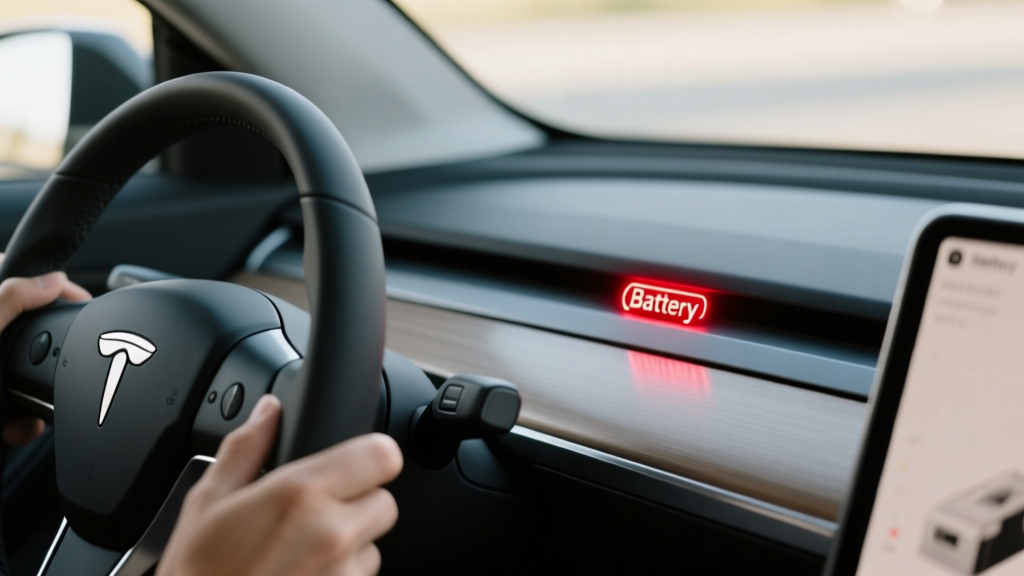
When a battery light on dashboard illuminates in a battery electric vehicle, it demands immediate attention — but it rarely signals the catastrophic failure that many drivers fear. Unlike the simple charge-warning light in a gasoline car (which points to a failing 12V alternator), an EV's high-voltage traction battery warning can indicate anything from a minor thermal management glitch to a cell imbalance that warrants dealer service.
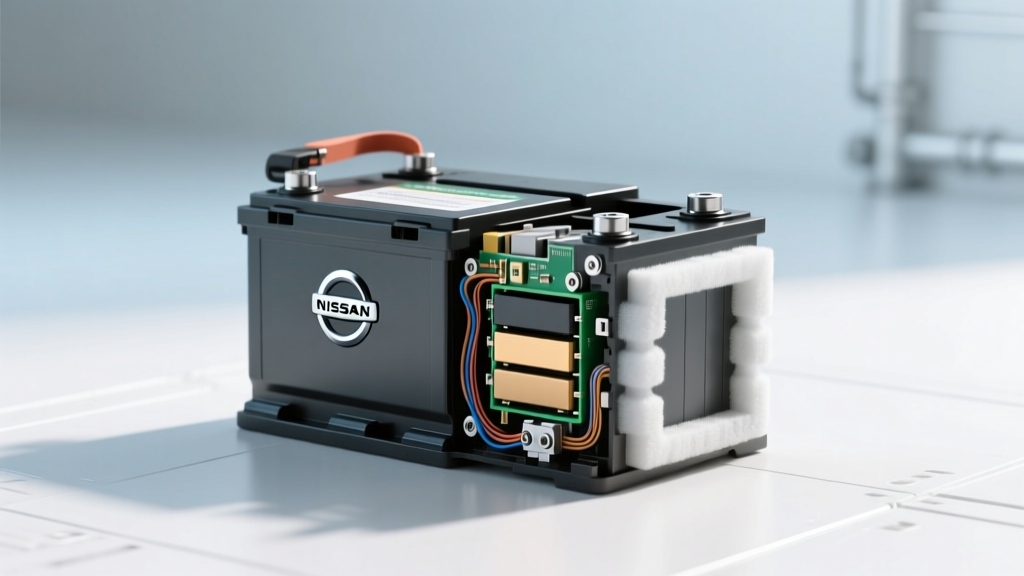
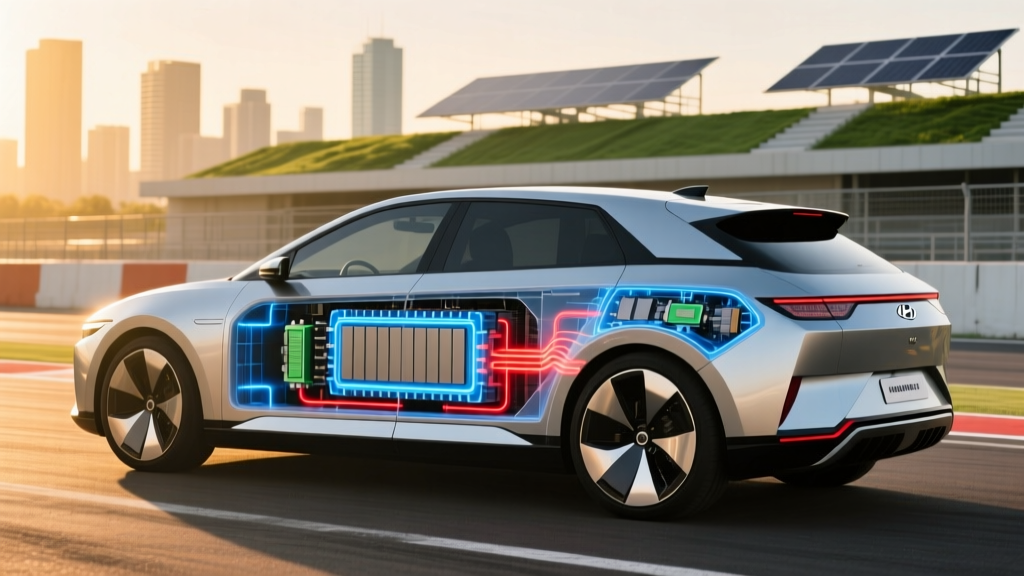
The critical first step is distinguishing which battery the warning references. Every EV carries two batteries: a conventional 12V auxiliary battery (which powers lights, infotainment, and computers) and the high-voltage traction battery (typically 400V–800V, storing 50–130+ kWh) that actually drives the wheels. A 12V battery dying will strand you just as surely as a dead gas-car battery, and many EVs trigger a generic battery warning when the 12V is failing. The traction battery, by contrast, is monitored by a dedicated Battery Management System (BMS) that logs specific diagnostic trouble codes (DTCs) readable via OBD-II or the manufacturer's app.
This guide focuses on the high-voltage traction battery — the component that represents 25–40% of a new EV's purchase price and the source of most long-term ownership anxiety. We'll cover what warning indicators mean, how long these batteries actually last based on fleet data, what your warranty covers, and what emerging chemistry advances mean for future replacements.
EV Battery Chemistry: LFP vs NMC vs NCA
The specific warning thresholds and long-term degradation behavior you'll experience depend heavily on which chemistry powers your EV. As of 2026, three lithium-ion chemistries dominate the market, each with distinct trade-offs that affect range, longevity, charging behavior, and cost.
| Attribute | LFP (Lithium Iron Phosphate) | NMC (Nickel Manganese Cobalt) | NCA (Nickel Cobalt Aluminum) |
|---|---|---|---|
| Energy Density | 160–180 Wh/kg (lower) | 220–300 Wh/kg (high) | 250–300 Wh/kg (high) |
| Cycle Life | 3,000–5,000+ cycles | 1,000–2,000 cycles | 1,000–1,500 cycles |
| Cold-Weather Performance | More range loss (~35–40% at 20°F) | Moderate loss (~25–30% at 20°F) | Moderate loss (~25–30% at 20°F) |
| Recommended Daily SoC | 100% (no penalty) | 80% for daily use | 80% for daily use |
| Cost per kWh | ~$90–$110 (2026 pack-level) | ~$120–$145 | ~$125–$150 |
| Common Vehicles (2026) | Tesla Model 3/Y RWD, Ford Mustang Mach-E Select (base), Rivian Standard | Hyundai Ioniq 5/6, Kia EV6/EV9, Chevy Equinox EV, VW ID.4 | Tesla Model 3/Y Long Range, Lucid Air |
| Thermal Runaway Risk | Very low | Low (with BMS management) | Low (with BMS management) |
LFP wins on longevity and cost. If your priority is keeping a vehicle for 200,000+ miles with minimal degradation, LFP is the chemistry of choice. Tesla's standard-range Model 3 and Model Y use CATL-sourced LFP packs that have shown under 5% degradation at 100,000 miles in fleet data. The trade-off: less range per pound, worse cold-weather performance, and a flatter voltage curve that makes state-of-charge estimation harder (the BMS occasionally needs a full 100% charge to recalibrate).
NMC dominates the mid-range and long-range market. Higher energy density means more range in the same physical space, which is why the Hyundai Ioniq 5 Long Range (84 kWh usable, NMC, EPA 305 miles) and Kia EV6 (77.4 kWh, EPA 310 miles) both rely on it. The trade-off is a shorter cycle life and a stronger recommendation to keep daily charge at 80% to minimize calendar degradation.
NCA is Tesla's long-range signature. Tesla pairs NCA chemistry with its proprietary thermal management to extract both high range and strong fast-charging performance. The Model Y Long Range AWD (75 kWh usable, EPA 320 miles) remains a benchmark. NCA is also used by Lucid for its efficiency-leading Air sedan.
How Long Do EV Batteries Last? Real Degradation Data
The short answer: far longer than most buyers assume. According to data aggregated by Recurrent Auto from over 15,000 EVs in real-world use, the average EV battery retains approximately 90% of its original capacity at 100,000 miles and roughly 85% at 150,000 miles. Catastrophic failure requiring full replacement remains rare — well under 2% of vehicles in major fleets.
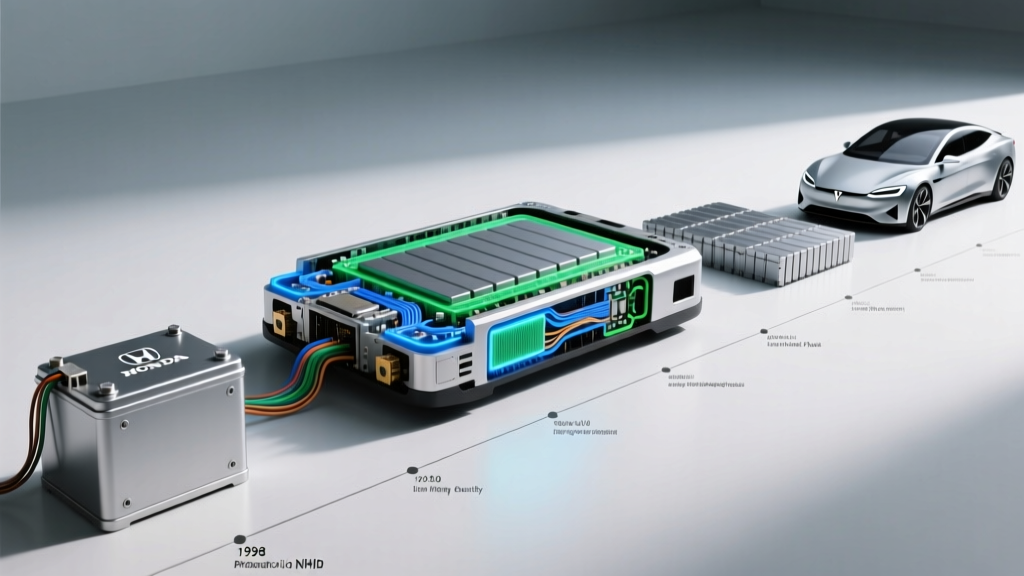
However, degradation is not linear. Most batteries experience an initial "break-in" drop of 2–4% in the first 20,000 miles, followed by a long, slow decline of roughly 1–2% per year or 15,000 miles thereafter. Here's what the data shows across popular models:
- Tesla Model 3/Y (NCA/NMC): ~95% at 50k mi → ~90% at 100k mi → ~86% at 150k mi
- Tesla Model 3/Y RWD (LFP): ~97% at 50k mi → ~93% at 100k mi → ~90% at 150k mi
- Chevrolet Bolt EV/EUV (NMC, 65 kWh): ~93% at 50k mi → ~88% at 100k mi → ~83% at 150k mi
- Nissan LEAF (passive cooling, NMC): ~88% at 50k mi → ~78% at 100k mi (notably worse due to lack of active thermal management)
- Hyundai Ioniq 5 (NMC, 77.4 kWh): ~96% at 50k mi → ~91% at 100k mi (projected from early fleet data)
- Ford Mustang Mach-E (NMC, 91 kWh extended): ~94% at 50k mi → ~89% at 100k mi
Sources: Recurrent Auto fleet data, Geotab battery health studies, manufacturer service bulletins. Individual results vary based on climate, charging habits, and thermal management use.
The Nissan LEAF data is instructive as a cautionary tale: its lack of active liquid cooling meant that batteries in hot climates (Arizona, Texas) degraded significantly faster than those in moderate climates. Every mainstream EV sold in 2026 uses active liquid thermal management, which is the single biggest factor in improved battery longevity over the past decade.
What Triggers a Traction Battery Warning Light?
Modern EV battery management systems monitor dozens of parameters in real-time: individual cell voltages (down to millivolt precision), pack temperature at multiple points, coolant flow rate, insulation resistance, and current flow. A dashboard warning illuminates when any parameter falls outside safe bounds. Common triggers include:
- Cell imbalance: One or more cells in a module drift outside the normal voltage window. The BMS can often rebalance these passively over several charge cycles, but persistent imbalance triggers a warning.
- Thermal management fault: Coolant pump failure, low coolant level, or a sensor malfunction. The vehicle may limit charge rate or power output as a precaution.
- Isolation fault: The BMS detects a potential high-voltage leak to the chassis. This is a safety-critical condition — the vehicle will typically disable propulsion immediately.
- Contactors or fuse issue: The high-voltage contactors (heavy-duty relays that connect the battery to the drivetrain) may fail to close or open properly.
- Software/calibration drift: Occasionally, a BMS firmware update resolves phantom warnings caused by sensor calibration issues. Tesla, Ford, and Hyundai have all issued over-the-air updates addressing this.
If your battery light illuminates, your first step should be checking the vehicle's app or touchscreen for a specific diagnostic message. Vague warnings like "Check EV System" require a dealer scan tool to read the specific DTC. Do not ignore traction battery warnings — while most are minor, isolation faults and thermal runaway precursors are serious safety concerns.
EV Battery Warranty Coverage: What's Protected
Federal law mandates that EV batteries carry a minimum warranty of 8 years / 100,000 miles. In California Air Resources Board (CARB) states — which include California, New York, Massachusetts, Washington, Oregon, Colorado, and over a dozen others — the requirement extends to 10 years / 150,000 miles for vehicles certified to CARB standards. Most manufacturers exceed these minimums.
| Manufacturer | Coverage Period | Capacity Retention Threshold | Notes |
|---|---|---|---|
| Tesla | 8 yr / 120,000 mi (Model 3/Y LR); 8 yr / 100,000 mi (RWD) | 70% | Module-level replacement when possible |
| Hyundai / Kia | 10 yr / 100,000 mi | 70% | Among the most generous terms |
| Ford | 8 yr / 100,000 mi | 70% | Covers F-150 Lightning, Mach-E |
| General Motors (Chevy/Cadillac) | 8 yr / 100,000 mi | 70% (60% on some Bolt-era terms) | Ultium platform standard |
| Volkswagen | 8 yr / 100,000 mi | 70% | ID.4, ID. Buzz |
| Rivian | 8 yr / 175,000 mi (R1T); 8 yr / 120,000 mi (R1S) | 70% | Higher mileage cap on truck |
| BMW | 8 yr / 100,000 mi | 70% | i4, i5, iX, i7 |
The critical detail is the capacity retention threshold — typically 70%. This means the manufacturer will repair or replace the battery (or individual modules) only if measured capacity drops below 70% of original within the warranty period. Normal degradation to 85% at 100,000 miles is not a warranty claim. If you see a battery light on dashboard and your State of Health (SoH) reads above 70%, the warranty will not cover replacement.
Warranties cover defects and abnormal degradation. They do not cover damage from accidents, flooding, improper charging equipment, or modifications. The warranty is also typically transferable to subsequent owners, which supports EV resale values.
EV Battery Replacement Costs: What to Expect
For most owners, battery replacement is a hypothetical concern rather than a practical one. The vast majority of EV batteries outlast the vehicle's useful economic life. But understanding replacement costs is essential for long-term planning, especially for used-EV buyers evaluating vehicles outside warranty coverage.
| Vehicle (Battery Size) | Full Pack Replacement (Parts + Labor) | Module-Level Repair | Typical Replacement Timeline |
|---|---|---|---|
| Tesla Model 3/Y (75–82 kWh) | $12,000–$16,000 | $3,000–$6,000 per module group | Rarely before 200,000+ mi |
| Chevy Bolt EV (65 kWh) | $14,000–$17,000 | N/A (full pack swap typical) | Rarely before 180,000+ mi |
| Hyundai Ioniq 5 (77.4 kWh) | $13,000–$18,000 | $4,000–$7,000 per module | Rarely before 200,000+ mi |
| Ford F-150 Lightning (131 kWh ext.) | $20,000–$28,000 | $5,000–$9,000 per module | Too new for fleet data |
| Rivian R1T (135 kWh Max Pack) | $22,000–$30,000 | Under development | Too new for fleet data |
| Nissan LEAF (40–62 kWh) | $8,000–$12,000 | N/A | Some replacements at 100k–140k mi (hot climates) |
Several important context points: module-level repair is becoming more common as manufacturers design packs with serviceable sub-units. Tesla, Hyundai, and BMW all support module replacement, which can address a single degraded or faulty section without replacing the entire pack. Independent EV repair shops are also emerging, offering refurbished pack installations at 30–50% below OEM dealer pricing.
Pack-level pricing has declined steadily — from over $300/kWh in 2015 to approximately $130–$150/kWh at the dealer level in 2026 (parts + labor). As LFP chemistry proliferates and manufacturing scales, expect further cost reductions through the end of the decade.
Maximizing Battery Health: Charging Habits & Monitoring
Battery degradation is driven by three primary factors: heat exposure, high state-of-charge storage, and charge cycle count. You can't eliminate degradation, but you can significantly slow it.
- Daily charge limit: Set to 80% for NMC/NCA vehicles. LFP vehicles can (and should) charge to 100% regularly for BMS calibration.
- Avoid prolonged 100% storage: Don't charge to 100% and leave the car sitting for days. Charge to full only when you'll drive within 24 hours.
- Minimize DC fast charging when possible: Frequent 150+ kW sessions accelerate degradation by ~1–2% over the battery's life compared to exclusive Level 2 charging. Road trips are fine — daily fast-charging is the concern.
- Use preconditioning: Enable your vehicle's scheduled departure or battery preconditioning feature. This warms the battery before charging (protecting it from cold-charge stress) and before driving (improving efficiency).
- Avoid extreme SoC in extreme heat: In summer, storing a vehicle at 100% SoC in 95°F+ heat is the single worst thing you can do for battery health. Store at 50–60% if the car will sit unused.
- Keep the vehicle plugged in during extreme cold: The thermal management system will maintain battery temperature, preventing cold-induced degradation.
How to Check Your Battery's State of Health (SoH)
State of Health (SoH) is expressed as a percentage of original capacity. A new battery is 100% SoH; at 70% SoH, a 75 kWh pack effectively holds 52.5 kWh. Here's how to monitor it:
- In-vehicle display: Some EVs (Tesla, Hyundai/Kia, BMW) show battery health metrics in the service menu or app. Tesla displays estimated range at 100% charge, from which you can calculate SoH by comparing to the original EPA-rated range.
- OBD-II dongles: Devices like the OBDLink SX paired with apps such as EVNotify or LeafSpy (for Nissan) can read detailed BMS data including individual cell voltages, pack SoH, and cycle count.
- Dealer diagnostic: Request a battery health report during routine service. Most manufacturers provide a printout showing measured capacity vs. original.
- Third-party certification: Services like Recurrent offer battery health scores that are increasingly recognized in the used-EV market.
Emerging Battery Technologies: What's Next
Several next-generation battery technologies are in various stages of development. It's important to distinguish what's available now from what's on the horizon.
Silicon-dominant anodes: Companies like Sila Nanotechnologies and Group14 are replacing graphite anodes with silicon composites, increasing energy density by 20–40%. These are already appearing in limited production — the Mercedes G-Class EV (2025) uses silicon-anode cells from Sila. Expect broader adoption by 2027–2028.
Semi-solid-state batteries: NIO's 150 kWh semi-solid-state pack (available in China since 2024) demonstrates 360 Wh/kg energy density. These use a gel-polymer electrolyte rather than a fully solid one, making them a bridge technology. U.S. availability is limited, with QuantumScape targeting production with Volkswagen Group in 2027–2028.
True solid-state batteries: The long-promised leap — solid electrolyte replacing liquid, enabling lithium-metal anodes, faster charging, and near-zero fire risk. Toyota has announced production intent for 2027–2028, Samsung SDI targets 2027, and multiple startups (Solid Power, Factorial Energy) are in pilot production. Realistic mass-market availability in the U.S. is 2029–2031 at the earliest. These are not currently available in any production vehicle.
Sodium-ion batteries: CATL and BYD have begun producing sodium-ion cells for low-cost, short-range EVs in China. Lower energy density (~140 Wh/kg) limits them to city cars and micro-EVs, but they use no lithium, cobalt, or nickel, dramatically reducing cost and supply-chain risk. U.S. availability is unlikely before 2028.
Frequently Asked Questions
How long do EV batteries last in years and miles?
Based on fleet data from Recurrent Auto and Geotab, most modern EV batteries (2020+ model years with active liquid thermal management) retain 85–90% of original capacity at 150,000 miles. In years, that translates to roughly 12–15 years of typical use (12,000–15,000 miles/year) before reaching the 70% threshold where range reduction becomes meaningfully noticeable. Many will outlast 200,000 miles before needing replacement.
How much does an EV battery cost to replace in 2026?
Full pack replacement ranges from approximately $8,000 (small packs like the Nissan LEAF) to $28,000+ (large packs like the F-150 Lightning Extended Range). For mainstream EVs (Tesla Model 3/Y, Ioniq 5, Mach-E), expect $12,000–$18,000 including labor. Module-level repairs, when available, cost $3,000–$9,000. These costs have declined ~40% since 2020 and are expected to continue falling.
What does the EV battery warranty actually cover?
Federal minimum is 8 years / 100,000 miles (10 years / 150,000 miles in CARB states). Coverage applies when measured capacity drops below the stated threshold — typically 70% of original. The warranty covers defects, abnormal degradation, and component failures (BMS, contactors, cooling system). It does not cover damage from accidents, flooding, or aftermarket modifications. Coverage is transferable to subsequent owners.
How do I check my EV battery health at home?
Compare your vehicle's displayed range at 100% charge to the original EPA-rated range. If your Model Y Long Range originally showed 320 miles at 100% and now shows 290 miles, your SoH is approximately 90.6%. For more precision, use an OBD-II reader with EV-specific software (LeafSpy for Nissan, EVNotify for broader compatibility) to read the BMS-reported SoH directly. Many manufacturer apps also display health metrics.
LFP vs NMC: which battery chemistry is better for me?
Choose LFP if: you want maximum longevity (3,000+ cycle life), prefer charging to 100% daily without worry, prioritize lower cost, and don't need the absolute longest range. Choose NMC/NCA if: you need maximum range per charge, frequently drive in cold climates (better low-temp performance), or want faster DC charging speeds. Neither is universally "better" — the right choice depends on your driving patterns and ownership timeline.
Is a battery light on dashboard always a serious problem?
Not always. A 12V auxiliary battery warning is common and inexpensive to fix ($150–$300). A traction battery warning can range from a minor sensor glitch (resolved by a software update) to a serious isolation fault (requiring immediate service). Always check the specific message on your display. If the vehicle limits power or displays "Stop Safely" or "High-Voltage Fault," pull over and call for a tow. If it's a general "Check EV System" message with no drivability change, schedule a dealer appointment within a few days.
Does frequent DC fast charging damage my battery?
Frequent exclusive use of DC fast charging (150+ kW) adds approximately 1–2% additional degradation over the battery's lifetime compared to primarily using Level 2 (7–11.5 kW) home charging. The heat generated during high-power charging stresses cells. However, occasional fast charging on road trips has negligible impact. The practical recommendation: use Level 2 for daily charging, reserve DC fast charging for trips, and always enable battery preconditioning before arriving at a fast charger.
For official battery warranty details specific to your vehicle, consult your owner's manual or manufacturer website. For federal tax credit eligibility on EV purchases, refer to IRS §30D guidelines. Range and efficiency data sourced from fueleconomy.gov.