If you've landed here searching for a battery for 2013 Honda Civic, you're likely facing one of two scenarios: your conventional Civic's 12V starter battery needs replacement, or you're researching how hybrid and electric vehicle (EV) battery systems compare. This guide bridges both worlds — covering what 2013 Civic owners need today, while providing a comprehensive breakdown of the high-voltage traction batteries that power modern EVs in 2026.
Understanding the distinction between a standard 12V auxiliary battery and a high-voltage EV traction battery is essential. The former powers accessories and starts an internal combustion engine; the latter stores tens of kilowatt-hours of energy to propel an electric vehicle. The chemistry, cost, lifespan, and maintenance requirements are entirely different.
12V Battery for 2013 Honda Civic: Quick Reference
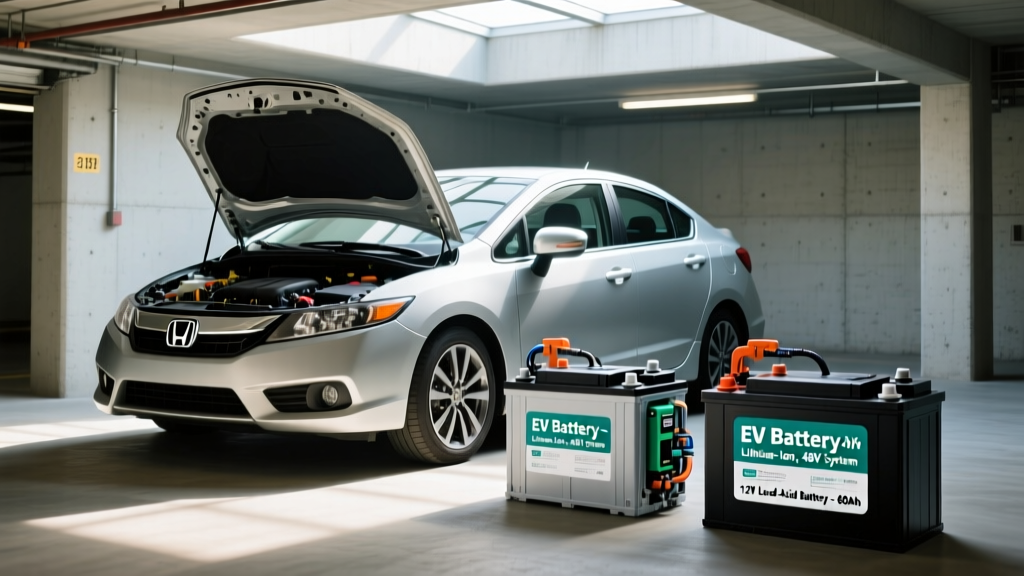
The 2013 Honda Civic (non-hybrid) uses a conventional 12V lead-acid or AGM (absorbed glass mat) battery. This is a Group 51R size in most trims, delivering around 500 cold cranking amps (CCA). Replacement batteries from brands like Interstate, Optima, or DieHard typically cost $120–$220 installed at an auto parts store. Lifespan averages 3–5 years depending on climate and driving habits.
For the 2013 Civic Hybrid, there are two batteries: the standard 12V auxiliary battery and a high-voltage nickel-metal hydride (NiMH) IMA (Integrated Motor Assist) pack rated at approximately 0.5 kWh. The IMA battery in the 2013 Civic Hybrid was known to degrade over time, and replacements ran $2,000–$3,500 through Honda dealerships. Honda extended the hybrid battery warranty to 10 years/150,000 miles in many states following class-action settlements.
Modern EV Traction Batteries: Chemistry Explained
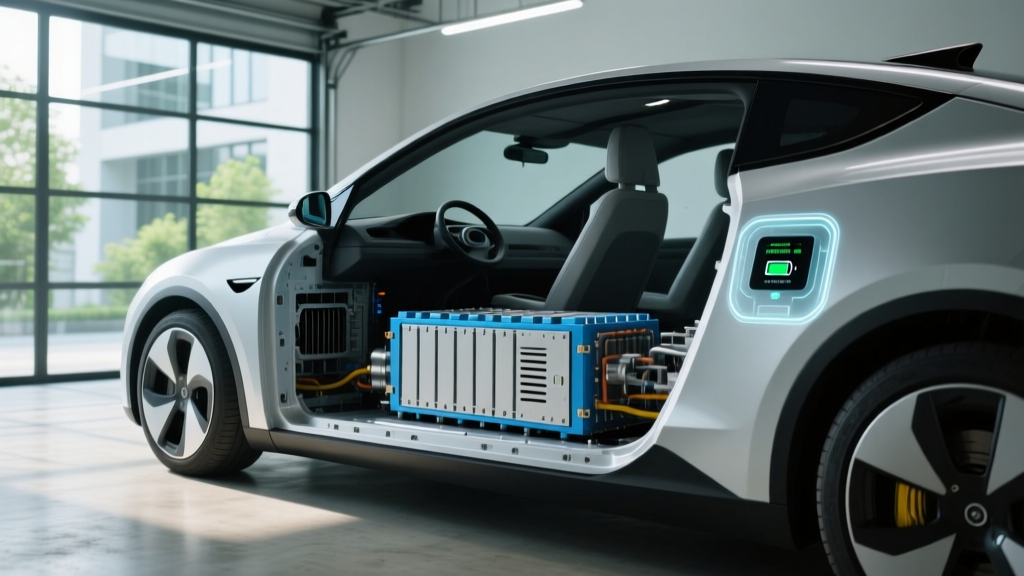
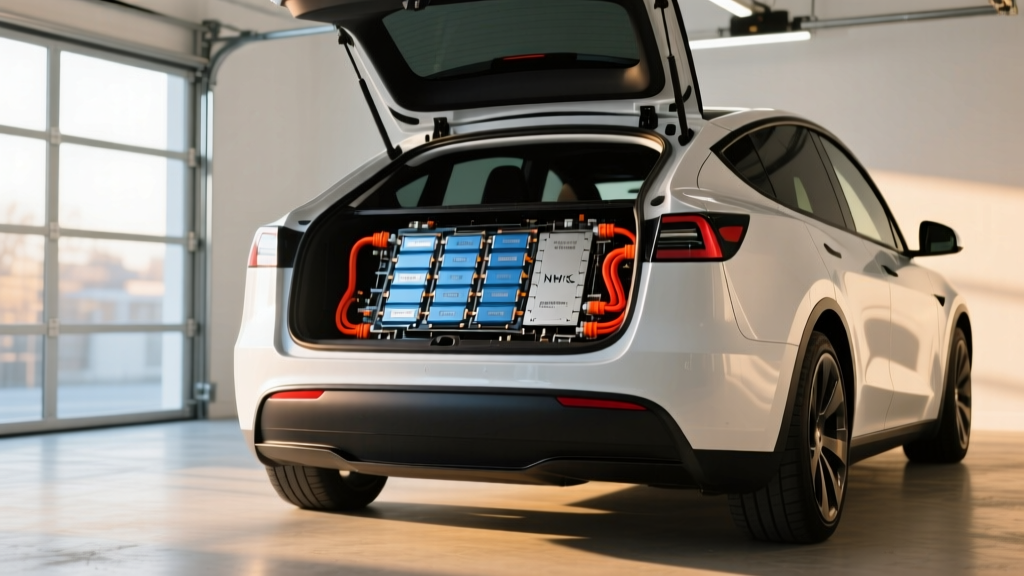
Today's battery electric vehicles (BEVs) use lithium-ion traction batteries ranging from ~50 kWh to over 130 kWh in capacity. Two dominant chemistries have emerged by 2026: NMC/NCA (nickel-manganese-cobalt / nickel-cobalt-aluminum) and LFP (lithium iron phosphate). Each has distinct trade-offs.
| Attribute | LFP (Lithium Iron Phosphate) | NMC/NCA (Nickel-based) |
|---|---|---|
| Energy Density | Lower (~160–180 Wh/kg cell-level) | Higher (~250–300 Wh/kg cell-level) |
| Typical Use | Standard-range / budget models (Tesla Model 3 RWD, BYD, base Ford Mustang Mach-E) | Long-range / performance models (Tesla Model Y LR, Hyundai Ioniq 5, Rivian) |
| Cycle Life | 3,000–5,000+ cycles to 80% SoH | 1,000–2,000 cycles to 80% SoH |
| Cold-Weather Performance | Moderate — slower charging below 32°F, ~15–25% range loss | Better — ~10–20% range loss in cold |
| Cost (per kWh, pack-level) | ~$80–$100/kWh (2026) | ~$110–$140/kWh (2026) |
| Thermal Stability | Excellent — less prone to thermal runaway | Good — requires more active thermal management |
| Charging to 100% | Recommended periodically for BMS calibration | Best kept at 80% daily; 100% for trips only |
| Cobalt/Supply Chain | No cobalt — simpler sourcing | Contains cobalt/nickel — more complex supply chain |
Which is better? It depends on your use case. If you drive a standard-range commuter EV, charge at home nightly, and want maximum longevity, LFP is the pragmatic choice. If you need 300+ miles of EPA range, frequently road-trip, or live in a cold climate, NMC/NCA offers higher energy density and better cold-weather behavior. Neither chemistry is universally superior.
How Long Do EV Batteries Last?
The short answer: most EV traction batteries outlast the vehicles they're installed in. Data from fleets, long-term owners, and studies by organizations like Geotab show average degradation of approximately 1.5% to 2.5% per year under normal use. That translates to roughly 85–90% State of Health (SoH) after 8 years and 100,000+ miles.
- Tesla Model 3/Y (NMC): ~10–12% capacity loss at 150,000 miles (Tesla Impact Report data)
- Chevrolet Bolt EV (NMC, 60 kWh): ~8–14% loss at 100,000 miles; some early units recalled for fire risk, not degradation
- Hyundai Ioniq 5 (NMC, 77.4 kWh): ~5–8% loss at 60,000 miles per owner reports on Ioniq forums
- Tesla Model 3 RWD (LFP, 60 kWh): ~3–5% loss at 50,000 miles; LFP chemistry showing slower fade
- Nissan Leaf (NMC, 40/62 kWh): Passive cooling leads to faster degradation in hot climates — 15–20% loss at 80,000 miles reported in Arizona/Texas
Key insight: degradation is not linear. Most packs experience a steeper drop in the first 1–2 years (roughly 2–4%), then settle into a slow, gradual decline. A battery reaching 70% SoH is generally considered at end-of-life for automotive use, though it still functions — just with reduced range.
What Does the Battery Warranty Cover?
Federal law mandates a minimum 8-year/100,000-mile warranty on EV batteries for emissions-related components, and most manufacturers match or exceed this for the traction battery. In CARB states (California and states adopting California emissions standards), the requirement extends to 10 years/150,000 miles.
| Manufacturer | Warranty Term | Capacity Retention Threshold |
|---|---|---|
| Tesla (Model 3/Y) | 8 yr / 120,000 mi (LR/AWD); 8 yr / 100,000 mi (RWD) | 70% SoH |
| Hyundai / Kia | 10 yr / 100,000 mi | 70% SoH |
| Ford (Mach-E, F-150 Lightning) | 8 yr / 100,000 mi | 70% SoH |
| Chevrolet (Equinox EV, Blazer EV) | 8 yr / 100,000 mi | 60–70% SoH (varies by model) |
| Rivian | 8 yr / 175,000 mi | 70% SoH |
| BMW (i4, iX) | 8 yr / 100,000 mi | 70% SoH |
What triggers a warranty claim? If your battery's usable capacity drops below the stated threshold (typically 70% of original) within the warranty period, the manufacturer will repair or replace modules or the full pack at no cost. Normal degradation above the threshold is not covered. Damage from accidents, flooding, or improper modifications is excluded.
EV Battery Replacement Cost: What to Expect
Out-of-warranty EV battery replacement remains expensive, but costs have declined significantly. Full pack replacement is rare — most repairs involve swapping individual modules. Here's a realistic cost breakdown for 2026:
| Vehicle / Pack Size | Full Pack Replacement | Module Repair (Common) |
|---|---|---|
| Chevrolet Bolt EV (65 kWh, NMC) | $14,000–$16,000 | $2,500–$5,000 (2–4 modules) |
| Tesla Model 3 Standard Range (60 kWh, LFP) | $12,000–$15,000 | $3,000–$6,000 |
| Tesla Model Y Long Range (82 kWh, NMC) | $16,000–$20,000 | $4,000–$7,000 |
| Hyundai Ioniq 5 (77.4 kWh, NMC) | $14,000–$18,000 | $3,000–$6,000 |
| Ford F-150 Lightning Ext. Range (131 kWh, NMC) | $22,000–$28,000 | $5,000–$10,000 |
| Nissan Leaf (62 kWh, NMC) | $10,000–$14,000 | $2,000–$5,000 |
Critical context: The vast majority of EV owners will never need a full battery replacement. Data from Consumer Reports and fleet operators indicates that fewer than 5% of EV batteries require replacement within the first 10 years. Most packs reach 200,000+ miles with 75–85% capacity remaining. The fear of a $20,000 surprise bill is largely overblown for vehicles still under warranty.
Factors That Affect Battery Longevity
While modern battery management systems (BMS) do an excellent job protecting cells, owner habits still influence long-term health. Here's what matters most:
- Avoid sustained 100% SoC: For NMC/NCA batteries, charge to 80% for daily use. Set 100% only for road trips. LFP batteries tolerate 100% better and benefit from periodic full charges for BMS calibration.
- Minimize DC fast charging frequency: Occasional fast charging is fine. Daily use of 150+ kW DC chargers accelerates degradation by ~0.5–1% per year versus Level 2 home charging. The charge curve tapers above 80% SoC to protect cells — let it taper naturally rather than unplugging at 80% every time at a fast charger.
- Precondition in cold weather: Use your EV's preconditioning feature (available on virtually all 2026 models) to warm the battery before fast charging. Cold batteries charge slower and experience more stress.
- Avoid extreme heat exposure: Parking in direct sun in 100°F+ climates for extended periods accelerates calendar degradation. Garage parking helps. Active thermal management systems mitigate this, but passive-cooled packs (older Nissan Leafs) are more vulnerable.
- Don't let SoC sit at 0% or 100% for weeks: If storing the vehicle, aim for 40–60% SoC. Lithium-ion cells degrade fastest at voltage extremes.
- Drive normally: Aggressive acceleration doesn't significantly harm the battery — the BMS limits maximum C-rate. But frequent track use or heavy towing in hot weather adds thermal stress.
How to Check Your Battery's State of Health (SoH)
Monitoring your EV's battery health is straightforward in 2026, with multiple methods available:
In-vehicle displays: Most modern EVs (Tesla, Hyundai/Kia, Ford, BMW, Rivian) display battery health or degradation percentage in the settings menu. Tesla shows it under Service > Battery Health. Hyundai's Bluelink app provides SoH data remotely.
OBD-II diagnostic tools: Devices like the OBDLink SX paired with apps such as LeafSpy (Nissan Leaf), TeslaFi, or ABRP (A Better Route Planner) can read detailed cell-level data, including individual module voltages, internal resistance, and calculated SoH.
Dealer diagnostic reports: Request a battery health check during scheduled service. Dealerships can pull a full BMS log showing capacity retention, charge cycle count, and thermal history. This is especially useful before purchasing a used EV.
Third-party services: Companies like Recurrent Auto offer free battery health reports by connecting to your vehicle's telematics data. They compare your pack's degradation to a database of thousands of identical vehicles, giving you a percentile ranking.
For 2013 Honda Civic Hybrid owners, the IMA battery health can be checked via the dashboard's IMA indicator or through a dealer diagnostic scan. If the IMA light is illuminated, the hybrid system has detected a fault — often related to battery capacity loss.
Emerging Battery Technology: What's Coming
The battery landscape is evolving rapidly, but it's important to separate laboratory announcements from production reality:
Solid-state batteries: Toyota, Samsung SDI, and QuantumScape have all announced solid-state prototypes promising 500+ mile range and 10-minute charging. Toyota has stated a commercial launch target of 2027–2028 in limited vehicles. However, manufacturing scalability remains the primary bottleneck. Solid-state cells have demonstrated impressive lab results, but mass production at automotive volumes and competitive costs is still 2–4 years away from broad availability. Expect initial deployment in luxury/flagship models at premium prices.
Silicon anode batteries: Companies like Sila Nanotechnologies and Group14 are replacing graphite anodes with silicon-dominant materials, boosting energy density by 20–40%. The Mercedes-Benz G-Class electric (2025) was among the first production vehicles to feature silicon anode cells. Expect wider adoption in 2026–2027 model-year vehicles.
Sodium-ion batteries: CATL and BYD have begun deploying sodium-ion packs in Chinese-market EVs. These offer lower cost and better cold performance but significantly lower energy density (~120–140 Wh/kg). They're suited for budget city cars and energy storage, not long-range vehicles. US-market availability remains limited as of 2026.
LMFP (lithium manganese iron phosphate): An evolution of LFP adding manganese for ~15–20% higher energy density while retaining cobalt-free chemistry. Tesla and Ford are expected to adopt LMFP cells in standard-range models by 2027.
Frequently Asked Questions
How long do EV batteries last in years and miles?
Most modern EV batteries retain 75–85% capacity after 10 years and 150,000 miles. Average annual degradation is 1.5–2.5%. With proper care, a pack should outlast 200,000 miles before reaching the 70% SoH threshold that manufacturers consider end-of-life for automotive use.
How much does an EV battery cost to replace?
Full pack replacement ranges from $10,000 (Nissan Leaf) to $28,000 (Ford F-150 Lightning extended range). However, most repairs involve module replacement at $2,000–$7,000. Fewer than 5% of EV batteries require replacement within the warranty period, and most are covered by the 8-year/100,000-mile minimum warranty.
What does the EV battery warranty actually cover?
Warranties cover capacity loss below a defined threshold (usually 70% of original capacity) within the warranty term (typically 8 years/100,000 miles, or 10 years/150,000 miles in CARB states). Manufacturing defects and premature degradation are covered. Damage from accidents, misuse, or environmental factors is not. Check your specific manufacturer's terms — details vary, and the IRS §30D credit has separate battery sourcing requirements for tax credit eligibility.
How do I maximize my EV battery's health?
Charge NMC/NCA batteries to 80% daily (100% for trips only). LFP batteries can be charged to 100% regularly. Minimize daily DC fast charging — use Level 2 home charging as your primary method. Precondition the battery in cold weather. Avoid leaving the vehicle at 0% or 100% SoC for extended periods. These habits can reduce degradation by 0.5–1% per year.
LFP vs NMC — which battery chemistry is better for me?
Choose LFP if you want maximum cycle life (3,000–5,000+ cycles), lower cost, cobalt-free sourcing, and primarily drive in moderate climates. Choose NMC/NCA if you need maximum range per charge (higher energy density), live in a cold climate (better low-temperature performance), or frequently take long road trips. Neither is universally superior — match the chemistry to your driving pattern.
Is the battery for a 2013 Honda Civic the same as an EV battery?
No. The 2013 Honda Civic (non-hybrid) uses a standard 12V lead-acid or AGM starter battery (Group 51R, ~$120–$220). The 2013 Civic Hybrid additionally has a small NiMH IMA pack (~0.5 kWh). Neither is comparable to a modern EV traction battery, which uses lithium-ion chemistry and stores 50–130+ kWh. If you're considering upgrading from a 2013 Civic to a modern EV, the battery technology is vastly more advanced, with far longer lifespans and comprehensive warranties.