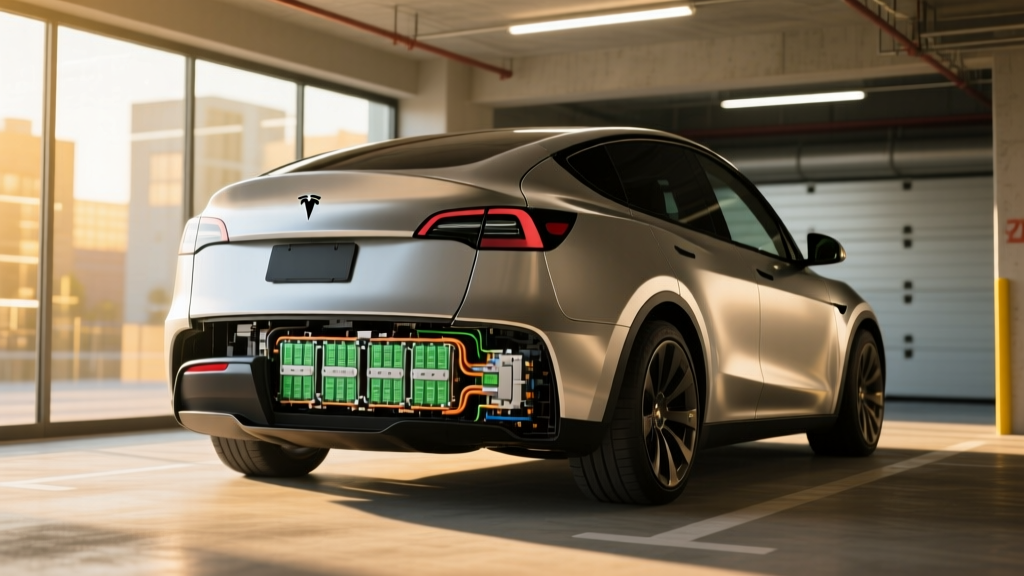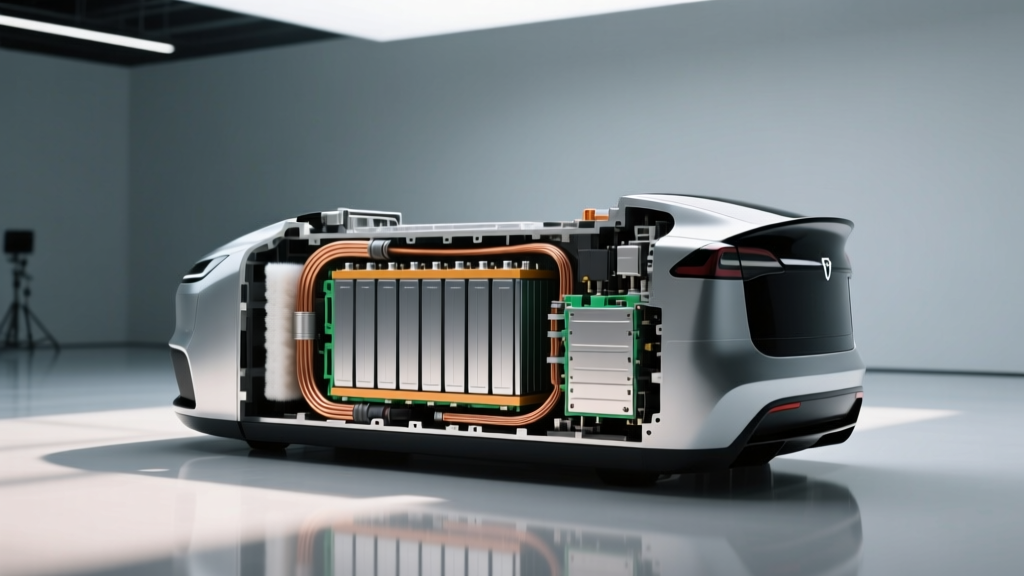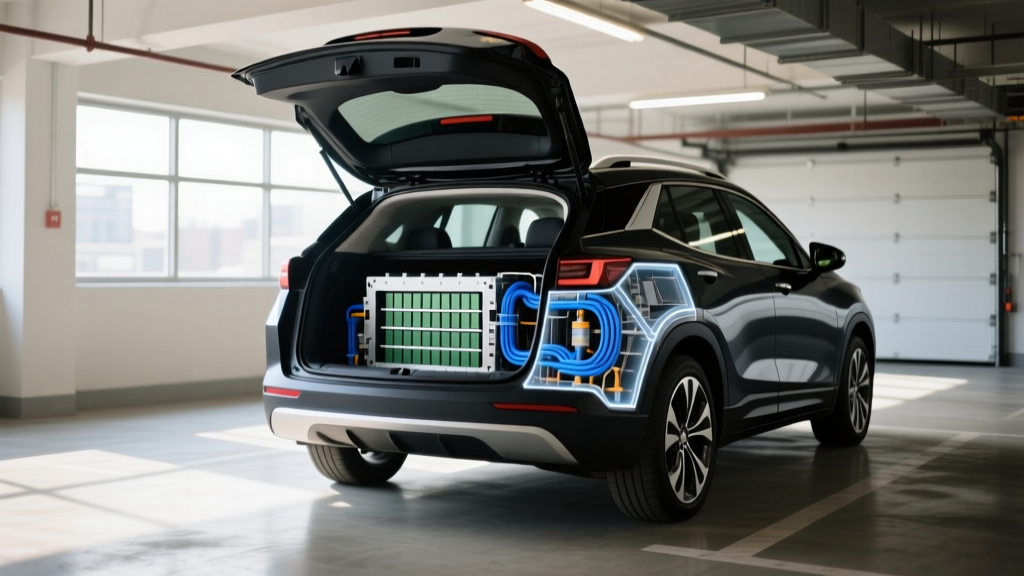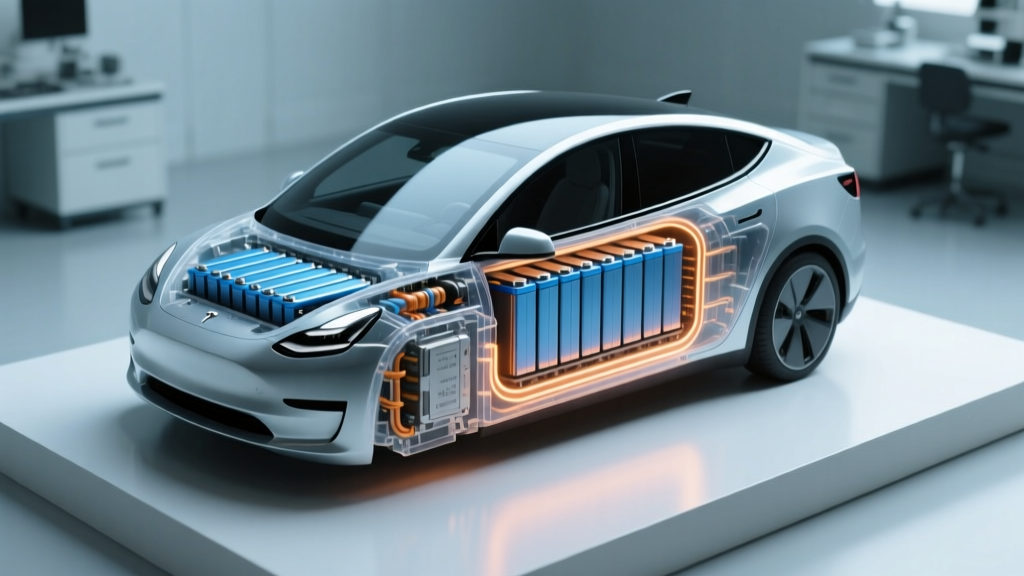
If you are shopping for your first electric vehicle or optimizing ownership of one you already drive, understanding battery charging basics is the single highest-leverage knowledge you can acquire. The traction battery is the most expensive component in any EV — typically $10,000 to $22,000 to replace — and its chemistry, thermal management, and your daily habits determine how much range you retain over 100,000+ miles. This guide cuts through the fear-mongering and marketing to give you exact numbers on degradation, warranty coverage, replacement economics, and the daily practices that actually move the needle on longevity.
LFP vs NMC/NCA: The Chemistry Decision That Shapes Your Ownership
Every EV sold in 2026 uses one of two dominant lithium-ion chemistries in its traction battery: lithium iron phosphate (LFP) or nickel manganese cobalt / nickel cobalt aluminum (NMC/NCA). The choice affects your daily charging routine, cold-weather range, and how aggressively you can use DC fast charging without accelerating degradation.
| Attribute | LFP (Lithium Iron Phosphate) | NMC / NCA (Nickel-Based) |
|---|---|---|
| Energy Density | Lower (~160–180 Wh/kg cell-level) | Higher (~230–280 Wh/kg cell-level) |
| Typical Cycle Life | 3,000–5,000+ full cycles | 1,000–2,000 full cycles |
| Daily Charge Recommendation | Can charge to 100% daily (Tesla, Ford recommend this) | Best kept 80–90% daily; 100% for trips only |
| Cold-Weather Performance | Weaker — more range loss below 32°F / 0°C | Better low-temp conductivity and regen capability |
| DC Fast Charge Tolerance | Handles frequent fast charging well; flatter degradation curve | More sensitive to repeated high-kW sessions; heat is the enemy |
| Cost per kWh (2026) | ~$80–$100 (pack level) | ~$110–$140 (pack level) |
| Notable 2026 Vehicles Using | Tesla Model 3/Y RWD, Ford Mustang Mach-E Select (LFP variant), Chevrolet Equinox EV (base) | Hyundai Ioniq 5, Kia EV6, BMW i4, Ford F-150 Lightning Extended, Rivian R1S/R1T |
| Key Trade-off | Heavier for same kWh; less range in a given package size | More range per pound, but stricter charge-habit discipline needed |
Which is better? There is no universal winner. If you have home Level 2 charging and drive under 60 miles daily, an LFP battery lets you charge to 100% every night without guilt — maximizing usable range from a smaller, cheaper pack. If you need maximum highway range, tow frequently, or live in a cold climate where every mile of range matters in January, NMC/NCA's superior energy density and cold performance justify the more careful charge management.
How Long Do EV Batteries Actually Last? Degradation Data
The fear that EV batteries need replacement every few years is not supported by fleet data. Most modern EV batteries are engineered to outlast the vehicle's economic life. Here is what real-world data shows:
Typical Degradation Trajectory (NMC/NCA, liquid-cooled packs, 2020–2026 models):
- Year 1 / ~12,000 miles: 2–4% capacity loss (initial formation loss)
- Year 3 / ~36,000 miles: 6–9% total loss
- Year 5 / ~60,000 miles: 8–12% total loss
- Year 8 / ~100,000 miles: 10–15% total loss
- Year 10+ / ~150,000 miles: 12–20% total loss (varies widely by climate and charging habits)
Sources: Geotab fleet data analysis (6,300+ EVs tracked), Recurrent Auto battery health reports, Tesla Impact Reports.
LFP batteries show a different curve: slightly faster initial drop (3–5% year one) but a much flatter degradation slope afterward, often retaining 90%+ capacity past 150,000 miles in fleet data. The critical insight is that degradation is non-linear — the steepest loss occurs early, then plateaus. A battery that has lost 8% in three years is not on track to lose 8% every three years.
Real-world example: A 2022 Hyundai Ioniq 5 (77.4 kWh NMC, EPA 303 miles) with 65,000 miles and predominantly home Level 2 charging typically shows 90–92% State of Health (SoH) — meaning roughly 270–275 EPA-equivalent miles of range remaining. That is still more daily range than most drivers use.
Battery Warranty Terms: What Manufacturers Actually Cover
Federal regulation mandates a minimum 8-year / 100,000-mile warranty on EV battery packs for emissions-related components, but manufacturers have largely standardized around this floor with meaningful capacity-retention guarantees. Here is how the major warranties compare for 2026 models:
| Manufacturer | Warranty Period | Mileage Cap | Capacity Retention Threshold | Notes |
|---|---|---|---|---|
| Tesla (Model 3/Y RWD — LFP) | 8 years | 100,000 mi | 70% | Long Range/Performance: 8 yr / 120,000 mi |
| Hyundai / Kia | 10 years | 100,000 mi | 70% | Among the longest coverage in the industry |
| Ford (Mach-E, F-150 Lightning) | 8 years | 100,000 mi | 70% | Covers battery and hybrid/electric components |
| General Motors (Ultium-based) | 8 years | 100,000 mi | 70% (estimated; varies by model) | Cadillac, Chevrolet, GMC EVs covered |
| BMW | 8 years | 100,000 mi | 70% | Includes i4, iX, i7 lineup |
| Rivian | 8 years | 175,000 mi (R1T/R1S Max Pack) | 70% | Standard Pack: 8 yr / 120,000 mi |
What the warranty covers: Defects in materials or workmanship, and capacity loss below the stated threshold (typically 70% of original capacity). If your 77.4 kWh pack drops below ~54 kWh usable within the warranty period, the manufacturer must repair or replace it — usually by swapping in a refurbished pack with at least the threshold capacity, not necessarily a brand-new unit.
What it does not cover: Damage from accidents, flooding, unauthorized modifications, or failure to follow basic maintenance (like ignoring coolant service intervals on liquid-cooled packs). Normal degradation above the 70% threshold is explicitly excluded — a battery at 72% SoH at year 8 is functioning as designed.
EV Battery Replacement Cost: Numbers and Context
This is the topic that generates the most alarmist headlines, so let us anchor it in data. Full battery pack replacement is rare for vehicles under 150,000 miles, but when it is needed — due to a manufacturing defect outside warranty, physical damage, or extreme degradation — costs are significant.
| Vehicle / Battery Size | Battery Capacity | Chemistry | Estimated Replacement Cost (Parts + Labor) |
|---|---|---|---|
| Tesla Model 3 RWD | ~60 kWh | LFP | $12,000 – $15,000 |
| Hyundai Ioniq 5 / Kia EV6 | 77.4 kWh | NMC | $16,000 – $20,000 |
| Ford F-150 Lightning Extended | ~131 kWh | NMC | $20,000 – $28,000 |
| Chevrolet Silverado EV | ~200 kWh (max) | NMC (Ultium) | $28,000 – $38,000 |
| BMW iX xDrive50 | ~111.5 kWh | NMC | $22,000 – $30,000 |
Critical context: Battery pack prices have fallen roughly 80% since 2013 (per BloombergNEF tracking) and continue declining. By the time a 2026 EV actually needs an out-of-warranty replacement in 2036–2038, replacement costs will likely be substantially lower. Additionally, module-level repair is increasingly common — many shops can replace individual degraded modules within a pack for $2,000–$5,000 rather than swapping the entire unit. Independent EV repair networks are expanding this capability rapidly.
The honest math: for the vast majority of owners who sell or trade their EV within 8–10 years, the battery will still be under warranty and above 80% SoH. The "replacement cost bomb" is a real number but an improbable event during typical ownership.
Factors That Accelerate (or Protect) Battery Health
Your daily habits influence degradation more than any single factor the manufacturer controls. Research from the National Renewable Energy Laboratory (NREL) and fleet analytics firms consistently identifies these variables:
Battery Care Checklist: Maximize Longevity
- Avoid sustained high State of Charge (SoC) on NMC/NCA: Store your EV at 50–80% when not driving. Charge to 100% only when you will drive it within hours. (LFP owners: this rule is relaxed — 100% daily is fine and recommended for cell balancing.)
- Minimize DC fast charging frequency: Occasional road-trip fast charging is fine. Daily reliance on 150+ kW DC charging accelerates degradation on NMC packs by an estimated 1–3% additional loss over 5 years vs. Level 2 home charging. If you must fast-charge daily, LFP chemistry tolerates it better.
- Precondition before fast charging: Battery preconditioning (warming the pack to ~85–95°F / 30–35°C) before a DC session reduces internal resistance and lithium plating risk. Most EVs do this automatically when you navigate to a charger — use the built-in navigation for this reason.
- Avoid extreme-temperature parking when possible: Sustained exposure to 100°F+ ambient (Phoenix summers) or below 0°F (Minnesota winters) accelerates calendar aging. Garage parking in summer is the single most impactful passive protection.
- Do not let SoC sit at 0% or 100% for days: Both extremes stress the chemistry. If storing the EV for a week or more, set charge limit to 50–60%.
- Use regenerative braking moderately in extreme cold: Below 20°F, aggressive regen can stress a cold battery. Most EVs automatically limit regen when the pack is cold — let the system manage this.
- Keep up with coolant service: Liquid-cooled packs rely on thermal management fluid. Follow the manufacturer's coolant replacement interval (typically every 4–5 years or 60,000 miles).
The most damaging pattern for an NMC battery is a combination of high SoC + high temperature + frequent DC fast charging. An owner in Arizona who charges to 100% daily and exclusively uses 350 kW public chargers will see measurably faster degradation than one in Oregon who charges to 80% on a home Level 2. The difference over 8 years could be 5–8 percentage points of SoH.
How to Check and Monitor Your Battery's State of Health
State of Health (SoH) is the percentage of your battery's original capacity that remains usable. A new 77.4 kWh pack at 95% SoH delivers ~73.5 kWh. Here is how to track it:
Manufacturer apps and in-dash displays:
- Tesla: The mobile app does not display SoH directly, but you can estimate it by charging to 100% and comparing the displayed range to the original EPA figure. Third-party tools like Tessie or Teslamate log detailed battery data via the vehicle API.
- Hyundai/Kia: The Bluelink / Kia Connect app shows battery health percentage in the vehicle status section on most 2023+ models.
- Ford: FordPass provides a battery health indicator on the Mach-E and Lightning (added in 2024 model year OTA updates).
- BMW: The My BMW app includes a battery health report under vehicle status.
Third-party diagnostics: Services like Recurrent offer free battery health reports by connecting to your vehicle's telematics data. Independent EV shops with diagnostic scanners (like the Autel MaxiEV or Bosch BAT 612) can pull detailed cell-level voltage data and calculate SoH from a 15-minute test. Request this when buying a used EV — it is the equivalent of a compression test on a gas engine.
OBD-II dongles: Devices like the OBDLink SX paired with apps such as ABRP (A Better Route Planner) or LeafSpy (Nissan-specific) can read real-time battery data. Coverage varies by manufacturer, but most 2022+ EVs expose SoH through standard OBD-II PIDs.
Emerging Battery Technology: What Is Real and What Is Not (Yet)
Battery technology is advancing, but timelines matter. Here is an honest assessment of what is available now versus what is on the horizon:
Silicon-dominant anodes (available now, limited): Companies like Sila Nanotechnologies and Group14 are supplying silicon-carbon anode materials that boost energy density by 15–25% over graphite. The 2025–2026 Mercedes-Benz G-Class electric (announced) and select Porsche models are early adopters. Expect wider availability by 2028–2029.
Semi-solid-state batteries (early production): NIO's 150 kWh semi-solid-state pack is available in China for the ET7 sedan, delivering over 620 miles of CLTC range. In the US, Factorial Energy is partnering with Stellantis and Hyundai for pilot production, but consumer availability is not expected before 2028–2029.
True solid-state batteries (not yet commercially available): Toyota, Samsung SDI, and QuantumScape have all announced prototype solid-state cells with impressive energy density and charge-speed figures. Toyota targets limited production in 2027–2028 for select models, with meaningful volume not expected until 2030+. QuantumScape's cells have demonstrated 80% charge in under 15 minutes in lab testing, but manufacturing scale-up remains the bottleneck. Do not delay a 2026 EV purchase waiting for solid-state — it is years from mainstream availability at accessible price points.
Sodium-ion batteries (emerging for budget EVs): CATL and BYD are producing sodium-ion cells that eliminate lithium, cobalt, and nickel entirely. Energy density is lower (~140 Wh/kg), making them suited for city cars and light commercial vehicles. The first US-market vehicles with sodium-ion packs are not expected before 2028.
Frequently Asked Questions
How long do EV batteries last in years and miles?
Most 2022–2026 EV batteries retain 85–92% of original capacity at 100,000 miles based on fleet data from Geotab and Recurrent. With proper care, a modern liquid-cooled pack should provide reliable service for 150,000–200,000 miles before dropping below 70% SoH — a span of 12–15 years for average drivers covering 12,000–14,000 miles annually.
How much does an EV battery cost to replace?
Full pack replacement ranges from approximately $12,000 for a Tesla Model 3 RWD (LFP, ~60 kWh) to $28,000–$38,000 for large-pack trucks like the Chevrolet Silverado EV (~200 kWh). However, most replacements are covered under the 8-year / 100,000-mile warranty, and module-level repairs often cost $2,000–$5,000. Pack prices continue declining year over year.
What does the EV battery warranty actually cover?
Manufacturer warranties cover defects and capacity loss below a defined threshold — typically 70% of original capacity — for 8 years / 100,000 miles (Hyundai/Kia extends to 10 years / 100,000 miles). They do not cover physical damage, accidents, or normal degradation above the threshold. If your pack falls below the threshold within the warranty period, the manufacturer repairs or replaces it at no cost.
How do I check my EV battery health?
Check your manufacturer's app (Bluelink, FordPass, My BMW) for a battery health readout. For more detailed data, use third-party services like Recurrent Auto (free), OBD-II diagnostic tools, or request a battery health report from a qualified EV service center. When buying used, always obtain an SoH reading before purchase.
Is LFP or NMC better for my EV battery?
It depends on your use case. LFP is better if you want simpler daily habits (charge to 100% freely), longer cycle life, and lower cost — but you sacrifice some range per pound and cold-weather performance. NMC/NCA is better if you need maximum range, tow heavy loads, or live in cold climates — but you must manage charge levels more carefully (80% daily, 100% only for trips). Neither is universally superior.
Does DC fast charging damage my EV battery?
Occasional DC fast charging causes negligible additional degradation. However, exclusive reliance on high-power DC charging (150+ kW) without Level 2 home charging can add 1–3% additional capacity loss over 5 years for NMC packs. LFP chemistry handles frequent fast charging with less penalty. Always precondition the battery before a fast-charge session to minimize stress.
Should I worry about my EV battery in extreme heat or cold?
Cold temperatures temporarily reduce range (15–30% loss below 20°F is normal and reversible) but do not permanently damage the battery. Sustained extreme heat (above 100°F ambient for weeks) accelerates calendar aging more than cold does. Garage parking in summer and preconditioning in winter are the most effective protections. Modern liquid-cooled thermal management systems handle most conditions well during active driving and charging.
Understanding battery charging basics is not about memorizing chemistry formulas — it is about aligning your habits with your battery's needs. Charge NMC to 80% daily, let LFP go to 100%, precondition before fast charging, and check SoH annually. Do that, and your EV's battery will very likely outlast your ownership of the vehicle.