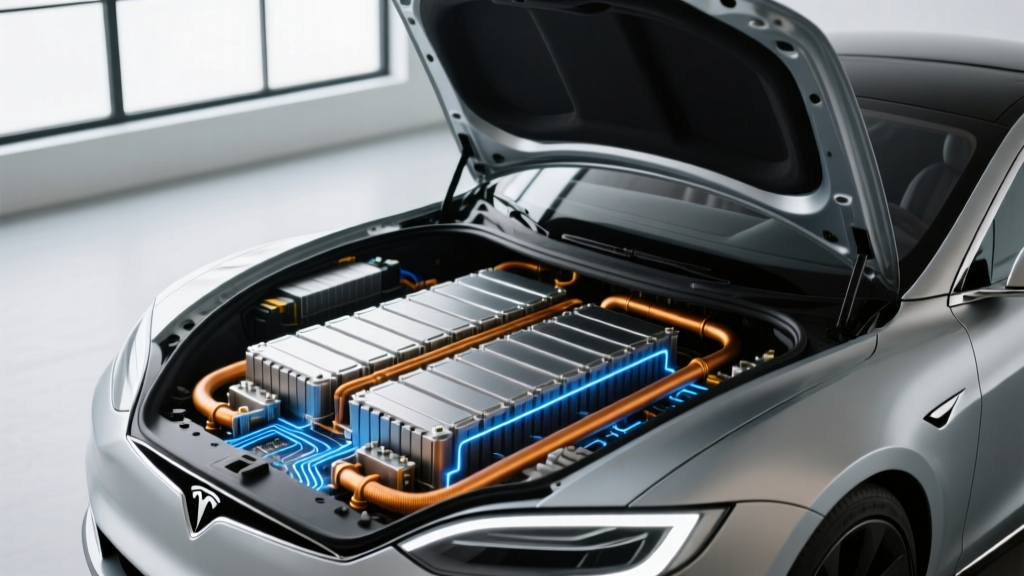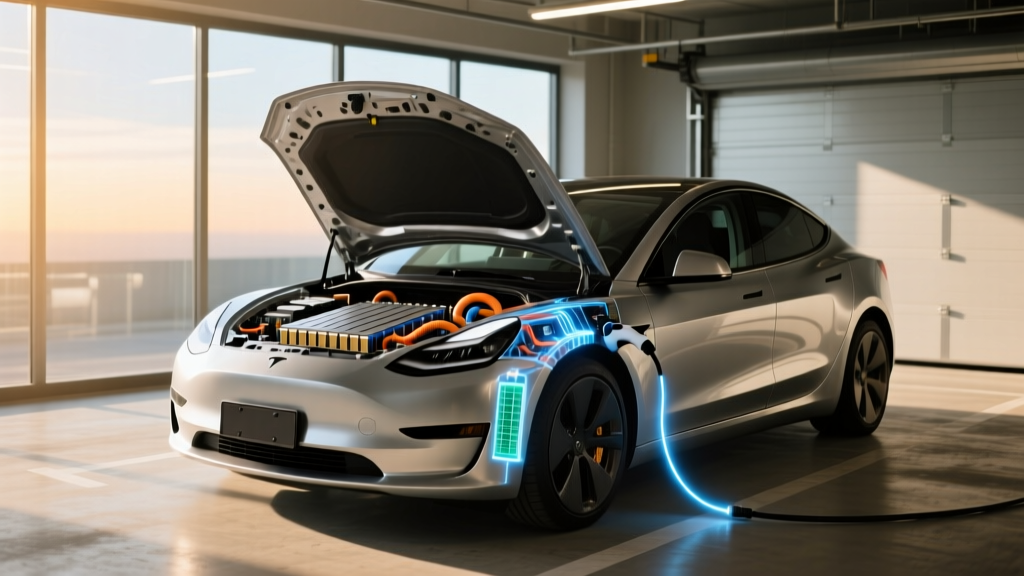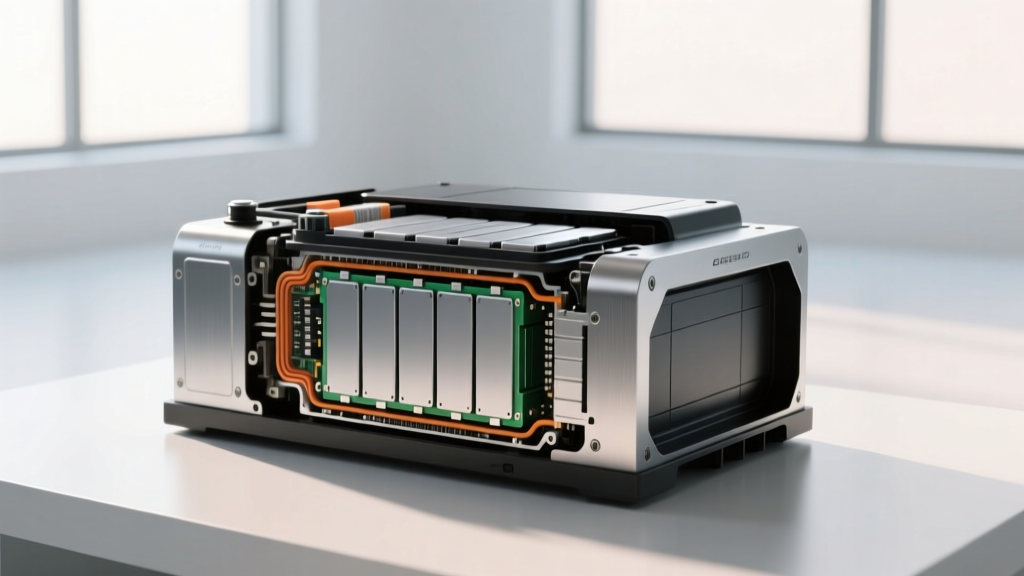
Every electric vehicle is only as good as the hundreds of individual battery cells stacked inside its high-voltage pack. The battery cell for car applications determines your EV's range, how fast it charges, how well it handles winter cold, and ultimately how long the vehicle remains economically viable. Yet most buyers focus on the EPA range sticker without understanding the chemistry, degradation patterns, or warranty fine print that govern real-world ownership.
This guide breaks down exactly what's inside your EV battery pack, how long those cells actually last, what replacement costs look like in 2026, and the daily habits that extend — or shorten — your pack's useful life.
LFP vs NMC: Choosing the Right Battery Cell Chemistry for Your EV
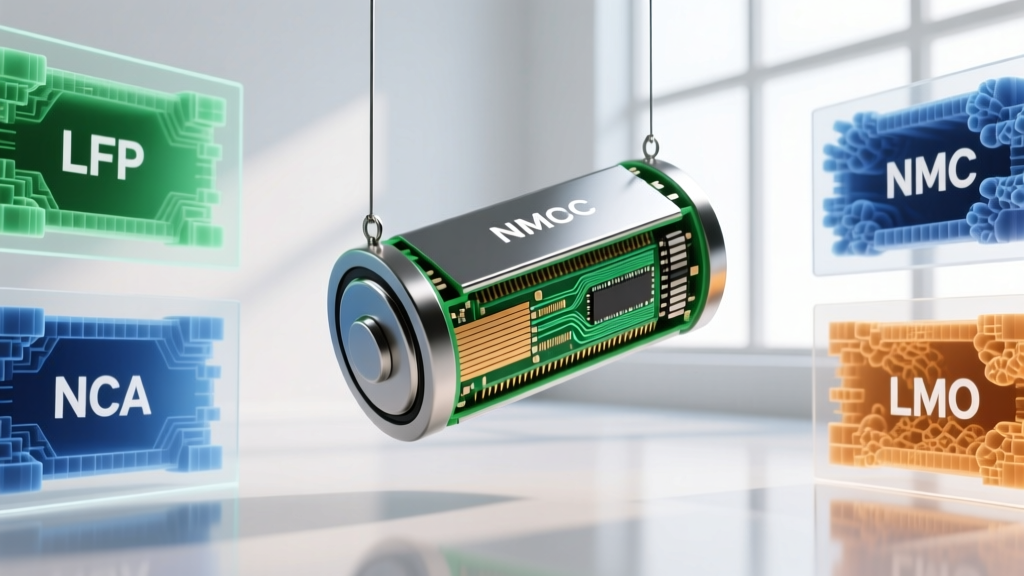
Two dominant lithium-ion chemistries power nearly every EV sold in the US today: NMC (nickel-manganese-cobalt) and LFP (lithium iron phosphate). The choice between them shapes your ownership experience in measurable ways.
NMC cells pack more energy into a smaller, lighter volume — which is why most long-range EVs (Tesla Model 3 Long Range at 363 miles EPA, Hyundai Ioniq 5 at 318 miles) use NMC or the closely related NCA (nickel-cobalt-aluminum) chemistry. LFP cells are heavier and less energy-dense, but they tolerate daily 100% charging, survive more charge cycles before degrading, cost less per kWh to manufacture, and contain no cobalt.
| Attribute | LFP (Lithium Iron Phosphate) | NMC / NCA |
|---|---|---|
| Energy Density | Lower (~160-180 Wh/kg cell-level) | Higher (~220-260 Wh/kg cell-level) |
| Typical Cycle Life | 3,000–5,000+ cycles to 80% SoH | 1,000–2,000 cycles to 80% SoH |
| Daily Charging to 100% | Recommended — no degradation penalty | Not ideal — manufacturers suggest 80% daily |
| Cold-Weather Performance | Weaker — greater range loss below freezing | Better — more resilient in sub-32°F conditions |
| Cost per kWh (2026) | ~$80–$100 (pack-level) | ~$110–$140 (pack-level) |
| Cobalt Content | None | Present (supply-chain and ethical concern) |
| Common In (2026 MY) | Tesla Model 3 RWD, Model Y RWD, Ford Mustang Mach-E Select (some trims) | Tesla LR/Performance, Ioniq 5/6, Rivian R1T, most PHEVs |
Which is better? It depends on your driving pattern. If you commute short distances, charge at home nightly, and live in a mild climate, LFP is arguably the smarter pick — you'll get more total lifetime miles from the pack. If you need maximum range per charge, regularly road-trip in cold weather, or tow, NMC's higher energy density is the practical choice.
How Long Do EV Battery Cells Last? Real-World Degradation Data
The short answer: far longer than most buyers fear. Data aggregated from fleet operators, manufacturer reports, and independent testing shows that modern EV battery packs typically lose 5-10% of original capacity over the first 100,000 miles, then degrade more slowly afterward.
According to fueleconomy.gov, most EV batteries are engineered to retain at least 70-80% of their original capacity after 8 years or 100,000 miles. Real-world fleet data often exceeds this:
- Tesla Model 3/Y fleet (2024 impact report): Average ~12% degradation at 200,000 miles for NMC packs; LFP packs showing even lower loss at equivalent mileage.
- Nissan Leaf (air-cooled, pre-2018): Higher degradation rates — some packs losing 20-25% by 80,000 miles, largely due to lack of active thermal management.
- Hyundai/Kia E-GMP platform (Ioniq 5, EV6): Reports indicate ~8-10% loss at 100,000 miles with liquid-cooled NMC packs.
- Chevrolet Bolt EV/EUV (NMC, liquid-cooled): Fleet data suggests ~7-9% loss at 100,000 miles under normal use.
Typical Degradation Curve (NMC, liquid-cooled pack, moderate climate):
- Year 1 / 15,000 mi: ~2-3% loss (initial formation drop)
- Year 3 / 45,000 mi: ~5-7% total loss
- Year 5 / 75,000 mi: ~7-10% total loss
- Year 8 / 120,000 mi: ~10-14% total loss
- Year 10+ / 150,000+ mi: Gradual linear decline; most packs still above 75% SoH
Key insight: Degradation is not linear. The steepest loss occurs in the first 12-18 months, then the curve flattens significantly. This is why a 5-year-old EV often has nearly the same usable range as a 3-year-old one.
EV Battery Warranty Coverage Explained
Federal law mandates that EV battery warranties cover a minimum of 8 years or 100,000 miles (whichever comes first). In California and states adopting CARB emissions standards, that extends to 10 years or 150,000 miles. But the critical detail is the capacity retention threshold — the point at which the manufacturer considers the pack "degraded enough" to warrant repair or replacement.
| Manufacturer | Warranty Period | Capacity Threshold | Notes |
|---|---|---|---|
| Tesla (Model 3/Y RWD, LFP) | 8 yr / 100,000 mi | 70% retention | LFP packs covered same as NMC |
| Tesla (Model 3/Y LR & Performance) | 8 yr / 120,000 mi | 70% retention | Longer mileage for LR trims |
| Hyundai / Kia (E-GMP) | 10 yr / 100,000 mi | 70% retention | Among the longest coverage |
| Ford (Mustang Mach-E, F-150 Lightning) | 8 yr / 100,000 mi | 70% retention | Standard across BEV lineup |
| GM (Ultium platform) | 8 yr / 100,000 mi | 70% retention (60% for Bolt recall replacements) | Varies by model year |
| Rivian (R1T / R1S) | 8 yr / 175,000 mi | 70% retention | Highest mileage threshold in segment |
| BMW (i4, iX) | 8 yr / 100,000 mi | 70% retention | Includes thermal management components |
What the warranty actually covers: If your pack drops below the stated retention threshold within the warranty window, the manufacturer will repair or replace modules (or the full pack) to bring capacity back above that threshold. It does not cover range loss from extreme temperatures, which is considered normal operating behavior. Some warranties also exclude degradation caused by repeated DC fast-charging above manufacturer-recommended limits, though this is rarely enforced in practice.
EV Battery Replacement Costs: What You'll Actually Pay
Out-of-warranty battery replacement is the scenario that generates the most anxiety — and the most misleading headlines. Here's the reality: the vast majority of EV batteries outlast the vehicle's economic life. A full pack replacement is uncommon before 200,000+ miles.
That said, if you do need one, costs in 2026 vary dramatically by pack size and chemistry:
| Vehicle / Pack Size | Chemistry | Replacement Cost Range | When Typically Needed |
|---|---|---|---|
| Tesla Model 3 RWD (~60 kWh, LFP) | LFP | $7,000–$10,000 | 200,000+ mi (rare before) |
| Tesla Model 3 LR (~82 kWh, NMC) | NMC | $12,000–$16,000 | 200,000+ mi |
| Hyundai Ioniq 5 (~77.4 kWh, NMC) | NMC | $10,000–$14,000 | 180,000+ mi |
| Ford F-150 Lightning Ext. Range (~131 kWh) | NMC | $18,000–$25,000 | 200,000+ mi |
| Chevrolet Equinox EV (~85 kWh, Ultium) | NMC | $10,000–$14,000 | 180,000+ mi |
| Rivian R1T Large Pack (~135 kWh) | NMC | $18,000–$22,000 | 200,000+ mi |
| BMW iX xDrive50 (~111 kWh) | NMC | $16,000–$22,000 | 180,000+ mi |
Several factors are driving these costs down year over year: pack-level cell prices have fallen from roughly $200/kWh in 2020 to approximately $100-$140/kWh in 2026, according to BloombergNEF battery price surveys. Module-level repair (replacing individual degraded modules rather than the entire pack) is also becoming more common at independent EV shops, reducing costs by 40-60% compared to a full pack swap.
Five Factors That Accelerate Battery Cell Degradation
Your battery cells degrade from the moment they leave the factory, but the rate of that degradation is largely within your control. These are the five biggest accelerants:
1. Frequent DC Fast Charging at High Power
DC fast charging at 150-350 kW generates significant internal heat. Occasional road-trip fast charging has minimal impact, but daily reliance on DCFC — especially without preconditioning — can add 1-3% additional degradation over 100,000 miles compared to Level 2 home charging.
2. Sustained High State of Charge (NMC Only)
Storing an NMC pack at 100% SoC for days or weeks stresses the cathode. LFP packs don't share this vulnerability — Tesla and Ford explicitly recommend periodic 100% charges for LFP calibration. For NMC, keep daily charging at 80% and save 100% for trips.
3. Deep Discharges Below 10%
Regularly running the pack below 10% SoC strains the anode. Most EVs have a bottom buffer (typically 2-5% of gross capacity hidden from the driver), but repeatedly hitting 0% displayed SoC still accelerates wear.
4. Extreme Temperature Exposure
Prolonged exposure to ambient heat above 100°F — especially while parked at high SoC — degrades electrolyte stability. Similarly, charging a frozen pack without preconditioning (warming the battery before charging) causes lithium plating on the anode. Modern thermal management systems mitigate this, but parking in shade or a garage in summer still helps.
5. Calendar Aging
Even a parked EV loses capacity over time. Calendar aging is most aggressive at high SoC and high temperatures. A pack stored at 50% SoC in a 70°F garage will age roughly half as fast as one stored at 90% SoC in a 95°F driveway.
Battery Health Maximization Checklist
- NMC owners: Set daily charge limit to 80%; charge to 100% only before long trips
- LFP owners: Charge to 100% at least once per week for BMS calibration
- Use Level 2 home charging as your primary method; reserve DCFC for road trips
- Enable battery preconditioning when navigating to a fast charger (Tesla, Hyundai, Ford all support this)
- In hot climates, park in shade or a garage; avoid leaving the car at high SoC in direct sun for days
- In cold climates, plug in when parked so the thermal management system can maintain pack temperature using grid power rather than battery energy
- Avoid storing the vehicle below 15% SoC for more than a few days
How to Check Your EV's Battery State of Health (SoH)
State of Health (SoH) is the percentage of original capacity your pack can still hold. A new pack is 100% SoH; a pack at 85% SoH holds 85% of its original kWh. Monitoring SoH helps you track degradation, plan for warranty claims, and assess used-EV value.
Built-in methods:
- Tesla: No native SoH readout in the vehicle UI, but the Tesla app (v4.30+) and third-party tools like Tessie or Teslamate can estimate SoH from charge logs.
- Hyundai/Kia: The EV app and some diagnostic menus display SoH percentage directly (varies by model year and region).
- BMW: The iDrive system includes a battery health indicator under vehicle settings.
- Ford: The FordPass app shows estimated battery health for Mach-E and Lightning owners.
- OBD-II scanners: Tools like the OBDLink MX+ paired with apps such as EVNotify or LeafSpy (Nissan) can read SoH directly from the battery management system (BMS) on most EVs.
DIY estimation: Charge to 100%, note the displayed range, and compare it to the original EPA range adjusted for your driving style. If your 318-mile EPA Ioniq 5 now shows 280 miles at 100%, that's roughly 88% SoH — consistent with typical 3-year degradation. This method isn't perfectly precise (displayed range factors in recent driving efficiency), but it's a useful trend indicator.
For used-EV purchases, request a SoH reading from the seller or have a pre-purchase inspection performed at a dealer or EV-specialist shop. A pack below 85% SoH on a vehicle under 80,000 miles may indicate abuse (frequent DCFC, chronic high-SoC storage) or a defective module.
What's Next: Solid-State and Silicon-Anode Battery Cells
Next-generation battery technologies promise step-change improvements, but timelines remain fluid and production-scale availability is still ahead of us.
Solid-state batteries replace the liquid electrolyte with a solid material (ceramic, sulfide, or polymer), enabling higher energy density (~350-400 Wh/kg cell-level projected), faster charging (potential for 10-80% in under 10 minutes), and improved safety (no flammable electrolyte). Toyota, Samsung SDI, and QuantumScape are among the most advanced developers. Toyota has announced solid-state EVs for limited production around 2027-2028, but widespread availability at mainstream price points is not expected before 2030. QuantumScape's cells are in validation with Volkswagen's PowerCo division, with pilot vehicles expected in 2026-2027.
Silicon-anode batteries (from companies like Sila Nanotechnologies and Group14) replace graphite anodes with silicon-dominant composites, boosting energy density by 20-40% without requiring an entirely new cell format. These are closer to market — Mercedes-Benz's next-generation G-Class EV (expected 2028) will use silicon-anode cells from Sila. Expect this technology to appear in premium EVs first, then trickle down to mainstream models by 2029-2030.
Sodium-ion batteries are also emerging as a low-cost alternative for entry-level EVs. CATL has begun shipping sodium-ion packs in Chinese-market vehicles, and while energy density is lower than LFP, the cost advantage (no lithium, no cobalt, no nickel) could make them viable for urban commuter EVs in the US by the late 2020s.
None of these technologies are available in US-market EVs as of 2026. If you're buying now, today's LFP and NMC packs — backed by maturing manufacturing and proven longevity data — are the practical choice.
Frequently Asked Questions
How long do EV batteries last in years and miles?
Most modern liquid-cooled EV battery packs last 15-20 years or 200,000+ miles before degrading to 70-75% of original capacity. Many packs will outlast the vehicle's body, electronics, or the owner's desire to keep it. Air-cooled packs (like early Nissan Leafs) degrade faster and may need attention around 100,000-120,000 miles.
How much does it cost to replace an EV battery?
Out-of-warranty replacement costs range from roughly $7,000 for a small LFP pack (Tesla Model 3 RWD) to $25,000 for a large NMC pack (F-150 Lightning Extended Range). However, the vast majority of EVs never need a full pack replacement — module-level repair and continued use at reduced range are far more common outcomes.
What does the EV battery warranty actually cover?
By federal law, EV battery warranties cover at minimum 8 years / 100,000 miles against dropping below a specified capacity threshold (typically 70% of original). In CARB states, this extends to 10 years / 150,000 miles. The warranty covers cell and module failures, BMS defects, and thermal management component failures. It does not cover range loss from extreme temperatures, which is normal.
How do I maximize my EV battery's lifespan?
For NMC packs: charge to 80% daily, avoid storing above 90%, use Level 2 charging when possible, precondition before DC fast charging, and avoid deep discharges. For LFP packs: charge to 100% weekly for calibration, and follow the same temperature and fast-charging best practices. Garage parking in extreme climates significantly helps.
LFP vs NMC — which battery cell chemistry should I choose?
Choose LFP if you prioritize longevity, plan to keep the vehicle 10+ years, charge mostly at home, and don't need maximum range (LFP EVs typically offer 250-270 miles EPA). Choose NMC if you need 300+ miles of range, frequently drive in cold weather, or tow heavy loads. Both chemistries are proven and reliable — neither is a bad choice.
Can I check my battery health myself?
Yes. Many manufacturers now show SoH in their companion apps (FordPass, Hyundai Bluelink, BMW Connected). Third-party OBD-II tools like OBDLink MX+ with EV-specific apps can read SoH from the BMS on most EVs. You can also estimate SoH by comparing your 100% displayed range to the original EPA figure.
Will solid-state batteries make my current EV obsolete?
Not for years. Solid-state batteries are expected in limited premium vehicles around 2028-2029, with mainstream availability not until 2030 or later. Even then, existing NMC and LFP packs will remain supported, and replacement cells will continue to be manufactured. Your current EV's battery technology will not become unsupported overnight.
For official warranty details on specific models, consult fueleconomy.gov and your manufacturer's warranty booklet. For information on how battery sourcing affects federal tax credit eligibility under §30D, see the IRS clean vehicle credits page.