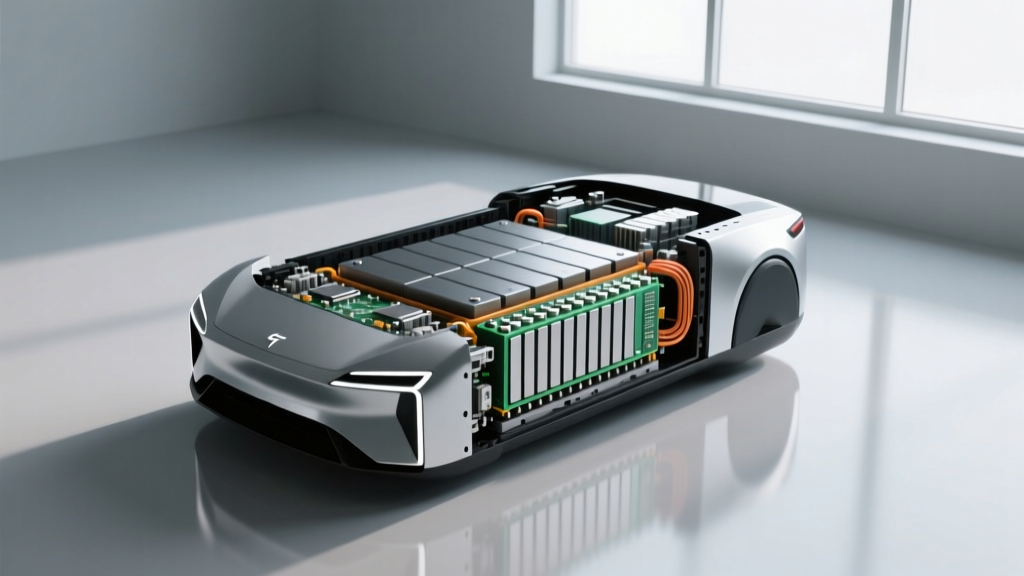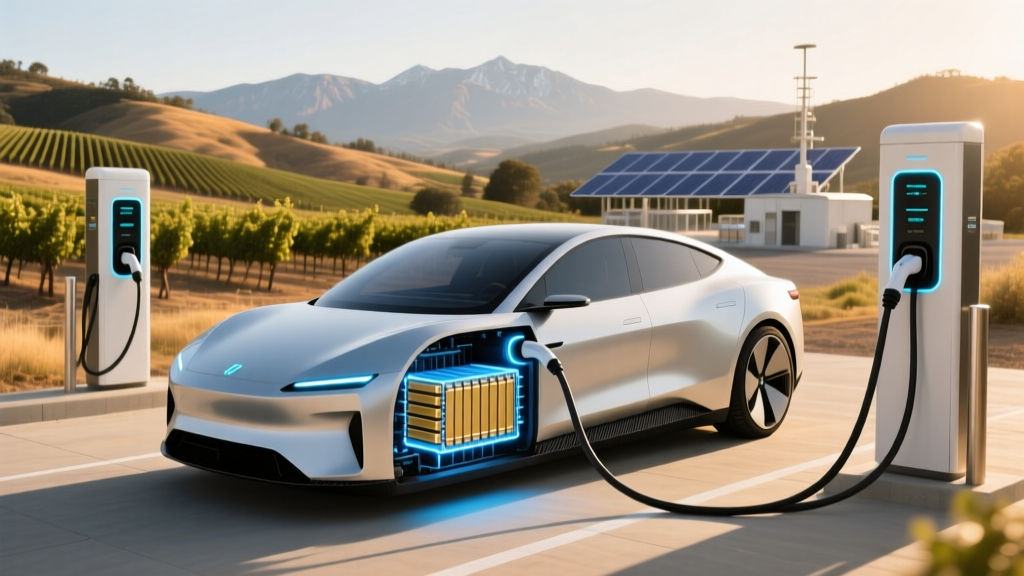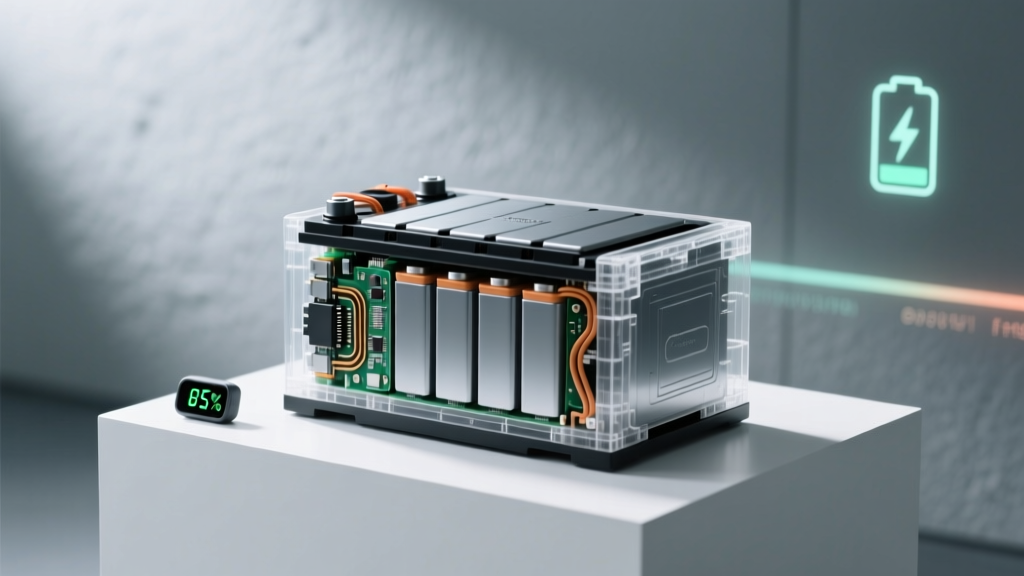
When a battery car symbol illuminates on your EV's instrument cluster, it's easy to feel a spike of anxiety. Unlike the simple alternator warning in a gas car, EV battery indicators can signal anything from a routine thermal-management message to a high-voltage system fault requiring immediate service. Understanding what that symbol means — and the broader health of your high-voltage traction battery — is one of the most consequential parts of EV ownership.
This guide covers what the battery car symbol actually communicates, how long EV batteries last with real-world degradation data, the chemistry inside your pack (LFP vs. NMC/NCA), what warranties cover, what a replacement costs, and how to maximize the lifespan of the most expensive component in your vehicle.
What the Battery Car Symbol Means on Your Dashboard
The battery car symbol — typically an outline of a vehicle with a battery icon inside, or a standalone battery icon with an exclamation mark — is your EV's way of flagging a high-voltage traction battery issue. It is not the same as the 12V auxiliary battery warning (which usually shows a traditional battery icon with + and – terminals).
Here's how to interpret the most common battery-related dashboard indicators:
- Yellow/amber battery car symbol: A reduced-power or capacity warning. The vehicle is drivable, but the battery management system (BMS) has detected a condition — such as cell imbalance, elevated temperature, or a minor fault — that limits performance. Schedule a service visit.
- Red battery car symbol: A critical high-voltage fault. Pull over safely and power down. This can indicate a coolant leak into the battery enclosure, a contactor failure, or an isolation fault. Do not continue driving.
- Battery temperature warning: Often a separate icon showing a thermometer near a battery. This means the pack is too hot or too cold for optimal operation. The BMS will throttle charge and discharge rates until temperatures normalize.
- Turtle/power-reduction icon: Related to the battery system — indicates the pack cannot deliver full power, often due to very low state of charge (SoC) or extreme temperatures.
In most cases during normal operation, you should never see these symbols. Their appearance typically correlates with either a genuine hardware fault, extreme environmental conditions, or a software-detectable cell-level anomaly. The first step is always to check your vehicle's app or infotainment screen for a specific diagnostic code, then contact your dealer or a qualified EV service center.
How Long Do EV Batteries Last? Real-World Degradation Data
The short answer: modern EV batteries are engineered to outlast the useful life of the vehicle in most cases. But "outlast" doesn't mean "zero degradation." Every lithium-ion battery loses capacity over time and use. Here's what the data shows.
Typical Degradation Curve (NMC/NCA packs, 2020–2026 model years):
- Year 1 / 15,000 miles: ~2–4% capacity loss (initial formation loss, steepest part of the curve)
- Year 3 / 45,000 miles: ~5–8% total loss
- Year 5 / 75,000 miles: ~8–12% total loss
- Year 8 / 120,000 miles: ~10–15% total loss
- Year 10+ / 150,000+ miles: ~12–20% total loss (highly dependent on usage patterns)
Sources: Geotab fleet battery health study, manufacturer warranty thresholds, and aggregated owner-reported data from EV communities.
LFP (lithium iron phosphate) packs, now standard in many base-trim models from Tesla, BYD, and others, typically show slower degradation — often 5–8% loss at 100,000 miles — but with different trade-offs discussed below.
A key insight: degradation is not linear. The steepest capacity loss occurs in the first year or two (calendar aging and initial cycle settling), then the curve flattens considerably. A battery that has lost 8% over 50,000 miles will not necessarily lose another 8% by 100,000 miles.
Real-world example: Tesla's 2025 Impact Report showed that Model 3/Y vehicles retained approximately 85% of their original range at 150,000 miles on average. EPA-rated ranges on fueleconomy.gov represent new-vehicle figures; a 5-year-old EV with 12% degradation on a 300-mile EPA sticker would see roughly 264 miles of range at full charge.
LFP vs. NMC/NCA: Which Battery Chemistry Is Better?
The two dominant chemistries in 2026 EV batteries serve different use cases. Neither is universally "better" — the right choice depends on your driving patterns, climate, and budget.
| Factor | LFP (Lithium Iron Phosphate) | NMC / NCA (Nickel Manganese Cobalt / Nickel Cobalt Aluminum) |
|---|---|---|
| Energy Density | Lower (~160–180 Wh/kg cell-level) | Higher (~250–300 Wh/kg cell-level) |
| Cycle Life | 3,000–5,000+ cycles to 80% SoH | 1,000–2,000 cycles to 80% SoH |
| Cold-Weather Performance | Weaker — more range loss below 32°F, slower cold charging | Better — less range loss, faster cold preconditioning |
| Charging to 100% | Recommended periodically for BMS calibration | Avoid daily 100% — 80% daily max recommended |
| Cost | Lower — no cobalt or nickel | Higher — commodity-priced nickel and cobalt |
| Thermal Stability | Excellent — very resistant to thermal runaway | Good — requires more active thermal management |
| Common In (2026) | Tesla Model 3 RWD, BYD, base-trim EVs, commercial fleets | Long-range/performance trims, most luxury EVs, Hyundai/Kia E-GMP |
The practical takeaway: If you live in a mild climate, charge primarily at home, and prioritize long-term durability over maximum range, LFP is an excellent choice. If you need maximum range per charge, frequently drive in cold weather, or regularly use DC fast charging on road trips, NMC/NCA is better suited — with the discipline to charge to 80% daily and only hit 100% before long trips.
What Does the EV Battery Warranty Actually Cover?
Federal law in the United States mandates that EV batteries carry a minimum warranty of 8 years or 100,000 miles (whichever comes first). In California Air Resources Board (CARB) states, that extends to 10 years or 150,000 miles for certain emissions-related components, though traction battery coverage varies by manufacturer.
| Manufacturer | Battery Warranty | Capacity Retention Threshold |
|---|---|---|
| Tesla (Model 3/Y RWD — LFP) | 8 yr / 100,000 mi | 70% of original capacity |
| Tesla (Model 3/Y LR/Perf — NMC) | 8 yr / 120,000 mi | 70% of original capacity |
| Hyundai / Kia (E-GMP platform) | 10 yr / 100,000 mi | 70% of original capacity |
| Ford (Mustang Mach-E, F-150 Lightning) | 8 yr / 100,000 mi | 70% of original capacity |
| GM (Ultium platform — Cadillac, Chevy) | 8 yr / 100,000 mi | 70% of original capacity (60% for commercial) |
| BMW / Mercedes-Benz | 8 yr / 100,000 mi | 70% of original capacity |
| Rivian | 8 yr / 175,000 mi (Max pack) | 70% of original capacity |
What's covered: Capacity loss below the stated threshold, manufacturing defects, cell failures, and BMS malfunctions. If your battery drops below 70% State of Health (SoH) within the warranty period, the manufacturer will repair or replace it — typically with a refurbished or remanufactured unit, not necessarily brand new.
What's NOT covered: Normal degradation above the threshold (a battery at 72% SoH at year 7 is "within spec"), damage from accidents, flooding, or unauthorized modifications, and range loss due to tire pressure, climate, or driving habits.
According to IRS guidelines on the §30D clean vehicle credit, battery sourcing and critical mineral requirements affect your tax credit eligibility — but they do not affect your battery warranty coverage.
How Much Does an EV Battery Replacement Cost?
This is the question that generates the most fear — and the most misinformation. Here are the actual numbers.
| Vehicle / Pack Size | Battery Replacement Cost (Parts + Labor) | Typical When Needed |
|---|---|---|
| Tesla Model 3 RWD (~60 kWh LFP) | $12,000 – $16,000 | Rarely before 200,000+ mi |
| Tesla Model Y LR (~82 kWh NMC) | $16,000 – $22,000 | Rarely before 180,000+ mi |
| Hyundai Ioniq 5 (~77.4 kWh NMC) | $14,000 – $20,000 | Rarely before 175,000+ mi |
| Ford F-150 Lightning Ext. Range (~131 kWh) | $25,000 – $35,000 | Rarely before 150,000+ mi |
| Chevrolet Bolt EV (~65 kWh NMC) | $14,000 – $18,000 | Post-recall replacements covered |
| Nissan Leaf (40–62 kWh) | $8,000 – $14,000 | Older air-cooled packs degrade faster |
Critical context: The vast majority of EV batteries never need full replacement. Data from warranty claims across major manufacturers shows that fewer than 1–2% of EV batteries require replacement during the warranty period, and most of those are due to manufacturing defects or isolated cell failures — not gradual wear-out.
Additionally, module-level repair is increasingly common. Many modern packs are composed of individually replaceable modules. A single failed module can be swapped for $1,500–$4,000 rather than replacing the entire pack. BMW, Hyundai, and GM's Ultium platform all support module-level service.
By the time a battery reaches end-of-life in a vehicle (typically 70% or below SoH), the vehicle itself is often 12–15 years old and the replacement cost exceeds the car's residual value. In these cases, the battery is more valuable for second-life stationary storage applications.
Factors That Accelerate Battery Degradation
Not all miles are equal when it comes to battery wear. These are the factors with the greatest measurable impact on long-term State of Health:
High-Impact Factors (avoid when possible):
- Frequent DC fast charging above 150 kW: Occasional road-trip use is fine, but daily reliance on DCFC accelerates degradation by an estimated 1–3% additional loss over 5 years compared to Level 2 home charging.
- Sustained high SoC (90–100%) in hot weather: Sitting at full charge in 95°F+ heat is one of the most damaging conditions for NMC chemistry. If you must charge to 100%, drive immediately rather than letting the car sit.
- Deep discharges (below 10% SoC): Regularly draining the battery to near-empty stresses cell chemistry. Try to keep the pack above 15–20%.
- Extreme cold without preconditioning: Charging a cold NMC pack without preconditioning can cause lithium plating on the anode — a form of irreversible damage. Always use your car's preconditioning feature before cold-weather fast charging.
Low-Impact Factors (don't obsess over):
- Regenerative braking intensity: Modern BMS systems manage regen current within safe limits. Setting regen to "strong" will not meaningfully harm the battery.
- Occasional 100% charges (LFP): LFP packs actually benefit from periodic full charges for cell balancing.
- Calendar aging: Even a garage-kept EV with low miles will lose 1–2% capacity per year. This is normal and unavoidable.
How to Check and Monitor Your Battery's State of Health
State of Health (SoH) is expressed as a percentage — a new battery is 100% SoH, and a battery that can only hold 85% of its original capacity is at 85% SoH. Here's how to check yours:
1. Built-in vehicle displays: Some manufacturers now show SoH directly in the infotainment system or companion app. Hyundai/Kia, BMW, and Mercedes-Benz have included battery health readouts in recent model years. Tesla does not display SoH natively but provides range estimates that reflect current capacity.
2. OBD-II diagnostic tools: Devices like the OBDLink MX+ paired with apps such as EV Battery Health or Leaf Spy (for Nissan Leaf) can read the BMS-reported SoH directly. These tools cost $50–$120 and provide the same data a dealer scan tool would show.
3. Dealer diagnostic report: Any authorized service center can pull a full battery health report showing individual cell voltages, internal resistance, and overall SoH. Request this during routine service visits, especially as you approach the warranty mileage threshold.
4. Manual calculation method: Charge to 100% (or a known SoC), record the displayed range, and compare it to the original EPA range adjusted for your typical conditions. A car originally rated at 300 miles EPA that now shows 255 miles at 100% SoC has roughly 85% SoH — though this method is imprecise because the displayed range estimate varies with recent driving patterns.
Emerging Battery Technology: Solid-State and Silicon Anodes
The next generation of EV battery technology is in active development, but realistic timelines matter. Here's where things stand as of 2026:
Solid-state batteries: Toyota, Samsung SDI, and QuantumScape have all demonstrated prototype cells with solid electrolytes that promise higher energy density (potentially 400+ Wh/kg), faster charging, and improved safety. However, manufacturing at automotive scale remains the bottleneck. Toyota has announced a limited production vehicle with solid-state cells for 2027–2028, but widespread availability across multiple models at competitive pricing is not expected before 2030 at the earliest.
Silicon anode technology: Companies like Sila Nanotechnologies and Group14 are replacing graphite anodes with silicon-dominant composites, boosting energy density by 20–40% without changing the cathode chemistry. These cells have begun appearing in limited production vehicles (notably the Mercedes G-Class 580e) and are expected to scale into more models through 2027–2029.
Sodium-ion batteries: CATL and BYD have begun producing sodium-ion cells for lower-cost, shorter-range applications. These eliminate lithium entirely, reducing cost and supply-chain risk, but offer lower energy density (~120–150 Wh/kg). Expect these in entry-level urban EVs and fleet vehicles, not in long-range models.
None of these technologies are available in mass-market vehicles you can buy today. If you're shopping now, current-generation LFP and NMC packs are mature, well-understood, and backed by extensive real-world data.
Frequently Asked Questions
How long do EV batteries last in years and miles?
Most modern EV batteries retain 80–85% of their original capacity at 150,000 miles or 10+ years. With proper care (avoiding extreme SoC and excessive DCFC), many packs will reach 200,000+ miles before dropping below the 70% warranty threshold. Complete battery failure is rare — gradual capacity loss is the norm.
How much does an EV battery cost to replace?
Full pack replacement ranges from roughly $8,000 for a smaller pack (Nissan Leaf) to $35,000 for a very large pack (F-150 Lightning Extended Range). However, most batteries never need replacement during the vehicle's life, and module-level repairs ($1,500–$4,000) are often possible instead of full-pack swaps.
What does the EV battery warranty cover?
Federal minimum is 8 years / 100,000 miles with a 70% capacity retention threshold. If your battery's State of Health drops below 70% within that window, the manufacturer repairs or replaces it. Damage from accidents, misuse, or unauthorized modifications is excluded.
How do I check my EV battery health?
Use your vehicle's built-in battery health display (if equipped), an OBD-II scanner with an EV-compatible app, or request a diagnostic report from your dealer. You can also estimate SoH by comparing your displayed range at full charge to the original EPA figure.
LFP vs. NMC — which battery is better for me?
Choose LFP if you prioritize cycle life, lower cost, thermal safety, and don't mind slightly less range or cold-weather performance. Choose NMC/NCA if you need maximum range, frequently drive in cold climates, or regularly take road trips requiring fast charging. Both chemistries will reliably last the life of the vehicle with reasonable care.
Is it bad to charge my EV to 100% every day?
For NMC/NCA batteries, yes — daily 100% charges accelerate degradation. Set your charge limit to 80% for daily driving and only charge to 100% before long trips. For LFP batteries, periodic 100% charges are actually recommended for cell balancing, though daily 80–90% is still fine.
Does fast charging damage my EV battery?
Occasional DC fast charging (road trips, a few times per month) has minimal impact. Daily DCFC use, especially at rates above 150 kW without adequate thermal management, can add 1–3% additional degradation over 5 years. Home Level 2 charging at 7–11 kW remains the gentlest and most cost-effective method.
The battery car symbol on your dash is a sophisticated warning system backed by hundreds of sensors monitoring voltage, temperature, and current across every cell in your pack. In most cases, you'll never see it. When you do, it's actionable information — not a death sentence for your vehicle. Modern EV batteries, whether LFP or NMC, are remarkably durable components that, with basic care, will serve reliably for well over a decade and 150,000+ miles.