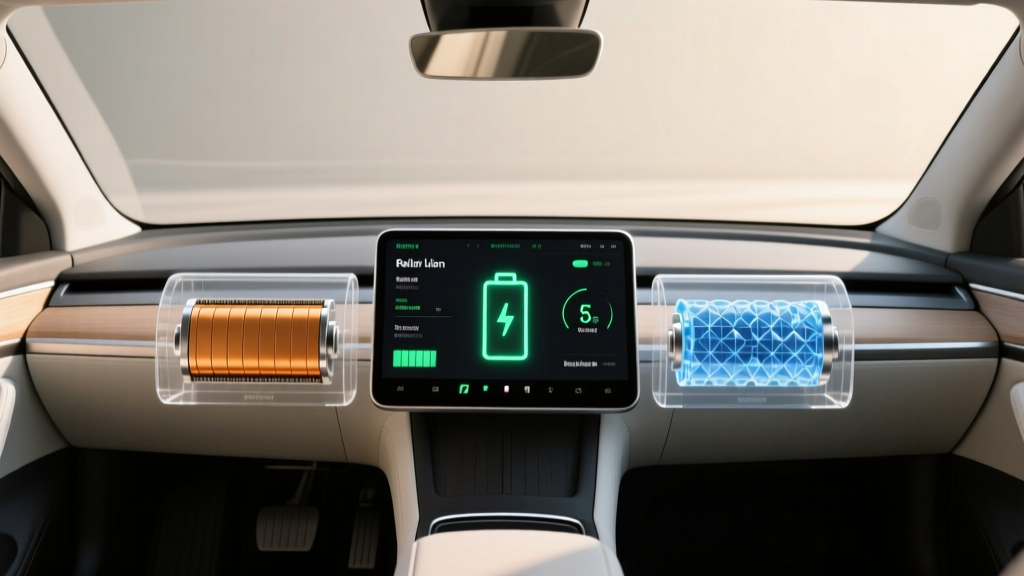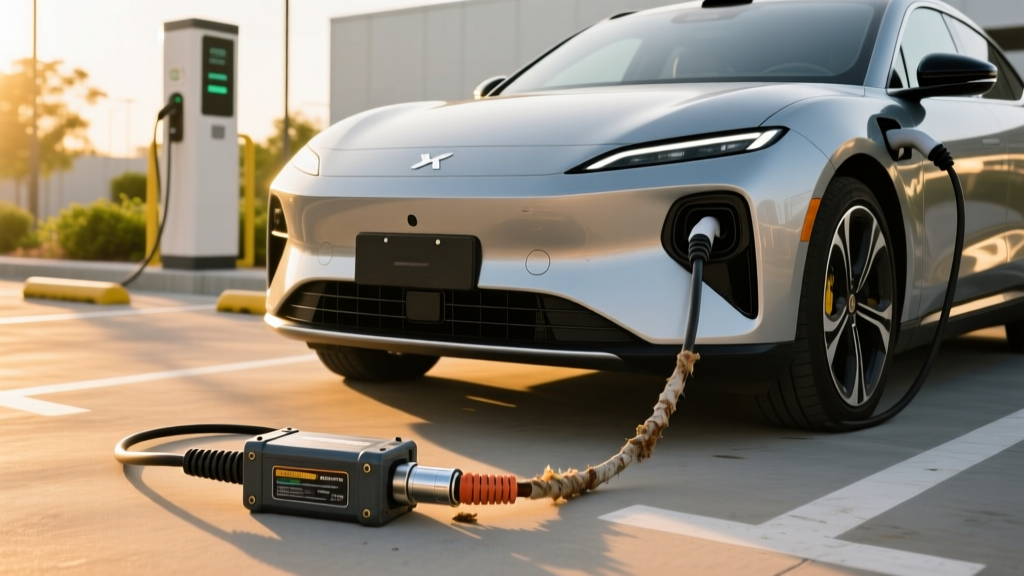
Searches for battery booster cables spike every winter as drivers scramble to revive dead cars. But if you own an electric vehicle, those heavy-gauge jumper cables in your trunk are addressing the wrong battery entirely. An EV actually carries two batteries: a small 12-volt auxiliary battery (which can be jump-started like a gas car's) and the massive high-voltage traction battery that actually propels the vehicle. No set of booster cables on the market can revive a depleted or degraded EV traction pack. Understanding that distinction is the first step toward properly managing your EV's most expensive component.
This guide covers the chemistry, degradation realities, warranty protections, and daily habits that determine how long your EV's traction battery will last — and what it actually costs if replacement becomes necessary.
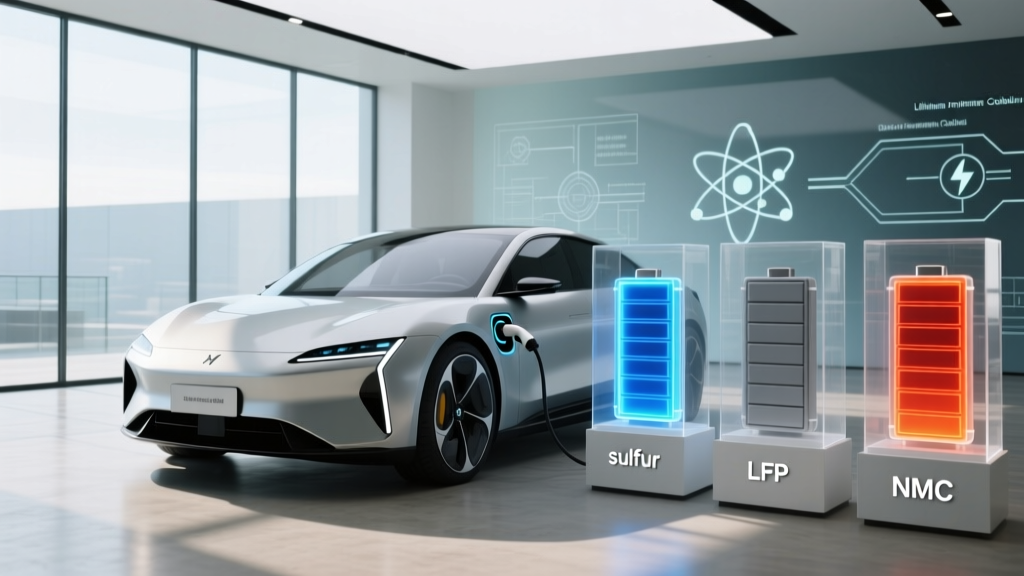
EV Battery Chemistry: LFP vs NMC vs NCA Explained
Not all lithium-ion packs are built the same. The cathode chemistry inside your EV's battery dictates its energy density, cycle life, cold-weather behavior, and price. As of 2026, two chemistries dominate the US market: LFP (lithium iron phosphate) and NMC/NCA (nickel manganese cobalt / nickel cobalt aluminum). Knowing which one is under your floorboards matters for long-term ownership.
| Attribute | LFP (Lithium Iron Phosphate) | NMC / NCA (Nickel-based) |
|---|---|---|
| Energy Density | Lower (~160 Wh/kg cell-level) | Higher (~250-300 Wh/kg cell-level) |
| Typical Cycle Life | 3,000-5,000+ full cycles | 1,000-2,000 full cycles |
| Cold-Weather Performance | Weaker; noticeable range loss below 32°F | Better low-temp discharge capability |
| Cost per kWh | Lower (~$80-100/kWh pack-level) | Higher (~$120-150/kWh pack-level) |
| Thermal Stability | Excellent; very low thermal-runaway risk | Good; requires robust BMS management |
| SoC Recommendation | Can charge to 100% daily | Best kept 20-80% for daily use |
| Common In (2026 Models) | Tesla Model 3/Y RWD, Ford Mustang Mach-E Select, base Chevy Equinox EV | Hyundai Ioniq 5/6, Kia EV6/EV9, Tesla Long Range, Rivian, BMW iX |
The trade-off in plain terms: LFP packs are cheaper, last more charge cycles, and tolerate daily 100% charging — but they're heavier for the same range and suffer more in freezing temperatures. NMC/NCA packs deliver more range per kilogram and handle cold better, but degrade faster if you routinely charge to 100% or let them sit at extreme states of charge.
If you live in Phoenix and commute 30 miles daily, LFP is arguably the better long-term bet. If you're in Minnesota regularly driving 200+ miles in January, NMC's cold-weather advantage is meaningful.
How Long Do EV Batteries Actually Last?
The short answer: far longer than most buyers fear. Real-world fleet data from sources like fueleconomy.gov and long-term owner studies consistently show that modern EV traction batteries lose roughly 1-2% of total capacity per year under normal use. That means after 10 years, a well-maintained pack typically retains 80-90% of its original capacity.
Typical Degradation Curve (Real-World Fleet Averages)
| Timeframe | Average Capacity Retained | Example: 300-mi EPA Range Becomes |
|---|---|---|
| Year 1 (15,000 mi) | ~96-98% | ~290-294 miles |
| Year 3 (45,000 mi) | ~92-95% | ~276-285 miles |
| Year 5 (75,000 mi) | ~88-92% | ~264-276 miles |
| Year 8 (120,000 mi) | ~82-88% | ~246-264 miles |
| Year 10 (150,000 mi) | ~78-85% | ~234-255 miles |
Note: Degradation is non-linear — most loss occurs in the first 12-18 months, then the curve flattens significantly. Data reflects mixed LFP/NMC fleet averages; individual results vary by climate, charging habits, and chemistry.
The critical insight is that degradation is non-linear. You'll see the steepest drop in the first year or two (often 2-4%), then the curve flattens dramatically. Many Tesla Model S owners from 2013-2015 are still driving on original packs at 150,000+ miles with 75-82% capacity remaining.
Most EV batteries will outlast the vehicle they're installed in. Catastrophic failure (sudden death rather than gradual degradation) is rare in modern packs with active thermal management.
What Does the EV Battery Warranty Actually Cover?
Federal law mandates that EV battery warranties cover a minimum of 8 years / 100,000 miles (10 years / 150,000 miles in California Air Resources Board states). But the details matter enormously — specifically, the capacity-retention threshold that triggers a warranty claim.
| Manufacturer | Warranty Period | Capacity Threshold | Chemistry Notes |
|---|---|---|---|
| Tesla (Model 3/Y RWD — LFP) | 8 yr / 120,000 mi | 70% retention | LFP pack; higher cycle tolerance |
| Tesla (Model 3/Y LR/Perf — NMC) | 8 yr / 120,000 mi | 70% retention | NMC/NCA pack |
| Hyundai / Kia (EV6, Ioniq 5/6) | 10 yr / 100,000 mi | 70% retention | NMC; industry-leading term |
| Ford (Mach-E, F-150 Lightning) | 8 yr / 100,000 mi | 70% retention | LFP (Select) / NMC (Premium/ER) |
| GM (Equinox EV, Blazer EV, Silverado EV) | 8 yr / 100,000 mi | 70% retention | Ultium NMC platform |
| Rivian (R1T, R1S) | 8 yr / 175,000 mi | 70% retention | NMC; highest mileage threshold |
| BMW (iX, i4, i7) | 8 yr / 100,000 mi | 70% retention | NMC; BMW also covers against cell defects |
The universal threshold is 70% capacity retention. If your 82 kWh pack drops below 57.4 kWh of usable capacity within the warranty window, the manufacturer must repair or replace it — typically with a refurbished or new pack that meets the threshold, not necessarily a brand-new unit.
Warranties cover defects and abnormal degradation. They do not cover damage from accidents, flooding, improper charging equipment, or modifications. Read your warranty booklet — some manufacturers exclude "cosmetic" capacity loss that doesn't affect drivability.
EV Battery Replacement Cost: What to Expect in 2026
Here's the number that generates the most anxiety — and the most misinformation. Yes, a full traction-battery replacement is expensive. But context matters: most owners never need one, and costs have been declining steadily as pack prices fall and the refurbished market matures.
| Vehicle / Pack Size | New OEM Pack (Parts + Labor) | Refurbished / Remanufactured | Typical Replacement Trigger |
|---|---|---|---|
| Tesla Model 3 RWD (~60 kWh LFP) | $8,000 - $12,000 | $5,000 - $8,000 | Rare before 200k+ mi |
| Tesla Model Y LR (~75 kWh NMC) | $12,000 - $16,000 | $8,000 - $12,000 | Rare before 200k+ mi |
| Hyundai Ioniq 5 (~77.4 kWh NMC) | $14,000 - $18,000 | $9,000 - $13,000 | Rare before 180k+ mi |
| Ford F-150 Lightning ER (~131 kWh NMC) | $20,000 - $28,000 | $14,000 - $20,000 | Rare before 150k+ mi |
| Chevy Equinox EV (~85 kWh Ultium) | $13,000 - $17,000 | $8,500 - $12,000 | Rare before 180k+ mi |
| Rivian R1T (~128 kWh NMC) | $18,000 - $25,000 | $12,000 - $18,000 | Rare before 175k+ mi |
A few important realities:
- Most packs outlive the car. The average US vehicle age is 12.6 years. At 1-2% annual degradation, a 12-year-old pack still retains ~78-88% capacity — well above the 70% threshold.
- Module-level repair is increasingly common. Many shops can replace individual modules (a fraction of the full pack) for $2,000-$5,000 rather than swapping the entire unit.
- Refurbished packs are gaining availability. Companies like Repower and OEM-certified refurbishers offer tested packs at 40-60% of new pricing.
- Pack costs continue falling. According to IRS and industry data, average pack-level costs have dropped below $130/kWh in 2026, down from $200+/kWh just three years ago.
Factors That Accelerate (or Slow) Battery Degradation
Your daily habits have a measurable impact on how quickly your pack loses capacity. The physics are well-understood — lithium-ion cells degrade fastest under thermal stress, extreme states of charge, and high current loads.
Battery Care Essentials: What Actually Matters
- Avoid habitual DC fast charging above 150 kW. Occasional road-trip fast charging is fine, but daily use of 250-350 kW chargers accelerates degradation. Studies show exclusive DCFC use can add 1-3% extra annual loss versus Level 2 home charging.
- Keep NMC packs between 20-80% for daily use. Set your charge limit to 80% and only charge to 100% when you need the full range for a trip. LFP packs are an exception — manufacturers recommend periodic 100% charges for cell balancing.
- Don't let your EV sit at 100% or below 10% for days. Extreme SoC combined with time is more damaging than the charging itself. If you're leaving for a week, set the charge limit to 50-60%.
- Precondition before fast charging. Most EVs do this automatically when you navigate to a charger, but in cold weather, give the pack 15-30 minutes of driving before hitting a DCFC. A cold pack charges slower and experiences more stress.
- Park in shade or a garage when possible. Sustained high battery temperatures (above 95°F ambient, especially in desert climates) accelerate calendar degradation. Active thermal management helps but isn't magic.
- Use Level 2 home charging as your primary method. A 7-11 kW Level 2 charger is the sweet spot — fast enough for overnight replenishment, gentle enough to minimize cell stress.
The single biggest mistake EV owners make? Treating an NMC pack like a smartphone — charging to 100% every night and letting it drain to 5% before plugging back in. That cycle pattern, combined with frequent DC fast charging, can push annual degradation toward 3% instead of 1.5%.
How to Monitor Your EV Battery Health (State of Health)
Unlike a gas car's engine, you can't just "feel" battery degradation day-to-day — it happens gradually. But several tools let you track your pack's State of Health (SoH), expressed as a percentage of original capacity.
In-Vehicle Monitoring
Most modern EVs display estimated range based on current pack health, but few show a direct SoH percentage. Tesla's service menu (accessible via the touchscreen) shows energy consumption graphs that indirectly reveal degradation. Hyundai/Kia's infotainment system includes a battery-health indicator in later model years. GM's Ultium vehicles report pack health through the MyChevrolet/MyCadillac app.
OBD-II Dongles and Apps
Third-party tools like Scan My Tesla, ABRP (A Better Route Planner) with OBD integration, and LeafSpy (for Nissan Leaf owners) pull real-time cell voltage, pack temperature, and calculated SoH data from the vehicle's CAN bus. Expect to spend $30-$60 on an OBD-II Bluetooth adapter plus a $5-$15 app subscription.
Dealer Diagnostics
Any authorized dealer can run a full battery health report during a service visit. This is especially useful before a warranty claim — the report documents exact capacity, cell-balance data, and charge-cycle counts. Request one annually or before any long road trip.
What to Look For
A healthy pack shows SoH declining roughly 1-2% per year. If you see a sudden drop of 3-5% over a few months, that signals a potential cell or module issue worth investigating under warranty. Cell-voltage imbalance (one cell group significantly lower than others) is an early warning sign of module failure.
What About Battery Booster Cables and the 12V System?
This is where the keyword search and EV ownership intersect practically. Your EV's 12-volt auxiliary battery powers the computers, door handles, lights, and infotainment — and yes, it can die just like a gas car's battery. When it does, your EV won't "start" (even though the massive traction pack underneath is fully charged) because the 12V system needs to boot the high-voltage contactors.
Standard battery booster cables or a portable lithium jump-starter can revive the 12V battery and get you going. Many EV owners keep a compact lithium jump-starter ($50-$80) in the frunk or glovebox specifically for this purpose. Some newer EVs (2024+ Teslas, Rivians) have moved to lithium-iron-phosphate 12V batteries that rarely die, but most 2026 models still use conventional lead-acid or AGM 12V batteries with a 3-5 year lifespan.
What booster cables absolutely cannot do is address traction-battery degradation, charge your main pack, or fix a high-voltage system fault. If your EV's driving range is dropping, that's a traction-battery issue requiring dealer diagnostics — not a jump start.
Emerging Battery Tech: Solid-State and Silicon Anodes
The next generation of EV batteries promises transformative improvements — but realistic timelines matter more than press-release hype.
Solid-state batteries replace the liquid electrolyte with a solid material, potentially offering 2-3x the energy density, faster charging (10-80% in under 10 minutes), and improved safety. Toyota, Samsung SDI, and QuantumScape have all announced production timelines targeting 2027-2029 for limited commercial availability. Expect initial deployment in premium vehicles at significant cost premiums, with mainstream adoption not arriving until the early 2030s.
Silicon-anode batteries (from companies like Sila Nanotechnologies and Group14) replace graphite anodes with silicon, boosting energy density by 20-40%. These are closer to market — NHTSA-registered vehicles with partial silicon-anode cells are expected in the 2026-2027 model year, initially in high-performance applications.
Sodium-ion batteries from CATL offer lower cost and no critical-mineral dependency, but with lower energy density. They're suited for budget city EVs and are already appearing in Chinese-market vehicles. US availability is estimated for 2027-2028 in entry-level models.
None of these technologies are available in production EVs you can buy today. Plan your current purchase on existing LFP and NMC technology — which is already excellent — rather than waiting for a breakthrough that's still years from your driveway.
Frequently Asked Questions
Can I use battery booster cables on my EV's main traction battery?
No. Battery booster cables are designed for 12-volt systems only. Your EV's traction battery operates at 400-800 volts and requires specialized high-voltage service equipment. Attempting to connect jumper cables to any high-voltage component is extremely dangerous and could be fatal. Booster cables can only be used on the 12V auxiliary battery to restore basic vehicle electronics.
How long do EV batteries last in years and miles?
Most modern EV batteries last 15-20 years or 200,000+ miles before dropping below 70% capacity. Real-world data shows average degradation of 1-2% per year, meaning a 10-year-old pack typically retains 80-90% of its original range. The federal warranty mandates coverage for at least 8 years / 100,000 miles.
How much does it cost to replace an EV battery in 2026?
Full traction-battery replacement ranges from $8,000 for a smaller pack (Tesla Model 3 RWD, ~60 kWh) to $28,000 for a large pack (F-150 Lightning Extended Range, ~131 kWh). Refurbished packs cost 40-60% less. However, most owners never need a replacement — the pack typically outlasts the vehicle.
Is LFP or NMC better for my situation?
Choose LFP if you want maximum cycle life, can charge at home daily to 100%, live in a moderate climate, and prioritize lower cost. Choose NMC/NCA if you need maximum range per charge, regularly drive in cold weather, or want the longest single-charge road-trip distance. Both chemistries are proven to last the life of the vehicle with proper care.
Does frequent DC fast charging damage my battery?
Occasional DC fast charging (road trips, a few times per month) has minimal impact. Daily use of high-power DCFC (150+ kW) can accelerate degradation by an additional 1-3% per year compared to Level 2 home charging. The best practice is Level 2 at home for daily needs and DCFC for road trips only.
How do I check my EV's battery State of Health?
Use the vehicle's built-in battery health display (if available), connect an OBD-II dongle with apps like Scan My Tesla or LeafSpy for detailed cell-level data, or request a battery health report from your dealer during service visits. Check SoH at least twice per year to catch abnormal degradation early.
Will my EV battery warranty cover gradual range loss?
Only if capacity drops below the manufacturer's threshold — typically 70% of original capacity within the warranty period (usually 8 years / 100,000 miles). Normal gradual degradation of 1-2% per year is considered expected wear and won't trigger a claim. Document your SoH readings regularly to support any future warranty claim.