If you have landed here searching for a battery for 2018 Hyundai Sonata, you are most likely dealing with one of two things: the 12-volt auxiliary battery that starts the car's electronics, or the high-voltage lithium-ion pack inside the Sonata Hybrid and Sonata Plug-In Hybrid. This guide uses that exact search as a starting point to explain how modern EV and hybrid batteries are engineered, how they degrade, what warranties actually cover, and what replacement really costs in 2026 — whether you drive a 2018 Sonata Hybrid or a newer dedicated EV like the Ioniq 5 or Ioniq 6.
The 2018 Hyundai Sonata Battery Landscape: 12V, Hybrid, and PHEV Packs
The 2018 Hyundai Sonata was sold in three powertrain forms: a conventional gas model (12V lead-acid battery only), the Sonata Hybrid (HEV) with a 1.62 kWh lithium-ion polymer traction pack, and the Sonata Plug-In Hybrid (PHEV) with a 9.8 kWh lithium-ion polymer pack. None of these are battery-electric vehicles, but the traction batteries inside the hybrid variants follow the same chemistry, degradation, and warranty logic as full EV packs — just at a smaller scale.
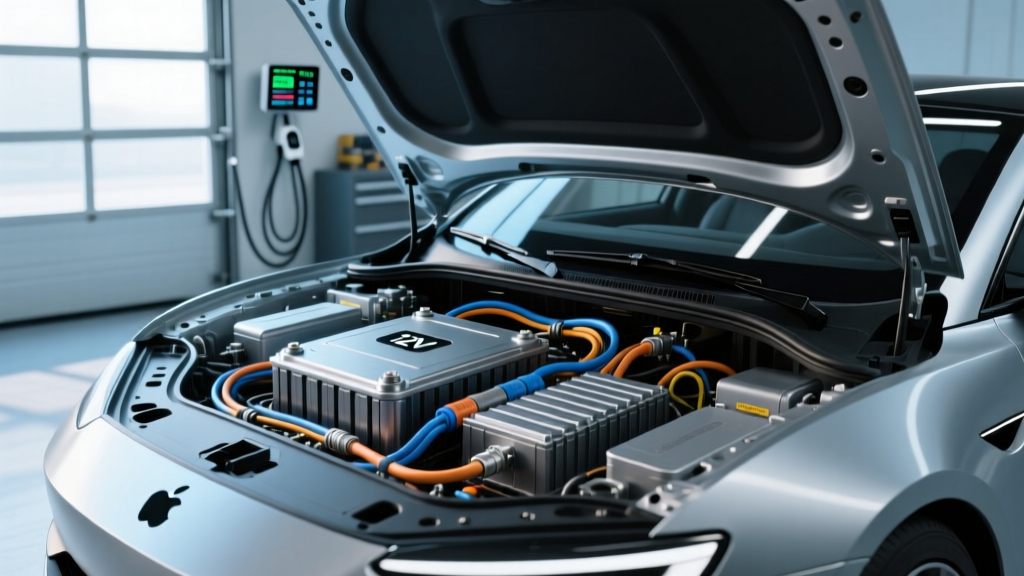
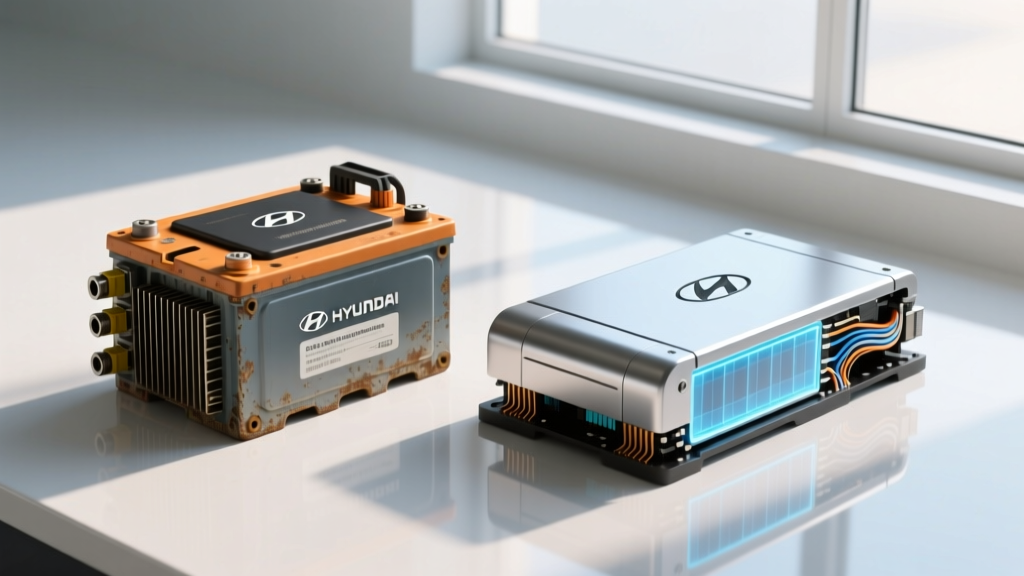
For clarity: the 12V auxiliary battery (typically a Group 47 or H6 AGM) powers lights, infotainment, and ECU boot-up. It is a $150–$280 consumable, replaced every 3–5 years. The high-voltage traction battery is what propels the car in electric mode and is the subject of this guide. We will not confuse the two.
| Powertrain | Traction Battery kWh | Chemistry | EPA Electric Range | Warranty |
|---|---|---|---|---|
| Sonata 2.4L Gas | N/A (12V only) | Lead-acid | N/A | 3 yr / 36,000 mi (basic) |
| Sonata Hybrid (HEV) | 1.62 kWh | Li-ion Polymer (NMC) | N/A (assist only) | 10 yr / 100,000 mi |
| Sonata Plug-In Hybrid | 9.8 kWh | Li-ion Polymer (NMC) | 27 mi (EPA) | 10 yr / 100,000 mi |
Source: fueleconomy.gov — 2018 Hyundai Sonata comparison.
Battery Chemistry: LFP vs NMC/NCA Trade-Offs
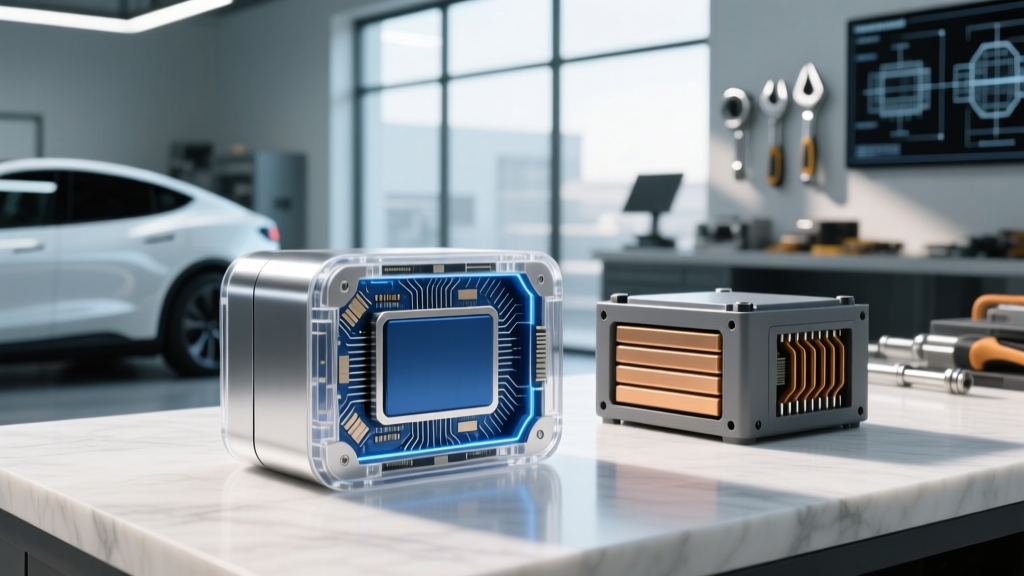
The 2018 Sonata Hybrid and PHEV use NMC (Nickel Manganese Cobalt) lithium-ion cells, which was the industry default at that time. By 2026, the EV market has split into two dominant chemistries, each with distinct trade-offs:
| Attribute | LFP (Lithium Iron Phosphate) | NMC / NCA (Nickel-based) |
|---|---|---|
| Energy Density | Lower (~160 Wh/kg cell-level) | Higher (~250–300 Wh/kg cell-level) |
| Cycle Life | 3,000–5,000+ cycles to 80% SoH | 1,000–2,000 cycles to 80% SoH |
| Cold-Weather Performance | Weaker below 32°F; needs preconditioning | Better low-temp discharge and charge acceptance |
| Cost per kWh | Lower (no cobalt, abundant iron) | Higher (cobalt, nickel price volatility) |
| Thermal Stability | Excellent — lower runaway risk | Good, but requires more active thermal management |
| Typical 2026 Applications | Tesla Model 3 RWD, Ford Mustang Mach-E Select, BYD, Rivian standard range | Long-range AWD trims, performance packs, Hyundai E-GMP, GM Ultium |
| Recommended Charge Habit | Can charge to 100% daily without harm | Best kept 20–80% daily; 100% only for trips |
Which is better? It depends on use case. LFP wins on longevity and cost if you charge at home nightly and don't need maximum range. NMC/NCA wins if you need 320+ miles of EPA range, live in cold climates, or prioritize performance. The 2018 Sonata's NMC pack was appropriate for its era — today, an equivalent hybrid pack would likely still be NMC due to space constraints, while a dedicated EV might offer both options depending on trim.
How Long Do EV and Hybrid Batteries Last?
The short answer: longer than most buyers expect. The fear that an EV battery will "die" at 100,000 miles is not supported by fleet data. Here is what real degradation looks like:
Typical Capacity Retention Over Time (Industry Aggregate Data):
- Year 1 / 15,000 mi: ~2–4% loss (initial calibration drop)
- Year 3 / 45,000 mi: ~5–8% total loss
- Year 5 / 75,000 mi: ~8–12% total loss
- Year 8 / 120,000 mi: ~10–18% total loss (warranty threshold territory)
- Year 10+ / 150,000+ mi: ~15–25% total loss for NMC; ~10–15% for LFP
These figures are drawn from aggregated fleet data published by Geotab's EV battery health study covering over 10,000 vehicles, as well as owner-reported data on platforms like Recurrent Auto. Degradation is non-linear: the steepest loss occurs in the first year, then the curve flattens considerably.
For the 2018 Sonata Plug-In Hybrid specifically, the 9.8 kWh pack is now 8 years old. Owners reporting on Hyundai forums typically see 7.5–8.5 kWh of usable capacity remaining — roughly 13–23% degradation, which tracks with industry averages for NMC packs of that era. The car's EPA-rated 27-mile electric range may now deliver 21–24 miles in real-world use.
What Does the Battery Warranty Cover?
Federal law (EPA emissions warranty requirements) mandates that hybrid and EV battery packs be covered for a minimum of 8 years / 80,000 miles. In California Air Resources Board (CARB) states — including California, New York, Massachusetts, and others — the mandate extends to 10 years / 150,000 miles. Hyundai has historically exceeded both thresholds.
| Vehicle | Battery Warranty | Capacity Retention Threshold | Transferable? |
|---|---|---|---|
| 2018 Sonata Hybrid / PHEV | 10 yr / 100,000 mi | ~70% of original capacity | Original owner: full. Second owner: 10yr/100k from original in-service in many states; otherwise 5yr/60k |
| 2026 Hyundai Ioniq 5/6 | 10 yr / 100,000 mi | 70% of original capacity | Yes, remainder of term |
| 2026 Tesla Model 3/Y (NMC Long Range) | 8 yr / 120,000 mi | 70% of original capacity | Yes, remainder of term |
| 2026 Tesla Model 3 RWD (LFP) | 8 yr / 100,000 mi | 70% of original capacity | Yes, remainder of term |
| 2026 Ford Mustang Mach-E | 8 yr / 100,000 mi | 70% of original capacity | Yes, remainder of term |
| 2026 GM Ultium-based EVs | 8 yr / 100,000 mi | 70% of original capacity | Yes, remainder of term |
Key detail: "70% capacity retention" means the manufacturer will repair or replace the pack only if it falls below 70% of its original kWh capacity within the warranty period. A 2018 Sonata PHEV with a 9.8 kWh pack would need to drop below ~6.9 kWh usable to qualify. Most packs do not hit this threshold under normal use — they degrade gradually and remain functional well beyond the warranty window.
How Much Does an EV Battery Cost to Replace?
This is the question that generates the most anxiety — and the most misinformation. Here are actual replacement cost ranges in 2026:
| Vehicle / Pack Size | Battery Cost (New OEM) | Labor | Total Estimate | Notes |
|---|---|---|---|---|
| 2018 Sonata Hybrid (1.62 kWh) | $1,500–$2,500 | $500–$900 | $2,000–$3,400 | Small pack; some shops offer refurbished modules for less |
| 2018 Sonata PHEV (9.8 kWh) | $3,500–$5,500 | $800–$1,500 | $4,300–$7,000 | Refurbished/remanufactured packs available for ~$3,000–$4,500 |
| Dedicated EV — 60–75 kWh pack (e.g., Model 3 RWD, Mach-E Select) | $8,000–$13,000 | $1,500–$3,000 | $9,500–$16,000 | LFP packs trending lower; NMC higher |
| Dedicated EV — 80–100 kWh pack (e.g., Model S, Ioniq 5 Long Range) | $12,000–$20,000 | $2,000–$4,000 | $14,000–$24,000 | Cell-to-pack designs may reduce labor over time |
Critical context: Full battery replacement is rare. According to Consumer Reports' EV reliability data, fewer than 5% of EVs and hybrids require a full pack replacement within the first 10 years. More commonly, individual modules or cells within the pack are replaced at a fraction of the full-pack cost. The 2018 Sonata Hybrid's 1.62 kWh pack is small enough that even a full replacement is comparable to a major transmission repair on a gas car — not the $20,000 catastrophe that headlines suggest.
Factors That Accelerate (or Preserve) Battery Life
Battery degradation is driven by chemistry, temperature, and usage patterns — not simply age. Here is what the data shows:
Practices That Accelerate Degradation:
- Frequent DC fast charging above 150 kW without preconditioning — heat is the primary enemy of lithium-ion cells. Occasional fast charging is fine; daily reliance on 350 kW chargers without thermal prep adds measurable wear.
- Storing at 100% or 0% SoC for extended periods — especially in hot climates. A pack sitting at 100% in 95°F ambient degrades faster than one stored at 50%.
- Regularly discharging below 10% — deep cycles stress NMC chemistry more than LFP.
- Extreme cold charging without preconditioning — charging a frozen NMC pack at high kW can cause lithium plating on the anode, permanently reducing capacity.
Practices That Preserve Battery Health:
- Daily charging to 80% (NMC) or 100% (LFP) — set your charge limit in the vehicle's app or infotainment system.
- Home Level 2 charging at 7–11 kW — slower charging generates less heat, which is gentler on cells. A Level 2 home charger is the single best investment for battery longevity.
- Using preconditioning before DC fast charging — most 2026-era EVs do this automatically when you navigate to a charger; older vehicles like the 2018 Sonata PHEV may not have this feature.
- Storing at 40–60% SoC if the vehicle will sit unused for weeks.
- Parking in shade or a garage during summer months to reduce thermal soak.
How to Check and Monitor Battery Health (State of Health)
State of Health (SoH) is expressed as a percentage of the battery's original capacity. A new 9.8 kWh Sonata PHEV pack at 85% SoH holds approximately 8.3 kWh of usable energy. Here is how owners can monitor it:
For Hyundai Hybrid/PHEV owners (2018 Sonata and similar):
- The instrument cluster or infotainment system may display an "EV battery" status screen showing current charge and estimated range, but not a direct SoH percentage.
- A Hyundai dealer can pull SoH data via the OBD-II diagnostic port using the GDS (Global Diagnostic System) tool. Request this during routine service — it takes minutes.
- Third-party OBD-II dongles like OBDLink MX+ paired with apps such as Torque Pro or Car Scanner ELM OBD2 can read battery-specific PIDs on many Hyundai/Kia hybrids, though the available data fields vary by model year.
For dedicated EV owners (2022+ vehicles):
- Tesla: Battery health is visible in the service menu (software 2024.44+). Third-party tools like TeslaFi or Stats log SoH over time.
- Hyundai/Kia E-GMP (Ioniq 5/6, EV6): Dealer diagnostic or OBD-II apps like Car Scanner with EV-specific PID profiles.
- GM Ultium: OnStar diagnostics and the myChevrolet/myCadillac app provide battery condition summaries.
- Cross-brand: Services like Recurrent Auto offer free battery health reports by connecting to your vehicle's telematics data.
Emerging Battery Technology: What's Next and When
The battery landscape is evolving, but timelines matter. Here is a realistic assessment of what is coming — and what is not yet available for purchase in 2026:
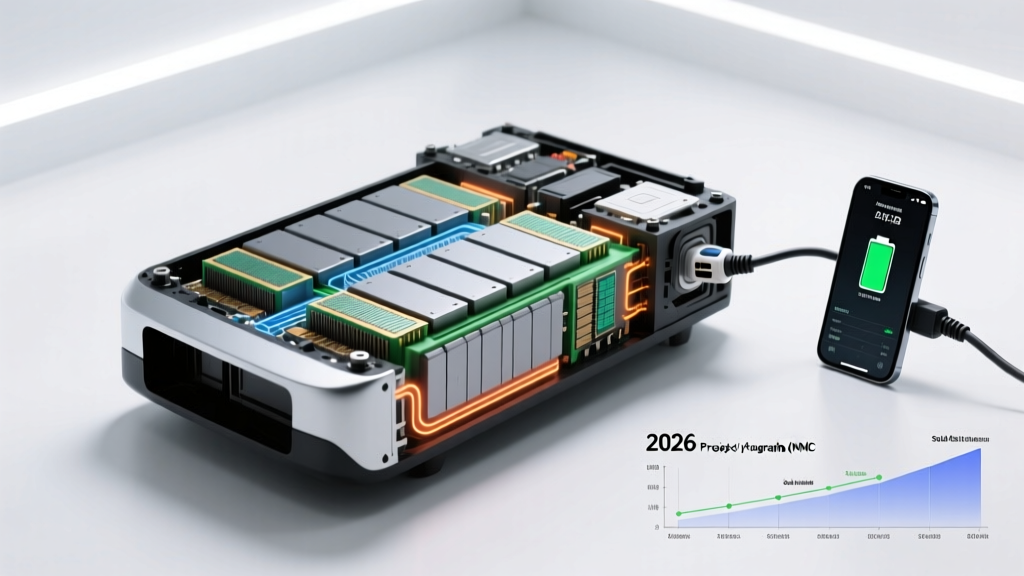
Solid-State Batteries: These replace the liquid electrolyte with a solid material, promising higher energy density (potentially 400+ Wh/kg), faster charging, and improved safety. Toyota has announced limited production for 2027–2028, and Samsung SDI targets 2027. However, manufacturing scale and cost remain significant barriers. Expect solid-state packs to debut in premium, low-volume applications before reaching mainstream pricing — likely 2029–2031 for vehicles in the $40,000–$50,000 range.
Silicon-Dominant Anodes: Companies like Sila Nanotechnologies and Group14 are producing silicon-composite anode materials that increase energy density by 20–40% compared to graphite. These are already in limited production (Mercedes G-Class electric SUV uses Sila cells in 2025–2026). Wider adoption is expected by 2027–2028 as manufacturing scales.
Sodium-Ion Batteries: CATL and BYD are producing sodium-ion cells for lower-cost, shorter-range applications (city cars, energy storage). These use no lithium, cobalt, or nickel, reducing cost and supply-chain risk. Energy density is lower than LFP, so they are unlikely to replace lithium in long-range EVs but may appear in budget segments by 2027–2028.
None of these technologies are available as retrofit upgrades for a 2018 Sonata Hybrid or PHEV. They are relevant for buyers planning their next vehicle purchase in the 2028–2032 window.
Frequently Asked Questions
How long do EV batteries last in years and miles?
Most modern EV and hybrid traction batteries are designed to last 15–20 years or 150,000–200,000 miles before degrading to 70–80% of original capacity. The 2018 Sonata Hybrid and PHEV packs, now 8 years old, are typically still functional with 13–23% capacity loss based on owner reports. Full failure before 100,000 miles is uncommon and usually covered under warranty.
How much does it cost to replace the battery in a 2018 Hyundai Sonata Hybrid or PHEV?
For the Sonata Hybrid (1.62 kWh), expect $2,000–$3,400 total. For the Sonata PHEV (9.8 kWh), expect $4,300–$7,000 for a new OEM pack, with refurbished options available for $3,000–$4,500. These costs are significantly lower than full EV pack replacements, which range from $9,500 to $24,000 depending on pack size.
What does the Hyundai battery warranty actually cover?
Hyundai's hybrid/PHEV/EV battery warranty covers defects and capacity loss below approximately 70% of original capacity for 10 years or 100,000 miles (whichever comes first). This applies to the original owner; second-owner coverage varies by state and may be reduced. The warranty does not cover damage from accidents, flooding, or unauthorized modifications.
How do I check my battery's State of Health?
For the 2018 Sonata, a Hyundai dealer can pull SoH data via OBD-II diagnostics during a service visit. Third-party OBD-II adapters with EV-compatible apps can also read battery data, though PID support varies. For newer EVs, built-in telematics apps (Tesla, Hyundai Bluelink, GM OnStar) and services like Recurrent Auto provide ongoing SoH monitoring.
LFP vs NMC — which battery chemistry should I choose?
Choose LFP if you charge primarily at home, want maximum cycle life (3,000–5,000+ cycles), live in a moderate climate, and don't need 320+ miles of range. Choose NMC/NCA if you need long range, live in a cold climate, frequently road-trip and rely on DC fast charging, or prioritize performance. Both chemistries are proven and reliable in 2026 — the "best" choice depends on your driving pattern.
Is the 12V battery in my 2018 Sonata the same as the hybrid traction battery?
No. The 12V auxiliary battery is a standard lead-acid or AGM battery that powers the car's electronics, lights, and starter systems. It costs $150–$280 and is replaced every 3–5 years like any conventional car battery. The high-voltage traction battery (1.62 kWh in the Hybrid, 9.8 kWh in the PHEV) is the lithium-ion pack that propels the vehicle in electric mode. This guide focuses on the traction battery.
Can I upgrade my 2018 Sonata PHEV battery to a larger or newer chemistry pack?
No practical upgrade path exists. The pack is engineered for the vehicle's specific voltage, cooling, and BMS (Battery Management System) architecture. Swapping to a larger or different-chemistry pack would require reprogramming the BMS, modifying the cooling system, and potentially voiding all remaining warranty and emissions compliance. When the time comes, a like-for-like replacement (new OEM or quality refurbished) is the correct approach.
Sources: fueleconomy.gov (EPA range and efficiency data), Hyundai USA (specifications and warranty terms), Geotab EV Battery Health Study (fleet degradation data).