Why Searching for a "Battery for 2018 Ford Explorer" Leads to a Bigger EV Question
If you've landed here searching for a battery for 2018 Ford Explorer, you're likely dealing with a dead 12-volt starter battery — the small lead-acid or AGM unit under the hood that powers your lights, infotainment, and engine cranking. A replacement Group 65 AGM battery for the 2018 Explorer typically runs $180–$280 at an auto parts store, and installation takes ten minutes.
But that search also surfaces a much larger question spreading across forums and dealership service desks: How do EV batteries compare? Do they die after a few years? What does replacement actually cost?
The answer, backed by eight years of real-world fleet data, is that modern EV traction batteries are outlasting the vehicles they power in most cases. This guide breaks down exactly what the data shows — chemistry trade-offs, degradation curves, warranty coverage, and replacement economics — so you can evaluate any electrified vehicle with confidence, whether you're sticking with a conventional Explorer or considering Ford's electric SUV lineup.
The 12V Battery for 2018 Ford Explorer: Quick Replacement Facts
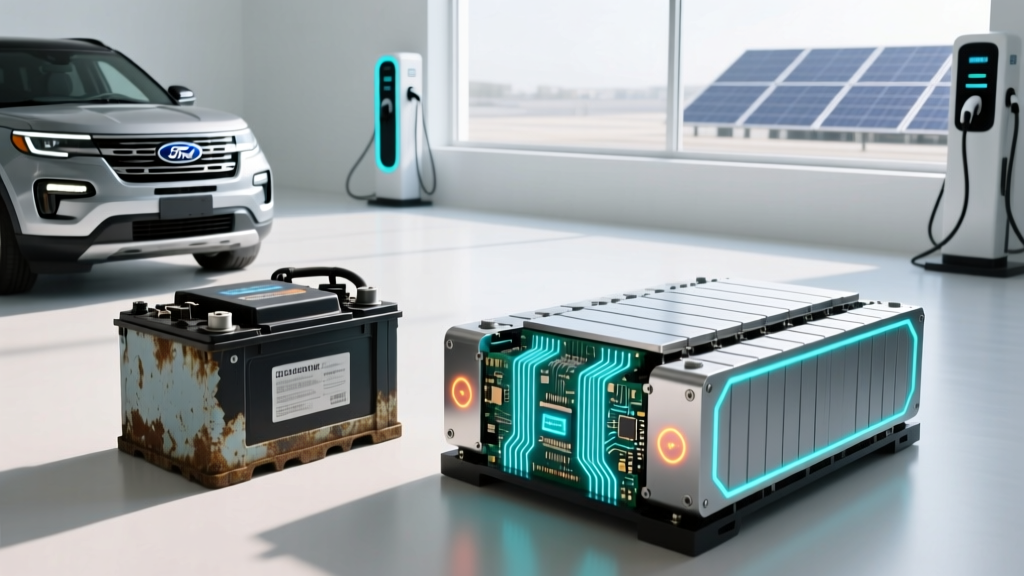
Before diving into EV traction batteries, let's address the original search intent directly. The 2018 Ford Explorer uses a Group 65 AGM (Absorbent Glass Mat) 12V battery, rated at approximately 750 cold-cranking amps (CCA). Here's what you need:
- Part type: Group 65 AGM (required for start-stop equipped trims)
- Typical cost: $180–$280 (retail), $220–$350 installed at a dealer
- Lifespan: 3–5 years depending on climate and use
- Warranty: Usually 2–3 years free replacement, prorated to 5 years
- Where to buy: AutoZone, Advance Auto, Costco (Interstate), or Ford dealer parts counter
This is a routine maintenance item — no different from replacing wiper blades or brake pads. Now let's contrast that with the high-voltage traction batteries powering electric vehicles.
EV Traction Battery Chemistry: LFP vs NMC Explained
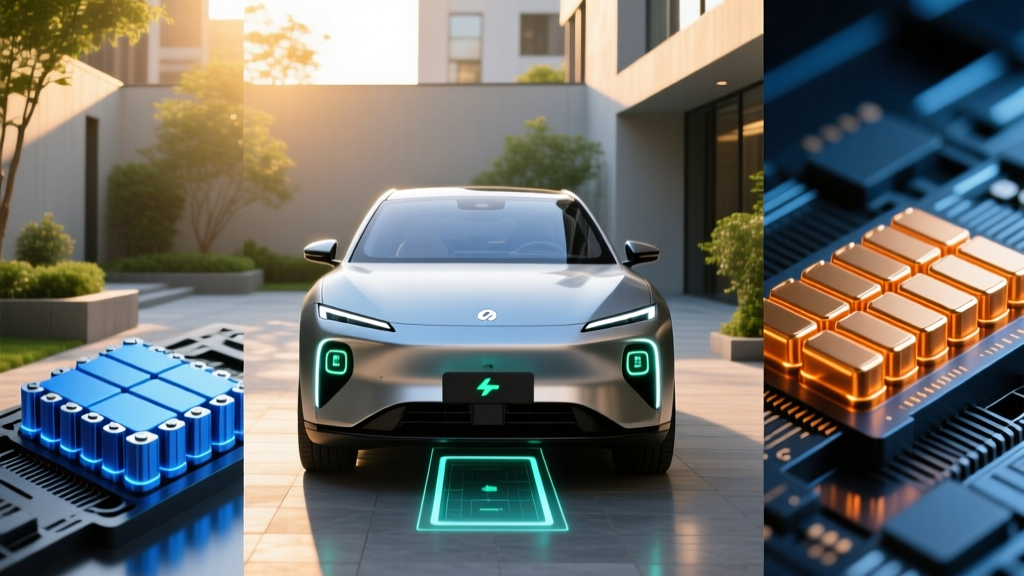
Every modern EV uses one of two dominant lithium-ion chemistries in its traction battery (the large pack that actually drives the wheels). Understanding the difference is the single most important factor in predicting longevity, range behavior, and charging habits.
| Attribute | LFP (Lithium Iron Phosphate) | NMC / NCA (Nickel Manganese Cobalt / Nickel Cobalt Aluminum) |
|---|---|---|
| Energy density | Lower (~160–180 Wh/kg cell-level) | Higher (~220–300 Wh/kg cell-level) |
| Typical cycle life | 3,000–6,000+ cycles to 80% SoH | 1,000–2,500 cycles to 80% SoH |
| Cold-weather performance | Weaker — more range loss below 32°F | Better — less range loss in freezing temps |
| Charging to 100% daily | Recommended by most OEMs (Tesla, Ford for LFP trims) | Not recommended — accelerates degradation; 80% daily target |
| Thermal runaway risk | Very low — inherently stable chemistry | Higher — requires more active thermal management |
| Cost per kWh (2026 pack-level) | ~$95–$115/kWh | ~$125–$155/kWh |
| Common in (2026 models) | Tesla Model 3/Y RWD, Ford Mustang Mach-E Select (LFP option), BYD, Rivian Standard | Tesla Long Range, Hyundai Ioniq 5/6, BMW iX, Ford F-150 Lightning Extended, Porsche Taycan |
The practical takeaway: LFP batteries trade some range (due to lower energy density) for dramatically longer cycle life and the simplicity of daily 100% charging. NMC packs deliver more range per pound but require more careful state-of-charge management to maximize lifespan. Neither is universally "better" — the right choice depends on your driving pattern.
How Long Do EV Batteries Actually Last? Real Degradation Data
The fear that EV batteries need replacement every 5–7 years is not supported by fleet data. Here's what large-scale studies and owner-reported telemetry actually show:
Typical EV Battery Degradation Curve (Fleet Averages)
- Year 1 / ~15,000 mi: 2–5% capacity loss (initial formation loss)
- Year 3 / ~45,000 mi: 6–10% total loss
- Year 5 / ~75,000 mi: 8–14% total loss
- Year 8 / ~120,000 mi: 10–18% total loss (NMC); 5–10% (LFP)
- Year 10 / ~150,000 mi: 12–22% total loss (NMC); 7–13% (LFP)
Sources: Geotab fleet study (6,300+ EVs), Recurrent Auto battery health reports, Tesla Impact Reports.
At 150,000 miles, the average NMC-based EV retains roughly 78–88% of its original capacity. An LFP-equipped vehicle often retains 87–93%. In practical terms, a 300-mile EPA-rated EV with an NMC pack would still deliver approximately 240–265 miles of range at 150,000 miles — more than adequate for most daily driving.
It's critical to note that degradation is non-linear. The steepest drop occurs in the first year or two (formation cycling), then the curve flattens considerably. Many packs reach 200,000+ miles before approaching the 70% capacity threshold that triggers a warranty claim.
What Does the EV Battery Warranty Actually Cover?
Federal law mandates a minimum battery warranty of 8 years / 100,000 miles for all EVs sold in the U.S. (10 years / 150,000 miles in California and states adopting CARB standards). Most manufacturers meet or exceed this baseline. Here's how major brands structure coverage in 2026:
| Manufacturer | Warranty Term | Capacity Retention Threshold | Notes |
|---|---|---|---|
| Tesla (Model 3/Y) | 8 yr / 120,000 mi (LR); 8 yr / 100,000 mi (RWD) | 70% retention | LFP RWD covered to 100k mi |
| Ford (Mach-E, F-150 Lightning) | 8 yr / 100,000 mi | 70% retention | Covers battery components + control systems |
| Hyundai / Kia | 10 yr / 100,000 mi | 70% retention | Among the longest terms in the industry |
| GM (Chevrolet, Cadillac) | 8 yr / 100,000 mi | 60–70% retention (varies by model) | Ultium packs; Bolt EV was 8yr/100k at 60% |
| Rivian | 8 yr / 175,000 mi | 70% retention | Highest mileage cap among mainstream OEMs |
| BMW | 8 yr / 100,000 mi | 70% retention | Extends to 10 yr in some markets |
What triggers a warranty replacement? If diagnostic testing confirms the pack has degraded below the stated threshold (typically 70% of original capacity) within the warranty period, the manufacturer will repair or replace defective modules or the entire pack at no cost. This covers manufacturing defects and abnormal degradation — it does not cover physical damage from collisions, flooding, or unauthorized modifications.
According to fueleconomy.gov, battery warranty claims remain rare. Most packs outlast their warranty periods with capacity to spare.
EV Battery Replacement Cost: What the Numbers Actually Show
This is where fear-mongering runs hottest — and where context matters most. Yes, a full traction battery replacement is expensive. But the probability of needing one within the vehicle's useful life is low, and costs are declining year over year.
| Vehicle / Pack Size | Battery Capacity | Estimated Replacement Cost (Parts + Labor) | Cost per kWh |
|---|---|---|---|
| Tesla Model 3 RWD (LFP) | ~60 kWh | $8,000–$12,000 | ~$135–$200/kWh |
| Tesla Model Y Long Range (NMC) | ~75 kWh | $12,000–$16,000 | ~$160–$215/kWh |
| Ford Mustang Mach-E Extended Range | ~91 kWh | $14,000–$20,000 | ~$155–$220/kWh |
| Ford F-150 Lightning Extended Range | ~131 kWh | $20,000–$28,000 | ~$155–$215/kWh |
| Hyundai Ioniq 5 Long Range | ~77.4 kWh | $11,000–$16,000 | ~$145–$205/kWh |
| Chevrolet Equinox EV | ~85 kWh | $12,000–$17,000 | ~$140–$200/kWh |
Context that matters: The average age of a vehicle scrapped in the U.S. is around 15 years at roughly 180,000 miles. Given current degradation data, the vast majority of EV batteries will retain 75%+ capacity at that point — meaning the car will likely be retired for other reasons (body damage, interior wear, technology obsolescence) long before the battery fails catastrophically.
Additionally, module-level repair is increasingly common. Rather than replacing the entire pack, technicians can swap individual degraded modules for $2,000–$5,000, restoring most of the pack's original capacity. This option is available on most modular pack designs (Ford, GM Ultium, Hyundai/Kia, BMW).
Factors That Accelerate (or Preserve) Battery Life
Not all miles are equal when it comes to battery wear. The following factors have the most measurable impact on long-term State of Health (SoH):
EV Battery Care Checklist — Maximize Your Pack's Lifespan
- Avoid sustained high SoC on NMC packs: Daily charging to 80% (not 100%) significantly reduces calendar degradation. Save 100% for road trips. LFP packs are the exception — most OEMs recommend periodic 100% charges for cell balancing.
- Minimize DC fast-charging frequency: Occasional fast charging is fine, but daily reliance on 150+ kW DC charging adds thermal stress. Data from Recurrent Auto shows that EVs fast-charged more than 3x/week degrade slightly faster (~2–3% additional loss over 4 years) compared to primarily Level 2 home charging.
- Precondition before fast charging: Most modern EVs do this automatically when you navigate to a charger. A warm battery (around 77–95°F / 25–35°C) charges faster and with less stress. In cold weather, preconditioning can cut 10–80% charge times by 30–50%.
- Avoid extreme SoC storage: Don't leave an NMC pack sitting at 100% or below 10% for days or weeks. For extended parking, aim for 50–60% SoC.
- Extreme heat is worse than extreme cold: Sustained ambient temperatures above 95°F accelerate calendar degradation more than freezing temps. Garage parking in hot climates measurably helps.
- Use regenerative braking in moderation on full charge: Regen is limited at 100% SoC anyway — this is normal battery protection, not a malfunction.
How to Check Your EV Battery's State of Health (SoH)
State of Health (SoH) represents your battery's current maximum capacity as a percentage of its original capacity when new. A brand-new pack reads 100% SoH; a pack that held 75 kWh originally but now holds 64 kWh reads ~85% SoH.
How to check SoH by brand:
- Tesla: The in-car energy graph shows projected range vs. actual usage over time. Third-party apps like Tessie or TeslaFi can estimate SoH from charge logs. Tesla service centers can run a formal capacity test on request.
- Ford (Mach-E, Lightning): The FordPass app displays estimated range and charging data. Dealers can pull a detailed battery health report via the IDS diagnostic tool.
- Hyundai/Kia: The infotainment system's EV menu shows battery health percentage on newer models (2024+). Dealers can access detailed cell-level data.
- BMW: The iDrive system shows a "Battery Health" percentage under the EV settings menu. This is one of the most transparent OEM implementations.
- Universal OBD-II method: An OBD-II dongle paired with apps like Car Scanner or ABRP (A Better Route Planner) can read battery management system (BMS) data directly, including SoH, cell voltage spread, and pack temperature. This works on most EVs and costs $30–$60 for the hardware.
For used-EV buyers, requesting a dealer battery health report before purchase is strongly recommended. A pack showing 90%+ SoH at 50,000 miles is tracking well; below 85% at that mileage warrants further investigation.
What's Next: Solid-State and Silicon-Anode Batteries (Forward-Looking)
Two emerging technologies promise to shift the battery landscape — but neither is available in production consumer EVs as of 2026.
Solid-state batteries replace the liquid electrolyte with a solid ceramic, polymer, or sulfide material. The theoretical benefits are substantial: 30–50% higher energy density, faster charging (potentially 10–80% in under 10 minutes), and inherent fire resistance. Toyota has announced solid-state-equipped EVs for 2027–2028, and QuantumScape is working with Volkswagen on pilot production. However, manufacturing yield challenges and cost remain significant barriers. Realistic mass-market availability is 2029–2032.
Silicon-anode batteries (sometimes called silicon-dominant anodes) replace the graphite anode with silicon, which can store roughly 10x more lithium ions per gram. Companies like Sila Nanotechnologies and Group14 are already shipping silicon-anode cells in limited applications. Expect this technology to appear in premium EVs by 2027–2028, with cost reductions enabling broader adoption by the early 2030s.
For buyers in 2026, today's LFP and NMC chemistries are mature, well-understood, and backed by extensive real-world data. Waiting for solid-state is not necessary for most buyers — current batteries are already lasting the life of the vehicle.
Frequently Asked Questions
How long do EV batteries last in years and miles?
Based on fleet data from Geotab and Recurrent Auto, the average EV battery retains 80–90% of its original capacity at 150,000 miles (roughly 10–12 years of average use). LFP chemistries often retain 87–93% at that mileage. Most packs will outlast the vehicle's useful life without requiring replacement.
How much does an EV battery cost to replace in 2026?
Full pack replacement costs range from approximately $8,000 for a 60 kWh LFP pack (e.g., Tesla Model 3 RWD) to $28,000 for a 131 kWh NMC pack (e.g., F-150 Lightning Extended Range), including labor. However, module-level repairs ($2,000–$5,000) are increasingly available, and the vast majority of owners never need a replacement. Warranty coverage handles abnormal degradation for 8–10 years.
What does the EV battery warranty cover?
Federal law requires a minimum 8-year / 100,000-mile warranty covering manufacturing defects and capacity loss below a defined threshold (typically 70% of original capacity). Some manufacturers, like Hyundai/Kia and Rivian, extend this to 10 years or 175,000 miles. The warranty does not cover physical damage from accidents, flooding, or aftermarket modifications.
How do I check and maximize my EV battery health?
Check SoH through your vehicle's infotainment system, OEM app (FordPass, TeslaFi, etc.), or an OBD-II reader with BMS-compatible software. To maximize lifespan: charge NMC packs to 80% daily (100% for road trips only), favor Level 2 home charging over frequent DC fast charging, precondition before fast charging, avoid storing at extreme SoC levels, and park in shade or a garage in hot climates.
LFP vs NMC — which battery chemistry is better for me?
Choose LFP if you prioritize longevity, lower cost, and the convenience of daily 100% charging, and you can accept slightly less range and more cold-weather range loss. Choose NMC if you need maximum range per charge, better cold-weather performance, or faster DC charging speeds, and you're willing to manage daily SoC targets (80%). Neither chemistry is universally superior — the right choice depends on your driving pattern and climate.
Is replacing a 12V battery in a 2018 Ford Explorer the same as replacing an EV traction battery?
No. The 12V battery in a 2018 Explorer is a small Group 65 AGM lead-acid battery costing $180–$280 and lasting 3–5 years. An EV traction battery is a large lithium-ion pack (60–131 kWh) that powers the drivetrain, costs $8,000–$28,000 to replace, and typically lasts 150,000+ miles with 80%+ capacity retention. They serve entirely different functions and have vastly different lifespans and costs.