Why Searching for a 'Battery for 2016 Honda CR-V' Leads to an EV Reality Check
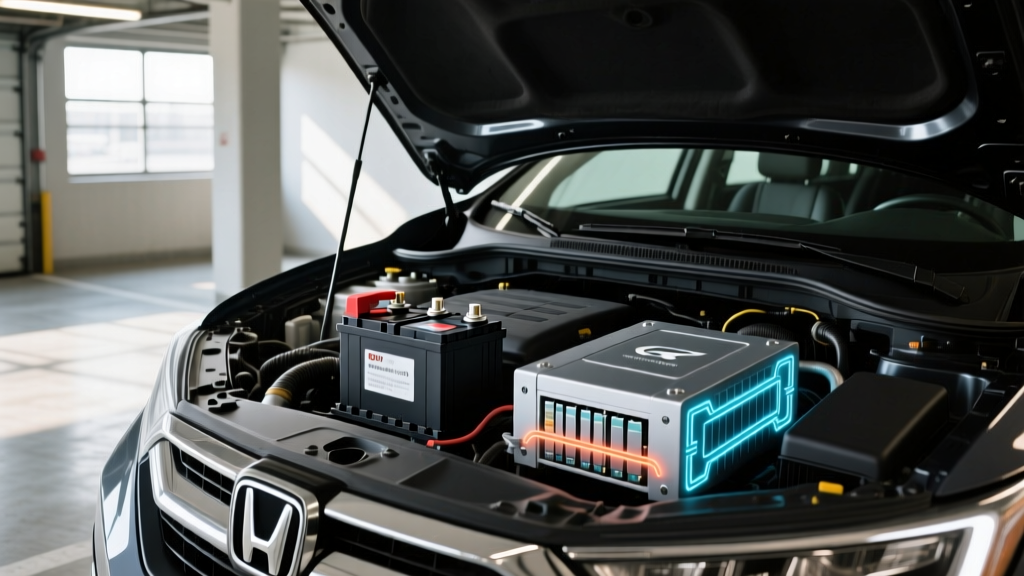
If you typed "battery for 2016 Honda CR-V" into a search engine, you are almost certainly dealing with a dead 12-volt starter battery — the small lead-acid or AGM unit under the hood that powers your lights, infotainment, and engine cranking. The 2016 CR-V is a conventional gasoline SUV; it has no high-voltage traction battery, no electric motor, and no plug. A replacement 12V battery (Group 51R, typically 500–600 CCA) runs $140–$250 installed at any auto parts store.
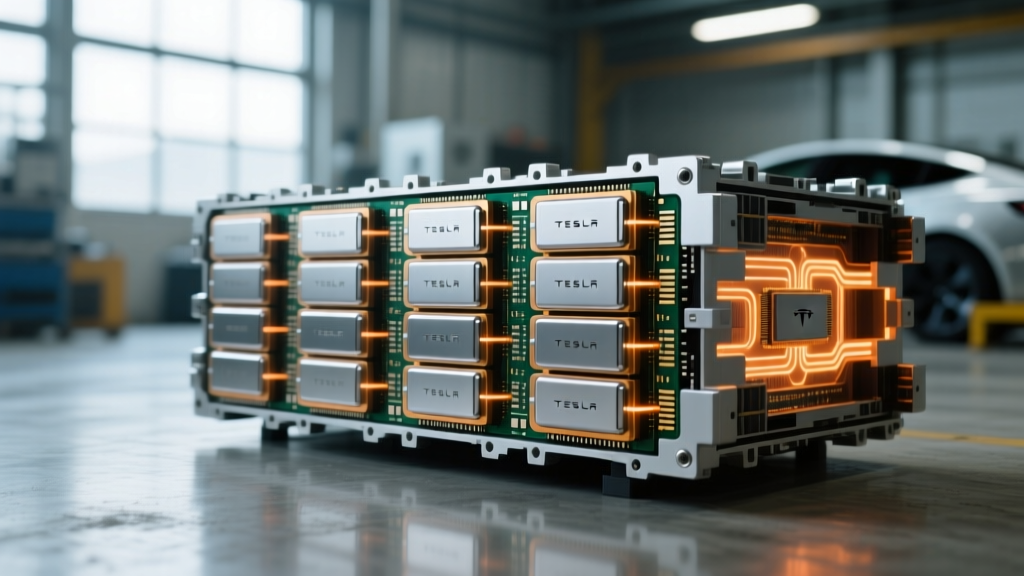
But this search query opens a much bigger conversation for anyone cross-shopping a used 2016 CR-V against a modern EV or plug-in hybrid in 2026. The battery in an electric vehicle is an entirely different animal: a 60–100+ kWh lithium-ion pack costing $8,000–$22,000 to replace, engineered to last 15–20 years, and governed by federal warranty mandates. Understanding that gap — and how EV traction batteries actually age — is essential before you commit to an electrified vehicle.
This guide breaks down every dimension of EV battery ownership: chemistry, degradation data, warranty coverage, replacement costs, care habits, and emerging tech. We will also circle back to the CR-V lineup, because Honda now sells the CR-V Hybrid and has announced an electric SUV successor.
LFP vs NMC/NCA: The Chemistry Decision That Defines Your EV
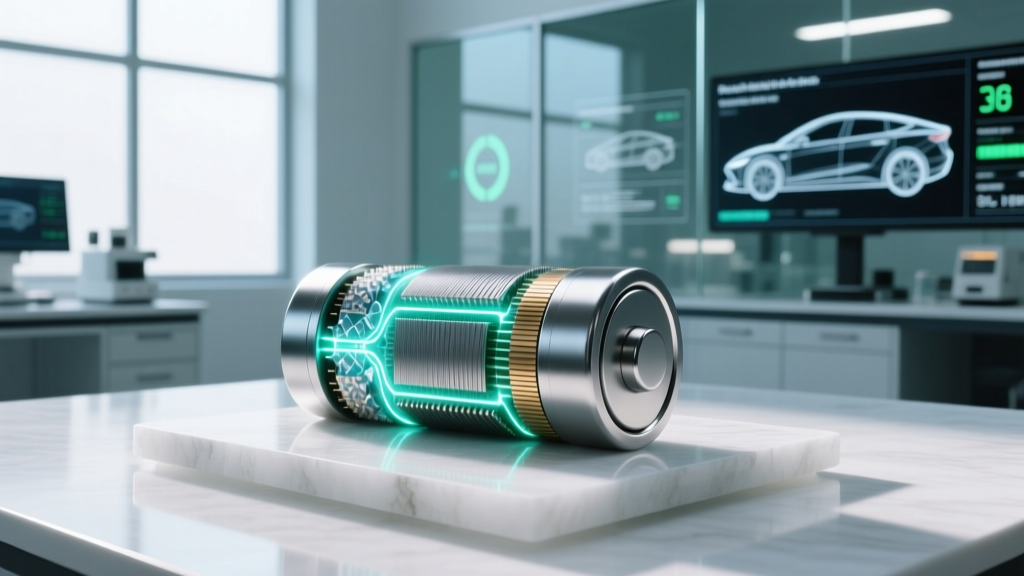
Every EV battery sold in 2026 uses one of two dominant lithium-ion chemistries. The choice affects range, longevity, cold-weather behavior, and price.
| Attribute | LFP (Lithium Iron Phosphate) | NMC / NCA (Nickel-based) |
|---|---|---|
| Energy density | ~160 Wh/kg (lower) | ~250–300 Wh/kg (higher) |
| Typical cycle life | 3,000–5,000+ cycles | 1,000–2,000 cycles |
| Cold-weather range loss | Greater (~35–45% at 20°F) | Moderate (~25–35% at 20°F) |
| Peak charge speed | Slightly slower taper | Higher peak kW sustained longer |
| Cost per kWh (2026) | ~$95–$115 | ~$130–$165 |
| Recommended SoC ceiling | 100% daily OK | 80% daily preferred |
| Common applications | Tesla Model 3 RWD, base BYD, Ford LFP Mustang Mach-E | Long-range trims, Hyundai Ioniq 5/6, Rivian, Lucid |
Which is better? LFP wins on longevity and daily convenience (charge to 100% without worry). NMC/NCA wins on range per pound and cold-weather usability. For a garage-kept commuter in Texas, LFP is ideal. For a Minnesota driver needing 320+ miles of EPA range, NMC is the pragmatic pick.
How Long Do EV Batteries Actually Last?
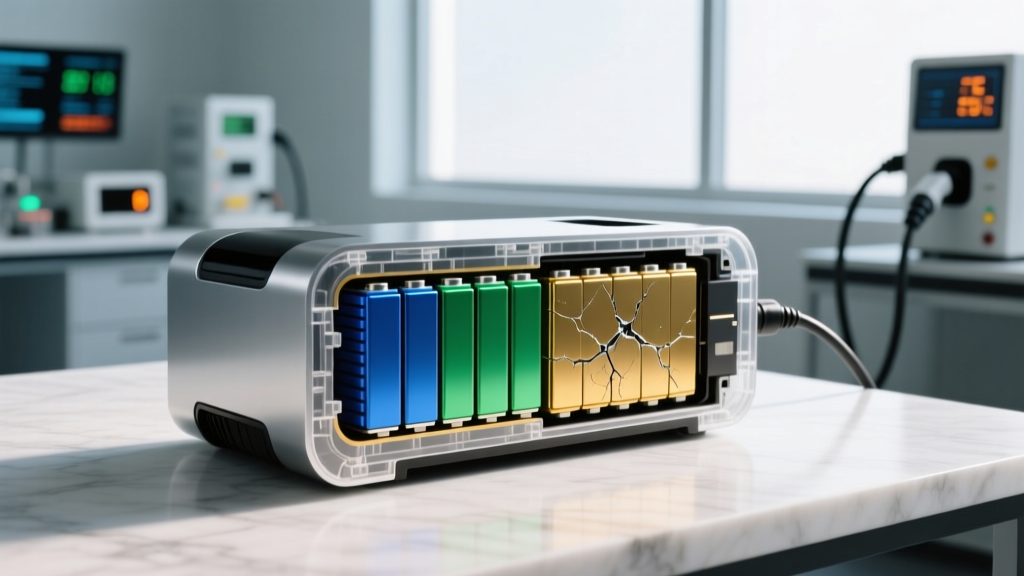
The short answer: far longer than most buyers assume. Data from fleet operators, Tesla's impact reports, and independent testing labs consistently show modern lithium-ion packs retaining 85–92% of original capacity after 100,000 miles.
Real-World Degradation Data Points
- Tesla Model 3/Y (NCA/NMC): ~12% average capacity loss at 200,000 miles per Tesla's 2024 Impact Report.
- Nissan Leaf (early passive-cooled packs): 20–30% loss by 100,000 miles in hot climates — the cautionary tale that drove industry-wide thermal management adoption.
- Chevrolet Bolt EV (LG NMC): ~8–10% degradation at 80,000 miles per Recurrent Auto fleet data.
- Hyundai/Kia E-GMP (Ioniq 5, EV6): ~6–9% loss at 60,000 miles in owner-reported datasets.
- LFP packs (Tesla Model 3 RWD, BYD): Often under 5% loss at 80,000 miles, with a flatter degradation curve.
Source: Recurrent Auto fleet analytics and manufacturer impact reports.
The typical EV battery reaches end-of-first-life (defined as 70–80% original capacity) between 150,000 and 300,000 miles, depending on chemistry, climate, and charging habits. Most packs outlive the vehicle's body, suspension, and interior.
Battery Warranty Terms: What Federal Law Requires
Under EPA and CARB regulations, every EV battery sold in the United States carries a minimum warranty of 8 years / 100,000 miles (extended to 10 years / 150,000 miles in California and states adopting CARB standards). The capacity-retention threshold is typically 70%, though some manufacturers guarantee higher.
| Manufacturer | Warranty Term | Capacity Threshold | Notes |
|---|---|---|---|
| Tesla (Model 3/Y LFP) | 8 yr / 120,000 mi | 70% | Long Range: 8 yr / 120k mi |
| Hyundai / Kia | 10 yr / 100,000 mi | 70% | Among the most generous terms |
| Ford (Mustang Mach-E, F-150 Lightning) | 8 yr / 100,000 mi | 70% | LFP and NMC trims covered equally |
| GM (Ultium platform) | 8 yr / 100,000 mi | 70% | Includes Blazer EV, Silverado EV |
| BMW / Mercedes | 8 yr / 100,000 mi | 70% | Often includes buffer monitoring |
If your pack drops below the threshold within the warranty window, the manufacturer replaces or remanufactures the battery at no cost. Out-of-pocket replacement is rare under warranty — and increasingly rare overall as pack reliability improves.
EV Battery Replacement Cost: When and How Much
For the vast majority of owners, a traction battery replacement is never needed. But for out-of-warranty vehicles, high-mileage fleet use, or salvage-title purchases, here is the current cost landscape:
| Vehicle Class / Example | Battery Size | Replacement Cost Range | Typical Need Timeline |
|---|---|---|---|
| Compact EV (Nissan Leaf, Chevy Bolt) | 40–65 kWh | $8,000–$14,000 | 150,000+ mi, if ever |
| Midsize EV (Tesla Model 3, Ioniq 5) | 60–80 kWh | $12,000–$18,000 | 200,000+ mi, if ever |
| Large EV / Truck (F-150 Lightning, Rivian) | 98–135 kWh | $18,000–$28,000 | 200,000+ mi, if ever |
| Luxury EV (Lucid Air, Mercedes EQS) | 90–118 kWh | $20,000–$35,000 | 200,000+ mi, if ever |
Critically, these costs are declining. BloombergNEF reports average lithium-ion pack prices fell below $130/kWh in 2025, down from $1,200/kWh in 2010. Remanufactured and refurbished packs are increasingly available at 40–60% of new-pack pricing. And again: the 2016 Honda CR-V's 12V battery replacement — the likely intent behind the original search — is roughly $180, a 100x difference.
Factors That Accelerate (or Preserve) Battery Life
Not all miles age a battery equally. These variables determine whether your pack hits 200,000 miles at 90% health or 75%:
Battery Care Checklist
- Avoid sustained 100% SoC (NMC/NCA only): Store between 20–80% daily; charge to 100% only before road trips. LFP owners can ignore this.
- Minimize DC fast charging to >80% weekly: Frequent 150+ kW sessions add heat stress. Home Level 2 at 7–11 kW is gentler.
- Precondition in cold weather: Use your EV's scheduled departure feature to warm the battery while plugged in, reducing lithium plating risk.
- Avoid prolonged storage at 0% or 100%: If leaving the car for weeks, set SoC to ~50%.
- Limit exposure to extreme heat: Garage parking in hot climates measurably slows degradation.
- Use regenerative braking moderately: Aggressive one-pedal driving generates heat cycles; moderate regen is easier on the pack.
A 2025 study by Geotab found that vehicles fast-charged more than 3 times per week showed degradation rates 1.5–2x higher than those primarily charged on Level 2 home stations.
Monitoring State of Health (SoH): What Owners Can Track
State of Health (SoH) is the percentage of original battery capacity remaining. A new EV sits at 100% SoH; a well-maintained 5-year-old EV might read 91–94%.
Most 2026 EVs surface SoH through the infotainment system or companion app. Tesla displays it under Settings → Service → Battery Health. Hyundai/Kia include it in the Bluelink/UVO app. Third-party tools like OBD2 dongles paired with apps such as Leaf Spy (Nissan), Scan My Tesla, or Car Scanner pull live SoH data from the battery management system.
For used-EV buyers, requesting a SoH reading before purchase is as important as checking a Carfax. A 2020 Model 3 at 88% SoH is a healthy vehicle; one at 76% is approaching warranty-claim territory and should be priced accordingly.
What About the 2016 Honda CR-V Itself? Hybrid and EV Successors
The 2016 CR-V has no traction battery to worry about. But Honda's current lineup tells a different story. The 2026 CR-V Hybrid uses a 1.3 kWh lithium-ion pack (far smaller than a BEV) paired with a 2.0L Atkinson-cycle engine, delivering 40 MPG combined per fueleconomy.gov. That tiny hybrid battery carries an 8-year/100,000-mile warranty and costs roughly $2,000–$3,500 to replace — a fraction of a full EV pack.
Honda has also announced the next-generation Prologue (built on GM's Ultium platform) and plans for a Honda 0 Series EV lineup. These will feature NMC packs in the 85–100 kWh range with EPA targets above 300 miles. If you are cross-shopping a used 2016 CR-V against a new electric SUV, the battery economics are now part of your decision framework.
Emerging Battery Tech: Solid-State and Silicon Anodes
Two technologies are reshaping the next generation of EV batteries — but neither is widely available in production vehicles as of early 2026:
Solid-state batteries replace the liquid electrolyte with a solid ceramic or polymer layer, promising 30–50% higher energy density, faster charging, and improved safety (no flammable electrolyte). Toyota has announced limited production in 2027–2028; Samsung SDI targets 2027. Realistic mass-market availability remains 2029+.
Silicon-dominant anodes (from companies like Sila Nanotechnologies and Group14) increase energy density by 20–40% over graphite anodes. These are beginning to appear in limited applications — the Mercedes G-Class 580e uses a silicon-anode pack — and will proliferate through 2027–2028 model years.
For buyers today: current LFP and NMC chemistries are mature, reliable, and backed by a decade of fleet data. Waiting for solid-state means waiting 3–5 years for unproven, premium-priced technology.
Frequently Asked Questions
Is the battery in a 2016 Honda CR-V the same as an EV battery?
No. The 2016 CR-V uses a standard 12V lead-acid or AGM battery (Group 51R, ~$150–$250). It has no high-voltage traction battery. EV traction batteries are 60–135 kWh lithium-ion packs costing $8,000–$35,000.
How long do EV batteries last in years and miles?
Most modern EV batteries retain 85–92% capacity at 100,000 miles and reach end-of-first-life (70% capacity) between 150,000 and 300,000 miles. In years, that translates to 15–20 years of typical use.
What does the EV battery warranty actually cover?
Federally mandated minimum: 8 years / 100,000 miles (10/150k in CARB states) against capacity dropping below 70% of original. If it does, the manufacturer replaces or refurbishes the pack at no cost.
LFP or NMC — which should I choose?
Choose LFP if you want maximum cycle life, can charge to 100% daily, and live in a moderate climate. Choose NMC/NCA if you need maximum range per charge, drive in cold winters, or want the fastest DC charge speeds.
How do I check my EV's battery health before buying used?
Request the SoH (State of Health) reading from the vehicle's infotainment system, companion app, or an OBD2 diagnostic scan. Compare it to the warranty threshold — anything above 85% at 50,000 miles is excellent health.