Why a "Battery for 2014 Honda Accord" Search Leads to Two Very Different Answers
If you've typed "battery for 2014 Honda Accord" into a search engine, you're almost certainly looking for a 12-volt auxiliary (starter) battery — the small lead-acid unit under the hood that powers your lights, infotainment, and starter motor. The 2014 Accord is a conventional internal-combustion vehicle (or a hybrid in the case of the Accord Hybrid), and it does not have a high-voltage EV traction battery in the way a Tesla Model 3 or Hyundai Ioniq 5 does.
But that search also opens a useful door: understanding the fundamental difference between the 12V auxiliary battery every car has and the high-voltage traction battery that powers a true battery-electric vehicle (BEV). This guide covers both — the practical replacement info Accord owners need today, and the deep-dive EV traction battery science that matters if you're considering an upgrade to an electric vehicle.
12V Battery Replacement for the 2014 Honda Accord
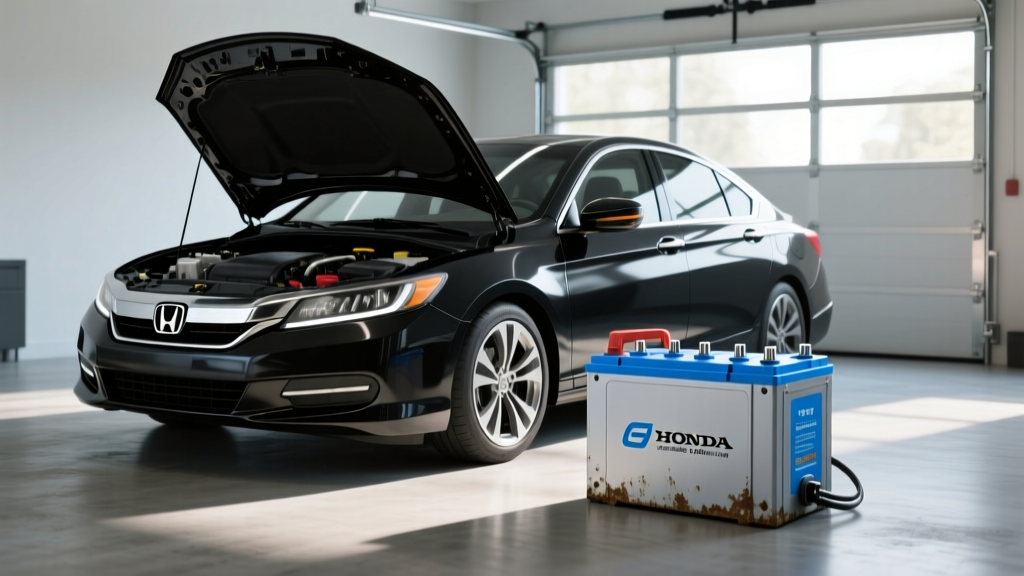
The 2014 Honda Accord (gas models: 2.4L 4-cylinder or 3.5L V6) uses a standard Group 51R or Group 24F 12V lead-acid battery, depending on engine and trim. The Accord Hybrid uses a smaller 12V auxiliary battery alongside its ~1.3 kWh lithium-ion hybrid system battery.
Typical specs for a 2014 Accord 12V replacement:
- Group size: 51R (4-cyl) or 24F (V6)
- Cold Cranking Amps (CCA): 500–640 CCA depending on group
- Typical cost: $120–$220 for an AGM or flooded lead-acid unit from retailers like AutoZone, Advance Auto Parts, or Costco
- Lifespan: 3–5 years in moderate climates; 2–4 years in extreme heat
This is a straightforward DIY or shop replacement — no high-voltage safety protocols required.
EV Traction Battery Chemistry: LFP vs. NMC Explained
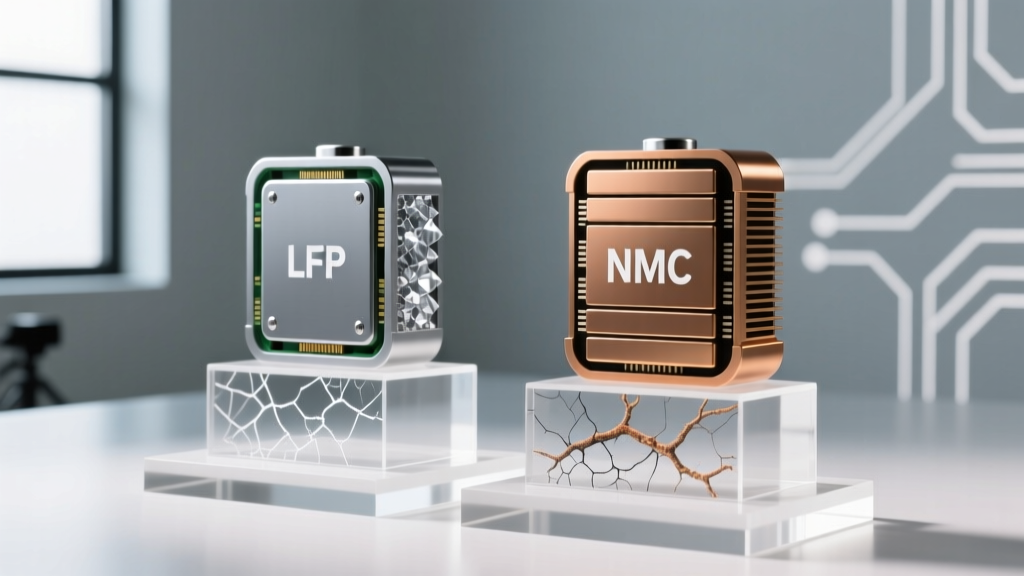
Now let's shift to the battery technology that powers modern EVs — relevant if you're researching an electric upgrade from your Accord. Every current-production BEV uses one of two dominant lithium-ion chemistries: LFP (lithium iron phosphate) or NMC/NCA (nickel manganese cobalt / nickel cobalt aluminum). The chemistry determines range, longevity, cold-weather behavior, and price.
| Attribute | LFP (Lithium Iron Phosphate) | NMC/NCA (Nickel-based) |
|---|---|---|
| Energy density | Lower (~160 Wh/kg cell-level) | Higher (~250–300 Wh/kg cell-level) |
| Typical EV range | 200–330 mi (EPA) | 250–400+ mi (EPA) |
| Cycle life | 3,000–6,000+ cycles to 80% SoH | 1,000–2,500 cycles to 80% SoH |
| Cold-weather performance | Weaker; ~15–30% range loss at 20°F | Better; ~10–20% range loss at 20°F |
| Cost (per kWh, pack-level) | ~$100–$120/kWh (2025–2026) | ~$130–$160/kWh (2025–2026) |
| Recommended daily SoC | 100% OK; benefits from periodic full charge | 80% daily; 100% only for trips |
| Thermal stability / safety | Excellent; highly resistant to thermal runaway | Good; requires robust BMS and cooling |
| Example vehicles (2026) | Tesla Model 3 RWD, Ford Mustang Mach-E Select (LFP option) | Hyundai Ioniq 5, BMW iX, Rivian R1T |
Which is better? For daily commuting and cost-sensitive buyers, LFP wins on longevity and price. For maximum range and cold-climate drivers, NMC/NCA remains the stronger choice. According to IEA Global EV Outlook data, LFP market share in new EVs reached roughly 40% globally by 2025, driven by Tesla's adoption and Chinese OEM volume.
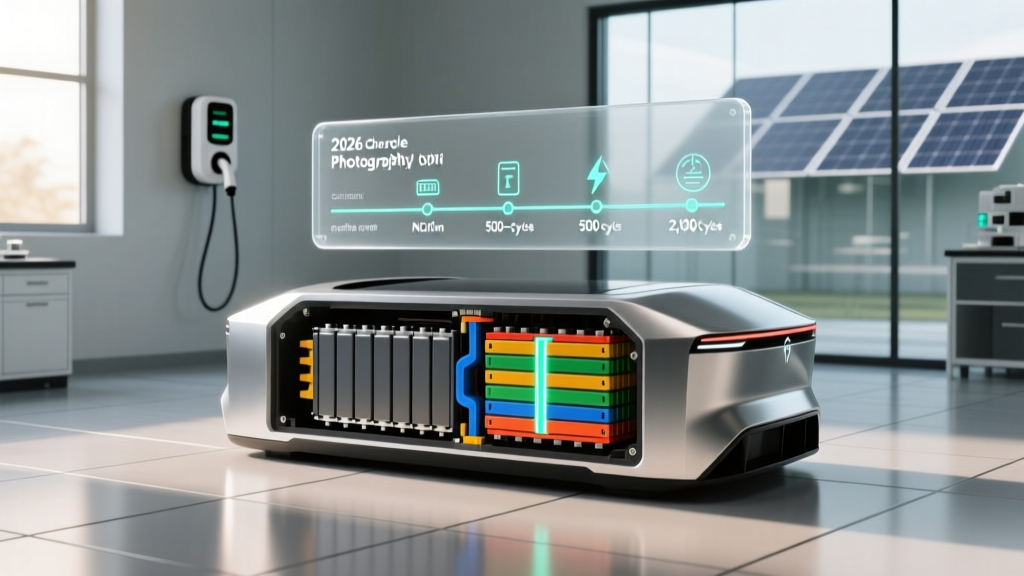
How Long Do EV Batteries Last? Degradation Data by the Numbers
The single most common fear among prospective EV buyers is battery failure. The data tells a reassuring story: modern EV traction batteries are engineered to outlast the vehicle's economic life.
Real-world degradation data points:
- Geotab fleet study (2024, ~10,000 vehicles): Average degradation of 1.8% per year across all chemistries, meaning ~82% State of Health (SoH) at 10 years.
- Tesla Impact Report (2024): Model 3/Y batteries retain ~85% capacity at 200,000 miles. LFP-equipped vehicles showed slower fade curves in the first 50,000 miles.
- Recurrent Auto data (2025): Chevrolet Bolt EV (NMC, 60 kWh) averaged 91% SoH at 5 years / 60,000 miles. Hyundai Ioniq 5 (NMC, 77.4 kWh) averaged 94% SoH at 3 years / 40,000 miles.
- LFP advantage: Tesla Model 3 RWD (LFP, ~60 kWh) showed ~96% SoH at 3 years / 45,000 miles in Recurrent's dataset — roughly half the degradation rate of comparable NMC packs.
Battery Warranty Terms: What's Actually Covered
Every EV sold in the U.S. carries a federally mandated minimum battery warranty, and most automakers exceed it. Here's how the major brands stack up as of the 2026 model year:
| Manufacturer | Warranty Term | Capacity Retention Threshold | Notes |
|---|---|---|---|
| Tesla (Model 3/Y LFP) | 8 yr / 100,000 mi | 70% SoH | Whichever comes first |
| Tesla (Model S/X, LR/AWD) | 8 yr / 120,000–150,000 mi | 70% SoH | Varies by drivetrain |
| Hyundai / Kia | 10 yr / 100,000 mi | 70% SoH | Among the longest coverage |
| Ford (Mach-E, F-150 Lightning) | 8 yr / 100,000 mi | 70% SoH | Standard across BEV lineup |
| BMW (iX, i4) | 8 yr / 100,000 mi | 70% SoH | Includes battery management system |
| Rivian (R1T, R1S) | 8 yr / 120,000 mi | 70% SoH | Extended mileage for truck use |
What the warranty covers: If your battery's usable capacity drops below the threshold (typically 70% of original) within the warranty period, the manufacturer will repair or replace modules or the full pack at no cost. This does not cover damage from accidents, flooding, or unauthorized modifications.
Source: fueleconomy.gov EV technology overview and individual manufacturer warranty documents.
EV Battery Replacement Cost: When and How Much
Out-of-warranty battery replacement is the scenario that generates the most anxiety — and the most misleading headlines. Here are the actual numbers based on 2025–2026 service data:
| Vehicle | Battery Size (kWh) | Chemistry | Replacement Cost (parts + labor) | Typical Need Timeline |
|---|---|---|---|---|
| Tesla Model 3 RWD | ~60 kWh | LFP | $12,000–$16,000 | Rarely before 200,000+ mi |
| Tesla Model Y Long Range | ~82 kWh | NMC | $14,000–$20,000 | Rarely before 180,000+ mi |
| Hyundai Ioniq 5 | 77.4 kWh | NMC | $15,000–$22,000 | Rarely before 150,000+ mi |
| Ford Mustang Mach-E ER | 91 kWh (usable: 88) | NMC | $18,000–$25,000 | Rarely before 150,000+ mi |
| Chevrolet Bolt EV/EUV | 65 kWh | NMC | $14,000–$17,000 | Post-recall replacement packs show strong longevity |
| Nissan LEAF (40 kWh) | 40 kWh | NMC (passive air-cooled) | $8,000–$12,000 | Earlier degradation due to thermal management; 100,000–130,000 mi |
Context that matters: The average age of a vehicle scrapped in the U.S. is roughly 15–17 years (S&P Global Mobility). At an average 13,500 miles/year, that's ~200,000–230,000 miles — right at the point where most modern liquid-cooled EV batteries still retain 75–85% SoH. Full pack replacement is rare; module-level repair is more common and costs $2,000–$6,000.
Factors That Affect EV Battery Lifespan
Battery degradation isn't random — it's driven by specific, controllable factors. Here's what the data shows:
- Minimize DC fast charging to <20% of total charging sessions. Geotab data shows vehicles that DC fast-charged >3x/week degraded ~0.5% faster per year than those primarily using Level 2.
- Keep daily State of Charge between 20–80% for NMC/NCA batteries. LFP batteries can and should be charged to 100% regularly — their BMS needs full-charge calibration for accurate range estimation.
- Precondition the battery before fast charging. Most modern EVs do this automatically when you navigate to a charger. Cold batteries (below 50°F) accept charge slowly and experience more stress.
- Avoid prolonged storage at 100% SoC or 0% SoC. If leaving the car for >2 weeks, set SoC to ~50% and plug in to a Level 1 or Level 2 charger so the BMS can maintain thermal management.
- Garage parking in extreme heat matters. Sustained ambient temps above 95°F accelerate calendar degradation. Liquid-cooled packs handle this far better than passively cooled ones (looking at you, older Nissan LEAF).
- Don't fear regen braking. Regenerative braking does not meaningfully accelerate battery wear — the charge current from regen is well within safe C-rate limits.
How to Check and Monitor Battery State of Health (SoH)
State of Health (SoH) is the percentage of original capacity your battery can still hold. A new battery is 100% SoH; a degraded one might be 88%. Here's how to check it:
- In-vehicle display: Some EVs (BMW iX, Mercedes EQS, newer Hyundais) show a SoH percentage in the settings menu. Tesla does not display SoH natively — it shows estimated range, which is influenced by SoH but also by temperature and driving style.
- OBD-II diagnostic apps: Tools like LeafSpy (Nissan LEAF), TeslaFi or Tessie (Tesla), and Car Scanner (general OBD-II) can read SoH directly from the battery management system (BMS).
- Dealer diagnostic report: Any authorized service center can pull a battery health report. Request this during routine service or a pre-purchase inspection on a used EV.
- Recurrent Auto / Geotab: If you opt into these fleet-analytics platforms, they track your SoH over time and benchmark it against similar vehicles.
Pro tip for used-EV buyers: Before purchasing, request a battery health report from the seller or run a third-party diagnostic. A 2020 Model 3 with 92% SoH at 50,000 miles is in excellent shape; one at 78% SoH at the same mileage warrants investigation (possible thermal exposure or exclusive DC fast-charging history).
Emerging Battery Technology: What's Next (and When)
Several next-generation battery technologies are in development. None are available in production vehicles as of early 2026, but timelines are becoming clearer:
- Solid-state batteries: Replace the liquid electrolyte with a solid ceramic or polymer, enabling higher energy density (~400–500 Wh/kg projected), faster charging, and improved safety. Toyota has announced a limited production rollout in select 2027–2028 models. Samsung SDI and QuantumScape are targeting 2028–2030 for broader commercialization. Expect premium pricing initially.
- Silicon-dominant anode batteries: Companies like Sila Nanotechnologies and Group14 are replacing graphite anodes with silicon composites, boosting energy density by 20–40%. Mercedes-Benz's next-gen EQ platform (expected 2027) will use Sila's silicon anode cells. This is likely the first "next-gen" tech to reach mass-market vehicles.
- Sodium-ion batteries: Cheaper and more abundant than lithium, but with lower energy density (~120–150 Wh/kg). CATL has begun production for Chinese-market city cars. U.S. availability is uncertain before 2029 and likely limited to budget/urban EVs.
Frequently Asked Questions
How long do EV batteries last in years and miles?
Modern liquid-cooled EV batteries (both LFP and NMC) typically retain 80–90% of original capacity at 10 years or 150,000 miles based on fleet data from Geotab, Tesla, and Recurrent Auto. Many will function well beyond 200,000 miles before dropping below the 70% warranty threshold. The Nissan LEAF (passively air-cooled, pre-2023 models) is a notable exception, showing faster degradation in hot climates.
How much does an EV battery cost to replace?
Full pack replacement costs range from $8,000 (Nissan LEAF 40 kWh) to $25,000 (Ford F-150 Lightning extended range, ~131 kWh) including parts and labor as of 2026. However, full replacements are rare — module-level repairs typically cost $2,000–$6,000. Most EVs will never need a battery replacement during typical ownership.
What does the EV battery warranty actually cover?
Federal law mandates a minimum 8-year/100,000-mile warranty on EV battery capacity for emissions-related compliance (relevant for PHEVs in CARB states), and most automakers voluntarily extend this to full BEVs. The warranty guarantees the battery will retain at least 70% of its original usable capacity. If it drops below that threshold within the warranty term, the manufacturer repairs or replaces it at no cost. Accidental damage, flooding, and unauthorized modifications are excluded.
How do I check and maximize my EV battery health?
Check SoH via your vehicle's settings menu (if supported), an OBD-II app like TeslaFi or LeafSpy, or a dealer diagnostic report. Maximize longevity by: favoring Level 2 home charging over DC fast charging, keeping NMC batteries between 20–80% SoC for daily use (100% is fine for LFP), preconditioning before fast charging, and avoiding prolonged storage at extreme SoC levels or in extreme heat.
LFP vs. NMC — which battery chemistry is better for me?
Choose LFP if: you commute daily and can charge at home, you live in a moderate or warm climate, you want maximum cycle life (3,000–6,000+ cycles), and you prefer lower cost. Choose NMC/NCA if: you need maximum EPA range (300–400+ miles), you live in a cold climate where LFP loses more range in winter, or you frequently road-trip and need the extra buffer. Both chemistries are safe and well-proven; the right choice depends on your driving pattern.
I own a 2014 Honda Accord — does it have an EV battery?
No. The 2014 Honda Accord (gas models) uses only a conventional 12V lead-acid battery (Group 51R or 24F). The 2014 Accord Hybrid has a small ~1.3 kWh lithium-ion hybrid system battery in addition to the 12V battery, but this is not a plug-in EV traction battery. If you're looking for a replacement 12V battery for your 2014 Accord, expect to pay $120–$220 at an auto parts retailer. If you're researching EV batteries because you're considering an electric vehicle upgrade, the rest of this guide applies to your future purchase.