What Types of Batteries Are Used in Electric Cars?
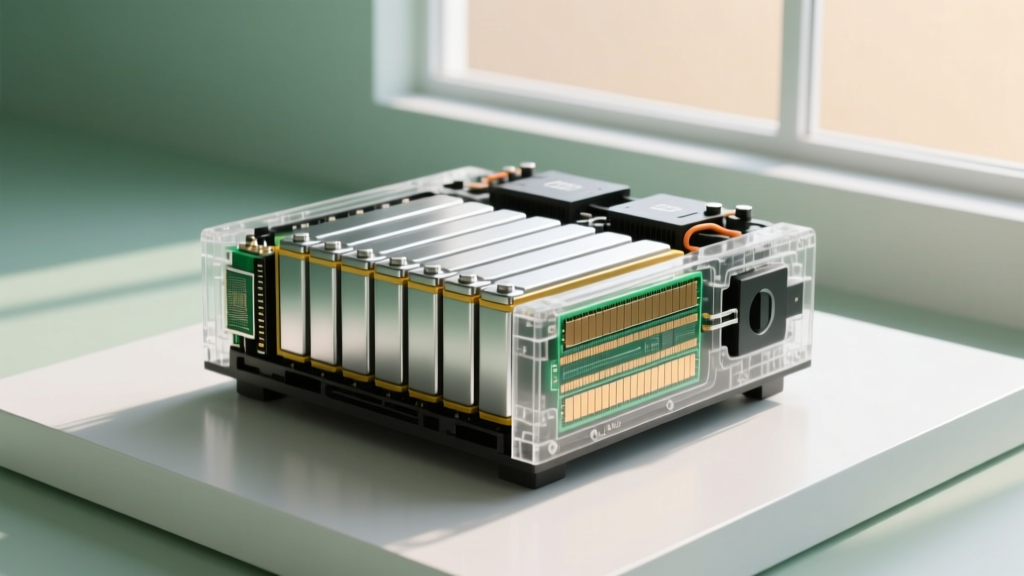
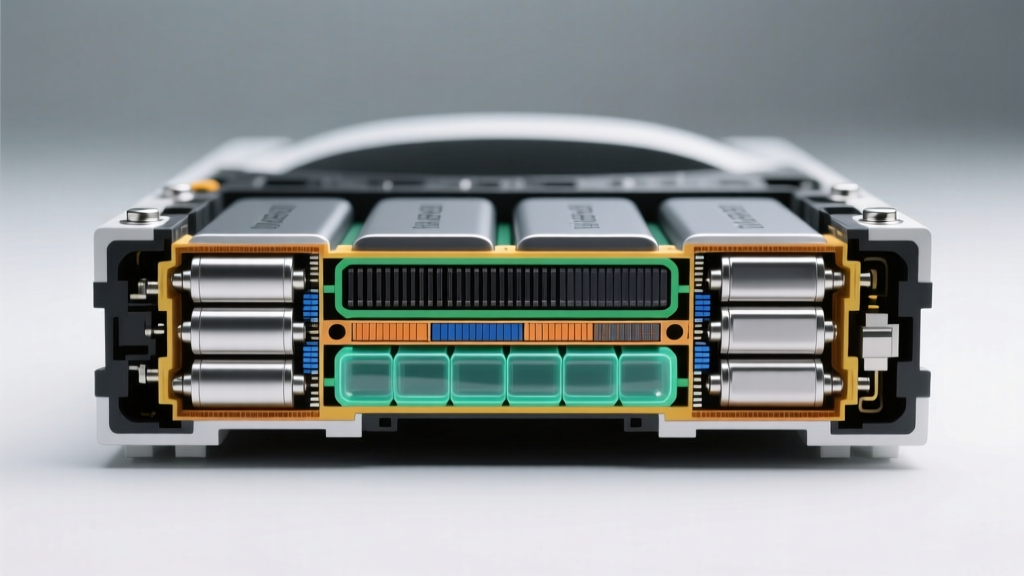
Every modern battery electric vehicle (BEV) relies on a lithium-ion traction battery pack to store energy and propel the car. But not all lithium-ion batteries are the same. The two dominant chemistries in the 2026 EV market are NMC/NCA (nickel manganese cobalt / nickel cobalt aluminum) and LFP (lithium iron phosphate). The chemistry inside your pack determines your car's range, how fast it charges, how well it performs in cold weather, how quickly it degrades, and ultimately how much it costs to replace if something goes wrong years down the road.
Understanding these differences isn't academic — it directly affects your ownership experience and total cost. A Tesla Model 3 Rear-Wheel Drive with an LFP pack behaves very differently from a Hyundai Ioniq 5 with an NMC pack, even though both are lithium-ion. Below, we break down the chemistries, real-world degradation data, warranty coverage, replacement economics, and the habits that extend (or shorten) your battery's useful life.
LFP vs NMC/NCA: The Chemistry Breakdown
The cathode material in a lithium-ion cell defines its trade-off profile. Here's how the two mainstream chemistries compare across the metrics that matter to owners:
| Attribute | LFP (Lithium Iron Phosphate) | NMC / NCA (Nickel-based) |
|---|---|---|
| Energy Density | ~160–180 Wh/kg (cell level) | ~220–280 Wh/kg (cell level) |
| Typical EV Range | 250–330 mi EPA (lighter/smaller packs) | 280–400+ mi EPA (higher density) |
| Cycle Life | 3,000–5,000+ cycles to 80% SoH | 1,000–2,000 cycles to 80% SoH |
| Cold-Weather Performance | Moderate loss; slower charge in deep cold | Better low-temp conductivity; faster cold charging |
| Cost per kWh (2026) | ~$80–$100 (pack level) | ~$110–$140 (pack level) |
| Recommended Daily SoC | 100% OK — charge to full regularly | 80–90% daily; 100% only for trips |
| Thermal Stability | Excellent — less prone to thermal runaway | Good, but requires more active thermal management |
| Critical Minerals | No cobalt or nickel — easier sourcing | Requires nickel, cobalt — supply-chain sensitivity |
| Notable 2026 Vehicles | Tesla Model 3 RWD, Model Y RWD, Rivian Standard, Ford Mustang Mach-E Select | Hyundai Ioniq 5/6, Kia EV6/EV9, BMW iX, Chevrolet Equinox EV, Porsche Taycan |
Which is better? It depends on your use case. If you prioritize maximum range per charge and fast DC charging in cold climates, NMC/NCA delivers. If you want the longest possible cycle life, lower replacement cost, and don't mind slightly less range, LFP is the pragmatic choice. Tesla's shift to LFP in standard-range models and Rivian's adoption of LFP for its Standard battery underscore a clear industry trend: LFP is winning the volume battle, while NMC remains the choice for long-range and performance trims.
How Long Do EV Batteries Actually Last?
The short answer: far longer than most buyers fear. Data from fleet operators, manufacturer reports, and independent testing consistently shows that modern EV traction batteries retain the vast majority of their capacity well beyond 100,000 miles.
Real-World Degradation Data Points
- Tesla fleet data (2025 Impact Report): Model S/X batteries retain approximately 88% capacity at 150,000 miles; Model 3/Y (including LFP) retain ~92% at 100,000 miles.
- Geotab fleet study (2024, 10,000+ EVs): Average annual degradation of 1.8% across all chemistries, meaning ~82% capacity retention at 10 years. LFP vehicles showed ~1.2%/year average loss.
- Recurrent Auto data (2025): Chevrolet Bolt EV owners average ~8% loss at 80,000 miles; Hyundai Ioniq 5 owners average ~5% loss at 50,000 miles.
- Taxi/rideshare high-mileage cases: Multiple Tesla Model 3 units in rideshare service have exceeded 300,000 miles on original packs with 75–80% capacity remaining.
The pattern is clear: degradation is front-loaded. Most packs lose 3–5% in the first year or two, then settle into a slow, linear decline of roughly 1–2% per year. A well-cared-for battery in a 2026 EV should comfortably deliver 80%+ capacity at 150,000 miles and 15+ years of service.
What Does the EV Battery Warranty Cover?
Federal regulations in the U.S. mandate a minimum of 8 years / 100,000 miles for EV battery warranties (10 years / 150,000 miles in California Air Resources Board states). Most manufacturers meet or exceed this baseline. The warranty covers defects and excessive capacity loss — typically defined as falling below 70% of original capacity within the warranty period.
| Manufacturer | Warranty Term | Capacity Threshold | Chemistry Notes |
|---|---|---|---|
| Tesla (Model 3/Y RWD — LFP) | 8 yr / 100,000 mi | 70% retention | LFP — longer cycle life expected |
| Tesla (Model 3/Y LR — NMC) | 8 yr / 120,000 mi | 70% retention | NMC Long Range pack |
| Hyundai / Kia (E-GMP platform) | 10 yr / 100,000 mi | 70% retention | NMC — best-in-class duration |
| Ford (Mustang Mach-E) | 8 yr / 100,000 mi | 70% retention | LFP (Select) / NMC (GT/Extended) |
| General Motors (Ultium platform) | 8 yr / 100,000 mi | 70% retention | NMC — Equinox EV, Blazer EV, Silverado EV |
| Rivian (Standard pack) | 8 yr / 120,000 mi | 70% retention | LFP — introduced 2025 model year |
| BMW (iX, i4, i5) | 8 yr / 100,000 mi | 70% retention | NMC with active thermal management |
Critical fine print: The warranty covers capacity loss below the threshold and manufacturing defects. It does not cover damage from accidents, improper modifications, or use of non-approved charging equipment. If your 2026 Ioniq 5 shows 68% capacity at 60,000 miles, Hyundai replaces or repairs the pack at no cost. In practice, warranty claims remain rare — the vast majority of packs never breach the 70% threshold within the covered period.
How Much Does an EV Battery Replacement Cost?
This is the question that generates the most anxiety, and the most misinformation. Yes, an out-of-warranty battery replacement is expensive. But context matters enormously: most EV batteries outlast the vehicle's economic life, and pack prices have fallen dramatically.
| Vehicle | Battery Size (kWh) | Chemistry | Replacement Cost (Parts + Labor) |
|---|---|---|---|
| Tesla Model 3 RWD | 60 kWh | LFP | $7,000 – $10,000 |
| Tesla Model Y Long Range | 75 kWh | NMC | $10,000 – $14,000 |
| Hyundai Ioniq 5 | 77.4 kWh | NMC | $11,000 – $16,000 |
| Ford Mustang Mach-E Extended Range | 91 kWh | NMC | $14,000 – $18,000 |
| Chevrolet Silverado EV | 200 kWh | NMC | $22,000 – $30,000 |
| Rivian R1T Standard | 106 kWh | LFP | $12,000 – $16,000 |
| BMW iX xDrive50 | 111.5 kWh | NMC | $18,000 – $24,000 |
These figures include the pack and dealer installation labor. Independent EV shops can sometimes reduce labor costs by 20–30%. It's worth noting that module-level repair is increasingly common — rather than replacing the entire pack, technicians can swap individual degraded modules for $2,000–$5,000, depending on the vehicle.
When is replacement typically needed? Based on current degradation trajectories, most 2026 EVs will not require a battery replacement during typical first- or second-owner periods (10–15 years, up to 200,000 miles). Replacement becomes a realistic consideration primarily for high-mileage commercial use (rideshare, delivery fleets) or vehicles kept beyond 200,000 miles.
Factors That Affect Battery Lifespan
Not all miles are equal when it comes to battery wear. The following factors have the largest measurable impact on long-term capacity retention:
Battery Care Best Practices — What the Data Shows
- Avoid chronic 100% SoC (NMC/NCA only): Storing an NMC battery at 100% accelerates calendar degradation. Charge to 80–90% for daily use; reserve 100% for road trips. LFP owners can charge to 100% regularly — in fact, Tesla and Rivian recommend periodic full charges for LFP to maintain BMS calibration.
- Minimize DC fast charging when possible: Frequent use of 150+ kW DC fast charging generates sustained heat. Data from Recurrent Auto shows vehicles that DC fast charge more than 3x per week exhibit ~1–2% additional degradation over 4 years versus those that primarily use Level 2. Occasional road-trip fast charging is fine; daily reliance on DCFC adds up.
- Precondition before fast charging: Most 2026 EVs with navigation-based preconditioning (Tesla, Hyundai, Ford, Rivian) warm the battery to optimal temperature before arriving at a DCFC. This reduces charge time and thermal stress. Always route through a charger in your nav system to trigger this.
- Extreme heat is worse than extreme cold: Sustained ambient temperatures above 95°F (35°C) accelerate calendar aging. If you live in Phoenix or Houston, garage parking meaningfully extends battery life. Cold weather reduces range temporarily but doesn't cause permanent degradation.
- Avoid deep discharges: Regularly draining below 10% SoC stresses the cells. Most 2026 EVs have a bottom buffer (typically 2–5 kWh) that prevents true zero, but habitually running the pack very low still accelerates wear.
- Drive it: Batteries degrade from both cycling and calendar aging. A car that sits at 50% SoC for months in a hot garage may degrade more than one driven regularly with moderate charge cycles.
How to Check and Monitor Battery Health (State of Health)
State of Health (SoH) is the percentage of your battery's original usable capacity that remains available. A new pack is 100% SoH; at 80% SoH, a 77.4 kWh Ioniq 5 pack holds roughly 62 kWh of usable energy, reducing your EPA range proportionally.
Here's how to monitor SoH in 2026 vehicles:
- In-car displays: Tesla provides a battery health estimate in the Service menu (or via the app on newer software). Hyundai/Kia displays SoH percentage in the EV settings menu. BMW shows it in the iDrive EV status screen.
- OBD-II apps: Third-party tools like Leaf Spy (Nissan), Teslalogger, or ABRP's OBD-II integration can read detailed cell-level data, including individual cell voltage variance, which is a more granular health indicator than overall SoH.
- Range tracking: The simplest method — if your car originally displayed 310 miles at 100% SoC and now shows 285 miles at the same charge level (accounting for temperature), you're at roughly 92% SoH. Apps like Recurrent and Geotab automate this tracking over time.
- Dealer diagnostics: Any authorized service center can run a full battery diagnostic that provides a certified SoH report — useful for pre-purchase inspections on used EVs.
For buyers evaluating a used EV, always request a battery health report. A 2022 Model 3 Long Range at 45,000 miles showing 93% SoH is in excellent shape; one at 87% warrants investigation.
Emerging Battery Technology: What's Next?
Two technologies dominate the forward-looking conversation, but neither is commercially available in production EVs as of early 2026:
Solid-state batteries: These replace the liquid electrolyte with a solid conductor, promising 30–50% higher energy density, faster charging, and improved safety. Toyota has announced a solid-state pack targeting 2027–2028 production in limited models. Samsung SDI and QuantumScape are also in late-stage testing. Realistic volume availability remains 2029+ for mainstream vehicles. Early implementations will likely appear in premium models at significant cost premiums.
Silicon-anode batteries: Companies like Sila Nanotechnologies and Group14 are replacing graphite anodes with silicon-dominant materials, boosting energy density by 20–40%. These are closer to market — Mercedes-Benz's next-generation EQ platform and select 2027 models from Asian OEMs are expected to incorporate silicon-anode cells. This is an incremental evolution rather than a revolution, but it meaningfully extends range without increasing pack size.
Sodium-ion batteries: CATL and other Chinese manufacturers have begun producing sodium-ion packs for low-cost, short-range EVs. While unlikely to appear in U.S.-market vehicles before 2028, sodium-ion chemistry offers a cobalt-free, nickel-free alternative with lower energy density but excellent cost and cycle-life characteristics — ideal for urban commuter vehicles.
For buyers today, current lithium-ion technology (both LFP and NMC) is mature, well-understood, and backed by extensive real-world data. Waiting for solid-state is not a practical strategy for anyone who needs a vehicle in the next 2–3 years.
Frequently Asked Questions
How long do batteries used in electric cars last in years and miles?
Based on fleet data from Tesla, Geotab, and Recurrent Auto, modern EV batteries retain 80–90% of their original capacity at 150,000 miles and 10–15 years of service. Most will outlast the vehicle's practical economic life. LFP batteries, with cycle lives exceeding 3,000–5,000 cycles, can theoretically endure 900,000+ miles of driving before reaching 80% capacity.
How much does it cost to replace an EV battery?
Out-of-warranty replacement costs range from approximately $7,000 for a Tesla Model 3 RWD (LFP, 60 kWh) to $30,000 for a Chevrolet Silverado EV (NMC, 200 kWh). Most mainstream sedans and crossovers fall in the $10,000–$18,000 range including labor. However, the vast majority of EV owners never need a replacement — the battery typically outlives the car.
What does the battery warranty cover and what voids it?
Federal law requires a minimum 8-year/100,000-mile battery warranty (10/150,000 in CARB states). Coverage includes capacity loss below ~70% of original and manufacturing defects. Warranties are typically voided by accident damage, unauthorized modifications to the battery system, or use of non-approved charging equipment. Normal degradation above the 70% threshold is not covered.
How do I maximize my EV battery's lifespan?
For NMC/NCA batteries: charge to 80–90% daily, avoid frequent DC fast charging, precondition before fast charging, avoid prolonged storage at 100% or below 10%, and park in shade or a garage in hot climates. For LFP batteries: charge to 100% regularly (it's recommended for BMS calibration), and follow the same DCFC and temperature guidelines. Both chemistries benefit from moderate driving habits and regular use rather than prolonged storage.
Is LFP or NMC better for my needs?
Choose LFP if you prioritize longevity, lower replacement cost, and don't need maximum range — it's ideal for daily commuting and moderate-distance driving. Choose NMC/NCA if you need the longest possible range per charge (300–400+ miles), faster cold-weather DC charging, or are buying a performance trim. Neither is objectively "better" — the right choice depends on your driving patterns, climate, and budget.
Does fast charging damage my EV battery?
Occasional DC fast charging (1–2 times per week on road trips) has negligible impact on battery health. Frequent daily DCFC use (3+ times per week) adds approximately 1–2% additional degradation over 4 years, according to Recurrent Auto data. Modern battery management systems actively limit charge rates when the pack is too hot or too cold, providing built-in protection. For daily charging, Level 2 home charging at 7–11 kW remains the gold standard for long-term battery health.
Can I check my EV battery health myself?
Yes. Most 2026 EVs display State of Health (SoH) in the vehicle's settings or app. You can also estimate SoH by comparing your current 100%-charge range display to the original EPA rating (adjusted for temperature). For a detailed assessment, OBD-II diagnostic tools or a dealer service visit can provide cell-level voltage data and a certified SoH report — always recommended before buying a used EV.
Sources: EPA fuel economy data via fueleconomy.gov; IRS §30D clean vehicle credit rules via irs.gov; manufacturer warranty specifications; Geotab and Recurrent Auto fleet degradation studies.