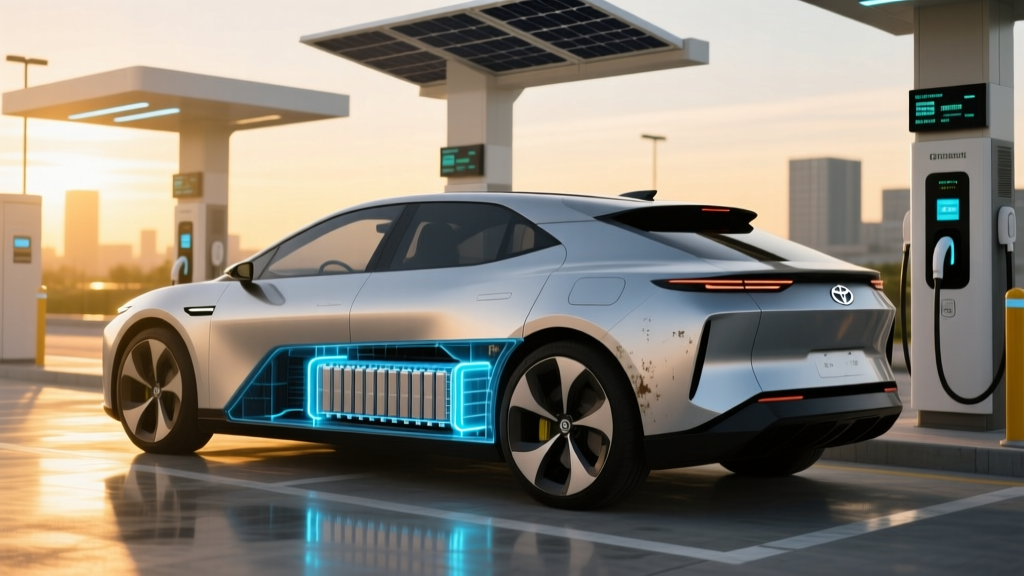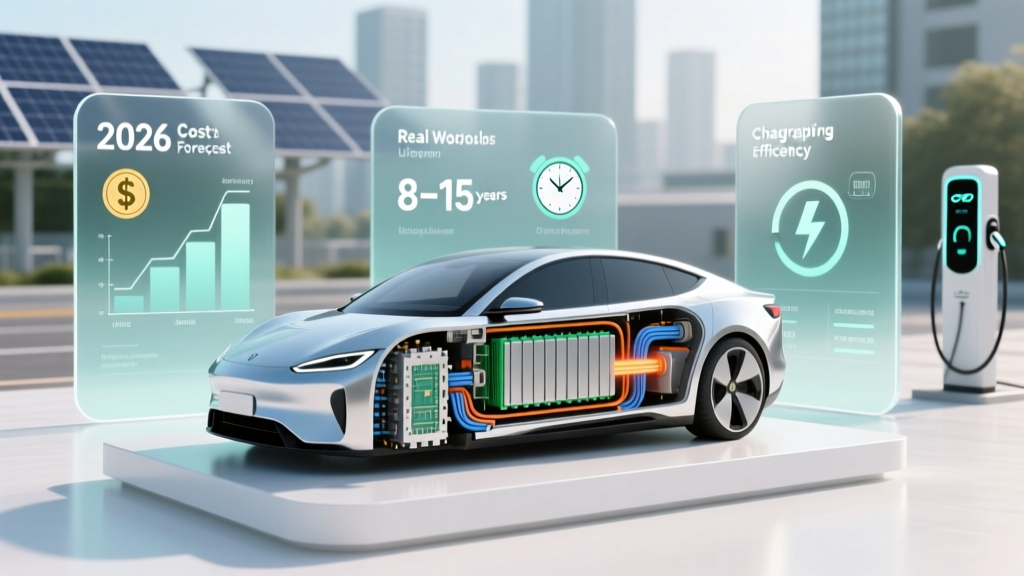
If you're shopping for an EV or already own one, the traction battery is the single most expensive component in the vehicle — and the one buyers worry about most. The question isn't just whether EV batteries degrade (they do, slowly), but what happens if something goes wrong out of warranty and how much a replacement actually costs.
The short answer: most modern EV batteries are engineered to outlast the useful life of the car itself. But when replacements are needed — whether from a manufacturing defect, collision damage, or accelerated degradation — the price tag is substantial. Here's the full picture with real numbers, chemistry trade-offs, and actionable care strategies for 2026 models.
How Long Do EV Batteries Actually Last?
Modern lithium-ion EV batteries are designed for longevity that surprises most first-time buyers. Based on fleet data from manufacturers, third-party testing organizations, and real-world owner reports, here's what the data shows:
- Typical lifespan: 15–20 years or 200,000–300,000+ miles before capacity drops below 70–80% of original
- Average annual degradation: 1.5–2.5% per year for NMC/NCA chemistries; 1–1.5% per year for LFP
- 10-year expectation: Most EVs retain 85–92% of original battery capacity at the 10-year mark under normal use
To put that in context: the average American drives roughly 14,000 miles per year according to the Federal Highway Administration. A battery lasting 200,000 miles represents over 14 years of driving. For the vast majority of owners, the battery will still be functional — albeit with reduced range — when they trade the car in or sell it.
There are documented cases of Tesla Model S and Model 3 vehicles exceeding 300,000 miles on their original battery packs with 80%+ capacity retention. Hyundai and Kia's EVs with LFP chemistry (like the 2026 Ioniq 5 Standard Range) show even slower degradation curves in early fleet data. The outlier cases — batteries failing prematurely — are typically covered under the federally mandated warranty (more on that below).
Battery Chemistry Explained: LFP vs NMC/NCA
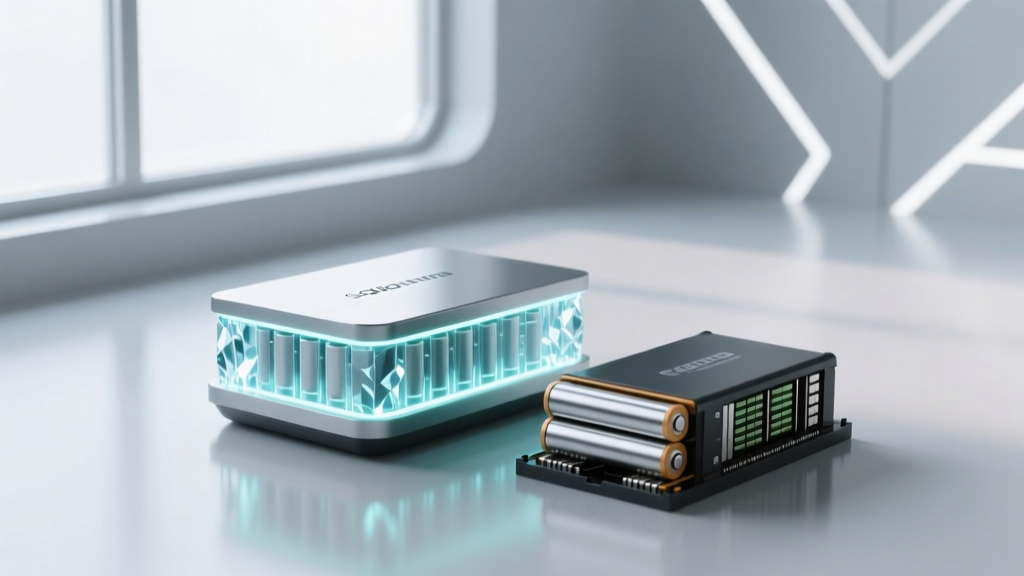
Not all EV batteries are the same. The two dominant chemistries in 2026's EV market each carry different trade-offs that affect cost, longevity, range, and cold-weather behavior. Understanding which chemistry is in your EV (or the one you're considering) is essential for predicting long-term battery cost and care requirements.
| Attribute | LFP (Lithium Iron Phosphate) | NMC/NCA (Nickel Manganese Cobalt / Nickel Cobalt Aluminum) |
|---|---|---|
| Energy density | Lower (~160–180 Wh/kg cell-level) | Higher (~220–300 Wh/kg cell-level) |
| Typical cycle life | 3,000–5,000+ cycles | 1,000–2,000 cycles |
| Degradation rate | ~1–1.5% per year | ~1.5–2.5% per year |
| Cold-weather performance | Weaker — more range loss below freezing | Better low-temp discharge capability |
| Charging to 100% | Recommended regularly (helps BMS calibration) | Generally 80–90% daily; 100% for trips only |
| Cost per kWh (pack-level) | $90–$120 (2026 estimates) | $120–$160 (2026 estimates) |
| Common in (2026 models) | Tesla Model 3 RWD, Model Y RWD, Hyundai Ioniq 5 Std Range, Ford Mustang Mach-E Select | Tesla Long Range/Performance, Hyundai Ioniq 5 Long Range, BMW i4, Rivian, Lucid |
| Safety/thermal stability | Higher — less prone to thermal runaway | Good but requires more active thermal management |
The practical takeaway: If your priority is maximum range per charge and strong cold-weather driving, NMC/NCA is the better fit. If you plan to keep the car 10+ years, drive moderate daily distances, and want the lowest long-term battery cost and degradation, LFP is increasingly the smart choice — and it's why automakers are expanding LFP adoption across standard-range trims.
How Much Does an EV Battery Cost to Replace?
Out-of-warranty battery replacement is the scenario EV skeptics point to most often. The cost is real, but context matters enormously. Here's a breakdown of current replacement pricing by vehicle category, based on manufacturer service bulletins, dealer quotes, and third-party repair data compiled through 2026:
| Vehicle / Category | Battery Size (kWh) | Chemistry | Estimated Replacement Cost |
|---|---|---|---|
| Tesla Model 3 RWD | ~60 kWh | LFP | $8,000–$12,000 |
| Tesla Model Y Long Range | ~75 kWh | NMC/NCA | $12,000–$16,000 |
| Hyundai Ioniq 5 Long Range | 77.4 kWh | NMC | $11,000–$15,000 |
| Ford F-150 Lightning Extended Range | 131 kWh | NMC | $18,000–$25,000+ |
| Chevrolet Equinox EV | ~85 kWh | NMC | $12,000–$16,000 |
| Rivian R1T (Large Pack) | ~135 kWh | NMC | $20,000–$28,000 |
| BMW i4 eDrive40 | 81.5 kWh | NMC | $14,000–$19,000 |
| Nissan Leaf (40 kWh pack) | 40 kWh | NMC | $6,500–$9,000 |
These figures include the battery pack and labor but can vary by region, dealer, and whether the pack is new, remanufactured, or refurbished. Several important nuances:
- Module-level repair: Many modern packs allow individual module replacement rather than the entire pack. A single failed module might cost $1,500–$4,000 to swap, restoring full functionality at a fraction of a full-pack price.
- Remanufactured packs: Third-party suppliers and some OEMs now offer remanufactured packs at 30–50% below new pricing. These use tested, graded cells and carry their own warranties.
- Most owners never pay this: According to data from consumer EV communities and warranty claim analyses, fewer than 2–3% of EV batteries require full replacement within the first 10 years. The vast majority of battery-related service is covered under warranty.
What Does the Battery Warranty Actually Cover?
U.S. federal law mandates that EV batteries carry a minimum warranty of 8 years or 100,000 miles (whichever comes first). In California and states that have adopted CARB (California Air Resources Board) emissions standards, the requirement extends to 10 years or 150,000 miles. Most major automakers meet or exceed these minimums:
| Manufacturer | Warranty Period | Capacity Retention Threshold | Notes |
|---|---|---|---|
| Tesla | 8 yr / 100,000–120,000 mi (varies by model) | 70% | Long Range/Performance models get 120k mi |
| Hyundai / Kia | 10 yr / 100,000 mi | 70% | Among the best in the industry |
| Ford | 8 yr / 100,000 mi | 70% | Covers battery and hybrid/electric components |
| General Motors (Chevy/Cadillac) | 8 yr / 100,000 mi | 70% | Ultium platform vehicles |
| BMW | 8 yr / 100,000 mi | 70% | Transferable to second owner |
| Rivian | 8 yr / 175,000 mi | 70% | Higher mileage cap for adventure-class vehicles |
| Volkswagen | 8 yr / 100,000 mi | 70% | ID.4 and upcoming ID. models |
What "70% capacity retention" means: If your 80 kWh battery degrades to below 56 kWh of usable capacity within the warranty period, the manufacturer is obligated to repair or replace the battery to bring it above that threshold. This doesn't mean the battery is useless at 70% — it means you'll see roughly 30% less range than when new, which for a 300-mile EPA-rated vehicle translates to about 210 miles of range. Still very usable for most daily driving.
What's typically covered: Manufacturing defects, premature cell failure, excessive degradation below the stated threshold, and failures of the battery management system (BMS). Damage from collisions, flooding, improper modifications, or unauthorized repairs is excluded.
Real-World Degradation: What the Data Shows
Manufacturer warranties set a floor, but real-world fleet data tells a more complete — and generally more reassuring — story. Here's what long-term studies and aggregated owner data reveal about actual degradation patterns:
- Tesla fleet data (2025 Impact Report): Model 3 and Model Y vehicles show an average of ~12% degradation at 150,000 miles. The curve flattens significantly after the initial 2–3% "break-in" loss in the first 10,000–15,000 miles.
- Geotab fleet study (2024, 10,000+ EVs): Average annual degradation across all brands was 1.8% per year, meaning a typical EV retains ~82% capacity after 10 years.
- Hyundai/Kia LFP vehicles (early data): Ioniq 5 Standard Range and Kia EV6 Light (LFP trims) are showing 0.8–1.2% annual degradation in early fleet monitoring — among the lowest rates recorded.
- Nissan Leaf (passive-cooled, older generation): Earlier Leafs (2011–2017) without active thermal management showed notably faster degradation, particularly in hot climates — up to 3–5% per year. This is largely a solved problem with modern liquid-cooled packs.
The degradation curve is not linear. Most batteries experience a steeper initial drop (1–3% in the first year or two), followed by a long, slow plateau, and then a gradual increase in loss rate after 10–15 years. This "bathtub curve" means that a battery making it past year three in good shape is very likely to continue performing well for many more years.
Factors That Accelerate Battery Degradation
Not all miles are created equal when it comes to battery wear. Based on electrochemistry fundamentals and fleet data analysis, these are the most significant factors that can shorten battery life:
✅ Best Practices to Maximize Battery Longevity
- Daily charging to 80–90% (NMC/NCA): Storing an NMC battery at 100% for extended periods accelerates electrolyte decomposition. Set your charge limit to 80–90% for daily driving and charge to 100% only before long trips. (LFP batteries are an exception — charge to 100% at least weekly for BMS calibration.)
- Minimize DC fast charging to when needed: Occasional fast charging is fine, but daily use of 150+ kW DC charging generates sustained heat that stresses cells. Use Level 2 (7–11 kW) for daily home charging and reserve DC fast charging for road trips.
- Avoid extreme State of Charge storage: Don't leave the car sitting at 100% or below 10% for weeks. If storing the vehicle, aim for 50–60% SoC.
- Use preconditioning: Most modern EVs allow you to precondition the battery (warm it up) before fast charging or before driving in cold weather. This reduces stress on cells and improves charging speed.
- Park in shade or a garage in extreme heat: Sustained battery temperatures above 95°F (35°C) accelerate degradation. Thermal management systems help, but reducing heat soak is beneficial.
- Keep firmware updated: OEMs regularly release BMS (Battery Management System) updates that optimize charging curves and thermal management. Install them promptly.
⚠️ Habits That Shorten Battery Life
- Exclusive reliance on DC fast charging (150–350 kW) for daily needs
- Regularly draining the battery below 10% before recharging
- Storing the vehicle at 100% SoC for extended periods (especially in heat)
- Ignoring battery thermal warnings or cooling system maintenance
- Aftermarket modifications that bypass the OEM BMS
How to Check Your Battery's State of Health (SoH)
State of Health (SoH) is a percentage indicating your battery's current maximum capacity relative to when it was new. A brand-new battery is at 100% SoH; one that can hold only 85% of its original energy is at 85% SoH. Here's how to monitor it:
Built-in vehicle tools:
- Tesla: The Tesla app and in-car service menu show estimated battery health. Third-party apps like Tessie or Stats provide more granular SoH tracking using OBD-II data.
- Hyundai/Kia: The infotainment system's EV diagnostics page displays battery health percentage. The Bluelink/UVO connected app also provides SoH estimates.
- Ford: The FordPass app and in-vehicle diagnostics provide battery state-of-health readings, particularly on the Mustang Mach-E and F-150 Lightning.
- BMW: The iDrive system includes a battery health report accessible through the service menu.
Third-party OBD-II tools:
- Devices like the OBDLink SX/MX+ paired with apps such as EVNotify, LeafSpy (for Nissan), or Car Scanner can read detailed battery data including individual cell voltages, pack temperature, and precise SoH calculations.
- Some EV-specialist shops offer battery health reports for $50–$150 using professional diagnostic equipment — a smart move when buying a used EV.
What to watch for: A sudden drop in SoH (more than 3–5% in a short period) or a significant imbalance between cell groups may indicate a failing module. This is exactly the type of issue that's often covered under warranty if caught early.
Emerging Battery Tech: Solid-State and Beyond
Next-generation battery technologies are in active development and pilot production, but it's critical to separate announced timelines from realistic availability:
- Solid-state batteries: Toyota, Samsung SDI, and QuantumScape are leading development. Toyota has announced a solid-state battery targeting 2027–2028 production with claims of 750+ km (466+ mi) range and 10-minute fast charging. However, mass-market availability at competitive pricing remains uncertain before 2030. Initial deployment will likely be limited to premium models.
- Silicon-dominant anodes: Companies like Sila Nanotechnologies and Group14 are producing silicon-carbon anode materials that boost energy density by 20–40% over graphite. These are entering production in 2025–2026 for select applications (Mercedes-Benz G-Class EV, certain consumer electronics) and will gradually scale across the EV market.
- Sodium-ion batteries: CATL and BYD are producing sodium-ion cells for lower-cost, shorter-range EVs. These trade energy density for lower material costs and excellent cycle life. Expect these in budget-oriented city EVs and commercial fleet vehicles, primarily in Asian markets initially, with U.S. availability likely post-2027.
The realistic outlook: Lithium-ion (LFP and NMC) will remain the dominant EV battery chemistry through at least 2030. Solid-state and silicon-anode technologies will improve energy density and charging speed incrementally, but they won't make current EVs obsolete. If you're buying an EV today or in the next 2–3 years, the battery technology is mature, well-understood, and backed by substantial warranty protection.
Frequently Asked Questions
How long do EV batteries last in years and miles?
Most modern EV batteries are engineered for 15–20 years or 200,000–300,000+ miles before dropping below 70–80% of original capacity. Real-world fleet data shows average annual degradation of 1.5–2.5% for NMC/NCA and 1–1.5% for LFP chemistries. At the 10-year mark, expect roughly 85–92% capacity retention under normal use.
How much does it cost to replace an EV battery out of warranty?
Full-pack replacement costs range from roughly $6,500 for smaller packs (Nissan Leaf 40 kWh) to $25,000+ for large packs (Ford F-150 Lightning 131 kWh, Rivian R1T). Most vehicles fall in the $10,000–$18,000 range. However, module-level repairs can cost $1,500–$4,000, and fewer than 2–3% of batteries require full replacement within the first decade. Remanufactured packs offer 30–50% savings over new.
What does the EV battery warranty cover?
Federal law requires a minimum of 8 years/100,000 miles of battery warranty coverage (10 years/150,000 miles in CARB states). The warranty covers manufacturing defects, premature cell failure, and degradation below a stated threshold — typically 70% of original capacity. Collision damage, flooding, and unauthorized modifications are excluded.
LFP vs NMC — which battery chemistry is better?
Neither is universally better; they serve different needs. LFP offers longer cycle life (3,000–5,000 cycles), slower degradation, lower cost per kWh, and better thermal safety — but has lower energy density and weaker cold-weather performance. NMC/NCA delivers higher range per charge, better cold-weather operation, and faster charging — but at higher cost and faster degradation. For maximum longevity and lowest lifetime cost, LFP wins. For maximum range and all-climate driving, NMC/NCA wins.
Does fast charging damage the battery?
Occasional DC fast charging (150–350 kW) causes negligible harm. The concern is exclusive reliance on fast charging for daily needs, which generates sustained heat and accelerates cell wear. Modern BMS and thermal management systems mitigate much of this, but Level 2 home charging (7–11 kW) remains the gentler, recommended daily option. Think of fast charging as the equivalent of highway driving for a gas car — fine in moderation.
Should I be worried about buying a used EV with an older battery?
Not necessarily — but do your due diligence. Request a battery health report (SoH percentage) from the seller or an independent EV shop. A 5-year-old EV with 88–92% SoH is typical and healthy. Check whether the original battery warranty is still active (most transfer to second owners). Avoid vehicles with SoH below 80% unless the price reflects the reduced range and potential replacement timeline.
Can I upgrade my EV's battery to a larger or newer one?
In most cases, no. Battery packs are engineered for specific vehicle platforms with proprietary mounting, cooling, and BMS integration. Some manufacturers (notably Tesla and Renault) have offered battery upgrades for specific models in the past, but this is not broadly available. The more practical path to more range is simply your next EV purchase.
Sources: fueleconomy.gov (EPA range and efficiency data), IRS §30D Clean Vehicle Credit guidelines, manufacturer warranty documentation (Tesla, Hyundai, Ford, BMW, Rivian), Geotab EV fleet degradation study, Federal Highway Administration driving statistics.