The single biggest concern for prospective EV buyers isn't range or charging speed — it's longevity. Will the battery last? What happens when it degrades? And how much will a replacement cost? These are fair questions, and the answers in 2026 are more reassuring than the early-day horror stories suggest. Modern EV traction batteries routinely outlast 200,000 miles with manageable degradation, and chemistry advances continue to push those boundaries further.
This guide covers everything you need to know about automotive battery lifespan: the chemistries inside today's EVs, real-world degradation data, what warranties actually cover, replacement economics, and the habits that maximize — or destroy — your pack's health over time.
How Long Do EV Batteries Actually Last?
The short answer: most modern EV batteries are engineered to last the usable life of the vehicle — typically 15 to 20 years or 200,000+ miles — before degradation reaches a point where range loss becomes functionally inconvenient. "End of life" for an EV battery doesn't mean it stops working; it means capacity has dropped below a usable threshold, usually around 70-80% of original capacity.
Here's what real-world data tells us about degradation trajectories:
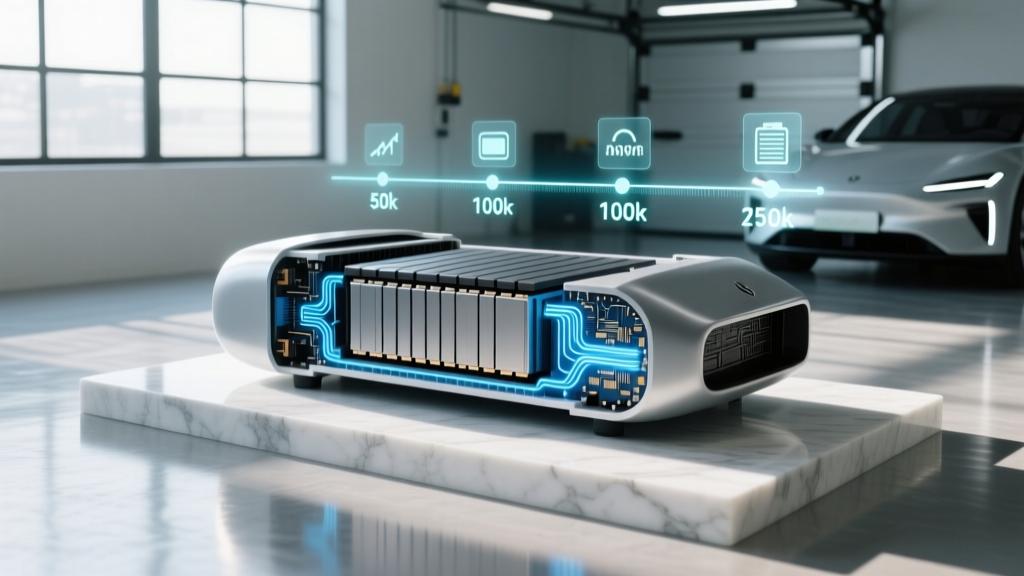
Typical EV Battery Degradation Over Time
| Timeframe | Average Capacity Retained | Notes |
|---|---|---|
| Year 1 / 15,000 mi | 95-97% | Initial drop as cells stabilize; most noticeable early loss |
| Year 3 / 45,000 mi | 92-95% | Degradation curve flattens significantly |
| Year 5 / 75,000 mi | 89-93% | Most owners report minimal day-to-day range difference |
| Year 8 / 120,000 mi | 85-90% | Federal warranty threshold period; most packs well above 70% |
| Year 10 / 150,000 mi | 82-88% | Noticeable but manageable range reduction |
| Year 15 / 200,000+ mi | 75-85% | Vehicles with LFP packs often retain more capacity at this stage |
Sources: Recurrent Auto battery data, manufacturer warranty filings, fleet operator reports. Individual results vary based on climate, charging habits, and chemistry.
The key insight: degradation is not linear. Most capacity loss occurs in the first 12-24 months as the solid electrolyte interphase (SEI) layer forms on the anode. After that, the curve flattens dramatically. A battery that has lost 5% in its first year won't lose another 5% every year — it's more likely to lose 1-2% annually thereafter.
LFP vs NMC vs NCA: Chemistry Determines Longevity
Not all EV batteries are created equal. The cathode chemistry inside the cells is the single biggest factor determining both lifespan and performance characteristics. In 2026, three chemistries dominate the market:
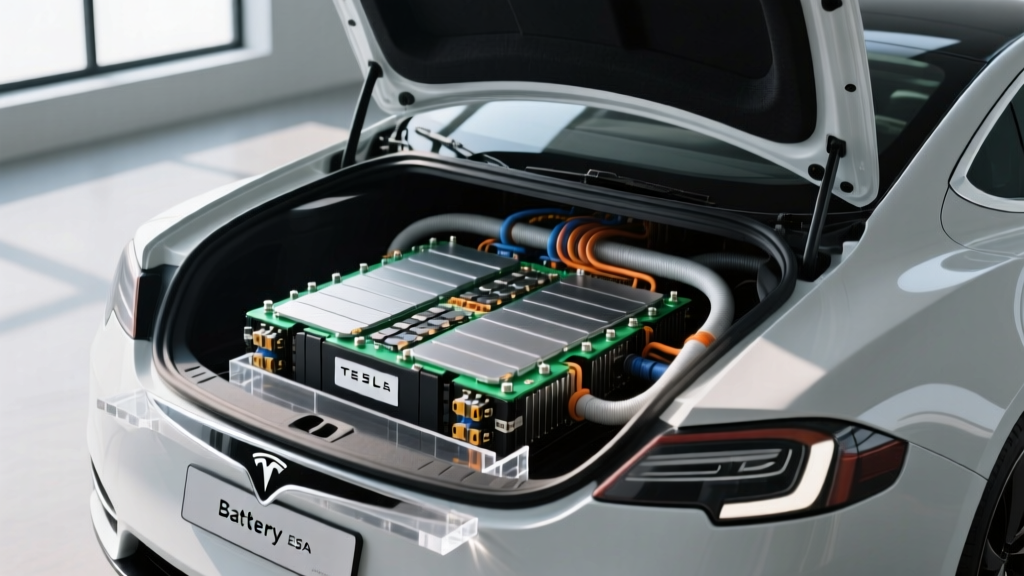
- LFP (Lithium Iron Phosphate) — Used in Tesla Model 3/Y Standard Range, Ford Mustang Mach-E Select, many BYD models
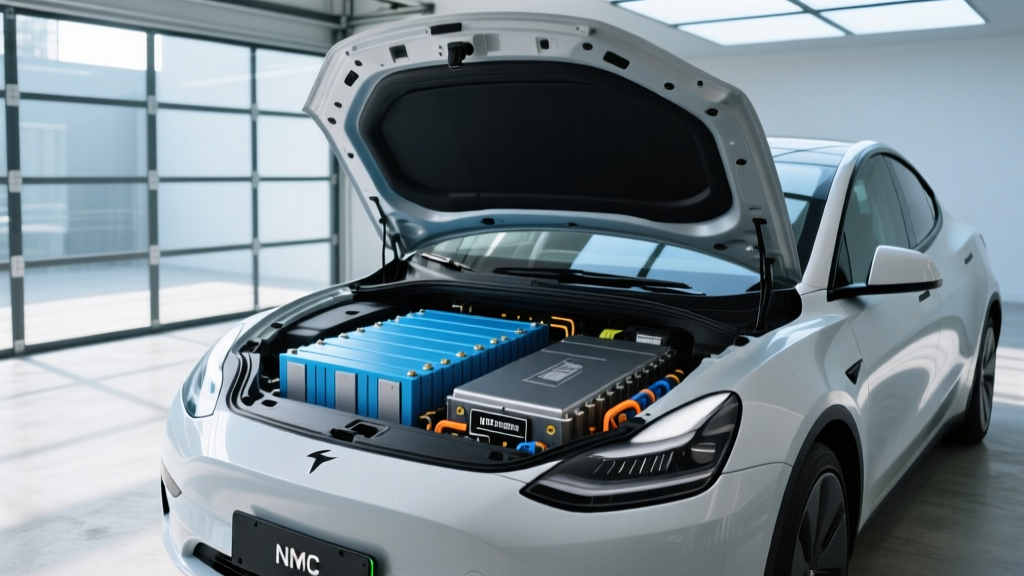
- NMC (Nickel Manganese Cobalt) — Used in Hyundai Ioniq 5/6, BMW i4/iX, VW ID.4, most long-range models
- NCA (Nickel Cobalt Aluminum) — Used in Tesla long-range and performance variants, Lucid Air
EV Battery Chemistry Comparison
| Attribute | LFP | NMC | NCA |
|---|---|---|---|
| Cycle life (full cycles to 80% SoH) | 3,000-5,000+ | 1,000-2,000 | 800-1,500 |
| Energy density (Wh/kg, cell-level) | 150-180 | 220-300 | 250-300 |
| Cold-weather performance | Moderate (more range loss below freezing) | Good | Good |
| Cost per kWh (cell-level) | Lowest (~$80-100) | Mid (~$110-140) | Mid-High (~$120-150) |
| Optimal daily SoC | 100% (can and should be charged fully) | 80% (daily); 100% only for trips | 80% (daily); 100% only for trips |
| Thermal stability / safety | Excellent (least prone to thermal runaway) | Good | Good (requires robust BMS) |
| Best for | Daily commuters, high-mileage drivers, hot climates | Long-range needs, cold climates, balanced use | Performance applications, maximum range per kg |
The longevity winner is LFP — by a wide margin. LFP cells tolerate thousands more charge cycles, don't suffer from the same nickel-related cathode degradation, and can be charged to 100% daily without accelerated wear. The trade-off is lower energy density, meaning LFP packs are heavier for the same kWh, which is why they're typically found in standard-range trims.
NMC and NCA offer more range per pound but degrade faster if routinely charged to 100% or deeply discharged. Owners of NMC/NCA vehicles who follow the 20-80% daily charging guideline consistently see better long-term capacity retention than those who charge to full nightly.
What the Battery Warranty Actually Covers
Federal law mandates that EV battery warranties cover a minimum of 8 years / 100,000 miles (10 years / 150,000 miles in California Air Resources Board states). But the details matter enormously — specifically, the capacity retention threshold at which the manufacturer must intervene.
2026 EV Battery Warranty Terms by Manufacturer
| Manufacturer | Warranty Period | Capacity Threshold | Remedy |
|---|---|---|---|
| Tesla (Model 3/Y LFP) | 8 yr / 120,000 mi | 70% retention | Repair or replace to meet threshold |
| Tesla (Model 3/Y NCA Long Range) | 8 yr / 120,000 mi | 70% retention | Repair or replace to meet threshold |
| Hyundai / Kia (E-GMP platform) | 10 yr / 100,000 mi | 70% retention | Repair or replace |
| Ford (Mach-E, F-150 Lightning) | 8 yr / 100,000 mi | 70% retention | Repair or replace |
| GM (Ultium platform) | 8 yr / 100,000 mi | 70% retention | Repair or replace |
| VW (ID.4 / MEB platform) | 8 yr / 100,000 mi | 70% retention | Repair or replace |
| BMW | 8 yr / 100,000 mi | 70% retention | Repair or replace |
Note: Warranty covers defects and abnormal degradation below the threshold. It does not cover gradual, normal capacity loss above 70%. Always check your specific model-year warranty booklet. Source: Manufacturer warranty documentation, fueleconomy.gov.
The 70% threshold is industry standard, and it's worth putting in perspective: a vehicle with an original EPA range of 310 miles would still deliver ~217 miles at 70% capacity. That's still functional for most daily driving. In practice, very few modern EV packs actually hit the 70% threshold within the warranty period. Fleet data from Recurrent Auto shows that the vast majority of EVs retain 85%+ capacity at the 100,000-mile mark.
EV Battery Replacement Cost: What to Expect
This is where fear tends to outpace reality. Yes, EV battery packs are expensive. But the context matters: most packs never need replacement during typical ownership, and costs have dropped significantly over the past decade.
Estimated EV Battery Replacement Costs (2026)
| Vehicle | Battery Size (kWh) | Chemistry | Estimated Replacement Cost |
|---|---|---|---|
| Tesla Model 3 Standard Range | 60 kWh | LFP | $8,000 – $12,000 |
| Tesla Model Y Long Range | 75 kWh | NCA | $12,000 – $16,000 |
| Hyundai Ioniq 5 | 77.4 kWh | NMC | $11,000 – $16,000 |
| Ford Mustang Mach-E Extended Range | 91 kWh | NMC | $14,000 – $20,000 |
| Ford F-150 Lightning Extended Range | 131 kWh | NMC | $18,000 – $28,000 |
| Chevrolet Equinox EV | 85 kWh | NMC (Ultium) | $12,000 – $18,000 |
| BMW iX xDrive50 | 111.5 kWh | NMC | $18,000 – $25,000 |
Costs include battery pack and labor. Prices vary by region, dealer, and whether refurbished/remanufactured packs are available. Module-level repair (replacing individual bad modules rather than the full pack) can reduce costs by 40-60% on platforms that support it. Source: dealer service estimates, KBB, independent EV service centers.
When is replacement actually needed? In most cases, it isn't — at least not during the first 15 years. The scenarios where replacement becomes necessary include:
- Manufacturing defect (covered under warranty — rare but it happens, typically identified in the first 2-3 years)
- Physical damage from a collision or road debris puncture (covered by insurance)
- Extreme degradation beyond the warranty threshold at high mileage (150,000-200,000+ miles — uncommon with modern packs)
- Coolant intrusion or BMS failure causing cell damage (may or may not be warranty-covered depending on cause)
For a vehicle you plan to keep 8-10 years and trade at 120,000 miles, the battery replacement question is largely academic. The warranty covers you for that entire period, and the pack will almost certainly outlast your ownership.
Factors That Accelerate — or Preserve — Battery Life
Chemistry sets the ceiling, but your habits determine whether you reach it. Here's what actually moves the needle on degradation, ranked by impact:
High-Impact Factors
- Extreme heat exposure — Sustained ambient temperatures above 95°F (35°C) accelerate electrolyte decomposition. Vehicles parked outdoors in Phoenix or Houston year-round degrade measurably faster than those in temperate climates. Garage parking and preconditioning help.
- Routine 100% SoC on NMC/NCA — Keeping nickel-based batteries at full charge for extended periods stresses the cathode lattice. Daily charging to 80% with 100% only before long trips is the single most impactful habit for NMC/NCA owners.
- Frequent DC fast charging above 150 kW — High-power DCFC sessions generate significant internal heat. Occasional fast charging is fine; daily 250 kW sessions will measurably accelerate wear. Tesla's own data showed that vehicles that primarily Supercharged degraded slightly faster than those that primarily used Level 2.
Moderate-Impact Factors
- Deep discharges (below 10% SoC) — Running the battery very low stresses the anode. Try not to regularly dip below 15-20%.
- Extreme cold charging without preconditioning — Charging a cold battery (below 32°F / 0°C) at high power can cause lithium plating on the anode, a permanent damage mechanism. Always use your vehicle's preconditioning feature before charging in cold weather.
- Sustained storage at 100% or 0% SoC — If leaving the vehicle for weeks, set SoC to 50-60%. Both full and empty storage accelerate calendar aging.
Low-Impact Factors
- Level 2 home charging speed — Whether you charge at 7 kW or 11.5 kW on Level 2 has negligible impact on degradation. The thermal load difference is minimal.
- Regenerative braking intensity — The charge currents from regen are well within safe C-rates and don't meaningfully affect battery wear.
Battery Care Best Practices — Quick Checklist
- ✅ Set daily charge limit to 80% (NMC/NCA) or 100% (LFP)
- ✅ Enable battery preconditioning before DC fast charging
- ✅ Avoid letting SoC drop below 15% regularly
- ✅ Park in shade or a garage in hot climates when possible
- ✅ Use Level 2 home charging as your primary method
- ✅ Limit DC fast charging to road trips when practical
- ✅ If storing for 2+ weeks, set SoC to 50-60%
- ✅ Keep battery cooling system maintained per manufacturer schedule (coolant flush intervals vary — check your manual)
- ❌ Don't charge to 100% nightly on NMC/NCA vehicles
- ❌ Don't leave the vehicle at 0% or 100% SoC for extended periods
- ❌ Don't repeatedly DC fast charge in extreme heat without cooldown periods
How to Check Your Battery's State of Health (SoH)
State of Health (SoH) is the metric that tells you how much capacity your battery retains relative to its original specification. A new battery is at 100% SoH; one that has degraded to hold only 88% of its original energy is at 88% SoH.
Here's how to monitor it:
Built-In Vehicle Displays
Most 2026 EVs offer some form of battery health indication in the infotainment or instrument cluster. Tesla provides a "Battery Health" percentage in the Service menu (software 2025.38+). Hyundai's Bluelink app shows estimated SoH. BMW's iDrive includes battery condition status. Check your owner's manual for the specific path.
OBD-II Diagnostic Tools
For more granular data, OBD-II dongles paired with apps like Car Scanner, ABRP (A Better Route Planner), or manufacturer-specific tools can read the BMS-reported SoH, cell voltage variance, and individual module temperatures. These read the same data the dealer sees.
Third-Party Battery Health Reports
Services like Recurrent and some dealer-certified pre-owned programs now provide battery health certificates — essentially a SoH report card. If you're buying a used EV, requesting this report is as important as checking a Carfax.
Manual Range Tracking
The simplest method: track your vehicle's displayed range at 100% SoC over time. If your Ioniq 5 showed 303 miles at 100% when new and now shows 272 miles at 100% after three years, you're at roughly 90% SoH. Note that the displayed range estimate also factors in recent driving efficiency, so this method has some noise — but the trend line is reliable.
What's Next: Solid-State and Silicon-Anode Batteries
Looking ahead, two emerging technologies promise to reshape battery longevity — but neither is commercially available in production EVs as of early 2026.
Solid-State Batteries
Solid-state batteries replace the liquid electrolyte with a solid material (ceramic, sulfide, or polymer), offering potential benefits including:
- Higher energy density (400-500 Wh/kg projected at cell level)
- Faster charging capability (potentially 10-80% in under 10 minutes)
- Improved safety (no flammable liquid electrolyte)
- Longer cycle life (projected 5,000+ cycles)
Realistic timeline: Toyota has announced solid-state battery production targeting 2027-2028 for limited-run vehicles. Samsung SDI and QuantumScape are in pilot production phases. Widespread, affordable solid-state packs in mainstream EVs are not expected before 2030. Any vehicle currently on sale does not have a solid-state battery.
Silicon-Anode Batteries
Silicon anodes replace or supplement the graphite anode in lithium-ion cells, offering roughly 20-40% more energy density. Companies like Sila Nanotechnologies and Group14 Technologies are supplying silicon-anode materials to battery manufacturers now, with early production cells appearing in premium applications.
Realistic timeline: Limited silicon-anode deployment is beginning in 2025-2026 model-year vehicles (primarily performance and luxury segments). Broader adoption across mainstream EVs is expected by 2028-2030. Cycle life remains a challenge — silicon expands significantly during charging, causing mechanical stress — but composite solutions are improving this.
Both technologies are worth watching, but neither should influence a buying decision today. Current lithium-ion chemistries (LFP and NMC) are mature, well-understood, and demonstrably long-lasting.
Frequently Asked Questions
How long do EV batteries last in years and miles?
Most modern EV batteries are designed to last 15-20 years or 200,000+ miles before degrading below 70-80% of original capacity. LFP-chemistry packs often exceed this. The battery doesn't "die" at this point — it simply holds less energy, reducing range. Many EVs from 2012-2015 (early Tesla Model S, Nissan Leaf) are still on their original packs at 150,000+ miles with 80-85% capacity retained.
How much does it cost to replace an EV battery?
Full battery replacement costs range from approximately $8,000 for a smaller LFP pack (Tesla Model 3 Standard Range, 60 kWh) to $28,000 for a large NMC pack (F-150 Lightning Extended Range, 131 kWh). Most mainstream mid-size EVs fall in the $11,000-$18,000 range including labor. However, most batteries never need replacement during normal ownership, and module-level repairs can cost significantly less on supported platforms.
What does the EV battery warranty cover?
Federal law requires a minimum of 8 years / 100,000 miles of battery warranty coverage (10 years / 150,000 miles in CARB states). The warranty guarantees the battery will retain at least 70% of its original capacity. If degradation drops below that threshold within the warranty period, the manufacturer must repair or replace the battery at no cost. The warranty also covers manufacturing defects and premature cell failures.
LFP vs NMC — which battery chemistry is better for longevity?
For pure lifespan, LFP wins decisively. LFP cells are rated for 3,000-5,000+ full charge cycles (vs. 1,000-2,000 for NMC), tolerate daily 100% charging without accelerated degradation, and are more thermally stable. The trade-off is lower energy density — LFP packs are heavier and typically offer less range. If you need maximum range and live in a cold climate, NMC is the practical choice; if you prioritize longevity and daily-driver practicality, LFP is ideal.
Does fast charging damage EV batteries?
DC fast charging generates more heat than Level 2 charging, and sustained high-power charging (250+ kW) does accelerate degradation — but the effect is smaller than commonly feared. Tesla's fleet data showed vehicles that primarily Supercharged had slightly more degradation than those using home charging, but the difference was a few percentage points over 100,000 miles. The real risk is repeated fast charging in extreme heat without preconditioning. For daily use, Level 2 home charging is preferable; fast charging on road trips is perfectly fine.
How do I check my EV battery health?
Check your vehicle's built-in battery health display (available in most 2026 models through the infotainment or companion app), use an OBD-II diagnostic tool with an EV-compatible app, or track your 100% SoC displayed range over time and compare it to the original EPA rating. For a used EV purchase, request a third-party battery health report from services like Recurrent or the manufacturer's certified pre-owned program.
Should I worry about buying a used EV with high mileage?
A high-mileage used EV (100,000+ miles) with a verified SoH above 80% is generally a sound purchase, especially if it's an LFP-equipped vehicle. Check the remaining warranty coverage, review the battery health report, and factor in that even at 85% SoH, a 300-mile-range vehicle still delivers ~255 miles. The bigger concerns with high-mileage used EVs are suspension, HVAC, and other mechanical wear items — not the battery.
The data is clear: modern EV batteries are remarkably durable components. With basic care — moderate charge limits for NMC/NCA, avoiding extreme heat where possible, and relying primarily on Level 2 charging — your battery will very likely outlast your ownership of the vehicle. The replacement-cost nightmare scenario that dominates forum threads is real in dollar terms but vanishingly rare in practice. Buy the chemistry that fits your driving pattern, follow the care basics, and let the warranty handle the rest.