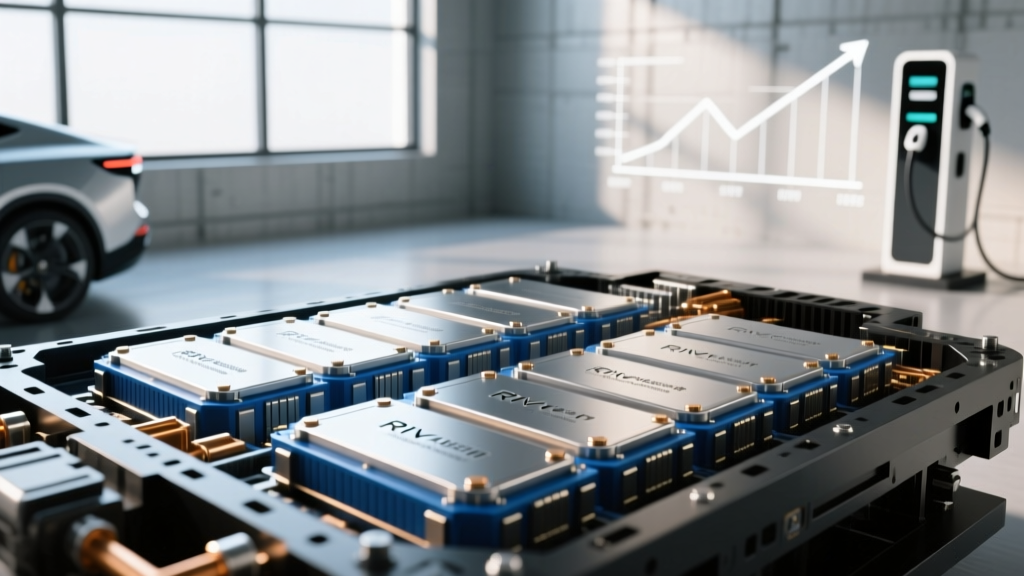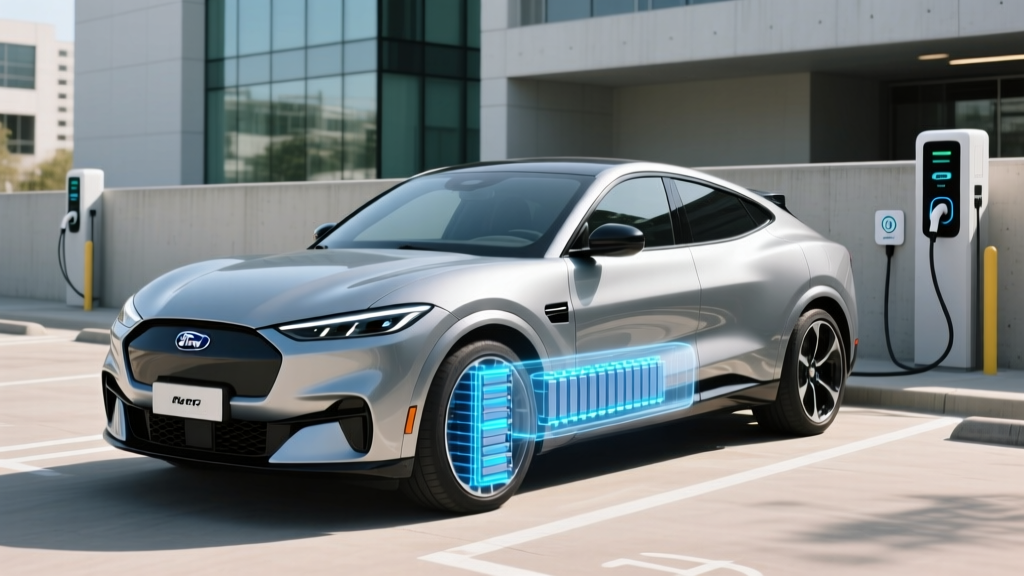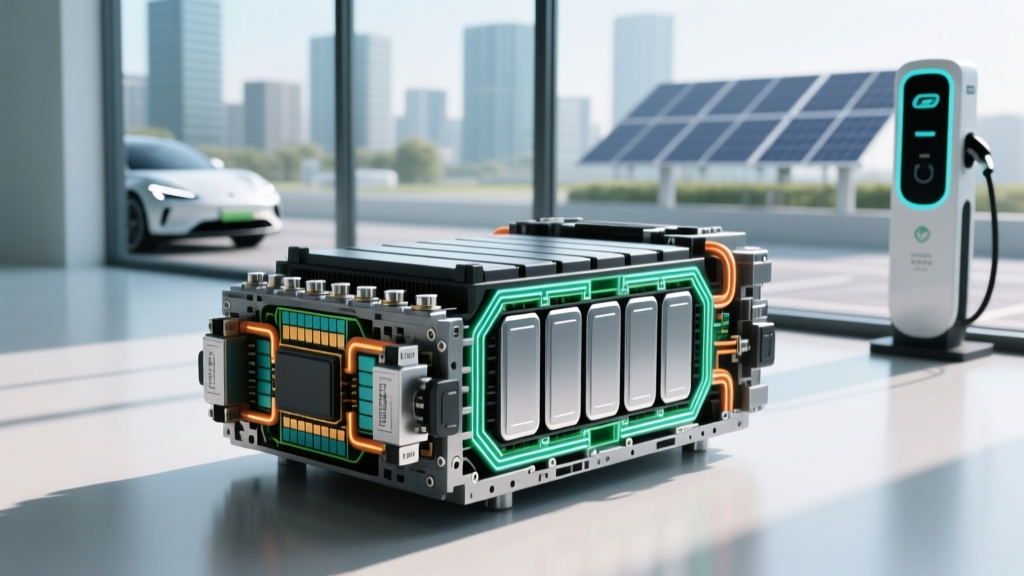
If you're considering an electric vehicle, the traction battery is the single most expensive component in the car — and the one buyers worry about most. The good news? Modern automotive battery life has improved dramatically. Most EV batteries on the road today will outlast the vehicles they're installed in, provided owners follow basic care practices. But "most" isn't "all," and understanding the chemistry, degradation patterns, and warranty coverage behind your battery pack is essential for making an informed purchase.
This guide covers everything you need to know about EV battery longevity in 2026: the two dominant chemistries (LFP and NMC/NCA), real-world degradation data, what warranties actually cover, what replacement costs look like, and the daily habits that maximize — or shorten — your pack's useful life.
How Long Do EV Batteries Actually Last?
The short answer: between 100,000 and 200,000 miles before significant degradation, and typically 12 to 20 years of calendar life depending on climate and usage patterns. "Significant degradation" here means the battery has lost enough capacity that you notice reduced range in daily driving — not that the battery has failed entirely.
Most modern EV batteries are engineered to retain 70% to 80% of their original capacity after 8 years or 100,000 miles, whichever comes first. That's the federal warranty minimum mandated for all EVs sold in the United States, and many manufacturers exceed it. In practice, data from fleet operators and long-term owners suggests that liquid-cooled battery packs from major manufacturers (Tesla, Hyundai/Kia, GM, Ford, BMW) are losing roughly 1% to 2.5% of capacity per year under normal use.
- Tesla Model 3/Y (NMC/NCA): ~10-12% capacity loss at 100,000 miles (data aggregated from fleet and owner reports)
- Hyundai Ioniq 5 (NMC): ~8-10% loss at 80,000 miles in moderate climates
- Tesla Model 3 Standard Range (LFP): ~5-8% loss at 100,000 miles — LFP degrades more slowly
- Chevrolet Bolt EV/EUV (NMC): ~8-12% loss at 80,000 miles (pre-recall replacement packs show improved longevity)
Sources: Recurrent Auto battery health data, owner community aggregations, manufacturer service bulletins.
It's critical to understand that degradation isn't linear. Most packs experience a steeper drop in the first 10,000 to 20,000 miles (sometimes 3-5%), then settle into a slow, gradual decline. A battery that has lost 10% after 60,000 miles hasn't necessarily lost 20% by 120,000 miles — the curve flattens considerably.
LFP vs NMC/NCA: The Chemistry That Defines Your Battery's Lifespan
The two dominant lithium-ion chemistries in 2026 EVs are LFP (lithium iron phosphate) and NMC/NCA (nickel manganese cobalt / nickel cobalt aluminum). The chemistry inside your pack determines not just how far you can drive on a charge, but how long the battery will last, how it handles cold weather, and how much it costs to replace.
| Attribute | LFP (Lithium Iron Phosphate) | NMC / NCA |
|---|---|---|
| Energy Density | Lower (~160-180 Wh/kg cell-level) | Higher (~220-260 Wh/kg cell-level) |
| Cycle Life | 3,000-5,000+ cycles to 80% SoH | 1,000-2,000 cycles to 80% SoH |
| Calendar Life | 15-20+ years | 10-15 years typical |
| Cold-Weather Performance | Weaker — more range loss below freezing | Better — less range loss in cold |
| Charging to 100% Daily | Recommended — LFP benefits from full charges | Not recommended — accelerates degradation |
| Cost per kWh | Lower (~$80-100/kWh at cell level) | Higher (~$110-140/kWh at cell level) |
| Thermal Stability | Excellent — very low thermal runaway risk | Good — requires robust thermal management |
| Common in (2026 models) | Tesla Model 3 RWD, Model Y RWD, base BYD models, Ford Mustang Mach-E Select (some trims) | Tesla Long Range/Performance, Hyundai Ioniq 5/6, Kia EV6/EV9, GM Ultium vehicles, Rivian, BMW iX |
Which is better? It depends entirely on your priorities. If you want maximum battery longevity and don't need the longest possible range, LFP is the superior choice — it simply lasts longer and costs less. If you need 300+ miles of range, tow frequently, or live in a cold climate where every mile of range matters, NMC/NCA's higher energy density is the better fit. Both chemistries are mature, safe, and proven in millions of vehicles on the road.
What the Battery Warranty Actually Covers
Federal law requires that all EV batteries carry a minimum warranty of 8 years or 100,000 miles (whichever comes first). In California and states that follow CARB (California Air Resources Board) emissions standards, the mandate extends to 10 years or 150,000 miles. These warranties guarantee that the battery will retain a minimum percentage of its original capacity — typically 70%, though some manufacturers set the threshold at 65% or 75%.
| Manufacturer | Coverage Period | Capacity Threshold | Notes |
|---|---|---|---|
| Tesla | 8 yr / 100,000-120,000 mi (varies by model) | 70% | Long Range/Performance models get 120,000 mi |
| Hyundai / Kia | 10 yr / 100,000 mi | 70% | Among the longest coverage in the industry |
| GM (Chevrolet, Cadillac) | 8 yr / 100,000 mi | 70% | Ultium platform; covers battery and EV components |
| Ford | 8 yr / 100,000 mi | 70% | Covers high-voltage battery and EV-specific components |
| Rivian | 8 yr / 175,000 mi | 70% | Highest mileage threshold among mainstream EV makers |
| BMW | 8 yr / 100,000 mi | 70% | Includes battery and high-voltage system |
What's covered: Capacity loss below the stated threshold, manufacturing defects, and failures of the battery management system (BMS) or thermal management components. What's not covered: Damage from accidents, flooding, or improper modification; capacity loss that stays above the threshold (even if you notice reduced range); and cosmetic issues.
The practical takeaway: if your 2024 Ioniq 5 shows 68% capacity at year 7, Hyundai will replace or repair the battery at no cost. But if it's at 72%, you're on your own — even though you've lost over a quarter of your original range. This is why monitoring State of Health (SoH) proactively matters.
EV Battery Replacement Costs: What You'll Actually Pay
This is the question that generates the most anxiety — and the most misinformation. Let's look at real numbers.
| Vehicle | Battery Size | Chemistry | Estimated Replacement Cost |
|---|---|---|---|
| Tesla Model 3 RWD | ~60 kWh | LFP | $8,000 - $12,000 |
| Tesla Model Y Long Range | ~75 kWh | NMC/NCA | $12,000 - $16,000 |
| Hyundai Ioniq 5 | 77.4 kWh | NMC | $12,000 - $18,000 |
| Ford F-150 Lightning (Extended Range) | ~131 kWh | NMC | $20,000 - $30,000 |
| Chevrolet Equinox EV | ~85 kWh | NMC (Ultium) | $12,000 - $16,000 |
| GMC Hummer EV | ~200+ kWh | NMC (Ultium) | $30,000 - $40,000+ |
These figures include the battery pack and labor but can vary significantly by region, dealer vs. independent shop, and whether the replacement is a brand-new pack, a refurbished unit, or a module-level repair. Many modern packs allow individual module replacement rather than swapping the entire pack — if only one or two modules have degraded, the cost can be $2,000 to $5,000 rather than the full-pack price.
When is replacement typically needed? For the vast majority of EV owners, the answer is: never during their ownership. According to data from Recurrent Auto, fewer than 1.5% of EVs in their study population required battery replacement outside of warranty-covered recalls. Most packs retain 85-90% of capacity at the 10-year mark. The vehicles most at risk for out-of-warranty replacement are early-generation EVs (2011-2016 Nissan Leaf, early Tesla Model S) with passive air-cooled batteries and no active thermal management.
Factors That Accelerate Battery Degradation
Not all miles are equal when it comes to battery wear. Here's what actually moves the needle on degradation:
1. Extreme State of Charge Habits
For NMC/NCA batteries, regularly charging to 100% and letting the car sit at full charge accelerates chemical degradation inside the cells. Similarly, frequently running the battery below 10% stresses the chemistry. The sweet spot for daily driving is 20-80% State of Charge. LFP batteries are the exception — manufacturers recommend charging to 100% at least weekly because LFP's voltage curve is so flat that the BMS needs full charges to accurately calibrate capacity.
2. DC Fast Charging Frequency
Occasional DC fast charging (1-2 times per week) has a negligible effect on modern battery health. But daily fast charging at 150+ kW — especially without preconditioning — generates sustained heat that accelerates degradation over time. A 2023 study by Geotab found that vehicles fast-charged more than three times per week showed roughly double the degradation rate of vehicles charged primarily on Level 2. The effect is real but modest: we're talking ~2-3% additional loss over 100,000 miles, not catastrophic failure.
3. Extreme Temperatures
Batteries degrade faster when exposed to sustained heat above 95°F (35°C) or when charged in sub-freezing temperatures without preconditioning. Hot climates (Arizona, Texas, the Middle East) are harder on long-term battery health than cold climates. Most modern EVs have active liquid cooling that mitigates this, but parking in shade or a garage when possible still helps. Cold weather reduces range temporarily (20-40% loss in extreme cold) but doesn't cause permanent damage unless you're fast-charging a frozen battery — preconditioning prevents this.
4. High-Discharge Loads
Repeated hard acceleration, frequent towing at max capacity, and sustained high-speed driving (80+ mph for hours) generate heat in the cells. Occasional spirited driving is fine; daily towing in July heat will shorten pack life incrementally.
- Set daily charge limit to 80% (NMC/NCA) or 100% (LFP — follow your manufacturer's recommendation)
- Use Level 2 home charging as your primary method; reserve DC fast charging for road trips
- Enable battery preconditioning when navigating to a fast charger (Tesla, Hyundai, GM, Ford all offer this)
- Avoid leaving the car at 100% SoC for more than a few hours — schedule charging to finish right before you leave
- In extreme heat, park in shade or a garage when possible
- In extreme cold, plug in when parked to let the thermal management system maintain battery temperature
- Don't stress about occasional 100% charges or fast charging — the effect is cumulative, and modern BMS systems protect against worst-case scenarios
How to Monitor Your Battery's State of Health (SoH)
State of Health (SoH) is expressed as a percentage: a brand-new battery is 100% SoH, and a battery that has lost 15% of its original capacity sits at 85% SoH. Monitoring SoH helps you track degradation, plan for warranty claims, and understand your vehicle's resale value.
Through the Vehicle's Infotainment System
Some manufacturers provide a battery health indicator in the car's settings. Tesla doesn't display SoH directly, but you can estimate it by comparing your current range at 100% charge to the original EPA rating. Hyundai and Kia provide more direct health readouts in newer model years. GM's Ultium-based vehicles include a battery health screen in the infotainment system.
Through Third-Party Apps and Services
Services like Recurrent connect to your vehicle's telematics and provide detailed SoH reports, degradation curves, and comparisons against similar vehicles. Tesla owners can use apps like Tessie or Stats to pull detailed battery data from the vehicle's API. OBD-II dongles paired with apps like Car Scanner or ABRP (A Better Route Planner) can read battery health data on many non-Tesla EVs.
Through a Dealer Diagnostic
Any authorized dealer can run a full battery health diagnostic that measures individual cell voltages, internal resistance, and total usable capacity. If you suspect your battery is approaching the warranty threshold (e.g., you're seeing less than 70% of original range), a dealer diagnostic creates the documentation you need for a warranty claim.
What's Next: Solid-State and Silicon-Anode Batteries
Next-generation battery technologies promise step-change improvements in energy density, charging speed, and longevity — but they're not yet in production vehicles you can buy today.
Solid-state batteries replace the liquid electrolyte with a solid material, enabling higher energy density (potentially 400+ Wh/kg at the cell level), faster charging, and improved safety (no flammable electrolyte). Toyota has announced solid-state EV prototypes targeting 2027-2028 production, and Samsung SDI is building pilot production lines. However, manufacturing scale-up remains a significant challenge, and industry analysts expect solid-state EVs to represent less than 5% of global EV production before 2030.
Silicon-anode batteries (used in limited form in the Porsche Taycan's performance battery and being developed by companies like Sila Nanotechnologies and Group14) offer 20-40% higher energy density than current graphite anodes. These are closer to mass production — expect wider adoption in 2027-2029 model-year vehicles.
Sodium-ion batteries are emerging as a low-cost alternative for budget EVs, particularly in China (CATL and BYD are already producing them). They sacrifice energy density for dramatically lower material costs and excellent cycle life, making them ideal for urban commuter vehicles with 150-200 miles of range.
For buyers shopping in 2026, these technologies are forward-looking context — not purchase factors. The LFP and NMC batteries available today are mature, well-understood, and backed by extensive real-world data. Waiting for solid-state means waiting at least 3-5 years for broad availability and likely paying a premium when they first arrive.
Key Takeaways on Automotive Battery Life
Modern EV batteries are far more durable than early-generation packs. With typical annual degradation of 1-2.5%, most owners will never need a battery replacement during their ownership. The warranty safety net (8 years/100,000 miles minimum, 70% capacity retention) provides strong protection against outliers. And daily care habits — primarily moderate State of Charge, home Level 2 charging, and preconditioning — can extend a pack's useful life well beyond 200,000 miles.
If battery longevity is your top priority, choose an LFP-equipped vehicle and follow the manufacturer's charging recommendations. If you need maximum range and cold-weather performance, NMC/NCA is the right call — just be more deliberate about charge limits and fast-charging frequency.
Frequently Asked Questions
How long do EV batteries last in years and miles?
Most modern EV batteries are designed to last 100,000 to 200,000 miles and 12 to 20 years before significant capacity loss. Federal warranty requirements mandate at least 8 years/100,000 miles with 70% capacity retention, and real-world data shows most packs exceed this threshold comfortably. LFP batteries tend to last longer (3,000-5,000+ cycles) than NMC/NCA (1,000-2,000 cycles).
How much does it cost to replace an EV battery?
Full-pack replacement costs range from approximately $8,000 for a smaller LFP pack (Tesla Model 3 RWD) to $30,000+ for large packs (Ford F-150 Lightning Extended Range, GMC Hummer EV). However, fewer than 2% of EVs require out-of-warranty battery replacement, and many issues can be resolved with module-level repairs costing $2,000-$5,000.
What does the EV battery warranty cover?
Battery warranties cover capacity loss below a stated threshold (usually 70% of original capacity) and manufacturing defects for 8 years/100,000 miles (10 years/150,000 miles in CARB states). They do not cover damage from accidents, flooding, or modifications, nor do they cover normal degradation that stays above the threshold.
How do I check my EV battery's health?
You can monitor State of Health through your vehicle's infotainment system (some manufacturers provide this directly), third-party apps like Recurrent or Tessie that connect to your car's telematics, or a dealer diagnostic test. Comparing your current range at 100% charge to the original EPA rating gives a rough SoH estimate.
Is LFP or NMC better for battery longevity?
LFP (lithium iron phosphate) is significantly better for longevity — it offers 3,000-5,000+ charge cycles versus 1,000-2,000 for NMC, and can be charged to 100% daily without degradation concerns. The trade-off is lower energy density (shorter range per kWh) and weaker cold-weather performance. If longevity and cost are your priorities, LFP wins. If you need maximum range, NMC is the better choice.
Does fast charging damage my EV battery?
Occasional DC fast charging (1-2 times per week) has minimal impact on battery health in modern EVs with active thermal management. Daily fast charging without preconditioning can add roughly 2-3% additional degradation over 100,000 miles compared to primarily Level 2 charging. The key mitigations are preconditioning the battery before fast charging and avoiding fast charging in extreme heat when possible.