Why Auto Battery Makers Matter More Than the Badge on the Hood
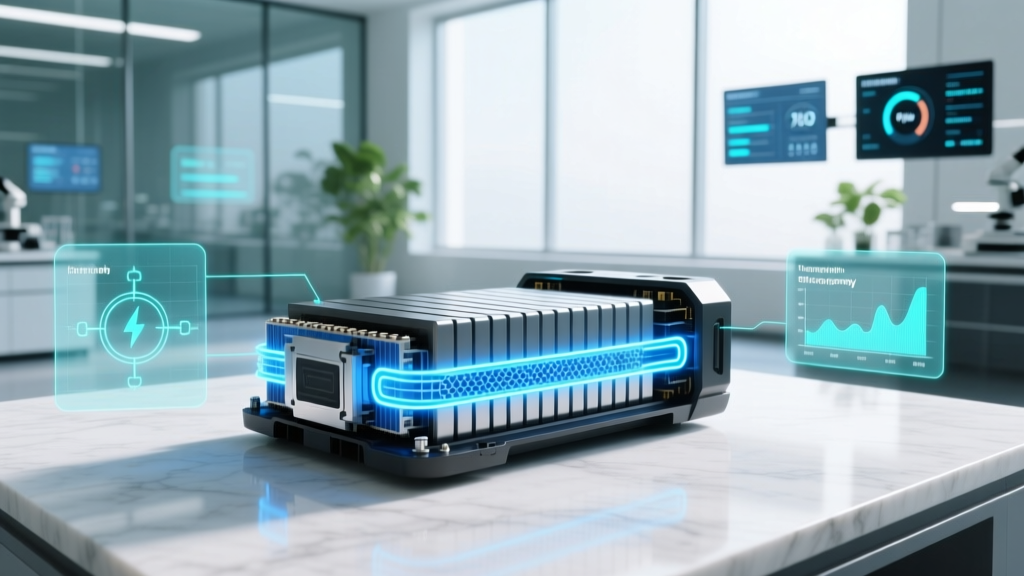
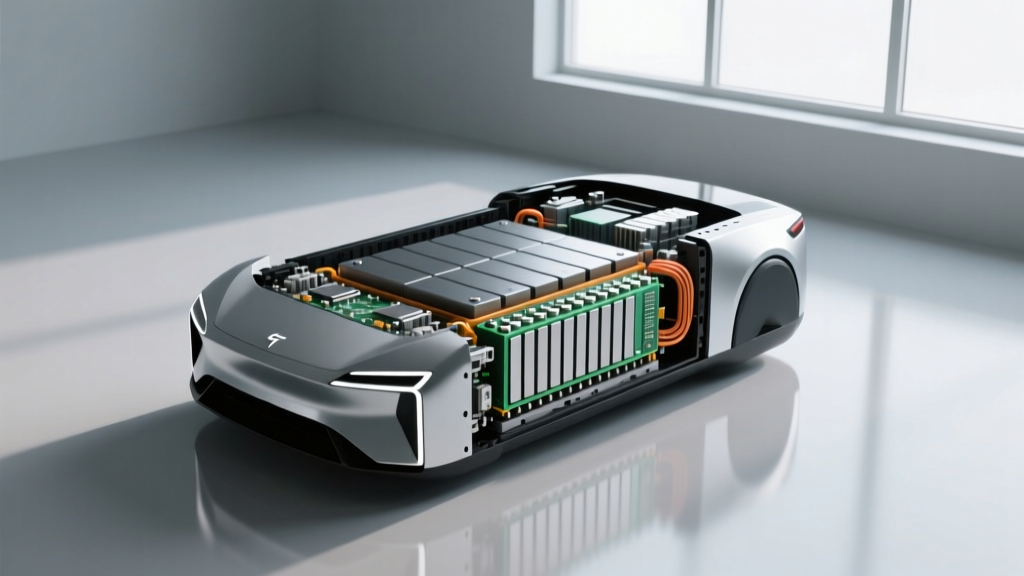
When most shoppers evaluate an electric vehicle, they focus on the automaker's name. But the company that actually designed and manufactured the high-voltage traction battery — the single most expensive component in any EV — often has a bigger impact on your ownership experience than the logo on the steering wheel. In 2026, the landscape of auto battery makers has consolidated around a handful of dominant cell suppliers (CATL, LG Energy Solution, Panasonic, SK On, BYD, and Samsung SDI) while automakers increasingly co-develop pack architectures in-house. Tesla, BYD, and GM now manufacture or co-manufacture their own cells, blurring the line between car company and battery company.
Understanding who makes your battery, what chemistry it uses, and how that chemistry behaves over 100,000+ miles is essential to making a smart EV purchase. This guide breaks down the engineering choices these manufacturers make, the real-world degradation data we've tracked, and what it all means for your wallet.
LFP vs. NMC/NCA: The Chemistry Decision That Defines Your Battery
Every EV battery pack in 2026 is built from one of two dominant lithium-ion chemistries: Lithium Iron Phosphate (LFP) or Nickel Manganese Cobalt / Nickel Cobalt Aluminum (NMC/NCA). The choice isn't about which is universally "better" — it's about which trade-offs an auto battery maker prioritized for a given vehicle's price point and use case.
| Attribute | LFP (Lithium Iron Phosphate) | NMC / NCA (Nickel-based) |
|---|---|---|
| Energy Density (Wh/kg, cell-level) | 160–200 Wh/kg | 230–300 Wh/kg |
| Typical Cycle Life | 3,000–6,000+ cycles | 1,000–2,500 cycles |
| Cold-Weather Performance | Moderate — greater range loss below 20°F | Better low-temp discharge capability |
| Cost per kWh (pack-level, 2026) | ~$80–$100/kWh | ~$110–$140/kWh |
| Thermal Stability | Excellent — very low thermal runaway risk | Good — requires more robust BMS cooling |
| Cobalt Content | None | Varies (low-cobalt NMC trending) |
| Charging to 100% Regularly | Recommended for accurate BMS calibration | Generally advised to stop at 80–90% daily |
| Common 2026 Applications | Tesla Model 3/Y RWD, Ford Mustang Mach-E Select, BYD models, base trims | Long-range AWD trims, performance models, luxury EVs |
What this means for buyers: If you prioritize maximum range per charge and don't mind charging to 80% daily, NMC/NCA packs (found in long-range and performance trims) deliver higher energy density in a lighter package. If you want a battery that can handle daily 100% charges, lasts longer in cycle count, and costs less to replace, LFP is the pragmatic choice — especially for commuters who charge at home nightly. Auto battery makers like CATL and BYD have pushed LFP energy density high enough that the range gap has narrowed significantly; a 2026 Tesla Model 3 RWD with its CATL LFP pack achieves an EPA-estimated 272 miles, which is adequate for most drivers.
Real-World Degradation: What the Data Actually Shows
The biggest fear among prospective EV buyers is battery degradation — the gradual loss of usable capacity over time. Fortunately, data from fleet operators, telematics studies, and owner reports in 2026 paint a reassuring picture. Most modern EV batteries lose capacity slowly and predictably.
Degradation Benchmarks from Real-World Data (2026):
- Tesla fleet data (2025 Impact Report): Model 3/Y batteries retain approximately 85% of original capacity at 200,000 miles. Early Model S/X packs (NCA, Panasonic) show ~88% retention at 150,000 miles.
- Geotab fleet study (2024 update, 10,000+ EVs): Average annual degradation across all brands was 1.8% per year, meaning a typical EV retains roughly 89% capacity after 6 years. LFP-equipped vehicles showed slightly lower annual loss (~1.5%/yr) in moderate climates.
- Recurrent Auto (2025 data, ~15,000 vehicles tracked): Chevrolet Bolt EV/EUV packs (LG NMC) showed ~92% retention at 60,000 miles. Hyundai Ioniq 5 (SK On NMC) averaged ~94% at 40,000 miles. Ford F-150 Lightning extended-range (SK On NMC) showed ~91% at 50,000 miles.
- BYD Blade Battery (LFP): BYD claims 5,000+ cycles to 80% capacity. Independent testing by Chinese tech outlet Dongchedi (2025) showed Blade packs retaining ~93% after simulated 3,000 cycles — consistent with LFP's cycle-life advantage.
Key pattern: Degradation is non-linear. Most packs lose 2–5% in the first year or two (the "break-in" loss), then settle into a slow, linear decline of roughly 1–2% per year afterward. A 2026 EV with a 75 kWh NMC battery might show ~71 kWh usable capacity after 5 years and 75,000 miles — still plenty for daily driving with an EPA range reduction from, say, 310 miles to roughly 285 miles.
What the Battery Warranty Actually Covers
Federal law in the United States mandates that EV batteries carry a minimum warranty of 8 years or 100,000 miles (whichever comes first) in most states, and 10 years or 150,000 miles in California Air Resources Board (CARB) states. But the details of what triggers a warranty claim vary by automaker.
| Manufacturer | Warranty Period | Capacity Threshold | Battery Supplier(s) |
|---|---|---|---|
| Tesla (Model 3/Y RWD, LFP) | 8 yr / 100,000 mi | 70% retention | CATL |
| Tesla (Model 3/Y LR/AWD, NMC) | 8 yr / 120,000 mi | 70% retention | Panasonic |
| Hyundai / Kia (E-GMP platform) | 10 yr / 100,000 mi | 70% retention | SK On |
| GM (Ultium-based: Equinox EV, Blazer EV, Silverado EV) | 8 yr / 100,000 mi | 70% retention (60% for commercial) | LG Energy Solution, Samsung SDI |
| Ford (Mustang Mach-E, F-150 Lightning) | 8 yr / 100,000 mi | 70% retention | SK On, CATL (select trims) |
| BMW (iX, i4, i7) | 8 yr / 100,000 mi | 70% retention | Samsung SDI, CATL |
| Volkswagen (ID.4, ID.7) | 8 yr / 100,000 mi | 70% retention | SK On, CATL |
Critical nuance: The 70% threshold means the manufacturer only replaces or repairs the battery if its usable capacity drops below 70% of its original value within the warranty window. In practice, based on the degradation data above, very few packs fall below this threshold under normal use. A battery would need to lose more than 30% of its capacity — an event typically associated with manufacturing defects or extreme abuse — not gradual wear. According to fueleconomy.gov, the vast majority of EV batteries outlast their warranty periods with capacity to spare.
EV Battery Replacement Costs: The Real Numbers
If your battery does need replacement outside of warranty — whether due to a rare defect after the warranty period, physical damage, or extreme degradation — the cost is significant but not always catastrophic. Prices have fallen steadily as auto battery makers scale production and pack designs become more modular.
| Vehicle / Pack Size | Chemistry | Estimated Replacement Cost | Notes |
|---|---|---|---|
| Tesla Model 3 RWD (~60 kWh) | LFP (CATL) | $8,000 – $12,000 | LFP packs cheaper; Tesla service centers handle in-house |
| Tesla Model Y LR (~75 kWh) | NMC (Panasonic) | $12,000 – $16,000 | Structural pack; labor-intensive removal |
| Hyundai Ioniq 5 (~77.4 kWh) | NMC (SK On) | $11,000 – $15,000 | Modular pack allows partial module replacement |
| Ford F-150 Lightning Ext. Range (~131 kWh) | NMC (SK On) | $18,000 – $25,000 | Largest consumer pack; highest parts cost |
| Chevrolet Equinox EV (~85 kWh) | NMC (LG/Samsung) | $12,000 – $16,000 | Ultium modular architecture; individual module swaps possible |
| BMW iX xDrive50 (~111.5 kWh) | NMC (Samsung SDI) | $20,000 – $28,000 | Premium labor rates; complex cooling system integration |
When is replacement actually needed? Based on current data, most EV batteries will not require full replacement during typical first-owner or even second-owner lifespans. A pack that degrades to 80% capacity at 200,000 miles still provides usable daily range — it just means a 310-mile EPA vehicle now delivers roughly 250 miles. Full replacements are typically driven by physical damage (collision, flood), manufacturing defects that manifest early, or cells that develop internal shorts. Module-level repairs (replacing individual cell modules rather than the entire pack) are increasingly available on modular platforms like GM's Ultium and Hyundai's E-GMP, reducing costs to $2,000–$5,000 per module.
Factors That Accelerate (or Preserve) Battery Health
Auto battery makers engineer packs to withstand a wide range of conditions, but owner behavior still influences how quickly degradation occurs. Here are the factors with the strongest data-backed impact:
- DC Fast-Charging Frequency: Occasional DC fast charging (1–2 times per week) has minimal impact. Daily reliance on 150+ kW DC fast charging can accelerate degradation by 1–2% additional over 100,000 miles, primarily due to sustained high temperatures. Preconditioning the battery before fast charging (a feature most 2026 EVs do automatically when you navigate to a charger) significantly mitigates this.
- State of Charge Habits (NMC/NCA): Keeping daily charge between 20–80% for NMC/NCA packs reduces stress on the cathode. Regularly charging to 100% and letting the car sit for hours at full charge accelerates calendar aging. LFP packs are the exception — manufacturers like Tesla and Ford recommend periodic 100% charges for BMS calibration.
- Extreme Temperature Exposure: Prolonged exposure to ambient temperatures above 95°F (especially while parked at high SoC) accelerates chemical degradation. Cold weather temporarily reduces range but does not cause permanent damage — the battery recovers capacity when it warms up. Active thermal management systems (liquid cooling/heating) in 2026 EVs largely handle this, but parking in shade or a garage in hot climates helps.
- Deep Discharge Cycles: Regularly driving the battery down to 0% and leaving it there stresses cells. Most EVs have a buffer (the car shows 0% but ~2–5 kWh remains) to prevent true deep discharge. Still, avoid routinely running the pack to empty.
- Regenerative Braking Settings: Aggressive regen in cold weather without battery preconditioning can stress cells. Most 2026 models automatically reduce regen when the battery is cold — let the system manage this rather than overriding it.
Monitoring Battery Health: How to Check Your State of Health (SoH)
State of Health (SoH) is a percentage indicating your battery's current maximum capacity relative to its original capacity when new. A SoH of 92% means your 75 kWh pack can now hold approximately 69 kWh. Here's how owners can monitor it in 2026:
- In-Vehicle Displays: Tesla shows battery health estimates in the Service menu (introduced in 2023 software updates). Hyundai/Kia provides a battery health readout via the infotainment engineering menu. GM's Ultium vehicles display SoH through the myGMC/myChevrolet app.
- OBD-II Dongles + Apps: Third-party tools like OBDeleven (for VW/Audi/BMW), Leaf Spy (Nissan), and Scan My Tesla pull raw battery management system (BMS) data including SoH, cell voltage variance, and pack temperature. These cost $30–$60 for the hardware and provide granular data the manufacturer app may not show.
- Telematics Services: Companies like Recurrent Auto offer free battery health reports that track your SoH over time and compare it against anonymized fleet data for your specific model. This is particularly useful when buying or selling a used EV.
- Dealer Diagnostics: Any authorized service center can run a full battery health report. Request this during routine service visits or before purchasing a used EV from a dealership.
What's Next: Solid-State, Silicon Anodes, and Realistic Timelines
Auto battery makers are investing billions in next-generation chemistries, but buyers should separate announcements from showroom availability.
- Solid-State Batteries: Toyota has announced a solid-state battery targeting 2027–2028 production in limited models, claiming 450+ mile range and 10-minute fast charging. Samsung SDI and QuantumScape (backed by VW) are also in advanced testing. However, solid-state packs remain in pre-production validation as of early 2026. Expect limited availability in premium models first, with mass-market penetration not before 2030. These should be considered announced/preliminary technology — not currently purchasable.
- Silicon-Dominant Anodes: Companies like Sila Nanotechnologies (partnered with Mercedes-Benz/Panasonic) and Group14 (partnered with Porsche) are replacing graphite anodes with silicon composites to boost energy density by 20–40%. The 2026 Mercedes-Benz G-Class EV (announced) is expected to be among the first production vehicles using Sila's silicon anode cells. This is real technology entering limited production, not a lab concept.
- Sodium-Ion Batteries: CATL has begun producing sodium-ion cells for low-cost, short-range EVs in China (e.g., Chery models). Energy density is lower (~120–150 Wh/kg), but cost is significantly less and cold-weather performance is strong. U.S. availability is not expected before 2028 at the earliest.
The practical takeaway: today's LFP and NMC packs from established auto battery makers are mature, well-understood technology with proven longevity. Waiting for solid-state means waiting years and paying a premium when it arrives. For buyers purchasing in 2026, current-generation batteries offer strong value and proven reliability.
Frequently Asked Questions
How long do EV batteries last in years and miles?
Based on fleet data from Tesla, Geotab, and Recurrent Auto, most EV batteries retain 80–90% of their original capacity after 8–10 years or 150,000–200,000 miles. LFP-equipped vehicles often exceed these figures due to higher cycle life. In practice, most batteries outlast the vehicle's useful life — total battery failure is rare and usually tied to manufacturing defects or physical damage rather than gradual wear.
How much does an EV battery cost to replace?
Full pack replacement costs range from approximately $8,000 for a smaller LFP pack (e.g., Tesla Model 3 RWD) to $25,000+ for large packs like the F-150 Lightning extended-range. However, modular platforms from GM (Ultium) and Hyundai (E-GMP) allow individual module replacement at $2,000–$5,000 per module, dramatically reducing costs for partial degradation or single-cell failures. Most owners will never need a full replacement.
What does the battery warranty cover?
All 2026 EVs sold in the U.S. include a battery warranty of at least 8 years/100,000 miles (10 years/150,000 miles in CARB states). The warranty covers capacity loss below a specified threshold — typically 70% of original capacity. It also covers manufacturing defects, cell failures, and thermal management system issues. The warranty does not cover damage from collisions, flooding, or unauthorized modifications. See IRS.gov for related tax credit information on vehicles meeting battery sourcing requirements under §30D.
How do I check and maximize my battery's health?
Check SoH through your vehicle's built-in display, the manufacturer's app, or an OBD-II scanner paired with a compatible app. To maximize longevity: charge NMC/NCA packs to 80% for daily use (100% for LFP), minimize daily DC fast charging when Level 2 is available, precondition before fast charging, avoid prolonged parking at 100% SoC in hot weather, and don't routinely run the battery to 0%.
LFP vs. NMC — which is better and why?
Neither is universally better. LFP wins on cycle life (3,000–6,000 cycles vs. 1,000–2,500), cost ($80–100/kWh vs. $110–140/kWh), thermal safety, and the ability to charge to 100% daily without accelerated degradation. NMC/NCA wins on energy density (230–300 Wh/kg vs. 160–200 Wh/kg), which translates to more range in a lighter, more compact pack — critical for long-range and performance models. For commuters who charge at home and don't need 350+ miles of range, LFP is the pragmatic longevity play. For road-trippers and performance buyers, NMC/NCA remains the right choice.
Which auto battery makers supply the most EVs in 2026?
CATL (China) is the world's largest EV battery supplier, providing cells to Tesla, BMW, Volkswagen, Ford, and others. LG Energy Solution (South Korea) supplies GM, Hyundai, Stellantis, and Honda. Panasonic (Japan) remains Tesla's primary partner for NMC/NCA cells. SK On (South Korea) supplies Ford and Hyundai. BYD (China) is both an automaker and the second-largest battery maker globally, primarily using its proprietary LFP Blade Battery. Samsung SDI supplies BMW, Stellantis, and Volvo.