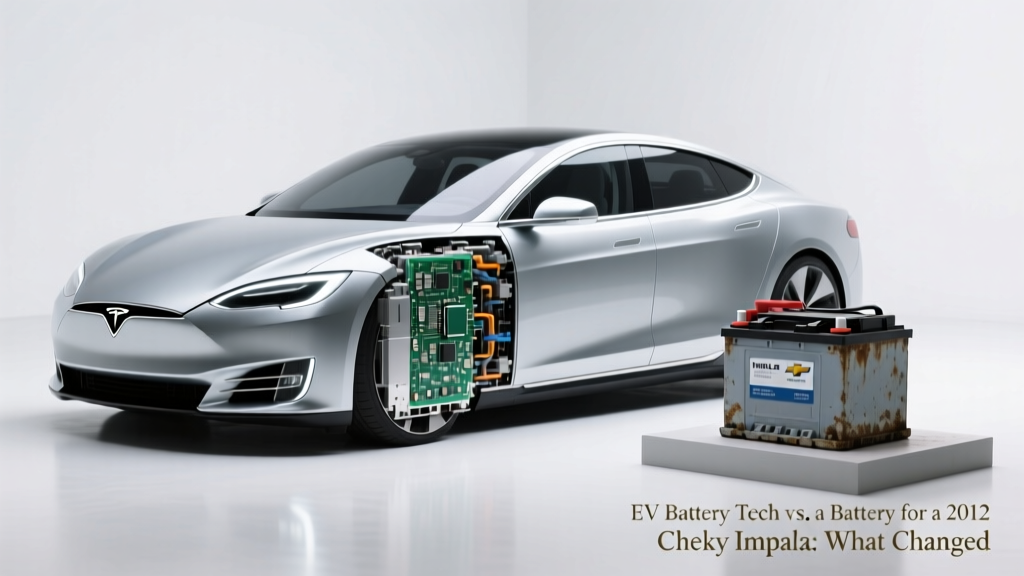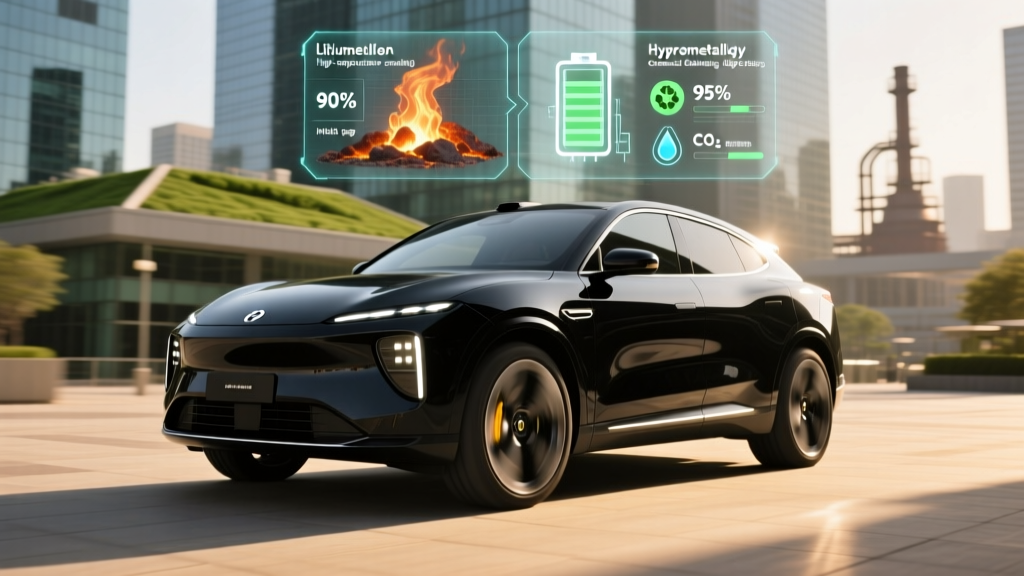
The upstream supply chain for electric vehicle batteries is undergoing a structural shift. As automakers push to localize critical-mineral sourcing — partly to meet IRS §30D battery-component and critical-mineral requirements — projects like the Atlis project lithium carbonate lithium hydroxide combined production target have moved from industry footnotes to buyer-relevant headlines. Understanding how raw lithium compounds flow into the two dominant chemistries (LFP and NMC/NCA) helps you make smarter decisions about which EV to buy, what to expect from its battery over a decade, and how to protect your investment.
This guide connects the upstream supply story to the practical realities of EV battery ownership: chemistry trade-offs, degradation data, warranty terms, replacement costs, and care habits that extend battery life.
Why the Atlis Lithium Production Target Matters to EV Buyers
Lithium carbonate and lithium hydroxide are not interchangeable feedstocks. Lithium carbonate is the primary input for LFP (lithium iron phosphate) cathodes, which dominate standard-range and affordable EVs. Lithium hydroxide is preferred for NMC (nickel manganese cobalt) and NCA (nickel cobalt aluminum) cathodes, used in long-range and performance models. A combined production target — as proposed by the Atlis project — signals a vertically integrated supply stream that can serve both chemistry camps from a single facility.
For 2026 model-year EVs, this matters because:
- Federal tax credit eligibility under §30D requires a growing percentage of critical minerals to be sourced from the U.S. or free-trade-agreement partners (IRS §30D rules).
- Domestic lithium refining capacity reduces reliance on Chinese-processed material, which can disqualify otherwise eligible vehicles.
- Increased supply of both carbonate and hydroxide puts downward pressure on cathode costs, which represent roughly 40-50% of cell-level battery cost.
LFP vs. NMC/NCA: The Chemistry Decision
Every mainstream EV in 2026 uses one of two lithium-ion cathode families. The Atlis project's dual-output target exists precisely because automakers need both chemistries at scale. Here is how they compare in real-world ownership:
| Attribute | LFP (Lithium Iron Phosphate) | NMC / NCA |
|---|---|---|
| Energy density (cell-level) | ~160-180 Wh/kg | ~220-280 Wh/kg |
| Cycle life | 3,000-5,000+ cycles | 1,000-2,000 cycles |
| Cold-weather performance | Moderate — greater range loss below 32°F without heat pump | Better low-temp discharge, less range penalty |
| Cost (per kWh, cell-level) | ~$80-$100 | ~$110-$140 |
| Thermal stability | Excellent — very low thermal runaway risk | Good — requires robust BMS and cooling |
| SoC recommendation | Can charge to 100% regularly | 80% daily, 100% only for trips |
| Typical 2026 vehicles | Tesla Model 3 RWD, Model Y RWD, Ford Mustang Mach-E SR, Chevy Equinox EV | Tesla Model 3 LR, Hyundai Ioniq 5 LR, BMW iX, Rivian R1T |
The bottom line: LFP wins on longevity, cost, and safety. NMC/NCA wins on range per pound and cold-weather efficiency. Neither is universally "better" — the right choice depends on your driving profile, climate, and ownership horizon.
How Long Do EV Batteries Actually Last?
Based on fleet data aggregated through 2025 and early 2026, the median high-voltage traction battery retains roughly 88-92% of original capacity after 100,000 miles and 80-87% after 150,000 miles for liquid-cooled NMC packs. LFP packs in similar thermal-management conditions show slower fade, with many retaining 90-95% at 100,000 miles.
- Tesla Model 3/Y NMC (2019-2022 fleet average): ~12% loss at 120,000 miles, with most degradation occurring in the first 20,000 miles (~5%), then a slow linear decline.
- Tesla Model 3 RWD LFP (2021-2024 fleet): ~6-8% loss at 80,000 miles; curve remains nearly flat after initial calendar aging.
- Hyundai/Kia E-GMP NMC (Ioniq 5, EV6, 2022-2025): ~10% loss at 100,000 miles under mixed Level 2 and DC fast charging use.
- Nissan Leaf (passive air-cooled, 2018-2023): accelerated degradation in hot climates — 15-22% loss at 80,000 miles in Sun Belt states, underscoring the importance of active liquid cooling.
In calendar years, most modern liquid-cooled EV batteries are engineered for 15-20 years of service before reaching the 70% capacity-retention threshold that triggers a warranty claim. The vast majority of EVs are scrapped or retired for reasons unrelated to battery failure before the pack requires full replacement.
What Does the Battery Warranty Actually Cover?
Federal law mandates a minimum of 8 years / 100,000 miles for EV battery warranties (10 years / 150,000 miles in CARB states like California). Here is how major manufacturers structure coverage for 2026 models:
| Manufacturer | Duration | Capacity Threshold | Notes |
|---|---|---|---|
| Tesla | 8 yr / 100,000 mi (SR) or 120,000 mi (LR) | 70% retention | Covers defects + excessive degradation |
| Hyundai / Kia | 10 yr / 100,000 mi | 70% retention | Transferable to second owner |
| Ford | 8 yr / 100,000 mi | 70% retention | Covers battery + powertrain components |
| General Motors | 8 yr / 100,000 mi | 70% retention (60% for commercial) | Ultium platform; module-level replacement available |
| Rivian | 8 yr / 175,000 mi | 70% retention | Higher mileage cap reflects adventure-use profile |
The 70% threshold is critical context: a warranty claim is not triggered by a 10% or 15% loss. You would need to lose roughly a third of your battery's original capacity — which, for a 300-mile EPA-rated vehicle, means dropping below ~210 miles of range — before the manufacturer is obligated to repair or replace.
EV Battery Replacement Cost: When and How Much
Full pack replacement is rare in modern liquid-cooled EVs but remains a valid concern for high-mileage drivers and used-EV buyers outside warranty. Here are 2026 replacement cost ranges based on service-bulletin data and independent shop estimates:
| Vehicle / Pack Size | Chemistry | Full Pack Cost | Module Repair Cost |
|---|---|---|---|
| Tesla Model 3 RWD (~57 kWh) | LFP | $8,000 - $12,000 | $2,500 - $4,500 |
| Tesla Model Y LR (~75 kWh) | NMC/NCA | $12,000 - $16,000 | $3,000 - $5,500 |
| Hyundai Ioniq 5 (~77.4 kWh) | NMC | $14,000 - $18,000 | $3,500 - $6,000 |
| Ford F-150 Lightning Ext. (~131 kWh) | NMC | $22,000 - $30,000 | $5,000 - $9,000 |
| Chevrolet Equinox EV (~85 kWh) | NMC (Ultium) | $13,000 - $17,000 | $3,000 - $5,500 |
Key context: Most modern packs use modular architectures. A single degraded or defective module can often be replaced without swapping the entire pack, reducing cost by 60-70%. GM's Ultium platform and Hyundai's E-GMP are specifically designed for module-level service. Full pack replacement is typically only needed after catastrophic physical damage or simultaneous multi-module failure, both of which are uncommon.
Factors That Accelerate (or Preserve) Battery Health
Battery degradation is not random — it follows predictable electrochemical patterns. These are the variables you can control:
- State of Charge (SoC) habits: For NMC/NCA, keep daily SoC between 20-80%. For LFP, periodic 100% charges are fine and actually help the BMS calibrate cell balance.
- DC fast charging frequency: Occasional DCFC (1-2 times per week) has negligible impact on modern liquid-cooled packs. Daily DCFC at 150+ kW can add ~2-4% additional degradation over 100,000 miles compared to Level 2 only.
- Extreme heat exposure: Sustained ambient temperatures above 95°F accelerate calendar aging. Garage parking and preconditioning while plugged in mitigate this.
- Extreme cold charging: Charging a cold-soaked battery (below 20°F) without preconditioning forces lithium plating on the anode. Always use the vehicle's preconditioning feature before DC fast charging in winter.
- Storage: If storing an EV for 2+ weeks, set SoC to 50-60% and keep it plugged in so the thermal management system can maintain optimal temperature.
- Regenerative braking settings: High-regen one-pedal driving has no meaningful negative impact on battery health; the charge current from regen is well within safe C-rates.
How to Monitor Battery State of Health (SoH)
State of Health is expressed as a percentage of original usable capacity. A new EV starts at 100% SoH; a battery at 85% SoH holds 85% of its original kWh. Here is how to check it:
- In-vehicle displays: Tesla provides a battery health readout in the Service menu (2023+ software). Hyundai/Kia shows SoH via the EV-specific cluster screen. GM's Ultium vehicles display estimated range vs. original, from which SoH can be derived.
- OBD-II diagnostic tools: Devices like the OBDLink MX+ paired with apps such as EV-Log or ABRP can read the BMS-reported SoH directly. This is the most accurate method for used-EV buyers.
- Third-party services: Companies like Recurrent Auto and Geotab offer battery health reports based on telematics data, useful for fleet operators and private sellers providing transparency to buyers.
- Manual calculation: Charge to 100%, note the displayed range, and compare to the EPA-rated range when new. This is imprecise (temperature and driving style affect the estimate) but provides a rough SoH proxy.
Emerging Battery Tech: Solid-State, Silicon Anodes, and What's Real
Several next-generation battery technologies are in various stages of development. It is important to separate announced timelines from production reality:
- Solid-state batteries: Toyota has announced a 2027-2028 production target for solid-state cells in limited volumes, promising ~450 Wh/kg energy density and 10-minute fast charging. QuantumScape's cells are in B-sample testing with Volkswagen. These are not available in any 2026 production vehicle. Realistic mass-market availability remains 2029-2032.
- Silicon-dominant anodes: Companies like Sila Nanotechnologies and Group14 are supplying silicon-carbon composite anodes to Panasonic and Mercedes-AMG (the latter for the G-Wagen EV). Silicon anodes increase energy density by 20-40% vs. graphite. Limited production vehicles in 2025-2026; broader adoption expected by 2028.
- Sodium-ion batteries: CATL has begun shipping sodium-ion cells in Chinese-market micro-EVs. Energy density (~120-150 Wh/kg) limits these to urban runabouts. U.S. availability is not expected before 2028.
- LFP improvements: CATL's Shenxing LFP cells (announced 2023, in production 2025) support 4C charging rates — a 10-80% charge in approximately 10 minutes on compatible 400V+ architectures. This narrows the charging-speed gap between LFP and NMC.
The connection back to upstream supply is direct: solid-state and silicon-anode cells still require lithium (often in hydroxide form), while sodium-ion aims to eliminate lithium entirely for certain segments. Projects like Atlis that produce both carbonate and hydroxide maintain flexibility to supply whichever chemistry the market demands.
Frequently Asked Questions
How long do EV batteries last in years and miles?
Modern liquid-cooled EV batteries are engineered for 15-20 years and 150,000-200,000+ miles before reaching the 70% capacity-retention threshold. Fleet data shows most retain 80-90% capacity at the 10-year mark under normal use. Air-cooled packs (notably older Nissan Leaf models) degrade significantly faster in hot climates.
How much does it cost to replace an EV battery?
Full pack replacement ranges from $8,000 to $30,000 depending on pack size and chemistry. However, most modern packs support module-level repair at $2,500-$9,000, and full replacement is rarely needed within the vehicle's useful life. Warranty covers replacement if capacity drops below 70% within 8 years/100,000 miles (federal minimum).
What does the battery warranty cover?
EV battery warranties cover manufacturing defects and excessive capacity degradation — typically defined as falling below 70% of original usable capacity within the warranty period (8 years/100,000 miles minimum; 10 years/100,000 miles in CARB states). They do not cover damage from accidents, flooding, or unauthorized modifications. Check your specific manufacturer's terms, as some cover the full pack while others replace only defective modules.
How do I check and maximize my EV battery health?
Monitor SoH through your vehicle's built-in display, an OBD-II scanner with EV-compatible software, or a third-party telematics service. Maximize longevity by keeping NMC/NCA batteries between 20-80% SoC for daily use, avoiding frequent DC fast charging when Level 2 is available, using battery preconditioning before winter fast charging, and avoiding prolonged storage at very high or very low SoC.
LFP vs. NMC — which is better and why?
Neither is universally superior. LFP offers longer cycle life (3,000-5,000 cycles vs. 1,000-2,000), lower cost, better thermal safety, and the convenience of regular 100% charging — but at the expense of lower energy density and worse cold-weather range. NMC/NCA delivers more range per kilogram and better cold-weather performance, making it the choice for long-range and performance trims. Your climate, daily mileage, and ownership timeline should drive the decision.
Does the Atlis lithium production project affect which EV I should buy?
Not directly at the dealership level, but upstream supply diversification affects battery pricing, tax-credit eligibility, and long-term parts availability. Vehicles whose batteries source critical minerals from domestic or FTA-partner projects are more likely to qualify for the full §30D federal credit. As combined carbonate/hydroxide facilities scale, expect broader credit eligibility across both LFP and NMC-equipped models.