For years, the conversation around EV battery raw materials has centered on Australia, Chile, and China. But a massive lithium resource sitting beneath southern Arkansas is shifting that narrative. The lithium found in Arkansas — specifically within the Smackover Formation — has drawn serious attention from automakers, battery suppliers, and policymakers looking to localize the EV supply chain. Standard Lithium and Equinor have been advancing direct lithium extraction (DLE) projects in the region, with estimates suggesting the formation could hold millions of tons of lithium equivalent.
But what does a domestic lithium supply actually mean for the batteries in your EV? To answer that, you need to understand what goes into today's battery packs, how long they last, what they cost to replace, and where the technology is headed. This guide covers all of it — grounded in real data, not hype.
Why Arkansas Lithium Matters for EV Battery Chemistry
The Smackover Formation, a geologic layer stretching across Arkansas, Louisiana, and Texas, contains lithium-rich brine in its groundwater. Unlike hard-rock lithium mining (dominant in Australia) or evaporation ponds (common in Chile), direct lithium extraction uses chemical processes to pull lithium directly from brine — potentially faster and with a smaller land footprint.
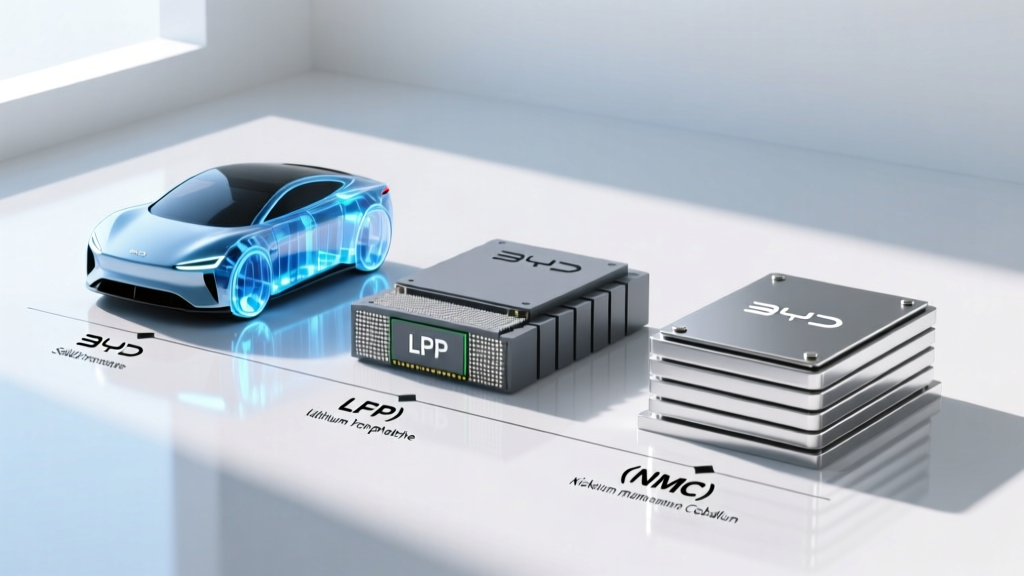
For EV batteries, the relevance comes down to two dominant chemistries that both rely on lithium:
- LFP (Lithium Iron Phosphate): Uses lithium, iron, and phosphate. No nickel or cobalt. Domestically sourced lithium would directly benefit LFP production.
- NMC/NCA (Nickel Manganese Cobalt / Nickel Cobalt Aluminum): Uses lithium plus nickel, manganese, and/or cobalt. Higher energy density but more complex supply chains.
If Arkansas-sourced lithium reaches commercial scale — Standard Lithium's Lanxess facility in El Dorado, AR, has been producing lithium carbonate samples — it could feed directly into the LFP supply chain that powers vehicles like the Tesla Model 3 RWD, Ford Mustang Mach-E Select, and BYD models entering Western markets.
LFP vs NMC: Which EV Battery Chemistry Is Right for You?
Choosing an EV increasingly means choosing a battery chemistry. Here's how the two mainstream options stack up across the metrics that matter most to owners:
| Attribute | LFP (Lithium Iron Phosphate) | NMC/NCA (Nickel-based) |
|---|---|---|
| Energy Density | ~160–180 Wh/kg (lower) | ~220–300 Wh/kg (higher) |
| Typical Cycle Life | 3,000–6,000+ cycles | 1,000–2,500 cycles |
| Cold-Weather Performance | Moderate; ~15–25% range loss below freezing | Better; ~10–20% range loss below freezing |
| Charging to 100% | Recommended periodically for BMS calibration | Avoid frequent 100% charges; 80% daily ideal |
| Cost per kWh | ~$80–$100 (lower) | ~$110–$140 (higher) |
| Critical Minerals | No cobalt or nickel | Requires nickel, cobalt, and/or manganese |
| Common in (2026 models) | Tesla Model 3 RWD, Model Y RWD, Ford Mach-E Select, Rivian Standard | Tesla Long Range/Performance, Hyundai Ioniq 5/6, BMW iX, most luxury EVs |
| Thermal Stability | Excellent; very resistant to thermal runaway | Good; requires robust thermal management |
The practical takeaway: If you drive moderate daily distances, can charge at home, and want maximum long-term durability, LFP is the cost-effective, low-drama choice. If you need the longest possible range per charge, tow frequently, or live in a very cold climate where every mile of range counts, NMC/NCA's energy density advantage matters.
Arkansas lithium is particularly relevant to LFP because iron phosphate cathodes don't require the cobalt and nickel that complicate NMC sourcing. A domestic lithium supply simplifies the LFP supply chain considerably — and LFP adoption is growing rapidly in North America.
How Long Do EV Batteries Actually Last?
The fear that EV batteries need replacement every few years is not supported by fleet data. Modern liquid-cooled battery packs are engineered to outlast the vehicles they're installed in — in most cases.
Typical Degradation Curve (Based on Aggregated Fleet Data):
- Year 1 / 15,000 miles: ~2–5% capacity loss (initial formation settling)
- Year 3 / 45,000 miles: ~5–8% total capacity loss
- Year 5 / 75,000 miles: ~8–12% total capacity loss
- Year 8 / 120,000 miles: ~10–15% total capacity loss (most still above warranty threshold)
- Year 10 / 150,000 miles: ~12–20% total capacity loss depending on usage patterns
Sources: Recurrent Auto battery health reports, fueleconomy.gov, and manufacturer longitudinal data.
Tesla's 2023 Impact Report noted that Model S/X batteries retained approximately 88% capacity at 150,000 miles. Hyundai/Kia's aggressive 10-year/100,000-mile warranty reflects internal testing confidence. Real-world fleet operators like Tesloop have documented individual vehicles surpassing 300,000 miles on original packs.
The key insight: degradation is not linear. Most capacity loss happens in the first year or two, then the curve flattens considerably. A battery that retains 90% after three years will likely still hold 82–85% at year eight.
What Does the EV Battery Warranty Actually Cover?
Federal law mandates a minimum 8-year/100,000-mile warranty on EV battery packs for emissions-related compliance, and most manufacturers meet or exceed this. California-emission states (which include 15+ states adopting CARB standards) often see 10-year/150,000-mile coverage.
| Manufacturer | Warranty Period | Capacity Retention Threshold | Notes |
|---|---|---|---|
| Tesla (Model 3/Y LFP) | 8 years / 120,000 miles | 70% minimum | Long Range/Performance: 8 yr / 120k mi at 70% |
| Hyundai / Kia | 10 years / 100,000 miles | 70% minimum | Among the longest coverage in the industry |
| Ford (Mach-E, F-150 Lightning) | 8 years / 100,000 miles | 70% minimum | Covers battery and hybrid/electric components |
| GM (Ultium platform) | 8 years / 100,000 miles | 70% minimum (varies by model) | Cadillac extends to 8 yr / 100k mi on Lyriq |
| Rivian | 8 years / 175,000 miles (Standard); 8 yr / 150k mi (Max) | 70% minimum | Higher mile cap for the Standard pack |
| BMW | 8 years / 100,000 miles | 70% minimum | iX, i4, i7 covered under HV battery warranty |
What triggers a warranty claim: If your battery's usable capacity drops below the stated threshold (typically 70% of original) within the warranty period, the manufacturer must repair or replace it at no cost. This doesn't mean a brand-new battery — it may be a refurbished unit that meets the capacity threshold.
What's NOT covered: Damage from accidents, improper charging (using uncertified equipment), unauthorized modifications, or using the vehicle as a stationary power source beyond V2L/V2H specifications. Always check your specific warranty booklet.
EV Battery Replacement Cost: What Owners Actually Pay
This is where fear-mongering runs rampant. Yes, an out-of-warranty battery replacement is expensive. But context matters enormously: the vast majority of EV owners never need one.
| Vehicle | Battery Size (kWh usable) | Chemistry | Estimated Replacement Cost |
|---|---|---|---|
| Tesla Model 3 RWD | ~57 kWh | LFP | $10,000–$14,000 |
| Tesla Model Y Long Range | ~75 kWh | NMC | $14,000–$18,000 |
| Hyundai Ioniq 5 | ~77.4 kWh | NMC | $13,000–$17,000 |
| Ford F-150 Lightning (Extended) | ~131 kWh | NMC | $22,000–$30,000 |
| Chevrolet Equinox EV | ~85 kWh | NMC (Ultium) | $14,000–$18,000 |
| Rivian R1T (Max Pack) | ~149 kWh | NMC | $25,000–$35,000 |
These figures include the battery module and labor but can vary significantly by region and service center. Costs have been declining — a replacement that cost $20,000 in 2020 may cost $14,000 today for the same pack, driven by falling cell prices and improved refurbishment programs.
When is replacement typically needed? In practice, most battery replacements occur after high-mileage use (150,000+ miles) or due to manufacturing defects caught under warranty. According to data from Recurrent Auto, fewer than 5% of EVs in their studied fleet of 15,000+ vehicles required battery replacement — and most of those were covered by warranty.
Factors That Accelerate (or Preserve) Battery Life
Your battery doesn't degrade in a vacuum. Usage patterns, climate, and charging habits all influence how quickly capacity declines. Here's what the data shows:
Battery Longevity Best Practices:
- Daily charging limit: Set to 80% for NMC/NCA batteries. LFP batteries can and should be charged to 100% at least once weekly for accurate state-of-charge calibration.
- DC fast charging: Occasional use (road trips) is fine. Daily DCFC sessions accelerate degradation — studies show ~2–4% additional loss over 100,000 miles vs. Level 2 charging. The heat generated at high charge rates (150–350 kW) stresses cells.
- Extreme heat: Sustained ambient temperatures above 95°F (35°C) without preconditioning or garage parking accelerate calendar degradation. Liquid-cooled packs handle this better than passively cooled ones.
- Extreme cold: Cold doesn't permanently damage batteries, but charging in sub-freezing temps without preconditioning can cause lithium plating. Always use your vehicle's preconditioning feature before fast charging in winter.
- Storage: If leaving your EV for weeks, store at ~50% state of charge. Avoid leaving at 100% or below 10% for extended periods.
- Regen braking: Normal regen use does not harm the battery. The battery management system (BMS) limits regen power when the battery is very cold or nearly full.
The single most impactful habit: avoid habitual DC fast charging and avoid routinely charging NMC packs to 100%. Owners who charge at home on Level 2 (7–11 kW) and set an 80% daily limit consistently show the lowest degradation rates in fleet studies.
How to Check and Monitor Your Battery's State of Health
State of Health (SoH) tells you what percentage of original capacity your battery retains. Unlike the 12V auxiliary battery (which powers accessories and is a separate, inexpensive component), the high-voltage traction battery is what propels the vehicle and stores energy measured in kWh.
How to check SoH:
- In-vehicle displays: Tesla shows battery health indirectly through range estimates. Hyundai/Kia provides a battery health indicator in the EV settings menu on newer models. BMW's iDrive includes an HV battery status screen.
- OBD-II diagnostic tools: Devices like the OBDLink MX+ paired with apps such as LeafSpy (Nissan), Scan My Tesla, or ABRP can read SoH directly from the BMS.
- Dealer diagnostics: Any authorized service center can pull a full battery health report during routine service. Request this before purchasing a used EV.
- Third-party services: Companies like Recurrent Auto offer battery health reports based on connected-car data, often available free for participating owners.
What SoH number should concern you? A used EV showing 85–90% SoH at 50,000 miles is tracking well. Below 80% before 80,000 miles may indicate aggressive fast-charging history or a cell imbalance worth investigating. Below the warranty threshold (70%) within the warranty period means you're eligible for a free replacement.
Emerging Battery Tech: Solid-State, Silicon Anodes, and What's Real
Headlines promise revolutionary batteries every year. Here's what's actually coming — and when — with realistic timelines:
Solid-state batteries: Replace the liquid electrolyte with a solid material, promising higher energy density (~400+ Wh/kg at cell level), faster charging, and improved safety. Toyota has announced a solid-state battery targeting 2027–2028 production in limited models, initially in Japan. Samsung SDI and QuantumScape are also in advanced testing. However, manufacturing scale-up remains the primary bottleneck. Realistic consumer availability: 2028–2030 at earliest, and likely in premium models first.
Silicon-dominant anodes: Companies like Sila Nanotechnologies and Group14 Technologies are replacing graphite anodes with silicon, boosting energy density by 20–40%. The Mercedes G-Class 580e (PHEV) already uses a silicon-anode battery from Sila. Expect broader EV adoption by 2027–2028 as production scales.
Sodium-ion batteries: CATL and other Chinese manufacturers are commercializing sodium-ion cells that eliminate lithium entirely. These offer lower energy density (~120–160 Wh/kg) but dramatically lower material costs. Best suited for city EVs and energy storage. US-market availability: likely 2027+ in entry-level models or as range-extender batteries in EREVs.
None of these technologies are available in production EVs sold in the US as of 2026, and none will render current lithium-ion packs obsolete overnight. The transition will be gradual, and today's LFP and NMC packs will remain mainstream through at least 2030.
Connecting Arkansas Lithium to Your Next EV Purchase
The lithium found in Arkansas won't appear in a battery pack tomorrow. Standard Lithium's DLE operations are still scaling toward commercial production volumes, and the path from raw lithium carbonate to finished cells involves cathode manufacturing, cell production, and pack assembly — a chain that takes 12–18 months even under ideal conditions.
But the strategic significance is real. Under current IRS §30D tax credit rules, the $7,500 federal credit requires that a growing percentage of battery critical minerals be sourced from the US or free-trade-agreement countries. Domestic lithium production from Arkansas directly helps automakers meet those sourcing thresholds — which means more EV models qualify for the credit at the point of sale.
For buyers in 2026, the practical implications are:
- LFP-equipped vehicles (Tesla Model 3 RWD at ~$38,990 MSRP, Ford Mach-E Select at ~$42,995) remain the most cost-effective entry point and benefit most from domestic lithium sourcing.
- NMC vehicles offer superior range and cold-weather performance but carry higher battery costs and more complex supply chains.
- Battery warranties across the industry are strong — 8 years minimum, 70% capacity retention — and real-world data supports that most packs will last the life of the vehicle.
- Replacement costs, while high in absolute terms, affect a small fraction of owners and continue to decline as cell prices fall.
Frequently Asked Questions
How long do EV batteries last in years and miles?
Most modern liquid-cooled EV batteries are designed to retain 70–85% of original capacity after 150,000–200,000 miles or 10–15 years of typical use. Fleet data from Recurrent Auto and manufacturer reports show that fewer than 5% of packs require replacement under normal conditions. Many will outlast the vehicle's body and interior.
How much does it cost to replace an EV battery?
Out-of-warranty replacement costs range from approximately $10,000 for a smaller LFP pack (Tesla Model 3 RWD, ~57 kWh) to $30,000–$35,000 for large NMC packs (Ford F-150 Lightning Extended Range, Rivian Max Pack). However, the vast majority of replacements are covered under the 8–10 year warranty, and most owners never need one.
What does the EV battery warranty cover?
Manufacturer warranties cover battery capacity loss below a specified threshold (typically 70% of original capacity) within the warranty period (8–10 years, 100,000–175,000 miles depending on brand). They also cover defects in materials and workmanship. Warranties do not cover damage from accidents, unauthorized modifications, or use outside manufacturer specifications.
How do I check my EV's battery health?
You can check State of Health (SoH) through in-vehicle settings menus (on supported models), OBD-II diagnostic tools paired with apps like Scan My Tesla or LeafSpy, dealer service diagnostics, or third-party services like Recurrent Auto. Request a battery health report when purchasing any used EV.
LFP vs NMC — which battery chemistry is better?
Neither is universally better. LFP offers superior cycle life (3,000–6,000+ cycles), lower cost, excellent thermal safety, and no cobalt — but has lower energy density, meaning heavier packs for the same range. NMC delivers higher energy density (more range per kg), better cold-weather performance, and faster sustained charging — but at higher cost and shorter cycle life. For daily commuting with home charging, LFP is ideal. For long-range driving and cold climates, NMC is preferable.
Will Arkansas lithium make EVs cheaper?
Potentially, yes — but gradually. Domestic lithium supply reduces shipping costs, mitigates geopolitical supply risk, and helps automakers meet IRS §30D critical-mineral sourcing requirements for the $7,500 federal tax credit. However, lithium is only one component of battery cost. Cathode materials, cell manufacturing, and pack assembly all factor in. Expect any price impact to manifest over 3–5 years as production scales, not immediately.
Does frequent DC fast charging damage my battery?
Occasional DC fast charging (road trips, a few times per month) has minimal impact. Daily DCFC use does accelerate degradation — studies show approximately 2–4% additional capacity loss over 100,000 miles compared to primarily Level 2 home charging. The heat generated at high charge rates (150–350 kW) is the primary stressor. Use preconditioning and prioritize Level 2 charging for daily needs.