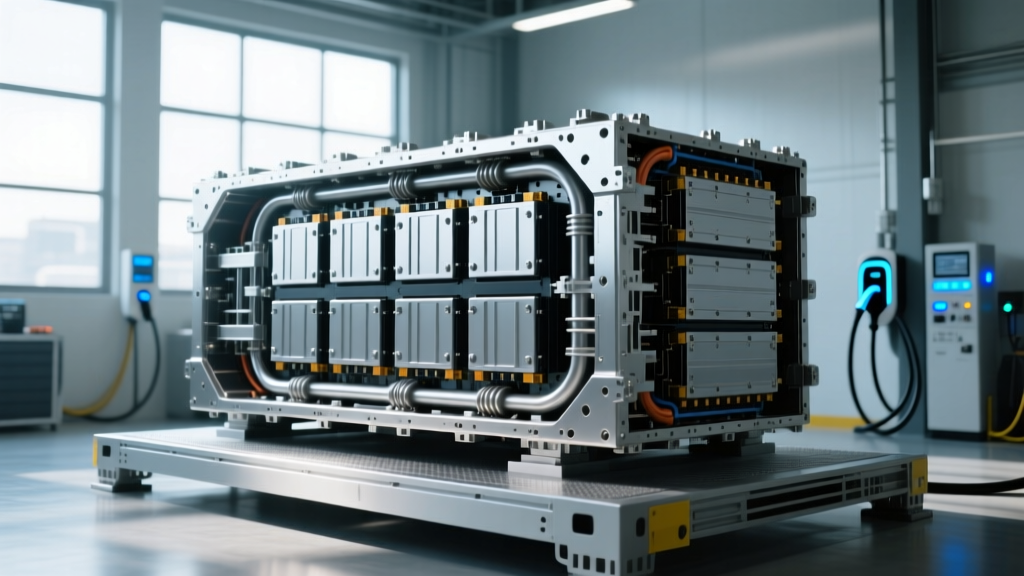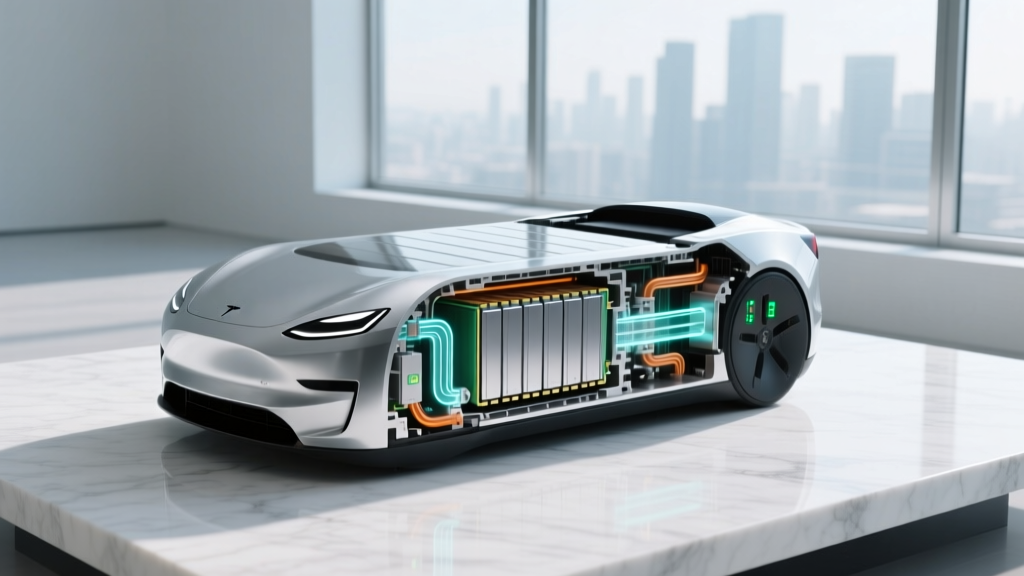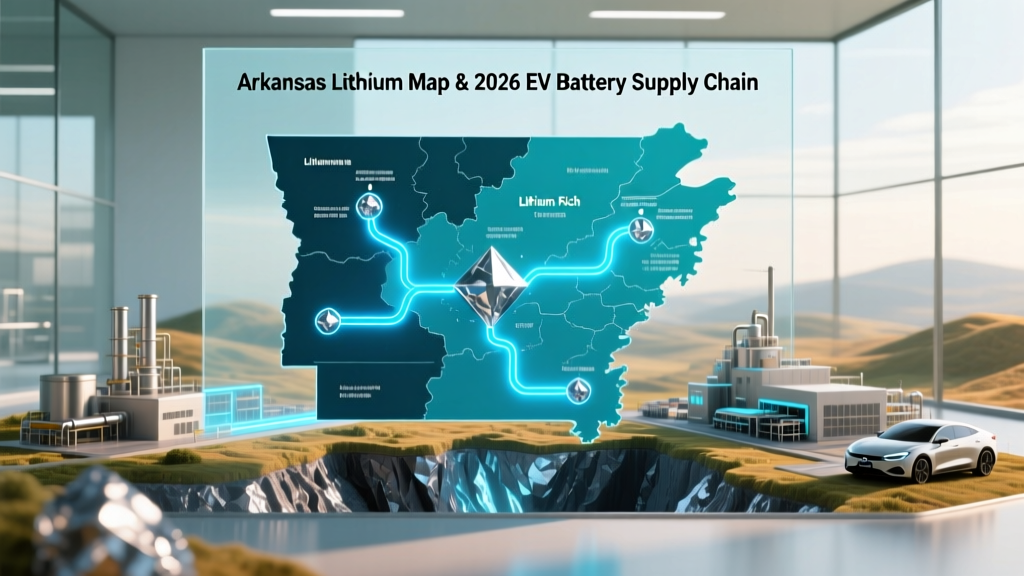
For EV buyers researching where their battery materials come from, the Arkansas lithium map has become a surprisingly important topic. Southern Arkansas sits atop the Smackover Formation, a geological brine reservoir containing an estimated 5 to 19 million tons of recoverable lithium — enough to reshape the North American EV battery supply chain. But what does a lithium play in rural Arkansas actually mean for the battery sitting under your electric car? This guide connects the resource map to the chemistry, degradation data, warranties, and replacement economics that matter to real EV owners in 2026.
The Arkansas Lithium Map: What the Smackover Formation Actually Is
The "Arkansas lithium map" refers primarily to the lithium-rich brine deposits within the Smackover Formation, a Jurassic-age geological layer that extends across southern Arkansas, northern Louisiana, East Texas, and parts of Mississippi. Companies including Standard Lithium (in partnership with Equinor) and ExxonMobil have been advancing direct lithium extraction (DLE) projects in Columbia and Lafayette counties, targeting lithium concentrations of roughly 400 mg/L in produced brine from existing oil and gas operations.
Why this matters for EV owners: domestic lithium sourcing directly affects whether a vehicle's battery pack qualifies for the IRS §30D federal tax credit. The critical-minerals requirement mandates that an increasing percentage of battery minerals must be extracted or processed in the U.S. or a free-trade-agreement partner. Arkansas-sourced lithium — if commercially scaled — could help more vehicles clear that threshold, potentially making the full $7,500 credit accessible to more trims and models. Always verify eligibility against current-year IRS rules, as MSRP caps, buyer income limits, and sourcing percentages update annually.
LFP vs NMC vs NCA: EV Battery Chemistry Trade-Offs
Understanding what's inside your traction battery is the first step to managing its lifespan. Three chemistries dominate the 2026 EV market:
- LFP (Lithium Iron Phosphate): No nickel or cobalt. Lower energy density but superior cycle life and thermal stability. Used in Tesla Model 3/Y Standard Range, Ford Mustang Mach-E Select (2025+), and many Chinese-market EVs.
- NMC (Nickel Manganese Cobalt): Higher energy density, enabling longer EPA range in a given pack volume. Common in Hyundai Ioniq 5, VW ID.4, BMW iX, and most long-range models.
- NCA (Nickel Cobalt Aluminum): Tesla's Long Range and Performance packs have historically used NCA or NCA/NMC blends for maximum energy density.
| Attribute | LFP | NMC (811/622) | NCA |
|---|---|---|---|
| Energy density (cell-level) | ~160–180 Wh/kg | ~220–260 Wh/kg | ~250–280 Wh/kg |
| Typical cycle life (to 80% SoH) | 2,500–4,000+ | 1,000–2,000 | 800–1,500 |
| Cold-weather range loss (~20°F) | ~30–40% reduction | ~20–30% reduction | ~20–30% reduction |
| Fast-charging tolerance | Excellent (can charge to 100% daily) | Moderate (80% daily recommended) | Moderate (80% daily recommended) |
| Cost per kWh (pack-level) | ~$95–$115 | ~$120–$150 | ~$130–$160 |
| Cobalt/nickel content | None | High | High |
| Example 2026 vehicles | Tesla Model 3 RWD, Ford Mach-E Select | Hyundai Ioniq 5 Long Range, VW ID.4 Pro | Tesla Model S Long Range |
Which is better? For daily commuting with home Level 2 charging, LFP is the durability champion — you can charge to 100% every night without meaningful accelerated degradation. For road-trippers needing 320+ miles of EPA range and fast DC charging on long corridors, NMC/NCA still wins on energy density. Neither chemistry is universally superior; the right choice depends on your driving profile.
How Long Do EV Batteries Last? Degradation Data by the Numbers
The question "how long do EV batteries last" has a reassuring answer backed by fleet data: most modern EV traction batteries will outlast the vehicle they're installed in. Here's what real-world degradation looks like across chemistries and mileages:
- Tesla Model 3/Y (NMC/NCA, 2018–2022 fleet): ~5–7% capacity loss at 100,000 miles; ~8–12% at 150,000 miles (source: Tesla Impact Reports, Recurrent Auto fleet data).
- Chevrolet Bolt EV/EUV (NMC, 2017–2023): ~6–10% loss at 80,000–100,000 miles; some early 2017–2019 models recalled for fire risk, not degradation.
- Hyundai Kona Electric (NMC, 2019–2023): ~5–8% at 80,000 miles in temperate climates; LG Energy Solution cells performed well post-2020 recall fix.
- Tesla Model 3 Standard Range (LFP, 2021+): ~2–4% loss at 60,000 miles — consistent with LFP's superior cycle life.
- Nissan Leaf (passive-cooled NMC/LMO, 2011–2024): Earlier 24/30 kWh packs showed 15–25% loss at 80,000 miles in hot climates; 2018+ 40/62 kWh packs with improved thermal management show ~8–12% at 80,000 miles.
The pattern is clear: liquid-cooled packs (virtually all 2020+ EVs) degrade far more slowly than older passively-cooled designs. The degradation curve is also non-linear — expect a steeper initial drop of 2–4% in the first year, then a long, slow plateau.
What Does the EV Battery Warranty Cover?
Federal law (under EPA/CARB-aligned guidelines) mandates a minimum 8-year/100,000-mile warranty on EV battery packs for emissions-related compliance, and virtually every automaker meets or exceeds this standard. Here's what the major brands offer for 2026 models:
| Manufacturer | Warranty Term | Capacity Retention Threshold | Chemistry (typical) |
|---|---|---|---|
| Tesla (Model 3/Y LFP) | 8 yr / 120,000 mi | 70% | LFP |
| Tesla (Model 3/Y LR, S, X) | 8 yr / 120,000 mi (S/X: 150k) | 70% | NMC/NCA |
| Hyundai / Kia | 10 yr / 100,000 mi | 70% | NMC |
| Ford (Mach-E, F-150 Lightning) | 8 yr / 100,000 mi | 70% | NMC / LFP (Select) |
| Volkswagen (ID.4) | 8 yr / 100,000 mi | 70% | NMC |
| GM (Ultium-based: Equinox EV, Blazer EV, Silverado EV) | 8 yr / 100,000 mi | 70% | NMC |
| BMW (i4, iX, i7) | 8 yr / 100,000 mi | 70% | NMC |
Key details to understand: The 70% threshold means the warranty only triggers if your battery drops below 70% of its original usable capacity within the term. Given that typical degradation is 5–12% over 100,000 miles (putting you at 88–95% SoH), very few owners ever file a warranty claim. The warranty covers defects and abnormal degradation — not damage from accidents, flooding, or aftermarket modifications.
EV Battery Replacement Cost: What You'd Actually Pay
If your battery does fail outside warranty — typically at 150,000–250,000+ miles — replacement costs vary dramatically by pack size and model. Here's the current landscape:
| Vehicle / Pack Size | Battery Cost (parts) | Labor | Total Estimate | When Typically Needed |
|---|---|---|---|---|
| Tesla Model 3 RWD (60 kWh LFP) | $8,000–$11,000 | $1,500–$2,500 | $10,000–$13,500 | Rare before 200k mi |
| Tesla Model Y Long Range (82 kWh NMC) | $12,000–$16,000 | $1,500–$2,500 | $14,000–$18,500 | Rare before 180k mi |
| Hyundai Ioniq 5 (77.4 kWh NMC) | $11,000–$14,000 | $1,200–$2,000 | $12,500–$16,000 | Rare before 180k mi |
| Ford F-150 Lightning Extended (131 kWh NMC) | $18,000–$25,000 | $2,000–$3,500 | $20,000–$28,500 | Rare before 150k mi |
| Chevrolet Bolt EV (65 kWh NMC) | $7,000–$10,000 | $1,000–$1,800 | $8,000–$11,800 | Rare before 180k mi |
Context that matters: By the time a battery might need replacement at 200,000+ miles, most vehicles are well past their economic prime. Many owners will trade in or sell before facing this cost. Additionally, pack-level prices have fallen from ~$200/kWh in 2020 to roughly $110–$130/kWh in 2026, and third-party refurbishers now offer module-level repairs (replacing individual degraded modules rather than the full pack) for $3,000–$6,000 on common platforms.
Factors That Accelerate (or Preserve) Battery Health
Not all miles are created equal when it comes to battery wear. These factors have the most significant impact on long-term State of Health (SoH):
- Daily charge limit: Set to 80% for NMC/NCA packs; LFP owners can charge to 100% daily without concern. Reserve 100% charges for road trips.
- DC fast charging frequency: Occasional fast charging (1–2x/week) has minimal impact on modern liquid-cooled packs. Daily 150+ kW DC fast charging may add 1–3% extra degradation over 100,000 miles. Precondition the battery before fast charging to reduce stress.
- Extreme heat exposure: Sustained ambient temperatures above 95°F accelerate degradation. Park in shade or a garage when possible. Avoid leaving the car at 100% SoC in extreme heat.
- Extreme cold: Cold doesn't permanently damage batteries (the BMS prevents charging below safe temperatures), but it temporarily reduces range by 20–40% at 20°F or below. Use preconditioning before driving in cold weather.
- Storage at extreme SoC: If storing the vehicle for 2+ weeks, leave it at 40–60% SoC. Never store at 100% or below 10%.
- Regen braking settings: Standard regen is fine; max regen in cold weather is typically limited by the BMS anyway. No meaningful SoH impact from regen settings.
How to Check Your EV Battery's State of Health
State of Health (SoH) measures your battery's current maximum capacity as a percentage of its original capacity. Here's how to monitor it:
- In-vehicle displays: Tesla shows estimated range at 100% (compare to original EPA spec); Hyundai/Kia and some BMW models show a battery health percentage directly in the settings menu.
- OBD-II diagnostic apps: Tools like OBDeleven, Leaf Spy (Nissan Leaf), or TeslaFi/Tessie pull SoH data from the BMS. A $30–$60 OBD-II dongle plus a $5–$15/year app subscription gives dealer-level battery diagnostics.
- Dealer service visits: Any authorized service center can run a full battery health report during routine service. Ask for it specifically — it's not always included in standard inspections.
- Third-party services: Companies like Recurrent Auto offer free battery health tracking by connecting to your vehicle's telematics API, providing degradation curves benchmarked against similar vehicles.
A healthy 3-year-old EV with 40,000 miles should show 93–97% SoH. If you see a drop below 90% before 60,000 miles, contact your dealer — that could indicate a defective module covered under warranty.
Emerging Battery Tech: Solid-State, Silicon Anodes, and Realistic Timelines
Several next-generation technologies are in development, but none are commercially available in production EVs as of 2026:
- Solid-state batteries: Replace liquid electrolyte with a solid ceramic or polymer layer, promising 30–50% higher energy density and faster charging. Toyota has announced limited production for 2027–2028, but these will debut in low-volume models at premium prices. Mass-market availability is projected for 2030+. Samsung SDI and QuantumScape are also advancing solid-state cells with OEM partnerships.
- Silicon-dominant anodes: Replacing graphite anodes with silicon can boost energy density by 20–40%. Sila Nanotechnologies and Group14 Technologies are supplying early silicon-anode materials for limited applications (e.g., Mercedes-AMG's high-performance models). Wider adoption expected by 2028–2030.
- Sodium-ion batteries: CATL and BYD are producing sodium-ion cells for low-cost, short-range EVs in China. Energy density (~140 Wh/kg) limits these to budget city cars; U.S. availability is uncertain and likely 2028+ at earliest.
- LMFP (Lithium Manganese Iron Phosphate): An evolution of LFP with ~15–20% higher energy density while retaining cobalt-free chemistry. Expected in Tesla and other OEM packs starting 2027–2028.
Bottom line on future tech: These are announced or in pilot production — not available to buy today. If you need an EV now, current LFP and NMC chemistries are mature, well-understood, and backed by real-world data across millions of vehicles.
Connecting the Arkansas Lithium Map to Your EV Purchase Decision
The Arkansas lithium map matters because domestic sourcing directly influences two things: your tax credit eligibility and the long-term cost trajectory of replacement batteries. As DLE projects in the Smackover Formation scale toward commercial production (projected 2027–2029 for first significant output), more battery packs assembled in North America will meet the IRS §30D critical-minerals requirements, potentially expanding the pool of vehicles eligible for the full $7,500 federal credit.
For today's buyer, the practical takeaway is this: choose your battery chemistry based on your driving habits, maintain it with the checklist above, and know that the warranty almost certainly covers you through the vehicle's useful life. The lithium from Arkansas or elsewhere will be inside your pack regardless — what changes is whether the supply chain qualifies you for a tax break at purchase.
Frequently Asked Questions
How long do EV batteries last in years and miles?
Most modern liquid-cooled EV batteries retain 85–95% of their original capacity at 100,000 miles and 8–10 years. With typical annual driving of 12,000–15,000 miles, that translates to a functional battery life of 15–20+ years. Complete failure is rare; gradual degradation is the norm.
How much does an EV battery cost to replace?
Full pack replacement ranges from roughly $8,000 for a 60 kWh pack (Chevrolet Bolt) to $25,000+ for a 131 kWh pack (Ford F-150 Lightning Extended Range), including labor. However, most batteries outlast the vehicle, and module-level repairs ($3,000–$6,000) are increasingly available as a lower-cost alternative.
What does the EV battery warranty actually cover?
Standard warranties cover defects and abnormal degradation below 70% capacity for 8 years/100,000 miles (Hyundai/Kia: 10 years/100,000 miles). They do not cover accident damage, flood damage, or degradation from normal use above the 70% threshold. Always read your specific owner's manual warranty section.
How do I check my EV's battery health?
Use your vehicle's built-in range estimate at 100% charge, an OBD-II diagnostic app (Leaf Spy, TeslaFi, OBDeleven), a dealer service visit, or a third-party tracking service like Recurrent Auto. Compare your current max range to the original EPA rating to estimate SoH.
LFP vs NMC — which battery chemistry is better for me?
Choose LFP if you charge at home daily, commute under 60 miles, and want maximum cycle life with the ability to charge to 100% regularly. Choose NMC/NCA if you need 300+ miles of EPA range, take frequent road trips, or live in a cold climate where NMC's slightly better cold-weather performance matters. Both chemistries will outlast most ownership periods with proper care.