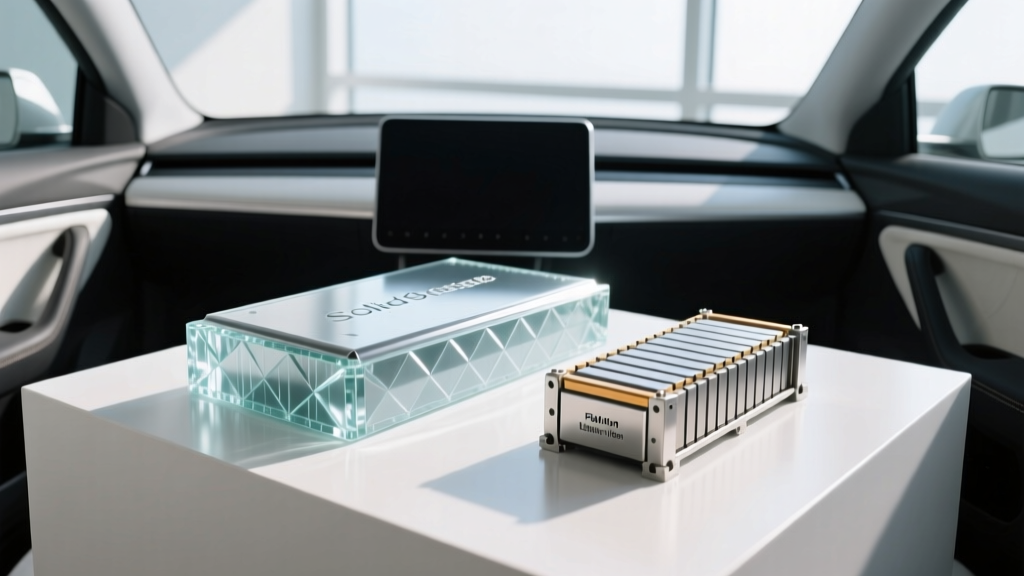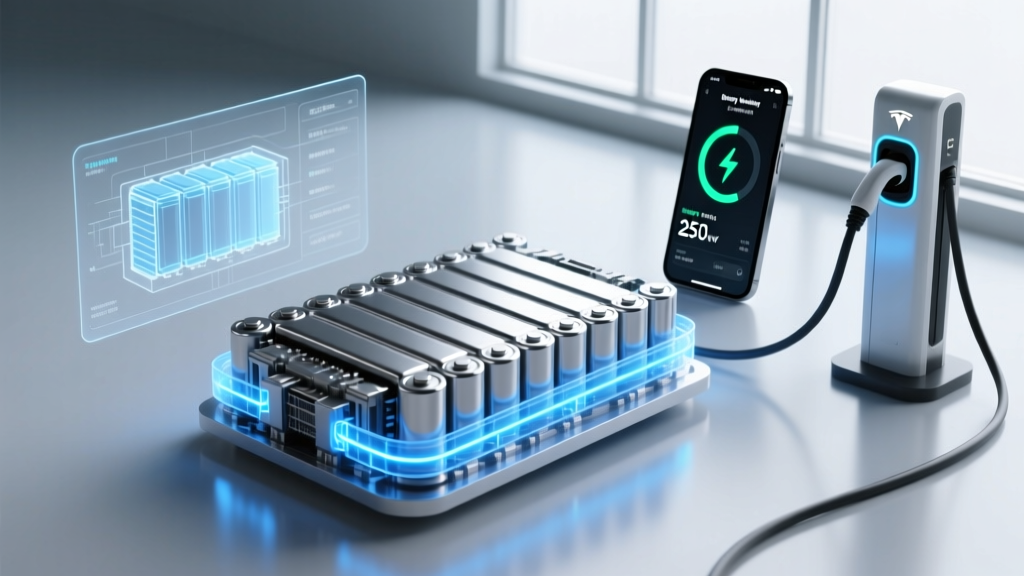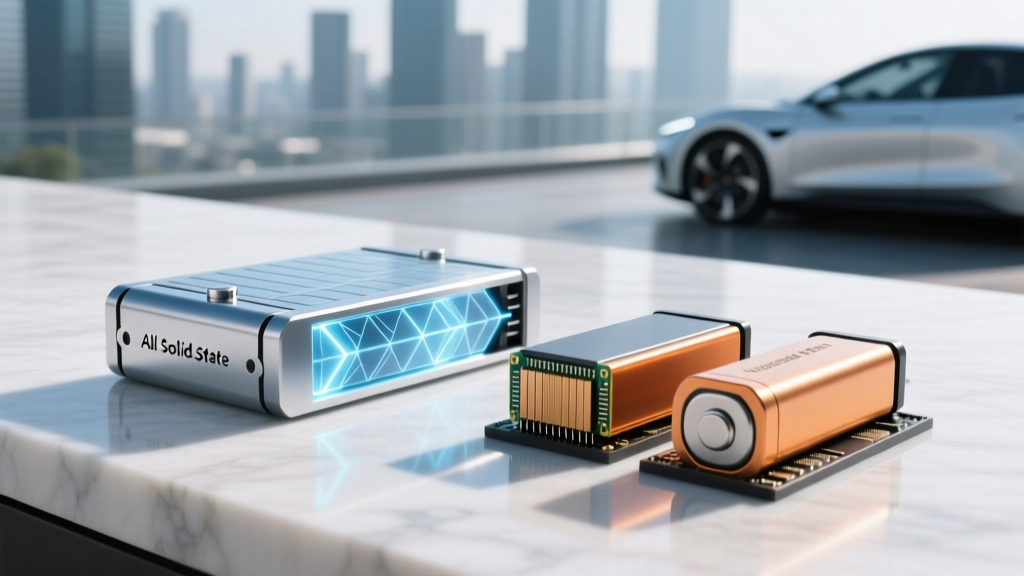
Today's EV Batteries vs. the All Solid State Battery Promise
If you've followed EV news for more than a few months, you've seen the headlines: the all solid state battery will revolutionize electric vehicles with 600-mile ranges, 10-minute charging, and zero fire risk. Toyota, Samsung SDI, QuantumScape, and Solid Power have all announced breakthroughs. Yet as of 2026, every mass-production EV sold in the United States still uses a liquid-electrolyte lithium-ion cell — either NMC (nickel manganese cobalt), NCA (nickel cobalt aluminum), or LFP (lithium iron phosphate).
That doesn't mean today's batteries are inadequate. Real-world data from hundreds of thousands of EVs shows that modern lithium-ion packs routinely last 150,000–200,000+ miles with manageable degradation, backed by 8-year/100,000-mile federal warranties. The question for buyers isn't whether to wait for solid-state — it's understanding what's in the car you can actually buy today, how long it will last, and what it costs if something goes wrong.
This guide breaks down current battery chemistries with hard numbers, projects realistic timelines for solid-state commercialization, and gives you the data to make an informed purchase decision now.
LFP vs. NMC vs. NCA: Chemistry Trade-Offs Explained
Every EV battery uses a specific cathode chemistry that determines its energy density, lifespan, cost, and cold-weather behavior. The three dominant chemistries in 2026 U.S.-market EVs are LFP, NMC, and NCA.
| Attribute | LFP (Lithium Iron Phosphate) | NMC (Nickel Manganese Cobalt) | NCA (Nickel Cobalt Aluminum) |
|---|---|---|---|
| Energy Density (Wh/kg, cell-level) | 160–180 | 220–260 | 240–270 |
| Cycle Life (to 80% SoH) | 3,000–5,000+ | 1,000–2,000 | 1,000–1,500 |
| Cost per kWh (pack-level, est.) | $95–$115 | $120–$145 | $125–$150 |
| Cold-Weather Performance | Moderate — greater range loss below 32°F | Good — better low-temp conductivity | Good — similar to NMC |
| Thermal Stability | Excellent — very high runaway threshold | Moderate — requires robust BMS | Moderate — requires robust BMS |
| Recommended Charge Habit | Can charge to 100% daily | Best kept 20–80% for daily use | Best kept 20–80% for daily use |
| Notable 2026 Vehicles | Tesla Model 3 RWD, Model Y RWD, Ford Mustang Mach-E Select (LFP option) | Hyundai Ioniq 5, Kia EV6, BMW iX, VW ID.4, Chevy Equinox EV | Tesla Model S, Model X, Model 3/Y Long Range (Panasonic cells) |
Which Chemistry Is Better?
There is no universal winner — it depends on your use case:
- Choose LFP if: You want maximum longevity, plan to keep the car 10+ years, charge at home daily (100% is fine), and can accept slightly less range per kWh. LFP's cycle life of 3,000–5,000+ cycles means a 75 kWh pack could theoretically endure 225,000–375,000 miles of full cycles before hitting 80% capacity.
- Choose NMC/NCA if: You need maximum range in a given pack size, frequently drive in cold climates, or want the fastest DC charging speeds. The trade-off is somewhat shorter cycle life and a recommendation to avoid sustained 100% states of charge.
How Long Do EV Batteries Actually Last?
The fear that EV batteries need replacing every few years is not supported by fleet data. According to fueleconomy.gov, most modern EV batteries are designed to last the lifetime of the vehicle. Real-world degradation studies tell a consistent story:
Typical Degradation Curve (Fleet Average Data)
| Vehicle Age / Mileage | Average Capacity Retained | Notes |
|---|---|---|
| Year 1 / 15,000 mi | 95–97% | Initial "break-in" loss; steepest part of the curve |
| Year 3 / 45,000 mi | 91–94% | Degradation rate slows significantly |
| Year 5 / 75,000 mi | 88–92% | Most packs well above warranty threshold |
| Year 8 / 100,000 mi | 85–90% | Federal warranty minimum: 70% retention |
| Year 10 / 150,000 mi | 82–88% | Based on Tesla, Nissan Leaf (gen 2), and Hyundai/Kia fleet data |
| Year 15 / 200,000 mi | 78–85% | Projected; limited real-world data at this age for newest chemistries |
Sources: Recurrent Auto fleet data (2025 report), Tesla Impact Reports, Geotab battery degradation study. Figures are averages — individual results vary based on climate, charging habits, and chemistry.
A critical nuance: degradation is non-linear. Most capacity loss occurs in the first 12–18 months (calendar aging and initial SEI layer formation on the anode), then the curve flattens considerably. A battery at 90% after three years is likely to still be at 84–86% at year eight.
Real-World Example: Tesla Model 3 Long Range (NCA)
According to Tesla's 2025 Impact Report, Model 3/Y batteries retain approximately 88% of original capacity after 150,000 miles. For a vehicle with an original EPA range of 341 miles, that translates to roughly 300 miles of range at 150K — still highly usable for daily driving and road trips.
Real-World Example: Nissan Leaf (LMO/NMC, passive cooling)
Earlier-generation Leafs with passive air cooling showed faster degradation, particularly in hot climates — some dropping to 75–80% capacity by year 5. Modern liquid-cooled packs (Leaf Plus from 2019+, and virtually all 2026 EVs) have largely solved this issue.
EV Battery Warranty: What's Actually Covered
Federal law mandates that EV batteries carry a minimum warranty of 8 years or 100,000 miles (whichever comes first) in most states, and 10 years or 150,000 miles in California Air Resources Board (CARB) states including California, New York, Massachusetts, and others. Most manufacturers exceed the federal minimum.
| Manufacturer / Model | Warranty Period | Capacity Threshold | Notes |
|---|---|---|---|
| Tesla Model 3 RWD (LFP) | 8 yr / 100,000 mi | 70% retention | Long Range/AWD: 8 yr / 120,000 mi |
| Tesla Model S / X | 8 yr / 150,000 mi | 70% retention | Higher mileage threshold |
| Hyundai Ioniq 5 / 6 | 10 yr / 100,000 mi | 70% retention | Among the longest coverage |
| Kia EV6 / EV9 | 10 yr / 100,000 mi | 70% retention | Matches Hyundai |
| Ford Mustang Mach-E / F-150 Lightning | 8 yr / 100,000 mi | 70% retention | Standard across Ford EVs |
| Chevrolet Equinox EV / Blazer EV | 8 yr / 100,000 mi | 60% retention | Note: lower threshold than most competitors |
| BMW iX / i4 | 8 yr / 100,000 mi | 70% retention | Extends to 80,000 mi in some markets |
| Rivian R1T / R1S | 8 yr / 175,000 mi | 70% retention | Highest mileage threshold in the market |
What Triggers a Warranty Claim?
If your battery's State of Health (SoH) drops below the stated threshold (typically 70%) within the warranty period, the manufacturer must repair or replace the pack at no cost. This covers abnormal degradation — not damage from accidents, flooding, or unauthorized modifications.
Important: the warranty covers capacity loss, not range loss from other factors. If your range decreases because of tire wear, brake drag, or software changes, that's not a battery warranty issue.
Battery Replacement Cost: When and How Much
Here's the data point that calms most replacement-cost anxiety: the vast majority of EV batteries outlast the vehicle's economic life. According to data from Recurrent Auto, fewer than 5% of EV batteries in their study fleet required replacement outside of warranty. When replacement is needed, it's typically due to manufacturing defects (covered under warranty) or physical damage (covered by insurance), not wear-out.
| Vehicle | Battery Size | Estimated Replacement Cost | Cost per kWh |
|---|---|---|---|
| Tesla Model 3 (LFP) | 60 kWh | $8,000–$12,000 | ~$133–$200 |
| Tesla Model Y Long Range | 82 kWh | $12,000–$16,000 | ~$146–$195 |
| Hyundai Ioniq 5 | 77.4 kWh | $11,000–$15,000 | ~$142–$194 |
| Ford F-150 Lightning (Extended) | 131 kWh | $18,000–$25,000 | ~$137–$191 |
| Chevrolet Bolt EV (older gen) | 65 kWh | $9,000–$14,000 | ~$138–$215 |
| BMW iX xDrive50 | 111.5 kWh | $18,000–$24,000 | ~$161–$215 |
| Mercedes EQS 450+ | 107.8 kWh | $20,000–$28,000 | ~$185–$260 |
Costs include the battery pack and labor but vary significantly by region, dealership vs. independent shop, and whether refurbished packs are available. Prices have declined ~8–12% annually and are expected to continue falling.
Module-level repair is often possible. Many EV battery packs are composed of individual modules (8–24 depending on the vehicle). If a single module fails, a qualified technician can often replace just that module for $1,500–$4,000 rather than swapping the entire pack. Tesla, BMW, and Hyundai/Kia packs are particularly modular in design.
Factors That Affect Battery Life (and What You Can Control)
Battery degradation is driven by four primary stressors. Understanding them lets you maximize your pack's useful life:
1. State of Charge Habits
Lithium-ion cells experience the most stress at the extremes — above 90% and below 10% SoC. For NMC and NCA batteries, daily charging to 80% and avoiding prolonged periods below 20% can significantly slow calendar aging. LFP batteries are more resilient at high SoC, which is why Tesla and Ford recommend periodic 100% charges for LFP packs (it also helps the BMS recalibrate).
2. DC Fast Charging Frequency
Occasional DC fast charging (1–2 times per week) has minimal measurable impact on modern, liquid-cooled batteries. However, exclusive reliance on DCFC — especially at high-power 250–350 kW chargers — can accelerate degradation by 1–3% over several years compared to predominantly Level 2 home charging. The heat generated during high-C-rate charging stresses cell internals. If you have home Level 2 access, use DCFC primarily for road trips.
3. Temperature Extremes
Batteries prefer 60–80°F (15–27°C). Prolonged exposure to ambient temperatures above 95°F accelerates calendar aging, while charging in sub-freezing temperatures without preconditioning can cause lithium plating on the anode — permanent damage. Most 2026 EVs have active thermal management (liquid heating and cooling) that mitigates this substantially, but parking in shade/garages in hot climates still helps.
4. Depth of Discharge
Shallow cycles (e.g., using 30% of the battery and recharging) are gentler than deep cycles (draining from 90% to 10%). You don't need to obsess over this — the BMS manages it — but it's another reason the 20–80% daily window is recommended for NMC/NCA.
Battery Care Checklist for Maximum Longevity
- ✅ Set daily charge limit to 80% (NMC/NCA) or 100% (LFP)
- ✅ Use Level 2 home charging as your primary method
- ✅ Enable battery preconditioning before DC fast charging (most EVs do this automatically when a charger is set as your navigation destination)
- ✅ Avoid leaving the car at 100% SoC for extended periods (days/weeks) — especially in hot weather
- ✅ Don't let the car sit below 10% SoC for more than a day or two
- ✅ In extreme cold, plug in when parked so the thermal system can maintain battery temperature using grid power
- ✅ Use the manufacturer's app to monitor SoH periodically
- ❌ Don't exclusively rely on 350 kW ultra-fast chargers for daily needs
- ❌ Don't store the vehicle at 0% or 100% SoC for weeks — aim for ~50% for long-term storage
How to Check and Monitor Your Battery's State of Health
State of Health (SoH) represents the battery's current maximum capacity as a percentage of its original capacity when new. A new EV starts at 100% SoH; if your 75 kWh pack now holds 67.5 kWh, its SoH is 90%.
Methods to Check SoH
- Manufacturer app: Tesla, Hyundai, Kia, BMW, Ford, and Rivian provide SoH estimates in their connected-car apps or on the vehicle's service screen. This is the easiest method.
- OBD-II diagnostic tools: Devices like the OBDeleven (VW/Hyundai/Kia) or third-party apps paired with an OBD-II dongle can read battery management system data directly, including individual cell voltages and total pack capacity.
- Dealer diagnostic check: Any authorized service center can run a full battery health report, typically during scheduled maintenance or upon request.
- Third-party services: Companies like Recurrent and Geotab offer fleet and individual battery monitoring that tracks SoH over time using telematics data.
When to Be Concerned
Normal degradation is roughly 2–3% in the first year, then 0.5–1% per year after that. If you observe a sudden drop of more than 3–5% in a short period, or if individual cell voltage variance exceeds 0.1V (visible via OBD-II tools), schedule a diagnostic check — this may indicate a module-level issue that's warranty-covered.
The All Solid State Battery: How Close Is It Really?
Now for the technology that dominates headlines. A solid-state battery replaces the liquid or gel electrolyte in conventional lithium-ion cells with a solid material — typically a ceramic, sulfide glass, or polymer. This change promises several advantages:
- Higher energy density: Solid electrolytes enable lithium-metal anodes, potentially doubling cell-level energy density to 400–500 Wh/kg (vs. 220–270 for today's best NMC/NCA).
- Faster charging: Solid-state cells can theoretically accept higher C-rates without lithium plating, enabling 10–15 minute 10–80% charges.
- Improved safety: No flammable liquid electrolyte means dramatically reduced thermal runaway risk.
- Better cold performance: Solid electrolytes can maintain ionic conductivity at lower temperatures than liquid systems.
The Reality Check: Timelines and Challenges
As of early 2026, no all solid state battery is in mass production for consumer vehicles. Here's where things stand:
| Company | Status | Claimed Timeline | Reality Assessment |
|---|---|---|---|
| Toyota | Prototype testing; limited pilot production | 2027–2028 for first vehicles (Japan); 2028–2030 for broader rollout | Most credible timeline; Toyota has 1,000+ patents. Initial deployment likely in limited-run, premium models at high cost. |
| Samsung SDI | Pilot line operational; sample cells to automakers | 2027 for initial production | Promising sulfide-based cells; manufacturing scale-up and cost remain unproven. |
| QuantumScape (VW partnership) | Alpha-2 prototype cells; pre-revenue | 2026–2027 for "B-sample" vehicles | Demonstrated 800+ cycle life in lab; transition from lab to gigawatt-scale manufacturing is historically the hardest step. |
| Solid Power (BMW/Ford partnership) | Pilot cells delivered to partners | 2028–2030 for production vehicles | Sulfide electrolyte approach; BMW testing in prototype i7 mules. |
| Nissan | Pilot plant under construction in Yokohama | 2028 for first EV application | Targeting $75/kWh pack cost — ambitious if achievable. |
Why It Keeps Getting Delayed
Three fundamental manufacturing challenges persist:
- Interface stability: The contact point between the solid electrolyte and the electrodes degrades over charge cycles, causing increased resistance. Lab solutions exist, but they're difficult to reproduce at factory scale with high yields.
- Manufacturing cost: Current solid-state cell production costs are estimated at $300–$500/kWh — 3–4x the cost of mature lithium-ion. Achieving cost parity requires entirely new production lines and processes.
- Pressure requirements: Many solid-state designs require significant external pressure (up to 50 MPa) to maintain electrode-electrolyte contact, adding weight and complexity to the pack.
What About "Semi-Solid-State" Batteries?
Several Chinese manufacturers, including NIO (150 kWh semi-solid pack for the ET7) and WeLion (supplying NIO), have deployed semi-solid-state batteries that use a hybrid electrolyte — partly solid, partly liquid. These are commercially available in China as of 2025–2026 and offer modest energy density improvements (~360 Wh/kg cell-level). However, they don't deliver the full safety or charging-speed benefits of a true all solid state battery, and they're not yet available in U.S.-market vehicles.
Silicon Anode: The Closer Innovation
A more imminent improvement is the silicon-dominant anode, which replaces graphite with silicon to increase energy density by 20–40%. Companies like Sila Nanotechnologies (partnered with Mercedes-Benz for the G-Class electric) and Group14 (Porsche/Rivian supply chain) are entering production in 2025–2027. Silicon anodes work with existing liquid electrolyte manufacturing and represent a meaningful, near-term range improvement without the manufacturing hurdles of full solid-state.
Frequently Asked Questions
How long do EV batteries last in years and miles?
Based on fleet data, most modern liquid-cooled EV batteries retain 82–90% of original capacity after 10 years or 150,000 miles. The battery is designed to outlast the vehicle's typical first-ownership period. Many will remain functional (albeit with reduced range) well beyond 200,000 miles. The 8-year/100,000-mile federal warranty (10-year/150,000-mile in CARB states) provides a strong baseline guarantee.
How much does it cost to replace an EV battery?
Out-of-warranty replacement costs range from approximately $8,000 for smaller packs (60 kWh, e.g., Tesla Model 3 RWD) to $25,000–$28,000 for the largest packs (130+ kWh, e.g., F-150 Lightning Extended Range, Mercedes EQS). However, fewer than 5% of EV batteries require out-of-warranty replacement. Module-level repairs, when possible, cost $1,500–$4,000. Costs continue to decline 8–12% annually as battery prices fall.
What does the EV battery warranty cover?
EV battery warranties cover capacity loss — specifically, the battery dropping below a stated retention threshold (usually 70% of original capacity) within the warranty period (typically 8 years/100,000 miles). The manufacturer will repair or replace the pack at no charge. The warranty does not cover damage from accidents, misuse, unauthorized modifications, or natural disasters (those are handled by insurance). Some warranties, like Chevrolet's, use a lower 60% threshold — read the fine print.
How do I check my EV battery health?
The easiest method is your vehicle's companion app — most manufacturers display a battery health estimate. For more granular data (individual cell voltages, precise SoH percentage), use an OBD-II diagnostic tool paired with an EV-specific app, or request a battery health report from your dealer. Monitor for sudden capacity drops (>3% in a month) which may indicate a warranty-covered defect.
LFP vs. NMC — which battery chemistry should I choose?
Choose LFP if you prioritize longevity (3,000–5,000+ cycles), lower cost, and don't mind slightly lower energy density. LFP tolerates daily 100% charging and is ideal for commuters who charge at home. Choose NMC or NCA if you need maximum range per charge, drive frequently in cold weather, or want the fastest DC charging. NMC/NCA batteries prefer a 20–80% daily window for optimal longevity. Neither chemistry is "bad" — they serve different priorities.
Should I wait for solid-state batteries before buying an EV?
For most buyers, no. The all solid state battery is not expected in affordable, mass-market U.S. vehicles before 2029–2031 at the earliest. Even when introduced, initial solid-state EVs will likely carry a significant price premium. Today's lithium-ion batteries (especially LFP) already offer excellent longevity, and waiting 4–5+ years means 4–5+ years of higher fuel and maintenance costs with a gasoline vehicle. If you need a car now, buy now — the battery technology is mature and well-warranted.
Does fast charging damage my EV battery?
Occasional DC fast charging (1–3 times per week) has minimal impact on modern liquid-cooled batteries — studies show approximately 1–3% additional degradation over several years compared to exclusive Level 2 charging. The real risk is exclusive DCFC use combined with high ambient temperatures. Always enable preconditioning (navigating to the charger triggers this automatically in most EVs) to bring the battery to optimal temperature before high-power charging.
Bottom Line: Buy Confidently Today, Watch Solid-State Tomorrow
The all solid state battery represents genuine progress in energy storage — but it remains a manufacturing and cost challenge, not a science problem. Toyota's 2027–2028 timeline is the most aggressive credible estimate, and broad availability at competitive prices is a 2030+ proposition.
Meanwhile, today's EV batteries are remarkably durable. LFP packs offer 3,000+ cycle lives, NMC/NCA packs routinely reach 150,000+ miles with 85%+ capacity retention, and federal warranties protect you against abnormal degradation for 8–10 years. Battery replacement costs, while significant ($8,000–$28,000 depending on the vehicle), are rarely incurred and continue to fall.
The smart move: buy the EV that fits your needs now, follow basic battery care practices (moderate SoC, home Level 2 charging when possible, preconditioning before DCFC), and let the technology evolve around you. By the time solid-state reaches your price point, you'll have saved thousands in fuel and maintenance — and you'll be ready for whatever comes next.