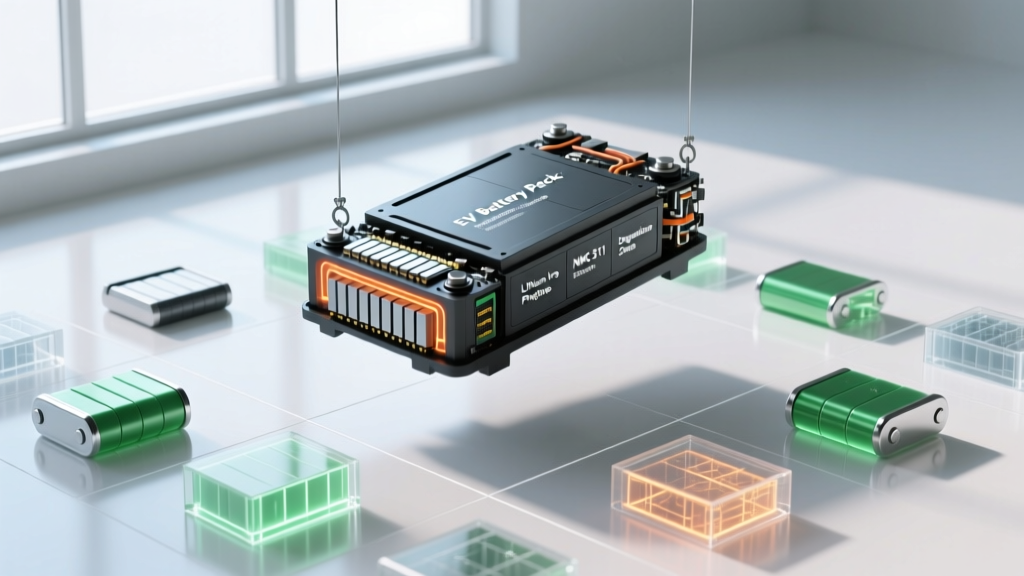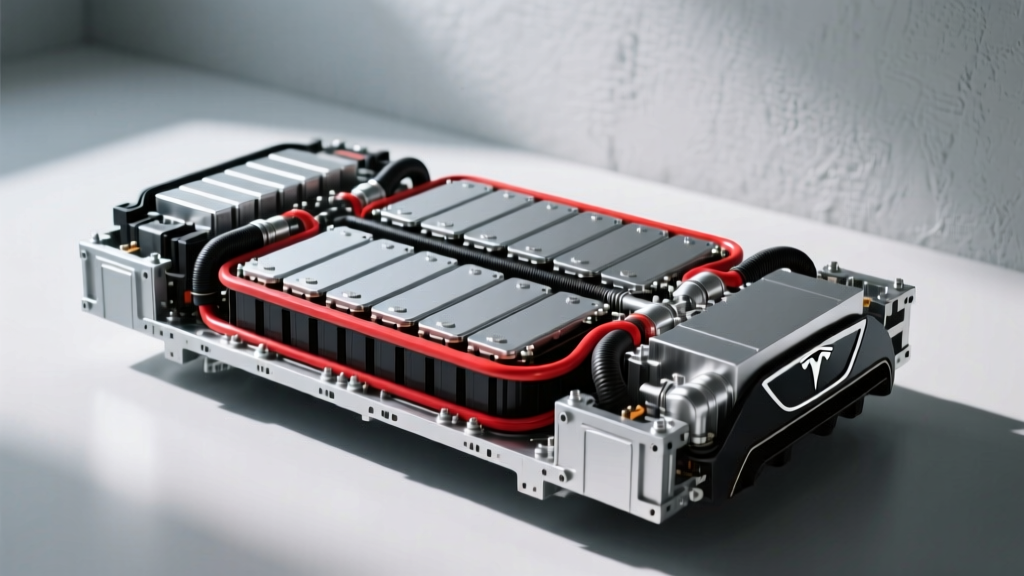
If you follow EV news, you've seen the headlines: the all solid battery is coming, and it will change everything. Longer range. Faster charging. No fire risk. But as of 2026, every mass-production EV on American roads still runs on a liquid-electrolyte lithium-ion cell — either NMC/NCA or LFP chemistry. Solid-state packs remain confined to limited production runs in Japan and prototype fleets, with broad consumer availability still years away.
That doesn't make today's batteries a compromise. Modern EV packs are lasting longer, degrading slower, and costing less per kWh than at any point in the industry's history. This guide breaks down exactly what's under your EV's floor today, how long it will last, what it costs to replace, and where all solid-state battery technology actually stands on the timeline.
Today's EV Battery Chemistry: LFP vs. NMC vs. NCA
Every EV sold in the U.S. in 2026 uses one of two cathode chemistries, paired with a liquid or gel electrolyte and (typically) a graphite or graphite-silicon anode. Understanding which chemistry your EV uses is the single most important factor in predicting its range behavior, charging habits, and long-term degradation.
| Attribute | LFP (Lithium Iron Phosphate) | NMC / NCA (Nickel Manganese Cobalt / Nickel Cobalt Aluminum) |
|---|---|---|
| Energy Density (cell-level) | ~160–180 Wh/kg | ~220–300 Wh/kg |
| Typical Cycle Life | 3,000–5,000+ cycles | 1,000–2,500 cycles |
| Cold-Weather Performance | Moderate — more range loss below 32°F | Better low-temp conductivity |
| Cost per kWh (2026) | ~$90–$110 | ~$120–$150 |
| Recommended Daily SoC | 100% (no penalty) | 80% for daily, 100% for trips |
| Cobalt / Nickel Content | None | Yes — supply-chain and ethical concerns |
| Thermal Stability | Excellent — very low runaway risk | Good — requires robust BMS and cooling |
| Examples (2026 models) | Tesla Model 3/Y RWD, Ford Mustang Mach-E Select, Chevrolet Equinox EV | Hyundai Ioniq 5, BMW i4, Rivian R1T, Porsche Taycan |
The practical takeaway: LFP wins on longevity, cost, and safety, which is why it now accounts for roughly half of global EV battery production. NMC/NCA wins on energy density, making it the choice for long-range and performance trims where packing maximum kWh into a limited space matters. Neither is universally "better" — the right choice depends on your driving pattern, climate, and budget.
How Long Do EV Batteries Actually Last? Degradation Data
The fear that an EV battery will "die" at 100,000 miles is a leftover from early-2010s Nissan Leaf packs that lacked active thermal management. Modern liquid-cooled packs tell a very different story.
Real-world degradation benchmarks (aggregated fleet and owner data):
- Year 1 / 15,000 mi: 2–4% capacity loss (initial formation loss)
- Year 3 / 45,000 mi: 5–8% total loss
- Year 5 / 75,000 mi: 7–12% total loss
- Year 8 / 120,000 mi: 10–18% total loss (most packs still above warranty threshold)
- Year 10+ / 150,000+ mi: 15–25% total loss — pack still functional, reduced range
Data consistent with Recurrent Auto fleet analysis and Tesla's 2025 Impact Report, which showed Model 3/Y packs retaining ~85% capacity at 200,000 miles.
Capacity loss is not linear. You'll see a steeper drop in the first year or two (called "formation loss" as the cell stabilizes), then a long, slow plateau. Many owners never notice the degradation because it happens gradually — a 310-mile EPA range slowly becoming 280 miles over five years.
Factors That Accelerate Degradation
- Frequent DC fast charging above 150 kW: Occasional road-trip use is fine. Daily use of 250–350 kW chargers generates sustained heat that stresses cells over time.
- Sustained high State of Charge (NMC/NCA): Storing an NMC pack at 100% SoC for days or weeks accelerates electrolyte decomposition. LFP is immune to this concern.
- Extreme heat exposure: Prolonged ambient temps above 100°F, especially when parked at high SoC without thermal management active.
- Deep discharge cycles: Regularly driving the pack below 10% SoC stresses the anode. The BMS buffer prevents true 0%, but habitual low-SoC driving isn't ideal.
- Ignoring preconditioning: Fast-charging a cold battery (below ~50°F) without preconditioning forces the pack to accept high current at low temperature, promoting lithium plating on the anode.
What Does the EV Battery Warranty Actually Cover?
Federal law mandates a minimum battery warranty of 8 years / 100,000 miles for all EVs sold in the U.S. Several manufacturers exceed this. The warranty guarantees that the pack will retain a minimum percentage of its original capacity — typically 70% — over the warranty period.
| Manufacturer | Battery Warranty | Capacity Retention Threshold | Notes |
|---|---|---|---|
| Tesla (Model 3/Y LFP) | 8 yr / 120,000 mi | 70% | Higher mileage threshold for LFP trims |
| Hyundai / Kia | 10 yr / 100,000 mi | 70% | Among the longest coverage in the industry |
| General Motors (Ultium) | 8 yr / 100,000 mi | 70% | Covers battery and electric drive components |
| Ford | 8 yr / 100,000 mi | 70% | Covers traction battery and BEV components |
| Rivian | 8 yr / 175,000 mi | 70% | Highest mileage threshold among U.S. OEMs |
| BMW | 8 yr / 100,000 mi | 70% | Includes high-voltage storage and related systems |
What triggers a warranty claim: If your pack's State of Health (SoH) drops below the threshold during the warranty period, the manufacturer will repair or replace modules (or the full pack) to bring capacity back above the guarantee. You do not need to prove a defect — degradation alone qualifies. Keep in mind that the warranty measures capacity, not range; range can decrease due to factors outside the battery (tire wear, drag, accessory load).
EV Battery Replacement Cost: What You'll Actually Pay
This is the question that dominates EV forums, and the honest answer is twofold: replacement is expensive, but it's also increasingly rare. The vast majority of EV batteries outlast the vehicle's useful life or its ownership period.
| Vehicle / Pack Size | Battery kWh | Estimated Replacement Cost (2026) | When Typically Needed |
|---|---|---|---|
| Tesla Model 3 RWD (LFP) | ~60 kWh | $8,000–$12,000 | Rarely — LFP packs exceeding 300,000 mi in fleet data |
| Hyundai Ioniq 5 (NMC) | 77.4 kWh | $12,000–$16,000 | 200,000+ mi or 12+ years |
| Ford F-150 Lightning Ext. Range | 131 kWh | $18,000–$28,000 | Very rare — large pack means low per-cycle stress |
| Chevrolet Equinox EV (LFP) | ~85 kWh | $10,000–$14,000 | Uncommon — cost declining with LFP adoption |
| Porsche Taycan (NMC) | 93.4 kWh | $16,000–$22,000 | 150,000+ mi; premium labor rates apply |
These figures include the pack and labor but can vary significantly by region and service center. A critical nuance: module-level repair is increasingly common. Rather than replacing the entire pack, technicians can swap individual degraded modules for $2,000–$5,000, restoring most of the lost capacity. Ask your dealer whether module-level service is available for your specific model.
For context, a conventional vehicle's transmission replacement averages $3,500–$7,000, and an engine rebuild can exceed $5,000. EV owners trade those mechanical failure risks for a single large-component risk that materializes far less frequently.
How to Check and Maximize Your Battery's State of Health
State of Health (SoH) is the percentage of original capacity your pack can still hold. A new pack is 100% SoH; a pack at 85% SoH holds 85% of its original kWh.
Checking SoH
- In-vehicle display: Tesla, Hyundai/Kia, BMW, and Rivian include SoH or degradation readouts in the infotainment or service menus. On Tesla, check Settings → Service → Battery Health.
- OBD-II + app method: Devices like the OBDLink SX paired with apps such as EV Health or TeslaFi (Tesla-specific) pull SoH data directly from the BMS.
- Dealer diagnostic: Any authorized service center can run a full BMS report showing SoH, cell voltage variance, and module-level health. Request this during routine service visits.
- Manual calculation: Charge to 100% (LFP) or your normal limit (NMC), note the displayed range, and compare to the original EPA-rated range adjusted for your typical conditions. This is approximate but useful for tracking trends.
Best Practices for Longevity
- NMC/NCA owners: Set daily charge limit to 80%. Charge to 100% only when departing for a long trip, and try to leave promptly after reaching full.
- LFP owners: Charge to 100% at least once a week — the BMS needs full-charge calibration to maintain accuracy, and LFP chemistry doesn't degrade faster at high SoC.
- All owners: Use Level 2 home charging as your primary method. Reserve DC fast charging for road trips or when time-constrained. Precondition before fast charging in cold weather (most navigation systems do this automatically when a charger is set as your destination).
- Parking in heat: If you live in a hot climate and park outdoors, try to keep SoC between 30–60% during extended parking. The battery's thermal management system will cycle on if needed, but a lower SoC reduces chemical stress.
The All Solid Battery Promise: Where the Technology Stands in 2026
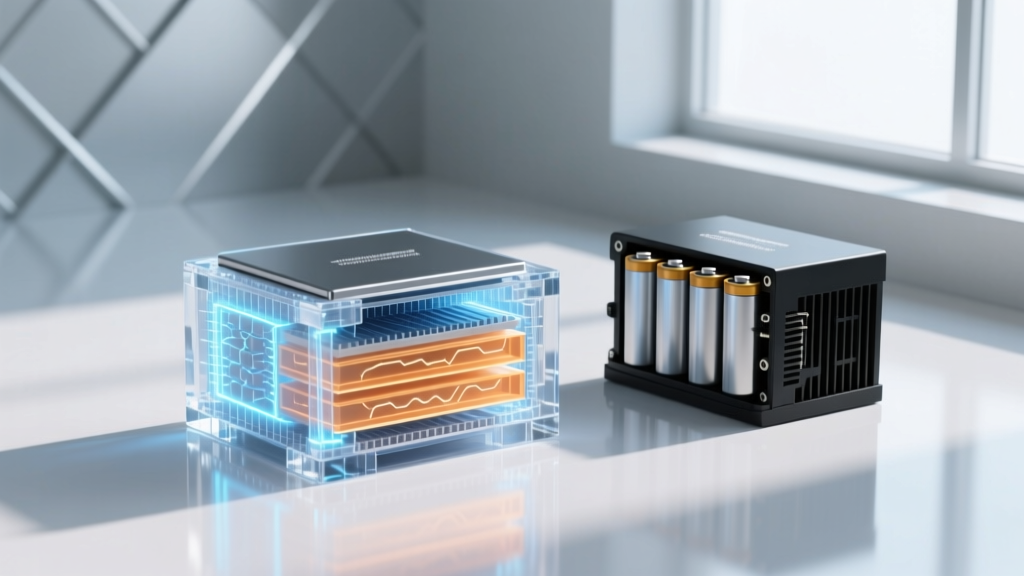
An all solid battery replaces the liquid or gel electrolyte in a conventional lithium-ion cell with a solid material — typically a sulfide, oxide, or polymer compound. This eliminates the flammable electrolyte, enables the use of a lithium-metal anode (dramatically increasing energy density), and theoretically allows faster charging without the thermal risks of today's cells.
The theoretical advantages are substantial:
- Energy density of 400–500 Wh/kg at the cell level (vs. ~250–300 for current NMC)
- 10–80% charge in under 10 minutes without degradation concerns
- Operating range from -30°C to 100°C with minimal performance loss
- No fire risk from electrolyte leakage or thermal runaway propagation
The reality in 2026:
- Toyota has announced a solid-state battery for a limited-production EV in 2027–2028, claiming 750 km (466 mi) range and 10-minute fast charging. This remains a pre-production commitment with limited volume.
- Samsung SDI is producing solid-state prototype cells for automotive partners, with mass production targeted for 2029.
- QuantumScape continues to ship prototype cells to Volkswagen's PowerCo for testing. Volume production timelines remain unspecified beyond "late this decade."
- Nissan plans a pilot production line in 2028, targeting a 2029 vehicle launch.
Manufacturing yield, cost per kWh (currently estimated at 3–5x the cost of liquid-electrolyte cells), and long-term cycle-life validation remain unsolved challenges at scale. The consensus among battery analysts is that solid-state packs will appear first in premium, low-volume vehicles in the 2028–2030 window and won't reach price parity with today's chemistry until the mid-2030s at the earliest.
Other emerging technologies — silicon-dominant anodes (already used in small percentages in cells from Amprius and Sila Nanotechnologies) and semi-solid-state designs (like those from WeLion in the NIO ET7) — serve as bridge technologies, offering incremental energy-density gains without the manufacturing leap that full solid-state requires.
Should You Wait for Solid-State or Buy Today?
Buy a current EV now if:
- You need a vehicle within the next 12 months
- Your daily commute is under 200 miles and you have home charging
- You want to take advantage of the current §30D federal tax credit (up to $7,500, subject to MSRP caps, buyer income limits, and battery-sourcing requirements — consult a tax professional)
- You value a mature charging network (Tesla Supercharger/NACS access is now universal across major OEMs)
Consider waiting if:
- Your current vehicle is reliable and you don't need to replace it for 3–5 years
- You routinely drive 350+ miles in cold weather and cannot tolerate any range compromise
- You're specifically interested in a premium segment where solid-state will debut first
Today's EV batteries are not a stopgap — they are mature, well-warranted, and demonstrably long-lasting. The average 2026 EV battery will retain 80%+ of its capacity at 150,000 miles, and the majority will never need replacement during original ownership. The all solid battery will eventually deliver meaningful improvements, but it is not a reason to delay an EV purchase that makes sense for your driving needs today.
Frequently Asked Questions
How long do EV batteries last in years and miles?
Most modern liquid-cooled EV batteries last 15–20 years and 200,000+ miles before dropping below 70–80% of original capacity. Fleet data from Recurrent Auto and Tesla's impact reports consistently show packs retaining 85%+ capacity at 150,000–200,000 miles. LFP chemistry packs are projecting even longer lifespans, with some fleet vehicles exceeding 300,000 miles on the original pack.
How much does it cost to replace an EV battery?
Full pack replacement ranges from $8,000 to $28,000 depending on the vehicle and pack size, with most mid-range EVs falling in the $12,000–$16,000 window. However, full replacement is rare — module-level repair ($2,000–$5,000) is increasingly available. The vast majority of EV owners will sell or trade the vehicle before a replacement is needed.
What does the EV battery warranty cover?
Federal law requires a minimum 8-year/100,000-mile warranty on all EV traction batteries. The warranty guarantees the pack will retain at least 70% of original capacity. If SoH drops below the threshold, the manufacturer repairs or replaces the pack at no cost. Some OEMs, like Hyundai/Kia (10 yr/100,000 mi) and Rivian (8 yr/175,000 mi), exceed the federal minimum.
How do I check my EV battery's State of Health?
Most modern EVs display SoH or degradation data through the infotainment system or service menus. You can also use an OBD-II adapter with apps like TeslaFi or EV Health, or request a full BMS diagnostic report from your dealer during service visits. Tracking your 100% charge range over time gives a rough manual estimate.
LFP vs. NMC — which battery chemistry is better for me?
Choose LFP if you prioritize longevity, lower cost, and the convenience of daily 100% charging — ideal for commuters and drivers in moderate climates. Choose NMC/NCA if you need maximum range in a single charge, frequently drive in cold weather, or want the longest possible highway trips between charges. Neither chemistry is universally superior; the right choice depends on your specific driving profile.
Will an all solid battery be available in consumer EVs soon?
Limited production is expected from Toyota around 2027–2028, with broader availability from multiple OEMs targeted for 2029–2030. Cost parity with current lithium-ion technology is not expected until the mid-2030s. Semi-solid and silicon-anode bridge technologies will appear sooner, offering incremental improvements within today's manufacturing infrastructure.