Why Aircraft Lithium Battery Standards Matter to EV Owners
When you search for an aircraft lithium battery, you'll find a category of power cells held to some of the most rigorous safety and reliability standards on Earth. Aviation-grade lithium cells must survive extreme vibration, rapid pressure changes, and temperatures from -55°C to +70°C — all while maintaining near-zero failure rates. The Federal Aviation Administration (FAA) and bodies like RTCA (through RTCA DO-311A) govern these standards, and the engineering lessons from aerospace have steadily filtered into the electric vehicle batteries sitting in your garage.
Understanding what makes aircraft lithium battery technology so robust helps EV buyers and owners grasp why their own traction batteries are designed the way they are — and where the trade-offs differ. This guide breaks down EV battery chemistry, degradation realities, warranty coverage, replacement costs, and health monitoring through the lens of aviation-grade reliability thinking.
LFP vs NMC/NCA: The Chemistry Showdown
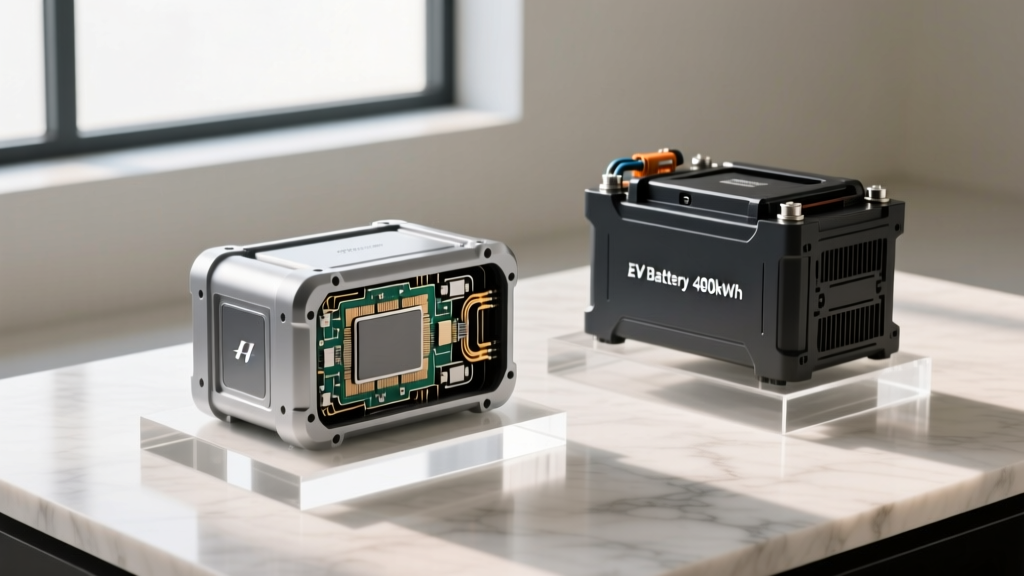
Every EV battery pack is built from one of several lithium-ion chemistries. The two dominant types in 2026 are LFP (Lithium Iron Phosphate) and NMC/NCA (Nickel Manganese Cobalt / Nickel Cobalt Aluminum). Aircraft lithium battery applications historically lean toward LFP or LTO (Lithium Titanate) for their thermal stability, while most long-range EVs use NMC or NCA for maximum energy density.
| Attribute | LFP (LiFePO₄) | NMC / NCA |
|---|---|---|
| Energy Density | ~160–180 Wh/kg (cell level) | ~230–300 Wh/kg (cell level) |
| Cycle Life | 3,000–5,000+ cycles to 80% SoH | 1,000–2,000 cycles to 80% SoH |
| Thermal Stability | Excellent — onset ~270°C | Moderate — onset ~210°C (NMC811) |
| Cold Performance (-10°C) | ~20-30% range loss without heat pump | ~15-25% range loss without heat pump |
| Cost per kWh (pack) | ~$90–$110/kWh | ~$120–$150/kWh |
| Cobalt/Nickel Content | None (iron + phosphate) | Significant (supply-chain risk) |
| Typical 2026 EV Use | Tesla Model 3 RWD, Ford Mustang Mach-E Select, BYD models | Tesla Model S/X, Hyundai Ioniq 5 Long Range, Rivian R1T |
| Aircraft Lithium Battery Relevance | Preferred for safety-critical auxiliary and emergency power | Rare in certified aviation; used in some eVTOL prototypes |
Which is better? It depends on your priority. If you want maximum range per dollar and plan to keep the car 10+ years, LFP wins on longevity and cost. If you need 320+ miles of EPA range and tow frequently, NMC's energy density is hard to beat. Aircraft lithium battery designers almost universally favor the thermal safety of LFP-type chemistries — a philosophy that has influenced Tesla's shift to LFP in standard-range models.
How Long Do EV Batteries Actually Last?
The short answer: longer than most buyers fear. Real-world fleet data from Tesla's 2025 Impact Report and independent analyses by Recurrent Auto show that modern EV batteries lose roughly 5–10% of original capacity in the first 100,000 miles, then degradation slows considerably.
- Year 1 / 15,000 mi: ~2–3% loss (initial formation loss)
- Year 3 / 45,000 mi: ~5–7% cumulative loss
- Year 5 / 75,000 mi: ~8–10% cumulative loss
- Year 8 / 120,000 mi: ~10–14% cumulative loss
- Year 10 / 150,000 mi: ~12–18% cumulative loss (LFP packs trend toward the lower end)
Sources: Recurrent Auto fleet data (2025), Tesla Impact Report 2025, Geotab fleet analysis. Individual results vary based on charging habits and climate.
For context, an aircraft lithium battery in a commercial airliner is typically replaced on a hard schedule (every 2–4 years) regardless of condition, because aviation tolerates zero ambiguity about cell health. EV batteries, by contrast, are designed for gradual, predictable fade — and most will outlast the vehicle's structural and mechanical components.
What the Battery Warranty Actually Covers
Federal law in the United States mandates that EV battery warranties cover a minimum of 8 years / 100,000 miles (in California Air Resources Board states, it's 10 years / 150,000 miles). Most manufacturers exceed the federal floor.
| Manufacturer / Model | Duration | Mileage | Capacity Threshold |
|---|---|---|---|
| Tesla Model 3 / Model Y (LFP) | 8 years | 120,000 mi | 70% retention |
| Tesla Model S / Model X (NMC) | 8 years | 150,000 mi | 70% retention |
| Hyundai Ioniq 5 / Kia EV6 | 10 years | 100,000 mi | 70% retention |
| Ford Mustang Mach-E / F-150 Lightning | 8 years | 100,000 mi | 70% retention |
| Rivian R1T / R1S | 8 years | 175,000 mi | 70% retention |
| Chevrolet Equinox EV / Blazer EV | 8 years | 100,000 mi | 60% retention |
What triggers a warranty claim? If your battery's usable capacity drops below the stated threshold (usually 70% of original) within the warranty period, the manufacturer must repair or replace it — typically with a refurbished pack, not a brand-new one. This covers degradation only; physical damage from collisions, flooding, or improper modifications is excluded. Always check your specific warranty booklet, as terms shift by model year.
EV Battery Replacement Costs: What to Budget
Out-of-warranty battery replacement is the single biggest fear among prospective EV buyers. Here's what it actually costs in 2026:
| Vehicle / Pack Size | Chemistry | Parts Cost | Labor (est.) | Total Range |
|---|---|---|---|---|
| Tesla Model 3 RWD (~60 kWh) | LFP | $8,000–$11,000 | $1,500–$2,500 | $9,500–$13,500 |
| Tesla Model Y LR (~75 kWh) | NMC | $12,000–$16,000 | $1,500–$2,500 | $13,500–$18,500 |
| Hyundai Ioniq 5 (~77 kWh) | NMC | $13,000–$17,000 | $2,000–$3,000 | $15,000–$20,000 |
| Ford F-150 Lightning Ext. (~131 kWh) | NMC | $22,000–$30,000 | $2,500–$4,000 | $24,500–$34,000 |
| Chevrolet Bolt EV (~65 kWh) | NMC | $9,000–$13,000 | $1,500–$2,500 | $10,500–$15,500 |
When is replacement typically needed? For most EVs, it isn't. Data from fueleconomy.gov and fleet operators shows that fewer than 2–3% of EV batteries require full replacement before 150,000 miles. Module-level repairs (replacing individual cell groups rather than the entire pack) are increasingly common and cost $2,000–$6,000 depending on the vehicle. This is the same philosophy used in aircraft lithium battery maintenance: modular design allows targeted swaps rather than full teardowns.
Factors That Accelerate (or Preserve) Battery Life
Your battery's lifespan isn't just about age — it's about how you treat it. Here's what the data shows:
- Limit DC fast charging to road trips. Daily use of 150+ kW chargers accelerates degradation by ~1–2% over 5 years vs. Level 2 home charging (Recurrent Auto, 2025).
- Keep State of Charge between 20–80% for NMC. Storing at 100% for extended periods stresses the cathode. LFP packs tolerate 100% better and actually benefit from periodic full charges for cell balancing.
- Precondition before fast charging. Cold batteries (< 50°F / 10°C) charged at high power suffer lithium plating. Use your car's navigation-to-charger preconditioning feature.
- Avoid prolonged exposure to extreme heat. Parking in 100°F+ ambient for weeks at high SoC is worse than cold. Garage parking in summer helps.
- Don't baby it too much. Occasional 100% charges and low-SoC driving are fine. Stress comes from sustained extremes, not brief excursions.
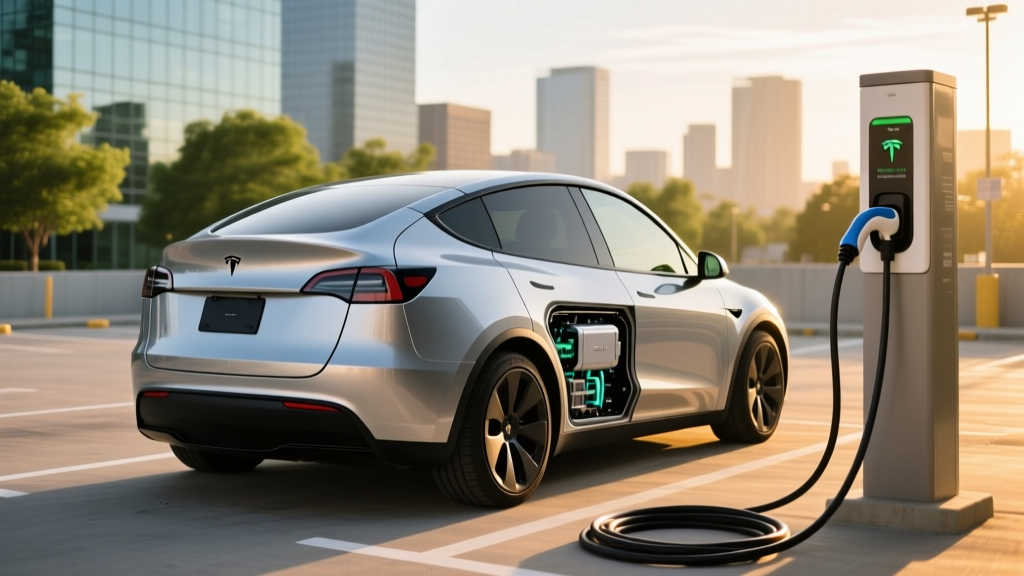
Aircraft lithium battery systems solve many of these problems with active thermal management that operates continuously, even when the aircraft is on the ground. Modern EVs like the Hyundai Ioniq 5, Tesla Model 3, and Rivian R1T employ liquid-cooled thermal management that approaches this level of sophistication — but the system only works when the car is powered on or plugged in.
How to Monitor Your Battery's State of Health
State of Health (SoH) is the percentage of your battery's original usable capacity that remains. Here's how to check it:
- In-car displays: Tesla shows battery health in the Service menu (Settings → Service → Battery Health). Hyundai/Kia provide SoH via the dealer diagnostic tool — request it at your next service visit.
- OBD-II apps: Tools like LeafSpy (Nissan Leaf), OBDeleven (VW/Audi EVs), and Scan My Tesla read BMS-reported SoH directly from the battery management system.
- Third-party reports: Services like Recurrent and AVILOO provide certified battery health reports useful for resale.
- Manual calculation: Track your kWh added during a full 0–100% charge (via your charger's app) and compare it to the pack's original usable capacity. If your 75 kWh pack now accepts only 65 kWh from empty, SoH ≈ 87%.
Emerging Tech: Solid-State, Silicon Anodes & What's Next
The next frontier in battery technology — relevant to both EVs and future aircraft lithium battery applications — includes several technologies moving from lab to production:
Solid-state batteries replace the liquid electrolyte with a solid ceramic or polymer, promising 30–50% higher energy density and dramatically improved thermal safety. Toyota has announced a solid-state-equipped EV for limited production in 2027–2028, and QuantumScape is shipping prototype cells to automotive partners. Samsung SDI targets 2027 for mass production. Realistically, solid-state EVs won't reach mainstream pricing until 2029–2031.
Silicon-dominant anodes (from companies like Sila Nanotechnologies and Group14) replace graphite anodes with silicon composites, boosting energy density by 20–40%. These are already appearing in premium cells and are expected in volume EV production by 2027.
Sodium-ion batteries offer a lower-cost, cobalt-free alternative with lower energy density (~140 Wh/kg). CATL and BYD are producing these for budget EVs in China; US-market adoption remains announced/preliminary for 2027+.
For aviation, solid-state is particularly attractive because it eliminates the flammable electrolyte — the single biggest safety concern in aircraft lithium battery certification. Expect eVTOL (electric vertical takeoff and landing) aircraft to be among the first commercial adopters of solid-state cells.
Frequently Asked Questions
How long do EV batteries last in years and miles?
Most modern EV batteries retain 80–90% of original capacity at 150,000 miles (roughly 10–12 years of average driving). LFP packs tend to outlast NMC by a meaningful margin in cycle count. Complete failure before 200,000 miles is rare — well under 3% of the fleet based on Recurrent Auto and Geotab data.
How much does an EV battery cost to replace in 2026?
Between $9,500 and $34,000 depending on pack size and vehicle. A Tesla Model 3 LFP pack runs ~$10,000–$13,500 installed; a Ford F-150 Lightning extended-range pack can exceed $30,000. Module-level repairs are $2,000–$6,000. However, fewer than 3% of EVs need a full replacement within the first 150,000 miles.
What does the EV battery warranty actually cover?
Federally mandated coverage is 8 years/100,000 miles minimum (10/150,000 in CARB states). The warranty covers capacity loss below a stated threshold — typically 70% of original capacity. It does not cover physical damage, improper modifications, or damage from flooding or collisions.
How do I check and maximize my EV battery's health?
Use your car's built-in battery health screen, OBD-II diagnostic apps, or third-party services like Recurrent. To maximize lifespan: favor Level 2 home charging over daily DC fast charging, keep NMC packs between 20–80% SoC for daily use, precondition before fast charging in cold weather, and avoid prolonged storage at 100% or near 0%.
LFP vs NMC — which battery chemistry is better for me?
Choose LFP if you want lower cost, longer cycle life, better thermal safety, and don't mind slightly less range (e.g., Tesla Model 3 RWD at 272 mi EPA). Choose NMC/NCA if you need maximum range (320+ mi EPA), tow heavy loads, or live in a very cold climate where NMC's slightly better cold-weather efficiency matters. Both chemistries will comfortably outlast a typical ownership period.
What can EV batteries learn from aircraft lithium battery engineering?
Aviation prioritizes redundancy, thermal stability, and conservative operating margins over cost. EV batteries have adopted several aviation principles: liquid thermal management, cell-level fusing, robust BMS algorithms, and modular pack designs that allow partial repair. The gap is narrowing — as LFP adoption grows and solid-state tech matures, EV batteries are approaching the safety margins that aircraft lithium battery standards demand.