Why Everyone Is Talking About Air Batteries
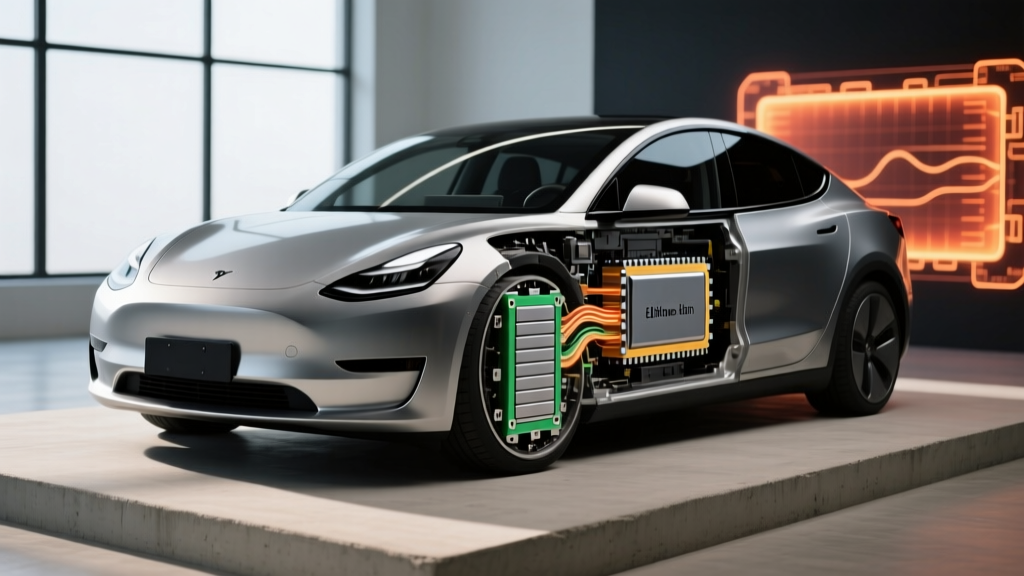
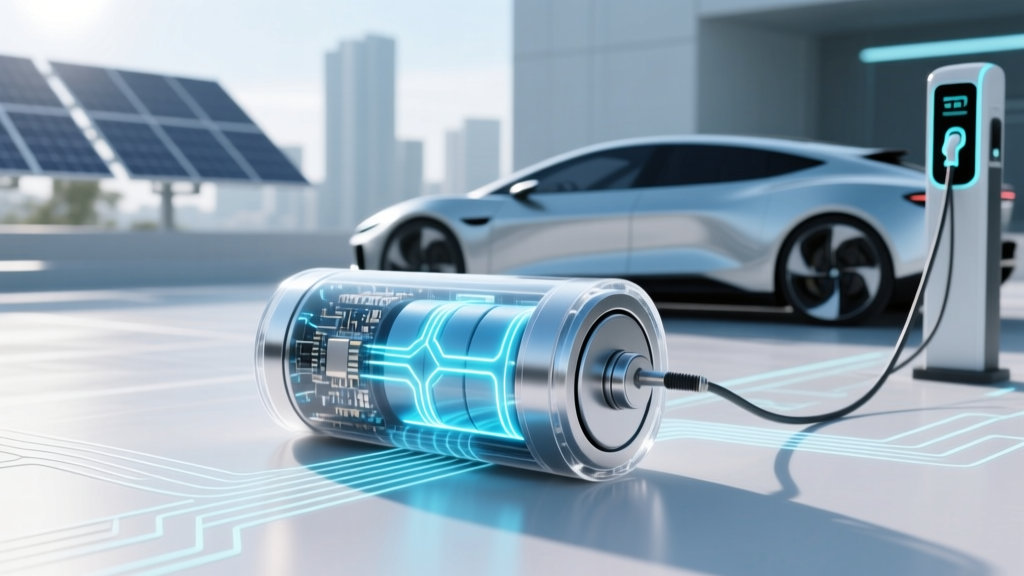
If you have spent any time in EV forums or battery-research threads, you have probably encountered the term air batteries — more formally known as lithium-air (Li-Air) or metal-air cells. The promise is seductive: a battery that "breathes" oxygen from the atmosphere as a reactant, potentially delivering energy densities rivaling gasoline. In theory, a lithium-air pack could push EV range well past 600 miles on a single charge while weighing a fraction of today's lithium-ion systems.
In practice, air batteries remain firmly in the laboratory. No automaker has announced a production vehicle with a lithium-air pack, and most researchers project commercial viability no earlier than the mid-2030s. Until then — and likely for years after — your EV will rely on proven lithium-ion chemistries: primarily NMC/NCA (nickel-manganese-cobalt / nickel-cobalt-aluminum) and LFP (lithium iron phosphate).
This guide explains where air-battery research actually stands, then focuses on what matters to you right now: the chemistry in your car today, how long it lasts, what it costs to replace, and how to maximize its lifespan.
Air Batteries vs. Today's Lithium-Ion: The Energy-Density Gap
A lithium-air cell uses a lithium-metal anode and an air (oxygen) cathode. Because oxygen is not stored inside the cell but drawn from the environment, the theoretical specific energy is extraordinary — roughly 3,500 Wh/kg at the cell level, compared to about 250–300 Wh/kg for the best current NMC cells. That is a 10× advantage on paper.
The engineering obstacles, however, are severe:
- Cycle life: Lithium-air cells currently degrade within tens to a few hundred cycles, far short of the 1,000–3,000+ cycles expected from automotive lithium-ion packs.
- Moisture and CO₂ sensitivity: Ambient air contains water vapor and carbon dioxide that corrode the lithium anode and clog the cathode, requiring complex filtration that adds weight and volume.
- Round-trip efficiency: Energy lost during charge/discharge in Li-Air cells is substantially higher than in intercalation-based lithium-ion cells, reducing practical efficiency to well below 70% in most lab demonstrations.
- Recharge rate: The oxygen-reduction and oxygen-evolution reactions are sluggish, limiting charge speed to rates impractical for automotive fast-charging.
Research groups at MIT, Stanford, and companies like IBM and Samsung continue publishing incremental advances — improved catalysts, protective solid-electrolyte interphases, and dry-air systems — but none have produced a cell that meets automotive durability, cost, and safety requirements simultaneously. For buyers shopping in 2026, the relevant comparison remains LFP versus NMC/NCA.
LFP vs. NMC/NCA: Which Chemistry Should You Choose?
Every mainstream EV sold in the United States in 2026 uses either an LFP or an NMC/NCA cathode. The trade-offs are well documented and significant.
| Attribute | LFP (LiFePO₄) | NMC / NCA |
|---|---|---|
| Cell-level energy density | ~160–180 Wh/kg | ~250–300 Wh/kg |
| Pack-level energy density | ~120–145 Wh/kg (CTP designs higher) | ~160–200 Wh/kg |
| Typical cycle life | 3,000–5,000+ cycles to 80% SoH | 1,000–2,500 cycles to 80% SoH |
| Cold-weather performance | Moderate; greater range loss below 20 °F | Better low-temp conductivity |
| Thermal stability / safety | Excellent; higher thermal-runaway threshold | Good but requires more active management |
| Cost per kWh (cell) | ~$70–90 | ~$100–130 |
| Cobalt / nickel content | None | Significant (supply-chain and ESG concern) |
| Recommended daily SoC | Up to 100% (no calendar-degradation penalty) | 80% for daily; 100% only before trips |
| Notable 2026 US vehicles | Tesla Model 3/Y RWD, Ford Mustang Mach-E Select (LFP option), base Rivian R1S Standard | Tesla Model 3/Y Long Range, Hyundai Ioniq 5/6, BMW i4/iX, Chevy Equinox EV, Ford F-150 Lightning Extended |
Bottom line: If you prioritize maximum range in a single charge and drive in cold climates, NMC/NCA still holds an edge thanks to higher energy density. If you plan to own the car for 10+ years, charge daily to 100%, and value lower cost and cobalt-free sourcing, LFP is the stronger long-term play. Tesla's shift to LFP in its Standard Range models and BYD's Blade battery (LFP, cell-to-pack) reflect this calculus at scale.
How Long Do EV Batteries Actually Last?
The short answer: almost certainly longer than you think. Data aggregated from fleet operators, manufacturer reports, and independent testing consistently shows that modern liquid-cooled EV batteries lose roughly 5–10% of original capacity in the first 100,000 miles, then degrade at a slower, roughly linear rate afterward.
- Tesla 2025 Impact Report: Model 3/Y packs retain ~88% capacity at 150,000 miles on average.
- Geotab fleet study (2024, 10,000+ vehicles): Average annual degradation of 1.8% across all chemistries; LFP vehicles averaged 1.3%.
- Recurrent Auto (2025 dataset, ~15,000 vehicles): Median range loss of 6.4% at 80,000 miles; only 1.5% of vehicles required battery replacement under warranty.
- Nissan Leaf (passive-air-cooled, older gen): Notably higher degradation — up to 15–20% loss at 80,000 miles — illustrating why active thermal management matters.
Sources: Tesla Impact Report, Geotab EV Battery Degradation, Recurrent Auto Research.
Most EV batteries will outlast the vehicle's useful economic life. Catastrophic failure (sudden capacity loss or internal short) is rare — well under 1% of packs in major datasets. The realistic concern is gradual range reduction, which for a 300-mile EPA vehicle might mean 270–280 miles available after a decade of typical use.
What Does the Battery Warranty Actually Cover?
Federal law (EPA emissions-warranty precedent and CARB requirements adopted by many states) effectively mandates that automakers warrant EV batteries for at least 8 years / 100,000 miles. Several manufacturers exceed this. The key metric is the capacity-retention threshold — the state of health (SoH) below which the manufacturer must repair or replace the pack.
| Manufacturer | Warranty Period | Capacity Retention Threshold |
|---|---|---|
| Tesla (Model 3/Y LFP) | 8 yr / 120,000 mi | 70% |
| Tesla (Model 3/Y Long Range, NMC) | 8 yr / 120,000 mi | 70% |
| Hyundai / Kia (Ioniq 5/6, EV6) | 10 yr / 100,000 mi | 70% |
| Ford (F-150 Lightning, Mach-E) | 8 yr / 100,000 mi | 70% |
| General Motors (Ultium-based) | 8 yr / 100,000 mi | 70% (60% for fleet/commercial on some models) |
| Rivian (R1S / R1T) | 8 yr / 120,000 mi | 70% |
| BMW (i4 / iX) | 8 yr / 100,000 mi | 70% |
Note that the 70% threshold means your battery must lose more than 30% of its original capacity before a warranty claim is valid. Given that real-world data shows most packs retaining 85–90% at 100,000 miles, hitting this threshold within the warranty period is uncommon for liquid-cooled packs. Warranties also cover defects and module failures, not just gradual degradation.
EV Battery Replacement Cost: What You Would Actually Pay
Out-of-warranty battery replacement is the scenario that generates the most anxiety — and the most misleading headlines. Here are realistic 2026 figures based on manufacturer parts pricing and independent-shop data:
| Vehicle / Pack Size | Battery Cost (parts) | Labor | Total Estimate |
|---|---|---|---|
| Tesla Model 3 RWD (~60 kWh LFP) | $8,000–$10,000 | $1,500–$2,500 | $9,500–$12,500 |
| Tesla Model Y Long Range (~82 kWh NMC) | $12,000–$15,000 | $1,500–$2,500 | $13,500–$17,500 |
| Hyundai Ioniq 5 (~77 kWh NMC) | $11,000–$14,000 | $2,000–$3,000 | $13,000–$17,000 |
| Ford F-150 Lightning Extended (~131 kWh NMC) | $18,000–$24,000 | $2,500–$4,000 | $20,500–$28,000 |
| Chevy Equinox EV (~85 kWh NMC) | $10,000–$13,000 | $2,000–$3,000 | $12,000–$16,000 |
| Nissan Leaf (40–62 kWh, passive-cooled) | $6,500–$9,000 | $1,500–$2,000 | $8,000–$11,000 |
Context matters: cell prices have fallen roughly 80% since 2013 and continue declining. By the time a 2026 vehicle needs an out-of-warranty replacement (likely 2036+), replacement packs will cost substantially less. Module-level repair — replacing individual failed modules rather than the entire pack — is increasingly available through independent EV shops for $2,000–$5,000, addressing most failure modes without a full swap.
Factors That Accelerate (or Preserve) Battery Health
Battery degradation is driven by chemistry, temperature, and usage patterns. Here is what the data shows actually matters:
- Avoid sustained high SoC (NMC/NCA): Daily charging to 80% rather than 100% can reduce calendar degradation by 30–40% over 5 years. LFP owners can charge to 100% daily without penalty — in fact, periodic 100% charges help the BMS calibrate.
- Minimize DC fast-charging frequency: Occasional fast charging is fine, but daily 150–350 kW sessions increase degradation by roughly 0.3–0.5% per year versus Level 2 charging, per Geotab data. Use DCFC for road trips; rely on Level 2 at home for daily needs.
- Precondition before fast charging: Most modern EVs automatically precondition the battery when you navigate to a charger. This warms the pack to ~95–105 °F, enabling faster charging and reducing lithium-plating risk. If your car offers manual preconditioning (e.g., Tesla's "Precondition" toggle), use it in cold weather.
- Avoid extreme SoC storage: If leaving the car for weeks, store at 40–60% SoC. Storing at 100% in hot weather accelerates calendar aging; storing near 0% risks cell damage from self-discharge.
- Thermal management matters: Garage parking in extreme heat or cold reduces the thermal cycling load on the pack. Liquid-cooled packs (standard on nearly all 2026 EVs except the base Nissan Leaf) handle temperature stress far better than passively cooled designs.
- Don't obsess over it: The difference between "perfect" and "reasonable" battery care over 10 years is typically 3–5% of capacity. Drive the car.
How to Check Your Battery's State of Health
State of Health (SoH) is the percentage of original capacity your battery currently holds. Monitoring it helps you track degradation and identify anomalies early.
Built-in vehicle tools:
- Tesla: The Service menu in recent software versions displays estimated battery health. Third-party apps like Tessie or TeslaFi log detailed SoH estimates from the BMS.
- Hyundai/Kia: The EV-specific menu in the instrument cluster or infotainment system shows battery-condition data. The Bluelink/Kia Connect app provides SoH estimates.
- GM (Ultium): The myChevrolet/myCadillac app includes a battery-health indicator; OnStar diagnostics can provide detailed reports.
- Ford: FordPass displays battery state of health in the vehicle-health section.
Third-party diagnostics: Services like Recurrent Auto offer free battery-health reports that compare your degradation curve against a fleet of identical vehicles. Some independent EV shops can perform a full capacity test (charge to 100%, discharge to 0% on a dyno or load tester) for $150–$300 — the most accurate SoH measurement available outside the factory.
OBD-II readers: Devices like the OBDLink MX+ paired with apps such as LeafSpy (Nissan), ABRP, or EV-BatMon can read real-time BMS data including cell voltages, pack temperature, and estimated SoH for many models.
Beyond Air Batteries: Solid-State, Silicon Anodes, and What's Next
While air batteries remain a long-term research project, other next-generation technologies are closer to production:
- Solid-state batteries: Toyota has announced a 2027–2028 production timeline for solid-state cells in limited-run vehicles, targeting 750 km (~465 miles) of range and 10-minute fast charging. Samsung SDI and QuantumScape are also in pilot production. However, initial solid-state packs will be expensive and limited to premium models. Broad availability at mainstream price points is unlikely before 2030–2032.
- Silicon-dominant anodes: Companies like Sila Nanotechnologies and Group14 are already shipping silicon-carbon composite anodes that boost energy density by 10–20% over graphite. The 2026 Mercedes-Benz G-Class EV uses a silicon-anode pack from Sila. This technology is scaling now and will become standard in premium packs within 2–3 years.
- Sodium-ion batteries: CATL and BYD have begun shipping sodium-ion packs in Chinese-market vehicles. Energy density is lower (~120–140 Wh/kg at cell level), but cost is significantly less, and sodium is abundant. Expect sodium-ion in US-market entry-level EVs and energy-storage applications by 2028–2029.
These technologies will eventually deliver meaningful range and cost improvements. But for buyers making a purchase decision today, LFP and NMC/NCA are mature, well-understood, and backed by extensive warranty coverage and real-world longevity data. The battery in your next EV will very likely outlast your ownership of the car — air batteries or not.
Frequently Asked Questions
Will air batteries ever reach production EVs?
Possibly, but not before the mid-2030s at the earliest. Lithium-air cells face unresolved challenges in cycle life, moisture sensitivity, and recharge efficiency. They remain a promising area of fundamental research, not an imminent automotive product.
How long do EV batteries last in years and miles?
Most modern liquid-cooled EV batteries retain 85–90% of original capacity at 100,000 miles and can reasonably be expected to last 15–20 years or 200,000+ miles before reaching 70% SoH. Fleet data from Tesla, Geotab, and Recurrent Auto supports this range.
How much does it cost to replace an EV battery?
Out-of-warranty replacement ranges from roughly $8,000 for a small pack (Nissan Leaf, Tesla Model 3 LFP) to $20,000–$28,000 for a large pack (F-150 Lightning Extended Range). Module-level repairs cost $2,000–$5,000. Cell prices continue declining, so future replacement costs will be lower.
What does the EV battery warranty cover?
Federally mandated minimum is 8 years / 100,000 miles. Most manufacturers guarantee the pack will retain at least 70% of original capacity during that period. Warranties also cover defects, module failures, and thermal events. Hyundai/Kia extend coverage to 10 years / 100,000 miles.
Is LFP or NMC better for battery longevity?
LFP has a clear longevity advantage — 3,000–5,000+ cycles versus 1,000–2,500 for NMC — and can be charged to 100% daily without penalty. NMC offers higher energy density and better cold-weather performance. For owners planning 10+ years of ownership, LFP generally provides lower degradation and lower lifetime cost.
Does fast charging damage my EV battery?
Occasional DC fast charging has minimal impact. Daily fast charging can increase annual degradation by roughly 0.3–0.5% compared to Level 2 home charging. Preconditioning the battery before fast charging (standard on most 2026 EVs) significantly reduces stress. For daily use, Level 2 charging at 7–11 kW is ideal.