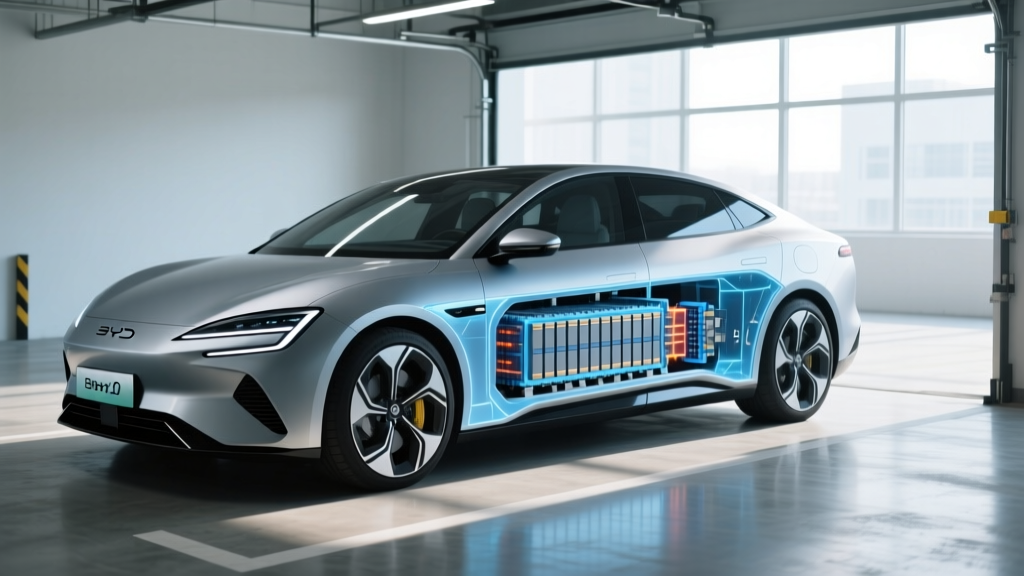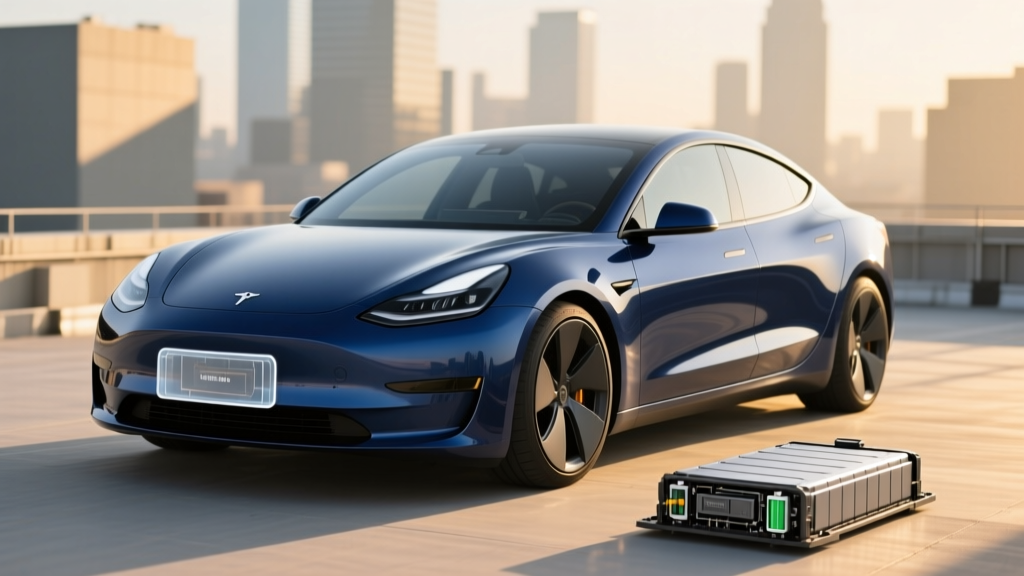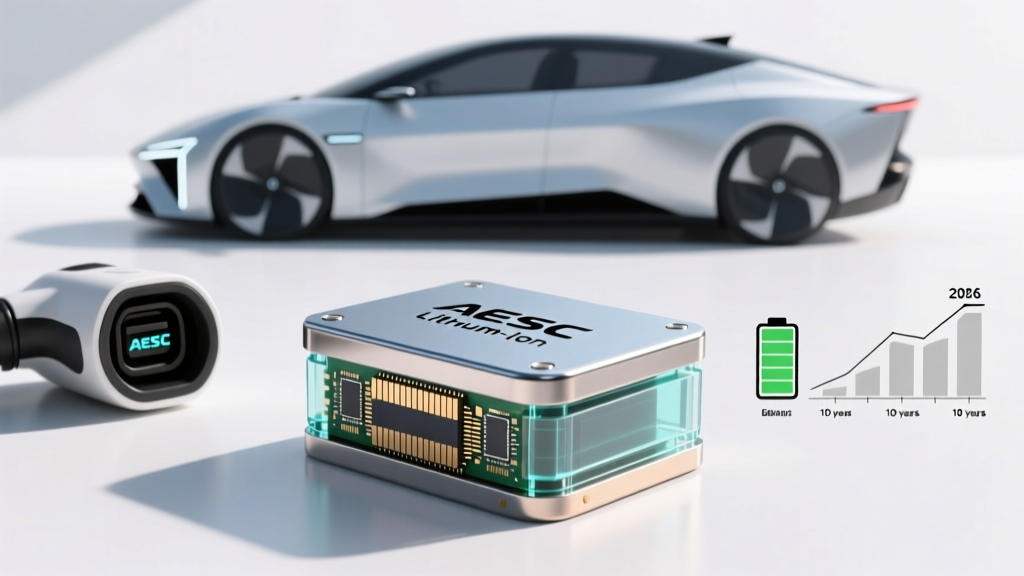
If you've researched Nissan electric vehicles — from the pioneering Leaf to the newer Ariya — you've likely encountered the term AESC battery. AESC (Automotive Energy Supply Corporation) was the joint venture between Nissan and NEC that manufactured lithium-ion cells for Nissan's electrified lineup. While AESC no longer operates under that name (Nissan sold its stake to Envision Group in 2018, creating Envision AESC), the cells powering millions of Nissan EVs worldwide remain a critical topic for buyers and owners evaluating long-term battery health, degradation patterns, and replacement economics.
This guide breaks down everything you need to know about AESC-origin batteries, how they compare chemically to the broader EV market, and what the data says about their real-world longevity.
What Is an AESC Battery and Where Did It Come From?
AESC was founded in 2007 as a 50/50 joint venture between Nissan Motor Co. and NEC Corporation. Its mission: develop and manufacture lithium-ion battery cells specifically for Nissan's electric vehicles. The result was the laminated-type lithium manganese oxide (LMO) cell used in the first-generation Nissan Leaf (2011–2017), and later NMC (nickel-manganese-cobalt) pouch cells used in subsequent Leaf generations and the Nissan Ariya.
In 2018, Nissan divested its majority stake to China-based Envision Group. The company was rebranded as Envision AESC, which now supplies batteries to Nissan, Mercedes-Benz, Renault, and other global automakers. When enthusiasts and owners refer to an "AESC battery," they're typically talking about the cells in 2011–2025 Nissan Leaf and Ariya models manufactured under either the original JV or the Envision AESC umbrella.
Key AESC battery configurations include:
- 24 kWh pack — 2011–2015 Nissan Leaf (LMO chemistry, 48 modules)
- 30 kWh pack — 2016–2017 Nissan Leaf (LMO/NMC blend, 48 modules)
- 40 kWh pack — 2018–2025 Nissan Leaf SV/S (NMC pouch, 48 modules)
- 62 kWh pack — 2019–2025 Nissan Leaf SL Plus (NMC pouch, 3 modules of 24 cells)
- 63–91 kWh packs — 2023–2026 Nissan Ariya (NMC, liquid-cooled)
LFP vs NMC Chemistry: Understanding the Trade-Offs
AESC batteries have historically used NMC (nickel-manganese-cobalt) and earlier LMO (lithium manganese oxide) chemistries. The broader EV market has increasingly adopted LFP (lithium iron phosphate) cells, particularly in standard-range models from Tesla, BYD, and Ford. Here's how these chemistries compare for EV buyers:
| Attribute | NMC / NCA | LFP |
|---|---|---|
| Energy density (Wh/kg) | 200–300 Wh/kg | 140–180 Wh/kg |
| Typical cycle life | 1,000–2,000 cycles | 3,000–5,000+ cycles |
| Cold-weather performance | Better low-temp discharge | Reduced range in freezing temps (15–30% loss) |
| Thermal stability / safety | Good (requires robust BMS) | Excellent (higher thermal runaway threshold) |
| Cost per kWh (cell-level) | ~$110–$140/kWh | ~$80–$100/kWh |
| Recommended daily SoC | 80% for daily, 100% for trips | 100% is fine daily |
| Used in AESC batteries? | Yes (Leaf 40/62 kWh, Ariya) | No (AESC has not mass-produced LFP) |
The takeaway: NMC offers more range in a smaller, lighter pack — which is why Nissan chose it for the Leaf and Ariya. LFP sacrifices energy density for dramatically longer cycle life, lower cost, and the ability to charge to 100% daily without accelerating degradation. If you're choosing between EVs, NMC is better for maximum range; LFP is better for longevity and budget-conscious daily driving.
How Long Do AESC Batteries Last? Real-World Degradation Data
Battery degradation — the gradual loss of usable capacity over time — is the single most important long-term ownership factor. Here's what real-world data shows for AESC-manufactured packs:
Nissan Leaf 24 kWh (2011–2015, passively air-cooled LMO/NMC):
- Year 1–2: ~5–8% capacity loss
- Year 3–5: ~12–20% capacity loss (highly climate-dependent)
- Year 8–10: 20–35% capacity loss reported by owners in hot climates (Arizona, Texas, Middle East)
- Key factor: Passive air cooling accelerated degradation in high-temperature environments
Nissan Leaf 40 kWh (2018–2025, NMC pouch, passive cooling):
- Year 1–3: ~4–7% capacity loss
- Year 5: ~10–15% capacity loss (temperate climates); ~15–22% (hot climates)
- Improved cell chemistry offset the continued lack of active liquid cooling
Nissan Leaf 62 kWh (2019–2025, NMC, passive cooling):
- Year 1–3: ~3–6% capacity loss
- Year 5: ~8–14% capacity loss
- Larger buffer means more usable range even after moderate degradation
Nissan Ariya 63–91 kWh (2023–2026, NMC, liquid-cooled):
- Year 1–2: ~2–4% capacity loss (early data, liquid cooling significantly improves thermal management)
- Projected Year 8: ~10–15% capacity loss based on comparable liquid-cooled NMC packs from Envision AESC
According to data aggregated by fueleconomy.gov and owner communities like SpeakEV and MyNissanLeaf, the first-generation Leaf's passive cooling was its Achilles' heel. The Ariya's switch to liquid cooling brought Nissan in line with competitors like Tesla, Hyundai/Kia, and GM.
Nissan EV Battery Warranty: What's Covered and for How Long
Nissan provides a lithium-ion battery capacity warranty that is separate from the standard vehicle powertrain warranty. Here are the current terms:
| Model | Warranty Duration | Capacity Threshold | What Triggers a Claim |
|---|---|---|---|
| Nissan Leaf (2018–2025) | 8 years / 100,000 miles | Below 9 bars out of 12 (approx. 70–75% SoH) | Capacity bar display drops below 9/12 within warranty period |
| Nissan Leaf (2011–2017) | 8 years / 100,000 miles (capacity); 5 yr / 60,000 mi (defect) | Below 9 bars / 66.25% capacity | Capacity loss below threshold verified by dealer diagnostic |
| Nissan Ariya (2023–2026) | 8 years / 100,000 miles | Below 70% capacity retention | Battery State of Health falls below 70% per Nissan diagnostic tool |
Important nuance: The warranty covers capacity loss below the stated threshold — not normal, gradual degradation above that line. If your 2022 Leaf shows 78% SoH at year 5, that's considered normal wear. If it drops to 68% at year 6, that triggers warranty coverage. Nissan's bar display system (12 bars on the dash) is a simplified proxy; the actual State of Health percentage requires a dealer diagnostic read or third-party tool like LeafSpy.
How Much Does an AESC Battery Replacement Cost?
Most EV batteries outlast the vehicle itself. Data from Recurrent Auto and NHTSA complaint records suggests catastrophic battery failure (requiring full replacement) is rare — affecting fewer than 1–2% of modern EVs. However, owners of older Leafs or those who bought used with degraded packs may face replacement decisions.
| Battery Pack | Vehicles | OEM Replacement Cost (approx.) | Refurbished / Aftermarket |
|---|---|---|---|
| 24 kWh | 2011–2015 Leaf | $6,500–$8,500 | $3,500–$5,000 (refurbished modules) |
| 30 kWh | 2016–2017 Leaf | $7,500–$9,500 | $4,000–$6,000 |
| 40 kWh | 2018–2025 Leaf SV/S | $8,000–$11,000 | $5,000–$7,500 |
| 62 kWh | 2019–2025 Leaf SL Plus | $10,000–$14,000 | Limited availability ($7,000–$10,000) |
| 63–91 kWh | 2023–2026 Ariya | $12,000–$18,000 (under warranty for most) | Not yet available (too new) |
Nissan has also offered a battery upgrade program in select markets, allowing 24 kWh Leaf owners to swap to a 40 kWh pack for approximately $5,500–$6,500. Availability varies by region and dealer participation. Third-party shops like Dala Power and Electrified Garage offer module-level repairs for $1,500–$3,500 when only specific cell groups have degraded unevenly.
Factors That Accelerate or Preserve Battery Life
Not all miles are equal when it comes to battery wear. The following factors have the most significant impact on AESC battery longevity:
What Hurts Battery Health
- Repeated DC fast charging above 50 kW: Heat is the primary degradation driver. The Leaf's passive cooling means frequent CHAdeMO fast-charging (especially in summer) accelerates cell wear. Data shows Leafs that fast-charge daily lose 2–4% more capacity over 5 years versus Level 2-only charging.
- Sustained high SoC in hot climates: Parking a Leaf at 100% SoC in 100°F+ ambient temperatures is the worst-case scenario for NMC cells. This combination caused the accelerated degradation seen in early Arizona and Texas Leafs.
- Deep discharges to 0%: Regularly running the pack to near-empty stresses cell chemistry. Keeping SoC above 10–15% reduces strain.
- Extreme cold without preconditioning: Charging a cold NMC battery at high power causes lithium plating on the anode. The Ariya's liquid cooling and preconditioning mitigate this; the Leaf lacks active preconditioning.
What Preserves Battery Health
- Daily charging to 80% SoC: Set your Leaf's charge timer or use the Ariya's charge limit setting. NMC cells are happiest between 20–80%.
- Level 2 home charging (6.6–7.2 kW): Slower charging generates less heat. A 240V Level 2 charger is the ideal daily charging method.
- Garage parking in extreme climates: Keeping the vehicle out of direct sun in summer and extreme cold in winter reduces thermal cycling stress.
- Moderate regen settings: Aggressive regen in cold weather can push high charge current into a cold battery. Use "B mode" sparingly in freezing conditions.
How to Check Your AESC Battery's State of Health
Monitoring your battery's State of Health (SoH) is essential for used-EV buyers and long-term owners. Here are the primary methods:
1. Nissan's 12-bar display (Leaf): The dashboard shows 12 capacity bars when new. Each bar lost represents roughly 6.25% of original capacity. At 9 bars, you've hit the warranty threshold (~66–75% SoH depending on model year). This is a rough indicator — not precise.
2. LeafSpy Pro (third-party OBD2 app): The gold standard for Leaf owners. A $20 OBD2 dongle (like the OBDLink MX+) paired with the LeafSpy app gives you exact SoH percentage, individual cell voltages, pack temperature, and charge/discharge history. This is what informed buyers use before purchasing a used Leaf.
3. Dealer diagnostic report: Nissan dealers can pull a detailed battery health report using the CONSULT diagnostic tool. Request this during any service visit — it's typically free or included in a standard inspection.
4. Ariya infotainment display: The Ariya includes a battery health indicator in its vehicle settings menu, though it's less granular than LeafSpy. For precise data, a dealer diagnostic is still recommended.
5. Third-party services: Companies like Recurrent Auto offer free battery health reports that benchmark your pack against thousands of similar vehicles. Connect your vehicle's telematics and receive a degradation curve comparison.
Emerging Battery Technology: What's Next After AESC NMC?
Envision AESC is actively developing next-generation cells, and the broader industry is pursuing several post-NMC technologies. Here's where things stand as of 2026:
Silicon-dominant anodes: Replacing graphite anodes with silicon can boost energy density by 20–40%. Envision AESC has announced partnerships to integrate silicon-carbon composite anodes in upcoming cells, targeting 2027–2028 production vehicles. Expect this in future Nissan models, though current Ariya and Leaf packs use conventional graphite.
Semi-solid-state batteries: Several manufacturers (Toyota, Samsung SDI, QuantumScape) are targeting 2027–2029 for initial solid-state or semi-solid-state production. These promise 50%+ energy density improvements, faster charging, and enhanced safety. However, initial production will be limited to premium models with costs well above current NMC. Mass-market adoption is realistically a 2030+ timeline.
Sodium-ion batteries: CATL and BYD are already producing sodium-ion cells for budget EVs in China. While energy density is lower (~120–150 Wh/kg), the cost advantage and lack of lithium/cobalt dependency make them attractive for city cars. Nissan has not announced sodium-ion plans, but Envision AESC's parent company is evaluating the technology.
For current buyers: NMC cells from Envision AESC (as found in the 2024–2026 Ariya) represent mature, well-understood technology with predictable degradation curves. The liquid-cooled Ariya pack addresses the primary weakness of earlier air-cooled Leaf batteries and should deliver 15+ years of usable service for most owners.
Frequently Asked Questions
How long do AESC batteries typically last before needing replacement?
Most AESC batteries last the life of the vehicle. The 24 kWh Leaf packs from 2011–2015 showed the most degradation (20–35% in hot climates after 8–10 years), but even these rarely needed full replacement — owners simply adapted to reduced range. The 40 kWh and 62 kWh Leaf packs and the liquid-cooled Ariya packs show significantly better longevity. Expect 15–20 years of usable service with 70–85% capacity remaining for most climates.
Is an AESC battery the same as an Envision AESC battery?
Yes, with a timeline distinction. Batteries manufactured before 2018 were produced under the Nissan-NEC joint venture called AESC. After Envision Group acquired the company in 2018, it was renamed Envision AESC. The cells in a 2024 Ariya are Envision AESC products — same engineering lineage, updated chemistry and manufacturing, now with liquid cooling.
Can I upgrade my 24 kWh Leaf to a 40 kWh or 62 kWh battery?
In select markets, yes. Nissan has offered official battery upgrade programs (24→40 kWh) through participating dealers for approximately $5,500–$6,500. Third-party shops have also performed 62 kWh swaps using salvaged packs from wrecked Leafs, typically costing $8,000–$12,000 including labor and programming. Availability depends on your region and local regulations regarding modified battery systems.
Does DC fast charging really damage my Leaf's AESC battery?
Occasional DC fast charging is fine. The concern is frequent fast charging — particularly in hot weather — because the Leaf's passive air cooling cannot dissipate heat as effectively as liquid-cooled systems. Data from fleet operators shows Leafs that DC fast-charge more than 3 times per week in summer months lose 2–5% more capacity over 5 years compared to Level 2-only charging. For road trips, fast charging is perfectly acceptable; for daily use, Level 2 is strongly preferred.
What does the Nissan battery warranty actually cover?
Nissan's lithium-ion battery warranty covers capacity loss below a defined threshold (typically 9/12 bars on the Leaf, or below 70% SoH on the Ariya) within 8 years or 100,000 miles, whichever comes first. It also covers manufacturing defects for 5 years / 60,000 miles. It does not cover normal gradual degradation above the threshold, damage from accidents, or modifications to the battery system. According to IRS §30D guidelines, battery replacement under warranty does not affect your original federal tax credit eligibility.
LFP vs NMC — which battery chemistry should I choose?
Choose NMC (like AESC/Envision AESC packs) if you need maximum range in a lighter pack, drive in cold climates where NMC outperforms LFP, or want a proven technology with extensive real-world data. Choose LFP if you prioritize longevity (3,000+ cycles vs 1,000–2,000), want to charge to 100% daily without guilt, live in a moderate-to-warm climate, or are cost-sensitive. LFP is not currently available in Nissan vehicles, so this choice applies when cross-shopping brands like Tesla (Model 3 RWD), Ford (Mustang Mach-E SR), or BYD.