What Is the 4680 Battery Cell — and Why Does It Matter?
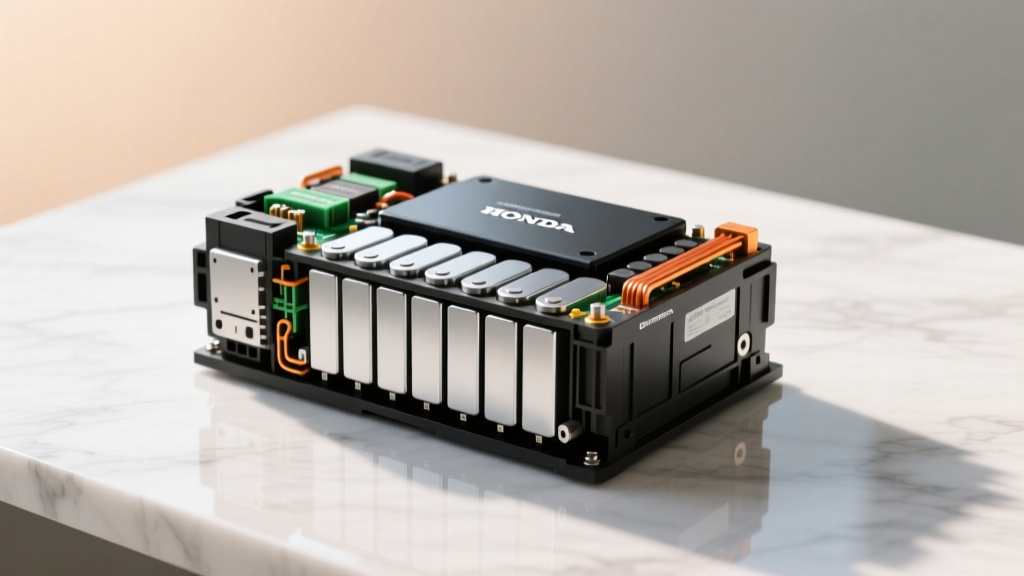
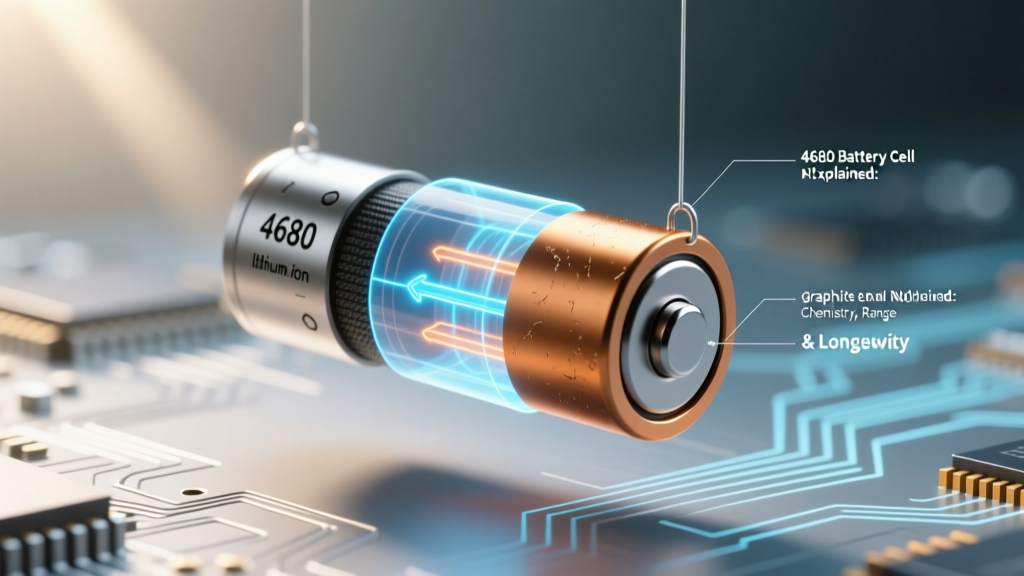
The 4680 battery cell is a cylindrical lithium-ion cell measuring 46 mm in diameter and 80 mm in height — roughly five times the volume of the 2170 cells used in most Tesla Model 3 and Model Y vehicles prior to 2023. Tesla introduced the form factor at Battery Day in 2020, and by the 2025–2026 model years it has become the primary cell in the structural battery pack of the Cybertruck, refreshed Model Y (Austin-built), and select Model 3 variants.
The promise of the 4680 cell is straightforward physics: a larger cell reduces the number of casings, tabs, and welds per pack, lowering manufacturing cost per kWh while improving pack-level structural rigidity. Tesla claims up to 16% more range per pack and roughly 5× the energy content per cell compared to the 2170 format. But real-world outcomes depend heavily on the chemistry inside the can — and that's where LFP, NMC, and NCA diverge in ways that affect your ownership experience for a decade or more.
This guide breaks down what the 4680 cell actually delivers in production vehicles, how its chemistry choices affect degradation and charging, and what you need to know about warranty coverage, replacement costs, and long-term health monitoring.
Battery Chemistry Showdown: LFP vs NMC vs NCA in 4680 Packs
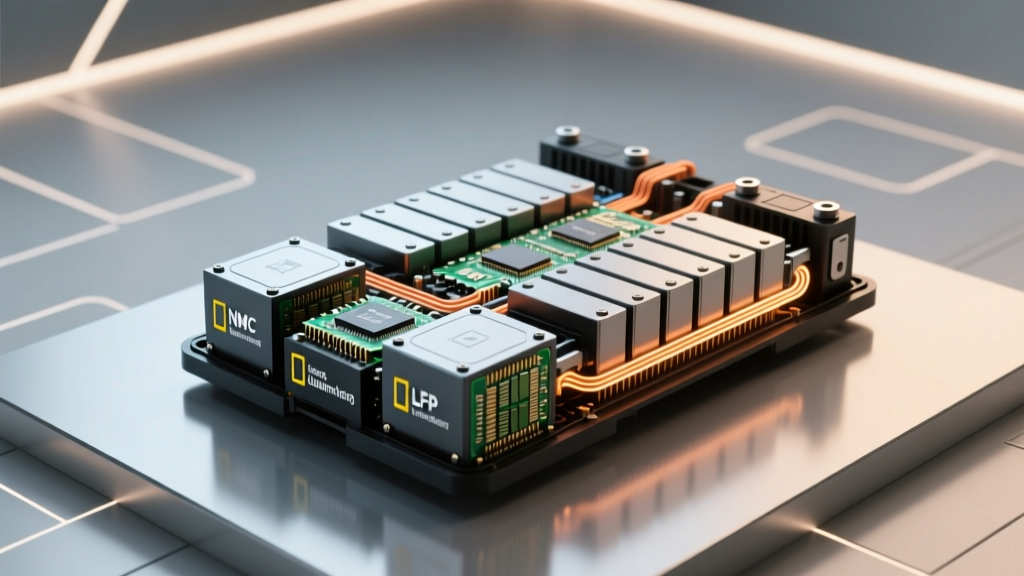
Not all 4680 cells are chemically identical. The form factor is a container; what determines energy density, cycle life, cold-weather behavior, and cost is the cathode chemistry packed inside. As of 2026, three dominant chemistries appear in 4680-format packs:
- LFP (Lithium Iron Phosphate): Used primarily in standard-range Tesla Model 3 and Model Y vehicles built at Giga Shanghai and Giga Austin. LFP offers a lower energy density (~160 Wh/kg at the cell level) but exceptional cycle life (3,000–5,000+ full cycles before reaching 80% capacity), a flat voltage curve ideal for state-of-charge estimation, and no cobalt or nickel — keeping costs down.
- NMC (Nickel Manganese Cobalt): Found in long-range and performance variants from multiple automakers experimenting with 4680-format cells. NMC delivers higher energy density (~220–260 Wh/kg) but trades some cycle life (1,500–2,500 cycles) and requires careful thermal management.
- NCA (Nickel Cobalt Aluminum): Tesla's long-standing chemistry for high-energy packs (e.g., Model S, Model X, Cybertruck). NCA offers the highest energy density (~260–290 Wh/kg) but the lowest thermal stability margin, requiring robust battery management systems (BMS).
| Attribute | LFP | NMC (811) | NCA |
|---|---|---|---|
| Energy Density (cell-level) | ~160 Wh/kg | ~230–260 Wh/kg | ~260–290 Wh/kg |
| Cycle Life (to 80% SoH) | 3,000–5,000+ | 1,500–2,500 | 1,200–2,000 |
| Cold Performance (-10°C) | ~25–30% range loss | ~15–20% range loss | ~15–20% range loss |
| Recommended Daily SoC | 100% (charge to full regularly) | 80–90% daily; 100% for trips | 80–90% daily; 100% for trips |
| Cost per kWh (cell) | ~$70–85 | ~$100–120 | ~$110–130 |
| Cobalt/Nickel Content | None | High nickel, low cobalt | High nickel, low cobalt |
| Thermal Stability | Excellent | Good | Moderate (requires active BMS) |
The practical takeaway: If you commute short distances and can charge to 100% nightly, an LFP 4680 pack (as in the 2026 Model 3 RWD) is arguably the most durable and lowest-maintenance option. If you need maximum range per charge — say, for road-trip-heavy lifestyles — NMC or NCA in the 4680 format gives you the density to push past 330 miles EPA, though you'll want to manage state-of-charge habits more carefully.
Real-World Degradation: What the Data Actually Shows
The biggest fear among prospective EV buyers is battery degradation — the gradual loss of usable capacity over time. For 4680-format packs, we now have enough production vehicles (2022–2026 model years) with sufficient mileage to draw data-backed conclusions.
According to Tesla's 2024 Impact Report (the most recent comprehensive fleet data published), Model 3 and Model Y vehicles show an average capacity loss of approximately 12% after 200,000 miles. Vehicles equipped with LFP chemistry tend to cluster at the lower end of that degradation curve (8–11% loss), while NCA/NMC high-performance packs trend slightly higher (12–15%) due to the stresses of higher charge/discharge rates and elevated operating temperatures during track or towing use.
Typical 4680 Pack Degradation Curve (Fleet Average Data):
- Year 1 / 15,000 mi: ~2–4% loss (initial formation drop)
- Year 3 / 45,000 mi: ~5–7% loss
- Year 5 / 75,000 mi: ~7–9% loss
- Year 8 / 120,000 mi: ~9–12% loss
- Year 10+ / 200,000 mi: ~12–15% loss
Sources: Tesla Impact Report 2024, Recurrent Auto fleet data (2025), recurrentauto.com
The degradation curve is not linear. Most capacity loss occurs in the first 20,000–30,000 miles as the solid electrolyte interphase (SEI) layer forms on the anode. After that, degradation slows to roughly 0.5–1.0% per year under normal use. The 4680 cell's tabless (or "shingled tab") design reduces internal resistance and heat generation during charging, which theoretically slows SEI growth compared to tabbed 2170 cells — though multi-year fleet data confirming a statistically significant advantage is still maturing.
Cold-climate note: LFP 4680 packs lose more range in sub-freezing temperatures than NMC/NCA equivalents. In testing at -10°C (14°F), LFP vehicles have shown 25–30% range reduction versus the EPA sticker, while NMC/NCA 4680 packs lose closer to 15–20%. This is a chemistry limitation, not a form-factor issue. Preconditioning the battery (via scheduled departure or navigation to a Supercharger) mitigates some of this loss by warming the cells before high-load use.
What the Battery Warranty Actually Covers
Federal law (EPA emissions warranty requirements) and manufacturer policies ensure that every new EV sold in the US carries a battery warranty of at least 8 years / 100,000 miles, with California Air Resources Board (CARB) states requiring 10 years / 150,000 miles. Here's how major 4680-equipped vehicles stack up:
| Vehicle | Warranty Period | Mileage Cap | Capacity Retention Threshold |
|---|---|---|---|
| Tesla Model Y (Austin, 4680 pack) | 8 years | 120,000 mi (Long Range) / 100,000 mi (RWD) | 70% |
| Tesla Cybertruck | 8 years | 150,000 mi | 70% |
| Tesla Model 3 (LFP, 4680) | 8 years | 100,000 mi | 70% |
| CARB-state vehicles (all brands) | 10 years | 150,000 mi | 70% |
The 70% capacity retention threshold is critical to understand: the warranty replaces or repairs the battery only if it degrades below 70% of its original usable capacity within the warranty period. Given that real-world fleet data shows most packs retaining 85–90% at 100,000 miles, hitting the 70% threshold before 150,000 miles is statistically rare under normal use. Warranty claims are overwhelmingly driven by manufacturing defects (bad welds, BMS faults, coolant intrusion) rather than gradual degradation.
Warranty does not cover:
- Capacity loss from exclusively DC fast-charging (though Tesla has not denied claims on this basis as of 2026)
- Damage from accidents, flooding, or modifications
- The 12V auxiliary battery (covered under a separate, shorter warranty — typically 4 years/50,000 miles)
EV Battery Replacement Costs: When and How Much
Out-of-warranty battery replacement is the cost scenario that generates the most anxiety. Let's put real numbers to it.
| Vehicle / Pack Size | Battery Capacity | Replacement Cost (Parts + Labor) | Typical Replacement Trigger |
|---|---|---|---|
| Tesla Model 3 RWD (LFP 4680) | ~60 kWh usable | $12,000–$16,000 | Manufacturing defect; rare degradation |
| Tesla Model Y LR (NMC 4680) | ~82 kWh usable | $16,000–$22,000 | Coolant leak, cell imbalance; uncommon before 200k mi |
| Tesla Cybertruck (NCA 4680) | ~123 kWh usable | $25,000–$35,000 | Structural damage; early for degradation data |
When is replacement typically needed? The honest answer for most owners: never, or at least not before the vehicle is retired. Data from Recurrent Auto (tracking over 15,000 EVs) shows that fewer than 1.5% of EV batteries have been replaced for degradation reasons. The vast majority of replacements are for isolated defects — a bad module, a coolant line failure, or a BMS fault — and many of those are resolved under warranty with module-level repairs rather than full pack swaps.
The structural battery pack design of the 4680 (where cells are bonded into a stressed member of the chassis) complicates partial repairs. Unlike older packs where individual modules could be swapped, a structural 4680 pack may require a full pack replacement if internal damage is detected. This is a trade-off: the design lowers weight and cost at manufacture but potentially raises out-of-warranty service costs.
Factors That Accelerate (or Preserve) 4680 Battery Life
Not all miles are equal when it comes to battery wear. The following factors have the most measurable impact on 4680 cell longevity:
What Accelerates Degradation
- Exclusive DC fast-charging: Vehicles that charge >90% of the time on DC fast chargers (150–350 kW) show approximately 1–3% additional degradation over 100,000 miles compared to primarily Level 2 home-charged vehicles. The 4680's tabless design reduces this penalty somewhat, but heat is still the enemy.
- Sustained high SoC in hot climates: Storing an NMC/NCA pack at 100% SoC in ambient temperatures above 95°F (35°C) accelerates electrolyte decomposition. LFP is more tolerant of 100% storage.
- Frequent deep discharges (below 10% SoC): Running the pack to near-empty stresses the anode. The BMS maintains a bottom buffer (typically 2–4 kWh), but repeatedly hitting that buffer adds wear.
- Track use / sustained high-C-rate discharge: Performance driving generates sustained cell temperatures above 45°C, which degrades the SEI layer faster.
What Preserves Battery Health
- Level 2 home charging (7–11.5 kW): The gentlest charging method; generates minimal heat.
- 20–80% SoC daily window (NMC/NCA): The single most impactful habit. Charge to 80% daily, 100% only before road trips.
- 100% SoC for LFP (weekly): LFP chemistry actually benefits from periodic full charges to recalibrate the BMS and balance cells.
- Preconditioning before fast-charging: Using the vehicle's nav-to-charger feature warms cells to the optimal ~35–40°C, reducing lithium plating risk during high-power charging.
- Garage parking in extreme heat: Keeping pack temperature below 35°C when parked extends calendar life measurably.
How to Monitor Your 4680 Battery's State of Health
State of Health (SoH) is a percentage representing your battery's current maximum capacity relative to its original capacity. A new pack is 100% SoH; at 70% SoH, the battery holds only 70% of its original energy — which is also the typical warranty-replacement threshold.
How to check SoH:
- Tesla app (built-in): As of 2025, Tesla includes a Battery Health metric in the vehicle's service menu and mobile app. It displays a percentage derived from recent full charge-discharge cycles. Note: the reading is most accurate after a full charge to 100% followed by a drive down to ~10%.
- Third-party OBD-II tools: Devices like the OBDLink MX+ paired with apps such as Scan My Tesla or TeslaFi can read the BMS-reported nominal full pack capacity (in kWh) and compare it to the original rated capacity. This is the most granular method available to consumers.
- Recurrent Auto (free enrollment): By sharing anonymized charging data, Recurrent provides a SoH estimate benchmarked against their fleet database. This is useful for resale documentation.
What's a healthy SoH trajectory? At 50,000 miles, expect 93–96% SoH. At 100,000 miles, 88–92% is typical. If your pack shows below 85% at 60,000 miles, that warrants a service visit — it may indicate a defective module or BMS calibration error rather than normal degradation.
Beyond 4680: Solid-State, Silicon Anodes, and What's Next
The 4680 form factor is a packaging innovation, not a chemistry endpoint. Several next-generation technologies are being developed for compatibility with large-format cylindrical cells:
Silicon-dominant anodes: Replacing graphite with silicon (or silicon oxide) on the anode can increase energy density by 20–40%. Tesla's 4680 cells already incorporate a small percentage of silicon in the anode blend. Companies like Sila Nanotechnologies and Group14 are scaling production of silicon-anode materials, with broader EV adoption expected in the 2027–2029 timeframe. The challenge remains cycle life — silicon expands ~300% during lithiation, causing mechanical stress that current binders struggle to contain over thousands of cycles.
Solid-state electrolytes: Replacing the liquid electrolyte with a solid ceramic or polymer eliminates flammability risk and enables lithium-metal anodes for potentially 2× energy density. Toyota, Samsung SDI, and QuantumScape have all announced pilot production, but no solid-state EV battery is currently available in a production vehicle as of 2026. Realistic volume production timelines remain 2028–2032 for premium vehicles, with mass-market availability likely post-2032. When solid-state cells do arrive, they may use the 4680 form factor or a new geometry entirely.
Dry electrode coating: Tesla has been working to implement dry electrode manufacturing for 4680 cathodes — eliminating the toxic solvent (NMP) used in conventional wet-coating processes. This reduces factory footprint and cost. As of early 2026, dry cathode production has not yet reached full volume scale, though dry anode processes are reportedly in production. This is a manufacturing evolution, not a chemistry change, but it directly affects the cost trajectory of 4680 packs.
The honest timeline: If you're buying an EV in 2026, the 4680 cell with current LFP/NMC/NCA chemistry is what's available and what will serve well for 150,000–200,000+ miles. Waiting for solid-state means waiting at minimum 3–5 more years, with no guarantee of pricing or availability.
Frequently Asked Questions
How long do 4680 EV batteries last?
Based on fleet data from 2022–2026 production vehicles, 4680-format packs retain approximately 85–88% of original capacity at 200,000 miles. LFP variants trend toward the higher end of that range. Most packs will outlast the vehicle's economic life. The warranty guarantees 70% retention for 8 years / 100,000–150,000 miles (depending on model and state), and very few packs hit that threshold under normal use.
How much does it cost to replace a 4680 battery pack?
Out-of-warranty replacement costs range from approximately $12,000 (Model 3 RWD, ~60 kWh LFP pack) to $35,000 (Cybertruck, ~123 kWh NCA pack). However, fewer than 1.5% of EV batteries are replaced for degradation. Most out-of-warranty replacements are for isolated defects, and module-level repair may be possible on non-structural pack designs. The structural 4680 pack design makes partial repair more difficult.
Is LFP or NMC better in a 4680 cell?
It depends on your use case. LFP wins on cycle life (3,000–5,000 cycles vs. 1,500–2,500), cost (~$70–85/kWh vs. $100–120/kWh), and daily convenience (charge to 100% freely). NMC wins on energy density (~230–260 Wh/kg vs. ~160 Wh/kg), cold-weather range retention, and maximum single-charge range. For a commuter vehicle with home charging, LFP 4680 is arguably the better long-term ownership proposition. For road-trip-heavy drivers in cold climates, NMC 4680 provides the range and winter performance edge.
Does frequent Supercharging damage the 4680 battery?
Exclusive DC fast-charging adds approximately 1–3% additional degradation over 100,000 miles compared to Level 2 charging, based on fleet studies. The 4680's tabless design reduces internal resistance and heat generation, partially mitigating this effect. Occasional Supercharging on road trips has negligible impact. Daily Supercharging as your only charging method will accelerate wear, but not catastrophically — you're trading perhaps 2–3 years of pack life over a 15-year ownership period.
How do I check my 4680 battery's health?
Use the Tesla app's built-in Battery Health metric (available since 2025), or connect an OBD-II reader (such as OBDLink MX+) with Scan My Tesla or TeslaFi to read BMS-reported nominal full pack capacity in kWh. For a benchmarked estimate, enroll in Recurrent Auto's free program. For the most accurate reading, perform a full charge to 100% followed by a drive to ~10% SoC — this allows the BMS to recalibrate its capacity estimate.
Are solid-state 4680 batteries available now?
No. As of 2026, no solid-state EV battery is in production for any consumer vehicle. Solid-state technology remains in pilot and validation phases at Toyota, Samsung SDI, and QuantumScape. Realistic volume production is expected in the 2028–2032 window for premium vehicles. Current 4680 cells use proven liquid-electrolyte lithium-ion chemistry (LFP, NMC, or NCA) that is well-understood and widely manufactured.
Sources referenced: Tesla Impact Report 2024, Recurrent Auto Battery Research, fueleconomy.gov (EPA), IRS §30D Clean Vehicle Credit.