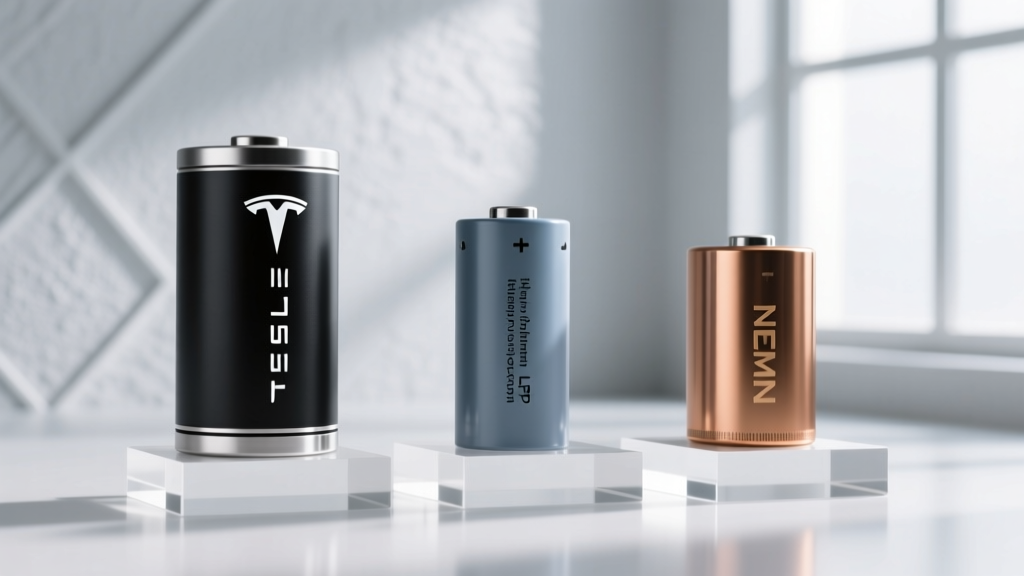
If you've followed Tesla's manufacturing updates or shopped for a Model Y in the last two years, you've likely encountered the term 4680 batteries. The name refers to the physical dimensions of the cylindrical cell — 46 millimeters in diameter and 80 millimeters tall — a format Tesla introduced at its 2020 Battery Day and began producing at scale in 2022. By the 2026 model year, 4680 cells power select Tesla vehicles built at Giga Texas and are central to the company's cost-reduction and structural-pack strategy.
But form factor is only part of the story. What actually determines your EV's range, longevity, charging speed, and cold-weather behavior is the chemistry inside the cell — typically NMC (nickel manganese cobalt), NCA (nickel cobalt aluminum), or LFP (lithium iron phosphate). The 4680 format can house different chemistries, and understanding both the physical design and the chemical composition is essential for any EV buyer evaluating long-term ownership costs.
This guide breaks down what 4680 cells are, how they compare to the more common 2170 and prismatic formats, and — critically — how the chemistry inside them affects degradation, warranty coverage, and real-world driving.
What Are 4680 Batteries and Why Do They Matter?
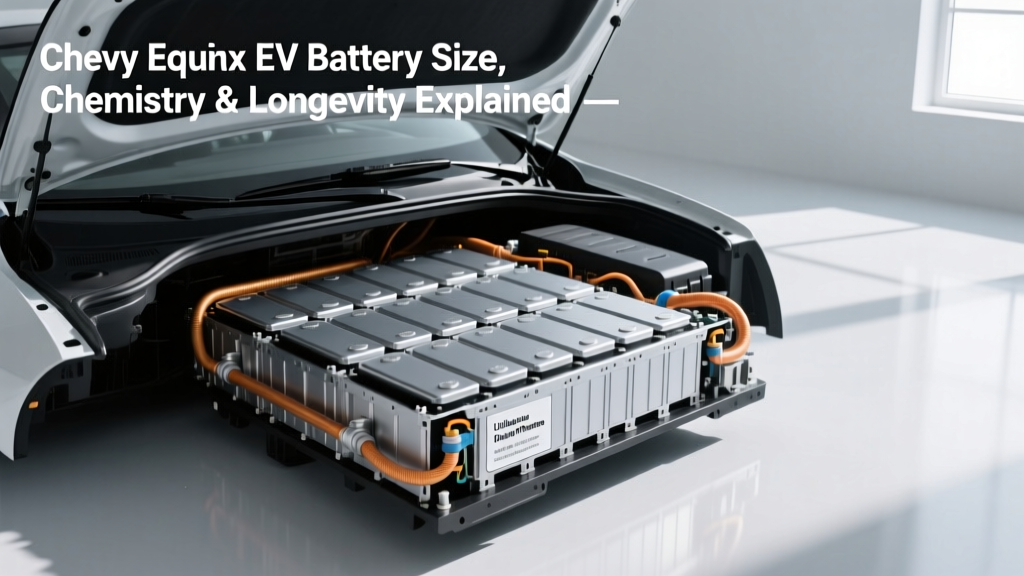
The 4680 cell is a large-format cylindrical lithium-ion cell. For comparison, the 2170 cells used in most Tesla Model 3 and Model Y vehicles measure 21 mm × 70 mm, and the older 18650 cells in early Model S and Model X units measure 18 mm × 65 mm. The 4680's larger volume means each individual cell stores more energy — roughly five times the energy of an 18650 cell — which reduces the total number of cells needed in a pack.
Tesla's stated engineering goals for the 4680 format include:
- Higher energy per cell: Fewer cells, fewer welds, simpler pack assembly.
- Structural battery pack: The 4680 cells are bonded into a pack that serves as a structural floor component, reducing vehicle weight and part count.
- Tabless electrode design: Tesla's "tabless" (or shingled spiral) electrode reduces the distance electrons travel inside the cell, lowering internal resistance and improving thermal management during fast charging.
- Lower cost per kWh: Tesla has targeted a 50%+ reduction in cost per kWh at the pack level through manufacturing simplification and dry-electrode coating processes, though achieving this at full scale has been a multi-year effort.
As of 2026, 4680 cells are found primarily in the Tesla Model Y (rear-wheel-drive variants built at Giga Texas) and the Cybertruck. Other automakers — including BMW and Samsung SDI — have announced their own large-format cylindrical cell programs (often called 46-series cells), but these are still ramping toward volume production.
LFP vs NMC vs NCA: Chemistry Trade-Offs That Actually Matter
Whether a battery uses the 4680 format or a prismatic pouch, the cathode chemistry determines its fundamental characteristics. Here is how the three dominant chemistries compare for passenger EVs in 2026:
| Attribute | LFP (Lithium Iron Phosphate) | NMC (Nickel Manganese Cobalt) | NCA (Nickel Cobalt Aluminum) |
|---|---|---|---|
| Energy density (cell-level) | ~160–180 Wh/kg | ~220–260 Wh/kg | ~240–270 Wh/kg |
| Cycle life (to 80% capacity) | 3,000–5,000+ cycles | 1,000–2,000 cycles | 800–1,500 cycles |
| Cold-weather performance | Moderate — more range loss below 32°F | Better low-temp discharge capability | Better low-temp discharge capability |
| Charging to 100% routinely | Recommended (BMS calibration needs it) | Not ideal — 80% daily is better | Not ideal — 80% daily is better |
| Cobalt content | None | Yes (supply-chain and ethical concerns) | Minimal |
| Cost per kWh (pack-level) | Lowest — ~$90–110/kWh | Higher — ~$120–150/kWh | Higher — ~$120–150/kWh |
| Typical 2026 vehicles | Tesla Model 3 RWD, Model Y RWD (some), BYD, Rivian Standard | Hyundai Ioniq 5, Kia EV6, Ford Mustang Mach-E Extended Range, VW ID.4 | Tesla Model S/X, Model Y LR (2170 cells), some Panasonic-supplied packs |
The practical takeaway: LFP sacrifices energy density (meaning a heavier or larger pack for the same range) but wins decisively on cycle life and cost. If you plan to keep your EV for 10+ years and 150,000+ miles, LFP's longevity advantage is significant. NMC and NCA deliver more range in a lighter package — important for performance trims and long-range variants — but degrade faster under heavy cycling and high state-of-charge storage.
Tesla's 4680 cells currently use an NMC-type chemistry with a silicon-enhanced anode in some production batches. The company has signaled interest in producing LFP 4680 cells, but as of early 2026, LFP variants in Tesla vehicles predominantly come from CATL in prismatic format.
How Long Do EV Batteries Last? Real Degradation Data
The most common question from prospective EV buyers is battery lifespan. The data, drawn from fleet studies, owner-reported telemetry, and manufacturer testing, is reassuring: most modern EV batteries outlast the vehicles they're installed in.
Here are observed degradation benchmarks across major chemistries and platforms:
- Tesla Model 3/Y (NMC/NCA, 2170 cells): Tesla's 2023 Impact Report (the most recent with granular fleet data) showed an average capacity loss of approximately 12% after 150,000 miles. Extrapolating conservatively, these packs retain ~80% capacity near 200,000 miles.
- Tesla Model 3 RWD (LFP, CATL prismatic): LFP packs show slower degradation. Owner-collected data on forums like TeslaFi and InsideEVs indicate 5–8% loss after 80,000–100,000 miles, with the degradation curve flattening significantly after the initial break-in period.
- Hyundai/Kia E-GMP platform (NMC, 77.4 kWh): Early Ioniq 5 and EV6 fleet data suggests ~8–10% loss at 100,000 miles, aided by aggressive thermal management.
- Chevrolet Bolt EV/EUV (NMC, 65 kWh): Pre-recall replacement packs and original fleet data showed roughly 10% degradation at 100,000 miles, though the recall complicates longitudinal analysis.
- Tesla 4680 (NMC, structural pack): Long-term fleet data is still accumulating given the format's 2022 production start. Early Cybertruck and Model Y 4680 vehicles have not yet accumulated sufficient mileage for statistically robust degradation curves. Tesla has stated a target of 1 million miles for next-generation cells, but this remains a manufacturing goal, not a validated fleet result.
What Causes Battery Degradation?
Lithium-ion cells lose capacity through several mechanisms:
- Calendar aging: Capacity loss that occurs even when the vehicle is parked, accelerated by high temperatures and high state of charge. Storing an NMC pack at 100% SoC in 95°F heat is one of the fastest ways to degrade it.
- Cycle aging: Each charge-discharge cycle causes minor structural changes to the cathode and anode. Higher C-rates (faster charging/discharging) accelerate this.
- Lithium plating: At very low temperatures or very high charge rates, lithium can plate onto the anode surface rather than intercalating into it. This is irreversible and reduces capacity.
- SEI layer growth: The solid electrolyte interphase layer on the anode thickens over time, consuming active lithium and increasing internal resistance.
EV Battery Warranty Coverage: What's Actually Protected
Federal regulations mandate a minimum battery warranty of 8 years / 100,000 miles for EVs sold in the US (10 years / 150,000 miles in California and states adopting CARB standards). Most manufacturers meet or exceed these thresholds. Here is how major 2026-model-year warranties compare:
| Manufacturer / Platform | Warranty Period | Mileage Limit | Capacity Retention Threshold |
|---|---|---|---|
| Tesla Model Y (incl. 4680) | 8 years | 120,000 miles (LR/AWD); 100,000 (RWD) | 70% |
| Tesla Model S / X | 8 years | 150,000 miles | 70% |
| Hyundai Ioniq 5 / Ioniq 6 | 10 years | 100,000 miles | 70% |
| Kia EV6 / EV9 | 10 years | 100,000 miles | 70% |
| Ford Mustang Mach-E / F-150 Lightning | 8 years | 100,000 miles | 70% |
| Rivian R1T / R1S | 8 years | 175,000 miles | 70% |
| BMW iX / i4 | 8 years | 100,000 miles | 70% |
What the warranty actually covers: If your battery's usable capacity drops below the stated threshold (typically 70% of original) within the warranty period, the manufacturer will repair or replace the battery to bring it above that threshold. Note that replacement may involve installing a refurbished pack with equivalent capacity — not necessarily a brand-new unit.
What voids coverage: Opening the pack, unauthorized modifications, using non-OEM charging equipment that causes damage, or physical damage from collisions or flooding. Normal degradation above the threshold is not a warranty claim.
EV Battery Replacement Cost: What to Budget For
Out-of-warranty battery replacement is the nightmare scenario EV skeptics cite. The reality is more nuanced: the vast majority of EV batteries never need full replacement during the vehicle's useful life. But if you do face an out-of-warranty replacement — typically after 10+ years and 150,000+ miles — here is the current cost landscape:
| Vehicle / Platform | Battery Capacity | Estimated Replacement Cost (Parts + Labor) |
|---|---|---|
| Tesla Model 3 / Y (2170 pack) | 60–82 kWh | $12,000 – $16,000 |
| Tesla Model Y 4680 (structural pack) | ~60–75 kWh | $10,000 – $14,000 (projected; structural design may lower labor cost) |
| Tesla Model S / X | 100 kWh | $18,000 – $22,000 |
| Hyundai Ioniq 5 / Kia EV6 | 77.4 kWh | $14,000 – $18,000 |
| Ford F-150 Lightning (Extended Range) | 131 kWh | $22,000 – $28,000 |
| Chevrolet Silverado EV | 200 kWh (Max Range) | $30,000 – $38,000 |
| Rivian R1T (Large Pack) | 135 kWh | $20,000 – $25,000 |
Several factors work in the owner's favor here:
- Prices are declining: Pack-level lithium-ion prices have fallen from over $1,000/kWh in 2010 to roughly $100–130/kWh in 2026 (BloombergNEF data). Replacement costs will continue trending downward.
- Module-level repair: Many packs can be serviced at the module level. If only a few modules degrade unevenly, a shop can replace individual modules for $2,000–$5,000 rather than swapping the entire pack.
- Third-party refurbishers: Companies like Electrified Garage and independent EV shops increasingly offer refurbished packs at 40–60% of OEM pricing.
Factors That Accelerate Battery Degradation (and How to Minimize Them)
While modern battery management systems (BMS) do an excellent job protecting the pack, owner habits still influence long-term health. Here are the factors ranked by impact, with practical mitigation strategies:
Battery Care Best Practices
- ✅ Set daily charge limit to 80% (NMC/NCA): For nickel-based chemistries, keeping SoC between 20–80% for daily use significantly reduces calendar aging. Tesla's app lets you set this easily. LFP owners should charge to 100% at least weekly for BMS calibration.
- ✅ Minimize DC fast charging when possible: Occasional Supercharging is fine, but daily 250 kW charging sessions generate sustained heat that accelerates degradation. Use Level 2 home charging as your primary method.
- ✅ Precondition before fast charging: Most EVs automatically precondition the battery when you navigate to a DC fast charger. This brings the cell temperature to the optimal range (~30–35°C), reducing lithium-plating risk and improving charge speed. If your EV offers manual preconditioning (e.g., Tesla's "Precondition for Supercharger" toggle), use it.
- ✅ Avoid prolonged storage at 100% or below 10%: If leaving your EV for a week or more, set the charge limit to ~50% and plug in to a Level 1 or Level 2 source so the BMS can maintain thermal management.
- ✅ Park in shade or a garage during extreme heat: Battery temperature tracks ambient temperature when parked. Sustained 100°F+ exposure at high SoC is the single worst combination for calendar aging.
- ⚠️ Cold-weather charging caution: Charging an ice-cold battery (below 32°F) at high power can cause lithium plating. Always precondition, and expect slower charge speeds in winter — the BMS will limit current to protect the cells.
- ⚠️ Avoid repeated 0% discharges: Running the pack to true zero (not just the displayed 0%, which includes a buffer) can stress cells. Most BMS designs include a ~5% bottom buffer, but habitually arriving at 0% is unnecessary wear.
How to Monitor Your EV's Battery Health (State of Health)
State of Health (SoH) is a percentage representing your battery's current maximum capacity relative to its original capacity. A new battery is 100% SoH; a battery that can only store 85 kWh of its original 100 kWh is at 85% SoH.
Methods for Checking SoH
- In-vehicle displays: Some EVs (notably the Tesla Model S/X and newer Hyundai/Kia models) show a battery health indicator in the service menu. Tesla's "Battery Health" test, accessible through the service mode, runs a controlled discharge cycle and reports capacity.
- Third-party apps: Tools like TeslaFi, Tessie, and EV Health log charging sessions and calculate SoH by comparing energy added during a known charge event (e.g., 10% to 80%) against the expected kWh for that range.
- OBD-II dongles: Devices like the OBDLink SX paired with apps such as LeafSpy (for Nissan Leaf) or ABRP can read BMS-reported capacity data directly from the CAN bus.
- Dealer diagnostic: Any authorized service center can run a full battery health report. Request this during routine service visits, especially as you approach warranty mileage thresholds.
How often to check: Once every 3–6 months is sufficient for most owners. Degradation is gradual — you won't see meaningful week-to-week changes. If you notice a sudden drop in displayed range that doesn't correlate with temperature changes, investigate immediately, as this could indicate a module imbalance or BMS fault.
4680 Batteries and the Road Ahead: Silicon Anodes and Solid-State
The 4680 format is an evolutionary step, not a final destination. Two emerging technologies are being developed that could further change the battery landscape:
Silicon-Dominant Anodes
Tesla has already incorporated small amounts of silicon into the anode of some 4680 cells. Silicon can theoretically store roughly 10 times more lithium ions per gram than the graphite anodes used today. The challenge has been that silicon expands up to 300% during lithiation, causing mechanical fracture and rapid degradation. Companies like Sila Nanotechnologies, Group14, and Enovix are developing nanostructured silicon composites that manage this expansion. Tesla's incremental silicon integration in 4680 cells is a bridge toward higher-silicon anodes expected later this decade.
Solid-State Batteries
Solid-state cells replace the liquid electrolyte with a solid ceramic, polymer, or sulfide conductor, potentially enabling:
- Higher energy density (400–500 Wh/kg at cell level vs. ~260 Wh/kg for today's best NMC)
- Faster charging (reduced lithium-plating risk without liquid electrolyte)
- Improved safety (no flammable liquid electrolyte)
Realistic timeline: Toyota, Nissan, and Samsung SDI have all announced solid-state pilot programs targeting 2027–2029 production starts, but in limited, premium-vehicle volumes. Widespread, cost-competitive solid-state batteries for mainstream EVs are not expected before 2030–2032 based on current manufacturing scale-up trajectories. QuantumScape's solid-state cells are undergoing validation with Volkswagen's PowerCo, but commercial availability remains years away.
Frequently Asked Questions
How long do 4680 batteries last compared to 2170 cells?
Long-term fleet data for 4680 cells is still limited given their 2022 production start. Tesla's 2170 NMC/NCA packs show approximately 12% degradation at 150,000 miles based on the company's Impact Report. Tesla has stated that 4680 cells are designed for comparable or better longevity, aided by the tabless electrode design that reduces internal resistance and heat generation. Independent validation will require another 2–3 years of fleet accumulation.
How much does it cost to replace a Tesla 4680 battery?
Estimated out-of-warranty replacement for a 4680 structural pack is $10,000–$14,000 as of 2026, though this is projected since few 4680 packs have reached out-of-warranty age. The structural design, where cells are bonded into the vehicle floor, may actually reduce labor costs compared to traditional pack swaps but complicates module-level repairs. Under warranty (8 years/120,000 miles for Long Range), replacement is covered if capacity drops below 70%.
Is LFP better than NMC for long-term ownership?
For pure longevity, yes. LFP cells routinely achieve 3,000–5,000+ charge cycles before reaching 80% capacity, compared to 1,000–2,000 cycles for NMC. LFP also contains no cobalt, reducing supply-chain risk. The trade-off is lower energy density — an LFP pack will be heavier and offer less range for the same physical size. If you prioritize maximum range or live in a very cold climate where NMC's better low-temperature performance matters, NMC may be the better fit. For a daily commuter who charges at home and plans to keep the car 10+ years, LFP is the stronger choice.
Does frequent Supercharging damage 4680 batteries?
The 4680's tabless electrode design was specifically engineered to reduce internal resistance and improve thermal performance during high-power charging. This means 4680 cells should theoretically tolerate DC fast charging better than 2170 cells. That said, the physics of lithium-ion cells means that any high-C-rate charging generates heat and accelerates cycle aging. Using Superchargers on road trips is perfectly fine — the BMS manages thermal load actively. Making DC fast charging your daily routine when Level 2 home charging is available will accelerate long-term degradation regardless of cell format.
What does the battery warranty actually cover?
EV battery warranties cover capacity loss below a specified threshold (typically 70% of original capacity) within the warranty period (typically 8 years/100,000–150,000 miles depending on the model). If your battery degrades past this threshold, the manufacturer will repair or replace it to restore capacity above the threshold. The warranty does not cover normal degradation above 70%, cosmetic issues, or damage from accidents, flooding, or unauthorized modifications. Always review the specific warranty terms in your purchase agreement — thresholds and mileage limits vary by model and trim.
How do I check my EV's battery State of Health?
The most accessible method is through your vehicle's service menu (Tesla's Battery Health test, for example) or third-party logging apps like TeslaFi or Tessie that calculate SoH from charging data. For the most accurate reading, a dealer diagnostic can pull BMS-reported capacity data directly. Check every 3–6 months, and always before the warranty period expires to ensure any qualifying degradation is documented and addressed.