Why 24m EToP Cell-Less Battery Technology Matters to EV Buyers
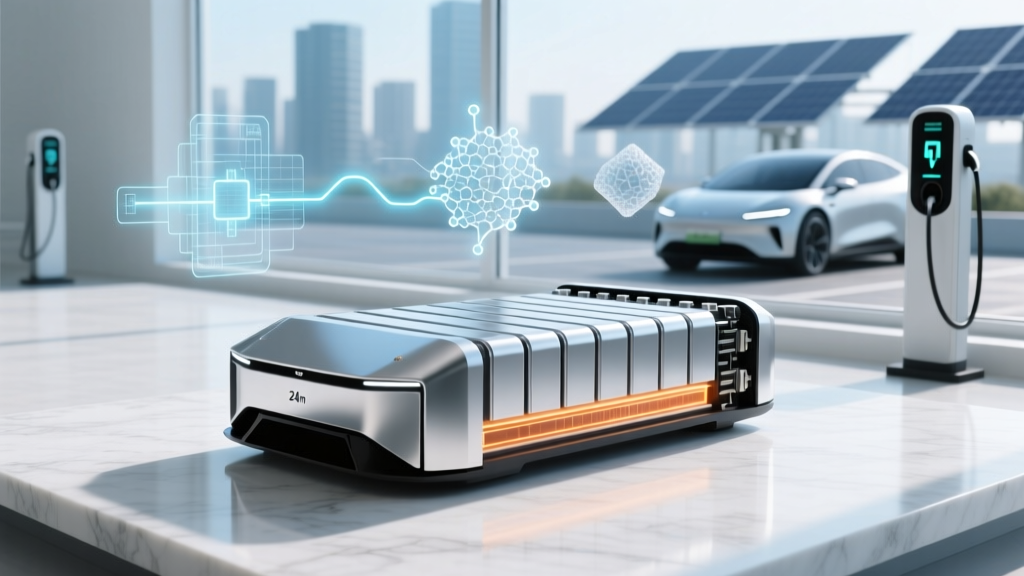
If you have been following battery patent filings or manufacturing-trade press, you may have encountered the phrase 24m EToP cell-less battery technology. EToP stands for "Electrode-to-Pack" — a manufacturing architecture pioneered by 24M Technologies that eliminates discrete cylindrical or pouch cells entirely. Instead of assembling hundreds of individual cells into modules and then into a pack, EToP uses continuous, large-format electrodes folded directly into a pack-level enclosure. The promise is fewer components, simpler thermal management, lower manufacturing cost per kWh, and potentially better structural rigidity.
As of 2026, EToP remains a pre-commercial and early-pilot-stage architecture. No mass-market EV on sale in the United States uses a 24m EToP cell-less pack. But understanding what it tries to solve — cost, complexity, and energy-density ceilings — requires understanding the chemistries and degradation realities that define today's EV batteries. This guide covers the current landscape and positions EToP and other emerging approaches within it.
Current Chemistries: LFP vs NMC vs NCA
Every EV battery sold in the US today uses one of three dominant lithium-ion cathode chemistries: lithium iron phosphate (LFP), nickel manganese cobalt (NMC), or nickel cobalt aluminum (NCA). The anode is overwhelmingly graphite, though silicon-doped anodes are appearing in select models. Each chemistry carries measurable trade-offs across energy density, cycle life, cold-weather performance, and raw-material cost.
| Attribute | LFP (LiFePO₄) | NMC (Ni-Mn-Co) | NCA (Ni-Co-Al) |
|---|---|---|---|
| Cell-level energy density | 160–180 Wh/kg | 230–280 Wh/kg | 250–300 Wh/kg |
| Typical pack-level density | 120–150 Wh/kg | 160–200 Wh/kg | 170–210 Wh/kg |
| Cycle life (80% retention) | 3,000–5,000+ cycles | 1,000–2,000 cycles | 800–1,500 cycles |
| Cold-weather range loss (−7°C/20°F) | ~30–40% | ~20–30% | ~20–30% |
| Thermal runaway risk | Very low | Moderate | Moderate-high |
| Cobalt / nickel content | None | Yes (varies by ratio) | Yes |
| Cost per kWh (cell, est.) | $70–$90 | $95–$130 | $100–$135 |
| Common 2026 US applications | Tesla Model 3/Y RWD, Ford Mustang Mach-E Select (LFP option) | Hyundai Ioniq 5, Kia EV6, VW ID.4, Ford F-150 Lightning (ext. range) | Tesla Model S/X, Rivian R1T/R1S (max pack) |
Bottom line: LFP wins on longevity, safety, and cost but is heavier and more cold-sensitive. NMC and NCA win on energy density — critical for trucks and long-range sedans where pack mass matters. Neither is universally "better"; the right chemistry depends on your driving profile and climate.
How Long Do EV Batteries Actually Last?
The most persistent fear among prospective EV buyers is premature battery failure. Real-world fleet data from the past decade consistently shows this concern is overstated for modern, liquid-cooled packs.
Observed degradation benchmarks (fleet and owner-reported data):
- 1 year / 15,000 mi: 1–3% capacity loss (initial SEI-layer formation, stabilizes afterward)
- 3 years / 45,000 mi: 4–7% loss typical across NMC/NCA packs; 2–5% for LFP
- 5 years / 75,000 mi: 7–12% loss (NMC/NCA); 4–8% (LFP)
- 8 years / 120,000 mi: 10–18% loss (NMC/NCA); 6–12% (LFP)
- 10+ years / 150,000+ mi: Many packs retain 75–85% SoH; some Tesla Model S/X units exceed 200,000 mi at ~80% SoH
Sources: Geotab fleet study, Tesla Impact Reports, Recurrent Auto battery data.
For context, the average US driver covers ~13,500 miles per year (FHWA data). A well-maintained NMC pack should deliver 150,000–200,000 miles before reaching the 70% capacity threshold that triggers warranty coverage. LFP packs routinely exceed 250,000 miles at that threshold. Most EV batteries outlast the body, suspension, and interior of the vehicle they power.
Factors That Accelerate Degradation
Not all miles age a battery equally. Five variables dominate the degradation curve:
- DC fast-charging frequency: Daily use of 150+ kW DC chargers raises cell temperatures and accelerates electrolyte breakdown. Occasional road-trip fast charging is fine; daily dependence is not. Aim to keep DCFC below 30% of total energy intake.
- State of Charge (SoC) extremes: Sustained storage at 100% SoC or below 10% SoC stresses NMC/NCA cathodes. Daily driving between 20–80% SoC is optimal. LFP is more tolerant of 100% SoC and in fact benefits from periodic full charges for cell balancing.
- Thermal exposure: Battery temperature above 40°C (104°F) during charging or below −10°C (14°F) during regenerative braking causes lithium plating and accelerated SEI growth. Preconditioning the pack before charging (a feature on most 2026 EVs) mitigates this.
- Calendar aging: Even parked EVs lose capacity over time, primarily driven by SoC and ambient temperature. A car stored at 50% SoC in a cool garage ages far slower than one parked at 90% SoC in Arizona summer heat.
- Depth of discharge (DoD): Shallow cycles (e.g., 60%→30%→60%) produce less wear than deep cycles (95%→10%→95%).
What the Battery Warranty Actually Covers
Federal law (EPA emissions warranty provisions extended to EV powertrains) mandates a minimum of 8 years / 80,000 miles for battery coverage in the US. California and states adopting CARB rules require 10 years / 150,000 miles. Most manufacturers exceed the federal floor voluntarily.
| Vehicle | Warranty Term | Capacity Retention Threshold | Chemistry |
|---|---|---|---|
| Tesla Model 3/Y RWD | 8 yr / 100,000 mi | 70% | LFP |
| Tesla Model 3/Y Long Range | 8 yr / 120,000 mi | 70% | NMC |
| Hyundai Ioniq 5 | 10 yr / 100,000 mi | 70% | NMC |
| Ford F-150 Lightning | 8 yr / 100,000 mi | 70% | NMC (ext. range) |
| Chevrolet Equinox EV | 8 yr / 100,000 mi | 60% | NMC |
| Rivian R1T / R1S | 8 yr / 175,000 mi | 70% | NMC/NCA |
Critical nuance: Warranties cover capacity loss below the threshold — not total failure alone. If your 82 kWh pack measures below 57.4 kWh (70%) at a certified diagnostic check within the warranty window, you are entitled to repair, module replacement, or full pack replacement at no cost. Read your owner's manual for the exact SoH diagnostic procedure your manufacturer requires.
EV Battery Replacement Cost: When and How Much
Out-of-warranty pack replacement is the scenario that generates the most fear — and the least actual occurrence. The vast majority of EV batteries never require full replacement during the vehicle's useful life. When they do, it is typically after 12–15 years or 180,000+ miles, and often due to a manufacturing defect or physical damage rather than natural degradation.
| Vehicle Class | Pack Size (kWh) | Replacement Cost Range | Labor + Diagnostics |
|---|---|---|---|
| Compact (Chevy Bolt, Nissan Leaf) | 60–65 kWh | $8,000–$12,000 | $1,500–$2,500 |
| Midsize sedan/crossover (Model 3, Ioniq 5) | 75–84 kWh | $12,000–$18,000 | $2,000–$3,500 |
| Large SUV / truck (F-150 Lightning, Rivian) | 100–149 kWh | $18,000–$30,000 | $3,000–$5,000 |
| Luxury / performance (Model S, Taycan) | 90–100 kWh | $15,000–$25,000 | $2,500–$4,500 |
Two trends are pushing these figures downward: (1) cell-level cost declines (LFP cells are below $80/kWh at scale in 2026) and (2) the rise of module-level repair. Many NMC packs are assembled from 8–16 modules; a single degraded or faulty module can be replaced for $1,500–$4,000 rather than swapping the entire pack. Independent EV repair shops are increasingly offering this service.
How to Monitor and Maximize Battery Health
Every 2026-model EV provides at least a basic State of Health (SoH) indicator, though the precision varies by brand.
OEM tools: Tesla displays a battery-health percentage in the service menu. Hyundai/Kia provides SoH via the dealer diagnostic tool and, in some 2026 models, in the infotainment EV status screen. Ford's Pass app shows estimated range vs. original, from which SoH can be inferred. GM's Ultium-based vehicles expose SoH through the myChevrolet/myCadillac apps.
Third-party tools: Apps like Recurrent, Tessie (Tesla-specific), and OBD-II dongles paired with ABRP (A Better Routeplanner) or Scan My Tesla can log capacity over time, giving you a more granular degradation curve than the OEM's rounded number.
Practical care protocol for maximum longevity:
- Set daily charge limit to 80% for NMC/NCA; 100% is acceptable for LFP (and recommended weekly for cell balancing).
- Enable pack preconditioning whenever navigating to a DC fast charger.
- Avoid leaving the vehicle at >90% SoC for more than 24 hours, especially in hot climates.
- In winter, plug in when parked to allow the thermal management system to maintain pack temperature from grid power rather than battery energy.
- Limit DC fast charging to road trips; rely on Level 2 (7–11 kW) home charging for daily replenishment.
Where 24m EToP and Emerging Tech Fit In
24M Technologies' EToP (Electrode-to-Pack) architecture attempts to skip the cell-formation step entirely. In a conventional pack, electrodes are cut, stacked or wound into individual cells, cased, filled with electrolyte, formed (a multi-day electrochemical process), tested, and then assembled into modules and packs. EToP uses large-format, continuous electrodes folded into a monolithic enclosure with shared electrolyte and thermal-management surfaces. The claimed benefits:
- Manufacturing cost reduction: 24M has cited 30–40% lower capex per GWh compared to conventional cell+pack lines, because the cell-assembly and formation steps are compressed or eliminated.
- Higher volumetric efficiency: Removing cell casings, module brackets, and inter-cell gaps frees space for active material, potentially raising pack-level energy density by 10–20%.
- Simplified thermal management: A single large-format electrode stack can be cooled more uniformly than hundreds of discrete cylindrical cells.
Current status (2026): 24M has demonstrated EToP in prototype and pilot-line form, primarily targeting stationary energy storage and defense/aerospace applications. Automotive qualification — which requires thousands of thermal cycles, vibration testing, crash-safety validation, and multi-year durability data — has not produced a production vehicle. Realistic timeline for a consumer EV using EToP: 2029–2032 at the earliest, assuming an OEM partnership reaches production intent.
Other forward-looking chemistries to watch:
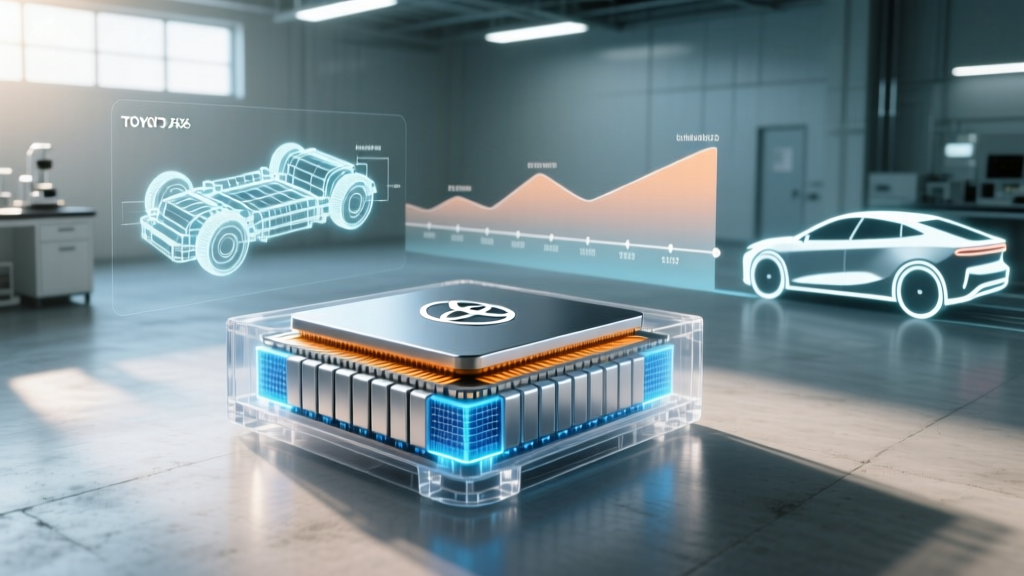
- Solid-state batteries: Toyota, Samsung SDI, and QuantumScape are targeting 2027–2029 production starts. Solid electrolytes promise higher energy density (potentially 400+ Wh/kg at cell level) and faster charging, but manufacturing scale-up and cost remain unsolved. Expect initial deployment in premium/low-volume models, not mainstream EVs.
- Silicon-dominant anodes: Companies like Sila Nanotechnologies and Group14 are supplying silicon-carbon composite anodes to Mercedes-Benz (G-Class EV, 2025+) and others. Silicon increases anode capacity ~20–40% over graphite, boosting energy density without changing the cathode. This is the most likely near-term upgrade to appear in 2026–2028 models.
- Sodium-ion batteries: CATL and BYD are producing sodium-ion cells for low-cost, short-range EVs in China. Energy density (~140 Wh/kg) limits them to urban runabouts. US-market adoption is unlikely before 2028 due to supply-chain and IRS §30D critical-mineral sourcing rules that favor lithium-based chemistries with North American or FTA-partner supply chains.
None of these technologies invalidate the EV you buy today. NMC and LFP chemistries are mature, cost-competitive, and will dominate through at least 2030. Emerging tech is incremental, not disruptive, on a 3–5 year horizon.
Frequently Asked Questions
Is 24m EToP cell-less battery technology available in any 2026 EV?
No. As of 2026, 24M's EToP architecture is in pilot and prototype stages, primarily for stationary storage and specialty applications. No consumer EV on sale uses this technology. Expect earliest automotive deployment no sooner than 2029–2032, pending OEM partnerships and automotive-grade validation.
LFP vs NMC — which is better for my situation?
Choose LFP if: you live in a mild climate, primarily commute under 150 miles daily, want maximum cycle life (5,000+ cycles), and prioritize lower cost and cobalt-free sourcing. Choose NMC/NCA if: you need maximum range in a single charge (300+ mi EPA), frequently drive in cold weather (better low-temp performance), or are buying a heavy truck/SUV where energy density reduces pack mass. Neither is universally superior.
How much does it cost to replace an EV battery out of warranty?
Between $8,000 and $30,000 depending on pack size and vehicle class, plus $1,500–$5,000 in labor. However, most modern liquid-cooled packs do not require full replacement during the vehicle's life. Module-level repair ($1,500–$4,000) is increasingly available for partial degradation. See the replacement-cost table above for class-specific estimates.
What does the federal battery warranty cover?
Minimum 8 years / 80,000 miles nationwide (10 years / 150,000 miles in CARB states). Coverage triggers when measured capacity drops below the manufacturer's stated threshold — typically 70% of original kWh. The warranty covers diagnosis, parts, and labor for repair or replacement. It does not cover damage from collisions, flooding, or unauthorized modifications.
How do I check my EV battery's State of Health?
Most 2026 EVs display SoH or estimated range vs. original in the infotainment system or companion app. For more precise tracking, use third-party tools like Recurrent, Tessie (Tesla), or an OBD-II dongle with EV-specific software. A certified dealer diagnostic check is required for warranty claims and provides the most authoritative SoH measurement.
Will solid-state batteries make today's EVs obsolete?
Not in the near term. Solid-state production is expected to begin in premium models around 2027–2029 (Toyota, Samsung SDI, QuantumScape timelines). Cost parity with NMC is unlikely before 2032–2035. Today's LFP and NMC packs, with proper care, will remain functional and economical well into the 2030s. Buy for your current needs; do not delay a purchase waiting for a chemistry that is still years from volume production.
For authoritative reference on EV efficiency and range ratings, consult fueleconomy.gov. For current federal EV tax-credit rules that affect battery sourcing requirements, see the IRS §30D guidance.