Most electric vehicles on the road in 2026 still rely on lithium-ion cells packaged into modules and packs — a design that has served the industry well but carries inherent weight, cost, and thermal-management penalties. Enter 24M ETOP (Electrode-to-Pack) cell-less battery technology, an approach that eliminates individual cylindrical or prismatic cells entirely, integrating electrode material directly into the pack structure. While still in advanced development and early pilot production rather than consumer vehicles, 24M's ETOP architecture represents one of the most structurally ambitious attempts to cut battery cost per kWh since the introduction of the 4680 cell.
This guide breaks down what ETOP cell-less technology actually is, places it alongside the LFP and NMC chemistries powering today's EVs, and gives you the real numbers on degradation, warranties, replacement costs, and daily battery care — the data every EV owner or shopper needs regardless of what's coming next.
What Is 24M ETOP Cell-Less Battery Technology?
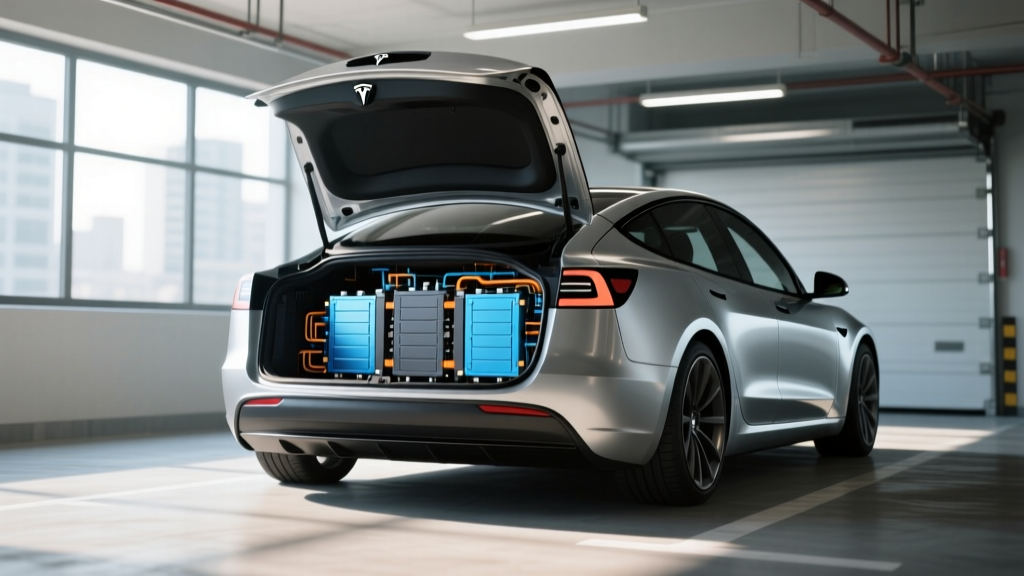
Conventional EV battery packs are assemblies of discrete cells — think Tesla's 4680 cylinders, CATL's prismatic LFP blocks, or LG Energy Solution's pouch cells — wired together inside a structural enclosure. Each cell has its own casing, terminals, and safety venting. That cell-level packaging adds mass, complexity, and cost.
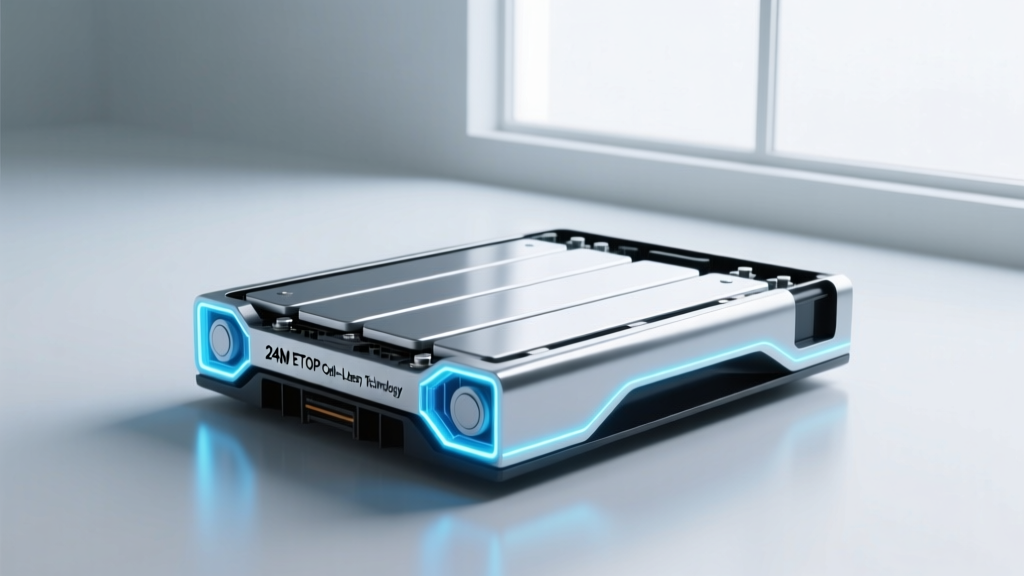
24M Technologies, a Cambridge, Massachusetts-based company spun out of MIT, proposes eliminating that intermediate cell layer entirely. Their ETOP (Electrode-to-Pack) approach uses what the company calls "SemiSolid" electrode manufacturing — a process where electrode slurries are handled in a semi-solid state rather than the traditional wet-coating, drying, and calendering steps. This reduces factory footprint, energy consumption during manufacturing, and capital expenditure.
In the ETOP architecture, large-format electrode assemblies are integrated directly into the pack enclosure with shared structural and thermal-management elements, removing individual cell casings, module-level hardware, and much of the wiring harness. The theoretical benefits:
- Cost reduction: 24M has targeted a 40–50% reduction in cell manufacturing cost compared to conventional lithium-ion processes, primarily through the SemiSolid electrode process and elimination of cell-level packaging.
- Energy density improvement: Removing cell casings and module hardware frees volume and mass for active electrode material, potentially improving pack-level energy density by 15–25%.
- Simplified thermal management: A unified pack structure with integrated cooling channels can manage heat more evenly than cooling hundreds of discrete cells.
- Manufacturing flexibility: The SemiSolid process can accommodate both NMC and LFP chemistries, meaning ETOP is an architecture, not a chemistry.
How Today's EV Batteries Actually Work: LFP vs. NMC/NCA
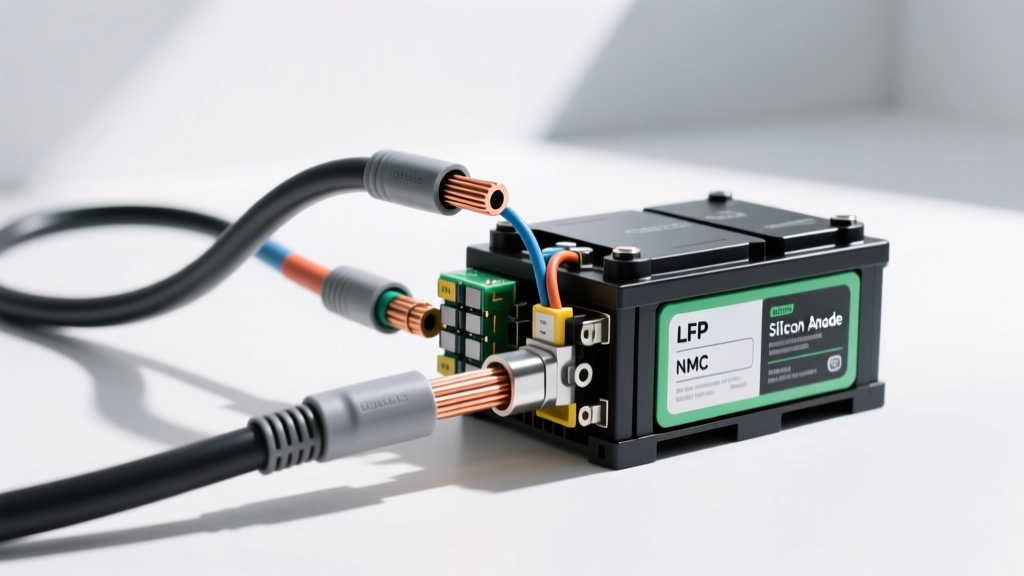
Until ETOP or similar architectures reach scale, the EV market runs on two dominant cathode chemistries: LFP (lithium iron phosphate) and NMC/NCA (nickel manganese cobalt / nickel cobalt aluminum). Understanding the trade-offs between them is essential whether you're buying a 2026 model or planning for what comes next.
| Attribute | LFP (LiFePO₄) | NMC / NCA |
|---|---|---|
| Energy density (cell-level) | 150–180 Wh/kg | 220–300 Wh/kg |
| Cycle life | 3,000–6,000+ cycles | 1,000–2,500 cycles |
| Cold-weather performance | Weaker — greater range loss below 32°F; slower charge acceptance when cold | Better low-temp discharge; preconditioning still critical |
| Thermal stability / safety | Excellent — higher thermal runaway threshold (~270°C) | Good but lower runaway threshold (~210°C); requires more BMS intervention |
| Cost per kWh | Lower — no cobalt or nickel; ~$80–100/kWh at cell level (2025–2026) | Higher — ~$100–130/kWh at cell level; exposed to nickel/cobalt commodity swings |
| Recommended charge habit | Can charge to 100% daily; periodic full charges help BMS calibration | Daily limit 80%; reserve 100% for trips |
| Common in (2026 models) | Tesla Model 3 RWD, Model Y RWD, BYD, standard-range offerings | Long-range and performance trims; Hyundai Ioniq 5, Ford Mustang Mach-E ER, BMW iX |
The practical takeaway: LFP wins on longevity, cost, and safety; NMC/NCA wins on range per pound and cold-weather usability. If you garage your car in a moderate climate and want a battery that will likely outlast the vehicle, LFP is the durability play. If you need maximum EPA range in a heavy SUV or live in sub-freezing winters, NMC's energy density and cold performance justify the trade-offs.
Where 24M ETOP fits in: because ETOP is an architecture rather than a chemistry, it could theoretically be manufactured with either LFP or NMC electrodes. The cost advantage of the SemiSolid process would compound with LFP's already-low material cost, potentially pushing pack-level pricing below $80/kWh — a threshold many analysts associate with true price parity with internal-combustion vehicles.
How Long Do EV Batteries Actually Last?
The fear that EV batteries need frequent replacement is one of the most persistent myths in the market. Real-world degradation data from fleets, owner communities, and manufacturer reports tells a more reassuring story.
Typical EV Battery Degradation Curve
Based on aggregated fleet data from sources including Geotab's analysis of over 10,000 EVs and owner-reported data:
- Year 1: ~2–3% capacity loss (initial formation loss)
- Years 2–4: ~1–2% per year (linear degradation phase)
- Years 5–8: ~1% per year (plateau phase)
- Average at 8 years / 100,000 miles: ~85–92% State of Health (SoH) retained
- Average at 150,000 miles: ~80–88% SoH retained for liquid-cooled packs
LFP packs tend to degrade more slowly in the linear phase but can show more variability in BMS-reported SoH due to the chemistry's flat voltage curve, which makes precise capacity measurement harder.
To put this in concrete terms: a 2026 Hyundai Ioniq 5 Long Range with a 77.4 kWh (usable) NMC pack and an EPA range of 305 miles would, at 88% SoH after 100,000 miles, still deliver roughly 268 miles of EPA-equivalent range. That's a noticeable reduction, but not a functional crisis — and it's still more range than most daily commutes require.
The critical insight: battery degradation is not linear forever. Most lithium-ion packs experience a steeper initial drop in the first year, then settle into a slow, nearly linear decline. Catastrophic failure (a pack suddenly losing large capacity) is rare and usually tied to manufacturing defects or physical damage, not normal aging.
What Does the Battery Warranty Actually Cover?
Federal law mandates that EV battery warranties cover a minimum of 8 years / 100,000 miles (whichever comes first). In California and states that follow CARB (California Air Resources Board) emissions standards, that extends to 10 years / 150,000 miles. Most manufacturers meet or exceed these thresholds.
| Manufacturer | Warranty Period | Capacity Retention Threshold | Notes |
|---|---|---|---|
| Tesla | 8 yr / 120,000 mi (Model 3/Y LR); 8 yr / 100,000 mi (RWD) | 70% | Covers defects and capacity below threshold |
| Hyundai / Kia | 10 yr / 100,000 mi | 70% | Among the longest coverage periods |
| Ford | 8 yr / 100,000 mi | 70% | Mach-E, F-150 Lightning |
| GM (Chevrolet, Cadillac) | 8 yr / 100,000 mi | 70% (60% on some Bolt-era packs) | Ultium platform vehicles |
| BMW | 8 yr / 100,000 mi | 70% | iX, i4, i7 |
| Rivian | 8 yr / 175,000 mi (R1T/R1S) | 70% | Higher mileage threshold reflects truck use case |
The capacity retention threshold is the key number. A 70% threshold means the manufacturer will repair or replace the battery if its usable capacity drops below 70% of original within the warranty period. In practice, very few properly maintained packs hit this threshold before the warranty expires — the degradation data above shows most packs retain 85%+ at the 8-year mark.
What warranties typically do not cover: damage from accidents, flooding, or improper modifications; capacity loss from consistently ignoring charge-limit recommendations (though this is hard for manufacturers to prove); and gradual degradation above the threshold. Read your specific warranty booklet — the details vary.
How Much Does an EV Battery Cost to Replace?
This is the question that generates the most anxiety, and it deserves an honest, data-backed answer.
| Vehicle / Pack Size | Battery Capacity | Estimated Out-of-Warranty Replacement Cost (2025–2026) | Context |
|---|---|---|---|
| Tesla Model 3 RWD (LFP) | ~60 kWh | $8,000–$12,000 | Smaller LFP pack; lower material cost |
| Tesla Model Y Long Range (NMC) | ~75 kWh | $12,000–$16,000 | Includes labor; varies by service center |
| Hyundai Ioniq 5 Long Range | 77.4 kWh | $13,000–$18,000 | NMC pack; dealer pricing |
| Ford F-150 Lightning Extended Range | ~131 kWh | $20,000–$30,000 | Largest consumer pack; highest cost |
| Chevrolet Bolt EV/EUV | 65 kWh | $9,000–$14,000 | Post-recall replacement pricing |
| BMW iX xDrive50 | ~105 kWh | $18,000–$25,000 | Premium brand labor rates add cost |
Important context: the vast majority of EV batteries never need full replacement during the vehicle's useful life. According to data from Consumer Reports and warranty claim rates reported by manufacturers, full battery replacements under or post-warranty remain rare events — affecting well under 5% of vehicles. When replacements do occur, they're often module-level repairs (replacing a faulty subset of modules rather than the entire pack), which cost significantly less.
Cell-level costs continue to decline. BloombergNEF's 2025 battery price survey reported average pack-level prices at approximately $115/kWh, down from $140/kWh in 2023. If that trend continues — and architectures like 24M ETOP aim to accelerate it — a replacement pack in 2035 could cost 30–40% less than today's prices.
Factors That Accelerate (or Slow) Battery Degradation
Battery chemistry sets the baseline, but your habits determine where within the degradation range your pack lands. Here are the factors ranked by impact, based on published research from the National Renewable Energy Laboratory (NREL) and real-world fleet analyses.
Battery Care Priorities (Ranked by Impact)
- Avoid sustained high State of Charge (SoC) in hot weather. Storing an NMC pack at 100% SoC in 95°F+ heat is the single worst thing you can do. If you're not driving, set the charge limit to 50–60% for storage. LFP is more tolerant here — 100% storage is less damaging but still not ideal for months at a time.
- Minimize DC fast charging when Level 2 is available. Occasional DCFC (road trips, 1–2 times per week) is fine. Daily DCFC at 150+ kW accelerates degradation by an estimated 1–3% additional loss over 100,000 miles vs. Level 2-only charging, per NREL modeling. The heat generated during high-C-rate charging stresses the electrolyte and anode.
- Use preconditioning before fast charging. Every modern EV with active thermal management (which is nearly all of them) will precondition the battery when you navigate to a charger. This warms or cools the pack to the optimal temperature window (roughly 25–40°C) for accepting high power. Skipping preconditioning — for example, by plugging into a DCFC without using the car's navigation — means the pack charges slower and generates more internal heat.
- Don't obsess over the 20–80% rule for LFP. The 20–80% daily window is sound advice for NMC/NCA packs. For LFP, manufacturers including Tesla and BYD actually recommend charging to 100% at least once per week to allow the BMS to recalibrate cell voltages. LFP's flat discharge curve means the BMS can lose track of true SoH without regular full charges.
- Avoid letting the pack sit at very low SoC (<5%) for extended periods. Deep discharge below the BMS buffer (the car's "0%" is not the cell's true 0%) can cause copper dissolution in the anode current collector, leading to permanent capacity loss. If you're storing the car, leave it at 40–60%.
- Extreme cold doesn't degrade the battery permanently — it temporarily reduces available capacity. A pack at 10°F may show 20–30% less range, but that capacity returns as the pack warms. The real cold-weather risk is charging at high power without preconditioning, which can cause lithium plating on the anode — a permanent damage mechanism.
How to Check and Monitor Your Battery's State of Health
State of Health (SoH) is the percentage of original capacity your battery can still hold. A new pack is 100% SoH; a pack that held 77.4 kWh when new and now holds 68 kWh is at ~88% SoH.
Here's how to check it on common 2026 EVs:
- Tesla: No native SoH display in the app or vehicle UI. Use third-party tools like TeslaFi or Stats (macOS) that read the BMS via the vehicle's API, or perform a manual test: charge to 100%, note the displayed range, and compare to the original EPA figure adjusted for the pack's usable kWh.
- Hyundai / Kia (E-GMP): The infotainment system's EV menu includes a battery health indicator, though it's a simplified bar graph rather than a precise percentage. Dealers can pull detailed SoH data via the KDS diagnostic tool.
- Ford: The FordPass app and in-vehicle settings show a battery health indicator. Ford has also introduced a more detailed SoH readout in the 2025+ model year SYNC 4A updates.
- BMW: The iDrive system includes a battery health display under the vehicle settings. BMW also provides SoH data through dealer diagnostics and the My BMW app for newer models.
- OBD-II dongles: Tools like the OBDLink SX paired with apps such as EVBatMon (for select vehicles) or Car Scanner can read BMS data including pack voltage, individual cell voltages, SoH estimate, and cycle count. Compatibility varies by manufacturer.
A practical DIY SoH check: charge the vehicle to 100% (on LFP) or 90% (on NMC, then extrapolate). Record the displayed estimated range. Divide by the original EPA range at 100%. This gives a rough SoH estimate — it won't be as precise as BMS-level data because the range estimate factors in driving habits and temperature, but it's a useful trend tracker over time.
What Comes After Lithium-Ion? Solid-State, Silicon Anodes, and ETOP's Place
The battery technology landscape in 2026 is active with several next-generation approaches at various stages of maturity. Here's where each stands realistically:
Solid-State Batteries
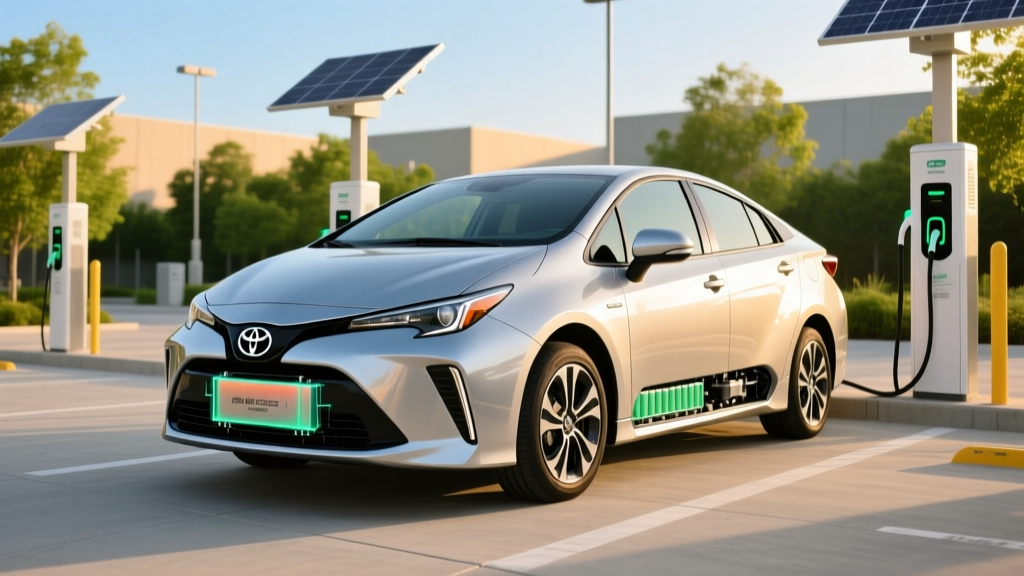
Solid-state cells replace the liquid electrolyte with a solid conductor (ceramic, sulfide, or polymer), enabling the use of lithium-metal anodes for dramatically higher energy density (targeting 400–500 Wh/kg at cell level). Toyota has announced limited production of solid-state-equipped vehicles for 2027–2028, and QuantumScape continues to advance its prototype cells with Volkswagen backing. However, manufacturing challenges — particularly achieving consistent solid-electrolyte interfaces at scale — mean widespread solid-state adoption in consumer EVs is unlikely before 2030. Expect initial deployment in low-volume, premium applications.
Silicon Anode Technology
Companies like Sila Nanotechnologies and Group14 Technologies are replacing graphite anodes with silicon-dominant composites, which can store roughly 10x more lithium per gram. This boosts cell energy density by 20–40% without changing the cathode. Sila's materials are already in limited production for consumer electronics and are entering automotive pilot programs. Expect silicon-anode cells in select EV models by 2027–2028, initially in performance-oriented applications where energy density justifies a cost premium.
Sodium-Ion Batteries
CATL and BYD have begun producing sodium-ion cells for lower-cost, shorter-range EVs in China. Sodium-ion offers lower energy density (~120–150 Wh/kg) but uses abundant, cheap materials with no lithium, cobalt, or nickel. US-market vehicles with sodium-ion packs are possible by 2028–2029, likely in entry-level models or as range-extender batteries in PHEVs.
Where 24M ETOP Fits
Unlike solid-state or silicon-anode approaches that change the cell chemistry, ETOP changes the manufacturing process and pack architecture. This means it can be deployed with existing, proven chemistries — reducing risk and accelerating time to market. If 24M's cost claims hold at scale, ETOP could bridge the gap between today's lithium-ion cells and tomorrow's solid-state packs, offering meaningful cost reduction without waiting for chemistry breakthroughs to mature.
Frequently Asked Questions
How long do EV batteries last in years and miles?
Most modern liquid-cooled EV batteries retain 85–92% of their original capacity at 8 years / 100,000 miles. With proper care, reaching 200,000 miles with 75–85% SoH is realistic for NMC packs, and potentially higher for LFP. The battery will likely outlast other major vehicle components.
How much does an EV battery cost to replace?
Out-of-warranty replacement costs range from approximately $8,000 for a smaller LFP pack (e.g., Tesla Model 3 RWD, ~60 kWh) to $20,000–$30,000 for large packs like the F-150 Lightning Extended Range (~131 kWh). Module-level repairs, when possible, cost significantly less. Prices are expected to decline as cell costs continue falling.
What does the EV battery warranty cover?
Federal minimum is 8 years / 100,000 miles with a capacity retention threshold of 70% (some manufacturers set different thresholds). CARB states get 10 years / 150,000 miles. The warranty covers manufacturing defects and capacity loss below the threshold. It does not cover accident damage, improper modifications, or gradual degradation above the threshold.
How do I check my EV battery's health?
Some vehicles display SoH in the infotainment system or companion app. For others, third-party OBD-II tools can read BMS data. A practical DIY method: charge to a known SoC, record the displayed range, and compare to the original EPA figure. Track this over time to spot trends rather than relying on a single measurement.
LFP vs. NMC — which battery chemistry is better?
Neither is universally better. LFP offers longer cycle life (3,000–6,000 cycles vs. 1,000–2,500), lower cost, better thermal safety, and tolerance for daily 100% charging — but lower energy density and worse cold-weather performance. NMC delivers more range per kWh of battery weight and better cold-weather usability, at higher cost and with a shorter cycle life. Your climate, driving patterns, and how long you plan to keep the vehicle should drive the choice.
Is 24M ETOP cell-less battery technology available in any car I can buy today?
No. As of 2026, 24M ETOP is in pilot and early commercial-scale production. No consumer EV currently on sale uses ETOP packs. The technology is expected to reach production vehicles in the late 2020s, pending successful scale-up and automotive qualification by 24M's manufacturing partners.
Does frequent DC fast charging damage my battery?
Occasional DC fast charging (a few times per week or on road trips) has a modest impact on long-term degradation — estimated at 1–3% additional capacity loss over 100,000 miles compared to Level 2-only charging. Daily DCFC, especially at high power (150+ kW) without proper preconditioning, accelerates wear more noticeably. For daily charging, a home Level 2 setup (7–11 kW) remains the best approach for battery longevity.