Which Battery Powers the 2026 Tesla Model Y?
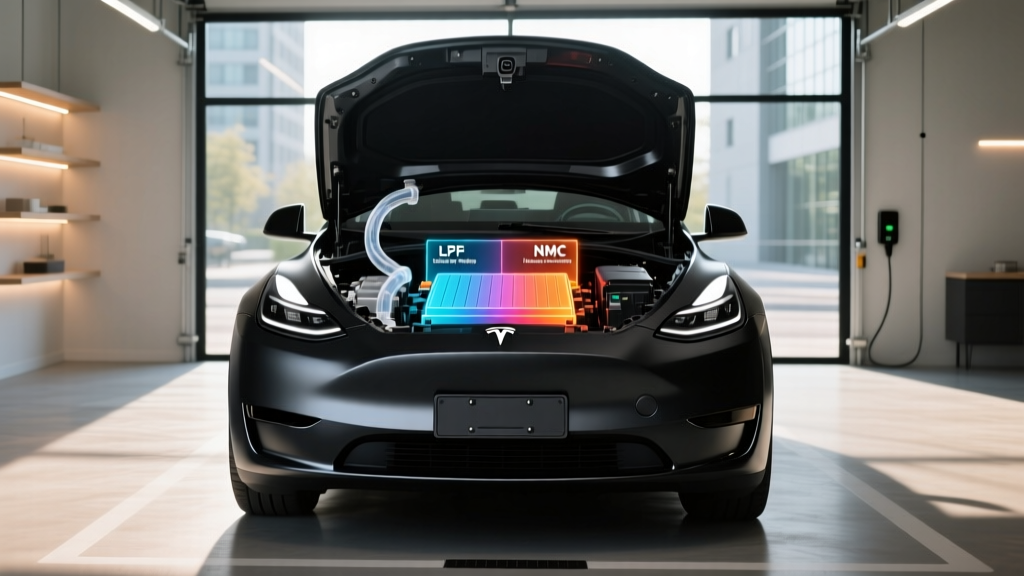
Tesla uses two distinct lithium-ion chemistries in the 2026 Model Y depending on trim. The base Rear-Wheel Drive (Standard Range) relies on a lithium iron phosphate (LFP) pack, while the Long Range AWD and Performance variants use a nickel-based NMC (nickel manganese cobalt) / NCA (nickel cobalt aluminum) chemistry. This isn't a marketing choice — it's a physics and economics decision that shapes range, charging habits, cold-weather behavior, and long-term degradation.
Understanding the 2026 Tesla Model Y battery type matters because your daily ownership experience — how often you charge to 100%, how the car handles a Minnesota winter, how much range you'll have at 150,000 miles — depends on which chemistry is under your floor.
| Specification | RWD (Standard Range) | Long Range AWD | Performance |
|---|---|---|---|
| Battery Chemistry | LFP (cathode) | NMC/NCA (cathode) | NMC/NCA (cathode) |
| Usable Capacity (est.) | ~60 kWh | ~75 kWh | ~75 kWh |
| EPA Range | ~260 mi | ~320 mi | ~295 mi |
| Real-World Highway (70 mph, 65°F) | ~225–240 mi | ~270–290 mi | ~250–270 mi |
| Cold-Weather Range (20°F, est.) | ~185–210 mi | ~230–255 mi | ~215–235 mi |
| Peak DC Fast Charge | ~170 kW | ~250 kW | ~250 kW |
| 10–80% DC Fast Charge | ~25 min | ~22 min | ~22 min |
| Level 2 Charge Rate | 11.5 kW (48A) | 11.5 kW (48A) | 11.5 kW (48A) |
| 0–60 mph | 6.6 sec | 4.8 sec | 3.5 sec |
| Horsepower | 295 hp | 384 hp | 456 hp |
| Base MSRP | $44,990 | $48,990 | $53,990 |
LFP vs NMC: Chemistry Trade-Offs Explained
LFP and NMC aren't just different labels — they represent fundamentally different engineering priorities. Here's how they compare across the dimensions that matter to owners:
| Attribute | LFP (Lithium Iron Phosphate) | NMC/NCA (Nickel-Based) |
|---|---|---|
| Energy Density | Lower (~160 Wh/kg cell-level) — heavier pack for same kWh | Higher (~250 Wh/kg cell-level) — more range per kg |
| Cycle Life | 3,000–5,000+ full cycles to 80% SoH | 1,000–2,000 full cycles to 80% SoH |
| Calendar Aging | Slower degradation at rest | Faster degradation, especially at high SoC |
| Cold Performance | Weaker — higher internal resistance, slower charge acceptance below freezing | Better low-temp discharge and charge performance |
| Thermal Stability | Excellent — very resistant to thermal runaway | Good — requires more active thermal management |
| Cost per kWh | Lower (no nickel or cobalt) | Higher (nickel/cobalt commodity exposure) |
| Charging to 100% | Recommended regularly for cell balancing and accurate BMS SoC estimation | Daily limit of 80–90%; 100% only for trips |
| Raw Material Supply Chain | Iron and phosphate are globally abundant | Nickel and cobalt face geopolitical supply constraints |
Which Is Better for You?
Choose LFP (Model Y RWD) if: You primarily commute under 60 miles daily, have reliable home Level 2 charging, live in a moderate climate, and want the longest possible cycle life at the lowest upfront cost. LFP rewards owners who charge to 100% nightly — it actually benefits from it.
Choose NMC (Model Y Long Range / Performance) if: You regularly drive 200+ miles between charges, live in a cold climate where every mile of range counts, need maximum DC fast-charge speed for road trips, or want the acceleration advantage. NMC demands more careful SoC management — keeping it between 20–80% for daily use preserves longevity.
How Long Do EV Batteries Actually Last?
The short answer: almost certainly longer than you'll own the car. Tesla's battery packs are engineered for 300,000–500,000 miles of usable life before reaching 70% state of health (SoH), depending on chemistry and usage patterns. But the details matter.
Degradation Data: What the Numbers Show
Tesla's own Impact Report data, combined with fleet analyses from Recurrent Auto and other battery-health platforms, paint a consistent picture:
| Mileage | NMC/NCA Avg. Capacity Retention | LFP Avg. Capacity Retention |
|---|---|---|
| New | 100% | 100% |
| 25,000 mi | ~95% | ~97% |
| 50,000 mi | ~92% | ~95% |
| 100,000 mi | ~88–90% | ~92–94% |
| 150,000 mi | ~85–88% | ~90–92% |
| 200,000 mi | ~82–86% | ~88–91% |
Source: Fleet-aggregated data; individual results vary based on charging habits, climate, and fast-charge frequency. Degradation is non-linear — most loss occurs in the first 20,000–30,000 miles, then the curve flattens significantly.
The key insight: battery degradation is front-loaded. You'll see the most rapid capacity loss in the first year or two (roughly 3–5%), after which degradation slows to approximately 1–2% per year under normal use. An NMC Model Y Long Range at 150,000 miles might have ~270 miles of real range instead of 310 — noticeable but not disabling.
What Does the Tesla Battery Warranty Cover?
Tesla's battery and drive unit warranty provides a contractual floor for capacity retention. Here's what's covered for the 2026 Model Y:
| Trim | Warranty Duration | Mileage Limit | Minimum Capacity Retention |
|---|---|---|---|
| RWD (LFP) | 8 years | 100,000 miles | 70% |
| Long Range AWD (NMC) | 8 years | 120,000 miles | 70% |
| Performance (NMC) | 8 years | 120,000 miles | 70% |
If your Model Y's battery falls below 70% usable capacity within the warranty window (whichever comes first — years or miles), Tesla will repair or replace the pack at no cost. In practice, this threshold is rarely breached under normal usage. The warranty covers manufacturing defects and abnormal degradation but does not cover damage from accidents, flooding, or unauthorized modifications.
Full warranty details are available on Tesla's official warranty page.
EV Battery Replacement Cost: What to Expect
Out-of-warranty battery replacement is the single biggest fear among prospective EV buyers. Here's the reality for the 2026 Model Y:
| Scenario | Estimated Cost | When It Applies |
|---|---|---|
| Full pack replacement (NMC ~75 kWh) | $12,000–$16,000 | Out of warranty, total pack failure |
| Full pack replacement (LFP ~60 kWh) | $9,000–$13,000 | Out of warranty, total pack failure |
| Module-level repair | $3,000–$7,000 | Isolated cell group failure; not always offered |
| Labor + diagnostics | $500–$1,500 | Additional to parts cost |
Critical context: Complete pack failure outside the warranty period is rare. The vast majority of Tesla battery packs outlast 200,000 miles with usable capacity above 80%. When replacement does occur, it's typically due to manufacturing defects (covered under warranty) or physical damage (covered by insurance). The fear of a surprise $15,000 bill at year 10 doesn't match the data — most Model Y batteries will still be functional, just with modestly reduced range, well past 250,000 miles.
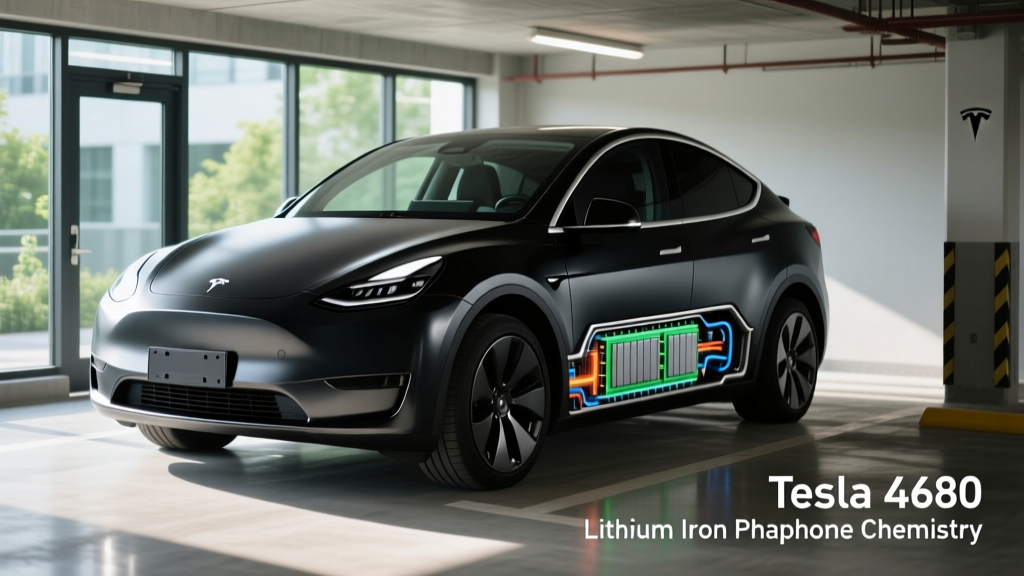
Tesla's structural battery pack design (introduced with the 4680 cell architecture) integrates cells into the vehicle chassis, which can complicate module-level repairs and may push replacement toward full-pack swaps. However, this design also improves structural rigidity and reduces overall vehicle weight.
Factors That Affect Battery Longevity
Not all miles are equal when it comes to battery wear. Here's what accelerates or slows degradation:
Battery Care Best Practices for the 2026 Model Y
- State of Charge (SoC) habits: For NMC trims, set daily charge limit to 80%. Charge to 100% only when departing on a trip. For LFP (RWD), Tesla recommends charging to 100% at least once per week for accurate BMS calibration and cell balancing.
- Avoid prolonged storage at extremes: Don't leave the car sitting at 100% SoC for days in hot weather, or at 0% SoC for extended periods. If storing for weeks, target 50% SoC.
- DC fast charging frequency: Occasional Supercharging has minimal impact. Daily DC fast charging at 250 kW does accelerate degradation modestly — studies suggest 1–3% additional loss over 100,000 miles vs. exclusive Level 2 charging. If you have home charging, use Level 2 for daily needs.
- Extreme temperature management: Tesla's active thermal management system handles most scenarios, but preconditioning (via the Tesla app or scheduled departure) before driving in cold weather reduces stress on the pack. In extreme heat, avoid repeated full-power acceleration launches.
- Regenerative braking settings: Standard regen is fine — Tesla's BMS manages charge acceptance to protect the pack. There's no degradation benefit to reducing regen.
- Software updates: Keep your Model Y updated. Tesla periodically refines BMS algorithms, thermal management strategies, and charge profiles via OTA updates that can improve longevity.
How to Monitor Battery Health (State of Health)
Tesla doesn't expose a direct "State of Health" percentage in the vehicle UI the way some competitors do. Here's how to assess your Model Y's battery condition:
Method 1: Tesla App Energy Graph
The Tesla app tracks energy consumption and can show projected range at various SoC levels over time. Comparing your current projected range at 100% SoC to the original EPA figure gives a rough degradation estimate.
Method 2: Full Charge Range Observation
Charge to 100% (especially easy with LFP, where this is recommended) and note the displayed range. A new Model Y RWD shows ~260 miles at 100%. If that number drops to 245 miles after 50,000 miles, your SoH is roughly 94%.
Method 3: Third-Party Tools
Services like Recurrent Auto and Tessie (a third-party Tesla companion app) can pull battery telemetry data and provide more granular SoH estimates. Tesla's own service centers can run a battery health diagnostic if you suspect abnormal degradation.
Method 4: OBD-II Data Readers
Advanced OBD-II readers paired with apps like Scan My Tesla can access BMS data including pack voltage, individual module balance, and estimated capacity — though interpreting this data requires some technical knowledge.
Emerging Battery Technology: What's Next
While the 2026 Model Y uses proven lithium-ion chemistries, the battery landscape is evolving. Here's a realistic look at what's on the horizon:
Silicon-Dominant Anodes
Replacing graphite anodes with silicon can theoretically boost energy density by 20–40%. Companies like Sila Nanotechnologies and Group14 are scaling production, and early applications are appearing in premium EVs. Expect broader adoption in Tesla's 4680 cells within the 2027–2029 timeframe, though early silicon anodes face cycle-life challenges that are still being resolved.
Solid-State Batteries
Solid-state technology replaces the liquid electrolyte with a solid material, promising higher energy density, faster charging, and improved safety. Toyota, Samsung SDI, and QuantumScape are leading development, with limited production vehicles expected by 2028–2030. However, manufacturing scale-up remains the primary bottleneck — solid-state cells are currently far more expensive to produce than conventional lithium-ion. This technology is not available in any production vehicle as of 2026.
Sodium-Ion Batteries
CATL and other Chinese manufacturers are producing sodium-ion cells for lower-cost, lower-range EVs. These offer excellent cycle life and cold performance but significantly lower energy density (~120–140 Wh/kg). They're unlikely to appear in a Tesla Model Y but may power budget city cars in the near future.
4680 Cell Evolution
Tesla's proprietary 4680 cylindrical cell format continues to evolve. The dry-electrode manufacturing process Tesla has been refining could eventually reduce cell cost by 20–30% while improving energy density. As of the 2026 model year, 4680 cells are used in select Model Y builds, with production capacity still scaling at Gigafactory Texas.
Frequently Asked Questions
Does the 2026 Tesla Model Y use LFP or NMC batteries?
Both. The base Rear-Wheel Drive (Standard Range) trim uses an LFP (lithium iron phosphate) battery, while the Long Range AWD and Performance trims use NMC/NCA (nickel-based) chemistry. The choice depends on your trim selection at purchase.
How long will the 2026 Model Y battery last before needing replacement?
Based on fleet data, Tesla battery packs typically retain 85–90% capacity at 150,000 miles (NMC) or 90–92% (LFP). Most packs remain functional well past 250,000 miles. Complete failure requiring replacement is rare and usually covered under the 8-year warranty.
Can I charge the LFP Model Y to 100% every day?
Yes — Tesla explicitly recommends it. LFP chemistry benefits from regular full charges because the BMS needs the 100% voltage reference point to accurately estimate state of charge and balance cells. Set your charge limit to 100% and plug in nightly if convenient.
Does frequent Supercharging damage the Model Y battery?
Occasional Supercharging has negligible impact. Daily exclusive DC fast charging may add 1–3% additional degradation over 100,000 miles compared to Level 2 charging. For daily use, home Level 2 charging at 11.5 kW is gentler on the pack. Use Superchargers for road trips without concern.
How much does it cost to replace a Tesla Model Y battery out of warranty?
A full pack replacement runs $9,000–$16,000 depending on chemistry and capacity (LFP packs are cheaper). Module-level repairs, when possible, cost $3,000–$7,000. However, most Model Y batteries never need replacement during typical ownership.
Does cold weather permanently damage the battery?
No. Cold weather temporarily reduces range and charge acceptance, but Tesla's thermal management system protects the pack from damage. The range loss (20–35% in sub-freezing temps) is fully recovered when temperatures rise. Preconditioning before driving and charging minimizes cold-weather impact.
Is the 2026 Model Y eligible for the federal EV tax credit?
The §30D federal tax credit offers up to $7,500, but eligibility depends on multiple factors: buyer income caps ($150K single / $300K joint MAGI), vehicle MSRP caps ($55,000 for SUVs), battery component and critical mineral sourcing requirements, and North American final assembly. The 2026 Model Y is assembled in Fremont, CA and Austin, TX. Credit eligibility and exact amount vary — check the IRS clean vehicle credit page and consult a tax professional for your specific situation. Point-of-sale transfer is available if you qualify.
Will solid-state batteries make my 2026 Model Y obsolete?
Not in any meaningful timeframe. Solid-state batteries are not expected in mass-production vehicles until 2028–2030 at the earliest, and early adoption will likely be limited to premium models at high prices. Your 2026 Model Y's lithium-ion pack will remain competitive and functional for well over a decade of typical use.