The 2026 Mercedes-Benz G-Class EQG Battery at a Glance
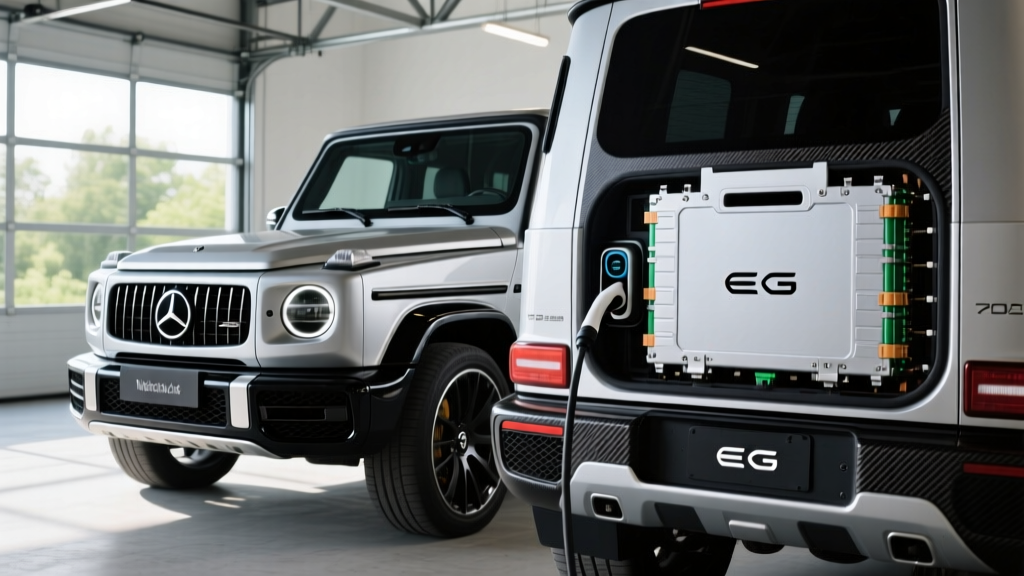
When Mercedes-Benz electrified the iconic G-Wagen, it didn't downsize the engineering ambition. The 2026 Mercedes-Benz G-Class EQG (badged G 580 with EQ Technology) carries one of the largest and most sophisticated traction batteries in any production passenger vehicle: a 116 kWh usable NMC (nickel-manganese-cobalt) lithium-ion pack integrated into a reinforced ladder frame. This is a heavy-duty, high-capacity system designed to push a 6,000+ lb box on wheels to a respectable EPA-estimated range while powering four independent electric motors.
But for buyers considering a six-figure electric luxury SUV — or any EV shopper researching long-term battery ownership — the critical questions go far beyond capacity. How long will this battery last? What does degradation look like in real-world use? What happens when the warranty expires? And how does the G-Class NMC chemistry compare to the LFP packs showing up in more affordable EVs?
This guide uses the 2026 G-Class EQG as a case study to answer those questions with hard data, while providing a framework that applies to any EV battery you're evaluating.
| Battery Chemistry | NMC (Nickel-Manganese-Cobalt) |
| Usable Capacity | 116 kWh |
| EPA-Est. Range | ~240 miles (est.; final EPA pending) |
| Max DC Fast Charge | 200 kW peak |
| 10–80% DC Charge | ~32 minutes |
| Level 2 AC Charge | 11 kW onboard charger |
| Thermal Management | Active liquid cooling + heating |
| Starting MSRP | ~$160,000 (G 580) |
Note: The 2026 G 580 with EQ Technology is a high-volume luxury EV well above the IRS §30D MSRP cap of $80,000 for SUVs. It does not qualify for the federal EV tax credit. State and local incentives may still apply — consult IRS §30D guidelines for current rules.
NMC vs LFP: Understanding the Chemistry Inside Your EV Battery
The 2026 G-Class EQG uses NMC chemistry — the same family found in most long-range, performance-oriented EVs from Mercedes, BMW, Hyundai, and Ford. But a growing number of EVs (particularly Tesla Model 3/Y Standard Range, Rivian Standard, and several BYD models) have shifted to LFP (lithium iron phosphate). The choice of chemistry has real ownership consequences.
| Attribute | NMC (Nickel-Manganese-Cobalt) | LFP (Lithium Iron Phosphate) |
|---|---|---|
| Energy Density | High (~220–300 Wh/kg cell-level) — more range in less space | Lower (~140–180 Wh/kg) — requires heavier/larger pack for same range |
| Cycle Life | 1,000–2,000 full cycles before 80% capacity | 3,000–5,000+ full cycles — significantly longer lifespan |
| Cold-Weather Performance | Better low-temp conductivity; less range loss in freezing conditions | More sluggish in cold; charge acceptance limited below freezing without preconditioning |
| Charging to 100% Regularly | Degrades faster if held at 100% SoC; 80% daily recommended | Tolerates and benefits from regular 100% charges; BMS calibration requires it |
| Cost | Higher — cobalt and nickel are expensive, volatile commodities | Lower — iron and phosphate are abundant, cheaper materials |
| Thermal Stability | Good, but requires robust active thermal management | Excellent — inherently more stable, lower thermal runaway risk |
| Best For | Long-range, performance, cold-climate, space-constrained vehicles | Standard-range, fleet/high-mileage, warm-climate, cost-sensitive vehicles |
Why the G-Class uses NMC: Pushing a 6,000+ lb luxury SUV to even ~240 miles of range demands maximum energy density. LFP simply can't pack enough kilowatt-hours into the G-Wagen's ladder-frame footprint without adding prohibitive weight. NMC is the only chemistry that makes the EQG's range-to-weight ratio possible.
The trade-off for owners: NMC batteries are more sensitive to charging habits. Mercedes-Benz recommends setting a daily charge limit of 80% and only charging to 100% when you need the full range for a road trip. Regularly leaving an NMC battery at 100% SoC accelerates calendar degradation — the slow capacity loss that occurs even when the car isn't driven.
How Long Do EV Batteries Actually Last? Degradation Data
This is the question every EV buyer wants answered, and the honest answer is: modern EV batteries typically outlast the vehicle they're installed in. But "outlast" doesn't mean "no degradation." Every lithium-ion battery loses capacity over time. The question is how fast.
kW vs kWh — a critical distinction: kW (kilowatts) measures power — how fast you charge or accelerate. kWh (kilowatt-hours) measures energy — how much the battery holds. When we talk about degradation, we're talking about kWh capacity loss, not kW charge speed (though charge speed can also decline slightly with age).
Real-World Degradation Data Points
Based on fleet data from sources like Geotab's analysis of over 10,000 EVs and manufacturer-reported figures:
- Year 1 (0–15,000 mi): 2–4% capacity loss (initial formation loss — steepest part of the curve)
- Year 2–4 (15,000–60,000 mi): ~1.5–2.5% loss per year (linear, gradual phase)
- Year 5–8 (60,000–120,000 mi): ~1–2% loss per year (plateau phase)
- Year 8–10 average SoH: 85–92% of original capacity (fleet average)
- Year 10+ projection: Most NMC packs retain 80%+ capacity at 150,000 miles
LFP packs typically degrade 30–50% slower than NMC under equivalent use conditions. Cold-climate NMC owners who rely heavily on DC fast charging may see the higher end of loss ranges.
What this means for the 2026 G-Class EQG: With a 116 kWh usable battery, even a pessimistic 15% degradation over 10 years would leave you with ~99 kWh of usable capacity — still enough for approximately 200+ miles of real-world range in a vehicle this heavy. The battery is oversized by design, which provides a natural degradation buffer.
Factors That Accelerate Degradation
- Frequent DC fast charging above 150 kW: Occasional road-trip fast charging is fine. Daily reliance on 200 kW DC charging (like the G-Class's peak rate) generates sustained heat that stresses cells. Try to use Level 2 for daily needs.
- Regular 100% SoC holds: Leaving an NMC battery at 100% for days (e.g., charging to full on Friday and not driving until Monday) accelerates calendar aging. Charge to 80% daily; 100% only before trips.
- Extreme heat exposure: Parking in unshaded lots in 100°F+ climates for extended periods degrades electrolyte. Liquid cooling mitigates this but isn't infinite.
- Deep discharge cycles: Regularly driving the battery below 10% SoC stresses cell chemistry. The BMS buffer protects against true 0%, but habitually running very low isn't ideal.
- Cold fast-charging without preconditioning: Charging a cold NMC battery at high power causes lithium plating — a permanent capacity loss mechanism. Always use the vehicle's preconditioning feature before DC fast charging in cold weather.
2026 Mercedes-Benz G-Class Battery Warranty: What's Covered
Mercedes-Benz provides one of the industry-standard — and in some ways slightly better — high-voltage battery warranties on the G 580 with EQ Technology.
| Coverage Area | Terms |
|---|---|
| Duration | 10 years or 155,000 miles (whichever comes first) |
| Capacity Retention Threshold | 70% of original usable capacity (i.e., below ~81 kWh) |
| What's Covered | Defects in materials/workmanship; capacity below threshold under normal use |
| Remedy | Repair, module replacement, or full pack replacement at Mercedes-Benz discretion |
| Exclusions | Damage from accidents, floods, modifications, or unauthorized repairs; cosmetic issues |
| Transferability | Yes — transfers to subsequent owners automatically |
The 10-year/155,000-mile term exceeds the federal minimum requirement (8 years/100,000 miles for emissions-related components, which some states apply to EV batteries) and matches or exceeds competitors like BMW, Audi, and Tesla (8 years/120,000–150,000 miles depending on model). The 70% retention threshold is industry standard — meaning Mercedes will intervene only if your battery drops below ~81 kWh of its original 116 kWh. Based on degradation data above, hitting that threshold within the warranty period under normal use is extremely unlikely.
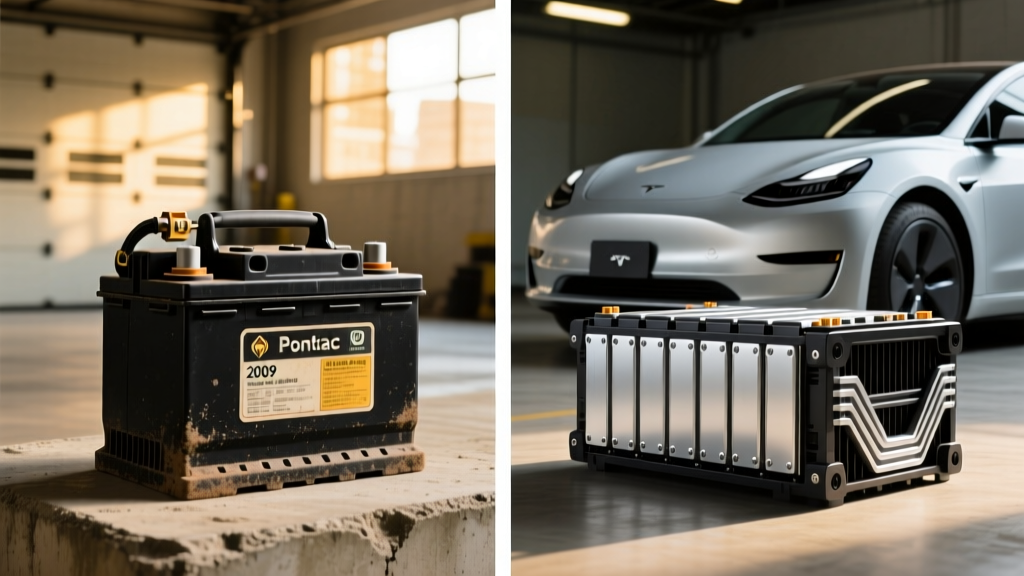
Important: The warranty covers the high-voltage traction battery only. The G-Class also has a separate 12V auxiliary battery (which powers lights, infotainment, and computers) — this is a conventional automotive battery with a typical 3–5 year lifespan and is covered under the standard new-vehicle limited warranty (4 years/50,000 miles), not the HV battery warranty.
EV Battery Replacement Cost: What G-Class Owners Should Budget For
This is where fear-mongering often takes over, so let's ground the discussion in data. Most EV batteries never need replacement during the vehicle's useful life. But if yours is damaged, falls outside warranty, or you're buying a high-mileage used EV, here's what the numbers look like.
| Vehicle Class / Battery Size | Full Pack Replacement Cost | Module-Level Repair |
|---|---|---|
| Compact EV (40–60 kWh, e.g., Leaf, Bolt) | $6,500–$12,000 | $1,500–$4,000 per module |
| Mid-size EV (75–100 kWh, e.g., Model Y, Ioniq 5) | $12,000–$20,000 | $2,000–$6,000 per module |
| Large / Luxury EV (100–120 kWh, e.g., G-Class EQG, EQS, iX) | $20,000–$35,000 | $3,000–$8,000 per module |
For the 2026 G-Class EQG specifically, a full out-of-warranty pack replacement would likely fall in the $25,000–$35,000 range at current parts and labor rates — a significant sum, but contextualized by two facts:
- Module-level repair is increasingly standard. Most battery "failures" involve one or two degraded or defective modules, not the entire pack. Mercedes-Benz dealerships and certified EV shops can diagnose and swap individual modules for a fraction of full-pack cost.
- Battery costs continue declining. Pack-level pricing has fallen from ~$200/kWh in 2020 to roughly $110–$130/kWh in 2025–2026, per BloombergNEF data. By the time a 2026 G-Class is out of warranty (2036+), replacement packs will almost certainly cost substantially less.
When is replacement typically needed? In practice, catastrophic battery failures (sudden, total loss) are rare and usually covered by warranty. Gradual degradation below the 70% threshold within the warranty period is also uncommon. The scenario where you'd pay out-of-pocket is typically: buying a 10+ year-old used EV with 150,000+ miles and a battery that has degraded to 65–70% SoH — and even then, you're living with reduced range, not a dead car.
Maximizing Your G-Class Battery Health: An Owner's Checklist
NMC batteries reward thoughtful habits with slower degradation. Here's a practical care protocol:
- ☐ Set daily charge limit to 80% — use the Mercedes me app or in-car settings to cap charging unless you need full range for a trip.
- ☐ Use Level 2 (AC) for daily charging — home or workplace Level 2 at 7–11 kW generates minimal heat compared to DC fast charging.
- ☐ Precondition before DC fast charging — use the navigation system's preconditioning feature (or manually activate) so the battery reaches optimal temperature before high-power charging, especially below 50°F.
- ☐ Avoid parking at 100% SoC for extended periods — if you charge to full for a road trip, try to depart within a few hours rather than letting the car sit fully charged overnight.
- ☐ Don't habitually run below 10% SoC — plan charging stops so you arrive at chargers with 15–20% remaining.
- ☐ Use scheduled charging in extreme heat — in hot climates, schedule charging for overnight hours when ambient temperatures are lower.
- ☐ Keep software updated — Mercedes periodically refines BMS algorithms via OTA updates that can improve thermal management and longevity.
How to Check Your Battery's State of Health (SoH)
State of Health (SoH) is the percentage of original capacity your battery currently retains. There are several ways to monitor it:
- Mercedes me app / MBUX system: The G 580's infotainment system provides battery health data in the EQ menu. This gives a real-time SoC (state of charge — how full it is right now) and may display estimated range vs. original range as an indirect SoH indicator.
- Dealership diagnostic check: A Mercedes-Benz service center can run a full battery diagnostic that reads individual cell voltages, internal resistance, and calculated SoH. Request this during routine service visits, especially as the vehicle approaches the warranty mileage threshold.
- Third-party OBD-II tools: Devices like the OBDeleven or dedicated EV diagnostic apps (e.g., EV Check, Car Scanner) can read SoH data from the BMS via the OBD-II port, though compatibility with Mercedes' proprietary protocols varies.
- Range tracking over time: The simplest DIY method — track your full-charge estimated range over months. If your G-Class showed 240 miles at full charge when new and now shows 220 miles at full charge under similar conditions, that's roughly 92% SoH.
What's Next: Solid-State and Silicon-Anode Batteries
If you're researching the 2026 G-Class battery, you've likely seen headlines about solid-state batteries promising 500+ mile range, 10-minute charging, and 20-year lifespans. Here's the reality check:
Solid-state batteries (which replace the liquid electrolyte with a solid ceramic, polymer, or glass material) are genuinely promising. Toyota, Samsung SDI, and QuantumScape have demonstrated prototype cells with 2–3x the energy density of current NMC and faster charge acceptance. Mercedes-Benz itself has invested in solid-state development through partnerships.
However: As of early 2026, no automaker has put a solid-state battery into volume production for a consumer vehicle. Toyota has announced a limited pilot for 2027–2028. Realistic timeline for solid-state batteries appearing in a production G-Class successor? 2030–2032 at the earliest, and likely initially as a premium option at significant cost.
Silicon-anode batteries (which replace the graphite anode with silicon to boost energy density by 20–40%) are closer to production. Companies like Sila Nanotechnologies and Group14 are already shipping cells to select manufacturers, and you'll likely see silicon-dominant anodes in EVs by 2027–2028. These are incremental improvements to existing lithium-ion architecture, not a revolution — but they'll meaningfully improve range without changing pack size.
Bottom line: The NMC battery in the 2026 G-Class EQG represents the current state of proven, production-ready technology. It's not a placeholder waiting to be obsoleted — it's a mature system backed by a decade of warranty coverage and degradation data showing it will likely serve the vehicle well for 15+ years.
Frequently Asked Questions
How long will the 2026 Mercedes-Benz G-Class EQG battery last?
Based on NMC degradation data from comparable large-pack EVs, expect the G-Class's 116 kWh battery to retain 85–92% of its original capacity after 8 years and 100,000 miles. With the battery's oversized design, even at 80% SoH (a pessimistic 10-year projection), you'd still have ~93 kWh usable — enough for approximately 190+ miles of real-world range. Most EV batteries outlast the vehicles they're in.
Does the G-Class EQG qualify for the federal EV tax credit?
No. The 2026 G 580 with EQ Technology starts around $160,000, far exceeding the IRS §30D MSRP cap of $80,000 for SUVs. It also likely exceeds the buyer income caps ($300,000 joint / $150,000 individual for new EVs). Consult IRS Publication on Clean Vehicle Credits for current eligibility rules. Some states offer separate incentives not tied to MSRP caps.
LFP vs NMC — which chemistry is better for me?
Neither is universally "better." NMC (used in the G-Class EQG) is better if you need maximum range in a heavy vehicle, drive in cold climates, or want fast charge acceptance. LFP is better if you want the longest possible cycle life, plan to charge to 100% daily, live in a warm climate, or prioritize lower cost. For a 6,000-lb luxury SUV, NMC is effectively required — LFP can't deliver the energy density needed.
How much does it cost to replace the G-Class EQG battery?
A full out-of-warranty pack replacement is estimated at $25,000–$35,000 at 2026 pricing. However, most battery issues are resolved through module-level repairs ($3,000–$8,000 per module), and pack costs are declining ~8–12% annually. By the time a 2026 model exits its 10-year warranty in 2036, replacement costs should be significantly lower. Full pack replacements during normal ownership are extremely rare.
What does the G-Class battery warranty actually cover?
Mercedes-Benz covers the high-voltage traction battery for 10 years or 155,000 miles against defects and capacity loss below 70% of original capacity (~81 kWh remaining from 116 kWh new). The remedy is repair, module replacement, or full pack replacement at Mercedes' discretion. The warranty transfers to subsequent owners. It does not cover the 12V auxiliary battery, accident damage, or unauthorized modifications.
Can I check my G-Class battery health myself?
Yes, partially. The MBUX EQ menu and Mercedes me app show state of charge and estimated range, which you can track over time as a rough SoH indicator (comparing full-charge range now vs. when new). For a precise SoH reading with individual cell data, visit a Mercedes-Benz dealership for a diagnostic scan, or use a compatible OBD-II diagnostic tool. Request a battery health report at every service visit.
Does frequent DC fast charging damage the G-Class battery?
Occasional DC fast charging (road trips, a few times per month) has minimal long-term impact thanks to the G-Class's active liquid thermal management. However, daily reliance on 200 kW DC charging does accelerate degradation compared to Level 2 AC charging. The heat generated at high charge rates stresses cell chemistry over thousands of cycles. For daily use, Level 2 at 11 kW is the healthiest charging method — it's slower but generates negligible thermal stress.
Sources: Mercedes-Benz USA G-Class specifications; Geotab EV Battery Health Study; IRS §30D Clean Vehicle Credit guidelines. All specifications reflect announced or estimated 2026 model-year data and are subject to change. Real-world range and degradation figures vary based on driving conditions, climate, and charging habits.