The 2025 Toyota Camry is now exclusively a hybrid — every trim uses Toyota's fifth-generation hybrid system with a lithium-ion or nickel-metal hydride traction battery paired with a 2.5-liter four-cylinder engine. If you've been searching for details on the 2025 Toyota Camry battery, you've likely encountered a confusing mix of information that blurs the line between the Camry's hybrid battery and the much larger packs found in full battery-electric vehicles (BEVs). This guide clears that up with exact specs, warranty terms, real-world degradation data, and a forward-looking comparison to the battery chemistries reshaping the broader EV market.
What Battery Does the 2025 Toyota Camry Actually Use?
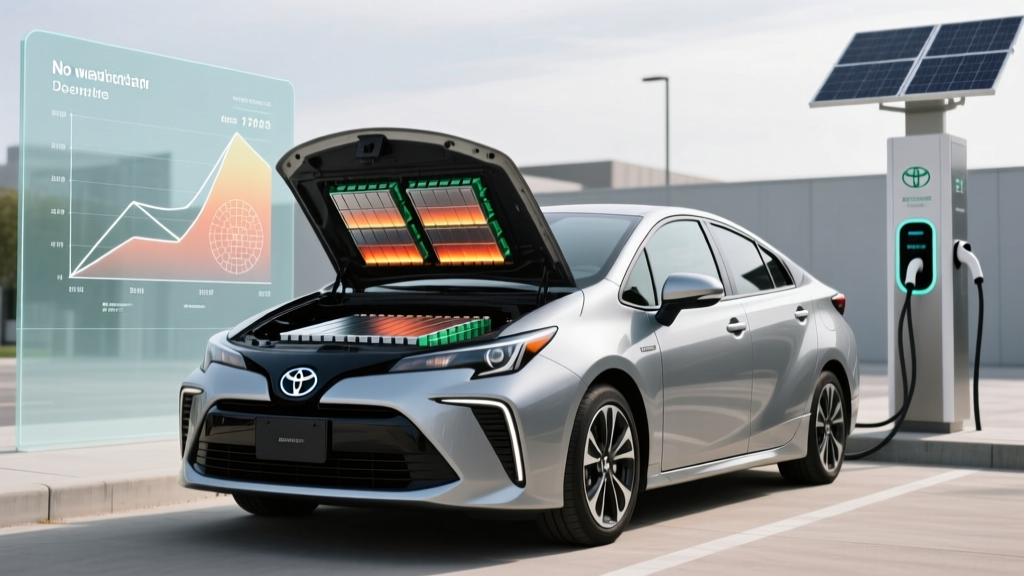
The 2025 Camry Hybrid employs a 1.1 kWh (gross) lithium-ion traction battery in most trims, a significant upgrade from the nickel-metal hydride (NiMH) packs used in earlier generations. This pack works in concert with the 2.5L Dynamic Force engine and electric motor-generators to deliver a combined 225 horsepower (FWD) or 232 hp (AWD). The battery is not designed to propel the car for miles on electric power alone — it assists during acceleration, captures energy during regenerative braking, and enables brief low-speed EV-mode driving of roughly 0.5 to 1 mile under ideal conditions.
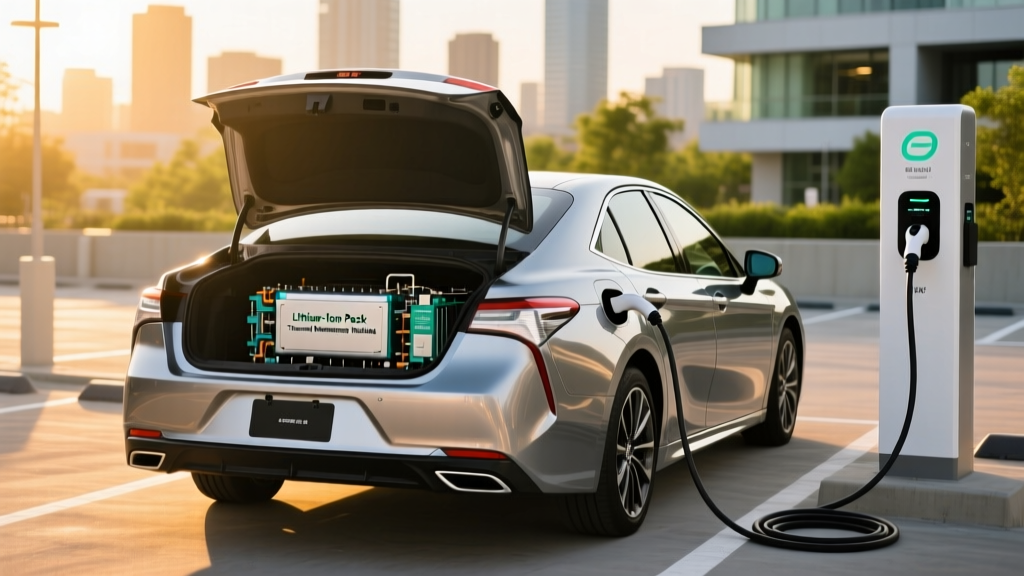
This is a critical distinction: the Camry is a self-charging hybrid electric vehicle (HEV), not a plug-in hybrid (PHEV) or battery-electric vehicle (BEV). You cannot plug it in. The small battery charges exclusively through the engine and regenerative braking. According to fueleconomy.gov, the 2025 Camry Hybrid LE achieves an EPA-estimated 53 MPG city / 50 MPG highway / 51 MPG combined — efficiency figures that rival many PHEVs operating in hybrid mode.
| Specification | Detail |
|---|---|
| Powertrain type | Series-parallel hybrid (HEV) |
| Battery chemistry | Lithium-ion (Li-ion) |
| Battery capacity (gross) | ~1.1 kWh |
| Combined system output | 225 hp (FWD) / 232 hp (AWD) |
| Engine | 2.5L 4-cyl Dynamic Force |
| EPA fuel economy (LE FWD) | 53 city / 50 hwy / 51 combined MPG |
| EV-only range | ~0.5–1 mile (low speed only) |
| Plug-in capable | No |
| Base MSRP (LE) | $29,495 |
Hybrid Battery Chemistry: How the Camry Compares to EV Batteries
Understanding the 2025 Toyota Camry battery requires context on the broader battery landscape. Full EVs like the Tesla Model 3 or Hyundai Ioniq 5 use packs ranging from 54 to 84 kWh — roughly 50 to 75 times the Camry's capacity. Those large packs predominantly use one of two lithium-ion chemistries: NMC (Nickel Manganese Cobalt) or LFP (Lithium Iron Phosphate). The Camry's smaller Li-ion pack prioritizes power density (rapid charge/discharge for acceleration and regen) over energy density (sustained range).
Here's how the dominant EV chemistries compare — knowledge that matters if you're cross-shopping a hybrid against a full EV:
| Characteristic | LFP (Lithium Iron Phosphate) | NMC (Nickel Manganese Cobalt) |
|---|---|---|
| Energy density | Lower (~160 Wh/kg cell-level) | Higher (~250–300 Wh/kg cell-level) |
| Cycle life | Superior (3,000–5,000+ cycles) | Good (1,000–2,000 cycles) |
| Cold-weather performance | Weaker; greater range loss below 32°F | Better low-temp discharge capability |
| Cost per kWh | Lower (no cobalt or nickel) | Higher (commodity-sensitive) |
| Thermal stability | Excellent; lower thermal runaway risk | Good but requires more active management |
| Typical use cases | Tesla Model 3 RWD, Ford Mustang Mach-E Select | Long-range BEVs, performance models |
| Recommended SoC for daily use | 100% (LFP benefits from periodic full charges) | 80–90% (prolongs calendar life) |
The Camry's hybrid battery operates in a narrow state-of-charge (SoC) window — typically between 40% and 80% — managed automatically by Toyota's hybrid control system. You never manually set charge limits as you would in a BEV. This shallow-cycling strategy is one reason Toyota hybrid batteries have demonstrated exceptional longevity in real-world use.
How Long Does the 2025 Camry Hybrid Battery Last?
This is the question that drives most searches about the 2025 Toyota Camry battery, and the answer is encouraging. Toyota's hybrid batteries are engineered to last the life of the vehicle. Real-world data from prior-generation Camry Hybrids, Prius models, and high-mileage taxi fleets consistently shows hybrid battery packs lasting 150,000 to 200,000+ miles before significant degradation or failure — and many exceed that without issue.
Typical Hybrid Battery Degradation Curve (Toyota HEV):
- Years 1–3 (0–45,000 miles): Negligible capacity loss; battery performs at 95–100% of original
- Years 4–7 (45,000–105,000 miles): Gradual loss to approximately 85–92% capacity; MPG impact is typically imperceptible (1–2 MPG at most)
- Years 8–12 (105,000–180,000 miles): Capacity may settle at 75–85%; hybrid system compensates by adjusting engine engagement patterns; fuel economy may drop 2–4 MPG from new
- Beyond 180,000 miles: Individual cell variance increases; some packs continue functioning acceptably, others may trigger a hybrid system warning
Note: These figures are aggregated from owner reports, fleet data, and independent testing of Toyota hybrid systems. Individual results vary based on climate, driving patterns, and maintenance. The Camry's small 1.1 kWh pack experiences far less stress than a 75 kWh BEV pack because it operates in a narrow SoC band and never undergoes deep discharge cycles.
The key insight: hybrid battery degradation in the Camry is gradual and largely transparent to the driver. Unlike a BEV where 15% degradation means 40+ fewer miles of range, a 15% loss in the Camry's 1.1 kWh pack translates to a barely noticeable reduction in electric-assist duration — the engine simply compensates. You won't be stranded with a degraded hybrid battery; you'll just see slightly lower MPG over many years.
Toyota's Hybrid Battery Warranty: What's Covered?
Toyota provides robust warranty coverage for the 2025 Camry Hybrid's traction battery. The terms are straightforward and among the best in the industry:
| Coverage Area | Term |
|---|---|
| Hybrid battery coverage | 10 years / 150,000 miles (whichever comes first) |
| Hybrid system components | 8 years / 100,000 miles |
| Capacity retention threshold | Toyota does not publish a specific % threshold; coverage applies to defects and abnormal degradation as diagnosed by dealer |
| Transferable to second owner | Yes — warranty follows the vehicle, not the original buyer |
| What's covered | Battery module replacement, hybrid control ECU, inverter, associated wiring and sensors |
| What's NOT covered | Damage from accidents, flooding, improper modifications, or aftermarket tampering |
The 10-year/150,000-mile hybrid battery warranty applies in all 50 states. In California and states that follow CARB (California Air Resources Board) emissions standards — which include Colorado, Connecticut, Maine, Maryland, Massachusetts, New Jersey, New York, Oregon, Rhode Island, Vermont, and Washington — hybrid battery coverage may extend further under emissions-related warranty provisions. Always verify with your local dealer or Toyota's official warranty documentation for your state's specific terms.
2025 Camry Hybrid Battery Replacement Cost: What to Expect
While most Camry Hybrid owners will never need to replace the traction battery during their ownership, it's worth understanding the cost landscape — especially if you plan to keep the car beyond 150,000 miles or are buying a high-mileage used example.
| Option | Cost Range | Notes |
|---|---|---|
| New OEM battery (dealer-installed) | $3,000 – $4,500 | Full new pack from Toyota; includes labor; typically 1-day service |
| Refurbished/remanufactured battery | $1,500 – $2,500 | Failed modules replaced with tested cells; available from independent hybrid shops |
| Individual module replacement | $500 – $1,200 | Only the degraded module(s) replaced; requires diagnostic scan to identify weak cells |
| Used/salvage battery | $800 – $1,500 | From a wrecked or parted-out Camry/Prius; condition varies; shorter expected remaining life |
For context, replacing the traction battery in a full BEV is dramatically more expensive — typically $10,000 to $22,000 for packs ranging from 54 to 100 kWh. The Camry's 1.1 kWh pack is a fraction of that cost, and the modular construction of Toyota hybrid batteries means that often only a single module (out of several dozen) needs replacement rather than the entire pack. Independent hybrid-specialty shops have emerged across the US that can diagnose and replace individual modules for under $1,500 — a viable option once the factory warranty expires.
The realistic takeaway: hybrid battery replacement in the Camry is an uncommon, manageable expense — not the catastrophic $20,000 bill that EV skeptics sometimes cite when conflating hybrid and BEV battery costs.
Factors That Affect the Camry Hybrid Battery's Lifespan
While Toyota's hybrid system automatically manages the battery to minimize stress, several real-world factors influence long-term health:
What Helps Your Camry Hybrid Battery Last Longer
- Regular driving: Hybrid batteries benefit from consistent use. Vehicles driven 10,000+ miles per year tend to show less degradation than those that sit for weeks at a time.
- Moderate climates: Extreme heat is harder on lithium-ion cells than extreme cold. Garage parking in hot climates (Arizona, Texas, Florida) reduces thermal stress.
- Maintaining the cooling system: The hybrid battery has its own dedicated cooling fan and air intake (typically located near the rear seat). Keep this intake unobstructed and have the filter cleaned during routine service.
- Following Toyota's maintenance schedule: The hybrid system inverter coolant should be inspected and replaced at Toyota-specified intervals to prevent thermal management degradation.
- Avoiding prolonged storage at extreme SoC: While the hybrid system manages SoC automatically, leaving the vehicle unused for months with a nearly depleted 12V auxiliary battery can stress the hybrid system on restart. Drive the car at least once every two weeks.
What Accelerates Degradation
- Consistent extreme heat exposure: Battery cells degrade faster at sustained temperatures above 104°F (40°C). This is a calendar-aging effect, not just a usage effect.
- Ignoring warning lights: A hybrid system warning light indicates the battery control system has detected an anomaly. Delaying diagnosis can allow a single weak module to stress the rest of the pack.
- Aftermarket modifications: Non-OEM tuning devices or electrical accessories that interfere with the hybrid control system can cause improper charging patterns.
How to Monitor Your Camry Hybrid Battery's Health
Unlike full BEVs that often display a State of Health (SoH) percentage in the infotainment system or app, the 2025 Camry Hybrid does not provide a user-facing battery health metric. Here's how to assess your pack's condition:
Via the Toyota App and Dealer Diagnostics
The Toyota app provides vehicle health reports that include hybrid system status, though not a granular SoH percentage. For a detailed assessment, request a hybrid battery health check at a Toyota dealer. They can run a diagnostic scan that reads individual module voltages, internal resistance, and temperature sensor data — the most accurate picture of pack condition available.
DIY Indicators of Battery Health
- Fuel economy trend: Track your MPG via the trip computer or fuelly.com. A sustained drop of 3+ MPG from your established baseline (not seasonal variation) can indicate battery degradation.
- Engine engagement frequency: If the gasoline engine starts noticeably more often — especially during low-speed driving where it previously stayed off — the battery may not be holding sufficient charge to sustain EV-mode operation.
- Regenerative braking feel: A healthy hybrid battery absorbs regen energy smoothly. If you notice the engine revving to burn off excess energy (a "regen limit" condition), the battery's acceptance rate may be reduced.
- OBD-II scan tools: Third-party apps like Dr. Prius (despite the name, compatible with Toyota hybrids broadly) paired with an OBD-II Bluetooth adapter can read hybrid battery voltage, current, and individual block voltages — providing enthusiast-level insight into pack balance and condition.
Looking Ahead: Solid-State Batteries and Toyota's EV Roadmap
Toyota has been vocal about its development of solid-state battery technology — cells that replace the liquid electrolyte with a solid conductor, promising higher energy density, faster charging, and improved safety. Toyota holds more solid-state battery patents than any other automaker. However, it's essential to separate announcements from production reality:
- Current status (2026): Solid-state batteries remain in pilot production. Toyota has demonstrated prototype cells but has not deployed them in any production vehicle.
- Announced timeline: Toyota has stated it aims to commercialize solid-state batteries in EVs around 2027–2028, initially in limited-production models. Mass-market deployment is projected for 2030 and beyond.
- Relevance to the Camry: Solid-state technology is being developed primarily for BEVs where energy density gains translate directly to range. The Camry Hybrid's 1.1 kWh pack is unlikely to adopt solid-state chemistry — the cost premium is unjustified for a pack this small, and the current Li-ion cells are well-suited to the shallow-cycle demands of hybrid operation.
- Silicon anode development: Companies like Sila Nanotechnologies and Group14 are developing silicon-dominant anodes that increase energy density by 20–40%. These may appear in next-generation BEVs before reaching hybrid applications.
The practical implication for 2025 Camry buyers: current lithium-ion hybrid battery technology is mature, well-proven, and cost-effective. Waiting for solid-state is not a rational reason to delay a Camry Hybrid purchase — the existing system delivers 51 MPG combined with a battery designed to outlast 200,000 miles.
2025 Toyota Camry Battery: Frequently Asked Questions
How long do EV batteries last compared to the Camry's hybrid battery?
Full EV batteries (50–100 kWh) typically last 150,000–200,000 miles before degrading to 70–80% of original capacity, with many exceeding 200,000 miles. The Camry's 1.1 kWh hybrid battery has a similar or longer effective lifespan because it operates in a narrow SoC window and never undergoes deep discharge. Most Toyota hybrid batteries outlast the vehicles they're installed in.
How much does a 2025 Camry hybrid battery cost to replace?
A new OEM replacement battery installed at a Toyota dealer costs approximately $3,000–$4,500. Independent hybrid shops can replace individual degraded modules for $500–$1,500. Refurbished full packs run $1,500–$2,500. For comparison, a full BEV battery replacement costs $10,000–$22,000.
What does the Camry hybrid battery warranty cover?
Toyota covers the hybrid battery for 10 years or 150,000 miles (whichever comes first) in all 50 states. This covers defects, premature degradation, and module failures. The broader hybrid system (inverter, control ECU, wiring) is covered for 8 years / 100,000 miles. The warranty is fully transferable to subsequent owners.
How do I check the battery health on my Camry Hybrid?
The Camry doesn't display a battery health percentage. You can monitor fuel economy trends as a proxy, use an OBD-II adapter with apps like Dr. Prius for module-level voltage data, or request a hybrid battery health scan at a Toyota dealer for the most comprehensive assessment.
LFP vs NMC — which battery chemistry is better?
Neither is universally better — it depends on application. LFP excels in cycle life (3,000–5,000 cycles), cost, and thermal safety, making it ideal for standard-range EVs and daily commuting. NMC offers higher energy density (more range per kg) and better cold-weather performance, suiting long-range and performance EVs. The 2025 Camry Hybrid's battery uses a lithium-ion chemistry optimized for power density (rapid charge/discharge) rather than energy storage — a different design priority entirely.
Can I plug in the 2025 Camry Hybrid to charge?
No. The 2025 Camry is a self-charging hybrid (HEV), not a plug-in hybrid (PHEV). The 1.1 kWh battery charges exclusively through the gasoline engine and regenerative braking. If you want a Toyota sedan you can plug in, the closest option is the Prius Prime PHEV, which offers up to 44 miles of electric-only range on a full charge.
Does the Camry Hybrid qualify for the federal EV tax credit?
No. Under IRS §30D rules, only plug-in electric vehicles (BEVs and PHEVs with at least 7 kWh of battery capacity) qualify for the federal tax credit. The Camry Hybrid's 1.1 kWh pack does not meet the minimum threshold. The IRS Clean Vehicle Tax Credits page details full eligibility requirements including MSRP caps, income limits, and battery sourcing rules for qualifying plug-in models.