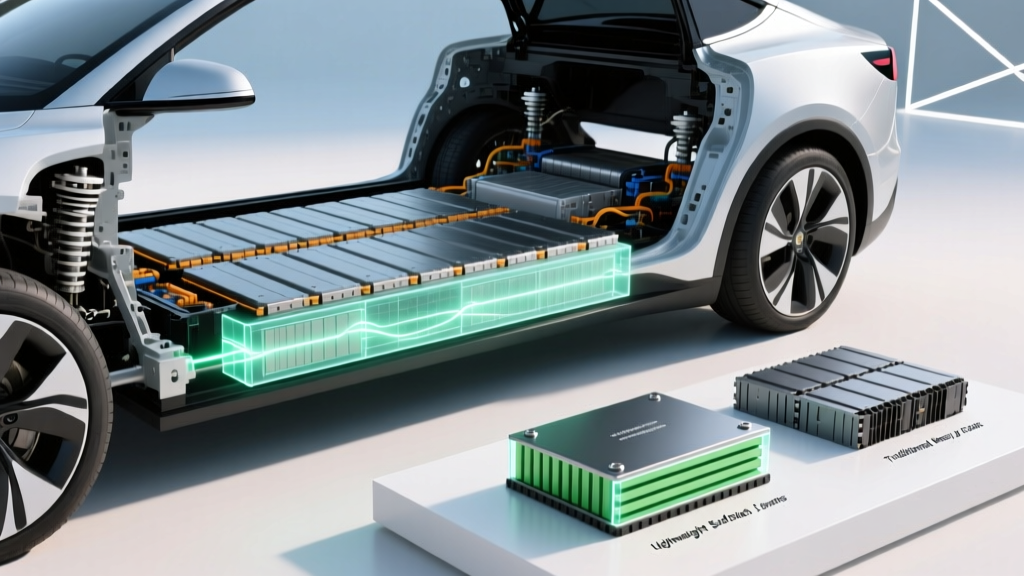
If you own a 2022 Tesla Model 3 — or are eyeing one on the used market — the high-voltage traction battery is the single most expensive and consequential component in the car. Unlike the 12V auxiliary battery (which powers lights and electronics and costs a few hundred dollars to swap), the traction battery stores the energy that actually propels the vehicle, and its health directly determines your usable range and resale value.
The 2022 Model 3 shipped with two distinct battery chemistries depending on trim: lithium iron phosphate (LFP) in the Standard Range/Rear-Wheel Drive, and nickel manganese cobalt (NMC) in the Long Range and Performance variants. That split matters enormously for how you charge, how the battery ages, and what to expect over a decade of ownership. This guide breaks down the exact data — chemistry trade-offs, measured degradation, warranty coverage, replacement economics, and care practices — so you can make informed decisions about a 2022 Tesla Model 3 battery in 2026 and beyond.
LFP vs NMC: Which 2022 Tesla Model 3 Battery Do You Have?
Tesla's 2022 lineup split along clear lines. The Standard Range (later simply called "Rear-Wheel Drive") used a CATL-supplied LFP pack rated at approximately 57.5 kWh usable. The Long Range AWD and Performance models used an NMC pack (Panasonic/LG) at roughly 75 kWh usable. Both chemistries are lithium-ion, but the cathode material drives very different behavior in daily use.
| Attribute | LFP (Standard Range / RWD) | NMC (Long Range / Performance) |
|---|---|---|
| Approx. usable capacity | ~57.5 kWh | ~75 kWh |
| EPA range (2022) | 272 mi | 358 mi (LR) / 315 mi (Perf) |
| Energy density | Lower (~160 Wh/kg cell) | Higher (~260 Wh/kg cell) |
| Cycle life | Higher (3,000+ full cycles typical) | Moderate (~1,000–1,500 full cycles) |
| Cold-weather performance | More range loss in freezing temps | Better cold-weather retention |
| Recommended daily charge | 100% (Tesla recommends weekly 100% top-up) | 80% daily; 100% only for trips |
| Cobalt / ethical sourcing | Cobalt-free | Contains cobalt & nickel |
| Cost (relative) | Lower per kWh | Higher per kWh |
Which is better? Neither is universally superior — the answer depends on your driving pattern. If you commute short distances and can charge to 100% nightly at home without range anxiety, LFP's exceptional cycle life and lower cost make it the longevity winner. If you regularly drive 200+ miles, live in cold climates, or need maximum range per charge, NMC's higher energy density and better cold performance are worth the trade-off in cycle life. For a deep dive on how these chemistries behave across the EV market, see our complete LFP vs NMC guide.
How Long Do EV Batteries Last? Degradation Data for the 2022 Model 3
The headline question for any EV owner: how much range will I lose over time? Battery degradation is measured as a decline in State of Health (SoH) — the percentage of original capacity the pack can still hold. A 2022 Model 3 with 90% SoH holds 90% of its original kWh.
Real-world data collected by fleet analytics firm Geotab across thousands of EVs shows an average lithium-ion pack loses roughly 1.8% capacity in year one, then settles into a slower linear decline of about 0.5–0.8% per year under normal use. Tesla's own 2023 Impact Report stated that Model 3 and Model Y batteries retained 85% of original capacity after 200,000 miles.
Typical Degradation Curve: 2022 Tesla Model 3 (NMC Long Range)
| Time / Mileage | Expected SoH | Approx. Range Remaining (from 358 mi EPA) |
|---|---|---|
| New (2022) | 100% | 358 mi |
| Year 1 / ~15,000 mi | ~97–98% | ~347–351 mi |
| Year 2 / ~30,000 mi | ~96–97% | ~344–347 mi |
| Year 4 / ~60,000 mi | ~93–95% | ~333–340 mi |
| Year 6 / ~90,000 mi | ~91–93% | ~326–333 mi |
| Year 8 / ~120,000 mi | ~88–91% | ~315–326 mi |
| ~200,000 mi | ~83–87% | ~297–311 mi |
Note: LFP packs in the Standard Range model degrade more slowly on a cycle basis, but the lower starting range (272 mi EPA) means absolute mile loss feels similar. Real-world highway range is typically 10–15% below EPA; cold weather can reduce range an additional 15–30%.
The critical takeaway: most 2022 Model 3 batteries will retain well above 80% capacity through 150,000+ miles. Catastrophic failure (sudden, total pack death) is extremely rare — degradation is gradual and predictable.
2022 Tesla Model 3 Battery Warranty: What's Covered
Tesla's battery warranty for the 2022 Model 3 is among the strongest in the industry, and it's essential to understand exactly what it guarantees — and what it doesn't.
| Trim | Warranty Duration | Mileage Limit | Capacity Retention Threshold |
|---|---|---|---|
| Standard Range / RWD (LFP) | 8 years | 100,000 miles | 70% minimum SoH |
| Long Range AWD (NMC) | 8 years | 120,000 miles | 70% minimum SoH |
| Performance (NMC) | 8 years | 120,000 miles | 70% minimum SoH |
What's covered: Battery replacement or repair if SoH drops below 70% within the warranty window, or if a manufacturing defect causes failure. The drive unit (motor/inverter) is also covered under the same terms.
What's not covered: Gradual degradation above 70% SoH (considered normal wear), damage from accidents, flooding, fire, unauthorized modifications, or using the vehicle as a stationary power source outside of Tesla-approved features. Cosmetic issues like range-display calibration drift don't qualify either.
For a 2022 Model 3 in 2026, you're approximately four years into the eight-year warranty. If your Long Range model has fewer than 120,000 miles and the battery tests below 70% SoH, Tesla will replace it at no cost. In practice, very few packs hit that threshold this early — it would require extreme use patterns or a manufacturing defect.
EV Battery Replacement Cost: When and How Much
Out-of-warranty battery replacement is the nightmare scenario EV skeptics cite, but the reality is more nuanced. Most 2022 Model 3 batteries will never need replacement during typical ownership. When they do, it's usually well past 150,000 miles and often past year 10.
| Scenario | Estimated Cost | Notes |
|---|---|---|
| Full pack replacement (NMC, Long Range/Performance) | $12,000 – $16,000 | Includes parts + labor at a Tesla Service Center |
| Full pack replacement (LFP, Standard Range/RWD) | $8,000 – $12,000 | Lower cost due to cheaper chemistry |
| Refurbished / remanufactured pack | $7,000 – $10,000 | Tesla sometimes uses refurbished packs for out-of-warranty service |
| Individual module replacement | $1,500 – $4,000 | If only one module is faulty — not always offered |
| 12V auxiliary battery (lithium) | $200 – $350 | Separate from traction battery; powers electronics |
To put replacement cost in perspective: a conventional car's engine or transmission replacement at high mileage often costs $4,000–$8,000, and you'd expect to drive that car 200,000+ miles before needing it. An EV battery replacement at 200,000 miles is in a similar economic category — significant, but not the financial apocalypse often portrayed. Most owners sell or trade their vehicles long before a replacement is needed.
Factors That Accelerate Battery Degradation
Not all miles are created equal when it comes to battery wear. Research from the U.S. Department of Energy's Idaho National Laboratory and real-world fleet data point to several factors that measurably speed up capacity loss:
- Frequent DC fast charging: Exclusively using Superchargers (150–250 kW) generates sustained high heat. Fleet data shows packs charged primarily via DCFC degrade roughly 1–2% faster over 100,000 miles versus those charged mostly on Level 2. Occasional fast charging is fine — daily dependence is the concern.
- Extreme heat exposure: Parking in 100°F+ ambient temperatures without thermal management active accelerates chemical aging. Tesla's active cooling system mitigates this significantly, but consistent desert-heat exposure still takes a toll over years.
- Chronic 100% SoC (NMC only): For NMC packs, sitting at 100% charge for extended periods stresses the cathode. Tesla's in-car charging limit defaults to 80% for NMC for this reason. LFP packs are the exception — Tesla recommends regular 100% charges to maintain cell balancing accuracy.
- Deep discharges to near 0%: Regularly driving the battery down below 5% SoC stresses the anode. Try to keep the floor around 10–15% for daily use.
- High-mileage, high-C-rate driving: Aggressive acceleration and sustained high-speed driving (80+ mph) generate internal battery heat. Track days and constant hard launches will age a pack faster than highway cruising.
Cold weather temporarily reduces range (15–30% in sub-freezing temps) but does not cause permanent degradation. Tesla's battery preconditioning — which warms the pack before Supercharging or driving — protects against cold-related stress.
How to Check and Monitor Your 2022 Model 3 Battery Health
Tesla doesn't expose a direct SoH percentage in the car's interface the way some other manufacturers do, but there are several reliable methods to assess your pack's condition:
1. Energy App and Range Estimation
Navigate to Settings → Energy on your touchscreen. The car displays a projected range based on recent driving efficiency. Compare this to the original EPA rating (272 mi for RWD, 358 mi for LR) at 100% SoC. A meaningful gap suggests some degradation, but note that range estimates fluctuate with driving style and temperature.
2. Third-Party Diagnostic Tools
Apps like Tessie and Scan My Tesla (via an OBD-II Bluetooth adapter) can read the battery management system's reported SoH, cell voltage deltas, and energy throughput. A cell voltage delta above 30–50 mV at rest may indicate module imbalance.
3. Tesla Service Center Diagnostic
If you suspect warranty-level degradation (approaching 70% SoH), schedule a battery health check at a Tesla Service Center. They'll run a full diagnostic and provide an official SoH reading — this is the number that matters for warranty claims.
4. Manual Capacity Test
Charge to 100% (LFP) or your normal limit (NMC), note the displayed range, drive until near empty, then recharge and note the kWh added via the Tesla app or charger display. Comparing kWh added to the original usable capacity gives a rough SoH estimate.
Maximizing Your 2022 Model 3 Battery Lifespan
Based on the data, here's a practical care framework:
Daily Charging Habits
- LFP owners: Charge to 100% at least once per week. Tesla explicitly recommends this for cell-balancing accuracy.
- NMC owners: Set daily charge limit to 80%. Reserve 100% for road trips, and try to depart soon after reaching full charge rather than sitting at 100% overnight.
- Both chemistries: Avoid leaving the car below 10% SoC for extended periods.
Charging Method
- Prioritize home Level 2 (7–11.5 kW) for daily charging. It's gentler on the pack and cheaper per kWh.
- Use DC fast charging (Superchargers) for road trips and occasional needs — not as your primary method if avoidable.
- Enable battery preconditioning (automatic when navigating to a Supercharger) to optimize charge speed and reduce stress.
Temperature Management
- In extreme heat: park in shade or a garage when possible. Tesla's thermal management runs while plugged in — keeping the car plugged in on hot days helps.
- In extreme cold: plug in overnight and use scheduled departure to precondition the battery before driving.
Looking Ahead: Solid-State and Silicon Anode Batteries
The battery landscape is evolving, and it's worth understanding what's coming — and what isn't here yet.
Solid-state batteries replace the liquid electrolyte with a solid material, promising higher energy density, faster charging, and improved safety. Companies like Toyota, QuantumScape, and Samsung SDI have demonstrated prototypes, but commercial availability in consumer vehicles remains estimated for 2028–2030 at the earliest, likely debuting in premium models first. A solid-state pack will not be retrofittable into a 2022 Model 3.
Silicon anode technology (replacing graphite with silicon in the anode) is closer to market and offers incremental energy-density gains of 10–20%. Some EVs are already using silicon-blend anodes. This tech will appear in next-generation vehicles rather than as upgrades to existing packs.
For current 2022 Model 3 owners: your existing LFP or NMC pack is mature, well-understood technology with a proven track record. There is no practical upgrade path to future chemistries — but given the degradation data above, there's also no urgent reason to seek one.
Frequently Asked Questions
How long do EV batteries last in years and miles?
Based on fleet data from Geotab and Tesla's own impact reports, a 2022 Tesla Model 3 battery should retain 83–90% of its original capacity at 200,000 miles. In calendar years, expect well over a decade of usable life before capacity drops to a point where range feels limiting. Most EV batteries outlast the vehicle's body and interior.
How much does a 2022 Tesla Model 3 battery cost to replace?
A full out-of-warranty traction battery replacement runs approximately $8,000–$16,000 depending on chemistry (LFP vs NMC) and whether the pack is new or refurbished. Individual module repairs can cost $1,500–$4,000. However, most packs never require replacement during typical ownership.
What does the Tesla battery warranty actually cover?
Tesla guarantees the 2022 Model 3 battery will retain at least 70% of original capacity for 8 years or 100,000 miles (Standard Range/RWD) or 8 years / 120,000 miles (Long Range/Performance), whichever comes first. If SoH drops below 70% within that window, Tesla replaces or repairs the pack at no cost. Damage from accidents, misuse, or unauthorized modifications is excluded.
How do I check my Tesla Model 3 battery health?
Use the in-car Energy app for a rough range comparison, third-party tools like Tessie or Scan My Tesla for SoH and cell-voltage data, or visit a Tesla Service Center for an official diagnostic. The service-center reading is the authoritative number for warranty purposes.
LFP vs NMC — which 2022 Model 3 battery is better for longevity?
LFP batteries have a longer cycle life (3,000+ cycles vs ~1,000–1,500 for NMC) and tolerate daily 100% charging, making them the better choice for pure longevity if you don't need maximum range. NMC offers higher energy density and better cold-weather performance, trading some cycle life for more miles per charge. For most daily commuters, LFP's durability advantage is significant.
Does frequent Supercharging damage my 2022 Model 3 battery?
Occasional Supercharging is perfectly fine and causes negligible additional wear. However, fleet data shows that packs charged primarily via DC fast charging (150–250 kW) degrade roughly 1–2% more over 100,000 miles compared to those charged mostly on Level 2 home chargers. If you can charge at home on Level 2 for daily needs, reserve Supercharging for road trips.
Should I worry about my 2022 Model 3 battery in 2026?
Four years in, your battery is likely at 93–97% SoH depending on usage patterns — well above the 70% warranty threshold. With another four years of warranty coverage remaining and degradation slowing over time, there is no data-driven reason for concern unless you're seeing anomalous range drops or error messages. Keep charging smartly and monitor SoH annually.