2022 Tesla Model 3 Battery Capacity: What You Actually Get
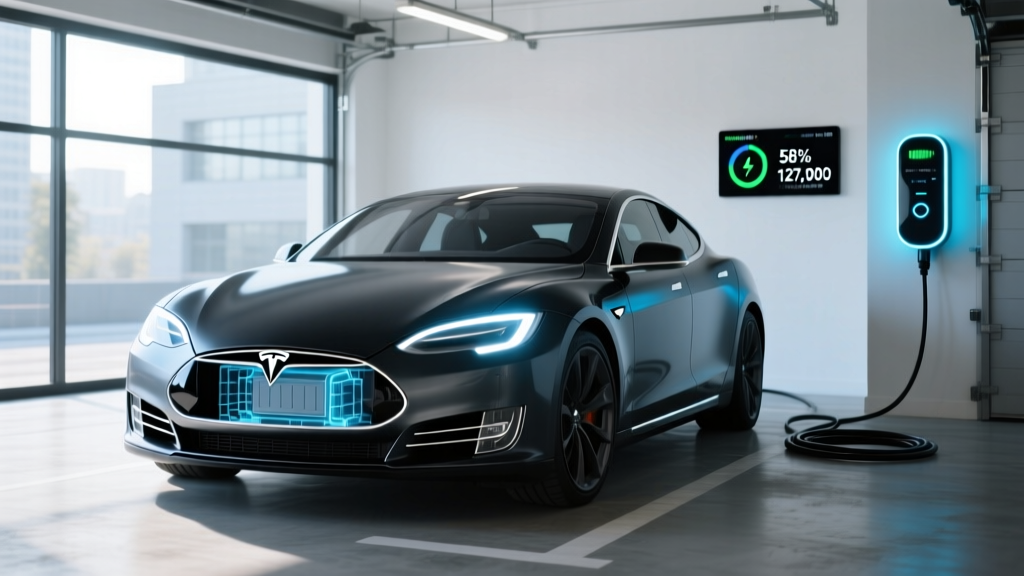
The 2022 Tesla Model 3 was offered in three trims, each with a different high-voltage traction battery size and chemistry. Understanding the exact kilowatt-hour (kWh) capacity — which measures total energy stored, not power output — is essential for evaluating range, charging behavior, and long-term ownership costs.
| Trim | Battery Chemistry | Usable Capacity (kWh) | EPA Range (mi) | Real-World Highway/Cold | Peak DC Charge Rate |
|---|---|---|---|---|---|
| Standard Range (RWD) | LFP (CATL) | ~57.5 | 272 | ~220–245 mi | 170 kW |
| Long Range AWD | NMC (Panasonic/LG) | ~77.5 | 358 | ~290–320 mi | 250 kW |
| Performance | NMC (Panasonic) | ~77.5 | 315 | ~260–285 mi | 250 kW |
Real-World Range Reality: EPA estimates assume mixed driving at moderate temperatures. In sustained 75 mph highway driving at 30°F, expect 15–25% range reduction across all trims. The LFP Standard Range also charges to 100% regularly (recommended by Tesla), which offsets its smaller capacity in daily use.
The split between LFP and NMC chemistry in the 2022 lineup wasn't just a capacity difference — it represented two fundamentally different battery philosophies, each with distinct ownership implications.
LFP vs NMC: The Chemistry Trade-Off That Matters
The 2022 Model 3 RWD uses a lithium iron phosphate (LFP) battery supplied primarily by CATL, while Long Range and Performance trims use nickel manganese cobalt (NMC) cells from Panasonic and LG Energy Solution. Neither is universally "better" — the right choice depends on how you drive, charge, and where you live.
| Attribute | LFP (Standard Range) | NMC (Long Range / Performance) |
|---|---|---|
| Energy Density | Lower (~160 Wh/kg cell-level) | Higher (~250–270 Wh/kg cell-level) |
| Usable Capacity (2022 Model 3) | ~57.5 kWh | ~77.5 kWh |
| Cycle Life | 3,000–5,000+ cycles to 80% SoH | 1,500–2,500 cycles to 80% SoH |
| Daily Charge Recommendation | 100% SoC (Tesla recommends) | 80% SoC for daily; 100% for trips |
| Cold-Weather Performance | More range loss in cold (20–30%) | Better cold retention (~15–25% loss) |
| Thermal Stability | Excellent — less prone to thermal runaway | Good — requires active thermal management |
| Cost | Lower — no cobalt or nickel | Higher — commodity-sensitive pricing |
| Weight (approx. pack) | ~820 lbs | ~1,050 lbs |
Bottom line: If you charge at home nightly, commute under 60 miles, and live in a mild climate, the LFP Standard Range offers superior longevity and lower cost. If you road-trip frequently, need maximum single-charge range, or live where winters are harsh, the NMC Long Range delivers more practical miles per charge despite its lower cycle-life ceiling.
Degradation Data: What 2022 Model 3 Owners Actually See
Tesla does not publish a public-facing degradation curve, but aggregated fleet data from sources like fueleconomy.gov and independent owner tracking (TeslaFi, Recurrent Auto) paint a consistent picture for the 2022 Model 3.
Typical Degradation Trajectory (2022 Model 3, averaged across trims):
- Year 1 / 15,000 mi: 3–5% capacity loss (initial formation loss)
- Year 2 / 30,000 mi: 5–7% total loss
- Year 4 / 60,000 mi: 8–10% total loss
- Year 6 / 90,000 mi: 10–13% total loss
- Year 8 / 120,000 mi: 12–16% total loss (still above warranty threshold)
LFP packs tend to show slightly slower degradation in the mid-life years (years 2–6), while NMC packs may exhibit marginally faster early loss but plateau similarly. Both chemistries are expected to retain well above 70% capacity through the 8-year/120,000-mile warranty window under normal use.
Tesla's own 2022 Impact Report stated that Model 3 batteries lose approximately 12% of capacity at 150,000 miles — a figure consistent with third-party fleet data. The critical insight: degradation is non-linear. The steepest drop occurs in the first 10,000–20,000 miles, then flattens significantly.
What the Battery Warranty Covers — and What It Doesn't
| Trim | Battery Warranty | Drive Unit Warranty | Capacity Retention Threshold |
|---|---|---|---|
| Standard Range (RWD) | 8 years / 100,000 mi | 8 years / 100,000 mi | 70% minimum |
| Long Range AWD | 8 years / 120,000 mi | 8 years / 120,000 mi | 70% minimum |
| Performance | 8 years / 120,000 mi | 8 years / 120,000 mi | 70% minimum |
The warranty covers replacement or refurbishment if the battery drops below 70% of its original usable capacity within the stated term. It also covers manufacturing defects, faulty cells, and BMS (battery management system) failures. What it does not cover: damage from accidents, flooding, fire, unauthorized modifications, or deliberate abuse (e.g., repeated 0% storage in extreme heat).
A common misconception is that the warranty guarantees 70% capacity at 8 years. It doesn't guarantee a specific degradation rate — it guarantees a floor. Most 2022 Model 3 packs will never approach that floor under normal ownership.
Battery Replacement Cost: When and How Much
Out-of-warranty battery replacement is the single biggest financial fear among prospective EV buyers. Here's the reality for the 2022 Model 3:
| Battery Pack | Part Cost (Refurb) | Part Cost (New) | Labor | Total Estimated Range |
|---|---|---|---|---|
| 57.5 kWh LFP (RWD) | $7,000–$9,000 | $11,000–$13,000 | $1,500–$2,500 | $8,500–$15,500 |
| 77.5 kWh NMC (LR/Perf) | $10,000–$13,000 | $15,000–$18,000 | $1,500–$2,500 | $11,500–$20,500 |
When is replacement actually needed? Almost never during typical first-owner tenure. Data from Recurrent Auto and Tesla fleet statistics show that fewer than 1.5% of Model 3 batteries have required replacement for capacity loss alone. The vast majority of out-of-warranty replacements result from physical damage (collision, ground strike) rather than degradation. Most 2022 Model 3 packs will outlast the vehicle's economic life.
Tesla increasingly uses refurbished packs for out-of-warranty replacements — packs pulled from lower-mileage vehicles or with isolated module swaps — which reduces cost and environmental impact. A refurbished pack still carries its own limited warranty (typically 4 years/50,000 miles from installation).
Maximizing Battery Life: Habits That Actually Matter
Battery longevity isn't random — it's driven by a handful of controllable variables. Here's the hierarchy of impact, based on cell-level aging research and fleet data:
Battery Care Checklist for 2022 Model 3 Owners:
- State of Charge (SoC) habits: For NMC (Long Range/Performance), set daily charge limit to 80%. Charge to 100% only for road trips, and don't let the car sit at 100% for extended periods. For LFP (Standard Range), Tesla recommends charging to 100% at least weekly to allow BMS recalibration.
- Avoid deep discharge: Try not to let the battery drop below 10% SoC. Storing the car near 0% for days — especially in heat — accelerates calendar aging.
- DC fast charging frequency: Occasional Supercharging is fine. Daily DC fast charging (3+ times per week exclusively) correlates with slightly higher degradation (~2–3% more over 5 years) due to sustained high C-rates and thermal stress. Level 2 home charging at 7–11 kW is gentler.
- Extreme temperature management: Use the Tesla app to precondition the battery before fast charging in cold weather. In summer, avoid leaving the car at low SoC in direct heat above 100°F for multi-day periods. The car's active thermal management system handles most scenarios, but it can't work if the car is parked uncharged in extreme heat.
- Regenerative braking settings: Standard regen is fine — it doesn't meaningfully affect battery health. The charge rate from regen is well within safe C-rate limits.
The single most impactful habit: avoiding prolonged high or low SoC. A battery held at 50% SoC ages roughly half as fast as one held at 100% SoC at the same temperature, according to calendar-aging studies published in the Journal of The Electrochemical Society.
Monitoring Battery Health: How to Check SoH
Tesla does not expose a direct State of Health (SoH) percentage in the Model 3's touchscreen. However, owners have several reliable methods to track battery condition:
- TeslaFi or Tessie (third-party apps): These log every charge session and calculate estimated capacity by comparing kWh added to SoC change. Over time, they build a degradation curve. TeslaFi is widely used and costs ~$5/month.
- Manual calculation: Charge from a known low SoC (e.g., 10%) to a known high SoC (e.g., 90%) on a Level 2 charger. Note the kWh added from the charger's display or Tesla app. Divide by the SoC range (0.80) and compare to the original usable capacity. Example: if you add 46 kWh over an 80% window on a 57.5 kWh pack, your current usable capacity is ~57.5 × (46 / 46) = approximately 57.5 × (46/57.5 × 100) ≈ 80% of the original. This method has ±2% error due to charging losses.
- Range at 100% display: On the LFP Model 3, charge to 100% and note the displayed rated range. Compare to the original 272 EPA miles. A 2022 RWD showing 248 miles at 100% indicates roughly 8–9% degradation. Note: displayed range is an estimate, not a precise measurement — it's influenced by recent driving efficiency.
- Service mode (limited): Tesla service centers can pull a full battery health report including individual module voltage variance, internal resistance, and precise capacity. Request this during any service visit.
Looking Ahead: Solid-State and Silicon Anode Timelines
The next major leaps in battery technology — solid-state electrolytes and silicon-dominant anodes — promise higher energy density, faster charging, and improved safety. But timelines matter, and the gap between lab announcements and production vehicles remains substantial.
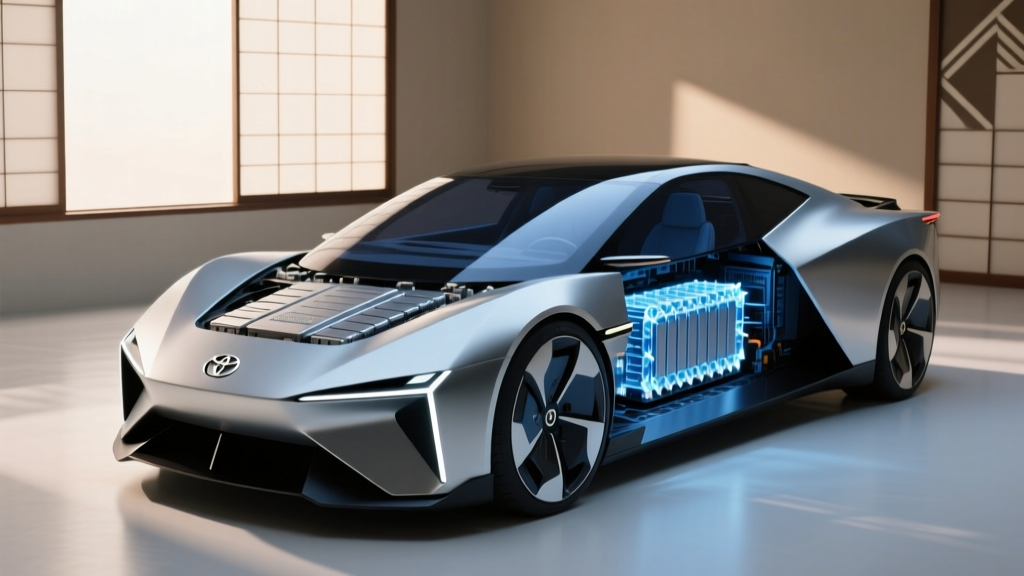
Solid-state batteries replace the liquid electrolyte with a solid material, potentially enabling 30–50% more energy density and reduced fire risk. Toyota has announced a 2027–2028 production target for solid-state EVs, initially in limited volumes and likely in Japan-first models. Samsung SDI targets 2027 for sample production. QuantumScape's solid-state cells are in validation with Volkswagen but remain pre-commercial. Realistic mass-market availability in US-spec vehicles: 2029–2031 at the earliest, with premium segments first.
Silicon anode technology (used in limited form by Tesla's 4680 cells and Sila Nanotechnologies' partnership with Mercedes) increases the anode's lithium storage capacity. Incremental silicon blending (5–10%) is already in production; dominant silicon anodes are expected in the 2027–2029 timeframe. This will improve energy density by 10–20% without the manufacturing overhaul that solid-state requires.
For a 2022 Model 3 owner or buyer, these technologies are relevant only for context: your current NMC or LFP pack is mature, proven, and will remain supported for years. The next generation won't make existing packs obsolete — it will simply offer better options in future vehicles.
Frequently Asked Questions
How long do EV batteries last in a 2022 Tesla Model 3?
Based on fleet data, a 2022 Model 3 battery should retain 84–88% of its original capacity at 8 years / 120,000 miles. In practical terms, most packs will provide reliable service for 200,000+ miles before dropping to 70% capacity — the point at which range reduction becomes noticeable in daily driving. Many will outlast the vehicle itself.
How much does it cost to replace a 2022 Model 3 battery out of warranty?
A refurbished replacement pack runs $8,500–$15,500 installed for the Standard Range LFP, and $11,500–$20,500 for the Long Range/Performance NMC pack. New packs are at the high end of those ranges. However, fewer than 1.5% of Model 3 batteries have required replacement for degradation — physical damage is the more common reason.
What does the Tesla battery warranty actually cover?
The warranty guarantees the battery will retain at least 70% of its original capacity for 8 years / 100,000 miles (Standard Range) or 8 years / 120,000 miles (Long Range/Performance). It also covers manufacturing defects and BMS failures. It does not cover accident damage, flooding, or unauthorized modifications. Tesla will replace or refurbish the pack to meet the 70% threshold.
Is LFP or NMC better for a Model 3?
It depends on your use case. LFP (Standard Range) offers longer cycle life (3,000–5,000 cycles), lower cost, and the ability to charge to 100% daily — ideal for commuters with home charging. NMC (Long Range/Performance) delivers more range per charge, better cold-weather performance, and faster DC charging — better for road-trippers and cold-climate owners. Neither is universally superior.
Does frequent Supercharging damage the Model 3 battery?
Occasional Supercharging has minimal impact. Fleet data suggests that exclusive, daily DC fast charging (3+ sessions per week with no Level 2 use) correlates with roughly 2–3% additional degradation over 5 years compared to primarily Level 2 charging. Tesla's thermal management system actively limits charge rate when battery temperature is extreme, providing built-in protection. For most owners who mix home Level 2 with occasional Supercharging, the effect is negligible.
How do I check my Model 3 battery health?
The most accessible method is using a third-party app like TeslaFi, which logs charge sessions and estimates capacity over time. You can also manually calculate capacity by measuring kWh added during a known SoC range on a Level 2 charger, or by checking rated range at 100% SoC (LFP) and comparing to the original EPA figure. For a precise assessment, request a battery health report during a Tesla service visit.