If you've landed here searching for information on the 2022 Chevy Malibu battery, there's an important clarification to make right away: the 2022 Chevrolet Malibu is a conventional gasoline sedan — it was never offered as an electric vehicle or even a hybrid. It uses a standard 12-volt auxiliary battery (typically an ACDelco AGM or flooded lead-acid unit) to start the engine and run electronics, not a high-voltage traction battery like an EV.
However, many shoppers researching the Malibu are actually cross-shopping it against electrified alternatives — the Chevy Bolt EV (discontinued after 2023), the Chevy Equinox EV, or the Chevy Blazer EV — and want to understand what owning an EV battery actually entails. This guide covers everything you need to know about EV traction battery technology, longevity, degradation, replacement costs, and how it compares to the simple 12V battery in a gas car like the Malibu.
The 2022 Chevy Malibu's 12V Battery vs. an EV Traction Battery
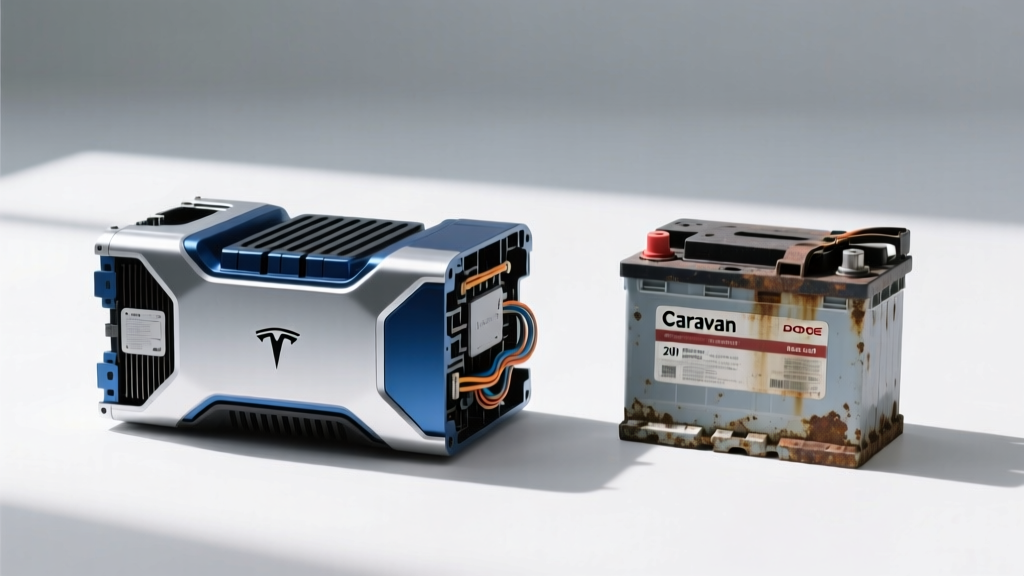
The 2022 Malibu's 12V battery is a familiar, inexpensive component. It stores roughly 0.5–0.7 kWh of energy, weighs about 30–45 lbs, and costs $150–$250 to replace at any auto parts store. It powers the starter motor, lights, infotainment, and ECU. Typical lifespan: 3–5 years.
An EV traction battery is an entirely different class of component. It stores 60–100+ kWh of energy, weighs 800–1,200 lbs, uses advanced lithium-ion chemistry, and costs $10,000–$20,000+ to replace. It powers the electric motor(s) and is the single most expensive part of the vehicle. Understanding this distinction is critical before diving into EV battery technology.
LFP vs. NMC: Which EV Battery Chemistry Is Better?
Modern EV batteries use one of two dominant lithium-ion chemistries: LFP (Lithium Iron Phosphate) or NMC (Nickel Manganese Cobalt). Some manufacturers also use NCA (Nickel Cobalt Aluminum), primarily Tesla in certain models. The chemistry choice affects range, longevity, cold-weather performance, and cost.
| Attribute | LFP (Lithium Iron Phosphate) | NMC / NCA |
|---|---|---|
| Energy Density | Lower (~160 Wh/kg cell-level) | Higher (~220–260 Wh/kg cell-level) |
| Cycle Life | 3,000–5,000+ cycles to 80% capacity | 1,000–2,000 cycles to 80% capacity |
| Cost | Lower — no cobalt or nickel | Higher — cobalt/nickel price exposure |
| Cold Performance | Weaker — more range loss below freezing | Better cold-weather discharge capability |
| Charge to 100% OK? | Yes — LFP tolerates full charges well | Prefer 80% daily; 100% for trips only |
| Thermal Stability | Excellent — very low thermal runaway risk | Good but requires robust BMS/cooling |
| Common In | Tesla Model 3/Y RWD, Ford Mustang Mach-E Select (2025+), BYD models | Chevy Bolt EV, Hyundai Ioniq 5, most long-range/AWD trims |
The bottom line: LFP wins on longevity, cost, and safety; NMC wins on energy density and cold-weather range. If you drive in a mild climate, charge mostly at home, and want a battery that could outlast the car itself, LFP is compelling. If you need maximum range per charge and regularly face sub-freezing winters, NMC remains the stronger pick.
How Long Do EV Batteries Actually Last?
The short answer: most EV batteries outlast the useful life of the vehicle. The fear of a $20,000 battery replacement at 80,000 miles is not supported by fleet data.
Real-World Degradation Data
Based on aggregated fleet data from sources including Recurrent Auto and manufacturer warranty claims:
- Year 1 / 15,000 miles: ~2–3% capacity loss (initial "break-in" drop)
- Year 3 / 45,000 miles: ~5–7% total loss
- Year 5 / 75,000 miles: ~8–10% total loss
- Year 8 / 120,000 miles: ~10–14% total loss
- Year 10 / 150,000 miles: ~12–18% total loss (varies significantly by climate and charging habits)
LFP batteries typically show slower degradation, often retaining 90%+ capacity at 100,000 miles under normal use.
For context, a 2022 Chevy Bolt EV with its 65 kWh NMC battery and EPA-rated 259-mile range would realistically offer roughly 230–240 miles of range at 5 years / 75,000 miles — still very usable for daily driving. According to fueleconomy.gov, the 2022 Bolt EV achieves 120 MPGe combined.
What Does the EV Battery Warranty Cover?
Federal law mandates that EV batteries carry a minimum warranty of 8 years or 100,000 miles (whichever comes first). In California Air Resources Board (CARB) states, the requirement extends to 10 years or 150,000 miles. Most manufacturers exceed these minimums.
| Manufacturer | Duration | Capacity Threshold | Notes |
|---|---|---|---|
| Chevrolet (Bolt, Equinox EV, Blazer EV) | 8 yr / 100,000 mi | 60% retention | Covers defects + excessive degradation below threshold |
| Tesla | 8 yr / 100,000–120,000 mi (varies by model) | 70% retention | Model 3/Y: 100k mi; Model S/X: 150k mi |
| Hyundai / Kia | 10 yr / 100,000 mi | 70% retention | Among the longest coverage in the industry |
| Ford | 8 yr / 100,000 mi | 70% retention | Applies to Mustang Mach-E, F-150 Lightning |
| BMW | 8 yr / 100,000 mi | 70% retention | i4, iX, i7 covered |
What "capacity threshold" means: If your battery's State of Health (SoH) drops below the stated percentage within the warranty period, the manufacturer will repair or replace it at no cost. In practice, very few batteries fall below 70% within 8 years under normal use — which is precisely why manufacturers offer this guarantee.
EV Battery Replacement Cost: What to Expect
Out-of-warranty battery replacement is the biggest fear for EV buyers. Here's the reality with current pricing data:
| Vehicle / Battery Size | Battery Pack Cost | Labor (est.) | Total Range |
|---|---|---|---|
| Chevy Bolt EV (65 kWh, NMC) | $10,000–$13,000 | $1,500–$2,500 | $11,500–$15,500 |
| Tesla Model 3/Y (60–82 kWh) | $12,000–$16,000 | $1,500–$3,000 | $13,500–$19,000 |
| Hyundai Ioniq 5 (77.4 kWh, NMC) | $13,000–$17,000 | $2,000–$3,000 | $15,000–$20,000 |
| Ford F-150 Lightning (131 kWh extended) | $20,000–$28,000 | $2,500–$4,000 | $22,500–$32,000 |
| Chevy Equinox EV (85 kWh, NMC) | $14,000–$18,000 | $2,000–$3,000 | $16,000–$21,000 |
Important context: Battery pack prices have fallen roughly 80% since 2013 and continue to decline. By the time most 2025–2026 EVs need an out-of-warranty replacement (if ever — likely 15–20 years from now), replacement costs will be substantially lower. Additionally, many shops now offer module-level repair — replacing individual degraded modules within the pack for $2,000–$5,000 rather than swapping the entire unit.
Most EV batteries will never need replacement during typical ownership. Data from Recurrent Auto shows that fewer than 2% of EV batteries have been replaced outside of warranty claims for manufacturing defects.
Factors That Accelerate (or Slow) Battery Degradation
Not all miles are equal when it comes to battery wear. These are the factors that matter most, ranked by impact:
- Avoid frequent DC fast charging: Occasional road-trip fast charging is fine, but daily use of 150+ kW DC chargers accelerates degradation. Studies show batteries fast-charged more than 3x/week degrade 1–3% faster over 5 years vs. Level 2-only charging.
- Keep State of Charge between 20–80% for daily use (NMC): Storing an NMC battery at 100% for extended periods stresses the cells. LFP batteries are an exception — manufacturers recommend periodic 100% charges for accurate BMS calibration.
- Minimize extreme heat exposure: Battery degradation accelerates significantly above 95°F ambient, especially if the car sits at high SoC. Garage parking in hot climates makes a measurable difference.
- Use preconditioning: Most EVs let you precondition the battery before fast charging or departure. This warms or cools the pack to optimal temperature, reducing stress and improving charge speed.
- Don't baby it too much: Modern battery management systems (BMS) and liquid cooling are remarkably effective. Driving normally and charging when convenient will still yield 90%+ capacity at 100,000 miles for most packs.
Cold Weather Impact
Cold temperatures don't permanently damage batteries, but they do temporarily reduce range. At 20°F, expect 20–30% range reduction compared to EPA estimates — this is reversible as temperatures warm. LFP batteries tend to lose slightly more range in cold weather than NMC, but the difference is modest (roughly 3–5 percentage points). Vehicles with heat pumps (standard on most 2025+ EVs) recover some of this loss by heating the cabin more efficiently.
How to Check Your EV Battery's State of Health (SoH)
State of Health (SoH) is expressed as a percentage — a new battery is 100% SoH, and a battery that has lost 10% of its original capacity sits at 90% SoH. Here's how to monitor it:
Methods for Checking SoH
- In-vehicle display: Some EVs (notably Tesla, Hyundai/Kia) show a battery health estimate in the settings menu. Tesla's service mode provides detailed cell-level data.
- OBD-II diagnostic tools: Devices like the OBDLink SX paired with apps such as EV Health or LeafSpy (Nissan) can read battery SoH directly from the BMS. Cost: $30–$80 for the adapter.
- Manufacturer diagnostic check: Any dealership can run a battery health report. Some brands (Hyundai, BMW) offer this free during routine service visits.
- Third-party services: Companies like Recurrent Auto offer battery health reports based on telematics data — often free for members. Useful when buying a used EV.
- Manual calculation: Track your actual range over a full charge cycle (100% to near-empty) and compare it to the original EPA rating. If your 259-mile Bolt EV now delivers 235 miles on a full charge, SoH is roughly 91%.
When buying a used EV: Always request a battery health report before purchase. A SoH below 85% on a vehicle with under 60,000 miles is a yellow flag — it may indicate heavy fast-charging use or exposure to extreme heat.
Emerging Battery Technology: What's Next
Several next-generation battery technologies are in development. Here's a realistic assessment — none of these are available in production vehicles as of 2026:
Solid-State Batteries
Solid-state batteries replace the liquid electrolyte with a solid material, promising higher energy density (potentially 400+ Wh/kg), faster charging, and improved safety. Toyota has announced plans for limited solid-state production around 2027–2028, initially in hybrid applications. Full EV deployment at scale is realistically a 2029–2032 timeline. Companies like QuantumScape and Samsung SDI are progressing but face manufacturing-scale challenges.
Silicon Anode Batteries
Replacing graphite anodes with silicon can boost energy density by 20–40%. Sila Nanotechnologies has begun supplying silicon-dominant anode material for the Mercedes G-Class EV (announced for 2025–2026 production). This is the nearest-term improvement likely to reach consumers, offering modest range gains without a full chemistry overhaul.
Sodium-Ion Batteries
CATL and BYD are producing sodium-ion batteries for lower-cost, shorter-range EVs in China. Energy density is roughly 30% lower than LFP, but cost is significantly lower. US-market availability remains uncertain and is likely 3–5 years away for mainstream models.
EV Batteries vs. the 2022 Malibu: An Ownership Cost Perspective
Since many readers researching the 2022 Chevy Malibu battery are weighing gas vs. electric ownership, here's a useful comparison. The 2022 Malibu (1.5L turbo, 160 HP) achieves an EPA-rated 29 MPG city / 36 MPG highway. At $3.30/gallon and 15,000 miles/year, annual fuel cost is roughly $1,840.
A comparable EV like the 2025 Chevy Equinox EV (EPA-estimated 315 miles range, 3.0 miles/kWh efficiency) charged at the US average electricity rate of $0.16/kWh costs roughly $800/year to fuel — a savings of about $1,040 annually. Over 8 years, that's $8,320 in fuel savings, which more than offsets the EV's typically higher purchase price and eliminates any battery replacement concern within the warranty period.
For current federal incentive rules, the IRS §30D Clean Vehicle Credit offers up to $7,500 for qualifying new EVs, subject to MSRP caps ($55,000 for cars, $80,000 for SUVs/trucks), buyer income limits ($150,000 single / $300,000 joint), and battery component/critical mineral sourcing requirements. Eligibility changes frequently — always verify on the IRS website before purchasing.
Frequently Asked Questions
Does the 2022 Chevy Malibu have an electric battery?
The 2022 Chevy Malibu has a standard 12-volt auxiliary battery (not a high-voltage EV traction battery). It is a gasoline-only vehicle. If you're looking for a Chevy with an EV traction battery, consider the Equinox EV, Blazer EV, or the now-discontinued Bolt EV (last model year 2023).
How long do EV batteries last in years and miles?
Most modern liquid-cooled EV batteries retain 85–90% of their original capacity at 100,000 miles (roughly 7–8 years of average driving). Many are expected to last 200,000+ miles before dropping below 70% capacity. LFP chemistry batteries may last even longer — 300,000+ miles in some projections.
How much does it cost to replace an EV battery?
Full pack replacement costs range from roughly $11,500 for a Chevy Bolt EV to $22,500–$32,000 for a Ford F-150 Lightning extended-range. However, fewer than 2% of EV batteries have required out-of-warranty replacement, and module-level repairs ($2,000–$5,000) are increasingly available as an alternative to full pack swaps.
What does the EV battery warranty actually cover?
Federal law requires a minimum 8-year/100,000-mile warranty on EV batteries (10 years/150,000 miles in CARB states). This covers manufacturing defects and excessive capacity loss — typically defined as dropping below 60–70% of original capacity, depending on the manufacturer. Normal gradual degradation above the threshold is not covered.
LFP vs. NMC — which battery is better for me?
Choose LFP if you want maximum cycle life, lower cost, can charge at home, and live in a mild climate. Choose NMC if you need maximum range per charge, regularly drive in freezing temperatures, or want the lightest possible pack for a given capacity. Both chemistries are proven and reliable.
How do I check my EV battery health?
Use your vehicle's built-in battery health display (if available), an OBD-II scanner with an EV-compatible app, a dealership diagnostic check, or a third-party service like Recurrent Auto. When buying used, always verify SoH before purchase — look for 90%+ on vehicles under 50,000 miles.
Will solid-state batteries make current EVs obsolete?
Not anytime soon. Solid-state batteries are not expected in mass-market US vehicles before 2029–2032 at the earliest. Current LFP and NMC lithium-ion batteries are mature, affordable, and offer excellent longevity. There is no reason to delay an EV purchase waiting for solid-state technology.
Sources: fueleconomy.gov (EPA range and efficiency data), Recurrent Auto (fleet degradation data), IRS.gov (§30D Clean Vehicle Credit rules).