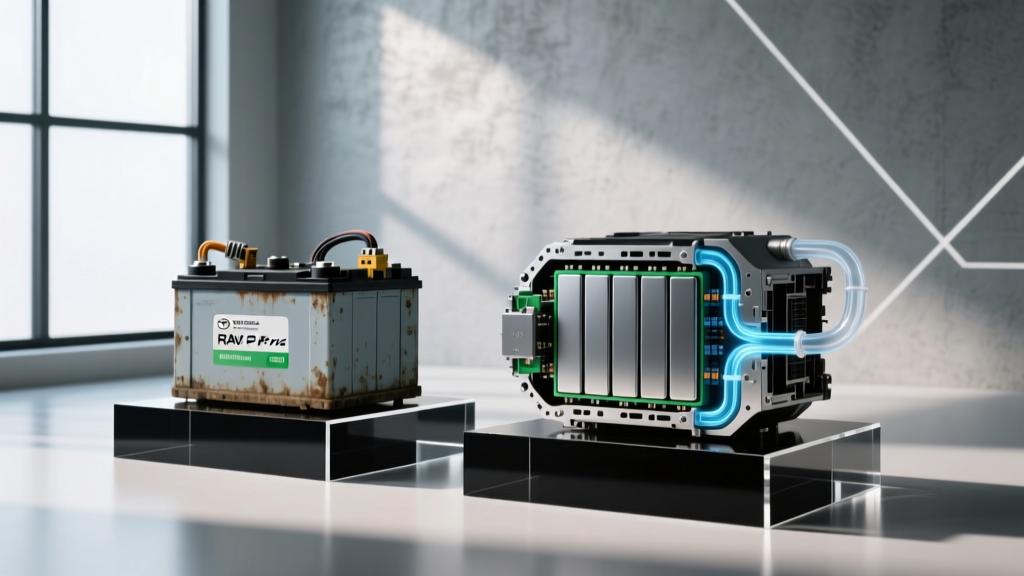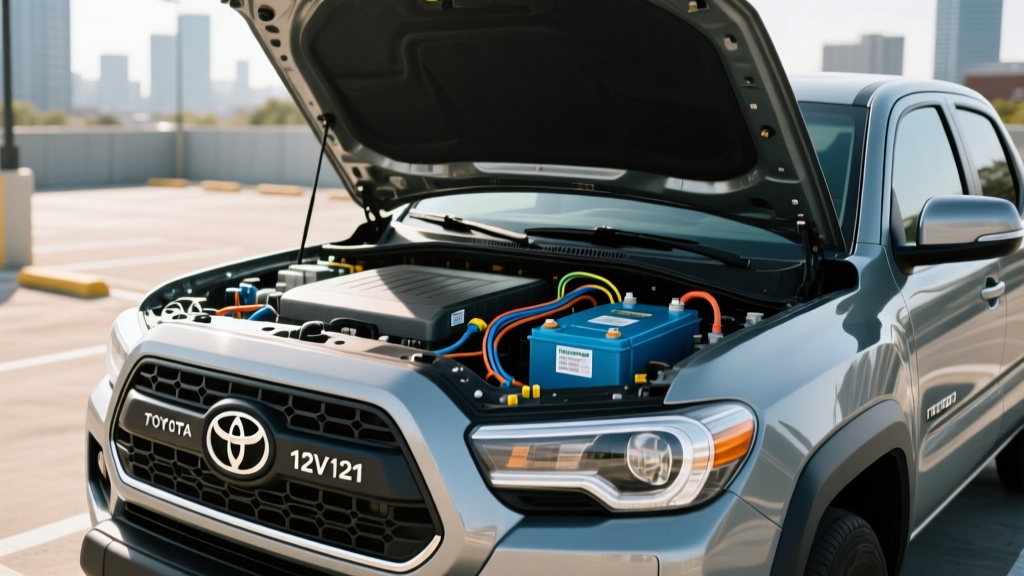
If you've landed here searching for a 2021 Toyota Tacoma battery, you're likely dealing with a dead 12-volt starter battery or researching what electrified powertrain options exist for Toyota's midsize truck. Here's the essential truth up front: the 2021 Tacoma is a purely internal-combustion vehicle. It has no high-voltage traction battery, no hybrid system, and no plug-in capability. The only battery in a 2021 Tacoma is a conventional 12V lead-acillatory battery that powers the starter motor, lights, infotainment, and electronics.
However, this guide uses that search as a springboard into what actually matters for EV and hybrid battery buyers in 2026: how modern lithium-ion traction batteries work, the chemistry trade-offs between LFP and NMC, real-world degradation data, warranty protections, replacement costs, and what Toyota's electrified truck future looks like. Whether you own a Tacoma and are considering an EV or hybrid next, or you're simply researching EV battery longevity, this is the deep-dive reference.
What Battery Does the 2021 Toyota Tacoma Actually Have?
The 2021 Toyota Tacoma uses a standard 12V lead-acid battery (Group 24F or 35, depending on trim and configuration). This battery has one job: crank the 2.7L inline-4 or 3.5L V6 engine and run accessories when the alternator isn't spinning. It is not a traction battery and has nothing to do with vehicle propulsion.
Typical 12V battery specs for the 2021 Tacoma:
- Voltage: 12V nominal
- Cold Cranking Amps (CCA): 550–650 CCA
- Chemistry: Flooded lead-acid (some owners upgrade to AGM)
- Typical lifespan: 3–5 years depending on climate and use
- Replacement cost: $120–$220 for the battery alone
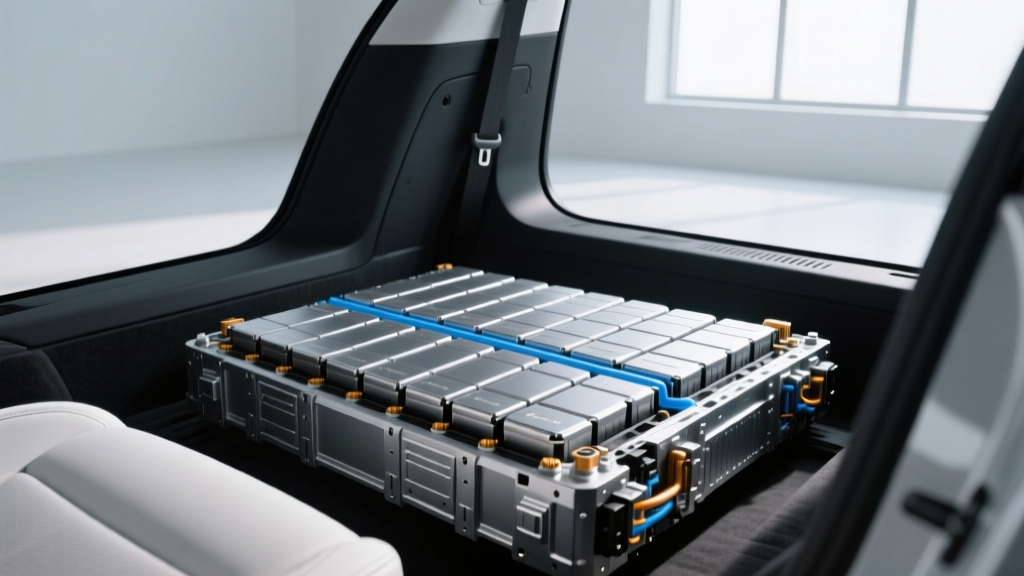
This is fundamentally different from the high-voltage lithium-ion traction batteries (40–130+ kWh) found in battery-electric vehicles (BEVs) or the smaller 1–18 kWh hybrid/PHEV batteries in vehicles like the Toyota RAV4 Prime or the upcoming Tacoma hybrid variant. Let's break down what those electrified batteries look like.
EV Battery Chemistry in 2026: LFP vs NMC vs NCA
Every modern EV uses one of two dominant lithium-ion cathode chemistries: LFP (lithium iron phosphate) or NMC/NCA (nickel manganese cobalt / nickel cobalt aluminum). The chemistry you get depends on the vehicle, and the trade-offs are significant.
| Attribute | LFP (Lithium Iron Phosphate) | NMC / NCA (Nickel-based) |
|---|---|---|
| Energy Density | Lower (~160 Wh/kg cell-level) | Higher (~250–300 Wh/kg cell-level) |
| Range per kWh | Same efficiency, but heavier pack for same range | Lighter pack for equivalent range |
| Cycle Life | 3,000–5,000+ cycles to 80% SoH | 1,000–2,000 cycles to 80% SoH |
| Cold-Weather Performance | Weaker; greater range loss below 32°F | Better cold-weather discharge capability |
| Cost | ~20–30% cheaper per kWh (no cobalt/nickel) | Higher raw material cost |
| Recommended Charge Habit | Can charge to 100% daily without harm | Best kept 20–80% for daily; 100% for trips only |
| Thermal Stability / Safety | Excellent; very resistant to thermal runaway | Good, but requires more active thermal management |
| Common 2026 Vehicles | Tesla Model 3/Y RWD, Ford Mustang Mach-E Select, Rivian Standard | Tesla Long Range, Hyundai Ioniq 5/6, BMW iX, Rivian Max |
Which is better? It depends on your use case. If you commute daily and charge at home, LFP is arguably superior in 2026: longer cycle life, lower cost, and no anxiety about charging to 100%. If you need maximum range for road trips or live in a cold climate, NMC/NCA packs deliver more miles per pound and perform better in freezing temperatures. Tesla's Standard Range models use CATL-sourced LFP; their Long Range models use NCA/NMC. Hyundai/Kia use NMC across most trims. Ford has begun offering LFP in base Mustang Mach-E trims.
How Long Do EV Batteries Last? Real Degradation Data
The biggest fear among prospective EV buyers is battery replacement. Let's address this with data, not anxiety.
Based on aggregated fleet data from sources like Recurrent Auto and manufacturer warranty claims, here is what typical lithium-ion EV battery degradation looks like in 2026:
- Year 1 / 15,000 miles: 1–3% capacity loss (initial settling)
- Year 3 / 45,000 miles: 5–8% capacity loss
- Year 5 / 75,000 miles: 7–12% capacity loss
- Year 8 / 120,000 miles: 10–15% capacity loss (NMC); 5–10% (LFP)
- Year 10+ / 150,000+ miles: 12–20% (NMC); 8–12% (LFP)
Key takeaways: the degradation curve is steepest in the first year or two, then flattens significantly. Most EV batteries retain 85–90% of original capacity at 100,000 miles. Complete failure is exceedingly rare—under 1% of EVs need a full battery replacement under normal use. The vast majority of EV batteries outlast the vehicle they're installed in.
LFP batteries degrade more slowly and tolerate 100% state-of-charge storage better than NMC. Tesla's LFP-equipped Model 3 RWD vehicles have shown degradation curves that project well beyond 300,000 miles before reaching 70% state of health.
What Does the EV Battery Warranty Cover?
Federal law mandates a minimum EV battery warranty of 8 years / 100,000 miles (in California Air Resources Board states, it extends to 10 years / 150,000 miles). Here's how major manufacturers structure their coverage in 2026:
| Manufacturer | Warranty Period | Capacity Retention Threshold | What's Covered |
|---|---|---|---|
| Tesla (Model 3/Y LFP) | 8 yr / 100,000 mi | 70% | Defects + degradation below threshold |
| Tesla (Model 3/Y LR, S, X) | 8 yr / 120,000 mi | 70% | Defects + degradation below threshold |
| Hyundai / Kia | 10 yr / 100,000 mi | 70% | Defects + degradation below threshold |
| Ford (Mach-E, F-150 Lightning) | 8 yr / 100,000 mi | 70% | Defects + degradation below threshold |
| GM (Ultium-platform) | 8 yr / 100,000 mi | 70% | Defects + degradation below threshold |
| BMW | 8 yr / 100,000 mi | 70% | Defects + degradation below threshold |
| Rivian | 8 yr / 175,000 mi (Standard); 8 yr / 120,000 mi (Max) | 70% | Defects + degradation below threshold |
If your battery drops below the stated threshold (typically 70% of original capacity) within the warranty period, the manufacturer must repair or replace it at no cost. In practice, very few owners ever hit this threshold. The warranty protects against the worst-case scenario, but real-world data shows most packs stay well above 80% for the warranty duration.
EV Battery Replacement Cost: What It Actually Costs and When
If you're outside warranty or dealing with a rare catastrophic failure, here's what battery replacement looks like in 2026:
| Vehicle / Pack Size | Battery Capacity | Estimated Replacement Cost (2026) | Typical Replacement Need |
|---|---|---|---|
| Tesla Model 3 RWD (LFP) | ~60 kWh | $10,000–$14,000 | Rarely needed; 200k+ mi projected life |
| Tesla Model Y Long Range | ~75 kWh | $13,000–$18,000 | Rarely needed under 200k mi |
| Hyundai Ioniq 5 | 77.4 kWh | $14,000–$19,000 | Rarely needed; strong warranty |
| Ford F-150 Lightning (Extended) | ~131 kWh | $22,000–$30,000 | Extremely rare; largest packs cost most |
| Chevy Bolt EV/EUV | ~65 kWh | $14,000–$16,000 | Post-recall replacement packs improved |
Context is critical here: battery replacement is not a routine maintenance item the way a timing belt or brake job is. It is a rare, end-of-life event. For perspective, the average age of a vehicle scrapped in the US is roughly 15 years. Most EVs will be retired for other reasons (collision, body rust, electronics obsolescence) before the traction battery fails. Costs are also declining: per BloombergNEF, lithium-ion pack prices fell below $115/kWh at the cell level in 2025, and continued declines are expected through the decade.
Factors That Accelerate (or Preserve) Battery Life
Not all miles are equal when it comes to battery health. Here's what actually moves the needle on degradation:
What Hurts Battery Longevity
- Frequent DC fast charging above 150 kW — occasional use is fine, but daily 350 kW sessions add heat stress. Most modern BMS (battery management systems) throttle charge speed to protect the pack, but sustained high-C-rate charging does accelerate wear.
- Prolonged storage at 100% SoC — especially in hot climates. A fully charged NMC pack sitting in a 95°F driveway for weeks is under maximum voltage stress.
- Regularly draining below 10% SoC — deep discharges strain cell chemistry. Try not to let the pack sit near empty for extended periods.
- Extreme ambient temperatures without preconditioning — charging a cold battery (below 32°F) without thermal preconditioning can cause lithium plating, a form of permanent damage.
What Preserves Battery Health
- Level 2 home charging as your primary method — slower charging generates less heat and is gentler on cells.
- Daily SoC between 20–80% for NMC; up to 100% is fine for LFP — use your car's charge-limit setting.
- Precondition the battery before DC fast charging — most EVs do this automatically when you navigate to a charger; the battery warms to optimal temperature for faster, safer charging.
- Drive it regularly — batteries prefer use over sitting idle for months.
- Garage parking in extreme climates — reducing thermal extremes helps both daily range and long-term health.
How to Check Your EV Battery's State of Health (SoH)
State of Health (SoH) is a percentage representing your battery's current maximum capacity relative to its original capacity. A new EV has 100% SoH; a battery at 85% SoH holds 85% of its original kWh.
Here's how owners check SoH in 2026:
- In-car displays: Tesla shows estimated range at 100% charge; Hyundai/Kia provides a battery health indicator in the EV menu. Some vehicles display SoH percentage directly.
- OBD-II dongles + apps: Tools like OBDLink SX paired with apps such as Leaf Spy (Nissan) or Scan My Tesla can read BMS data including SoH, cell voltage variance, and pack temperature.
- Manufacturer service visits: Dealers can pull a full battery health report during service appointments.
- Third-party services: Companies like Recurrent Auto provide fleet-based degradation benchmarking; some used-EV sellers now include battery health reports.
When buying a used EV, always verify SoH. A 2021 Tesla Model 3 with 50,000 miles and 94% SoH is a much better buy than one at 87% SoH, even at the same price.
What About Toyota Trucks and Hybrid/EV Battery Tech?
Toyota has been slower to adopt full BEVs than competitors, but the company is a hybrid-battery pioneer. The Toyota Tacoma Hybrid was announced for the 2025 model year refresh, using the i-FORCE MAX hybrid powertrain with a ~1.87 kWh nickel-metal hydride (NiMH) battery pack. This is a conventional hybrid (HEV)—not a plug-in—and the battery is small, assisting the turbocharged 2.4L engine rather than providing standalone electric range.
Toyota's hybrid battery warranty: 10 years / 150,000 miles, consistent across Prius, RAV4 Hybrid, and Tacoma Hybrid models. Toyota's hybrid batteries have an exceptional longevity track record—Prius taxis routinely surpass 300,000 miles on original packs.
For a full battery-electric Toyota truck, you'll need to wait for the Toyota Tundra EV (announced, expected late 2020s) or the company's next-generation BEV platform. Toyota has invested heavily in solid-state battery R&D, claiming a prototype that could deliver 750+ km of range with 10-minute fast charging. However, mass production of solid-state batteries remains targeted for 2027–2028 at the earliest, and initial deployment will likely be limited to premium models in Japan before reaching US-market trucks.
Emerging Battery Technology: What's Real and What's Not Yet
The EV battery landscape is evolving rapidly, but it's important to separate shipping products from lab prototypes:
- Solid-state batteries: Toyota, Samsung SDI, and QuantumScape are leading development. These promise higher energy density, faster charging, and improved safety by replacing the liquid electrolyte with a solid material. Toyota targets limited production in 2027–2028. Expect initial availability in flagship sedans, not trucks. This technology is not available in any 2026 production vehicle.
- Silicon-dominant anodes: Companies like Sila Nanotechnologies and Group14 are replacing graphite anodes with silicon to boost energy density by 20–40%. Early deployments are in premium EVs (Mercedes G-Class EV uses Sila cells). Expect broader adoption by 2027–2028.
- Sodium-ion batteries: CATL has begun shipping sodium-ion packs in Chinese-market EVs. These use no lithium, cobalt, or nickel—dramatically cheaper—but have lower energy density. Likely destined for budget EVs and stationary storage, not long-range US vehicles.
- LFP improvements: CATL's second-generation LFP cells (2025+) have closed much of the energy-density gap with NMC, making LFP viable for 350+ mile vehicles without a weight penalty.
For buyers shopping in 2026, today's lithium-ion batteries—both LFP and NMC—are mature, well-warranted, and proven. You don't need to wait for solid-state to buy with confidence.
Frequently Asked Questions
How long do EV batteries last in years and miles?
Most modern EV batteries are engineered for 150,000–300,000+ miles before dropping below 70% capacity. In years, that translates to 10–20 years of typical driving. LFP batteries tend to outlast NMC by a significant margin due to superior cycle life. According to data from fueleconomy.gov, EV batteries rarely require replacement during the typical ownership period.
How much does an EV battery cost to replace in 2026?
Replacement costs range from roughly $10,000 for a ~60 kWh pack (Tesla Model 3 RWD) to $30,000 for a ~131 kWh pack (F-150 Lightning Extended Range). However, full replacement is extremely rare. Most packs outlast the vehicle. If your battery degrades below warranty thresholds (typically 70% capacity within 8 years/100,000 miles), the manufacturer covers it.
What does the EV battery warranty actually cover?
Federal law requires a minimum of 8 years/100,000 miles of battery coverage. The warranty covers both manufacturing defects and capacity degradation below a stated threshold (usually 70% of original capacity). In CARB states, coverage extends to 10 years/150,000 miles. Check your specific manufacturer's terms—Hyundai/Kia offers 10 years/100,000 miles nationwide.
How do I check and maximize my EV battery health?
Check SoH through your car's in-vehicle display, an OBD-II scanner with EV-compatible software, or a dealer diagnostic report. To maximize longevity: rely on Level 2 home charging, keep NMC packs between 20–80% daily (LFP can go to 100%), precondition before fast charging, avoid prolonged storage at extreme SoC levels, and minimize repeated DC fast charging when Level 2 is available.
LFP vs NMC — which battery chemistry is better?
Neither is universally "better." LFP wins on cost, cycle life, safety, and daily-charge convenience (100% is fine). NMC wins on energy density, cold-weather performance, and maximum range per pound. For a daily commuter who charges at home, LFP is often the smarter choice in 2026. For road-trippers and cold-climate drivers, NMC offers practical advantages. Both chemistries are well-proven and well-warranted.
Does the 2021 Toyota Tacoma have an EV or hybrid battery?
No. The 2021 Tacoma is exclusively a gasoline-powered truck with a conventional 12V lead-acid starter battery. Toyota introduced the i-FORCE MAX hybrid powertrain in the Tacoma for the 2025 model year, but the 2021 model has no hybrid or electric drivetrain components. If you're replacing a 2021 Tacoma battery, you're looking at a standard Group 24F or 35 12V battery ($120–$220).