If you own or are shopping for a 2021 Toyota Camry, the word "battery" can mean two very different things depending on whether you're looking at the conventional Hybrid (HEV) or wondering how Toyota's battery technology stacks up against the broader EV landscape. The 2021 Camry was offered exclusively as a gasoline model or a traditional hybrid — not a plug-in hybrid or battery-electric vehicle — so its high-voltage battery is a nickel-metal hydride (NiMH) pack designed for hybrid assist, not standalone electric driving. Understanding that distinction is the first step toward making smart decisions about maintenance, replacement, and whether your next vehicle should go full electric.
This guide breaks down the 2021 Toyota Camry battery system, compares Toyota's hybrid NiMH approach with modern EV lithium-ion chemistries (LFP and NMC), and gives you hard data on degradation, warranty coverage, replacement costs, and best practices for maximizing battery life — whether you drive a Camry Hybrid or are considering an EV upgrade.
2021 Toyota Camry Hybrid Battery: What's Actually Under the Hood
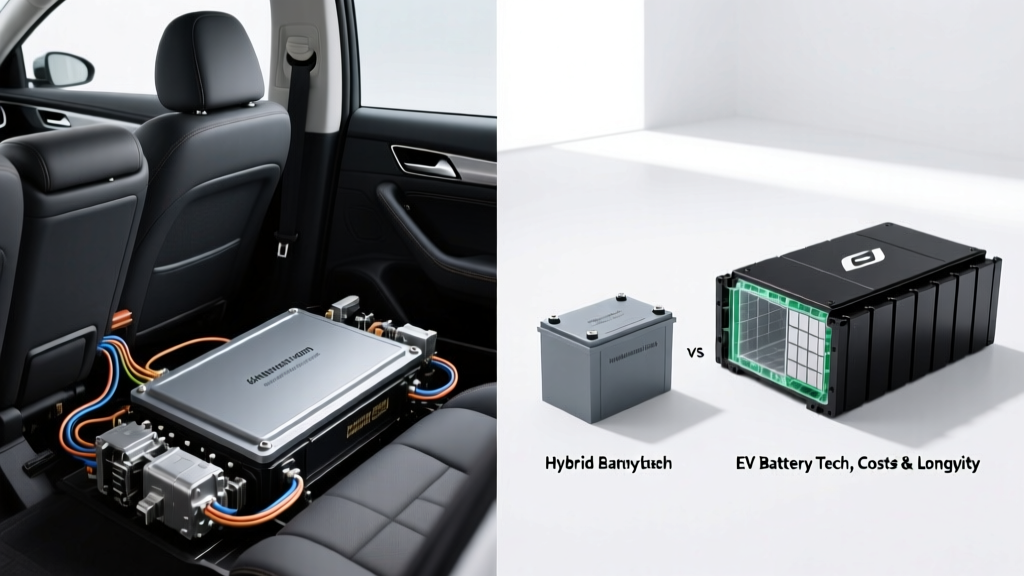
The 2021 Toyota Camry Hybrid uses a 1.6 kWh (gross) nickel-metal hydride (NiMH) battery pack located under the rear seats. This pack works in tandem with a 2.5-liter four-cylinder engine and two motor-generators through Toyota's Hybrid Synergy Drive system, producing a combined 208 horsepower. Unlike a battery-electric vehicle (BEV) where the traction battery is the sole energy source, the Camry Hybrid's battery is a buffer — it captures regenerative braking energy and assists during acceleration, but the gasoline engine remains the primary power source.
- Chemistry: Nickel-Metal Hydride (NiMH)
- Gross capacity: ~1.6 kWh
- Usable capacity: ~0.9 kWh (narrow state-of-charge window)
- System voltage: 244.8V nominal
- Combined system output: 208 hp
- EPA combined MPG: 52 MPG (LE trim) / 46 MPG (SE/XLE)
- Electric-only driving: Very short low-speed bursts only — not a plug-in
The key takeaway: this is not an EV battery. The Camry Hybrid cannot plug in, has no meaningful electric-only range, and its battery serves a fundamentally different role than the 60–100+ kWh lithium-ion packs in vehicles like the Tesla Model 3 or Hyundai Ioniq 5. That said, the hybrid battery still degrades over time, carries warranty coverage, and can be costly to replace — so the rest of this guide applies directly to Camry Hybrid owners.
NiMH vs LFP vs NMC: Battery Chemistry Trade-Offs Explained
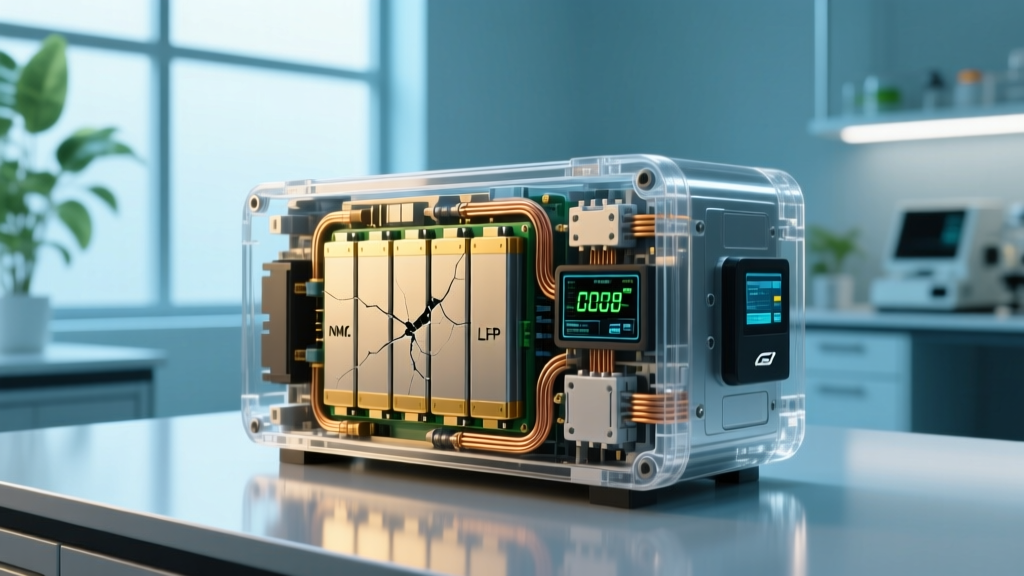
Toyota's stubborn loyalty to NiMH in its mainstream hybrids (including the 2021 Camry) is one of the most debated topics in electrified-vehicle engineering. Here's how NiMH stacks up against the two dominant lithium-ion chemistries powering modern EVs.
| Attribute | NiMH (Camry Hybrid) | LFP (Lithium Iron Phosphate) | NMC/NCA (Nickel Manganese Cobalt / Nickel Cobalt Aluminum) |
|---|---|---|---|
| Energy density | Low (~60–80 Wh/kg) | Medium (~140–170 Wh/kg) | High (~200–270 Wh/kg) |
| Cycle life | ~500–1,000 full cycles | ~3,000–6,000+ cycles | ~1,000–2,500 cycles |
| Cold-weather performance | Moderate; loses efficiency below 32°F | Poor below freezing without active heating | Better cold performance; still loses 15–30% range |
| Cost per kWh | Low (small packs keep total cost down) | Lowest among Li-ion (~$90–110/kWh cell-level) | Higher (~$110–140/kWh cell-level) |
| Thermal stability / safety | Excellent — very resistant to thermal runaway | Excellent — highest thermal runaway threshold | Good but requires robust BMS and cooling |
| Typical use case | HEV hybrid assist (small buffer) | Standard-range BEVs, fleet, daily commuters | Long-range BEVs, performance models |
| SoC management | Narrow window (~40–80%) managed by ECU | Tolerates 100% SoC better; periodic full charge recommended for BMS calibration | Best kept 20–80% daily; 100% only for trips |
The verdict: NiMH is a proven, safe, low-cost chemistry well-suited to the narrow charge-discharge cycles of a hybrid. Its low energy density makes it impractical for a BEV, which is why every modern EV — including Toyota's own bZ4X — uses lithium-ion. Among Li-ion options, LFP wins on longevity and cost (ideal for daily driving and high-mileage owners), while NMC/NCA wins on energy density and range (ideal for road-trippers and cold-climate drivers who need every mile).
How Long Do EV and Hybrid Batteries Last? Degradation Data
Battery degradation — the gradual loss of capacity over time and charge cycles — is the single biggest long-term ownership concern. Here's what the data actually shows.
- Toyota Camry Hybrid (NiMH): Typically retains ~85–90% of usable capacity at 150,000 miles / 10 years. Toyota's hybrid battery ECU keeps the pack in a narrow 40–80% SoC window, dramatically reducing stress. Failures before 150,000 miles are uncommon but not unheard of, often related to individual cell imbalance rather than wholesale capacity loss.
- NMC-based BEVs (e.g., Tesla Model 3 Long Range, Hyundai Ioniq 5): Data aggregated from fleet studies and owner reports shows ~10–12% capacity loss at 150,000 miles. Tesla's 2023 Impact Report cited an average of ~12% degradation at 200,000 miles across Model S/X fleets.
- LFP-based BEVs (e.g., Tesla Model 3 RWD, BYD models): Early data suggests ~5–8% loss at 150,000 miles, with the degradation curve flattening significantly after the first 20,000–30,000 miles. LFP's superior cycle life means these packs often outlast the vehicles they're installed in.
Sources: Tesla 2023 Impact Report, Geotab EV Battery Health Study
How long do EV batteries last? For modern lithium-ion EV batteries (both LFP and NMC), the practical answer is 15–20 years or 200,000–300,000 miles before capacity drops below 70% of original. For the Camry Hybrid's NiMH pack, expect 12–15 years or 150,000–200,000 miles under normal conditions. In most cases, the battery will outlast the vehicle's economic life — but "most cases" isn't "all cases," which is why warranty coverage matters.
Battery Warranty Coverage: What Toyota (and EV Makers) Guarantee
Warranty terms are your financial safety net. Here's how Toyota's hybrid battery warranty compares to typical EV battery warranties from major manufacturers.
| Vehicle | Battery Warranty | Capacity Retention Threshold | Notes |
|---|---|---|---|
| 2021 Toyota Camry Hybrid | 10 years / 150,000 miles | Not publicly specified (% threshold); covers defects and significant capacity loss | CARB-state vehicles: 10 yr/150k mi. Federal: 8 yr/100k mi for hybrid components. |
| Tesla Model 3 (NMC Long Range) | 8 years / 120,000 miles | 70% retention | Covers battery and drive unit |
| Hyundai Ioniq 5 (NMC) | 10 years / 100,000 miles | 70% retention | Among the longest coverage in the EV segment |
| Ford Mustang Mach-E (NMC) | 8 years / 100,000 miles | 70% retention | Standard across Ford's EV lineup |
What does the battery warranty cover? In all cases above, the warranty covers defects in materials/workmanship and capacity loss below the stated threshold. It does not cover damage from accidents, improper charging equipment, flooding, or modifications. Normal degradation above the threshold (e.g., your pack is at 75% capacity at year 7) is not a warranty claim — that's expected wear.
Important for 2021 Camry Hybrid owners: If you live in a CARB-adopting state (California, New York, Massachusetts, and others), your hybrid battery warranty extends to 10 years/150,000 miles. In non-CARB states, federal law mandates a minimum of 8 years/100,000 miles for hybrid/emission-related components. Check your warranty booklet for your state's specific coverage.
EV and Hybrid Battery Replacement Costs: What to Budget
This is the question that generates the most anxiety — and the most misinformation. Let's ground it in actual numbers.
| Vehicle / Battery Type | Pack Size | Replacement Cost Range (Parts + Labor) | Typical Replacement Timeline |
|---|---|---|---|
| 2021 Camry Hybrid (NiMH) | ~1.6 kWh | $2,500 – $4,500 (OEM new); $1,500–$2,500 (remanufactured) | 150,000–200,000+ miles if needed at all |
| Toyota Prius (NiMH, comparable gen) | ~1.3 kWh | $2,000 – $3,500 | 150,000–200,000+ miles |
| Tesla Model 3 (NMC, 75 kWh) | 75 kWh | $12,000 – $16,000 | 200,000–300,000+ miles; rarely needed |
| Hyundai Ioniq 5 (NMC, 77.4 kWh) | 77.4 kWh | $13,000 – $18,000 | 200,000+ miles; rarely needed |
| Chevy Bolt EV (NMC, 65 kWh) | 65 kWh | $14,000 – $16,000 (post-recall replacement packs) | Many covered under recall campaign |
The honest context: The vast majority of EV and hybrid batteries are never replaced. A 2024 study by Consumer Reports found that fewer than 5% of EV owners have needed a battery replacement outside of warranty, and most of those were early-generation vehicles (2011–2015 models). For a 2021 Camry Hybrid, the small NiMH pack is inexpensive relative to EV packs, and remanufactured options keep costs manageable even out of warranty.
Factors That Accelerate Battery Degradation (and How to Avoid Them)
Whether you're managing a 1.6 kWh NiMH pack in your Camry Hybrid or a 77 kWh NMC pack in an Ioniq 5, the physics of lithium-ion and nickel-metal hydride degradation respond to the same stressors.
- ✅ Avoid sustained high State of Charge (SoC): For NMC EV batteries, keep daily charging to 80%. LFP batteries tolerate 100% better and benefit from a full charge weekly for BMS calibration. The Camry Hybrid's ECU already manages SoC automatically — no owner action needed.
- ✅ Minimize DC fast charging frequency: Occasional fast charging is fine; daily fast charging accelerates degradation by ~1–2% additional loss per year based on Geotab fleet data. For road trips, fast charge freely. For daily driving, use Level 2 home charging.
- ✅ Precondition in extreme cold: If your EV supports it, precondition the battery while plugged in before driving or fast charging in sub-freezing temperatures. Cold charging without preconditioning can cause lithium plating on NMC anodes. The Camry Hybrid has no preconditioning — just allow a brief warm-up drive before demanding full hybrid assist in deep cold.
- ✅ Avoid prolonged storage at 0% or 100% SoC: If storing an EV for weeks, leave it at ~50% SoC. The Camry Hybrid should be driven at least once every two weeks to keep the hybrid battery conditioned.
- ✅ Keep the cooling system maintained: EV battery thermal management systems use dedicated coolant loops. Follow manufacturer service intervals. The Camry Hybrid's battery cooling fan (located near the rear seat) should be kept clear of debris and pet hair — a clogged fan is a leading cause of premature NiMH degradation.
- ✅ Don't fear normal use: The single worst thing for a battery is sitting unused for months. Regular driving with moderate charging habits is the best prescription for longevity.
How to Check and Monitor Battery Health (State of Health)
For 2021 Camry Hybrid owners: Toyota does not provide a consumer-facing State of Health (SoH) percentage in the dashboard display. However, you can monitor battery health indirectly:
- Hybrid system warnings: A "Check Hybrid System" message on the dash is the primary indicator of battery issues. It may also indicate inverter or ECU faults — a dealer diagnostic scan is required.
- Fuel economy decline: A noticeable drop from your baseline MPG (e.g., falling from 48 to 38 MPG combined) over several months suggests the battery is contributing less, forcing the engine to work harder.
- Dealer battery health check: Toyota dealerships can run a hybrid battery diagnostic using Techstream software, which reads individual module voltages and internal resistance. Request this during routine service visits, especially as you approach 100,000 miles.
- Aftermarket OBD-II tools: Apps like Dr. Prius (compatible with Toyota hybrids via an OBD-II Bluetooth adapter) can read battery module voltages, estimate SoH, and even perform a "Life Expectancy Test" that stress-tests the pack. This is a popular and inexpensive (~$30 for the adapter) option for DIY-minded Camry Hybrid owners.
For EV owners: Most modern EVs provide battery health data more transparently. Tesla offers a battery health estimate in the service menu. Hyundai/Kia vehicles display SoH through the dealer diagnostic system. Third-party tools like OBDeleven (for VW Group EVs) or generic OBD-II readers with EV-capable apps can pull SoH percentages from the battery management system. For the most authoritative assessment, a dealer-level diagnostic that reads cell-level voltage variance and internal resistance is the gold standard.
Emerging Battery Tech: Solid-State and Silicon Anodes
If you're deciding whether to replace a Camry Hybrid battery now or wait for the next generation of battery technology, here's a realistic timeline of what's coming — and what isn't.
- Solid-state batteries: Toyota has announced plans for commercial solid-state EV batteries targeting 2027–2028, claiming 750+ km (466 mi) range and 10-minute fast charging. Samsung SDI and QuantumScape are pursuing similar timelines. Reality check: These are limited-production targets for premium models. Mass-market solid-state EVs are not expected before 2030 at the earliest. Solid-state promises higher energy density and improved safety but faces manufacturing scale-up challenges.
- Silicon-dominant anodes: Companies like Sila Nanotechnologies and Group14 are replacing graphite anodes with silicon composites, boosting energy density by 20–40%. Early deployments are appearing in premium EVs (Mercedes-Benz G-Class electric SUV uses Sila cells). Expect broader adoption in 2026–2028 model-year vehicles.
- Sodium-ion batteries: CATL and BYD have begun producing sodium-ion packs for budget EVs in China. Lower energy density than LFP but cheaper and free of lithium/cobalt. US-market availability is uncertain and likely 2028+ for any significant presence.
Bottom line: None of these technologies change the calculus for a 2021 Camry Hybrid owner today. If your hybrid battery needs replacement, the proven NiMH pack (or a remanufactured equivalent) is the right move. If you're considering upgrading to a full EV, current-generation LFP and NMC batteries already offer excellent longevity — you don't need to wait for solid-state.
Frequently Asked Questions
How long does the 2021 Toyota Camry Hybrid battery last?
Based on Toyota's track record with NiMH hybrid batteries (shared across the Prius and Camry Hybrid lineages), expect 150,000–200,000+ miles or 12–15 years before any significant capacity loss or failure. Many original Prius batteries from 2004–2009 are still functional at 200,000+ miles. The Camry Hybrid's battery management system keeps the pack in a conservative 40–80% SoC window, which dramatically extends cycle life.
How much does it cost to replace the 2021 Camry Hybrid battery?
A new OEM NiMH replacement pack from Toyota runs approximately $2,500–$4,500 including labor at a dealership. Remanufactured or refurbished packs from third-party suppliers typically cost $1,500–$2,500 installed. Individual module replacement (if only a few cells have failed) can cost as little as $500–$1,000 at a hybrid-specialist shop. If your vehicle is within the 10-year/150,000-mile warranty window (in CARB states), the replacement may be fully covered.
Is the Camry Hybrid battery the same as an EV battery?
No. The Camry Hybrid uses a small (~1.6 kWh) NiMH battery for hybrid assist — it cannot be plugged in and provides no meaningful electric-only range. A battery-electric vehicle (BEV) uses a much larger lithium-ion pack (typically 50–100+ kWh) as its sole energy source. The chemistries, sizes, costs, and roles are fundamentally different.
Does frequent fast charging damage EV batteries?
Frequent DC fast charging does accelerate degradation, but the effect is modest. Geotab's fleet study of over 6,000 EVs found that vehicles fast-charging more than three times per week showed roughly 1–2% additional capacity loss per year compared to those primarily using Level 2 charging. Occasional fast charging (road trips, a few times a month) has negligible impact. The bigger degradation drivers are sustained high SoC, extreme heat, and high mileage.
LFP vs NMC — which battery chemistry should I choose?
Choose LFP if: you charge at home daily, drive under 250 miles between charges, want maximum cycle life and lowest cost, and don't regularly face sub-freezing temperatures. Choose NMC/NCA if: you need 300+ miles of range, take frequent road trips, live in a cold climate where energy density matters, or want the lightest possible pack for performance. For a Camry Hybrid owner considering an EV upgrade, LFP-based vehicles (Tesla Model 3 RWD, base Ford Mustang Mach-E) offer the best longevity-to-cost ratio for most daily drivers.
Can I upgrade my 2021 Camry Hybrid battery to get electric-only range?
No practical or manufacturer-supported upgrade exists to convert the Camry Hybrid into a plug-in. The vehicle lacks the onboard charger, charge port, and battery capacity for meaningful electric-only driving. If you want plug-in capability, consider trading into a PHEV (like the Toyota RAV4 Prime or Prius Prime) or a full BEV.
What voids a hybrid or EV battery warranty?
Common warranty exclusions include: damage from collisions, flooding, or fire; use of non-approved charging equipment; aftermarket modifications to the battery or BMS; failure to follow scheduled maintenance (coolant service); and odometer tampering. Normal driving, Level 2 home charging, and even occasional DC fast charging do not void your warranty.
This guide reflects data and pricing current as of early 2026. Battery replacement costs, warranty terms, and technology timelines are subject to change. For warranty specifics, consult your Toyota dealer or vehicle warranty booklet. For EV tax credit eligibility, refer to IRS §30D guidelines.