Why Are People Still Searching for a 2020 Malibu Battery?
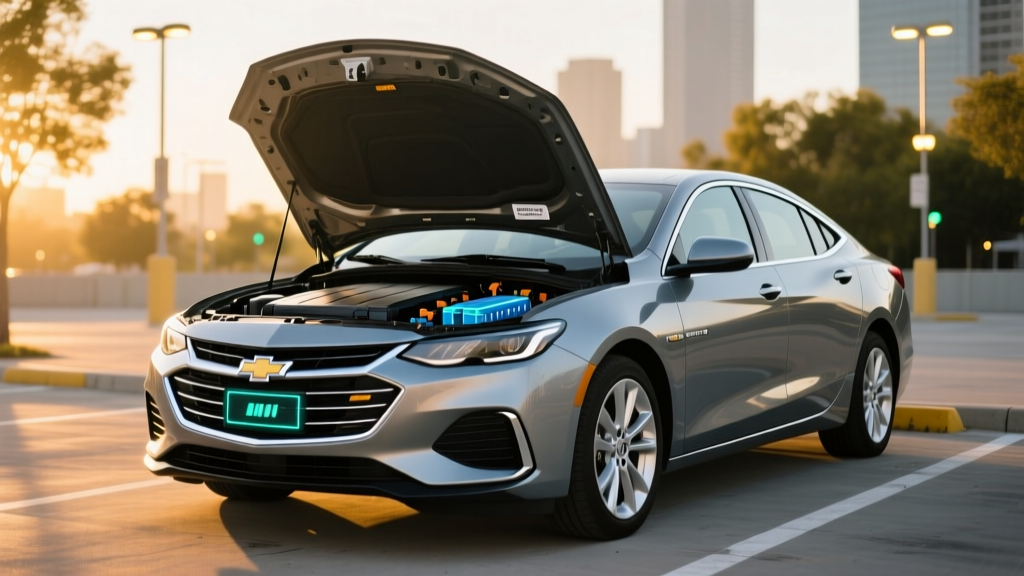
If you've landed here searching for a 2020 Malibu battery, you likely own or are considering a 2020 Chevrolet Malibu Hybrid — one of the last midsize plug-in-adjacent sedans GM offered before pivoting its electrification strategy entirely toward the Ultium-based EV lineup. The 2020 Malibu Hybrid uses a 1.5 kWh lithium-ion battery pack paired with a 1.8L four-cylinder engine and a two-motor hybrid drive unit. It's not a full battery-electric vehicle, but that high-voltage traction battery is still the single most expensive component in the powertrain, and understanding its lifespan, replacement cost, and care requirements matters just as much as it does for any full BEV.
This guide uses the 2020 Malibu Hybrid as a practical entry point to explain how hybrid and EV battery technology works, what degradation actually looks like with real data, and how modern chemistries like LFP and NMC compare. Whether you're maintaining an aging Malibu Hybrid or shopping for a new EV in 2026, the battery fundamentals here apply broadly.
2020 Malibu Hybrid Battery: The Specs That Matter
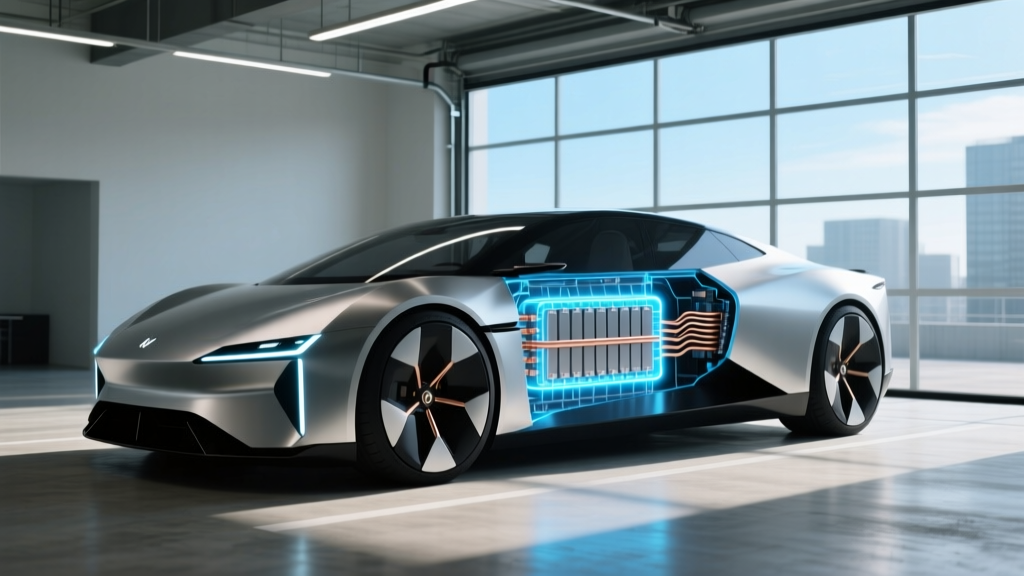
The 2020 Chevrolet Malibu Hybrid's high-voltage battery is modest by today's standards, but it was engineered for a specific duty cycle: short electric-only bursts to assist the gasoline engine during acceleration and enable regenerative braking energy capture.
| Specification | Value |
|---|---|
| Battery capacity | 1.5 kWh (gross) |
| Battery chemistry | Lithium-ion (NMC-type pouch cells, LG Chem) |
| Electric-only range | Not rated for EV-only driving (assist hybrid) |
| EPA combined fuel economy | 49 MPG combined (49 city / 49 highway) |
| System horsepower | 182 hp combined |
| 0-60 mph | ~7.0 seconds |
| High-voltage battery warranty | 8 years / 100,000 miles |
| Original MSRP (base Hybrid) | ~$28,995 |
Unlike a full BEV with a 60-100 kWh pack, the Malibu Hybrid's 1.5 kWh battery operates in a very narrow state-of-charge window — typically between 20% and 80% SoC — which significantly reduces stress on the cells and slows degradation. This is by design. GM engineers buffer the usable capacity to extend cycle life, a practice that carries over to modern Ultium-based EVs like the Equinox EV and Silverado EV.
How Long Do EV and Hybrid Batteries Actually Last?
The short answer: far longer than most buyers expect. Data from fleets, long-term owners, and manufacturer reports consistently show that modern lithium-ion traction batteries outlast the vehicles they're installed in — provided they aren't subjected to extreme abuse.
For the 2020 Malibu Hybrid specifically, the narrow SoC operating window and modest energy throughput mean the battery experiences relatively gentle cycling. Most Malibu Hybrids reaching 100,000-150,000 miles show minimal measurable capacity loss. For full BEVs with larger packs, the data tells a similar story:
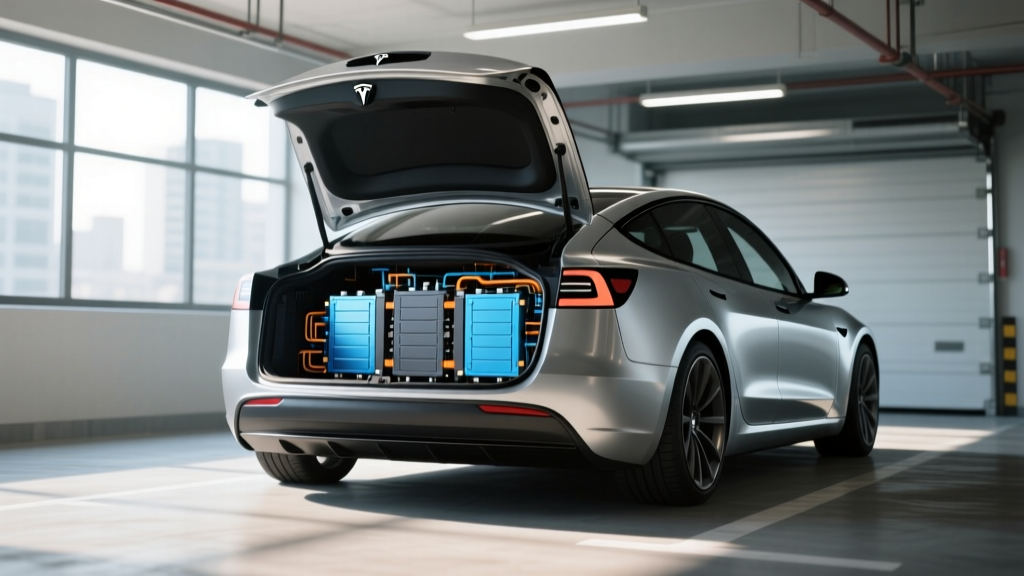
- Tesla fleet data (2023 Impact Report): Model S/X batteries retain approximately 88% capacity at 150,000 miles — a loss of roughly 12% over the vehicle's typical first-owner lifespan.
- Nissan Leaf (2013-2019, passively cooled): Higher degradation rates, with some 24 kWh packs showing 20-30% loss by year 8, particularly in hot climates. Active thermal management largely solved this in later designs.
- Chevrolet Bolt EV (2017-2023): Recalled for fire risk (manufacturing defect, not normal degradation); replacement packs in post-recall vehicles show normal NMC degradation curves of ~8-12% over 100,000 miles.
- Hyundai/Kia E-GMP platforms (Ioniq 5, EV6): Early fleet data suggests 5-8% degradation over the first 60,000 miles with active liquid cooling and NMC811 chemistry.
- LFP-equipped vehicles (Tesla Model 3 RWD, BYD): LFP cells demonstrate slower calendar aging, with reported losses of 3-5% over the first 100,000 miles in moderate climates.
Sources: fueleconomy.gov, manufacturer fleet reports, and long-term owner databases.
The general consensus among battery researchers: a well-managed NMC pack should retain 70-85% of original capacity at 150,000 miles and 10-15 years. LFP packs may retain 80-90%+ over the same period. For the Malibu Hybrid's small, heavily buffered pack, degradation is largely a non-issue during normal ownership.
What Does the Battery Warranty Actually Cover?
Federal law mandates that hybrid and EV battery packs carry a minimum warranty of 8 years / 100,000 miles in most states. In California Air Resources Board (CARB) states — which include California, New York, Massachusetts, and several others — the requirement extends to 10 years / 150,000 miles for partial-zero-emission vehicles (PZEVs), which the Malibu Hybrid qualifies as.
| Vehicle | Warranty Term | Capacity Retention Threshold | Coverage Scope |
|---|---|---|---|
| 2020 Chevy Malibu Hybrid | 8 yr / 100,000 mi (10/150k in CARB states) | ~60-70% (manufacturer discretion) | Defects + excessive capacity loss |
| 2026 Tesla Model 3 (LFP) | 8 yr / 120,000 mi | 70% minimum | Defects + capacity below threshold |
| 2026 Hyundai Ioniq 5 | 10 yr / 100,000 mi | 70% minimum | Defects + capacity below threshold |
| 2026 Ford F-150 Lightning | 8 yr / 100,000 mi | 70% minimum | Defects + capacity below threshold |
| 2026 Chevrolet Equinox EV | 8 yr / 100,000 mi | 70% minimum (est.) | Defects + capacity below threshold |
The critical detail most owners miss: warranty coverage typically requires the battery to fall below a specific capacity retention threshold — usually 70% of original capacity — before the manufacturer is obligated to repair or replace it. Normal gradual degradation that keeps you above that threshold is considered expected wear. For the Malibu Hybrid, the small pack and conservative buffer strategy mean hitting that 70% threshold under normal use is extremely unlikely within the warranty period.
If your 2020 Malibu Hybrid's battery does develop a fault, GM's hybrid battery warranty should still be active through the 2028 model year (8 years from the original in-service date). Check your vehicle's in-service date on your original purchase paperwork or through a GM dealer to confirm exact coverage expiration.
How Much Does an EV or Hybrid Battery Cost to Replace?
This is the question that generates the most anxiety — and the most misinformation. Replacement costs vary enormously based on battery size, chemistry, and vehicle platform.
| Vehicle / Pack Size | Battery Chemistry | Estimated Replacement Cost | Typical Replacement Timeline |
|---|---|---|---|
| 2020 Malibu Hybrid (1.5 kWh) | NMC pouch | $2,000 - $4,000 | Rarely needed; 150,000+ mi if ever |
| Toyota Prius Hybrid (~1.3 kWh) | NiMH / Li-ion | $2,000 - $4,500 | 150,000-200,000+ mi |
| Chevrolet Bolt EV (65 kWh) | NMC | $14,000 - $18,000 | Uncommon under 200,000 mi |
| Tesla Model 3 Standard (60 kWh LFP) | LFP | $12,000 - $16,000 | Rarely needed; 200,000+ mi |
| Tesla Model S/X (100 kWh) | NMC/NCA | $18,000 - $25,000 | 150,000-200,000+ mi |
| Ford F-150 Lightning Ext. Range (131 kWh) | NMC | $25,000 - $35,000 | Not yet observed in fleet at scale |
| Hyundai Ioniq 5 (77.4 kWh) | NMC | $15,000 - $22,000 | Rarely needed; 200,000+ mi |
For the 2020 Malibu Hybrid, the relatively small 1.5 kWh pack keeps replacement costs in the $2,000-$4,000 range — comparable to a major engine repair on a conventional vehicle, and far less than the catastrophic $20,000+ figures often cited in fear-based headlines about EV batteries. Independent hybrid repair shops can often replace individual modules within the pack for even less, sometimes $800-$1,500 for a single failed cell group.
The reality: most hybrid and EV batteries are never replaced during the vehicle's useful life. According to data from Consumer Reports and fleet operators, battery replacement rates for hybrids and EVs under 150,000 miles are well under 5%. The vehicles are typically retired for other reasons — body damage, interior wear, or simply upgrading to a newer model — long before the battery fails.
LFP vs NMC: Which Battery Chemistry Is Better?
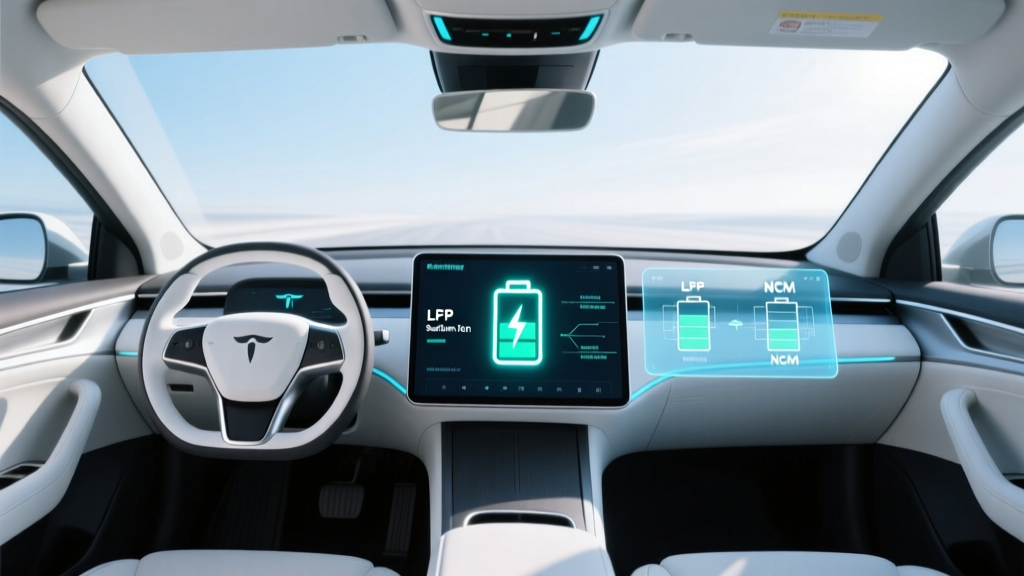
If you're shopping for a new EV in 2026, battery chemistry is one of the most consequential choices you'll make — even though most automakers don't advertise it prominently. The two dominant chemistries in the US market are NMC (Nickel Manganese Cobalt) and LFP (Lithium Iron Phosphate), and they serve different use cases.
| Attribute | LFP (Lithium Iron Phosphate) | NMC (Nickel Manganese Cobalt) |
|---|---|---|
| Energy density | Lower (~160 Wh/kg cell-level) — heavier pack for same range | Higher (~250-300 Wh/kg cell-level) — lighter, more range per kg |
| Cycle life | Superior — 3,000-5,000+ full cycles before 80% retention | Good — 1,000-2,000 full cycles before 80% retention |
| Calendar aging | Slower degradation at rest | Faster calendar aging, especially at high SoC |
| Cold-weather performance | Weaker — more range loss below freezing (~30-40% loss at 20°F) | Better cold performance (~20-30% loss at 20°F) |
| Charging behavior | Can be charged to 100% regularly without significant harm | Best kept at 80% daily; 100% for trips only |
| Cost | Lower — no cobalt or nickel; ~$80-100/kWh at cell level (2026) | Higher — commodity-sensitive; ~$110-140/kWh at cell level (2026) |
| Thermal stability | Excellent — inherently more resistant to thermal runaway | Good but requires robust BMS and cooling |
| Typical applications | Tesla Model 3 RWD, BYD models, standard-range EVs, energy storage | Long-range EVs, performance models, large SUVs/trucks |
Choose LFP if: You want maximum longevity, plan to keep the vehicle 10+ years, mostly drive in moderate climates, and don't need the absolute longest single-charge range. LFP is the pragmatic durability choice.
Choose NMC if: You need maximum range in a given vehicle platform, regularly drive in cold climates, or prioritize performance. NMC's higher energy density gives it an edge for long-range and heavy-duty applications.
The 2020 Malibu Hybrid uses NMC-type cells, which was standard for GM's hybrid and early EV platforms. GM's current Ultium architecture uses primarily NMC chemistry across its EV lineup (Equinox EV, Blazer EV, Silverado EV, Cadillac Lyriq), though the company has indicated LFP adoption for future entry-level models.
Factors That Accelerate Battery Degradation (and How to Avoid Them)
Battery degradation is driven by three primary mechanisms: cycle wear (charge-discharge cycling), calendar aging (chemical breakdown over time regardless of use), and thermal stress (exposure to extreme temperatures). Here's what actually moves the needle:
- Avoid sustained high SoC: For NMC packs, don't leave the vehicle plugged in at 100% for days. Set your charge limit to 80% for daily use and 100% only for planned long trips. LFP packs tolerate 100% better — in fact, periodic 100% charges help the BMS recalibrate cell balancing.
- Minimize DC fast charging frequency: Occasional fast charging is fine. Daily reliance on 150+ kW DC fast charging generates sustained heat that accelerates cell wear. If you have home Level 2 charging, use it as your primary method.
- Precondition in cold weather: Use your vehicle's preconditioning feature (available on most modern EVs and the Malibu Hybrid via OnStar/app) to warm the battery before driving or charging in freezing temperatures. Charging a cold battery below 32°F causes lithium plating, which permanently reduces capacity.
- Avoid prolonged storage at extreme SoC: If storing the vehicle for weeks, leave it at approximately 50% SoC in a temperature-controlled environment if possible.
- Don't obsess over shallow cycles: Modern battery management systems handle daily partial cycling well. You don't need to drain and recharge the battery in any specific pattern.
- Keep firmware updated: Manufacturers periodically release BMS (Battery Management System) updates that optimize charging algorithms and thermal management. These are delivered via OTA updates on modern EVs or through dealer visits for older models like the Malibu Hybrid.
For Malibu Hybrid owners, the good news is that the vehicle's BMS already handles most of these concerns automatically. The pack never charges to true 100% or discharges to true 0% — the buffer is managed invisibly. Your primary responsibility is simply keeping up with scheduled maintenance and avoiding leaving the vehicle unplugged in extreme heat for extended periods.
How to Check Your Battery's State of Health (SoH)
State of Health (SoH) is the metric that tells you what percentage of original battery capacity remains. A new battery is at 100% SoH; a degraded battery at 75% SoH holds only 75% of its original energy. Here's how to check it:
For the 2020 Malibu Hybrid:
- Dealer diagnostic scan: A Chevrolet dealer can pull the hybrid battery's SoH reading via the GM Global Diagnostic System (GDS). Request this during routine service visits. There is typically no charge if performed alongside another service item.
- OBD-II scanner with hybrid support: Third-party OBD-II tools like the OBDLink MX+ paired with apps such as Torque Pro or Hybrid Assistant can read hybrid battery parameters including voltage delta, module resistance, and estimated SoH. Note that the Malibu Hybrid's data availability through OBD-II is more limited than a full BEV.
- Fuel economy as a proxy: If your Malibu Hybrid's real-world MPG drops significantly below the EPA-rated 49 MPG combined (e.g., consistently below 40 MPG with normal driving), it may indicate the hybrid battery is contributing less assist — a potential sign of degradation worth investigating.
For modern BEVs (2024-2026 models):
- In-vehicle health display: Tesla, Hyundai, Kia, and BMW now include battery health indicators in the vehicle settings menu.
- Third-party diagnostics: Services like Recurrent Auto and AVILOO offer remote SoH monitoring via connected-car data, providing certification-grade battery health reports useful for resale.
- Charging data analysis: Comparing the kWh added during a known 10-80% charge session against the pack's rated capacity gives a rough SoH estimate. If your 77 kWh pack only accepts 60 kWh during a 10-80% session, your usable capacity has declined.
What's Next: Solid-State and Silicon-Anode Batteries
Emerging battery technologies promise step-change improvements, but realistic timelines matter. Here's where things stand as of 2026:
Solid-state batteries replace the liquid electrolyte in current lithium-ion cells with a solid material (ceramic, sulfide, or polymer), potentially offering 30-50% higher energy density, faster charging, and improved safety. Toyota has announced limited solid-state production for 2027-2028, initially in small volumes for select models. Samsung SDI and QuantumScape are targeting 2028-2030 for broader automotive deployment. Expect solid-state to remain a premium, low-volume technology through at least 2030.
Silicon-anode batteries (used in limited form by companies like Sila Nanotechnologies and Group14) replace graphite anodes with silicon-dominant materials, increasing energy density by 20-40%. These are already appearing in limited applications — the Mercedes-AMG ONE uses silicon-anode cells, and several manufacturers have announced partnerships for 2026-2028 production vehicles. This technology is closer to mainstream adoption than solid-state.
Sodium-ion batteries offer a lower-cost alternative using abundant sodium instead of lithium, with energy density roughly 30% lower than LFP. CATL has begun production in China for city EVs and energy storage. US-market availability remains limited but is expected to grow for budget EV segments by 2028-2030.
For current vehicle owners — whether you drive a 2020 Malibu Hybrid or a 2026 EV — these technologies are forward-looking and won't affect your current battery's lifespan or replacement options. The lithium-ion packs in vehicles today are mature, well-understood, and demonstrably durable.
Frequently Asked Questions
How long does the 2020 Malibu Hybrid battery last?
Based on GM's engineering and real-world hybrid fleet data, the Malibu Hybrid's 1.5 kWh traction battery should last 150,000-200,000+ miles with normal use. The conservative SoC buffer and modest energy throughput mean the cells experience minimal stress. Many hybrid batteries from this era outlast the vehicles themselves.
Is the 2020 Malibu Hybrid battery still under warranty in 2026?
Likely yes. GM's hybrid battery warranty covers 8 years / 100,000 miles from the original in-service date (10 years / 150,000 miles in CARB states). A 2020 model sold new in early 2020 would retain federal warranty coverage through early 2028. Verify your specific in-service date with a GM dealer.
Can I replace the Malibu Hybrid battery myself?
While technically possible for a skilled DIYer, high-voltage hybrid battery replacement involves lethal voltage levels (the pack operates at approximately 200V). GM recommends dealer or certified hybrid technician service. Independent hybrid shops can often perform the replacement at lower cost than a dealership. Always disconnect the high-voltage service loop and verify zero voltage before any work.
Does frequent fast charging damage my EV battery?
Occasional DC fast charging has minimal impact. However, daily reliance on high-power DC fast charging (150+ kW) generates sustained heat that accelerates degradation over time. Studies from the Idaho National Laboratory showed that vehicles charged exclusively via DC fast charging experienced roughly 5-10% more degradation over 50,000 miles compared to Level 2-charged counterparts. For daily charging, a home Level 2 charger (7-11 kW) is the longevity-friendly choice.
LFP vs NMC — which should I choose for my next EV?
If longevity, cost, and daily-charge convenience are your priorities, LFP is the stronger choice — charge it to 100% without worry and expect slower degradation. If you need maximum range, cold-weather performance, or are buying a large SUV/truck, NMC remains the practical option. For most 2026 commuters with home charging, LFP-equipped vehicles like the Tesla Model 3 RWD or upcoming GM entry-level models offer the best ownership economics.
How do I know if my hybrid or EV battery needs replacement?
Key indicators include: a noticeable drop in electric-only range (for PHEVs) or total range (for BEVs) exceeding 20-30% from original, dashboard warning lights specific to the hybrid/EV system, reduced fuel economy in hybrids, or a dealer diagnostic confirming SoH below the warranty threshold (typically 70%). For the Malibu Hybrid, a sustained drop below 40 MPG combined is worth investigating.