First, Let's Clear Up the Confusion: The Telluride Is Not an EV
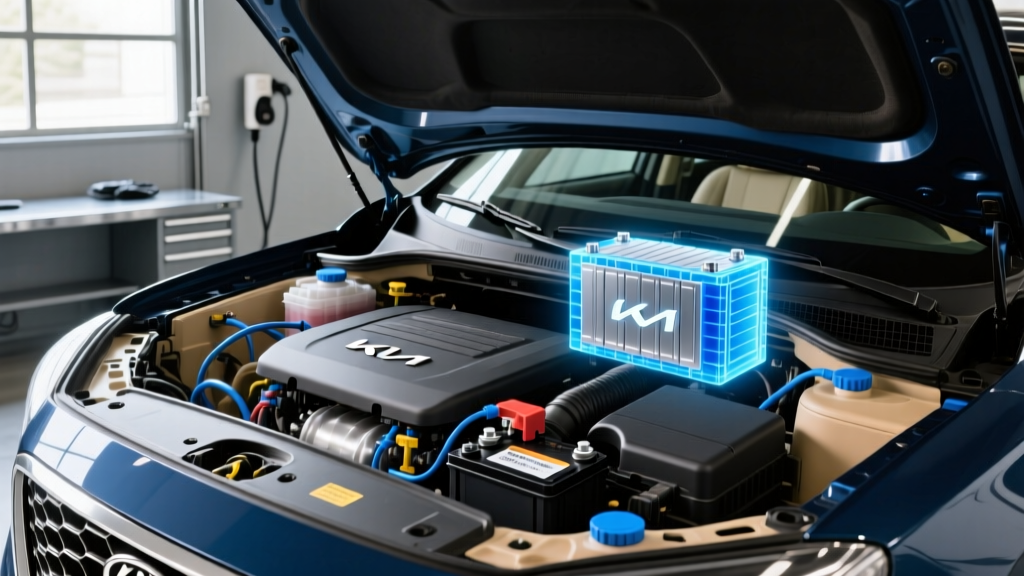
If you landed here searching for a 2020 Kia Telluride battery, there's an important clarification to make right away: the 2020 Kia Telluride is a conventional, internal-combustion-engine (ICE) SUV. It has no high-voltage traction battery, no electric motor, and no plug. The only battery in a 2020 Telluride is a standard 12-volt lead-acid auxiliary battery — the same kind found in virtually every gas-powered car on the road.
This matters because search engines often conflate "battery" queries, and with Kia's growing EV lineup (EV6, EV9, Niro EV), it's easy to assume the Telluride joined the electrified ranks. As of the 2026 model year, Kia still offers the Telluride exclusively with a 3.8L V6 gasoline engine. A hybrid Telluride has been rumored for years but remains unconfirmed.
That said, if you're cross-shopping a Telluride against an EV or want to understand how EV traction batteries compare to the 12V battery in your gas SUV, this guide covers both — with exact numbers on cost, chemistry, degradation, and warranty.
The 2020 Kia Telluride's 12V Battery: What You Actually Need to Know
The 2020 Telluride uses a Group 48 (H6) AGM or flooded lead-acid 12V battery, typically rated at around 70 amp-hours. This battery powers the starter motor, infotainment system, lights, and electronics — it does not propel the vehicle.
| Spec | 2020 Kia Telluride 12V Battery |
|---|---|
| Type | 12V lead-acid (Group 48/H6) |
| Capacity | ~70 Ah |
| Cold Cranking Amps (CCA) | ~760 CCA |
| Typical Lifespan | 3–5 years |
| Replacement Cost | $150–$280 (parts only) |
| Propels Vehicle? | No — starter/electronics only |
Expect to replace this battery every 3–5 years depending on climate (extreme heat kills lead-acid batteries faster than cold), driving frequency, and parasitic drain from accessories. This is routine maintenance, no different from replacing wiper blades or cabin air filters.
How EV Traction Batteries Differ Fundamentally
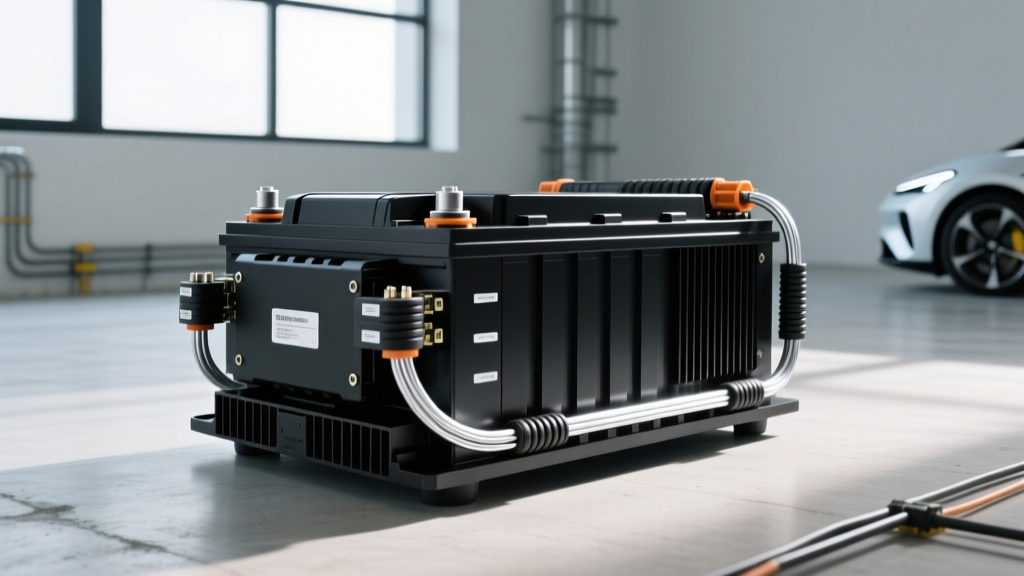
When people discuss "EV batteries," they're referring to the high-voltage lithium-ion traction battery — the massive pack (typically 60–120 kWh) that stores energy to propel the vehicle. This is fundamentally different from any 12V battery in a gas car.
For comparison, here's how the Telluride's powertrain stacks up against Kia's own EV, the 2026 EV6:
| Spec | 2020 Kia Telluride (Gas) | 2026 Kia EV6 Long Range (BEV) |
|---|---|---|
| Powertrain | 3.8L V6, 291 HP | Single/Dual motor, 225–320 HP |
| Traction Battery | None | 77.4 kWh, NMC lithium-ion |
| 12V Auxiliary Battery | Yes (lead-acid) | Yes (lithium 12V integrated) |
| EPA Range / MPG | 23 MPG combined | 310 mi EPA (est.) |
| Fuel/Energy Cost | ~$0.14/mi (gas) | ~$0.04/mi (home charging) |
| MSRP (base) | ~$32,000 (2020) | ~$42,900 (2026) |
The EV6's traction battery stores 77.4 kilowatt-hours (kWh) of energy — roughly equivalent to 2.2 gallons of gasoline in energy content, but converted to motion far more efficiently (electric motors are ~90% efficient vs. ~25–30% for a gas engine).
LFP vs. NMC: EV Battery Chemistry Explained
Modern EV batteries use one of two dominant lithium-ion chemistries. Understanding the trade-offs is critical if you're evaluating any EV purchase:
| Factor | NMC / NCA (Nickel-based) | LFP (Lithium Iron Phosphate) |
|---|---|---|
| Energy Density | Higher (~250 Wh/kg cell-level) | Lower (~170 Wh/kg cell-level) |
| Range per kWh of Pack | More miles for same weight/volume | Fewer miles; needs larger pack |
| Cycle Life | ~1,000–2,000 full cycles | ~3,000–5,000+ full cycles |
| Cold-Weather Performance | Better low-temp discharge/charge | Reduced performance below 32°F |
| Thermal Stability | Good; requires robust BMS | Excellent; inherently safer chemistry |
| Cost | Higher (nickel/cobalt supply chain) | Lower (iron/phosphate abundant) |
| Recommended Daily SoC | 80% for longevity | 100% is fine (LFP prefers it) |
| Used In | Kia EV6, Hyundai Ioniq 5, Tesla LR | Tesla Model 3 RWD, Ford base Mach-E |
Which is better? Neither is universally superior. NMC delivers more range in a lighter package and handles cold weather better — ideal for long-range trims and northern climates. LFP lasts longer (more cycles), costs less, and tolerates daily 100% charging, making it ideal for standard-range daily drivers. Most buyers won't notice the difference in daily use; the choice matters more for high-mileage drivers and extreme climates.
EV Battery Degradation: What the Real Data Shows
Contrary to persistent myths, EV batteries don't suddenly "die" like a phone battery after two years. They slowly lose capacity over time, and the data from hundreds of thousands of vehicles shows the curve is manageable.
Typical EV Battery Degradation Curve (aggregated fleet data):
- Year 1: ~2–3% capacity loss (initial "break-in" drop)
- Years 2–4: ~1–2% additional loss per year
- Years 5–8: ~1% per year, plateauing
- Year 8 average SoH: ~88–92% of original capacity
- Year 10 average SoH: ~85–90% (many packs still above warranty threshold)
A 2024 study by Recurrent Auto, analyzing data from over 15,000 EVs, found that the median battery retains roughly 90% of its original capacity after 5 years and 75,000 miles. Catastrophic failures (sudden, total battery death) remain rare — well under 1% of vehicles.
For a 300-mile EPA-rated EV, 10% degradation over 5 years means your real-world range drops from ~270 miles (real-world highway) to ~243 miles. Noticeable, but not debilitating for most drivers.
Battery Warranty Terms: What's Actually Covered
Federal law mandates that EV batteries carry a minimum warranty of 8 years or 100,000 miles (whichever comes first). In California Air Resources Board (CARB) states, that extends to 10 years or 150,000 miles. Here's how major manufacturers structure their coverage:
| Manufacturer | Warranty Period | Capacity Threshold | What Triggers a Claim |
|---|---|---|---|
| Kia / Hyundai | 10 yr / 100,000 mi | 70% SoH | Capacity drops below 70% |
| Tesla | 8 yr / 100,000–120,000 mi | 70% SoH | Capacity drops below 70% |
| Ford | 8 yr / 100,000 mi | 70% SoH | Capacity drops below 70% |
| GM (Ultium) | 8 yr / 100,000 mi | 70% SoH | Capacity drops below 70% |
| Volkswagen | 8 yr / 100,000 mi | 70% SoH | Capacity drops below 70% |
The 70% State of Health (SoH) threshold is the industry standard. If your battery's maximum capacity falls below 70% of its original rated capacity within the warranty period, the manufacturer will repair or replace modules to bring it back above that line. This is not a full pack replacement in most cases — technicians swap individual degraded modules.
EV Battery Replacement Costs: Numbers and Context
If a battery fails outside of warranty — or if you're buying a used EV and want to budget for a worst-case scenario — here's what full pack replacement costs look like in 2026:
| Vehicle | Battery Size | Chemistry | Replacement Cost (est.) |
|---|---|---|---|
| Tesla Model 3 RWD | 60 kWh | LFP | $12,000–$15,000 |
| Kia EV6 Long Range | 77.4 kWh | NMC | $15,000–$20,000 |
| Ford F-150 Lightning Ext. | 131 kWh | NMC | $25,000–$32,000 |
| Chevrolet Bolt EV | 65 kWh | NMC | $14,000–$16,000 |
| Hyundai Ioniq 5 | 77.4 kWh | NMC | $15,000–$19,000 |
Context that matters: The vast majority of EV batteries never need full replacement. According to fueleconomy.gov and manufacturer service data, most packs outlast the vehicle itself. Battery cell costs have fallen from ~$1,200/kWh in 2010 to roughly $120–$140/kWh in 2026, and module-level repairs (replacing only the degraded section) typically cost $2,000–$6,000 — not the full-pack price.
If you're evaluating a used 2020 Kia Telluride, the cost equation is completely different: a new 12V battery runs $150–$280 at any auto parts store. No specialized technician required.
Factors That Accelerate (or Preserve) EV Battery Health
Battery longevity isn't just about age — how you use and charge the vehicle has a measurable impact on degradation rate.
What Accelerates Degradation
- Frequent DC fast charging above 150 kW: High C-rates generate heat. Occasional fast charging is fine; daily 350 kW sessions add stress.
- Sustained 100% SoC: Sitting at full charge for days (especially in heat) stresses NMC cells. LFP tolerates 100% better.
- Deep discharge to 0%: Regularly draining to empty damages cell chemistry.
- Extreme heat exposure: Sustained ambient temps above 100°F without active thermal management.
- Aggressive acceleration habits: Repeated high-current draws generate internal heat.
What Preserves Battery Health
- Keep SoC between 20–80% for daily use (NMC); LFP owners can charge to 100% regularly.
- Use Level 2 home charging as your primary method — slower charging is gentler.
- Precondition the battery before fast charging in cold weather (most EVs do this automatically when you navigate to a charger).
- Park in shade or a garage during extreme summer heat.
- Drive it regularly — batteries prefer moderate, consistent use over sitting idle for weeks.
How to Monitor Battery State of Health (SoH)
Most modern EVs provide built-in battery health monitoring, though the level of detail varies by brand:
- In-vehicle displays: Kia/Hyundai EVs show a battery health percentage in the settings menu. Tesla displays estimated range at 100% (which reflects degradation) but doesn't show a raw SoH percentage natively.
- OBD-II scanners with EV support: Tools like the OBDLink SX paired with apps such as EVNotify or Car Scanner can read detailed cell-level data, including individual cell voltage variance and pack SoH.
- Dealer diagnostics: Any authorized dealer can run a full battery health report during service visits — request this when buying a used EV.
- Third-party services: Companies like Recurrent and AVILOO offer remote battery health certificates based on telematics data, useful for used-EV transactions.
If you're buying a used EV (not a Telluride, since it has no traction battery), always request a battery health report before purchase. A SoH above 90% at 50,000 miles is typical and healthy.
What's Coming: Solid-State and Silicon-Anode Batteries
Next-generation battery chemistries promise step-change improvements, but timelines matter:
- Solid-state batteries: Replace the liquid electrolyte with a solid material, potentially doubling energy density and improving safety. Toyota, Samsung SDI, and QuantumScape are leading development. Realistic timeline: limited production in select models by 2028–2029; broad market availability not before 2030–2032.
- Silicon-anode batteries: Replace graphite anodes with silicon, boosting energy density 20–40%. Companies like Sila Nanotechnologies and Group14 are in early commercial deployment. Realistic timeline: appearing in limited 2026–2027 model-year vehicles, scaling through 2030.
- Sodium-ion batteries: Use abundant sodium instead of lithium, dramatically cutting cost at the expense of energy density. CATL has begun production. Realistic timeline: likely in budget/urban EVs by 2027–2028.
None of these technologies are available in production vehicles you can buy today. If a salesperson tells you otherwise, ask for the spec sheet.
Frequently Asked Questions
How long do EV batteries last in years and miles?
Based on fleet data from Recurrent Auto and manufacturer warranty claims, most EV batteries retain 85–92% of original capacity at 10 years / 150,000 miles. Catastrophic failure is rare (under 1%). Many packs will outlast the vehicle's useful life. The 2020 Kia Telluride, being a gas vehicle, doesn't have a traction battery — its 12V battery lasts 3–5 years.
How much does an EV battery cost to replace?
Full traction battery replacement ranges from $12,000–$32,000 depending on pack size and chemistry. However, module-level repairs cost $2,000–$6,000, and most batteries never require replacement. A 2020 Kia Telluride's 12V battery replacement costs $150–$280.
What does the EV battery warranty actually cover?
Federal law requires a minimum 8-year/100,000-mile warranty on EV traction batteries. Kia/Hyundai offers 10 years/100,000 miles. The warranty covers capacity loss below 70% SoH and manufacturing defects. It does not cover damage from accidents, flooding, or unauthorized modifications.
How do I check my EV battery's State of Health?
Check the vehicle's built-in battery health display (varies by brand), use an OBD-II scanner with EV-compatible software, or request a dealer diagnostic report. For used-EV purchases, third-party battery health certificates from services like Recurrent provide independent verification.
LFP vs. NMC — which battery chemistry should I choose?
Choose NMC if you need maximum range, live in a cold climate, or frequently road-trip. Choose LFP if you want lower cost, longer cycle life, and plan to charge to 100% daily for commuting. Neither is "better" — they serve different use cases. The 2020 Telluride doesn't offer either, as it uses no traction battery.
Will the Kia Telluride ever get a hybrid or EV battery?
As of the 2026 model year, Kia has not confirmed a hybrid or electric Telluride. The current generation remains gas-only with a 3.8L V6. Kia's three-row electric SUV is the EV9. Rumors of a Telluride Hybrid persist, but no official announcement has been made. Check Kia's official site for updates.