If you've landed here searching for a 2020 Chevy Malibu battery, you're likely dealing with one of two scenarios: your Malibu's 12-volt starter battery needs replacing, or you're weighing the Malibu's long-term ownership costs against a modern electric vehicle and want to understand how EV battery expenses compare. This guide covers both — starting with the specific 12V battery details for the 2020 Malibu, then diving deep into EV high-voltage traction battery technology so you can make an informed decision about your next vehicle.
2020 Chevy Malibu Battery: What You Actually Need to Know
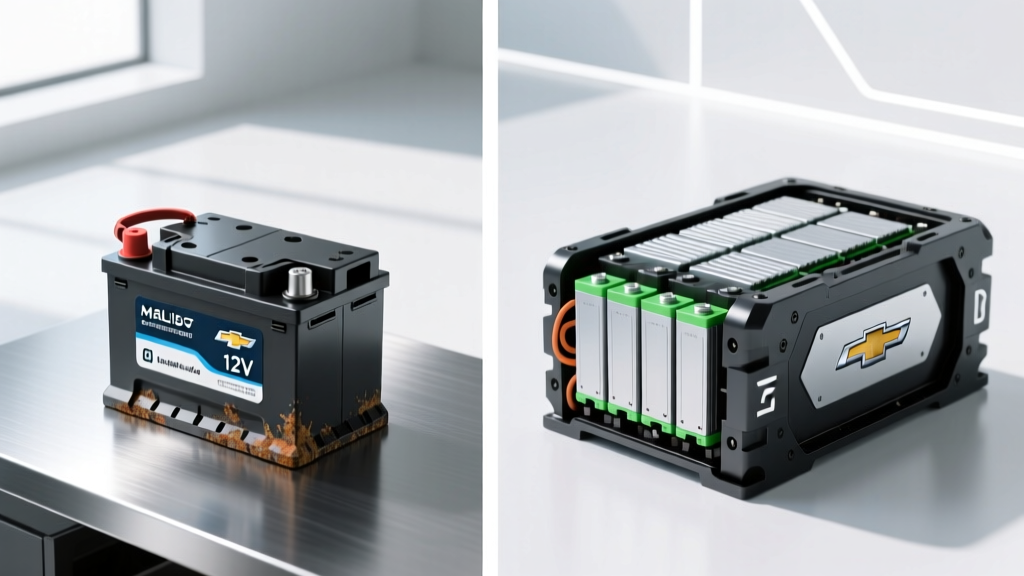
The 2020 Chevrolet Malibu uses a conventional 12-volt AGM (Absorbent Glass Mat) auxiliary battery — not a high-voltage traction pack, because the Malibu is a gasoline-powered midsize sedan (the Malibu Hybrid was discontinued after the 2019 model year). Here are the exact specs:
- Group Size: 48 (H6)
- Cold Cranking Amps (CCA): 720 CCA recommended
- Typical Replacement Cost: $180–$280 for the battery alone; $220–$350 installed at a dealer or auto parts store
- Expected Lifespan: 3–5 years depending on climate and driving habits
- Common OEM Part: ACDelco Gold 48AGM (or equivalent from Interstate, Duralast, DieHard)
This is a maintenance item every Malibu owner will face at least once during ownership. But if you're cross-shopping a Malibu against an EV like the Chevrolet Bolt EV or Equinox EV, the bigger battery question is the high-voltage traction pack — which operates on entirely different principles, costs, and timelines.
EV Traction Batteries vs. 12V Car Batteries: Key Differences
Before diving into EV battery technology, it's critical to understand the distinction between the two battery types in electrified vehicles:
- 12V Auxiliary Battery: Powers lights, infotainment, computers, and door locks. Found in every car — gas, hybrid, and EV alike. Costs $150–$350 and lasts 3–5 years. This is what a 2020 Chevy Malibu battery replacement involves.
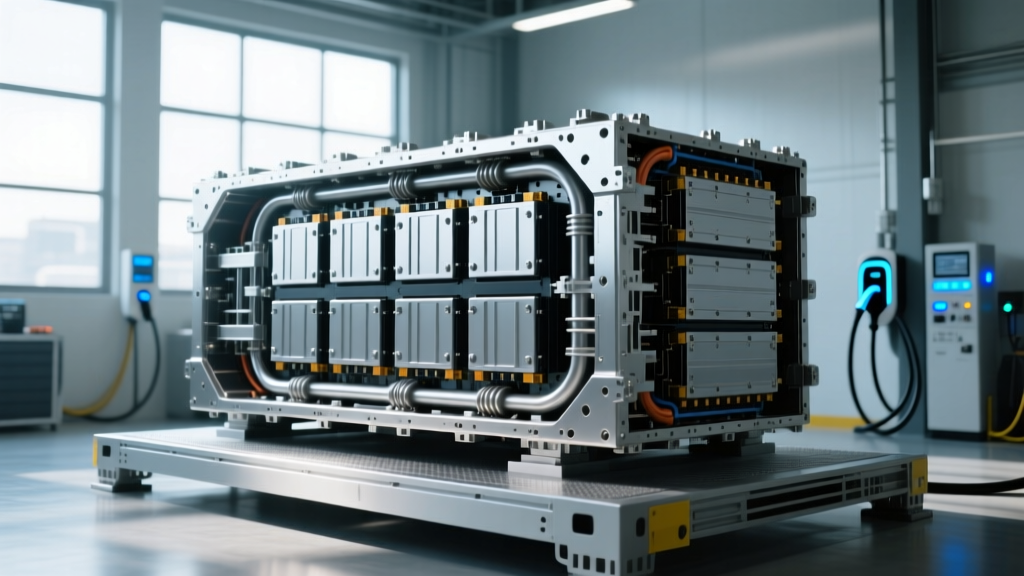
- High-Voltage Traction Battery: The large lithium-ion pack that actually propels an EV. Typically 50–120 kWh of capacity, weighing 600–1,500 lbs. Designed to last the life of the vehicle (15–20+ years). This is what most people mean when they say "EV battery."
EVs also carry a 12V battery, but the traction pack is the component that drives purchase anxiety and deserves detailed analysis.
Battery Chemistry Explained: LFP vs NMC vs NCA
Not all EV batteries are the same. The two dominant lithium-ion chemistries in 2026 are LFP (Lithium Iron Phosphate) and NMC/NCA (Nickel Manganese Cobalt / Nickel Cobalt Aluminum). Your choice of chemistry affects range, longevity, cold-weather performance, and cost.
| Attribute | LFP (LiFePO₄) | NMC / NCA |
|---|---|---|
| Energy Density | Lower (~160 Wh/kg cell-level) | Higher (~250–300 Wh/kg cell-level) |
| Typical Range per Pack Size | Shorter for same kWh; used in Standard Range models | Longer range; used in Long Range/Performance trims |
| Cycle Life | 3,000–5,000+ cycles to 80% capacity | 1,000–2,000 cycles to 80% capacity |
| Cold-Weather Performance | More range loss below 32°F (~30–40% reduction) | Better cold performance (~20–30% reduction) |
| Charging to 100% Daily | Recommended — no degradation penalty | Not recommended — accelerates wear above 80% SoC |
| Cost | Lower (no cobalt or nickel) | Higher (cobalt/nickel supply chain costs) |
| Thermal Stability | Excellent — very low thermal runaway risk | Good — requires more active thermal management |
| Examples (2025–2026) | Tesla Model 3 RWD, Ford Mustang Mach-E Select (LFP option), BYD Blade | Tesla Model Y Long Range, Hyundai Ioniq 5, Chevy Equinox EV |
Which is better? It depends on your use case. If you commute daily under 80 miles, charge at home, and live in a mild climate, LFP is the pragmatic choice — it lasts longer, costs less, and tolerates daily 100% charging. If you need maximum range for road trips, live in a cold-weather state, or want the fastest acceleration, NMC/NCA packs deliver higher energy density and better winter efficiency. Neither chemistry is universally superior; the right answer depends on your driving pattern.
How Long Do EV Batteries Actually Last?
The fear that EV batteries need replacing every few years is not supported by fleet data. Modern liquid-cooled lithium-ion packs are engineered for 15–20 years of service, and real-world degradation data from hundreds of thousands of vehicles confirms this.
Typical EV Battery Degradation Curve (Fleet Averages):
- Year 1: ~2–3% capacity loss (initial formation loss)
- Year 2–3: ~1–1.5% per year
- Year 4–8: ~0.5–1% per year (degradation slows significantly)
- Year 10 cumulative: ~10–15% total capacity loss (fleet average)
- Year 15 cumulative: ~15–22% total capacity loss (varies by chemistry and usage)
Sources: Recurrent Auto fleet data (2024) analyzing over 15,000 EVs; Tesla Impact Reports showing median ~12% degradation at 200,000 miles for Model S/X packs.
A practical example: If you buy an EV with an EPA-estimated 300-mile range, expect roughly 270–285 miles of real-world range after 5 years and 255–270 miles after 10 years. That's still more daily range than most drivers use. According to fueleconomy.gov, the average American drives 37 miles per day — meaning even a degraded 10-year-old EV battery covers typical needs with substantial margin.
Real-world caveat: Degradation isn't linear, and it varies by climate (Arizona heat is harder on batteries than Oregon mildness), charging habits (exclusive DC fast charging accelerates wear slightly), and chemistry (LFP degrades slower than NMC in most conditions).
EV Battery Warranty: What's Covered and for How Long
Federal law mandates that EV batteries carry a minimum warranty of 8 years / 100,000 miles (10 years / 150,000 miles in California and states that follow CARB emissions standards). Most manufacturers exceed this baseline.
| Manufacturer (2025–2026 Models) | Battery Warranty | Capacity Retention Threshold |
|---|---|---|
| Tesla (Model 3/Y RWD — LFP) | 8 yr / 100,000 mi | 70% of original capacity |
| Tesla (Model 3/Y Long Range — NMC) | 8 yr / 120,000 mi | 70% of original capacity |
| Hyundai / Kia (Ioniq 5, EV6, EV9) | 10 yr / 100,000 mi | 70% of original capacity |
| Chevrolet (Equinox EV, Blazer EV) | 8 yr / 100,000 mi | 60–70% depending on pack |
| Ford (Mustang Mach-E, F-150 Lightning) | 8 yr / 100,000 mi | 70% of original capacity |
| Rivian (R1T, R1S) | 8 yr / 175,000 mi | 70% of original capacity |
| BMW (i4, iX) | 8 yr / 100,000 mi | 70% of original capacity |
What the warranty actually covers: If your battery's usable capacity falls below the stated threshold (typically 70%) within the warranty period, the manufacturer will repair or replace modules or the full pack at no cost. This is a capacity retention warranty — it doesn't cover damage from accidents, flooding, or unauthorized modifications. A battery at 72% capacity after 8 years has not "failed"; it's simply aged, and most owners find this level of degradation perfectly livable.
How Much Does an EV Battery Cost to Replace?
Out-of-warranty battery replacement is the single biggest financial fear among EV shoppers. Here's the reality: most EV batteries never need replacement during original ownership. But if you're buying a used EV out of warranty or planning to keep a vehicle past 15 years, here's what replacement costs look like in 2025–2026:
| Vehicle / Pack Size | Full Pack Replacement Cost (2025–2026) | Module-Level Repair Cost |
|---|---|---|
| Chevrolet Bolt EV (65 kWh) | $14,000–$16,000 | $2,500–$4,500 per module |
| Tesla Model 3 Standard Range (60 kWh LFP) | $12,000–$15,000 | $2,000–$4,000 per module |
| Tesla Model Y Long Range (82 kWh NMC) | $16,000–$20,000 | $3,000–$5,000 per module |
| Hyundai Ioniq 5 (77.4 kWh) | $15,000–$18,000 | $2,500–$4,500 per module |
| Ford F-150 Lightning Extended Range (131 kWh) | $25,000–$32,000 | $3,500–$6,000 per module |
| Chevy Equinox EV (85 kWh) | $14,000–$18,000 | $2,500–$5,000 per module |
Key context: These are full-pack replacement prices at dealer rates. In practice, most out-of-warranty battery issues involve a single degraded module, not the entire pack — and independent EV repair shops increasingly offer module-level repairs for $2,500–$5,000. Battery prices have also fallen roughly 80% since 2013 (from ~$700/kWh to ~$130/kWh at the cell level, per BloombergNEF), and that trend continues. By the time a 2026 EV actually needs a new pack in 2040, replacement costs will likely be a fraction of today's figures.
For comparison, a 2020 Chevy Malibu owner will spend $180–$280 on a 12V battery every 3–5 years, plus $2,000–$4,000 on engine oil changes, transmission fluid, spark plugs, timing components, and exhaust repairs over 10 years — maintenance expenses that EVs largely eliminate.
Factors That Affect EV Battery Life (and How to Minimize Them)
EV battery degradation is driven by five primary factors. Understanding them lets you maximize your pack's lifespan:
- Extreme Heat: Sustained exposure to ambient temperatures above 95°F accelerates chemical degradation. Park in shade or a garage when possible. Liquid-cooled packs (standard on virtually all 2025+ EVs) handle heat far better than older passively-cooled designs.
- Extreme Cold: Cold doesn't permanently damage batteries, but charging a frozen battery without preconditioning can cause lithium plating. Always use your EV's preconditioning feature before DC fast charging in sub-32°F weather.
- High State of Charge (SoC) Storage: For NMC/NCA batteries, storing at 100% SoC for days or weeks accelerates degradation. Set your daily charge limit to 80% and only charge to 100% before road trips. (LFP batteries are the exception — manufacturers recommend charging to 100% at least weekly for accurate SoC calibration.)
- Exclusive DC Fast Charging: Frequent use of 150+ kW DC fast chargers generates heat stress. Fleet data from Recurrent shows that EVs charged primarily on Level 2 (home/workplace) degrade 1–3% less over 5 years than those using DC fast charging daily. Fast charge when you need it, but make Level 2 your routine.
- Deep Discharge Cycles: Regularly draining below 10% SoC stresses the battery. Plug in when you reach 15–20% rather than running the pack to near-empty.
Following these practices, a modern EV battery should comfortably deliver 200,000+ miles while retaining 75–85% of its original capacity.
How to Check and Monitor Your EV Battery Health
Most EVs provide State of Health (SoH) data through the infotainment system or companion app, but the depth of information varies by manufacturer:
- Tesla: No built-in SoH percentage in the app, but you can estimate it by charging to 100% and comparing the displayed range to the original EPA figure. Third-party tools like TeslaFi or Scan My Tesla (via OBD-II) provide granular cell-level data.
- Hyundai/Kia: The EV Settings menu displays a battery health indicator; the dealer can pull a detailed SoH report via the KDS diagnostic tool.
- GM (Chevrolet, Cadillac): The myChevrolet/myCadillac app shows estimated range at full charge, which serves as a proxy for SoH. Dealer diagnostics provide exact capacity measurements.
- Ford: The FordPass app and SYNC system display battery health status; dealers can run a full capacity test.
- OBD-II Scan Tools: Devices like the OBDLink SX paired with apps such as LeafSpy (Nissan) or ABRP (A Better Route Planner) can read battery management system (BMS) data on many EVs, showing individual cell voltages, pack temperature, and estimated SoH percentage.
Best practice: Check your full-charge range once a month and log it. A gradual decline of 1–2% per year is normal. A sudden drop of 5%+ in a single month warrants a dealer diagnostic check, as it may indicate a failing module rather than normal degradation.
What's Next: Solid-State and Silicon-Anode Batteries
Next-generation battery technologies are in active development, but it's important to separate announced timelines from showroom reality:
- Solid-State Batteries: These replace the liquid electrolyte with a solid material, promising 30–50% higher energy density, faster charging, and improved safety. Toyota has announced a solid-state EV for 2027–2028 with a claimed 620-mile range, but production volumes will be limited and costs high initially. Samsung SDI and QuantumScape are targeting 2027–2029 production. Expect solid-state to reach mainstream affordability (<$100/kWh) no earlier than 2030–2032.
- Silicon-Anode Batteries: Companies like Sila Nanotechnologies and Group14 are replacing graphite anodes with silicon, boosting energy density by 20–40%. These are beginning to appear in premium vehicles (the Mercedes G-Class 580e uses a silicon-anode pack from Group14) and will trickle into mainstream EVs through 2027–2029.
- Sodium-Ion Batteries: CATL and BYD are producing sodium-ion packs for lower-cost, shorter-range EVs in China. These use no lithium, cobalt, or nickel — dramatically reducing cost — but offer ~30% lower energy density. US-market availability is estimated for 2027+ in budget-oriented models.
Bottom line: If you're buying an EV in 2025–2026, today's LFP and NMC packs are mature, well-warrantied, and proven to last 15+ years. Waiting for solid-state means waiting 4–6 years for limited-availability, premium-priced vehicles. The best battery technology is the one that meets your needs today.
2020 Malibu vs. EV: Battery Ownership Cost Comparison
To bring this full circle for anyone cross-shopping a used 2020 Chevy Malibu against a new EV, here's a 10-year battery and maintenance cost snapshot:
| Cost Item | 2020 Chevy Malibu (Gas) | 2026 EV (e.g., Chevy Equinox EV) |
|---|---|---|
| 12V Battery Replacements (10 yr) | $540–$1,050 (2–3 replacements) | $360–$700 (2 replacements) |
| Traction Battery Replacement | N/A | $0 under warranty (if needed at all) |
| Engine/Transmission Maintenance | $2,500–$5,000 (oil, spark plugs, timing, coolant) | $0 |
| Fuel vs. Electricity (150,000 mi) | $16,500–$21,000 (gas at $3.30–$4.20/gal, 29 MPG avg) | $4,500–$7,500 (at $0.13–$0.18/kWh home charging) |
| Total 10-Year Energy + Maintenance | $19,540–$27,050 | $4,860–$8,200 |
The EV's traction battery — the component that scares buyers most — almost never needs replacement during typical ownership. Meanwhile, the Malibu's powertrain generates thousands in maintenance costs that EVs simply don't have. The 2020 Malibu's 12V battery is a minor, predictable expense; the real financial advantage of going electric lies in eliminating internal combustion maintenance entirely.
Frequently Asked Questions
How long do EV batteries last in years and miles?
Modern liquid-cooled EV batteries are designed to last 15–20 years or 200,000+ miles while retaining 70–85% of their original capacity. Fleet data from Recurrent Auto and Tesla shows median degradation of ~12% at 200,000 miles. Most EV batteries outlive the vehicle's body and interior.
How much does an EV battery cost to replace?
Full pack replacement ranges from $12,000–$20,000 for most passenger EVs (60–85 kWh packs) and $25,000–$32,000 for large trucks like the F-150 Lightning (131 kWh). However, most out-of-warranty repairs involve individual modules at $2,500–$5,000 each, and the vast majority of EV batteries never need replacement during original ownership.
What does the EV battery warranty cover?
Federal law requires a minimum 8-year/100,000-mile battery warranty (10 yr/150,000 mi in CARB states). The warranty covers capacity loss below a stated threshold (typically 70% of original capacity). It does not cover accident damage, flooding, or unauthorized modifications. Hyundai/Kia leads the industry with 10-year/100,000-mile coverage.
How do I check and maximize my EV battery health?
Monitor your full-charge range monthly via the vehicle's app or display. For maximum longevity: set daily charge limits to 80% (NMC/NCA) or 100% (LFP), avoid frequent DC fast charging when Level 2 is available, precondition the battery before fast charging in cold weather, and avoid storing the vehicle at very low or very high SoC for extended periods.
LFP vs NMC — which battery chemistry is better?
Neither is universally better. LFP offers longer cycle life (3,000–5,000 cycles), lower cost, better thermal safety, and tolerance for daily 100% charging — making it ideal for daily commuters and mild climates. NMC/NCA delivers higher energy density (more range per kWh of battery weight) and better cold-weather performance — making it better for road-trip-heavy drivers and cold climates. Choose based on your driving pattern, not marketing.
What type of battery does a 2020 Chevy Malibu use?
The 2020 Chevy Malibu uses a Group 48 (H6) 12V AGM battery with 720 CCA. Replacement costs $180–$280 for the battery and lasts 3–5 years. The Malibu does not have a high-voltage traction battery (the Hybrid variant was discontinued after 2019).