If you've landed here searching for a 2019 Subaru Ascent battery, you may be dealing with a dead 12-volt starter battery — or you might be wondering how the Ascent's electrical system compares to the high-voltage traction batteries found in hybrids and full electric vehicles. This guide clears up the confusion, then dives deep into the EV and hybrid battery data that matters for your next electrified purchase: chemistry trade-offs, real-world degradation curves, warranty coverage, replacement costs, and care habits that extend battery life.
The 2019 Subaru Ascent Battery: What You Actually Have
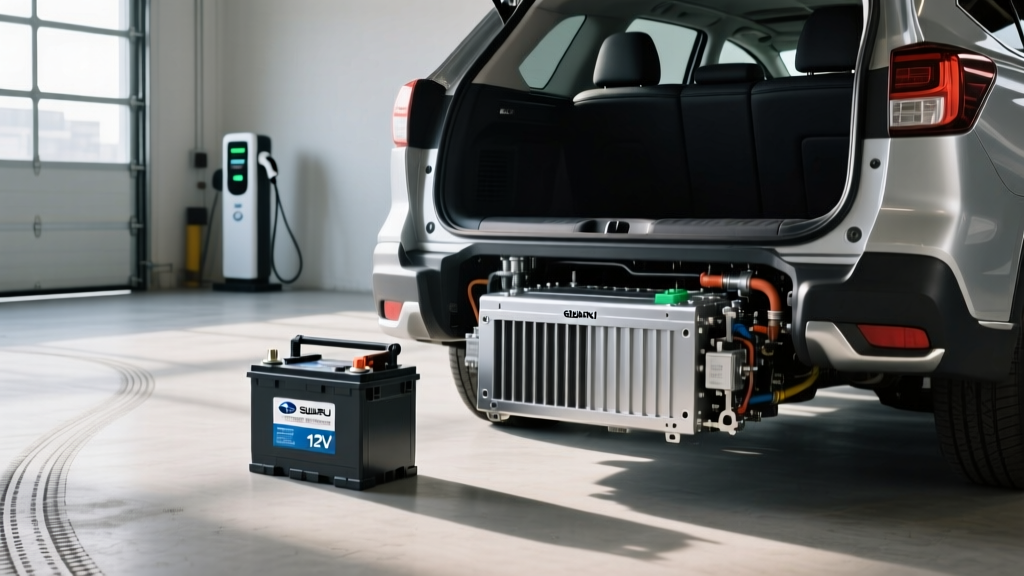
The 2019 Subaru Ascent is a conventional, turbocharged gasoline SUV. It is not a hybrid, plug-in hybrid, or electric vehicle. It does not have a high-voltage traction battery. What it does have is a standard 12V lead-acid auxiliary battery (Group 35 or Group 24F, depending on trim and climate package) responsible for starting the engine and powering electronics when the alternator isn't spinning.
Typical 12V battery lifespan in the Ascent is 3–5 years, heavily dependent on climate (heat kills lead-acid cells faster than cold), accessory load, and drive frequency. Replacement costs run $150–$280 for the battery itself, plus minimal labor if a shop handles it.
This is fundamentally different from the high-voltage lithium-ion traction batteries in vehicles like the Toyota RAV4 Prime (PHEV), Hyundai Ioniq 5 (BEV), or Toyota Highlander Hybrid. Those batteries store 1–77+ kWh of energy, power the electric motor(s), and are engineered for 150,000+ miles of service. Let's focus on those.
EV and Hybrid Traction Batteries: Chemistry Explained
Modern electrified vehicles use one of two dominant lithium-ion chemistries: NMC/NCA (nickel-manganese-cobalt or nickel-cobalt-aluminum) or LFP (lithium iron phosphate). The chemistry choice affects energy density, cycle life, cold-weather behavior, cost, and how you should manage daily charging.
| Attribute | NMC / NCA | LFP (Lithium Iron Phosphate) |
|---|---|---|
| Energy Density | High (~250–300 Wh/kg cell-level) | Lower (~160–200 Wh/kg cell-level) |
| Cycle Life | ~1,000–2,000 full cycles to 80% SoH | ~3,000–6,000+ full cycles to 80% SoH |
| Cold-Weather Performance | Better low-temp discharge & regen acceptance | Reduced regen & range below ~32°F; preconditioning critical |
| Peak Charge Rate (C-rate) | Higher peak kW; faster 10–80% times | Typically slower peak; but tolerates frequent 100% SoC |
| Daily Charging to 100% | Not recommended; accelerates degradation | Recommended weekly to calibrate BMS |
| Cost (per kWh, pack-level) | ~$130–$160 (2025–2026) | ~$90–$120 (2025–2026) |
| Cobalt / Ethical Sourcing | Contains cobalt (supply-chain concern) | Cobalt-free |
| Common Vehicles (2026) | Tesla Model Y LR, Hyundai Ioniq 5, Ford F-150 Lightning Ext Range | Tesla Model 3/Y RWD, Ford Mustang Mach-E SR (some trims), BYD models |
Which is better? NMC/NCA wins on range-per-kWh and cold-weather usability; LFP wins on longevity, cost, and ethical sourcing. For a daily commuter who charges at home every night, LFP is often the smarter long-haul pick. For road-trippers in cold climates who need maximum range and fast DC charging, NMC still holds the edge.
How Long Do EV Batteries Actually Last?
The short answer: most EV traction batteries outlast the vehicles they're installed in. The fear of a $20,000 battery swap at 80,000 miles is not supported by fleet data.
Typical Degradation Curve (NMC, liquid-cooled packs, 2020–2026 model years):
- Year 1 / 15,000 mi: ~2–4% capacity loss (initial "break-in" drop)
- Year 3 / 45,000 mi: ~6–9% cumulative loss
- Year 5 / 75,000 mi: ~8–12% cumulative loss
- Year 8 / 120,000 mi: ~10–16% cumulative loss
- Year 10 / 150,000 mi: ~12–20% cumulative loss (most packs still above 80% SoH)
Data from Geotab's fleet study of 6,300+ EVs shows an average annual degradation rate of approximately 1.8% per year across all chemistries and climates, with LFP packs trending lower and early-generation air-cooled packs (like the first-gen Nissan Leaf) trending significantly higher.
For a 2026 Hyundai Ioniq 5 with a 77.4 kWh (usable) NMC pack rated at 305 miles EPA, a realistic expectation is ~275 miles of usable range at year 5 and ~255 miles at year 10 — still entirely functional for daily use.
Battery Warranty Terms: What's Actually Covered
Federal law mandates that EV and hybrid battery warranties cover at minimum 8 years / 100,000 miles (10 years / 150,000 miles in CARB states including California, New York, Massachusetts, and others). Most manufacturers exceed the floor.
| Manufacturer (2026 Models) | Warranty Term | Capacity Threshold |
|---|---|---|
| Tesla (Model 3/Y LR) | 8 yr / 120,000 mi | 70% retention |
| Tesla (Model 3/Y RWD — LFP) | 8 yr / 100,000 mi | 70% retention |
| Hyundai / Kia (Ioniq 5, EV6) | 10 yr / 100,000 mi | 70% retention |
| Ford (Mach-E, F-150 Lightning) | 8 yr / 100,000 mi | 70% retention |
| Toyota (bZ4X, hybrids) | 10 yr / 150,000 mi | 70% retention (hybrid); 70% (BEV) |
| Chevrolet (Equinox EV, Blazer EV) | 8 yr / 100,000 mi | 60–70% retention (varies by model) |
What triggers a warranty claim? The battery management system (BMS) must report State of Health (SoH) below the threshold — typically 70% of original capacity. A 77 kWh pack at 70% SoH still holds ~54 kWh usable, which in the Ioniq 5 still delivers roughly 210+ miles of range. Most owners never approach a claim.
Warranties typically exclude damage from collisions, flood, improper charging equipment, or unauthorized modifications. Normal degradation within the threshold is not a defect.
EV Battery Replacement Cost: When and How Much
Out-of-warranty replacement is rare but real. Costs vary dramatically by pack size, chemistry, and whether the manufacturer offers module-level repair (replacing 1–2 bad modules instead of the entire pack).
| Vehicle / Pack Size | Full Pack Replacement (2026 est.) | Module Repair (where available) |
|---|---|---|
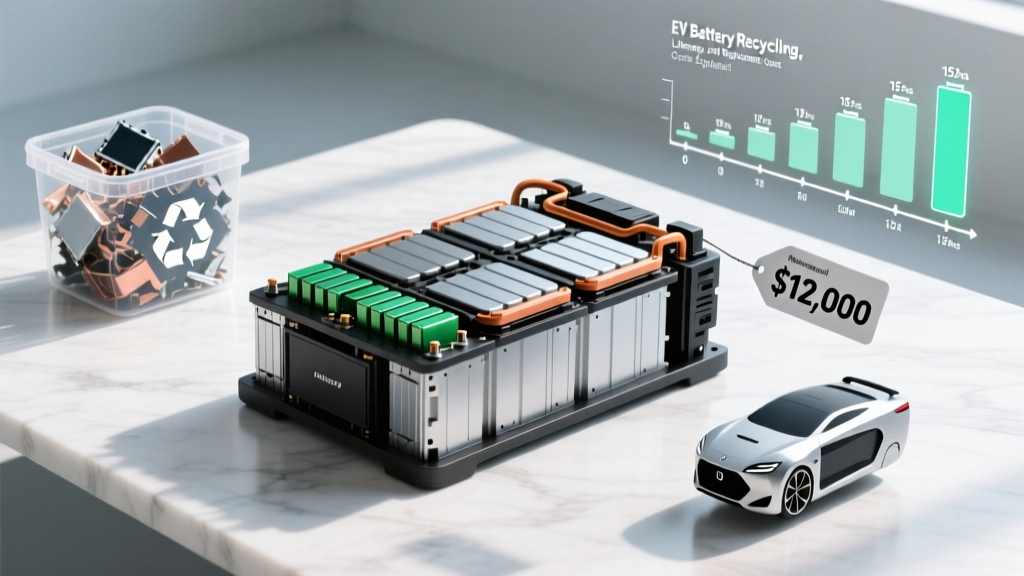
| Tesla Model 3 RWD (~60 kWh LFP) | $12,000–$15,000 | Limited — pack-level swap typical |
| Hyundai Ioniq 5 (77.4 kWh NMC) | $14,000–$18,000 | Module-level repair supported |
| Ford F-150 Lightning Ext Range (131 kWh) | $22,000–$28,000 | Module repair in development |
| Chevrolet Bolt EV/EUV (65 kWh NMC) | $14,000–$16,500 | Module replacement available |
| Toyota RAV4 Prime (18.1 kWh PHEV) | $4,500–$7,000 | Module repair common |
When is replacement actually needed? Based on current degradation data, most packs reach 70–80% SoH between 150,000 and 250,000 miles — a point at which many vehicles have already been retired for unrelated reasons (body damage, suspension wear, owner upgrade). Out-of-warranty failure before 100,000 miles is statistically uncommon in liquid-cooled packs.
Pack costs have fallen from ~$1,200/kWh in 2010 to approximately $130–$160/kWh at the pack level in 2025–2026 (BloombergNEF), and are projected to continue declining as LFP adoption grows and manufacturing scales.
Factors That Accelerate Battery Degradation
Lithium-ion batteries don't age on a fixed calendar — they age based on electrochemical stress. The biggest accelerants:
- Frequent DC fast charging above 150 kW without preconditioning: heat is the #1 degradation driver. Occasional road-trip fast charging is fine; daily 150+ kW sessions on a hot pack will measurably shorten life.
- Sustained high State of Charge (SoC): storing an NMC pack at 100% SoC for days or weeks — especially in heat — accelerates calendar aging. LFP tolerates 100% SoC far better.
- Deep discharges to 0%: regularly running the pack to near-empty stresses the cells. Most BMS systems maintain a bottom buffer (~3–5% of gross capacity), but habitual 5% SoC parking is still suboptimal.
- Extreme ambient temperatures: sustained exposure to 95°F+ (Phoenix, Las Vegas summers) or frequent -10°F cold-soaking without preconditioning. Liquid thermal management mitigates this substantially.
- High-performance driving in heat: repeated hard acceleration and high-speed runs generate internal cell heat that compounds degradation.
Battery Care Checklist for Maximum Longevity
- Set daily charge limit to 80% for NMC; 100% weekly is fine for LFP
- Enable battery preconditioning before DC fast charging (Tesla, Hyundai, Ford all support this)
- Avoid parking at 100% SoC in hot weather for extended periods
- Use Level 2 home charging as your primary method; DCFC for road trips
- In cold climates, plug in overnight and precondition while on grid power
- Keep SoC between 20–80% for long-term storage (2+ weeks)
- Update BMS firmware when prompted — manufacturers refine charge curves via OTA
How to Check Your Battery's State of Health (SoH)
Most modern EVs expose SoH data, though the method varies:
- Tesla: Service menu (hold model name on About screen for 3 seconds → enter "service" → Battery Health Test). Reports SoH percentage and flags degradation concerns.
- Hyundai/Kia: Dealer diagnostic scan via KDS tool; some third-party OBD2 readers (e.g., Car Scanner Pro with appropriate adapter) can pull SoH from the BMS.
- Ford: FordPass app shows estimated range trends; dealer scan required for precise SoH.
- Universal method: OBD2 dongle + app like EV Health, Car Scanner Pro, or LeafSpy (Nissan) reads the BMS-reported capacity vs. original. Results within 2–3% of dealer readings in most cases.
For used-EV buyers, a pre-purchase SoH check is the single most important diagnostic — more predictive of remaining useful life than odometer alone.
Emerging Battery Tech: Solid-State and Silicon Anodes
Two technologies are frequently cited as the "next generation" of EV batteries. Neither is broadly available in production vehicles as of early 2026, but both are progressing:
Solid-state batteries replace the liquid electrolyte with a solid ceramic, polymer, or sulfide material, promising 30–50% higher energy density, faster charging, and improved safety (no flammable electrolyte). Toyota has announced a 2027–2028 production timeline for a solid-state pack targeting 750+ km (~465 miles) range; Nissan and Samsung SDI target 2028–2030. These are announced, forward-looking targets — not available for purchase today.
Silicon anode technology (used in limited form in the Porsche Taycan Turbo GT and GM's upcoming Ultium cells) replaces graphite anodes partially or fully with silicon, boosting energy density by 10–25% at the cell level. Sila Nanotechnologies and Group14 are scaling production through 2026–2027. This tech is closer to mainstream adoption than solid-state but still in early production ramp.
Realistic timeline for mainstream buyers: Expect solid-state to appear in premium/limited-production vehicles in 2028–2030, with volume-market penetration likely 2032+. Silicon anodes will reach broader availability sooner, likely 2027–2029 across multiple OEMs.
Frequently Asked Questions
How long do EV batteries last in years and miles?
Most liquid-cooled EV batteries from 2020 onward retain 75–85% of original capacity at 150,000 miles / 10 years. At 200,000+ miles, many packs still function above 70% SoH — though range reduction becomes noticeable. Calendar aging matters as much as mileage; a 10-year-old pack with 50,000 miles can show similar degradation to one with 120,000 miles.
How much does an EV battery cost to replace out of warranty?
Full pack replacement ranges from $12,000 for smaller LFP packs (Tesla Model 3 RWD) to $28,000 for large NMC packs (F-150 Lightning Extended Range). Module-level repair, where supported, can reduce costs to $2,000–$6,000. Most owners never face this expense — the vehicle is typically retired for other reasons first.
What does the federal battery warranty actually cover?
By law, minimum 8 years / 100,000 miles (10/150k in CARB states) against capacity loss below a stated threshold (usually 70%). It covers defects and abnormal degradation. It does not cover collision damage, flood, unauthorized modifications, or normal wear within the threshold. Check your specific warranty booklet — terms vary by OEM.
How do I check my EV's battery health before buying used?
Use an OBD2 adapter with an EV-compatible app (Car Scanner Pro, EV Health) to read BMS-reported SoH. For Tesla, use the in-car Battery Health Test in the service menu. Always compare current max range at 100% SoC against the original EPA rating — a 305-mile Ioniq 5 showing 250 miles at full charge has roughly 82% SoH.
LFP vs NMC — which battery chemistry should I choose?
Choose LFP if you charge at home daily, want maximum cycle life, prioritize lower cost and cobalt-free sourcing, and don't need maximum cold-weather range. Choose NMC/NCA if you need the longest possible EPA range per charge, drive frequently in sub-freezing climates, or rely on DC fast charging for regular long-distance travel. Both chemistries reliably exceed 150,000 miles with proper care.
Is the 2019 Subaru Ascent a hybrid or electric vehicle?
No. The 2019 Subaru Ascent is a gasoline-only SUV with a 2.4L turbocharged boxer engine and a conventional 12V lead-acid auxiliary battery. Subaru's first mass-market BEV, the Solterra (co-developed with Toyota), launched for the 2023 model year. Subaru has announced plans for additional EV models through 2027–2028.
Whether you're maintaining a conventional vehicle's 12V system or evaluating your next EV purchase, understanding battery chemistry, degradation patterns, and warranty coverage is the highest-leverage knowledge you can bring to the decision. The data is clear: modern EV batteries are lasting longer than early skeptics predicted, replacement is rare, and smart charging habits can push a pack well past 200,000 miles of usable service.