If you own or are considering a 2019 Nissan Frontier, you've likely searched for "2019 Nissan Frontier battery" at some point — whether you're dealing with a dead 12V starter battery, planning a replacement, or comparing the truck's conventional powertrain to the EV batteries in modern electric pickups. This guide covers both angles: the practical 12V battery replacement details every Frontier owner needs, and a deep dive into how modern EV traction batteries compare in longevity, cost, and maintenance.
2019 Nissan Frontier 12V Battery: Specs and Replacement
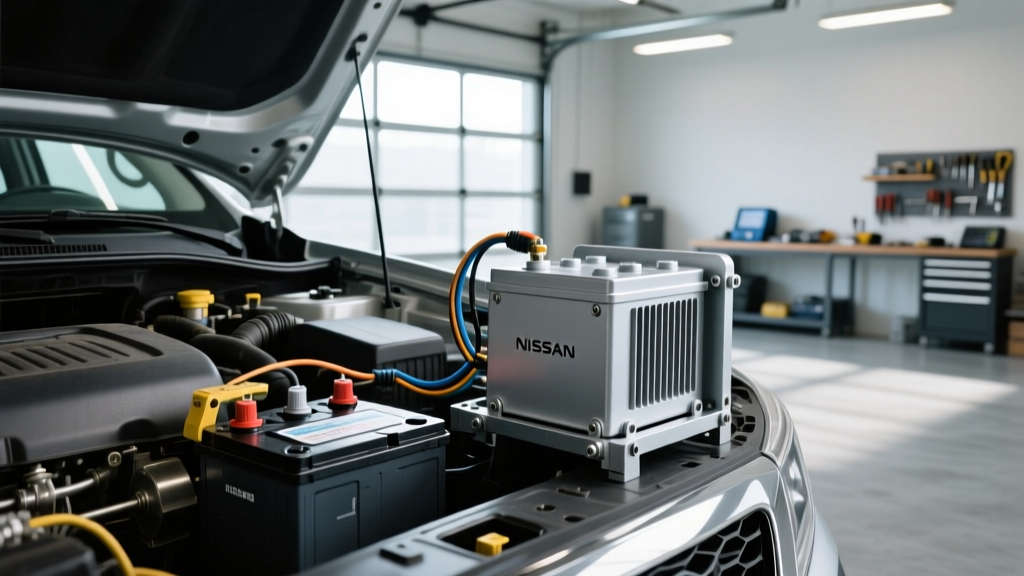
The 2019 Nissan Frontier uses a Group 34 or Group 35 12V lead-acid battery, depending on engine configuration. The 2.5L four-cylinder models typically use a Group 35, while the 4.0L V6 models call for a Group 34 with higher cold-cranking amps (CCA).
| Specification | 4-Cylinder (2.5L) | V6 (4.0L) |
|---|---|---|
| Battery Group Size | 35 | 34 |
| Cold Cranking Amps (CCA) | 550-640 | 650-700 |
| Voltage | 12V | 12V |
| Typical Lifespan | 3-5 years | 3-5 years |
| Replacement Cost (parts) | $120-$200 | $140-$220 |
Signs your Frontier's 12V battery is failing include slow cranking, dimming headlights, the check-battery dash light, or needing frequent jump starts. In hot climates like Arizona or Texas, expect the lower end of that 3-5 year lifespan — heat accelerates lead-acid degradation faster than cold.
Replacement Tips
- Match the group size exactly — a Group 34 in a Group 35 tray won't secure properly and can vibrate loose.
- Choose AGM (Absorbent Glass Mat) over flooded lead-acid if you frequently drive off-road or in extreme heat. AGM batteries cost $40-$60 more but resist vibration damage and last longer.
- After installation, the Frontier's ECU may need a brief idle relearn cycle — let it idle for 10 minutes before driving.
EV Traction Batteries vs. Conventional 12V: A Different World
If you're researching the 2019 Frontier's battery because you're weighing whether to keep it or switch to an electric truck like the Ford F-150 Lightning, Rivian R1T, or Chevrolet Silverado EV, understanding EV traction batteries is essential. Unlike the Frontier's $150 lead-acid unit, an EV's high-voltage battery pack is the single most expensive component in the vehicle — and its longevity directly determines the truck's usable life.
Modern EV batteries are fundamentally different from the 12V battery in your Frontier:
- Chemistry: Lithium-ion cells (NMC, NCA, or LFP) instead of lead-acid
- Voltage: 350-800V DC systems vs. 12V
- Capacity: 60-200+ kWh of usable energy vs. roughly 0.6 kWh in a Frontier battery
- Lifespan: Designed for 150,000-300,000+ miles vs. 40,000-60,000 miles for a 12V
- Cost: $5,000-$25,000 to replace vs. $120-$220
LFP vs. NMC/NCA: Which Battery Chemistry Is Right for You?
The two dominant lithium-ion chemistries in 2026 EVs are LFP (Lithium Iron Phosphate) and NMC/NCA (Nickel Manganese Cobalt / Nickel Cobalt Aluminum). Each has distinct trade-offs that affect range, longevity, cold-weather performance, and cost.
| Factor | LFP (Lithium Iron Phosphate) | NMC/NCA (Nickel-based) |
|---|---|---|
| Energy Density | Lower (~160-180 Wh/kg) | Higher (~220-280 Wh/kg) |
| Cycle Life | 3,000-6,000+ cycles | 1,000-2,500 cycles |
| Cold-Weather Performance | Weaker — more range loss below 32°F | Better — less cold-weather penalty |
| Cost per kWh | Lower (~$80-$100/kWh at pack level) | Higher (~$110-$140/kWh) |
| Charging to 100% | Recommended regularly (helps BMS calibration) | Better to stay at 80-90% daily |
| Safety / Thermal Runaway | Higher threshold, more stable | Lower threshold, requires more thermal management |
| Common In (2026) | Tesla Model 3/Y RWD, Ford Mustang Mach-E Select, many Chinese-market EVs | Long-range and performance trims, most trucks and large SUVs |
For truck buyers comparing a used 2019 Frontier to a new EV pickup, NMC chemistry dominates the electric truck segment because these vehicles need maximum energy density for towing range. The F-150 Lightning's extended-range pack (131 kWh usable, NMC) and the Silverado EV's 200+ kWh pack both use nickel-based chemistry.
How Long Do EV Batteries Actually Last? Degradation Data
The most common question from buyers considering an EV truck — or any EV — is how long the battery will last before it needs replacement. The data is reassuring: most EV batteries outlast the vehicles they're installed in.
Typical EV Battery Degradation Curve (NMC/NCA chemistry, average use):
- Year 1 / 15,000 miles: ~2-4% capacity loss (initial settling)
- Year 3 / 45,000 miles: ~6-9% total loss
- Year 5 / 75,000 miles: ~8-12% total loss
- Year 8 / 120,000 miles: ~10-15% total loss
- Year 10 / 150,000 miles: ~12-18% total loss
LFP batteries degrade more slowly — expect roughly 5-8% loss over 150,000 miles based on fleet data. Source: Recurrent Auto battery health data and Geotab fleet analysis.
At 15% degradation, a 250-mile EPA-rated EV still delivers roughly 212 miles of range — still functional for most daily driving. The battery isn't "dead"; it simply holds less energy. This is analogous to a smartphone battery after two years: usable, just not at peak capacity.
Factors That Accelerate Degradation
- Frequent DC fast charging: Exclusive reliance on 150+ kW DC fast charging (rather than Level 2 home charging) can add 1-3% more degradation over 100,000 miles due to sustained heat exposure.
- Extreme temperatures: Repeatedly exposing the battery to sustained 100°F+ ambient heat without active thermal management accelerates cell wear. Cold weather reduces range temporarily but doesn't permanently damage cells.
- Consistent 100% or 0% state of charge: For NMC/NCA batteries, routinely sitting at full charge or deeply discharging stresses cells. LFP batteries tolerate 100% SoC better.
- High-performance driving: Repeated hard acceleration and sustained high-speed driving generate internal cell heat.
Battery Warranty Coverage: What Manufacturers Guarantee
Federal law mandates a minimum 8-year/100,000-mile warranty on EV battery packs (10 years/150,000 miles in California and states adopting CARB standards). Most manufacturers exceed this baseline.
| Manufacturer | Warranty Period | Capacity Retention Threshold | Notes |
|---|---|---|---|
| Ford (F-150 Lightning) | 8 yr / 100,000 mi | 70% of original capacity | Covers battery components and capacity loss |
| General Motors (Silverado EV) | 8 yr / 100,000 mi | 70% of original capacity | Ultium platform warranty |
| Tesla (Cybertruck) | 8 yr / 120,000 mi | 70% of original capacity | Extended mileage vs standard Model 3/Y |
| Rivian (R1T) | 8 yr / 175,000 mi | 70% of original capacity | Industry-leading mileage cap |
| Hyundai (Ioniq 5) | 10 yr / 100,000 mi | 70% of original capacity | Longest time period among mainstream brands |
The key metric is the capacity retention threshold — typically 70%. If your EV battery drops below 70% of its original usable kWh within the warranty period, the manufacturer must repair or replace it at no cost. In practice, very few batteries fall below this threshold under normal use. According to Recurrent Auto's 2025 fleet analysis, fewer than 2% of EV batteries have required warranty replacement.
EV Battery Replacement Cost: When and How Much
If a battery fails outside warranty coverage — typically after 8-10 years or 100,000-175,000 miles depending on the manufacturer — replacement costs are significant. However, this scenario is rare, and costs have been declining steadily.
| Vehicle Category | Battery Size (usable kWh) | Replacement Cost Range (2026) | Cost per kWh |
|---|---|---|---|
| Compact EV (e.g., Chevy Bolt EV) | 58-65 kWh | $6,000-$10,000 | ~$110-$155/kWh |
| Mid-size crossover (e.g., Tesla Model Y) | 72-82 kWh | $8,000-$14,000 | ~$110-$170/kWh |
| Electric truck (e.g., F-150 Lightning) | 98-131 kWh | $12,000-$22,000 | ~$120-$170/kWh |
| Large luxury EV (e.g., GMC Hummer EV) | 170-212 kWh | $20,000-$35,000 | ~$120-$165/kWh |
These figures include parts and labor at a dealership. Independent EV repair shops are emerging in major metros, often offering 15-25% savings. Module-level repair — replacing individual degraded cell modules rather than the entire pack — is increasingly common and can cost $2,000-$5,000 instead of a full replacement.
Context for Frontier owners: You'll spend roughly $120-$220 on a 12V battery every 3-5 years over the life of your truck. Over 15 years, that's $360-$1,100 in total battery costs. An EV battery replacement is a single large expense, but it typically only happens once (if at all) during the vehicle's life, and most owners never need one.
How to Check and Maximize EV Battery Health
Modern EVs include built-in State of Health (SoH) monitoring accessible through the vehicle's infotainment system or companion app. Here's how to monitor and extend your battery's life:
Monitoring Battery Health
- In-car SoH display: Most EVs show estimated range vs. original EPA range, which indirectly reflects degradation. Some (like Hyundai/Kia) display a specific SoH percentage in the service menu.
- OBD-II tools: Third-party apps like LeafSpy (Nissan), Tessie (Tesla), or CarScanner (universal) read battery management system data for precise SoH, cell voltage variance, and cycle count.
- Dealer diagnostic: Request a battery health report during annual service visits — this documents SoH for warranty claims.
Maximizing Battery Longevity
- Charge to 80-90% daily (NMC/NCA): Use your car's charge-limit setting. Reserve 100% for road trips.
- Charge to 100% freely (LFP): LFP chemistry benefits from regular full charges for cell balancing and accurate BMS calibration.
- Precondition before fast charging: Use the navigation-based preconditioning feature (Tesla, Hyundai, Ford) to warm the battery before arriving at a DC fast charger. This optimizes the charge curve and reduces stress.
- Use Level 2 as primary: Home Level 2 charging (7-11 kW) generates far less heat than DC fast charging (50-350 kW). Make it your daily routine.
- Avoid prolonged storage at 0% or 100%: If leaving the car for a week or more, set SoC to 50-60%.
- Park in shade or a garage in extreme heat: Reducing ambient temperature exposure by even 10°F makes a measurable difference in long-term cell health.
Future Battery Technology: Solid-State and Beyond
If you're deciding between keeping a 2019 Frontier and waiting for next-generation EVs, it's worth understanding what's coming — and when.
Solid-state batteries replace the liquid electrolyte in current lithium-ion cells with a solid material (ceramic, sulfide, or polymer). The promised benefits include:
- 30-50% higher energy density (more range in the same physical space)
- Faster charging (potentially 10-80% in under 10 minutes)
- Improved safety (no flammable liquid electrolyte)
- Longer cycle life (5,000-10,000+ cycles)
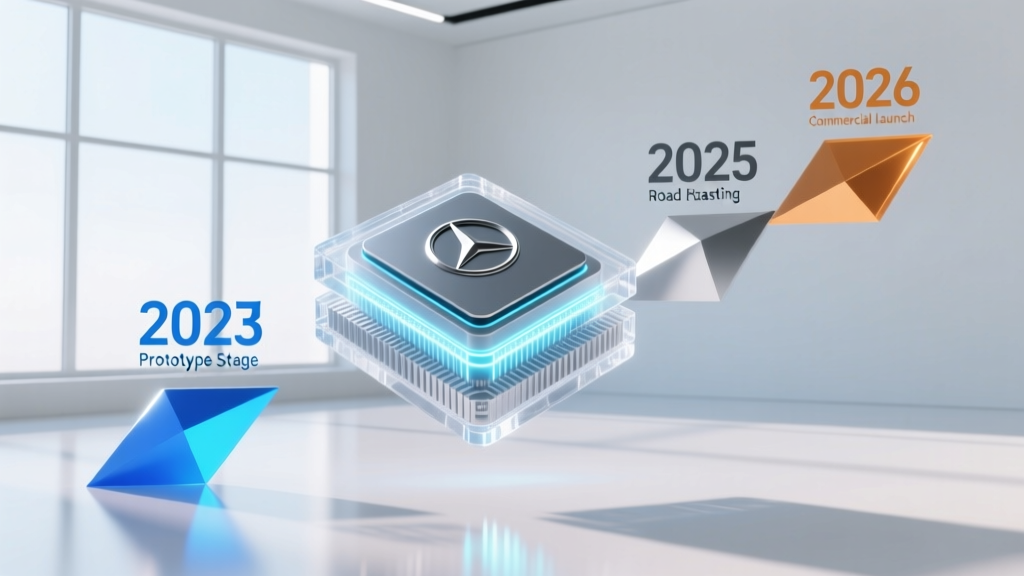
Realistic timeline: Toyota, Nissan, and Samsung SDI have announced solid-state production targets for 2027-2029, but initially in limited, premium vehicles. Broad market availability at mainstream price points is not expected before 2030-2032. Early solid-state packs will likely carry a significant cost premium.
Silicon-anode batteries (from companies like Sila Nanotechnologies and Group14) are closer to market, with limited deployment in 2025-2026 vehicles. They offer 10-20% energy density improvement over conventional graphite anodes and are expected to appear in production vehicles from Mercedes-Benz and others within the next 1-2 years.
Frequently Asked Questions
How long do EV batteries last in years and miles?
Based on fleet data from Recurrent Auto and Geotab, the average EV battery retains 85-90% of its original capacity after 150,000 miles (roughly 10 years of average driving). Most EV batteries are designed to remain functional for 200,000-300,000 miles before capacity drops below practical levels. Complete battery failure is rare — degradation is gradual, not sudden.
How much does an EV battery cost to replace?
Full pack replacement ranges from $6,000 for compact EVs to $22,000-$35,000 for large electric trucks (2026 pricing). Module-level repair, where only degraded sections are replaced, typically costs $2,000-$5,000. Costs have declined roughly 15-20% since 2022 due to falling cell prices and increased competition in the repair market.
What does the EV battery warranty actually cover?
Federally mandated minimum coverage is 8 years/100,000 miles (10 years/150,000 miles in CARB states). The warranty covers capacity loss below a specified threshold (typically 70% of original capacity) as well as component failures. It does not cover damage from accidents, modifications, or improper charging equipment. See IRS guidelines on EV credits for related purchase incentive information.
How do I check my EV battery's State of Health?
Use the vehicle's built-in range estimator compared to original EPA figures, access the service menu for a SoH percentage (available on most brands), or connect an OBD-II reader with EV-specific software (LeafSpy, Tessie, CarScanner) for detailed cell-level data. Request a formal battery health report from your dealer during service visits to document SoH for potential warranty claims.
LFP vs. NMC — which battery chemistry is better?
Neither is universally better — it depends on your use case. Choose LFP if you prioritize longevity, lower cost, and can accept slightly less range and more cold-weather range loss. Choose NMC/NCA if you need maximum range, better cold-weather performance, or are buying a larger vehicle like an electric truck where energy density matters for towing. For a daily commuter, LFP's 3,000-6,000 cycle life often exceeds the vehicle's useful life. For a truck buyer comparing against a 2019 Frontier, NMC's energy density supports the range and towing capability you'd expect.
Can I replace a 2019 Nissan Frontier 12V battery myself?
Yes — the Frontier's 12V battery is a straightforward DIY replacement. Disconnect the negative terminal first, remove the hold-down clamp, lift out the old battery, and reverse the process. Clean the terminal posts with a wire brush and apply dielectric grease. Total time: 15-20 minutes. This is fundamentally different from an EV traction battery, which requires high-voltage safety certification and specialized equipment.
Does fast charging damage my EV battery?
Occasional DC fast charging has minimal impact. Studies from Idaho National Laboratory show that exclusive use of DC fast charging (versus Level 2) adds approximately 2-4% additional capacity loss over 100,000 miles. Modern battery management systems actively manage charge rates and temperatures to minimize stress. The practical recommendation: use Level 2 at home for daily charging, and DC fast charge freely on road trips without significant concern.
Whether you're maintaining a 2019 Nissan Frontier's 12V system or evaluating an EV truck's long-term battery economics, the data shows that battery technology — in both its conventional and electrified forms — is more durable and more predictable than most buyers assume. The 2019 Frontier's $150 battery swap every four years and a modern EV's 150,000-mile traction battery are both manageable, known costs in the broader picture of vehicle ownership.