Understanding the 2019 Chrysler Pacifica Hybrid Battery Pack
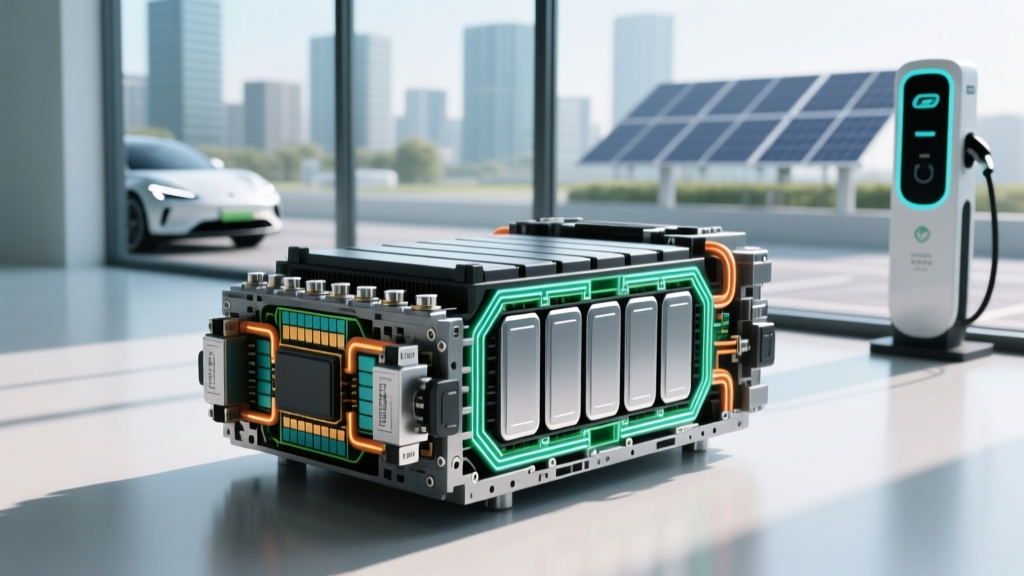
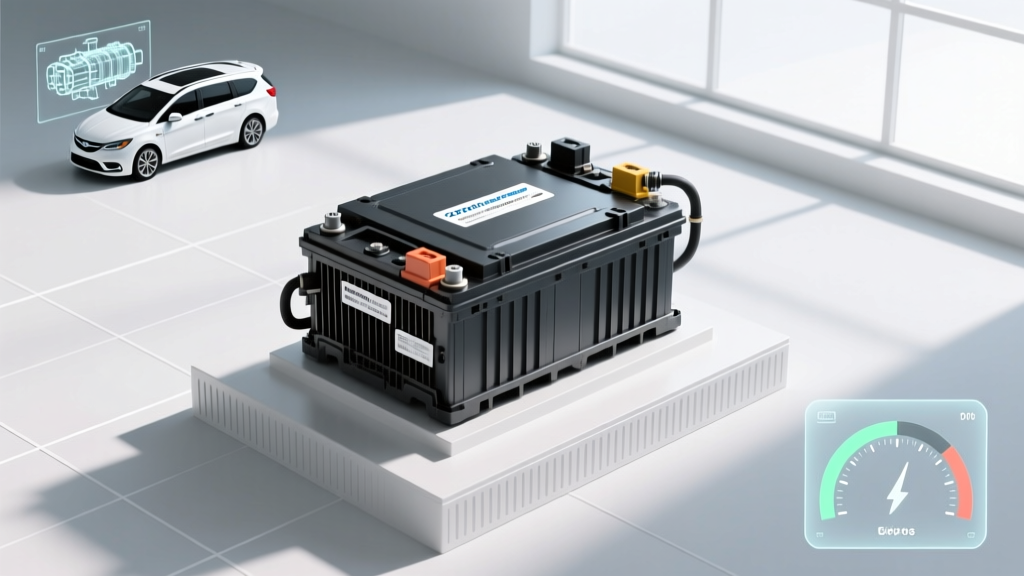
The 2019 Chrysler Pacifica Hybrid pairs a 3.6-liter V6 engine with a 16 kWh lithium-ion high-voltage traction battery located beneath the second-row floor. This pack powers two electric motor-generators integrated into the transmission, delivering an EPA-estimated 32 miles of electric-only range and 84 MPGe combined when operating in hybrid mode. Unlike a pure EV, the Pacifica Hybrid's battery is designed for frequent shallow cycling — partial discharges followed by regenerative or plug-in recharges — rather than deep 100-to-0% cycles typical of battery-electric vehicles.
For owners and prospective used buyers in 2026, understanding this pack's chemistry, degradation trajectory, warranty coverage, and eventual replacement cost is critical. A seven-year-old PHEV battery is entering the phase where capacity loss becomes measurable, and knowing what to expect separates informed owners from those facing surprise repair bills.
2019 Pacifica Hybrid Battery Quick Specs
- Usable capacity: ~13 kWh (of 16 kWh gross)
- Chemistry: NMC (Nickel Manganese Cobalt) lithium-ion
- EPA electric-only range (new): 32 miles
- EPA combined MPGe: 84 MPGe
- Battery location: Under second-row floor
- Warranty (original): 10 years / 100,000 miles (CARB states: 15 yr / 150,000 mi)
NMC Chemistry Explained: What Powers the Pacifica Hybrid
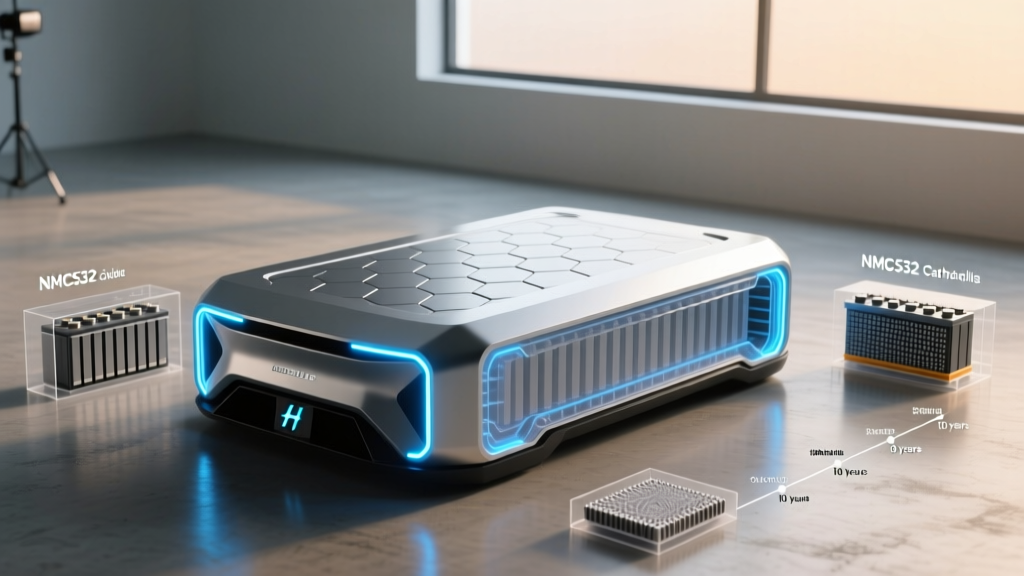
The Pacifica Hybrid uses an NMC (Nickel Manganese Cobalt) lithium-ion cell chemistry, which was the dominant choice for PHEVs and BEVs in the 2018-2020 model years. NMC offers a balance of energy density, power delivery, and cost that suited Chrysler's packaging constraints — fitting meaningful electric range into a minivan platform without compromising the interior.
LFP vs. NMC: Chemistry Trade-Offs
By 2026, the EV industry has split into two dominant chemistries. Understanding the difference helps contextualize why the Pacifica Hybrid uses NMC and what that means for longevity.
| Attribute | LFP (Lithium Iron Phosphate) | NMC (Nickel Manganese Cobalt) |
|---|---|---|
| Energy density | Lower (~160 Wh/kg cell-level) | Higher (~220-260 Wh/kg cell-level) |
| Cycle life | 3,000-5,000+ cycles to 80% SoH | 1,000-2,000 cycles to 80% SoH |
| Cold-weather performance | Reduced charge acceptance below 32°F | Better low-temp charge/discharge |
| Thermal stability | Excellent — less prone to thermal runaway | Good — requires robust BMS management |
| Cost | Lower (no cobalt/nickel) | Higher (commodity-priced metals) |
| Typical 2026 applications | Tesla Model 3 RWD, Ford F-150 Lightning standard | Long-range BEVs, most PHEVs including Pacifica |
The Pacifica Hybrid's NMC pack was chosen for its higher energy density — critical when packaging 16 kWh into a minivan floor. LFP packs in 2019 were largely limited to stationary storage and Chinese-market vehicles; they only gained mainstream US traction post-2022. For PHEV applications, NMC remains the standard because the pack is small enough that cycle-life advantages of LFP matter less than packaging efficiency.
How Long Does the 2019 Pacifica Hybrid Battery Last?
Based on real-world data from PHEV fleets and owner reports, NMC packs in plug-in hybrid applications typically retain 85-92% of original capacity after 7 years or 75,000-100,000 miles. The Pacifica Hybrid benefits from a relatively conservative state-of-charge window — the battery management system (BMS) buffers the top and bottom of the pack, meaning you never truly use 100% or drain to 0%. This gross-to-net buffer (roughly 3 kWh reserved) significantly extends cycle life.
PHEV NMC Battery Degradation — Real-World Data Points
- Year 1-2 (0-25k mi): 2-5% capacity loss — initial formation degradation
- Year 3-5 (25k-60k mi): Gradual linear loss, ~1-2% per year
- Year 6-8 (60k-100k mi): Total retention typically 85-92%
- Year 10+ (100k+ mi): 78-88% retention depending on climate and charging habits
Sources: fueleconomy.gov Pacifica Hybrid listings; Geotab fleet battery health studies; owner-reported data on Pacifica forums.
For a 2019 model in 2026, expect approximately 86-93% state of health (SoH) if the vehicle has been garage-kept and Level 2 charged. A Pacifica that sat at 100% charge in Phoenix heat for extended periods may show 80-85% SoH. The good news: at 85% SoH, you're still getting roughly 27 miles of electric range from the original 32 — still meaningful for school runs and grocery trips.
Battery Warranty Coverage: What Chrysler Covers
Stellantis (Chrysler's parent company) provided one of the stronger PHEV warranties in the segment for the 2019 Pacifica Hybrid. Understanding the terms is essential, especially for second owners evaluating a used purchase.
| Coverage Element | Standard States | CARB States (CA, NY, MA, + others) |
|---|---|---|
| Duration | 10 years / 100,000 miles | 15 years / 150,000 miles |
| Capacity retention threshold | Below ~70% of original capacity | Below ~70% of original capacity |
| Covered components | Battery pack, BMS, contactors, cooling system | Battery pack, BMS, contactors, cooling system |
| Transferable to second owner? | Yes — follows VIN | Yes — follows VIN |
| What voids coverage | Physical damage, unauthorized modifications, salvage title | Physical damage, unauthorized modifications, salvage title |
CARB (California Air Resources Board) states include California, Colorado, Connecticut, Maine, Maryland, Massachusetts, New Jersey, New York, Oregon, Rhode Island, Vermont, Virginia, and Washington. If your 2019 Pacifica Hybrid was originally sold or is currently registered in one of these states, the 15-year/150,000-mile warranty applies — meaning coverage extends through 2034.
The ~70% capacity threshold means Chrysler will replace or recondition the pack if it can no longer hold roughly 11.2 kWh (70% of 16 kWh gross). In practice, very few PHEV packs fail this test within the warranty period unless subjected to extreme abuse. According to NHTSA complaint data, Pacifica Hybrid battery failures are rare relative to the vehicle population.
Replacement Cost: What to Budget in 2026
If your Pacifica Hybrid falls outside warranty coverage — or you're in a non-CARB state past 100,000 miles — here's what replacement looks like in the current market.
| Vehicle Type / Model | Battery Size | Replacement Cost (Parts + Labor) | Typical Need Timeline |
|---|---|---|---|
| 2019 Pacifica Hybrid | 16 kWh (NMC) | $5,500 - $8,500 | Rarely before 150k+ mi |
| Toyota Prius Prime (PHEV) | 13.6 kWh | $4,000 - $6,500 | Rarely before 150k+ mi |
| Chevrolet Bolt EV | 65 kWh (NMC) | $9,000 - $14,000 | Rarely before 150k+ mi |
| Tesla Model 3 Long Range | 75-82 kWh (NMC) | $12,000 - $16,000 | Rarely before 200k+ mi |
| Ford F-150 Lightning Ext. | 131 kWh (NMC) | $18,000 - $28,000 | Not yet observed at scale |
For the Pacifica Hybrid specifically, the 16 kWh pack is relatively small and straightforward to replace — labor typically runs 3-5 hours at a dealership. Independent hybrid/EV shops in major metro areas often quote $5,500-$7,000 for a remanufactured pack, while a new OEM pack from a Stellantis dealer runs $7,500-$8,500. The good news: most PHEV batteries never need replacement during the vehicle's useful life. The 2019 Pacifica Hybrid's pack is designed to outlast 150,000 miles with gradual, manageable degradation rather than sudden failure.
Factors That Accelerate (or Preserve) Battery Health
NMC longevity isn't random — it responds predictably to how you treat it. These are the variables within your control:
Battery Care Best Practices for PHEV Owners
- Avoid prolonged 100% SoC: Plug in to charge, but if you won't drive for 24+ hours, set charge limit to 80-90% (the Pacifica's BMS already buffers, but minimizing time at full charge helps).
- Minimize DC fast charging: The Pacifica Hybrid uses a J1772 Level 2 inlet only — it does not support DC fast charging. This is actually a longevity advantage, as Level 2 charging (3.3-7.2 kW) generates far less heat stress than DCFC.
- Extreme heat is worse than extreme cold: Sustained ambient temps above 95°F accelerate electrolyte decomposition. Garage parking in summer is the single best thing you can do.
- Drive it regularly: Lithium-ion cells prefer regular cycling to sitting idle at high SoC. A Pacifica driven daily degrades slower than one parked at 100% charge for weeks.
- Don't fear cold weather: Temporary range loss in winter (20-30% at 20°F) is a function of electrolyte viscosity and cabin heating demand, not permanent degradation. Capacity returns when temperatures rise.
- Keep the cooling system serviced: The Pacifica Hybrid's battery thermal management system uses a dedicated coolant loop. Follow Stellantis service intervals for coolant replacement.
How to Check Your Pacifica Hybrid Battery Health (SoH)
Unlike some EVs that display State of Health directly on the dash, the Pacifica Hybrid requires indirect methods to assess battery condition. Here are your options:
Method 1: Range Comparison Test
Charge the battery to full, reset the trip meter, and drive in electric-only mode under moderate conditions (50-65°F, flat terrain, no aggressive acceleration). If you consistently achieve 25-28 miles before the engine engages (down from the original 32), your SoH is approximately 80-87%. This is normal for a 7-year-old NMC pack and nothing to worry about.
Method 2: OBD-II Scanner with Hybrid Data
Devices like the OBDLink MX+ paired with apps such as Torque Pro or hybrid-specific tools can read battery voltage, cell-level readings, and estimated SoH from the BMS. A qualified hybrid technician can pull this data during a service visit. Look for:
- Cell voltage spread: Healthy packs show less than 0.1V difference between highest and lowest cells at rest
- Estimated SoH percentage: Above 80% is normal and healthy at 7 years
- Charge/discharge power consistency: Erratic power delivery may indicate cell imbalance
Method 3: Dealer Diagnostic
A Stellantis dealer can run a full battery health report using the wiTECH diagnostic system. This is the most authoritative method and is recommended if you're purchasing a used 2019 Pacifica Hybrid and want verification before committing.
Looking Ahead: Solid-State and Silicon Anode Batteries
While the 2019 Pacifica Hybrid's NMC pack represents mature, proven technology, the broader battery landscape is evolving rapidly. It's worth understanding what's coming — with realistic timelines.
Solid-state batteries replace the liquid electrolyte with a solid ceramic or polymer conductor, promising 30-50% higher energy density, faster charging, and improved safety. Toyota, Samsung SDI, and QuantumScape have announced pilot production for 2027-2028, but these are limited-run, premium-vehicle applications. Mass-market solid-state packs at PHEV-relevant cost points are not expected before 2030-2032. Your Pacifica Hybrid will not be retrofitted with solid-state cells.
Silicon anode technology (used by startups like Sila Nanotechnologies and Group14) replaces graphite anodes with silicon-dominant materials, boosting energy density by 20-40%. This technology is entering production in 2025-2026 EVs like the Mercedes G-Class EV and is expected to trickle into PHEV applications by 2028-2029.
The practical takeaway: your 2019 Pacifica Hybrid's battery represents a well-understood, thoroughly tested generation of NMC chemistry. It won't benefit from next-gen breakthroughs, but it also won't suffer from first-generation growing pains. The technology is mature, the degradation curve is predictable, and replacement infrastructure is well-established.
Frequently Asked Questions
How long do EV and PHEV batteries actually last?
Modern lithium-ion traction batteries — both BEV and PHEV — are designed to last the useful life of the vehicle. NMC packs typically retain 80-90% capacity at 100,000-150,000 miles. LFP packs can exceed 200,000 miles with 85%+ retention. Catastrophic failure (sudden death) is extremely rare; degradation is gradual and linear. Most EVs are scrapped for collision damage or body rust long before the battery becomes unusable.
How much does a 2019 Pacifica Hybrid battery cost to replace?
Expect $5,500-$8,500 for a replacement pack (remanufactured or new OEM) including labor, depending on your market and whether you use an independent hybrid shop or a Stellantis dealership. However, the vast majority of Pacifica Hybrid packs never require replacement — degradation to 80-85% SoH still provides 25+ miles of usable electric range.
What does the battery warranty cover?
Stellantis covers the high-voltage battery pack, battery management system, contactors, and associated cooling system for 10 years/100,000 miles (15 years/150,000 miles in CARB states) against capacity loss below approximately 70% of original. The warranty follows the VIN and transfers to subsequent owners. It does not cover damage from collisions, flooding, or unauthorized modifications.
How do I check and maximize my Pacifica Hybrid battery health?
Check health by performing a full-charge electric-only range test (expect 25-28 miles at 7 years) or having a dealer/technician pull BMS data via OBD-II. Maximize longevity by avoiding prolonged storage at 100% charge, parking in shade or a garage during hot weather, driving regularly rather than letting the vehicle sit, and following coolant service intervals. The Pacifica Hybrid's Level 2-only charging is already a longevity advantage — no DC fast-charging stress.
LFP vs. NMC — which chemistry is better for my situation?
Neither is universally better. NMC wins on energy density and cold-weather performance — critical for PHEVs where pack space is limited and every kWh of electric range matters. LFP wins on cycle life, thermal safety, and cost — ideal for BEVs where the pack is large enough that lower energy density is acceptable. Your 2019 Pacifica Hybrid's NMC pack was the correct engineering choice for its application. If you upgrade to a 2026+ BEV, you may encounter LFP in standard-range trims and NMC in long-range trims.
Is the 12V battery the same as the hybrid battery?
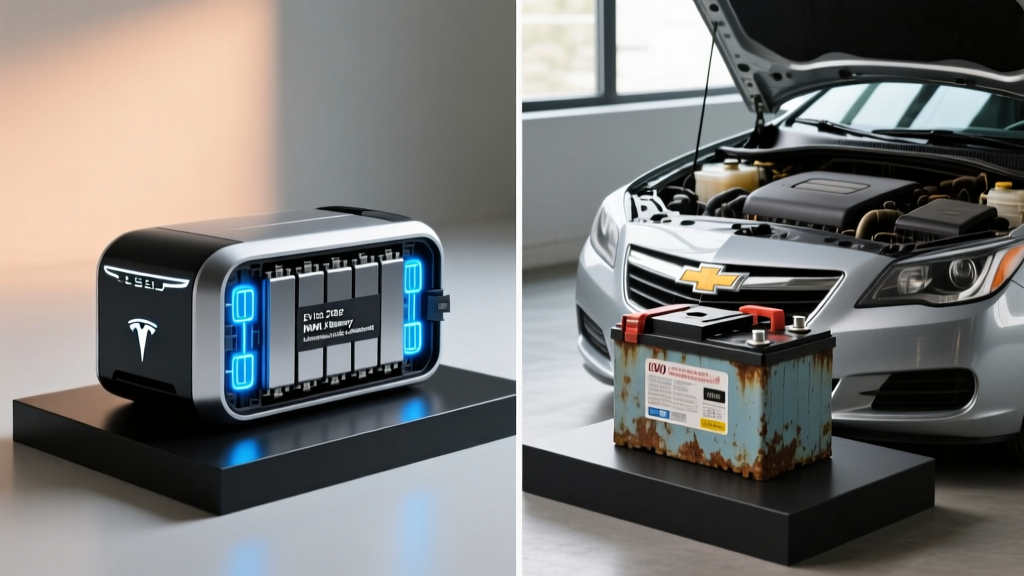
No. The 2019 Pacifica Hybrid has two separate batteries: the 16 kWh high-voltage traction battery (under the floor, powers electric driving) and a standard 12V lead-acill auxiliary battery (powers lights, infotainment, and control modules). The 12V battery may need replacement every 4-6 years like any conventional vehicle — this is a $150-$250 maintenance item unrelated to the hybrid system.