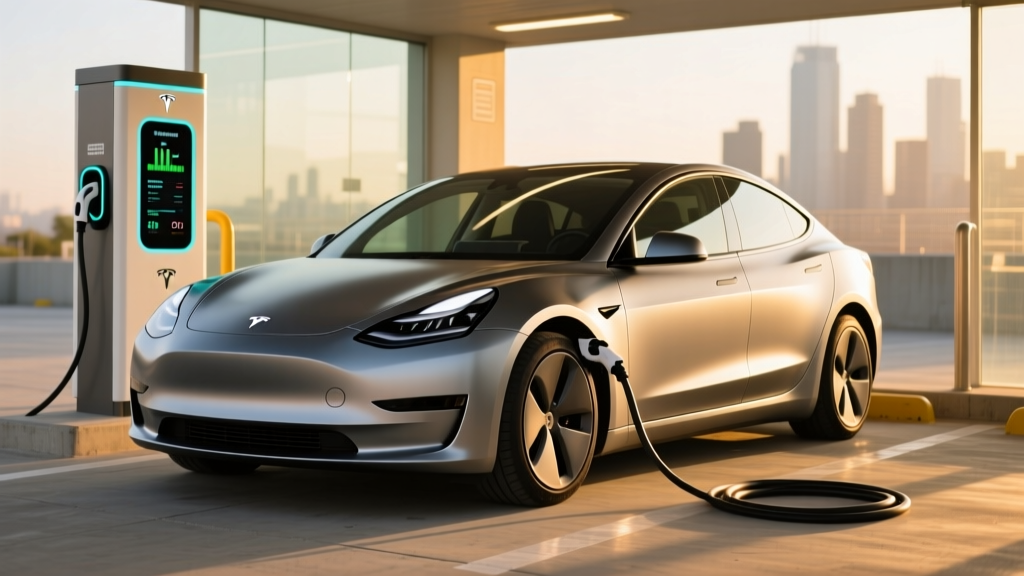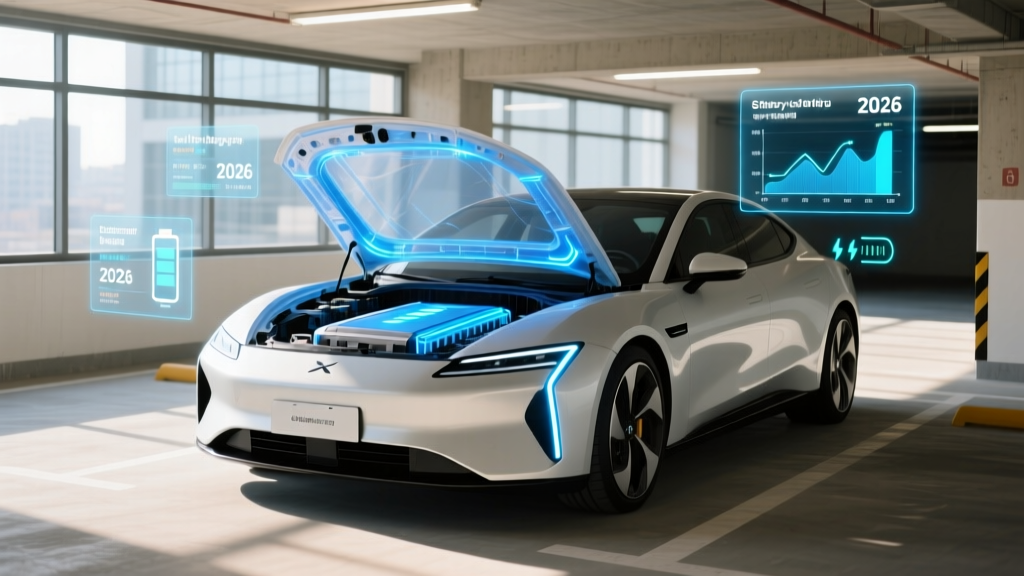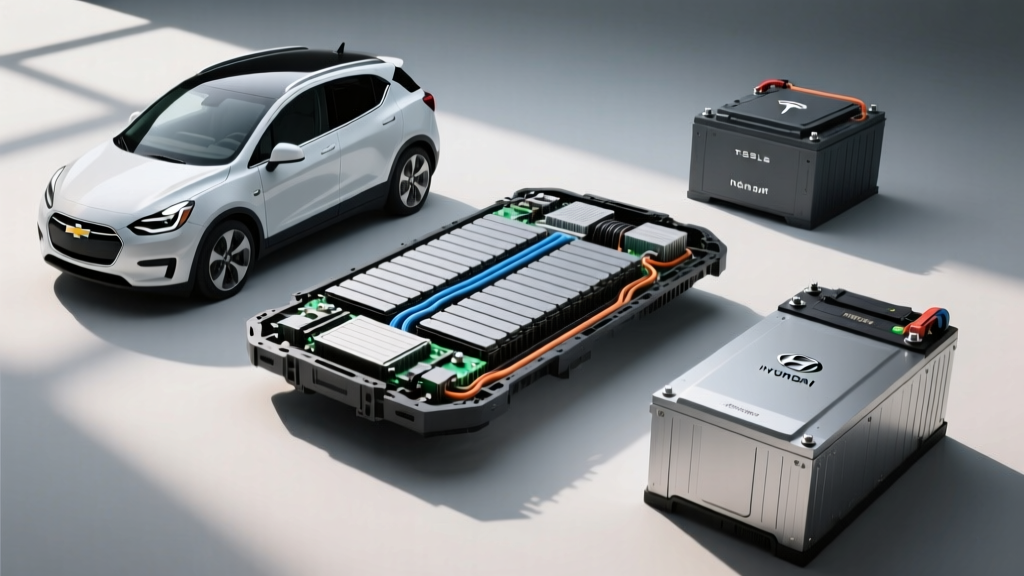
If you've searched for a 2019 Chevy Trax battery, you're likely dealing with a dead 12-volt starter battery — a $150–$250 fix at any auto parts store. But that search also opens a much larger question for anyone considering the jump to an electric vehicle: What happens when an EV's high-voltage traction battery degrades or fails?
The 2019 Chevrolet Trax is a conventional gasoline subcompact SUV. It has no high-voltage battery pack. Its only battery is a standard Group 47 AGM or flooded lead-acid 12V unit that powers the starter motor, lights, and infotainment. Replacing it is routine maintenance, comparable to swapping a battery in any ICE vehicle.
This guide uses that distinction as a starting point to walk through everything modern EV buyers and owners need to know about traction battery chemistry, degradation, warranties, replacement costs, and care — with hard data, not marketing claims.
The 2019 Chevy Trax Battery: What You're Actually Replacing
The 2019 Trax uses a 12V battery (typically Group 47, H5, or 48 depending on trim and start-stop equipment). Here's what that replacement looks like:
| Spec | 2019 Chevy Trax 12V Battery |
|---|---|
| Type | 12V lead-acid (flooded or AGM) |
| Group size | 47 / H5 (verify by VIN) |
| Typical cost (part) | $140–$240 |
| Lifespan | 3–5 years |
| Warranty | 2–4 years free replacement, prorated after |
| Purpose | Starter motor, accessories, ECU |
This is a simple, well-understood component. Now contrast it with an EV traction battery — a 60–100+ kWh lithium-ion pack that serves as the vehicle's entire energy source.
LFP vs NMC: The Two Battery Chemistries Powering Today's EVs
Every mainstream EV sold in 2026 uses one of two lithium-ion cathode chemistries: LFP (lithium iron phosphate) or NMC/NCA (nickel manganese cobalt / nickel cobalt aluminum). The chemistry determines range, longevity, cold-weather behavior, and cost.
| Attribute | LFP (Lithium Iron Phosphate) | NMC / NCA (Nickel-based) |
|---|---|---|
| Energy density | Lower (~160–180 Wh/kg cell-level) | Higher (~220–260 Wh/kg cell-level) |
| Typical EV range | Shorter for same pack weight | Longer for same pack weight |
| Cycle life | 3,000–5,000+ cycles to 80% SoH | 1,000–2,000 cycles to 80% SoH |
| Cold-weather performance | Greater range loss below freezing (~30–40%) | Better cold performance (~20–30% loss) |
| Charging to 100% regularly | Recommended — LFP benefits from full charges for BMS calibration | Not recommended daily — accelerates degradation; 80% daily target preferred |
| Cost per kWh | Lower ($80–$110/kWh pack-level, 2026 estimates) | Higher ($110–$140/kWh pack-level) |
| Cobalt/nickel content | None — less supply-chain and ethical concern | Contains cobalt and/or nickel |
| Common in | Tesla Model 3/Y RWD, Ford Mustang Mach-E Select (LFP trims), BYD models, base-trim EVs | Long-range and performance trims, Hyundai Ioniq 5/6, Kia EV6/EV9, GM Ultium vehicles, Rivian |
Which is better? It depends on your use case. If you want maximum range per charge and live in a cold climate, NMC delivers. If you prioritize longevity, plan to keep the car 10+ years, and can charge to 100% without worry, LFP is the more durable choice. Most buyers will never notice the difference in daily driving — both chemistries in modern EVs outlast the typical ownership period.
How Long Do EV Batteries Actually Last? Degradation Data
EV batteries don't suddenly "die." They gradually lose capacity — the same way a phone battery holds less charge after two years. The industry measures this as State of Health (SoH): a battery at 90% SoH holds 90% of its original energy.
Here's what real-world fleet data shows for modern lithium-ion EV packs:
- Year 1 / 15,000 miles: ~2–4% capacity loss (initial formation drop)
- Year 3 / 45,000 miles: ~6–9% total loss
- Year 5 / 75,000 miles: ~8–12% total loss
- Year 8 / 120,000 miles: ~10–15% total loss
- Year 10 / 150,000 miles: ~12–20% total loss (highly dependent on climate and charging habits)
Sources: Geotab fleet data analysis, Recurrent Auto battery health reports. Individual results vary by chemistry, thermal management, and usage patterns.
For context, a 2026 Tesla Model Y Long Range with an EPA-rated 320 miles of range and 10% degradation after 5 years would still deliver approximately 288 miles — entirely adequate for daily driving and road trips. The vast majority of EV batteries outlive the vehicle's body, suspension, and interior. Complete, sudden battery failure is exceedingly rare in modern packs with active thermal management.
The 2019 Chevy Trax, by comparison, will likely go through 3–4 twelve-volt batteries over the same 10-year span — each one a potential no-start situation with no graceful degradation warning.
EV Battery Warranty Terms: What's Covered and for How Long
Federal law mandates a minimum 8-year/100,000-mile warranty on EV battery packs for emissions-related compliance, and nearly every automaker matches or exceeds this baseline for capacity retention. Here's how major manufacturers structure their coverage:
| Manufacturer | Warranty Period | Capacity Retention Threshold | Notes |
|---|---|---|---|
| Tesla (Model 3/Y NMC) | 8 yr / 120,000 mi | 70% | Long Range & Performance |
| Tesla (Model 3/Y LFP) | 8 yr / 100,000 mi | 70% | RWD / Standard Range |
| Hyundai / Kia | 10 yr / 100,000 mi | 70% | Among the longest coverage |
| GM (Ultium-based) | 8 yr / 100,000 mi | 70% (some trims 65%) | Covers Bolt EV/EUV, Blazer EV, Equinox EV, Silverado EV |
| Ford | 8 yr / 100,000 mi | 70% | Mustang Mach-E, F-150 Lightning |
| Rivian | 8 yr / 120,000 mi | 70% | R1T, R1S |
| BMW | 8 yr / 100,000 mi | 70% | i4, iX, i7 |
What the warranty actually covers: If your battery's usable capacity falls below the stated threshold (typically 70% of original) within the warranty period, the manufacturer will repair, replace, or recondition modules to bring it back above that threshold. It does not cover damage from accidents, flooding, or unauthorized modifications. It also does not guarantee you'll get a brand-new pack — refurbished or reconditioned modules are standard practice.
The key insight: a battery at 70% SoH still holds substantial energy. A 75 kWh pack at 70% retains 52.5 kWh of usable capacity — enough for 180–220 miles of real-world range in most vehicles. You're not stranded; you're driving a shorter-range EV.
EV Battery Replacement Cost: The Numbers Behind the Fear
This is the single most cited concern among prospective EV buyers, and it deserves honest, contextualized numbers rather than alarmist headlines.
| Vehicle / Pack Size | Battery Capacity | Estimated Out-of-Warranty Replacement | Typical Replacement Timeline |
|---|---|---|---|
| Chevrolet Bolt EV/EUV | 65 kWh (NMC) | $14,000–$17,000 | Rarely needed; most packs last 200k+ mi |
| Tesla Model 3 (LFP RWD) | 60 kWh (LFP) | $12,000–$15,000 | LFP cycle life makes replacement unlikely in vehicle lifetime |
| Tesla Model Y Long Range | 75 kWh (NMC) | $16,000–$20,000 | Module-level repair often possible for less |
| Hyundai Ioniq 5 | 77.4 kWh (NMC) | $15,000–$19,000 | 10-year warranty reduces owner risk significantly |
| Ford F-150 Lightning (Extended) | 131 kWh (NMC) | $25,000–$35,000 | Largest consumer packs; module service preferred |
| Rivian R1T (Max Pack) | 149 kWh (NMC) | $28,000–$38,000 | Early production; long-term data limited |
Context that matters: According to data from Recurrent Auto, fewer than 3% of EVs in their tracked fleet of over 15,000 vehicles have required a battery replacement outside of warranty recalls. Most battery issues surface in the first 2–3 years (manufacturing defects), which are fully covered. A battery that survives the early period typically degrades slowly and predictably for 15+ years.
Compare this to the 2019 Chevy Trax: over 15 years and 200,000 miles, you'll likely spend $2,000–$4,000 on 12V battery replacements alone, plus $8,000–$15,000 on gasoline, $3,000–$6,000 on oil changes and transmission fluid, and potentially $3,000–$5,000 on a catalytic converter or timing chain. The EV's "scary" battery cost is offset by eliminating all of those.
Also important: modern packs are increasingly serviceable at the module level. Rather than replacing the entire pack, technicians can swap individual degraded modules for $2,000–$6,000 — a fraction of the full-pack cost. Tesla, GM, Hyundai, and Rivian all support module-level service.
What Kills an EV Battery? Factors That Accelerate Degradation
Not all miles are equal when it comes to battery wear. These are the scientifically documented factors that accelerate lithium-ion capacity loss:
- Avoid sustained 100% SoC: For NMC batteries, set daily charge limit to 80%. Reserve 100% for road trips. LFP batteries are an exception — periodic 100% charges are recommended for BMS calibration.
- Minimize DC fast charging: Occasional fast charging is fine; daily reliance on 150+ kW DCFC accelerates degradation. Use Level 2 home charging as your primary method.
- Don't let the battery sit at low SoC in extreme heat: A battery at 10% SoC parked in 100°F+ ambient temperatures for days experiences accelerated calendar aging. Charge to 50%+ if storing.
- Precondition before fast charging: Most EVs automatically precondition the battery when a DCFC station is set as your navigation destination. This brings the pack to optimal temperature (~70–95°F), enabling faster charging and reducing lithium plating risk.
- Cold-weather range loss is temporary, not damage: Losing 25–40% range in sub-freezing temperatures is normal physics (increased internal resistance, cabin heating draw). Capacity returns when temperatures rise. This is not degradation.
- Use scheduled charging: Set your EV to finish charging just before you leave, rather than sitting at high SoC for hours. Most EVs and home chargers support scheduled charging natively.
- Keep software updated: OTA updates often refine battery management algorithms, thermal thresholds, and charge profiles — all of which protect long-term SoH.
How to Check Your EV's Battery Health (State of Health)
Unlike the 2019 Trax, where battery health means "does it start or not," EV owners have several tools to monitor traction battery SoH proactively:
In-Vehicle Displays
Some EVs show battery health directly. Tesla's service menu (accessible via the touchscreen) includes a battery health test that estimates current capacity. Hyundai/Kia models display a battery health percentage in the EV menu on recent model years. GM's Ultium-based vehicles provide a battery health indicator through the Driver Information Center.
OBD-II Dongles and Third-Party Apps
Tools like OBDLink SX/MX+ paired with apps such as EVNotify, LeafSpy (Nissan Leaf), or Scan My Tesla can read the battery management system's reported SoH, cell voltage variance, and pack temperature. This is the most granular data available to consumers.
Dealer Diagnostics
Any authorized service center can run a full battery health report. Request this during routine service visits or before purchasing a used EV. The report typically shows total energy throughput, capacity retention percentage, and any flagged cell imbalances.
Range Tracking Over Time
The simplest method: track your full-charge range estimate over months. If your EV showed 310 miles at 100% when new and now shows 285 miles at 100% after 40,000 miles, that's roughly 8% degradation — normal and expected. A sudden drop of 10%+ in a short period warrants a dealer visit.
What's Next? Solid-State, Silicon Anodes, and Realistic Timelines
Next-generation battery technologies are frequently hyped in headlines. Here's where they actually stand as of 2026:
Solid-state batteries replace the liquid electrolyte with a solid conductor, promising higher energy density, faster charging, and improved safety. Toyota has announced limited production of solid-state-equipped vehicles for 2027–2028, initially in small numbers and likely in Japan-market models first. Samsung SDI and QuantumScape are supplying prototype cells to automakers, but mass production at scale for affordable consumer EVs remains a 2029–2032 proposition. These will debut in premium vehicles before reaching mainstream price points.
Silicon-dominant anodes (replacing graphite with silicon to increase energy density) are already in limited production. Sila Nanotechnologies supplies silicon anode materials to Mercedes-Benz for the G-Class electric SUV. Expect incremental adoption through 2027–2029, improving energy density by 10–20% in early implementations. This is an evolution, not a revolution — it makes existing lithium-ion packs better, not obsolete.
Sodium-ion batteries are entering the market in 2026 through Chinese manufacturers (BYD, CATL) for lower-cost, shorter-range EVs. They eliminate lithium entirely but sacrifice energy density. U.S. availability in consumer vehicles is unlikely before 2028–2029.
The practical takeaway: today's LFP and NMC batteries are mature, well-understood, and continuously improving. Waiting for solid-state to buy an EV is like waiting for a perfect gas engine to buy a car — the technology will always be improving. Current EVs are ready for real ownership today.
Frequently Asked Questions
Does the 2019 Chevy Trax have an EV battery?
No. The 2019 Chevrolet Trax is a conventional gasoline vehicle with a 1.4L turbocharged engine. Its only battery is a standard 12V lead-acid unit (Group 47/H5) that powers the starter motor and electronics. It has no high-voltage traction battery, electric motor, or hybrid system.
How long do EV batteries last in years and miles?
Modern EV traction batteries (2020 and newer with active thermal management) typically retain 80–90% of their original capacity after 8–10 years or 100,000–150,000 miles. Fleet data from Recurrent Auto and Geotab shows that most EV batteries outlast the vehicle itself. Complete failure requiring replacement is rare — fewer than 3% of tracked vehicles have needed one.
How much does it cost to replace an EV battery out of warranty?
Full pack replacement ranges from approximately $12,000 for a 60 kWh LFP pack (Tesla Model 3 RWD) to $35,000+ for a 130+ kWh pack (Ford F-150 Lightning Extended Range). However, module-level repairs often cost $2,000–$6,000, and most batteries never need replacement during the vehicle's useful life. Warranty coverage of 8–10 years / 100,000+ miles further reduces owner risk.
What does an EV battery warranty actually cover?
EV battery warranties cover capacity loss below a defined threshold (typically 70% of original capacity) within the warranty period (8–10 years / 100,000–120,000 miles depending on manufacturer). If your battery falls below that threshold, the automaker will repair, replace, or recondition it at no cost. Warranties do not cover accident damage, misuse, or unauthorized modifications.
LFP vs NMC — which battery chemistry should I choose?
Choose LFP if you prioritize longevity (3,000–5,000 cycle life), want to charge to 100% daily without worry, and don't need maximum range. Choose NMC if you need longer EPA range, better cold-weather performance, or are buying a performance/long-range trim. Both chemistries in modern EVs will outlast typical ownership. LFP is increasingly common in base and mid-trim EVs; NMC dominates long-range and premium models.
How do I check my EV's battery State of Health?
Check through your vehicle's built-in battery health display (available on Tesla, Hyundai/Kia, and GM vehicles), use an OBD-II dongle with apps like EVNotify or Scan My Tesla for detailed cell-level data, request a health report from your dealer during service, or simply track your full-charge range estimate over time for a practical SoH indicator.