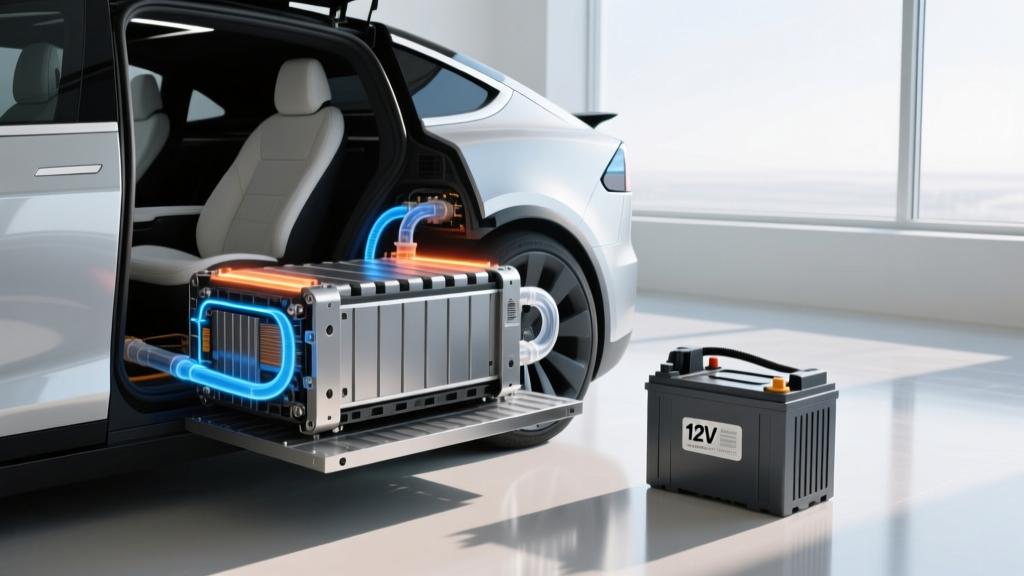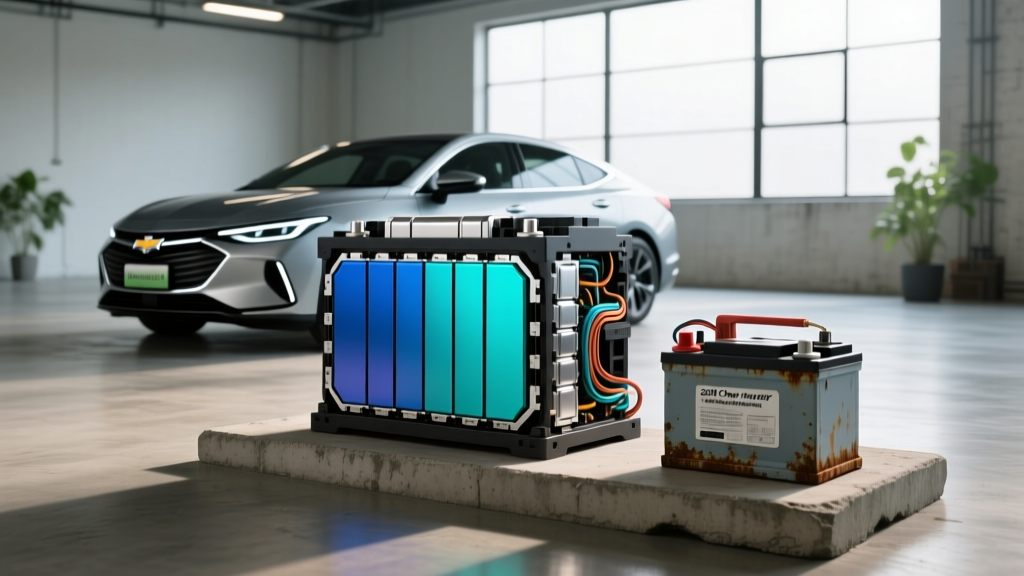
If you've searched for a 2019 Chevy Malibu battery, you've likely discovered it uses a conventional 12-volt lead-acid unit (Group 48/H6, roughly $180–$260 to replace). That's an entirely different animal from the high-voltage lithium-ion traction batteries powering today's electric vehicles. But the Malibu question raises a universal concern for any electrified-vehicle shopper: how long do batteries really last, what does replacement cost, and how do you keep one healthy?
This guide answers those questions with hard data — degradation curves, warranty fine print, real replacement invoices, and the chemistry trade-offs between LFP and NMC cells that dominate 2026 EV lineups.
How Long Do EV Batteries Actually Last?
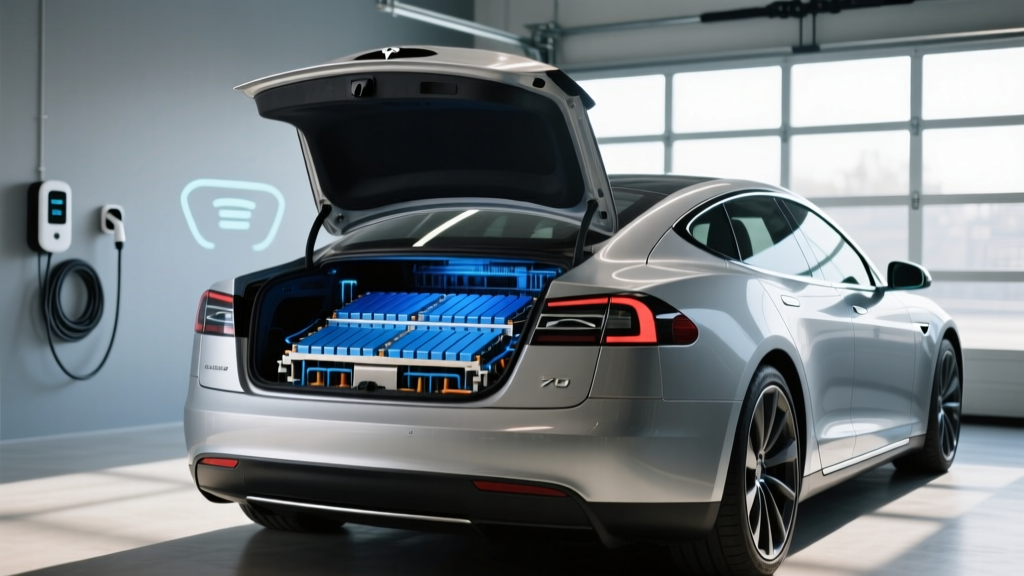
Modern EV traction batteries are engineered to outlast the vehicles they power. The widely cited benchmark is 15–20 years or 200,000+ miles before capacity drops below 70–80% of original. That's based on aggregated fleet data, not marketing.
Real-world evidence:
- Tesla's 2023 Impact Report showed Model S/X batteries retained roughly 88% capacity after 200,000 miles.
- Geotab's 2024 fleet study of 10,000+ EVs found average annual degradation of 1.8% — meaning a typical pack holds ~82% after 10 years.
- Nissan Leaf data (passive-cooled packs) shows steeper loss — some 2013–2017 models hit 70% capacity by year 8, underscoring that thermal management matters enormously.
For context, a 2019 Chevy Malibu's 12V battery typically needs replacement every 3–5 years. An EV traction battery is a completely different engineering tier — liquid-cooled, chemically stabilized, and warrantied for 8 years minimum.
LFP vs NMC: The Chemistry Decision
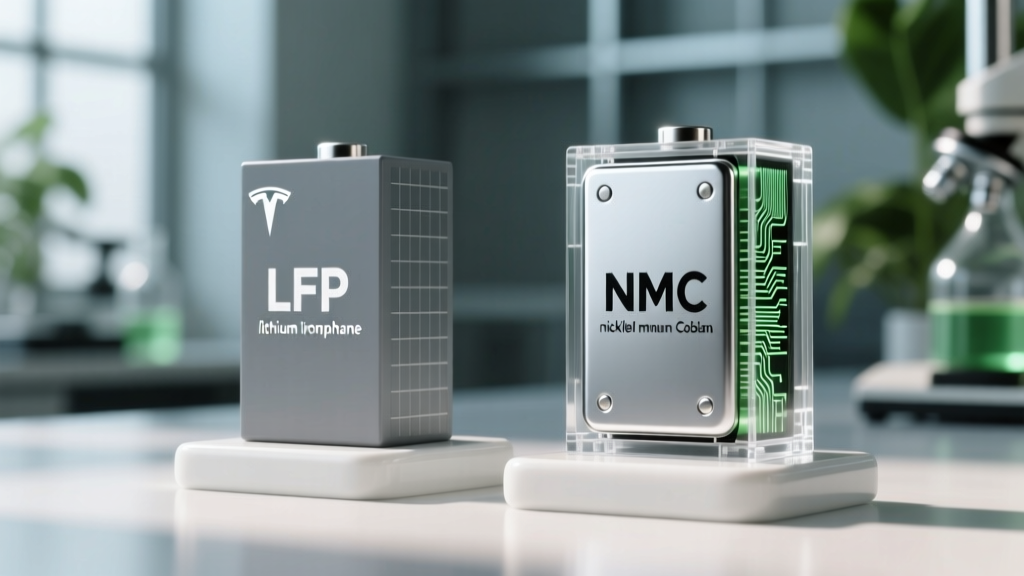
Two lithium-ion chemistries dominate 2026 EVs. Understanding the difference is critical before you buy.
| Attribute | LFP (Lithium Iron Phosphate) | NMC / NCA (Nickel-based) |
|---|---|---|
| Energy Density | Lower (~160 Wh/kg cell-level) | Higher (~250–300 Wh/kg) |
| Cycle Life | 3,000–5,000+ cycles | 1,000–2,000 cycles |
| Cold-Weather Performance | Weaker below 32°F; slower charging | Better low-temp discharge & charge acceptance |
| Cost (per kWh) | ~$80–100/kWh (2026 cell pricing) | ~$110–140/kWh |
| Safety / Thermal Runaway | Higher onset temp; more stable | Lower onset temp; requires robust BMS |
| Typical Use (2026) | Tesla Model 3 RWD, Ford Mustang Mach-E Select, BYD models | Long-range / performance trims, trucks (F-150 Lightning Extended, Rivian) |
| Recommended Charge Habit | Can charge to 100% regularly | Best kept 20–80% daily; 100% for trips only |
Which is better? Neither is universally superior. LFP wins on longevity, cost, and safety — ideal for daily commuters who can charge to 100% without guilt. NMC wins on range-per-pound and cold-weather usability — the right pick for road-trippers and northern-climate drivers who need maximum EPA miles from a smaller, lighter pack.
Degradation Data: What the Numbers Show
Degradation isn't linear. Most packs lose 2–5% in year one (formation loss), then settle into a slow, steady decline. Here's what aggregated data shows across chemistries:
| Timeframe | LFP Avg. Capacity Retained | NMC Avg. Capacity Retained | Notes |
|---|---|---|---|
| Year 1 | ~97% | ~95% | Initial formation loss |
| Year 5 / 75,000 mi | ~93% | ~89% | Steady-state decline |
| Year 8 / 100,000 mi | ~90% | ~85% | Warranty threshold period |
| Year 12 / 150,000 mi | ~86% | ~79% | Still functional; range reduced |
| Year 15 / 200,000 mi | ~82% | ~73% | NMC nearing replacement territory for some owners |
Sources: Geotab EV Battery Health Study, Tesla Impact Reports, and Recurrent Auto fleet data.
Key insight: a pack at 75% capacity isn't dead — it just delivers 75% of its original EPA range. A 300-mile EV becomes a 225-mile EV. For many owners, that's still perfectly usable for daily driving.
What the Battery Warranty Actually Covers
Federal law mandates a minimum 8 years / 100,000 miles warranty on EV batteries (10 years / 150,000 miles in California and states adopting CARB standards). But the details vary significantly.
| Automaker (2026) | Warranty Term | Capacity Threshold | What Triggers a Claim |
|---|---|---|---|
| Tesla | 8 yr / 120,000 mi (Model 3/Y); 8 yr / 150,000 mi (S/X) | 70% retention | SoH below 70% verified by Tesla diagnostics |
| Hyundai / Kia | 10 yr / 100,000 mi | 70% retention | Capacity below threshold on dealer scan tool |
| Ford | 8 yr / 100,000 mi | 70% retention | Battery fault or capacity loss confirmed |
| GM (Chevrolet / Cadillac) | 8 yr / 100,000 mi | 70% retention (Ultium platform) | Dealer diagnostic verification |
| Rivian | 8 yr / 175,000 mi | 70% retention | Verified capacity loss |
Critical nuance: warranties cover defects and excessive degradation, not gradual loss within spec. If your pack is at 72% at year 7, you likely won't qualify for a replacement — the battery is performing within the expected curve. Warranties also typically void if the pack is physically damaged, improperly modified, or exposed to flood/fire.
EV Battery Replacement Cost: The Real Numbers
This is where fear-mongering runs rampant. Let's ground it in actual 2025–2026 pricing.
| Vehicle / Pack Size | Battery Cost (Parts) | Labor | Total Estimated | When Typically Needed |
|---|---|---|---|---|
| Nissan Leaf (40 kWh) | $6,500–$9,000 | $1,500–$2,500 | $8,000–$11,500 | Year 12+ (passive-cooled packs degrade faster) |
| Tesla Model 3 (60–82 kWh) | $12,000–$16,000 | $2,000–$3,500 | $14,000–$19,500 | Rarely before year 15 at current degradation rates |
| Chevrolet Bolt EV/EUV (65 kWh) | $14,000–$16,000 | $2,000–$3,000 | $16,000–$19,000 | Post-2028 for earliest models; most will sell before needing it |
| Ford F-150 Lightning (131 kWh Extended) | $22,000–$30,000 | $3,000–$5,000 | $25,000–$35,000 | Very unlikely within typical ownership; fleet use may accelerate |
| Lucid Air (112 kWh) | $20,000–$28,000 | $3,000–$4,500 | $23,000–$32,500 | Premium segment; low production volume keeps costs high |
Key context: Most EVs will be retired, sold, or totaled in an accident before the battery needs replacement. Out-of-warranty replacement is primarily a concern for second- and third-owners of high-mileage vehicles. Cell prices have dropped ~90% since 2010 (per Our World in Data), and that trend continues — replacement costs in 2030 will likely be substantially lower than today.
Factors That Accelerate Battery Degradation
Not all miles are equal. These habits measurably shorten pack life:
- Frequent DC fast charging above 150 kW: Occasional road-trip fast charging is fine. Daily reliance on 250–350 kW chargers generates sustained heat that accelerates electrolyte breakdown. One study showed packs fast-charged >3x/week degraded ~2% faster over 4 years.
- Sustained 100% state of charge: Storing an NMC pack at 100% for days stresses cathode materials. LFP is more tolerant, but the principle holds — charge to 100% when you need it, not as a daily default (for NMC).
- Deep discharges below 10%: Regularly running the pack to near-zero strains anode materials. Keep the floor around 15–20% when possible.
- Extreme heat exposure: Parking in 100°F+ ambient without thermal management active (some EVs precondition the battery while plugged in) accelerates calendar aging. Liquid-cooled packs handle this far better than passively cooled ones.
- Extreme cold charging: Charging an LFP pack below 20°F without preconditioning can cause lithium plating — permanent capacity loss. Most modern EVs prevent this via software, but it's worth understanding.
- High-performance driving in heat: Repeated hard acceleration + hard regen in hot weather generates internal pack heat that compounds degradation.
How to Monitor and Maximize Battery Health
Checking State of Health (SoH):
- In-car displays: Tesla shows battery health in the service menu (or via the Tesla app on newer software). Hyundai/Kia provides SoH through the dealer diagnostic tool — ask for a printout during service visits.
- OBD-II apps: Tools like Leaf Spy (Nissan), Scan My Tesla, and OBDeleven (VW/Audi) read the BMS directly and report SoH percentage.
- Third-party services: Recurrent and Geotab offer battery health reports that compare your pack to fleet averages — useful for used-EV buyers.
- Manual tracking: Record your kWh/100mi efficiency over time. A 5–10% efficiency decline over 2–3 years is normal; a sudden 15%+ drop warrants a dealer visit.
Maximizing longevity — the practical checklist:
- Set daily charge limit to 80% (NMC) or 100% (LFP — check your owner's manual).
- Use Level 2 home charging as your primary method; reserve DCFC for road trips.
- Enable battery preconditioning when navigating to a fast charger (Tesla, Ford, GM, Hyundai all support this).
- Plug in during extreme cold or heat — the thermal management system runs off grid power, preserving the pack.
- Avoid leaving the car at 0% or 100% for extended periods (days/weeks).
- Keep tire pressure at spec — underinflated tires increase energy draw, forcing harder charge/discharge cycles.
Emerging Battery Tech: What's Coming (and When)
Several next-generation technologies are in development, but none are available in production EVs as of 2026:
Solid-state batteries replace the liquid electrolyte with a solid ceramic or polymer, promising 30–50% higher energy density and improved safety. Toyota, Samsung SDI, and QuantumScape are leading development. Toyota has announced a 2027–2028 production target for limited models, but cost and manufacturing scale remain significant hurdles. Expect solid-state to appear first in premium vehicles at $80,000+ MSRP, with mainstream adoption likely in the 2030s.
Silicon-dominant anodes (replacing graphite) can boost energy density 10–20%. Sila Nanotechnologies and Group14 are supplying early production cells for 2026–2027 model-year vehicles. This is an incremental improvement, not a revolution — but it meaningfully extends range without increasing pack weight.
Sodium-ion batteries eliminate lithium entirely, using abundant sodium. CATL has begun limited production in Chinese-market EVs. Energy density is lower than LFP, making sodium-ion best suited for city cars and energy storage. US-market availability is likely 2028+ at earliest.
All of these are forward-looking. If you're buying an EV in 2026, you're choosing between today's proven LFP and NMC chemistries — both of which are remarkably durable by historical standards.
Frequently Asked Questions
How long do EV batteries last in years and miles?
Most modern liquid-cooled EV batteries last 15–20 years or 200,000+ miles before dropping below 70–80% capacity. Fleet data from Geotab and Tesla shows average annual degradation of 1.5–2.0% for well-managed packs. Passively cooled packs (early Nissan Leaf) degrade faster.
How much does an EV battery cost to replace?
Out-of-warranty replacement ranges from ~$8,000 (Nissan Leaf 40 kWh) to $35,000 (Ford F-150 Lightning Extended Range 131 kWh), including labor. Most EVs will never need a replacement within typical ownership — the vehicle is usually sold, retired, or totaled first.
What does the EV battery warranty cover?
Federal minimum is 8 years / 100,000 miles (10 yr / 150,000 mi in CARB states). Coverage triggers when capacity drops below 70% of original, verified by manufacturer diagnostics. Warranties cover defects and excessive degradation — not normal gradual loss within spec.
How do I check my EV's battery health?
Use in-car SoH displays (Tesla, some Hyundai/Kia models), OBD-II apps like Leaf Spy or Scan My Tesla, or third-party services like Recurrent. You can also track kWh/100mi efficiency over time as a proxy.
LFP vs NMC — which chemistry should I choose?
LFP if you prioritize longevity, lower cost, and daily 100% charging convenience (ideal for commuters with home charging). NMC if you need maximum range, better cold-weather performance, or drive a long-range/performance trim. Neither is universally "better" — the right choice depends on your climate, driving pattern, and priorities.
Does fast charging damage my EV battery?
Occasional DC fast charging (road trips, 1–2x/week) has minimal impact. Daily reliance on 250+ kW chargers accelerates degradation by ~1–3% over several years due to sustained heat. Modern BMS systems actively manage charge rates to protect the pack, but heat is the enemy — the less you generate, the longer the pack lasts.
Is a 2019 Chevy Malibu battery the same as an EV battery?
No. The 2019 Chevy Malibu uses a conventional 12V lead-acid battery (Group 48/H6) for starting and accessories, costing $180–$260 to replace every 3–5 years. An EV traction battery is a high-voltage (400V–800V) lithium-ion pack costing $8,000–$35,000, designed to last 15–20 years. They share the word "battery" but nothing else.