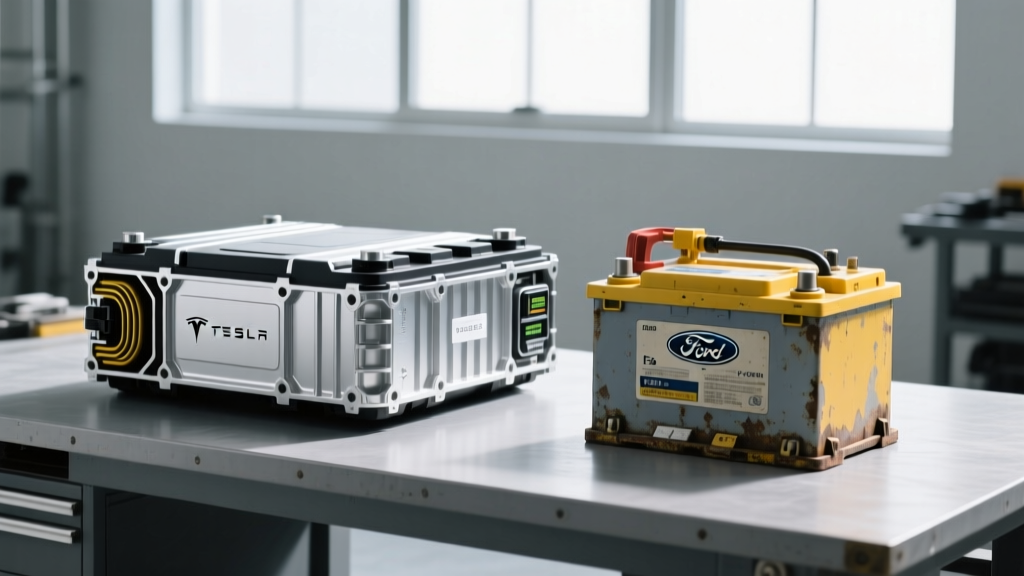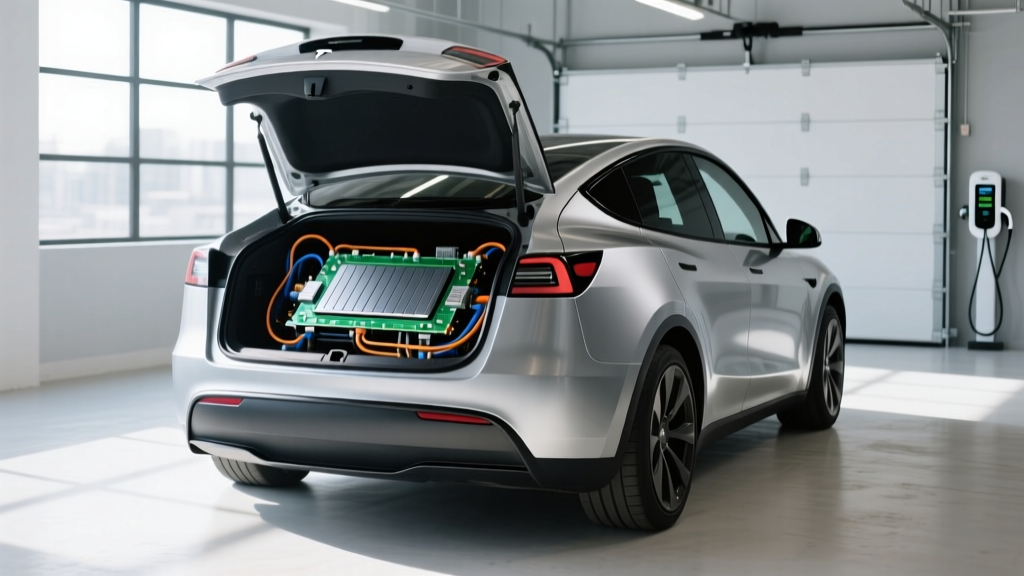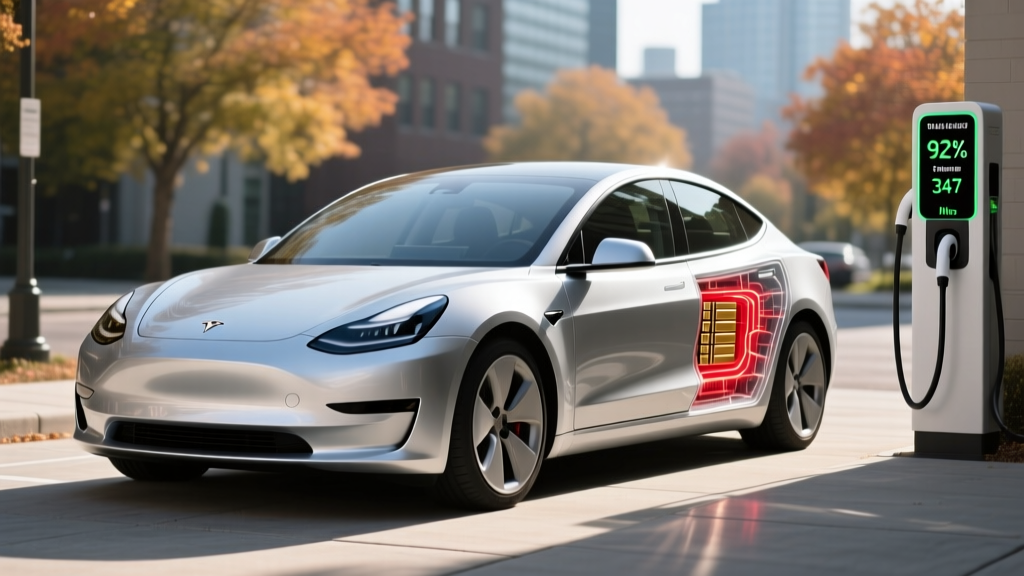
If you're evaluating a used 2018 Tesla Model 3 Long Range—or already own one—the single most important question is how the original high-voltage traction battery is holding up nearly eight years after production. The 2018 Model 3 Long Range shipped with a 75 kWh usable (approximately 79 kWh gross) NCA (nickel-cobalt-aluminum) lithium-ion battery pack, rated by the EPA at 310 miles of range when new. In 2026, real-world data from high-mileage owners and fleet telemetry tells a nuanced story about longevity, degradation curves, and what to expect as these early Model 3 packs age out of warranty.
This guide uses the 2018 Model 3 Long Range as a detailed case study, then broadens into a complete EV battery technology primer—covering chemistry trade-offs, degradation data across brands, warranty coverage, replacement economics, and the care habits that meaningfully extend pack life.
The 2018 Tesla Model 3 Long Range Battery: Original Specs and Architecture
The 2018 Model 3 Long Range uses a Panasonic-manufactured NCA battery in a 4,416-cell cylindrical (2170 format) configuration. This was Tesla's first deployment of the 2170 cell at scale, moving from the older 18650 cells used in the Model S and Model X. The pack operates at a nominal voltage of 350V and weighs approximately 1,054 lbs.
| Attribute | Value |
|---|---|
| Usable Capacity | 75 kWh (79 kWh gross) |
| Chemistry | NCA (Nickel-Cobalt-Aluminum) |
| Cell Format | 2170 cylindrical (Panasonic) |
| EPA Range (New) | 310 miles |
| EPA Efficiency | 26 kWh/100 mi (126 MPGe combined) |
| Peak DC Fast Charge | ~145 kW (V2 Supercharger era) |
| 10–80% DC Charge Time | ~30 minutes (at V2 Supercharger) |
| Level 2 Charge Rate | 11.5 kW (48A) |
| 0–60 mph | 4.8 seconds (RWD), 4.4 sec (AWD) |
Real-world range note: In 2026, a well-maintained 2018 Model 3 Long Range with typical degradation will display an estimated range of approximately 270–290 miles at 100% State of Charge. Highway driving at 75 mph in moderate temperatures yields roughly 250–270 real-world miles. In cold weather (below 32°F), expect a further 15–25% reduction, dropping effective range to 200–230 miles on a full charge.
NCA vs. LFP vs. NMC: Understanding Battery Chemistry Trade-Offs
The 2018 Model 3 Long Range uses NCA chemistry, but the broader EV market in 2026 spans three dominant cathode types. Tesla itself now uses LFP (lithium iron phosphate) in the standard-range Model 3, while most Long Range and Performance variants continue with NCA or NMC (nickel-manganese-cobalt). Understanding the trade-offs is essential for any buyer evaluating battery longevity.
| Factor | NCA (Tesla/Panasonic) | NMC (Most OEMs) | LFP (Tesla Std, BYD, Rivian Std) |
|---|---|---|---|
| Energy Density | Highest (~260 Wh/kg cell) | High (~220–250 Wh/kg) | Lower (~160–180 Wh/kg) |
| Cycle Life | ~1,000–1,500 full cycles | ~1,000–2,000 full cycles | ~3,000–5,000+ full cycles |
| Cold Performance | Good (heat pump helps) | Good | Weaker (slower charging, more range loss in cold) |
| Cost per kWh | Moderate–High | Moderate | Lowest (no cobalt/nickel) |
| Thermal Stability | Lower (requires active cooling) | Moderate | Highest (inherently stable) |
| Recommended Daily SoC | 80% (to slow degradation) | 80% | 100% (LFP tolerates full charge) |
| Typical Use Case | Long Range / Performance EVs | Most mid-to-high-range EVs | Standard-range, fleet, high-mileage |
Which is better? There is no universal winner. NCA delivers the best range per pound—critical for maximizing EPA ratings in a sedan like the Model 3 Long Range. LFP sacrifices energy density but offers dramatically longer cycle life, lower cost, and the ability to charge to 100% daily without accelerated degradation. NMC sits in the middle and dominates the broader market (Hyundai, BMW, Ford, VW). If you prioritize maximum range and don't mind capping daily charge at 80%, NCA/NMC is optimal. If you want a pack that may outlast the vehicle with minimal care, LFP is the longevity champion.
Degradation Data: What 2018 Model 3 Owners Actually See
Battery degradation is not linear. The steepest capacity loss occurs in the first 12–18 months (typically 2–5%), after which the curve flattens significantly. By year five through eight, most NCA and NMC packs lose an additional 1–2% per year under normal use.
Typical NCA Degradation Curve (Model 3 Long Range, Real-World Fleet Data):
- Year 1 / 15,000 mi: ~2–4% capacity loss (96–98% retained)
- Year 3 / 45,000 mi: ~5–8% loss (92–95% retained)
- Year 5 / 75,000 mi: ~7–10% loss (90–93% retained)
- Year 7 / 105,000 mi: ~9–13% loss (87–91% retained)
- Year 8 / 120,000 mi: ~10–15% loss (85–90% retained)
Sources: fueleconomy.gov EV technology overview, Tesla Fleet Telemetry data (aggregated via owner community reports), Tesla Battery Information.
For a 2018 Model 3 Long Range in 2026 with approximately 90,000–120,000 miles, the typical pack retains 85–92% of original capacity. That translates to roughly 265–285 miles of displayed range at 100% SoC—down from the original 310. Owners who frequently DC fast-charged, routinely charged to 100%, or operated in extreme heat without preconditioning tend to cluster at the lower end of that range.
LFP packs, by contrast, show far less degradation at equivalent mileage. BYD and Tesla Standard Range LFP owners commonly report 95%+ capacity retention at 100,000 miles, making LFP the preferred chemistry for high-mileage drivers and fleet operators.
Battery Warranty Coverage: What Tesla (and Others) Guarantee
The 2018 Model 3 Long Range is covered by Tesla's 8-year/120,000-mile battery and drive unit warranty (whichever comes first). This means most 2018 vehicles are either at or just past the warranty boundary in 2026. The warranty guarantees that the battery will retain at least 70% of its original capacity. If capacity drops below 70% within the warranty period, Tesla will repair or replace the pack at no cost.
| Manufacturer | Warranty Term | Capacity Threshold | Notes |
|---|---|---|---|
| Tesla (Model 3/Y LR & Perf) | 8 yr / 120,000 mi | 70% retention | Std Range: 8 yr / 100,000 mi |
| Hyundai / Kia | 10 yr / 100,000 mi | 70% retention | Among the longest coverage |
| Ford (Mustang Mach-E, F-150 Lightning) | 8 yr / 100,000 mi | 70% retention | Covers battery and HV components |
| GM (Ultium platform) | 8 yr / 100,000 mi | 70% retention | Includes Bolt EV/EUV successor packs |
| BMW | 8 yr / 100,000 mi | 70% retention | iX, i4, i7 coverage |
| Rivian | 8 yr / 175,000 mi | 70% retention | Higher mileage cap for R1T/R1S |
Critical distinction: The battery warranty covers the high-voltage traction battery pack and its internal modules—not the 12V auxiliary (low-voltage) battery that powers electronics and accessories. The 12V battery is a separate, much smaller unit (often lithium-ion in newer Teslas, lead-acid in older models) and is covered under a shorter warranty, typically 4 years / 50,000 miles.
EV Battery Replacement Cost: Reality vs. Fear
Out-of-warranty battery replacement is the number-one anxiety for used EV buyers. The costs are substantial but must be contextualized: most EV batteries outlast the vehicle's economic life, and full replacements remain rare.
| Vehicle / Pack Size | Battery Size (kWh) | Estimated Replacement Cost | Typical Need Timeline |
|---|---|---|---|
| Tesla Model 3 Std Range (LFP) | 57–60 kWh | $8,000–$12,000 | Rarely needed; 3,000+ cycle life |
| Tesla Model 3 Long Range (NCA) | 75–82 kWh | $12,000–$16,000 | 150,000–200,000+ mi (if ever) |
| Tesla Model Y Long Range | 75–82 kWh | $12,000–$16,000 | Similar to Model 3 LR |
| Ford F-150 Lightning Ext Range | 131 kWh | $20,000–$28,000 | Large pack; very slow degradation |
| Hyundai Ioniq 5 / Kia EV6 | 77.4 kWh | $10,000–$15,000 | 150,000+ mi |
| Chevrolet Bolt EV/EUV (older NMC) | 65 kWh | $9,000–$14,000 | Some early packs replaced under recall |
For the 2018 Model 3 Long Range specifically, an out-of-warranty pack replacement in 2026 costs approximately $12,000–$16,000 including labor at a Tesla Service Center. Third-party EV shops and refurbished pack options are increasingly available for $8,000–$11,000. Module-level repair (replacing only degraded cell groups) can reduce costs to $3,000–$6,000 in some cases, though Tesla's official service typically replaces the entire pack.
The important context: at current degradation rates, the vast majority of 2018 Model 3 Long Range packs will retain 80%+ capacity at 200,000 miles. Many will never need replacement during the car's usable life. The fear of a $15,000 surprise bill is real but statistically unlikely before the vehicle reaches 15+ years of age.
Factors That Accelerate (or Preserve) Battery Life
Not all 2018 Model 3 Long Range batteries age equally. The spread between a pack at 92% SoH and one at 84% SoH at the same mileage often traces back to owner habits. Here are the factors that matter most, ranked by impact:
High-Impact Factors
- Daily State of Charge: Charging NCA/NMC to 100% daily accelerates calendar degradation. Tesla recommends 80% for daily use and 100% only for trips. LFP owners can safely charge to 100% daily.
- Extreme Heat Exposure: Sustained operation or parking in ambient temperatures above 95°F without thermal management active causes the most irreversible capacity loss. Garage parking in hot climates meaningfully extends pack life.
- DC Fast-Charging Frequency: Exclusive or near-exclusive DC fast charging (especially at peak rates above 150 kW) correlates with 2–4% additional degradation over 100,000 miles vs. primarily Level 2 home charging. Occasional fast charging is fine; daily fast charging adds up.
Moderate-Impact Factors
- Cold Charging Without Preconditioning: Charging a cold NCA pack (below 40°F) at high power causes lithium plating on the anode. Always use the Tesla app to precondition the battery before charging in cold weather, or navigate to a Supercharger using the car's built-in routing (which auto-preconditions).
- Prolonged Storage at High or Low SoC: Leaving the car at 100% or below 10% for weeks accelerates degradation. For storage, aim for 50% SoC.
- Deep Discharge Cycles: Routinely driving the pack to 5% or below stresses cells. Try to charge before dropping below 10–15%.
Lower-Impact Factors
- Regenerative Braking Intensity: High regen in cold weather can stress cells if the pack is near 100% SoC. Tesla software now manages this automatically.
- Aftermarket Accessories: Third-party accessories drawing constant parasitic load from the HV battery (not the 12V) are rare but can contribute to micro-cycling.
How to Check Battery Health (State of Health) in a Tesla Model 3
Tesla does not display a direct "State of Health" (SoH) percentage in the vehicle's UI, unlike some OEMs (Hyundai's Bluelink, for example, shows SoH in its app). However, owners and prospective buyers have several reliable methods to assess pack condition:
Method 1: Displayed Range at 100% SoC
Charge the vehicle to 100% and note the displayed estimated range. Compare it to the original EPA rating of 310 miles. A 2018 Model 3 Long Range showing 275–290 miles at 100% is typical and healthy (89–94% SoH). Below 260 miles suggests above-average degradation (below 84% SoH) and warrants further investigation.
Method 2: Tesla Service Mode (or Third-Party Apps)
Tesla's Service Mode (accessible via a hidden menu in newer software versions) shows nominal full-pack capacity in kWh. Dividing the current nominal capacity by 75 kWh (original usable) gives a direct SoH percentage. Third-party apps like Tessie, TeslaFi, or Stats (iOS) pull this data via the Tesla API and display it clearly.
Method 3: OBD-II Dongle + Scan Tool
Tools like the Scan My Tesla app paired with an OBD-II adapter can read pack voltage, cell imbalance, and nominal capacity directly from the BMS (Battery Management System). Cell imbalance above 20–30 mV between module groups may indicate a weak module.
Method 4: Pre-Purchase Inspection at a Tesla Service Center
For used buyers, Tesla Service Centers can run a battery health diagnostic for approximately $100–$200. This provides an official SoH assessment and flags any cell-module anomalies. This is strongly recommended before purchasing a 2018 Model 3 Long Range in 2026, especially if the vehicle is past the 120,000-mile warranty threshold.
Emerging Battery Technology: What's Next (and When)
While the 2018 Model 3 Long Range's NCA pack represents proven, mature technology, the battery landscape is evolving rapidly. Here's a realistic assessment of what's coming—and what isn't available yet:
Silicon-dominant anodes: Companies like Sila Nanotechnologies and Group14 are replacing graphite anodes with silicon composites, boosting energy density by 20–40%. These are entering production in 2025–2027 in limited applications (initially consumer electronics and select EV models). Expect broader EV adoption by 2028–2030.
Solid-state batteries: Toyota, Samsung SDI, and QuantumScape have announced solid-state prototypes with 450+ mile range potential and 10-minute fast-charge capability. However, mass production remains targeted for 2028–2030 at the earliest, with initial deployment likely in premium vehicles at significant cost premiums. Solid-state is not available in any production vehicle as of 2026.
Sodium-ion batteries: CATL and BYD are deploying sodium-ion packs in Chinese-market vehicles. These offer lower cost and excellent cold performance but significantly lower energy density (~120–140 Wh/kg). They're best suited for urban/subcompact EVs and are not expected in US-market long-range vehicles before 2028.
Dry-electrode manufacturing: Tesla's acquisition of Maxwell Technologies and subsequent dry-electrode process development aims to reduce battery manufacturing cost by 30–50% per kWh. This is gradually entering production at Tesla's in-house cell lines (4680 cells) and will reduce replacement pack costs over time.
The practical takeaway: today's NCA, NMC, and LFP packs are already excellent. Next-generation chemistries will improve cost and energy density but won't retroactively benefit 2018 Model 3 owners. For current buyers, pack condition and care history matter far more than waiting for future technology.
Frequently Asked Questions
How long do EV batteries last in years and miles?
Most modern EV batteries (NCA, NMC, LFP) are designed to last 15–20 years or 150,000–300,000 miles before reaching 70–80% of original capacity. LFP packs routinely exceed 300,000 miles in fleet service. The 2018 Tesla Model 3 Long Range's NCA pack typically retains 85–92% capacity at 100,000–120,000 miles based on fleet data. Complete failure before 150,000 miles is rare and usually covered under warranty.
How much does an EV battery cost to replace?
Replacement costs range from approximately $8,000 for a standard-range LFP pack to $28,000 for a large pack like the F-150 Lightning Extended Range. For a 2018 Tesla Model 3 Long Range, expect $12,000–$16,000 at a Tesla Service Center, or $8,000–$11,000 via third-party shops using refurbished packs. Module-level repair can cost $3,000–$6,000. Most owners never need a full replacement.
What does the Tesla battery warranty actually cover?
Tesla's battery warranty for the 2018 Model 3 Long Range covers 8 years or 120,000 miles (whichever comes first) against defects and capacity loss below 70% of original capacity. It covers the high-voltage traction battery pack, internal modules, and the drive unit. It does not cover the 12V auxiliary battery, cosmetic issues, or damage from accidents, flooding, or unauthorized modifications. For the 2018 model year, most vehicles are at or just past this warranty boundary in 2026.
How do I check my Tesla's battery health?
Charge to 100% and compare displayed range to the original 310-mile EPA rating. Use third-party apps like Tessie or TeslaFi to read nominal pack capacity via the Tesla API. For a definitive assessment, request a battery diagnostic at a Tesla Service Center ($100–$200). OBD-II tools like Scan My Tesla can also read cell-level data including module imbalance.
LFP vs NMC/NCA — which battery chemistry is better for me?
Choose NCA or NMC if you prioritize maximum range and don't mind charging to 80% daily. These chemistries offer the highest energy density and best cold-weather range. Choose LFP if you want maximum longevity (3,000+ cycles), lower cost, the ability to charge to 100% daily, and don't need the last 30–50 miles of range. LFP is ideal for commuters, high-mileage drivers, and fleet use. NCA/NMC is better for road-trippers and those in cold climates.
Does frequent Supercharging damage the Model 3 battery?
Exclusive DC fast charging adds approximately 2–4% more degradation over 100,000 miles compared to primarily Level 2 home charging, based on fleet telemetry data. Occasional Supercharging (a few times per week) has a negligible effect. The bigger risk is fast-charging a cold battery without preconditioning, which can cause lithium plating. Always precondition before DC charging in cold weather.
Should I buy a 2018 Model 3 Long Range in 2026?
At typical used prices of $18,000–$25,000 in 2026, a well-maintained 2018 Model 3 Long Range with 85%+ SoH represents strong value—especially since it remains eligible for the used clean vehicle credit of up to $4,000 under IRS §25E (subject to income limits, the $25,000 sale-price cap, and dealer registration requirements). Get a battery health diagnostic before purchase, verify the pack retains at least 85% capacity, and budget for potential out-of-warranty service.