When shoppers search for a 2018 Subaru Forester battery, they're usually looking for a replacement 12-volt lead-acid unit — a $150–$250 part that starts the engine and powers accessories. But as more Forester owners consider trading in for an electric vehicle, understanding the fundamental difference between that conventional 12V battery and a modern EV's high-voltage traction battery has never been more important. This guide breaks down EV battery chemistry, real-world degradation data, replacement economics, and care strategies — while clarifying exactly what powers the vehicle sitting in your driveway today.
The 2018 Subaru Forester Battery: What You're Actually Replacing
The 2018 Subaru Forester (fifth-generation, final model year before the 2019 redesign) uses a standard Group 35 12V lead-acid battery, typically rated at 550 cold-cranking amps (CCA). This battery powers the starter motor, lights, infotainment, and ECU — exactly like any conventional gasoline vehicle. It has nothing to do with propulsion energy storage.
Replacement is straightforward: expect to pay $140–$260 for an AGM or flooded lead-acid Group 35 battery at an auto parts store, with a typical lifespan of 3–5 years depending on climate and usage. Subaru's original equipment battery carries a 3-year/36,000-mile warranty through the dealership.
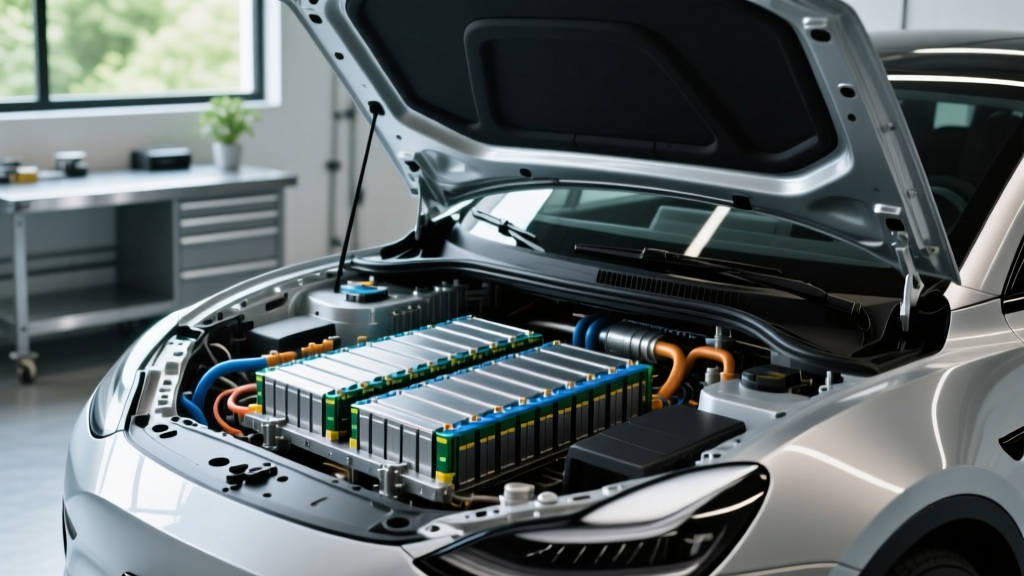
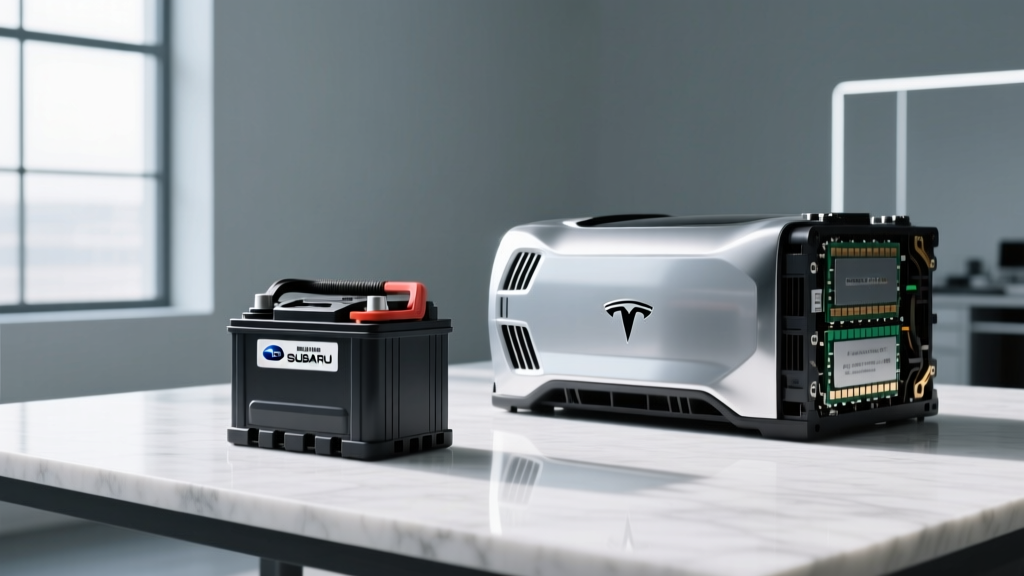
This stands in stark contrast to EV traction batteries — the massive lithium-ion packs that actually propel electric vehicles. Understanding that difference is the first step toward making an informed electrified purchase decision.
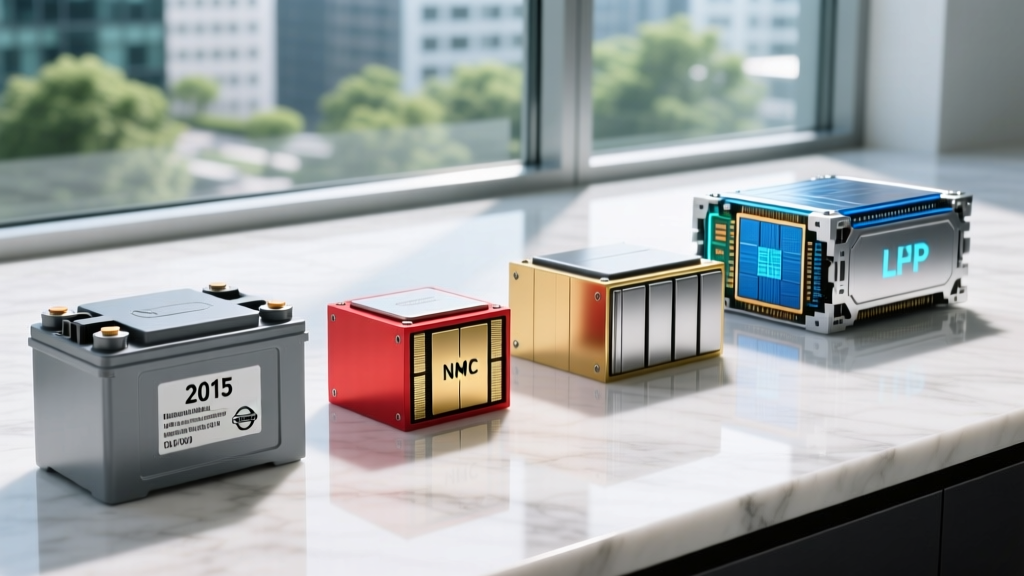
EV Battery Chemistry: LFP vs NMC vs NCA Explained
Modern EV traction batteries use one of three dominant lithium-ion chemistries. Each carries distinct trade-offs in energy density, longevity, cold-weather performance, and cost. Here's how they compare as of the 2026 model year:
| Attribute | LFP (Lithium Iron Phosphate) | NMC (Nickel Manganese Cobalt) | NCA (Nickel Cobalt Aluminum) |
|---|---|---|---|
| Energy Density | Lower (~160 Wh/kg cell-level) | Higher (~220–260 Wh/kg) | Highest (~260–300 Wh/kg) |
| Cycle Life | 3,000–5,000+ cycles to 80% SoH | 1,000–2,000 cycles to 80% SoH | 1,000–1,500 cycles to 80% SoH |
| Cold Performance | Moderate — slower charging below 32°F | Better low-temp discharge/charge | Good low-temp performance |
| Cost per kWh | Lowest (~$80–100/kWh pack-level) | Mid-range (~$110–140/kWh) | Higher (~$120–150/kWh) |
| Thermal Stability | Excellent — very low thermal runaway risk | Good with active management | Requires robust BMS |
| Typical Vehicles (2026) | Tesla Model 3/Y RWD, Ford Mustang Mach-E Select, Rivian Standard | Hyundai Ioniq 5/6, Kia EV6/EV9, VW ID.4, BMW iX | Tesla Model S/X/3/Y Long Range, Lucid Air |
| Charging to 100% | Recommended periodically for cell balancing | 80% daily limit recommended | 80% daily limit recommended |
Which is better? There's no universal winner. LFP excels in longevity and cost — ideal for daily commuters who charge at home and don't need maximum range. NMC and NCA offer higher energy density for longer-range models and better cold-weather charging, making them preferable for road-trip-heavy drivers or those in northern climates. Tesla's dual-chemistry strategy (LFP for Standard Range, NCA for Long Range) reflects this pragmatic segmentation.
Real-World EV Battery Degradation: What the Data Shows
Battery degradation — the gradual loss of usable capacity over time — is the single biggest concern for prospective EV buyers. Fortunately, real-world data from millions of miles of fleet and consumer use paints a reassuring picture.
- Tesla fleet average: ~12% capacity loss at 150,000 miles (per Tesla 2024 Impact Report)
- Nissan Leaf (passive-cooled, 2011–2017): 20–30% loss at 100,000 miles — an outlier due to lack of active thermal management
- Hyundai/Kia E-GMP platform (Ioniq 5, EV6): ~5–8% loss at 60,000 miles per fleet data aggregators
- Chevrolet Bolt EV/EUV: ~6–10% loss at 80,000 miles with liquid-cooled pack
- General industry trend: Most liquid-cooled packs retain 85–92% capacity at 100,000 miles
Several patterns emerge from this data. First, the steepest degradation occurs in the first 20,000–30,000 miles (typically 3–5%), after which the curve flattens considerably. Second, active liquid cooling is the single most impactful hardware factor — passively cooled packs like early Leafs degrade significantly faster. Third, chemistry matters: LFP packs generally show slower degradation than NMC/NCA at equivalent cycle counts, though they start with lower total energy density.
For context, a vehicle like the 2026 Hyundai Ioniq 5 (84 kWh usable, NMC) with an EPA range of 310 miles would likely retain ~270–285 miles of range at 100,000 miles — still entirely practical for daily use and road trips alike.
Battery Warranty Coverage: What Manufacturers Guarantee
Federal regulations mandate a minimum 8-year/100,000-mile battery warranty for all EVs sold in the US. Many manufacturers exceed this baseline. The warranty typically guarantees the battery will retain a specified percentage of its original capacity — most commonly 70% — for the warranty period.
| Manufacturer | Warranty Term | Capacity Threshold | Notes |
|---|---|---|---|
| Tesla | 8 yr / 120,000 mi (Model 3/Y); 8 yr / 150,000 mi (S/X) | 70% | Longer mileage on premium models |
| Hyundai / Kia | 10 yr / 100,000 mi | 70% | Industry-leading duration |
| Ford | 8 yr / 100,000 mi | 70% | Applies to Mustang Mach-E, F-150 Lightning |
| GM (Chevrolet, Cadillac) | 8 yr / 100,000 mi | 70% (Bolt); 60% (Ultium platform) | Varies by platform |
| BMW | 8 yr / 100,000 mi | 70% | Includes i4, iX, i7 |
| Rivian | 8 yr / 175,000 mi (R1T/R1S) | 70% | Highest mileage threshold in segment |
What the warranty covers: If your battery falls below the stated capacity threshold within the warranty period, the manufacturer will repair or replace modules (or the full pack) at no cost. This covers defect-driven failures and abnormal degradation. It does not cover damage from collisions, flooding, or unauthorized modifications.
For comparison, the 12V battery in a 2018 Subaru Forester carries only a 3-year/36,000-mile warranty — and replacement is entirely out-of-pocket after that period, every 3–5 years for the life of the vehicle.
EV Battery Replacement Cost: When and How Much
The fear of a $20,000 battery replacement keeps some buyers on the sidelines. Let's put that number in perspective with current data.
| Vehicle | Pack Size | Full Replacement Cost | Module Repair Cost |
|---|---|---|---|
| Tesla Model 3/Y (LFP) | 60 kWh | $8,000–$12,000 | $2,000–$4,000 per module group |
| Hyundai Ioniq 5 | 77.4 kWh (84 usable) | $10,000–$16,000 | $2,500–$5,000 |
| Ford F-150 Lightning (Extended) | 131 kWh | $18,000–$28,000 | $3,000–$7,000 |
| Chevrolet Bolt EV | 65 kWh | $9,000–$14,000 | $2,000–$4,500 |
| BMW iX xDrive50 | 111.5 kWh | $18,000–$25,000 | $3,500–$6,000 |
Critical context: Full pack replacements are rare. Most degradation-related warranty claims are resolved by replacing individual modules — a fraction of the full-pack cost. And pack-level costs continue to decline. According to BloombergNEF, average lithium-ion pack prices fell below $115/kWh in 2025, down from $140/kWh in 2023.
When is replacement typically needed? For most liquid-cooled EVs, the answer is: probably never during original ownership. At a degradation rate of ~1–2% per year, a battery retains 80%+ capacity at 10–15 years. Many EV batteries will outlast the vehicle's body, electronics, and suspension components. The cars are more likely to be totaled in accidents or retired for other mechanical reasons before the battery fails catastrophically.
Compare this to the 2018 Subaru Forester's 12V battery: you'll likely replace it 3–4 times over a 15-year ownership period, spending $500–$1,000 total on a component that never propels the vehicle.
Factors That Accelerate (or Preserve) Battery Health
Not all miles are equal when it comes to battery wear. These are the variables within your control:
- Daily charge limit: Set to 80% for NMC/NCA batteries; 100% is fine for LFP. Every EV lets you set this in the app or infotainment.
- Avoid prolonged 100% SoC: Don't charge to full and let the car sit for days. Charge to 100% only when you'll drive soon after.
- Minimize DC fast charging when possible: Frequent 150+ kW sessions accelerate degradation. Use Level 2 home charging for daily needs; reserve DCFC for road trips.
- Precondition before fast charging: Most EVs automatically precondition the battery when you navigate to a charger. This optimizes charge speed and reduces stress. Always use the car's built-in navigation to chargers to trigger this.
- Avoid extreme SoC in extreme heat: A battery at 100% SoC in 100°F+ ambient temperatures experiences the most stress. Park in shade, use scheduled charging to finish near departure time.
- Don't baby it too much: Modern BMS (battery management systems) are sophisticated. The top and bottom buffers (typically 2–5% each) protect the cells even when the display shows 0% or 100%. Drive and charge normally.
- Cold weather is temporary: Range loss in freezing temperatures (15–30%) is largely reversible. It's reduced efficiency, not permanent degradation.
The single most impactful habit: install a Level 2 home charger and charge slowly overnight. Slow charging (7–11 kW) generates far less heat than DC fast charging (50–350 kW), and heat is the primary enemy of lithium-ion longevity. A $500–$1,500 Level 2 installation pays for itself in battery health preservation alone — before you even factor in the fuel savings.
How to Monitor Your EV's Battery State of Health
State of Health (SoH) is the percentage of original capacity your battery currently retains. A new battery is at 100% SoH; a battery that holds 80 kWh of its original 100 kWh is at 80% SoH.
How to check SoH by brand:
- Tesla: The in-car energy app shows projected range at 100% — compare to original EPA spec. Third-party apps like Tessie or TeslaFi log detailed SoH estimates from BMS data.
- Hyundai/Kia: Some models display SoH in the service menu (accessible via the cluster). Dealers can pull precise SoH via diagnostic tools.
- Ford: The FordPass app shows estimated range. Dealership OBD-II diagnostics provide SoH percentage.
- BMW: The iDrive system and My BMW app provide range estimates. Certified technicians can read precise SoH.
- Universal method: Charge to 100%, note the displayed range, and compare to the EPA-rated range when new. Account for temperature — do this comparison in moderate weather (60–75°F) for accuracy.
For used-EV shoppers, services like Recurrent provide battery health reports based on telematics data, giving you confidence in a pre-owned purchase.
What's Next: Solid-State and Silicon-Anode Batteries
Next-generation battery technologies promise step-change improvements, but realistic timelines matter.
Solid-state batteries replace the liquid electrolyte with a solid material, potentially offering 2× energy density, faster charging (10–80% in under 10 minutes), and improved safety. Toyota has announced pilot production for 2027–2028, with limited deployment in premium models. Samsung SDI and QuantumScape are targeting similar timelines. However, manufacturing scale-up remains the bottleneck — expect solid-state to reach mainstream, affordable vehicles no earlier than 2030–2032.
Silicon-anode batteries (used in limited form by Mercedes-Benz's upcoming models and Sila Nanotechnologies' partnership with Panasonic) offer 20–40% energy density improvements over graphite anodes. These are closer to commercialization, with select 2026–2027 models incorporating partial silicon-anode designs.
Sodium-ion batteries from CATL and others offer lower cost and better cold performance at the expense of energy density. These are entering Chinese-market vehicles in 2025–2026 and may reach US-market budget EVs by 2028.
From Forester to EV: The Ownership Math
If you're a 2018 Subaru Forester owner weighing an EV switch, consider the total battery-cost picture over 10 years:
| Cost Item | 2018 Subaru Forester (12V) | 2026 EV (Traction + 12V) |
|---|---|---|
| 12V Battery Replacements | 2–3 replacements × $180 = $360–$540 | 1–2 replacements × $200 = $200–$400 |
| Traction Battery Replacement | N/A | $0 (under warranty; statistically unlikely to need) |
| Fuel/Energy (150,000 mi) | ~$16,500 at 26 MPG avg, $3.50/gal | ~$5,400 at $0.14/kWh avg home charging |
| Total Energy + Battery Cost | ~$17,000 | ~$5,600 |
The EV's traction battery — the component that generates the most anxiety — costs you nothing during the warranty period and likely nothing beyond it. Meanwhile, you save roughly $11,000 in fuel over 150,000 miles. The federal §30D tax credit (up to $7,500 for qualifying new EVs, subject to MSRP caps, income limits, and battery-sourcing requirements) further tilts the economics.
Frequently Asked Questions
How long do EV batteries actually last?
Based on fleet data, most liquid-cooled EV batteries retain 80–90% of original capacity at 150,000 miles (roughly 12–15 years of average driving). Catastrophic failure is rare — gradual capacity loss is the norm, and the vehicle remains fully functional throughout. Many EV batteries will outlast the rest of the car.
How much does an EV battery cost to replace?
Full pack replacements range from $8,000–$28,000 depending on pack size, but most warranty claims are resolved with module-level repairs at $2,000–$7,000. Under the mandatory 8-year/100,000-mile warranty, abnormal degradation is covered at no cost. Pack prices continue declining ~8–12% annually.
What does the battery warranty actually cover?
All US-market EVs include at minimum an 8-year/100,000-mile battery warranty guaranteeing 70% capacity retention. This covers manufacturing defects and abnormal degradation. It does not cover collision damage, flooding, or unauthorized modifications. Hyundai/Kia leads with 10-year coverage; Rivian extends to 175,000 miles.
How do I check my EV battery's health?
Charge to 100% in moderate weather and compare the displayed range to the original EPA rating. Most EVs also offer SoH data through dealer diagnostics, third-party apps (Tessie, TeslaFi), or built-in service menus. For used EVs, services like Recurrent provide independent battery health reports.
LFP vs NMC — which battery chemistry should I choose?
Choose LFP if you charge at home daily, want maximum cycle life (3,000–5,000+ cycles), prefer lower cost, and don't need the longest possible range. Choose NMC/NCA if you need maximum range per charge, drive frequently in very cold climates, or take regular road trips where energy density matters. Both chemistries are proven and well-warrantied in 2026.
Is the 2018 Subaru Forester's battery the same as an EV battery?
No. The 2018 Forester uses a standard Group 35 12V lead-acid battery ($140–$260, replaced every 3–5 years) for starting and accessories. An EV's traction battery is a 40–130+ kWh lithium-ion pack ($8,000–$28,000 replacement value, warrantied 8–10 years) that stores all driving energy. They are fundamentally different components with different costs, lifespans, and purposes.