If you're evaluating a used Tesla Model 3 from the 2018 model year — or you already own one and are watching the range estimator creep downward — the high-voltage traction battery is the single most important component in the car. The 2018 Model 3 Long Range shipped with a ~75 kWh usable NCA (nickel-cobalt-aluminum) battery pack rated at 310 miles of EPA range when new. Nearly eight years later, the data is clear: these packs degrade, but they degrade slowly and predictably.
This guide breaks down the chemistry inside the 2018 Model 3 Long Range battery, what real-world degradation data shows at high mileage, what the warranty actually covers, what a replacement costs in 2026, and how to maximize the pack's remaining life. We'll also cover how this NCA pack compares to the LFP batteries Tesla now uses in Standard Range models.
What's Inside the 2018 Model 3 Long Range Battery Pack
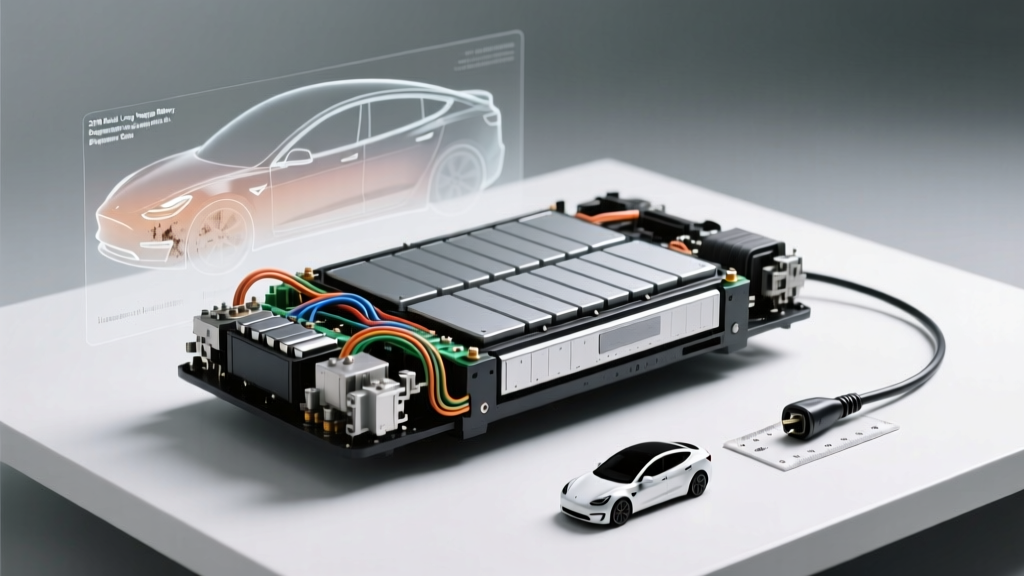
The 2018 Model 3 Long Range uses a battery pack built around Panasonic 2170-format cells with NCA cathode chemistry. The total pack capacity is approximately 79 kWh gross, with roughly 75 kWh usable — Tesla reserves a top and bottom buffer to protect the cells from extreme states of charge that accelerate degradation.
NCA chemistry was chosen for the Long Range variant because it offers high energy density, meaning more range in a lighter, more compact pack. This is the same cell format and chemistry Tesla used in the Model 3 Long Range through the 2020 model year before shifting to different suppliers and, eventually, LFP chemistry for rear-wheel-drive trims.
- Chemistry: NCA (Nickel-Cobalt-Aluminum)
- Cell format: Panasonic 2170
- Gross capacity: ~79 kWh
- Usable capacity: ~75 kWh
- EPA range (new): 310 miles
- Peak DC fast charge: ~170 kW (V2 Supercharger); up to 250 kW on V3 (added via OTA)
- 10–80% DCFC time: ~30 minutes (V3, preconditioned)
- Level 2 charge rate: 11.5 kW (48A)
NCA vs. LFP: Chemistry Trade-Offs Explained
Not all Tesla Model 3 batteries are the same. The 2018 Long Range uses NCA, while the Standard Range (Rear-Wheel-Drive) models sold from 2021 onward in the U.S. use LFP (lithium iron phosphate) cells, primarily from CATL. Understanding the difference matters whether you're buying used or comparing trims.
| Attribute | NCA (2018 Model 3 LR) | LFP (Model 3 RWD 2021+) |
|---|---|---|
| Energy density | High (~260 Wh/kg cell-level) | Moderate (~170–200 Wh/kg) |
| Typical pack range | 310–350 mi EPA | 250–272 mi EPA |
| Cycle life | ~1,000–1,500 full cycles to 80% SoH | ~2,000–3,000+ full cycles to 80% SoH |
| Cold-weather performance | Better low-temp energy delivery | More range loss in freezing temps |
| Daily charging recommendation | 80% SoC for daily use | 100% SoC OK (Tesla recommends weekly 100%) |
| Cost per kWh (cell) | Higher (cobalt content) | Lower (no cobalt or nickel) |
| Thermal stability | Good; requires active management | Excellent; inherently more stable |
The bottom line: NCA gives you more range and better cold-weather performance but requires more careful state-of-charge management. LFP sacrifices range for longevity and simplicity — you can charge to 100% daily without meaningful harm. If you're buying a used 2018 Model 3 Long Range, the NCA pack's higher energy density is the reason it still offers competitive range despite its age.
Real-World Degradation: What the Data Shows
Tesla's 2024 Impact Report (the most recent comprehensive dataset) stated that Model 3 and Model Y vehicles retain approximately 85% of their original battery capacity after 200,000 miles. Independent data from fleet operators and owner surveys largely corroborates this.
For a 2018 Model 3 Long Range specifically, here's what degradation looks like at typical mileage milestones based on aggregated owner data and fleet reports:
| Mileage | Average Capacity Retained | Estimated Range (from 310 mi EPA) |
|---|---|---|
| 0 mi (new) | 100% | 310 mi |
| 30,000 mi | ~96–97% | ~298–301 mi |
| 60,000 mi | ~93–95% | ~288–295 mi |
| 100,000 mi | ~90–93% | ~279–288 mi |
| 150,000 mi | ~87–90% | ~270–279 mi |
| 200,000 mi | ~84–88% | ~260–273 mi |
Several important caveats apply to these numbers:
- Early degradation is steeper. Most NCA packs lose 3–5% in the first 20,000–30,000 miles, then the curve flattens significantly. This is normal electrochemistry, not a defect.
- Highway-heavy driving is easier on the pack than stop-and-go city driving with frequent DC fast charging.
- Cold-climate owners may see slightly more apparent range loss in winter months due to reduced battery efficiency, but this is largely seasonal and reversible — not permanent degradation.
- Supercharger-heavy usage (multiple DC fast charges per week without preconditioning) can add 1–3% more degradation over 100,000 miles compared to primarily Level 2 home charging.
For context, a 2018 Model 3 Long Range with 90,000 miles and 92% battery health still delivers roughly 285 miles of range. That's more than many brand-new EVs on the market in 2026.
What the Tesla Battery Warranty Actually Covers
The 2018 Model 3 Long Range came with Tesla's standard battery and drive unit warranty. Here are the exact terms:
| Component | Coverage Period | Mileage Limit | Capacity Threshold |
|---|---|---|---|
| Battery pack | 8 years | 120,000 miles (Long Range) | 70% retention minimum |
| Drive unit(s) | 8 years | 120,000 miles | N/A (functional failure) |
Key details to understand:
- The warranty guarantees that the battery will retain at least 70% of its original usable capacity for 8 years or 120,000 miles, whichever comes first.
- For a 2018 Model 3, the 8-year warranty window expired (or is expiring) in 2026. If the vehicle is under 120,000 miles and drops below 70% retention, a warranty claim may still be valid depending on the exact in-service date.
- The warranty covers defects and excessive degradation — not damage from accidents, flooding, or improper modifications.
- Tesla measures capacity retention through the vehicle's BMS (Battery Management System). Owners can request a battery health check at a Service Center.
- If a warranty replacement is approved, Tesla may install a refurbished or remanufactured pack — not necessarily a brand-new one — but it will meet the 70%+ capacity threshold.
According to Tesla's official warranty documentation, the Long Range and Performance variants carry the 120,000-mile threshold, while the Standard Range Plus was covered at 100,000 miles.
Battery Replacement Cost: What to Expect in 2026
Out-of-warranty battery replacement is the elephant in the room for any used EV buyer. Here's the reality for the 2018 Model 3 Long Range:
| Scenario | Estimated Cost | Notes |
|---|---|---|
| Full pack replacement (Tesla Service) | $12,000–$16,000 | Remanufactured pack; includes labor |
| Full pack replacement (independent EV shop) | $9,000–$13,000 | Varies by source; may use salvaged packs |
| Module-level repair | $2,000–$5,000 | If only 1–2 modules are faulty; requires specialist |
Important context that often gets lost in replacement-cost panic:
- Most Model 3 batteries will never need replacement. At the degradation rates observed, a 2018 Long Range pack should deliver 250,000+ miles before dropping to 70% capacity — a mileage figure most owners will never reach.
- Module-level repair is increasingly viable. The Model 3 pack is composed of individual modules. If one module develops a fault, specialized EV repair shops can replace just that module for a fraction of a full-pack cost.
- Refurbished pack availability is growing. As more early Model 3s reach end-of-life from collisions or other damage, the supply of used and remanufactured packs is increasing, pushing prices down.
Factors That Accelerate (or Slow) Battery Degradation
Not all 2018 Model 3 Long Range batteries age the same way. The spread between a well-maintained pack at 92% SoH and a poorly treated one at 84% SoH at the same mileage comes down to these factors:
- Daily charge limit: 80%. Set the charge limit to 80% for everyday driving. Only charge to 100% when you need the full range for a road trip, and try not to let it sit at 100% for extended periods.
- Avoid deep discharge. Try not to regularly drop below 10–15% SoC. The low-voltage stress on NCA cells accelerates degradation.
- Precondition before DC fast charging. Navigate to a Supercharger using the car's built-in navigation — this triggers battery preconditioning, warming the pack to the optimal temperature for fast charging and reducing stress.
- Minimize DC fast charging frequency. Daily Supercharging isn't catastrophic, but if you have Level 2 home charging, use it for daily needs and reserve DCFC for road trips.
- Park in shade or a garage in hot climates. Sustained high battery temperatures (above 104°F / 40°C) accelerate calendar aging. Tesla's thermal management helps, but it can't fully compensate for a car baking in a Phoenix parking lot for days.
- Don't leave the car at low SoC for weeks. If storing the vehicle, leave it plugged in at 50% SoC — this is the most chemically stable state for NCA cells.
- Keep Sentry Mode usage in check. Constant Sentry Mode draws from the pack and can keep the battery at low SoC if not plugged in, adding unnecessary shallow cycles.
How to Check Battery Health (State of Health)
Unlike a gas car where you can check compression or read OBD-II codes, EV battery health monitoring is more nuanced. Here are the methods available to 2018 Model 3 owners:
1. Tesla Service Center Battery Health Report
You can request a battery health evaluation at any Tesla Service Center. Technicians pull detailed BMS logs that show measured capacity vs. original capacity, cell imbalance data, and charge/discharge history. This is the most authoritative method and is typically free if you ask during a service visit.
2. Third-Party OBD-II Diagnostics
Tools like the OBDLink MX+ paired with apps such as Scan My Tesla or TeslaFi can read real-time BMS data, including nominal full-pack energy (kWh), cell voltage delta, and pack temperature. This gives you a close approximation of State of Health without visiting a Service Center.
3. Manual Range Tracking
Charge the car to 100% and note the rated range displayed. Compare this to the original 310-mile EPA figure. A 2018 Model 3 showing ~280 miles at 100% charge has roughly 90% SoH. This method is imprecise (the BMS estimate can drift) but gives a quick sanity check.
4. TeslaFi or Tessie App Logging
Subscription services like TeslaFi log every charge session, energy added, and estimated capacity over time. By tracking the kWh added from a known SoC to another known SoC, you can calculate a reliable SoH percentage. For example, if charging from 10% to 90% adds 56 kWh, your usable capacity is approximately 70 kWh (56 ÷ 0.80), suggesting ~93% of the original 75 kWh.
Looking Ahead: Solid-State and Next-Gen Battery Technology
The battery landscape is evolving, but it's important to separate what's available now from what remains in development:
- Solid-state batteries: Companies like Toyota, QuantumScape, and Samsung SDI have demonstrated prototype solid-state cells with higher energy density and faster charging. However, as of 2026, no solid-state pack is in mass production for consumer vehicles. Realistic availability in production cars is 2028–2030 at the earliest, with cost parity likely taking longer.
- Silicon-dominant anodes: Startups like Sila Nanotechnologies and Group14 are supplying silicon-blend anode materials to manufacturers including Mercedes-Benz and Panasonic. These improve energy density by 10–20% but are currently limited to specific applications and low volumes.
- 4680 cells: Tesla's larger 4680-format cells (used in the Austin-built Model Y and Cybertruck) offer manufacturing cost reductions and structural benefits but use similar NMC/NCA chemistry. They represent an evolution, not a revolution, in cell chemistry.
- Sodium-ion batteries: CATL and other Chinese manufacturers have begun producing sodium-ion cells for lower-cost, shorter-range EVs. These are unlikely to appear in U.S.-market Tesla vehicles but represent a cost-reduction pathway for the broader industry.
For a 2018 Model 3 Long Range owner, these technologies don't change the calculus. Your NCA pack is proven, well-understood, and likely has years of useful life remaining. When it does eventually need attention, module-level repairs and a growing refurbished-pack market offer options that didn't exist five years ago.
Frequently Asked Questions
How long do EV batteries last in years and miles?
Based on current data, most NCA and NMC battery packs — including the one in the 2018 Model 3 Long Range — retain 80–85% of their original capacity at 200,000 miles. In terms of years, calendar aging adds roughly 1–2% loss per year even with low mileage. A well-maintained pack should provide reliable service for 15–20 years or 250,000+ miles before reaching 70% capacity, at which point it's still functional — just with reduced range.
How much does it cost to replace a Tesla Model 3 battery?
A full battery pack replacement through Tesla Service costs approximately $12,000–$16,000 for a remanufactured pack including labor. Independent EV shops may offer replacements for $9,000–$13,000. Module-level repairs, when only a portion of the pack is faulty, can cost $2,000–$5,000. However, most Model 3 batteries will never require a full replacement during the vehicle's useful life.
What does the Tesla battery warranty cover?
The 2018 Model 3 Long Range battery warranty covers the pack for 8 years or 120,000 miles (whichever comes first) against defects and degradation below 70% of original capacity. For a 2018 model, this warranty window is expiring in 2026. If your pack drops below 70% retention within the warranty period, Tesla will replace or refurbish it at no cost. The warranty does not cover damage from accidents, misuse, or unauthorized modifications.
How do I check and maximize my Model 3 battery health?
Check health by requesting a BMS report at a Tesla Service Center, using OBD-II tools like Scan My Tesla, or tracking charge data via TeslaFi. Maximize longevity by setting an 80% daily charge limit, avoiding deep discharges below 10%, preconditioning before DC fast charging, minimizing Supercharger frequency when Level 2 is available, and avoiding prolonged storage at very high or very low states of charge.
Is the NCA battery in the 2018 Model 3 Long Range better or worse than LFP?
Neither is universally better — they serve different priorities. NCA offers higher energy density (more range in a lighter pack) and better cold-weather performance, making it ideal for the Long Range model. LFP offers longer cycle life, better thermal stability, and the convenience of daily 100% charging, but with lower energy density and more cold-weather range loss. For a 2018 Long Range buyer, the NCA pack's superior range is a significant advantage over an LFP-equipped Standard Range model of similar age.
Can I upgrade my 2018 Model 3 to a newer battery pack?
Tesla does not offer official battery upgrades for older Model 3 vehicles. While the physical pack dimensions are similar across model years, the BMS software, cooling architecture, and electrical interfaces differ. Some independent shops have explored swaps, but this is not a supported or warranty-covered procedure and may create compatibility issues with the vehicle's firmware.
Sources: Tesla New Vehicle Limited Warranty · EPA Fuel Economy — 2018 Tesla Model 3 Long Range · Tesla Impact Report 2024 (Battery Degradation Data)