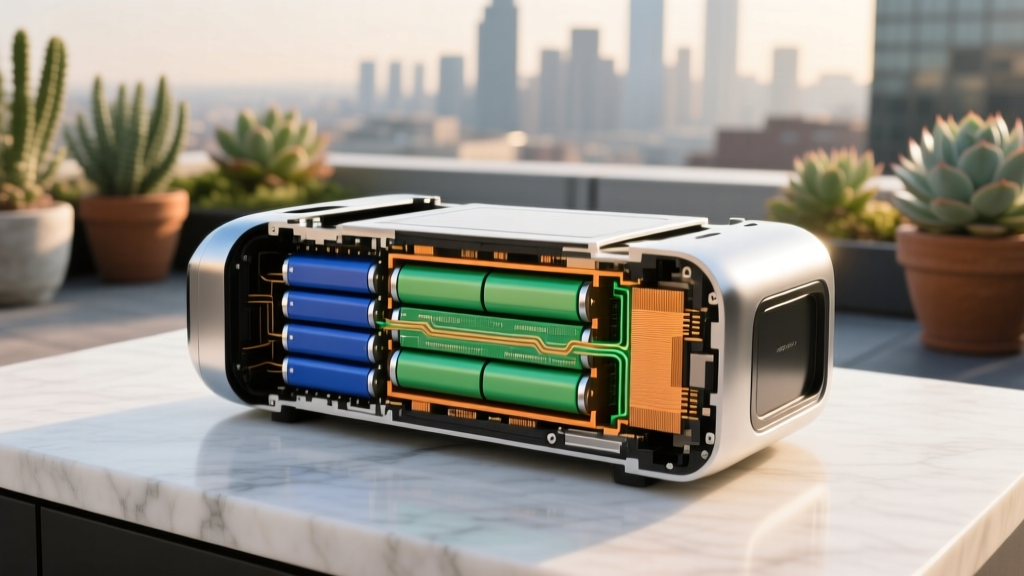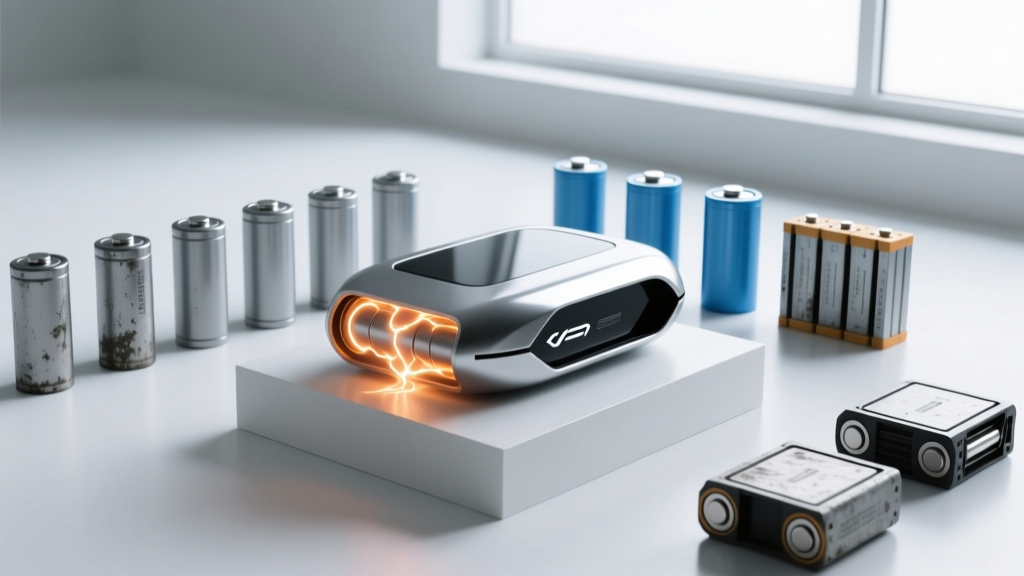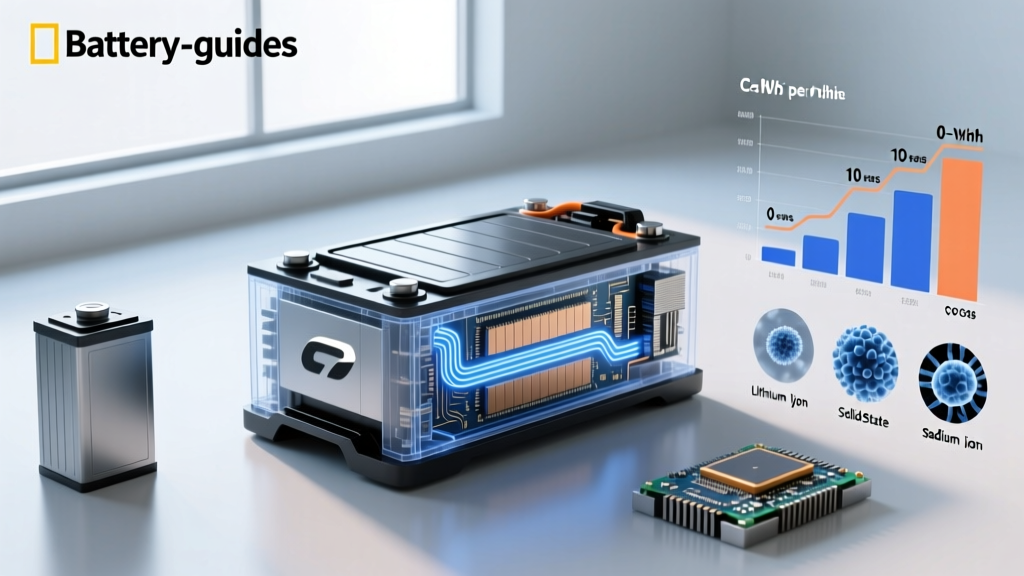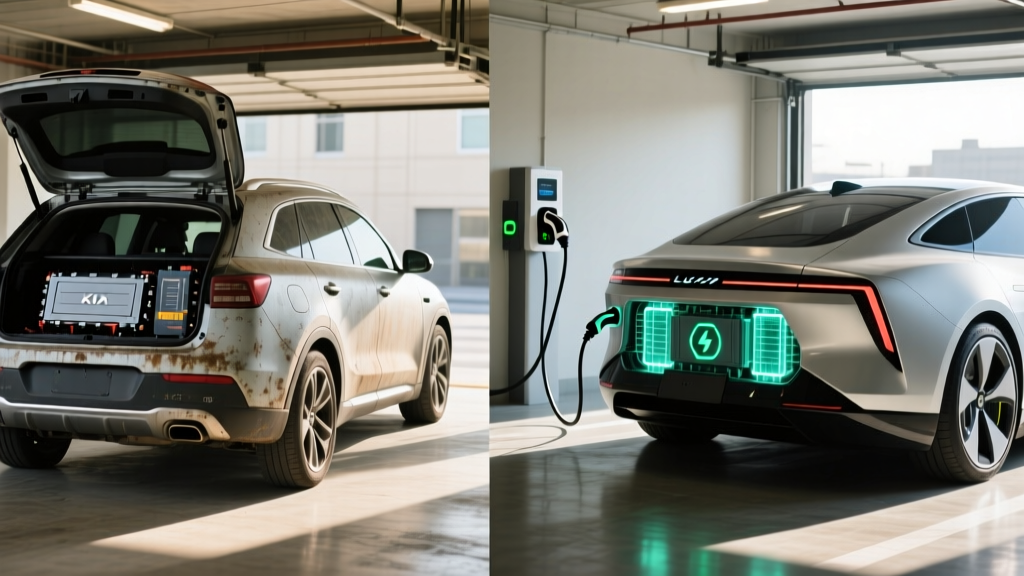
If you're researching a 2018 Kia Sorento battery, you're likely dealing with one of two scenarios: the 12-volt auxiliary battery that powers the electronics, or you're cross-shopping a used Sorento Hybrid against a modern battery-electric vehicle and wondering how long EV traction batteries actually last. This guide addresses both — clarifying the Sorento's battery setup while providing a comprehensive, data-backed look at EV high-voltage battery longevity, degradation, replacement costs, and the chemistry choices shaping today's market.
The 2018 Kia Sorento Battery: What Owners Actually Need to Know
The 2018 Kia Sorento was sold exclusively as a gasoline-powered midsize SUV — there was no fully electric or plug-in hybrid variant for that model year in the U.S. market. This means the 2018 Kia Sorento battery most owners search for is the standard 12V lead-acid auxiliary battery (typically a Group 124R or H7/94R, depending on the engine), which handles starting, lights, and electronics.
However, if you're considering a 2019–2021 Sorento PHEV (sold in some markets) or comparing a used Sorento against a modern EV like the Kia EV6 or Hyundai Ioniq 5, the high-voltage traction battery questions become critical. Let's break down everything you need to know about EV battery lifespan, costs, and care — with hard numbers.
How Long Do EV Batteries Last? Real-World Degradation Data
The single most common concern for EV buyers and used-EV shoppers is battery longevity. The good news: modern lithium-ion traction batteries routinely outlast the vehicles they're installed in.
Typical EV Battery Degradation Curve (NMC Chemistry):
- Year 1 / 15,000 mi: ~2–4% capacity loss (initial settling)
- Year 3 / 45,000 mi: ~6–8% total loss
- Year 5 / 75,000 mi: ~8–12% total loss
- Year 8 / 120,000 mi: ~10–15% total loss
- Year 10 / 150,000 mi: ~12–18% total loss (varies widely by climate and charging habits)
Sources: Geotab fleet data (6,300+ vehicles), Recurrent Auto battery studies.
According to fleet data analyzed by Geotab, the average EV battery retains roughly 88–90% of its original capacity after 5 years and around 80–85% after 10 years under normal use conditions. Tesla's own impact report has shown Model S/X batteries retaining approximately 88% capacity at 150,000 miles. LFP (lithium iron phosphate) chemistries, now used in Tesla Model 3/Y Standard Range, Ford Mustang Mach-E Select, and many Chinese-market EVs, demonstrate even slower degradation — often retaining 90%+ capacity at 100,000 miles.
The key takeaway: most EV batteries will deliver 150,000–200,000+ miles before capacity drops below 70%, which is the threshold most manufacturers use for warranty claims. Catastrophic failure (sudden death) is exceedingly rare — degradation is gradual and linear after the first year.
LFP vs NMC/NCA: Which Battery Chemistry Is Right for You?
Two dominant chemistries power today's EVs, and the choice affects range, longevity, cold-weather performance, and cost. Here's the direct comparison:
| Attribute | LFP (Lithium Iron Phosphate) | NMC/NCA (Nickel Manganese Cobalt / Nickel Cobalt Aluminum) |
|---|---|---|
| Energy Density | Lower (~140–180 Wh/kg cell-level) | Higher (~220–300 Wh/kg cell-level) |
| Typical Range | Shorter packs; common in standard-range models | Longer range per kg; used in extended-range trims |
| Cycle Life | 3,000–5,000+ cycles to 80% SoH | 1,000–2,000 cycles to 80% SoH |
| Calendar Life | Excellent; slower degradation over time | Good; degrades faster if stored at high SoC |
| Cold Performance | Weaker below 32°F; more range loss in winter | Better cold-weather performance; less range drop |
| Fast-Charging Tolerance | Can handle frequent DC fast charging better | More stress from repeated 150+ kW sessions |
| Recommended Daily SoC | 100% is fine (no upper-limit stress) | 80% daily; 100% only for road trips |
| Cost | ~20–30% cheaper per kWh to manufacture | More expensive due to nickel/cobalt content |
| Notable Vehicles (2025–2026) | Tesla Model 3 RWD, Model Y RWD, Ford Mach-E Select, BYD models, Rivian Standard | Tesla Long Range, Hyundai Ioniq 5/6, Kia EV6, BMW iX, Mercedes EQE/EQS |
The bottom line: If you drive mostly in moderate climates, charge at home, and want maximum battery lifespan, LFP is the durability champion. If you need maximum range, tow frequently, or live in cold northern states, NMC/NCA gives you more miles per charge and better winter performance — at the cost of slightly faster long-term degradation and a higher per-kWh price.
EV Battery Warranty Terms: What's Actually Covered
Federal law mandates that EV battery warranties cover a minimum of 8 years / 100,000 miles (10 years / 150,000 miles in CARB states like California, New York, and Massachusetts). Most manufacturers exceed this baseline. Here's how the major warranties compare:
| Manufacturer | Warranty Period | Capacity Threshold | Notes |
|---|---|---|---|
| Tesla | 8 yr / 100,000–150,000 mi (varies by model) | 70% retention | Model 3/Y RWD: 100k mi; Long Range/Performance: 120k mi; Model S/X: 150k mi |
| Hyundai / Kia | 10 yr / 100,000 mi | 70% retention | Among the longest; covers Ioniq 5, EV6, EV9 |
| Ford | 8 yr / 100,000 mi | 70% retention | Mach-E, F-150 Lightning |
| General Motors | 8 yr / 100,000 mi | 70% retention | Equinox EV, Blazer EV, Silverado EV, Cadillac Lyriq |
| BMW | 8 yr / 100,000 mi | 70% retention | iX, i4, i7 |
| Rivian | 8 yr / 120,000–175,000 mi | 70% retention | R1T/R1S: 120k mi; Commercial vans: 175k mi |
What triggers a warranty claim? If your battery's State of Health (SoH) drops below 70% within the warranty period, the manufacturer will repair or replace modules (or the full pack) to bring it back above threshold. Note: warranties cover defects and excessive degradation — not damage from accidents, flooding, or unauthorized modifications. Always keep records of your SoH readings.
EV Battery Replacement Cost: What It Actually Takes
This is where fear-mongering often takes over. Yes, a full traction battery replacement is expensive. But the context matters enormously: the vast majority of EV batteries never need replacement during the vehicle's useful life.
| Vehicle / Battery Size | Battery Capacity | Estimated Replacement Cost (2025–2026) | Typical Replacement Timeline |
|---|---|---|---|
| Tesla Model 3 Standard Range (LFP) | ~60 kWh | $12,000–$16,000 | Rarely before 200,000+ mi |
| Tesla Model Y Long Range (NMC) | ~82 kWh | $16,000–$22,000 | Rarely before 150,000+ mi |
| Hyundai Ioniq 5 / Kia EV6 (NMC) | 77.4 kWh | $14,000–$20,000 | Rarely before 150,000+ mi |
| Ford F-150 Lightning Extended Range | ~131 kWh | $22,000–$30,000 | Rarely before 150,000+ mi |
| Chevrolet Bolt EV/EUV (NMC) | 65 kWh | $14,000–$16,000 (post-recall updated pack) | Most covered under recall/warranty |
| Nissan LEAF (older, air-cooled) | 24–62 kWh | $6,500–$9,000 (40 kWh); $10,000–$14,000 (62 kWh) | Earlier degradation; 80,000–120,000 mi in hot climates |
For context, compare this to what you'd spend on a gasoline vehicle's powertrain over the same mileage: a transmission replacement ($3,000–$7,000), timing chain ($1,500–$3,000), head gasket ($1,500–$2,500), plus 150,000 miles of oil changes, spark plugs, and exhaust repairs can easily total $5,000–$10,000+. The EV battery is the single largest potential repair, but it's also the least likely component to fail catastrophically.
If you're coming from a 2018 Kia Sorento (gasoline) and weighing an EV switch, consider that your Sorento's engine and transmission are approaching the mileage where major powertrain repairs become common — while a 2025 EV's battery will likely outlast the car's body and interior.
Factors That Accelerate (or Preserve) Battery Life
Not all miles are equal when it comes to battery wear. Here are the variables that matter most, ranked by impact:
High-Impact Factors:
- Extreme heat exposure: Sustained ambient temperatures above 95°F accelerate chemical degradation. Garage parking and thermal preconditioning help significantly.
- Consistently charging to 100% (NMC/NCA only): Storing an NMC battery at 100% SoC for days or weeks stresses the cathode. Charge to 80% daily; use 100% only before road trips. LFP batteries are exempt from this rule — charge to 100% regularly for cell balancing.
- Frequent DC fast charging above 150 kW: Occasional fast charging is fine. Daily use of 250–350 kW chargers generates sustained heat that accelerates wear. Use Level 2 (7–19 kW) for daily needs.
Moderate-Impact Factors:
- Deep discharges to 0%: Avoid regularly draining below 10%. The battery management system (BMS) reserves a buffer, but repeatedly hitting the floor stresses cells.
- Cold-weather fast charging without preconditioning: Charging a frozen battery at high power can cause lithium plating. Always use your car's preconditioning feature before DC fast charging in winter.
- Sustained high-speed driving: Continuous 80+ mph operation generates more heat than moderate driving, slightly accelerating degradation over time.
Low-Impact (Myth-Busting):
- Regenerative braking intensity: Minimal effect on battery wear; the BMS manages regen current within safe limits.
- Partial charges (20–60%, 40–80%): Actually beneficial for NMC — partial cycles cause less stress than full 0–100% sweeps.
How to Check and Monitor Your EV Battery Health
State of Health (SoH) is the percentage of your battery's original capacity that remains usable. A new battery is 100% SoH; a battery that held 77.4 kWh when new and now holds 68 kWh is at roughly 88% SoH.
How to check SoH:
- In-car displays: Tesla (Service menu → Battery Health), Hyundai/Kia (EV-specific settings), BMW iDrive (battery info screen). Not all brands show SoH directly.
- OBD-II apps: Tools like LeafSpy (Nissan), Scan My Tesla, or Car Scanner ELM OBD2 can read SoH, cell voltages, and degradation data from the BMS.
- Dealer diagnostics: Any authorized service center can pull a full battery health report — request one during routine service or before buying a used EV.
- Third-party services: Recurrent Auto offers free battery health reports that compare your degradation to fleet averages for your specific model.
Used-EV buying tip: Always request a battery health report before purchasing. A 2021 model with 90% SoH at 40,000 miles is in excellent shape. The same model at 78% SoH may indicate heavy fast-charging use or hot-climate exposure — and could hit the 70% warranty threshold sooner than expected.
What's Next: Solid-State and Silicon-Anode Batteries
Several next-generation battery technologies are in development, but realistic timelines matter:
Solid-state batteries replace the liquid electrolyte with a solid material, promising higher energy density (potentially 400+ Wh/kg), faster charging, and improved safety. Toyota has announced pilot production for 2027–2028, initially in limited-run vehicles. Samsung SDI and QuantumScape are targeting similar timelines. Mass-market availability at scale is not expected before 2030.
Silicon-anode batteries (used in limited form in the Porsche Taycan and upcoming GM Ultium enhancements) increase energy density by replacing graphite anodes with silicon composites. These are closer to market — expect broader adoption in 2026–2028 model-year vehicles — but they address range and weight more than longevity.
Sodium-ion batteries are emerging as a low-cost alternative for entry-level EVs, particularly from Chinese manufacturers like BYD and CATL. They offer lower energy density but excellent cycle life and no critical-mineral dependency. U.S. availability remains limited and is not expected in mainstream models before 2028.
None of these technologies are currently available in production vehicles you can buy today. If you're shopping now, today's LFP and NMC batteries — with proper care — will serve you well for 150,000+ miles.
Frequently Asked Questions
How long do EV batteries last in years and miles?
Based on fleet data from Geotab and Recurrent Auto, most modern EV batteries retain 80–85% of their original capacity after 10 years or 150,000 miles. With proper care (avoiding extreme heat, limiting DC fast charging, and following SoC guidelines for your chemistry), many packs will deliver 200,000+ miles before dropping below the 70% warranty threshold. LFP batteries typically outlast NMC by a significant margin in cycle life.
How much does an EV battery cost to replace in 2025–2026?
Full traction battery replacements range from approximately $6,500 (Nissan LEAF 40 kWh) to $30,000 (Ford F-150 Lightning Extended Range 131 kWh), with most mainstream EVs (Tesla Model 3/Y, Hyundai Ioniq 5, Kia EV6) falling in the $12,000–$22,000 range. However, the overwhelming majority of EV batteries never require replacement during the vehicle's useful life. Per IRS guidelines, if you do face a replacement, the cost may be partially offset by warranty coverage.
What does the EV battery warranty actually cover?
Federal law requires a minimum 8-year/100,000-mile warranty on EV batteries (10 years/150,000 miles in CARB states). Coverage applies when the battery's State of Health drops below 70% of original capacity due to normal use or manufacturing defects. It does not cover damage from collisions, flooding, unauthorized modifications, or external events. Hyundai and Kia lead the industry with 10-year/100,000-mile coverage across their EV lineup.
How do I maximize my EV battery's lifespan?
For NMC/NCA batteries: charge to 80% daily, use 100% only before long trips, avoid frequent 150+ kW DC fast charging, precondition before winter charging, and garage-park in hot climates. For LFP batteries: charge to 100% regularly (at least weekly) for cell balancing, and follow the same fast-charging and temperature guidelines. Level 2 home charging (7–19 kW) is the gentlest and most cost-effective daily charging method.
LFP vs NMC — which battery chemistry is better for me?
Choose LFP if: you want maximum battery lifespan, live in a moderate climate, mostly charge at home, and don't need the longest possible range per charge. Choose NMC/NCA if: you need maximum range (300+ miles), frequently drive in cold weather, tow heavy loads, or regularly take long road trips where fast-charging speed matters. Neither is universally "better" — the right choice depends on your driving pattern and climate. See the chemistry comparison table above for a detailed breakdown.
Does the 2018 Kia Sorento have a high-voltage EV battery?
No. The 2018 Kia Sorento sold in the U.S. was gasoline-only — no hybrid, PHEV, or EV variant was offered. The battery most owners search for is the standard 12V auxiliary battery. If you're looking for a Kia with a high-voltage traction battery, the Sorento PHEV debuted for the 2022 model year (13.8 kWh NMC pack, 32 miles electric-only range per fueleconomy.gov). For a fully electric Kia, the EV6 (2022+) and EV9 (2024+) are the current options.