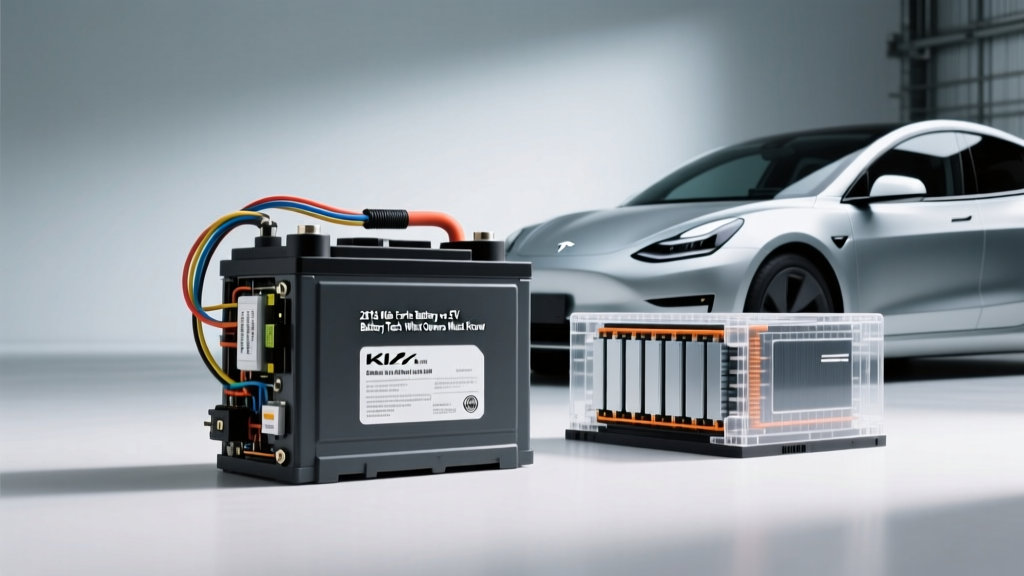
If you've landed here searching for a 2018 Kia Forte battery, you're likely dealing with a dead 12-volt starter battery in a conventional gasoline sedan. That's an entirely different component from the high-voltage traction batteries powering today's electric vehicles — but the confusion is understandable, and it reveals something important about how automotive battery technology has evolved.
This guide bridges both worlds. We'll clarify what battery the 2018 Forte actually uses, then dive deep into modern EV traction battery technology: chemistry, degradation data, warranties, replacement costs, and how to maximize longevity. Whether you're replacing a $150 lead-acid battery in your Forte or evaluating a $45,000 EV's long-term battery health, the fundamentals matter.
The 2018 Kia Forte Battery: What You Actually Need
The 2018 Kia Forte is a conventional internal-combustion compact sedan. It uses a standard 12V lead-acid auxiliary battery (Group Size H5/47 or 121R, depending on trim and engine) to crank the engine and power electronics when the alternator isn't running. This is not a traction battery — it doesn't propel the car.
Key specs for the 2018 Forte 12V battery:
- Group size: H5 (L2) or 121R
- Cold Cranking Amps (CCA): 550–650 CCA depending on brand
- Reserve Capacity: ~90–100 minutes
- Typical replacement cost: $120–$200 at auto parts retailers
- Expected lifespan: 3–5 years depending on climate and usage
This is a straightforward, widely available part. But understanding why a gas car's 12V battery differs fundamentally from an EV's high-voltage traction battery sets the stage for everything that follows.
EV Traction Batteries: Chemistry Fundamentals (LFP vs NMC)
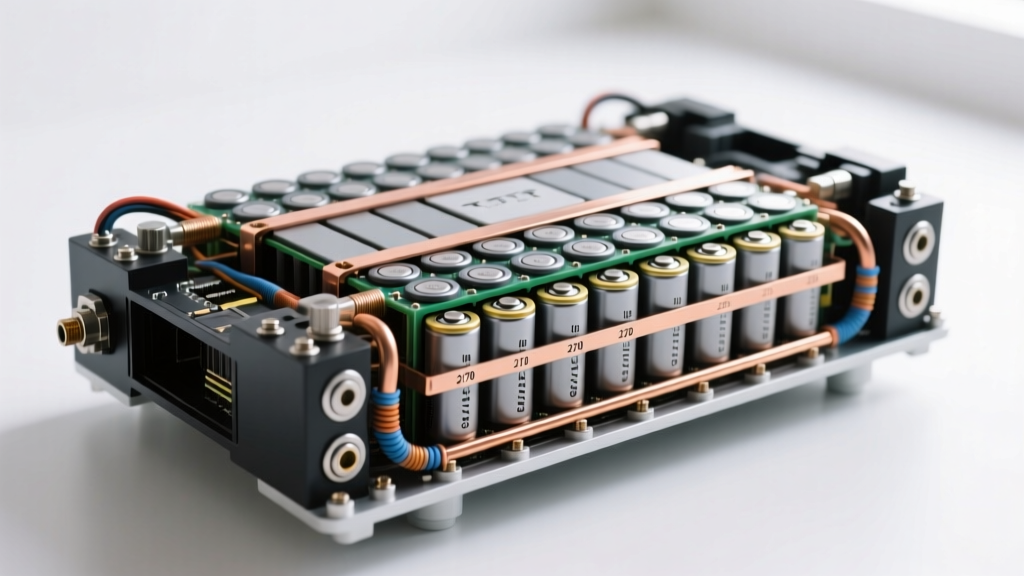
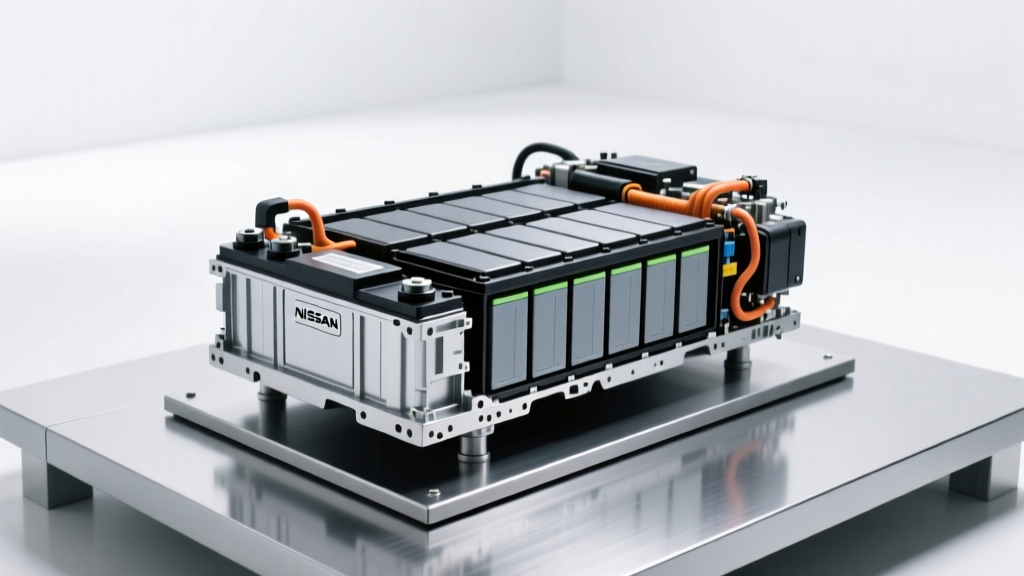
Modern EVs use lithium-ion traction batteries operating at 300–800 volts, storing 40–130+ kWh of usable energy. Two dominant chemistries serve the 2025–2026 market, each with distinct trade-offs:
| Attribute | LFP (Lithium Iron Phosphate) | NMC/NCA (Nickel Manganese Cobalt / Nickel Cobalt Aluminum) |
|---|---|---|
| Energy density | Lower (~160 Wh/kg cell-level) | Higher (~250–300 Wh/kg cell-level) |
| Cycle life | 3,000–5,000+ cycles to 80% SoH | 1,500–2,500 cycles to 80% SoH |
| Cold-weather performance | Weaker below 32°F; slower charging | Better low-temp conductivity |
| Cost per kWh | ~$80–100/kWh (pack-level, 2025) | ~$110–140/kWh (pack-level, 2025) |
| Thermal stability | Excellent — less prone to thermal runaway | Good but requires more robust BMS |
| Recommended daily SoC | Can charge to 100% regularly | Better at 80% daily; 100% for trips only |
| Common applications (2025–2026) | Tesla Model 3/Y RWD, Ford Mustang Mach-E Select, BYD models | Long-range/performance variants, Hyundai Ioniq 5/6, Rivian, GM Ultium |
Which is better? Neither is universally superior. LFP wins on longevity and cost — ideal for standard-range daily drivers who charge at home. NMC wins on range-per-kilogram — essential for long-range models where battery mass matters. Tesla's split strategy (LFP for RWD, NMC for Long Range/Performance) reflects this calculus precisely.
How Long Do EV Batteries Actually Last? Degradation Data
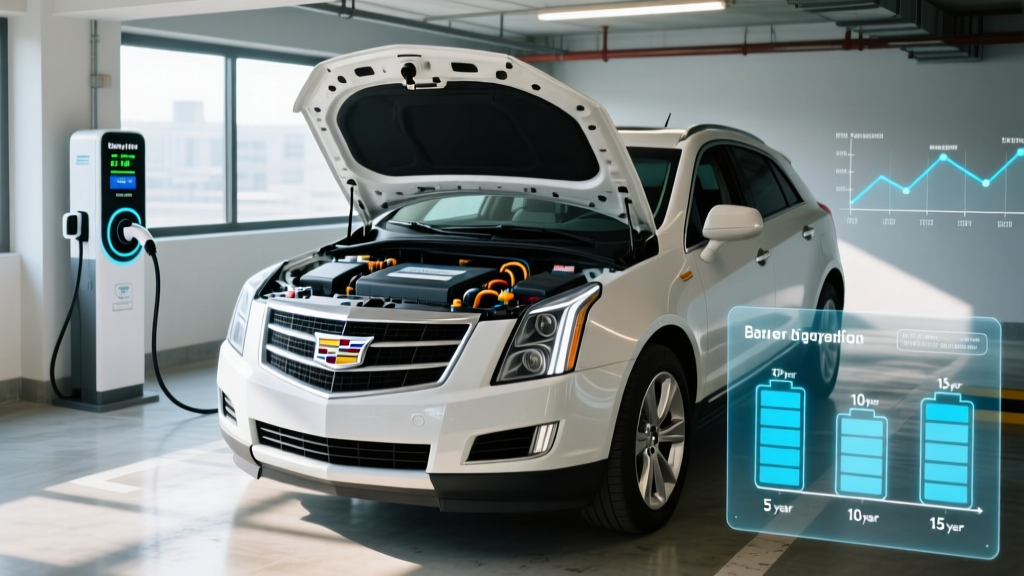
The single most common question from EV shoppers: "Will I need a $20,000 battery replacement in five years?" The data says almost certainly not. Most EV batteries outlast the vehicles they power.
Here's what real-world fleet data and manufacturer testing show about capacity retention over time:
| Milestone | Typical Capacity Retention | Data Source / Notes |
|---|---|---|
| Year 1 / 15,000 mi | 95–98% | Initial calibration drop; stabilizes quickly |
| Year 3 / 45,000 mi | 90–95% | Geotab fleet study (2024); liquid-cooled packs |
| Year 5 / 75,000 mi | 86–92% | Recurrent Auto data; Tesla, Chevy Bolt, Hyundai Kona |
| Year 8 / 120,000 mi | 80–88% | Warranty threshold; most packs still above 70% |
| Year 10 / 150,000 mi | 75–85% | Tesla Impact Report; Model S/X fleet average |
| Year 12+ / 200,000+ mi | 70–80% | High-mileage outlier data; LFP packs often higher |
A few important nuances:
- Calendar aging matters as much as mileage. A 6-year-old EV with 30,000 miles may show similar degradation to one with 80,000 miles. Lithium-ion cells degrade chemically over time regardless of use.
- Liquid-cooled packs degrade slower than passively cooled ones. The Chevy Bolt's early air-cooled pack showed faster degradation than Tesla's or Hyundai's liquid-cooled systems.
- The "buffer" hides some loss. Most EVs have a top and bottom buffer (e.g., 84 kWh gross / 77.4 kWh usable). Early degradation eats into the buffer before the driver notices range loss.
For context, the average American drives ~13,500 miles per year (FHWA data). At that rate, reaching 200,000 miles takes roughly 15 years — well beyond most ownership cycles.
EV Battery Warranty Terms: What's Covered and for How Long
Federal law mandates that EV battery warranties cover a minimum of 8 years / 100,000 miles (in California Air Resources Board states, it's 10 years / 150,000 miles). But capacity-retention thresholds and transferability vary by manufacturer.
| Manufacturer | Warranty Period | Capacity Threshold | Transferable to Second Owner? |
|---|---|---|---|
| Tesla (Model 3/Y LFP) | 8 yr / 100,000 mi | 70% retention | Yes |
| Tesla (Model 3/Y LR NMC) | 8 yr / 120,000 mi | 70% retention | Yes |
| Hyundai / Kia (EV6, Ioniq 5) | 10 yr / 100,000 mi | 70% retention | Yes (first owner 10/100; second owner 5/60) |
| GM (Ultium: Equinox EV, Blazer EV, Silverado EV) | 8 yr / 100,000 mi | 70% retention | Yes |
| Ford (Mach-E, F-150 Lightning) | 8 yr / 100,000 mi | 70% retention | Yes |
| Rivian (R1T, R1S) | 8 yr / 120,000 mi | 70% retention | Yes |
| BMW (i4, iX) | 8 yr / 100,000 mi | 70% retention | Yes |
What triggers a warranty claim? If your battery's State of Health (SoH) drops below the stated threshold (typically 70% of original usable capacity) within the warranty period, the manufacturer must repair or replace it — usually by swapping in a refurbished pack with equivalent or better capacity. They are not required to give you a brand-new battery.
Warranty claims remain rare. Recurrent Auto's 2024 fleet analysis found that fewer than 1.5% of EVs in their dataset required warranty battery replacements — and many of those were due to manufacturing defects early in ownership, not gradual degradation.
EV Battery Replacement Costs: What to Expect If You're Out of Warranty
If your battery fails outside the warranty window — or you're buying a used EV with an expired warranty — replacement cost is a legitimate concern. Here's the current landscape for 2025–2026:
| Vehicle / Battery Size | Battery Capacity (kWh) | Estimated Replacement Cost (Parts + Labor) | Notes |
|---|---|---|---|
| Chevy Bolt EV/EUV | 65 kWh (NMC) | $14,000–$16,000 | GM's Ultium transition may affect parts availability long-term |
| Tesla Model 3 RWD | ~60 kWh (LFP) | $12,000–$15,000 | Refurbished packs increasingly available |
| Tesla Model Y Long Range | ~75 kWh (NMC) | $15,000–$18,000 | High-volume model; third-party options emerging |
| Hyundai Ioniq 5 / Kia EV6 | 77.4 kWh (NMC) | $16,000–$20,000 | E-GMP platform; dealer-only replacement currently |
| Ford F-150 Lightning Extended | 131 kWh (NMC) | $22,000–$28,000 | Largest consumer pack on market |
| Rivian R1T (Max Pack) | 149 kWh (NMC) | $25,000–$30,000+ | Limited third-party ecosystem |
Important context: most EV owners never pay for a traction battery replacement. The vehicle is typically sold, traded, or retired before the battery falls below usable capacity. A pack at 75% SoH still provides meaningful range — a 300-mile EPA vehicle at 75% capacity still delivers ~225 miles, adequate for most daily driving.
Costs are also declining. Pack-level pricing has fallen from ~$200/kWh in 2020 to roughly $100–130/kWh in 2025 for NMC and $80–100/kWh for LFP. By the time a 2025 EV needs an out-of-warranty replacement in the 2035+ timeframe, prices will likely be substantially lower.
Factors That Accelerate (or Preserve) Battery Health
Not all miles age a battery equally. These are the primary factors influencing long-term State of Health:
Practices That Preserve Battery Life
- Keep daily SoC between 20–80% (NMC) or charge to 100% freely (LFP). Avoid storing NMC packs at 100% for extended periods.
- Use Level 2 home charging as your primary method. Slow charging generates less heat stress than DC fast charging.
- Precondition the battery before DC fast charging (most EVs do this automatically when you navigate to a charger). Cold batteries charged at high power suffer lithium plating.
- Park in shade or a garage during extreme heat. Sustained high temperatures (above 95°F ambient) accelerate calendar aging.
- Drive the car regularly. Batteries prefer moderate use to prolonged sitting at high or low SoC.
Practices That Accelerate Degradation
- Frequent DC fast charging (3+ times per week exclusively). Data from Geotab's fleet study shows vehicles that fast-charge more than three times weekly in hot climates degrade roughly 1.5–2x faster than those primarily using Level 2.
- Regularly draining below 10% or sitting at 100% for days. Extreme SoC states stress cell chemistry.
- Towing or sustained high-speed driving in hot weather — generates sustained high current and heat.
- Ignoring thermal management warnings or cooling system maintenance (some packs use glycol loops that need periodic service).
How to Check and Monitor Your EV's Battery Health (SoH)
State of Health (SoH) is the percentage of original usable capacity your battery retains. Unlike the 2018 Kia Forte's simple 12V battery (where a load tester at an auto parts store gives you a pass/fail), EV SoH monitoring is software-driven and more nuanced.
Methods to check SoH:
- In-vehicle diagnostics: Some EVs (notably Hyundai/Kia E-GMP vehicles, newer Teslas via software updates) display battery health percentage in the settings menu.
- OBD-II dongles + apps: Tools like OBDeleven, LeafSpy (Nissan Leaf), or Scan My Tesla read the BMS (Battery Management System) directly for precise SoH, cell voltage spread, and cycle count.
- Dealer diagnostic report: Any authorized service center can pull a full battery health report — often free under warranty, or $100–150 out of warranty.
- Third-party services: Recurrent and AVTO offer battery health reports for used-EV buyers, comparing your pack against fleet averages for your model and mileage.
What to look for: A healthy pack should show SoH within 2–3% of the fleet average for its age and mileage. Cell voltage spread (the difference between highest and lowest cell groups) should be under 50 mV at rest — wider spreads suggest cell imbalance that may worsen over time.
Emerging Battery Technology: What's Next (2027 and Beyond)
Current lithium-ion technology is mature and proven, but several next-generation chemistries are in development. These are not yet commercially available in production vehicles as of early 2026:
- Solid-state batteries: Replace the liquid electrolyte with a solid ceramic or polymer, promising 30–50% higher energy density and improved safety. Toyota has announced a 2027–2028 production timeline for limited solid-state EVs; Samsung SDI targets 2027. Real-world availability at scale remains uncertain. (IEA Global EV Outlook)
- Silicon-dominant anodes: Replacing graphite anodes with silicon can boost energy density by 20–40%. Companies like Sila Nanotechnologies and Group14 are supplying early production cells, but volume is limited and cost remains high.
- Sodium-ion batteries: Lower-cost alternative to lithium using abundant sodium. CATL and BYD have begun production for Chinese-market EVs; energy density is ~30% lower than LFP, limiting range. Possible fit for budget city cars.
- LMFP (Lithium Manganese Iron Phosphate): An evolution of LFP with ~15–20% higher energy density while retaining LFP's safety and cycle life. Expected in production vehicles by 2027–2028.
For buyers today, current lithium-ion technology (both LFP and NMC) is well-proven with extensive fleet data backing its longevity. There is no practical reason to delay an EV purchase waiting for solid-state — today's batteries will reliably serve 10–15+ years with proper care.
Frequently Asked Questions
How long do EV batteries last in years and miles?
Based on fleet data from Geotab, Recurrent Auto, and manufacturer reports, most modern liquid-cooled EV batteries retain 80–90% of original capacity at 100,000 miles (roughly 7–8 years). Many packs reach 150,000–200,000 miles while still holding 70–80% capacity — enough range for daily use. LFP chemistries tend to outlast NMC in cycle count, though calendar aging affects both.
How much does it cost to replace an EV battery?
Out-of-warranty replacement costs range from roughly $12,000 for a Tesla Model 3 LFD pack to $28,000+ for a Ford F-150 Lightning Extended Range pack, including labor. However, the vast majority of EV owners never replace their traction battery — the vehicle is typically sold or retired first. Costs continue to decline as pack-level pricing drops and refurbished packs become available.
What does the EV battery warranty actually cover?
Federal law requires a minimum 8-year/100,000-mile warranty on EV batteries (10 years/150,000 miles in CARB states). If your battery's capacity drops below the manufacturer's stated threshold (typically 70% of original usable capacity), the manufacturer must repair or replace it at no cost. This covers degradation — not damage from accidents, flooding, or unauthorized modifications.
How do I check my EV battery's health?
Check your vehicle's built-in battery health display (if equipped), use an OBD-II adapter with a compatible app (LeafSpy, Scan My Tesla, OBDeleven), or request a diagnostic report from your dealer. For used-EV purchases, services like Recurrent provide fleet-comparison health reports.
Is LFP or NMC better for my needs?
Choose LFP if you prioritize longevity, lower cost, and plan to charge at home daily (you can safely charge to 100%). Choose NMC if you need maximum range per charge and don't mind managing state-of-charge habits (80% daily, 100% only for road trips). Both chemistries reliably deliver 150,000+ miles with proper care.
Does the 2018 Kia Forte have an EV battery?
No. The 2018 Kia Forte is a conventional gasoline sedan with a standard 12V lead-acid battery (Group H5/121R, ~550–650 CCA, $120–$200 replacement cost). Kia's electric offerings — the Niro EV, EV6, and EV9 — use high-voltage lithium-ion traction batteries, which are fundamentally different components.