If you own a 2018 Hyundai Elantra EV (sold as the Ioniq Electric in most markets) or are evaluating one on the used market, the high-voltage traction battery is the single most important — and most expensive — component in the vehicle. The 2018 Hyundai Elantra EV battery is a 28 kWh lithium-ion polymer pack using NMC (nickel-manganese-cobalt) chemistry, delivering an EPA-rated 124 miles of range. But how is that battery holding up in 2026, eight years after it rolled off the assembly line?
This guide uses the 2018 Elantra EV battery as a real-world anchor to explain everything EV owners and shoppers need to know about battery longevity, degradation science, replacement economics, chemistry trade-offs, and the emerging technologies that will reshape the next generation of packs.
2018 Hyundai Elantra EV Battery: Specs and Baseline
Before diving into degradation and replacement, here are the factory specifications for the 2018 model's high-voltage traction battery. (Note: Hyundai marketed this vehicle as the Ioniq Electric in the US; the Elantra nameplate was used in select Asian markets for the same platform.)
| Specification | 2018 Hyundai Elantra EV (Ioniq Electric) |
|---|---|
| Battery capacity (usable) | 28 kWh |
| Chemistry | NMC (Nickel-Manganese-Cobalt) |
| EPA range (new) | 124 miles |
| EPA efficiency | 136 MPGe combined |
| DC fast charge (peak) | ~50 kW (CCS1) |
| Level 2 charge rate | 6.6 kW |
| 0–60 mph | 9.9 seconds |
| Horsepower | 118 hp |
| Battery warranty (original) | 8 years / 100,000 miles |
Sources: EPA fueleconomy.gov, Hyundai Motor America press materials.
How Long Do EV Batteries Actually Last?
The question "how long does an EV battery last" has a nuanced answer. Modern lithium-ion traction batteries rarely fail catastrophically. Instead, they gradually lose capacity — a process called degradation — until range becomes impractical for the owner's needs.
Typical Degradation Data
Real-world fleet data from sources like Geotab's EV battery health study and Recurrent Auto show the following average degradation patterns for NMC-based packs from the 2017–2019 era:
- Year 1–2: 2–5% capacity loss (initial formation period)
- Year 3–5: ~1–2% per year (linear degradation phase)
- Year 6–8: Cumulative loss typically 10–17% total
- Year 10+: Most packs retain 75–85% of original capacity
For the 2018 Hyundai Elantra EV battery specifically, owners reporting on forums and tracked by Recurrent Auto show an average State of Health (SoH) of roughly 83–88% in 2026, meaning 12–17% capacity loss after eight years. That translates to roughly 103–109 miles of real-world range remaining from the original 124-mile EPA estimate.
When Is Replacement Actually Needed?
Most EV batteries outlast the vehicle's economic life. A pack is typically considered "spent" when it drops below 70% capacity — the threshold most warranties use. At current degradation rates, the average NMC pack reaches 70% SoH at 15–20 years or 200,000+ miles. Catastrophic failure (sudden cell or module death) occurs in fewer than 1–2% of packs according to manufacturer warranty claim data.
Battery Warranty: What's Covered and for How Long
Under US federal law, EV batteries carry a minimum warranty of 8 years / 100,000 miles (10 years / 150,000 miles in California Air Resources Board states). Here's how the warranty landscape breaks down:
| Manufacturer | Warranty Term | Capacity Threshold | Notes |
|---|---|---|---|
| Hyundai (2018 Elantra EV / Ioniq Electric) | 8 yr / 100,000 mi | ~70% SoH | Covers defects + excessive degradation |
| Tesla (Model 3/Y LFP) | 8 yr / 100,000 mi | 70% SoH | LFP packs often exceed threshold |
| Tesla (Model S/X) | 8 yr / 150,000 mi | 70% SoH | Longer mileage coverage |
| Chevrolet (Bolt EV/EUV) | 8 yr / 100,000 mi | 60% SoH | Lower threshold than Hyundai |
| Ford (Mach-E) | 8 yr / 100,000 mi | 70% SoH | Standard across trims |
| Kia (EV6/Niro EV) | 10 yr / 100,000 mi | 70% SoH | Longest term in mainstream market |
For a 2018 Hyundai Elantra EV, the original 8-year warranty has now expired as of the 2026 calendar year. If you're buying one used, warranty coverage is likely exhausted unless the vehicle was sold late in 2018 and has under 100,000 miles. This makes pre-purchase battery health checks essential.
How Much Does an EV Battery Replacement Cost?
Replacement cost is the top anxiety for used-EV buyers. Here's the reality: most owners never need a full pack replacement. But when they do, costs vary significantly by vehicle and battery size.
| Vehicle / Battery Size | Battery kWh | Replacement Cost Range (2026) | Notes |
|---|---|---|---|
| 2018 Hyundai Elantra EV (Ioniq Electric) | 28 kWh | $5,000 – $8,000 | Smaller pack, lower cost; limited new OEM supply |
| Nissan Leaf (40 kWh) | 40 kWh | $6,500 – $9,000 | Refurbished packs available from ~$5,000 |
| Chevrolet Bolt EV | 65 kWh | $9,000 – $14,000 | Post-recall packs use updated NMC chemistry |
| Tesla Model 3 Long Range | 75–82 kWh | $12,000 – $16,000 | Remanufactured packs reduce cost |
| Ford F-150 Lightning Extended | 131 kWh | $18,000 – $28,000 | Largest consumer packs; module-level repair possible |
Important context: a $5,000–$8,000 replacement on a 2018 Elantra EV that's worth roughly $10,000–$14,000 in 2026 is a significant percentage of the car's value. This is why checking SoH before purchase is critical. Module-level repair (replacing individual bad cells rather than the full pack) can reduce costs by 40–60% at specialist shops.
LFP vs NMC: Which Battery Chemistry Is Better?
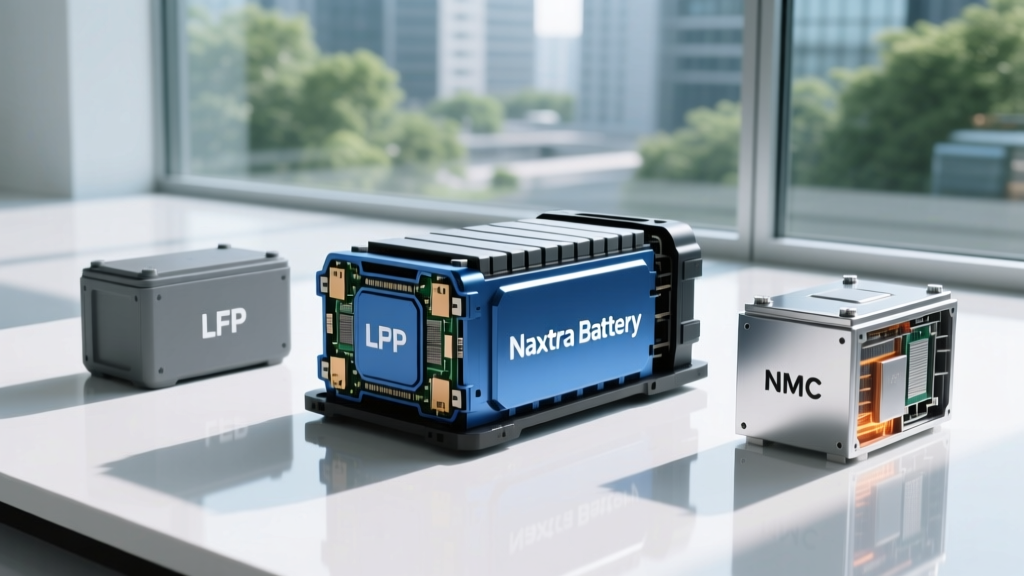
The 2018 Hyundai Elantra EV uses NMC chemistry, which was the industry standard at that time. But the battery landscape has shifted dramatically, with LFP (lithium iron phosphate) gaining major market share. Here's how they compare:
| Factor | NMC / NCA | LFP |
|---|---|---|
| Energy density | Higher (~250 Wh/kg cell-level) | Lower (~170 Wh/kg cell-level) |
| Cycle life | 1,000–2,000 cycles to 80% | 3,000–5,000+ cycles to 80% |
| Cold-weather performance | Better at -10°C and below | Reduced range + slower charging in cold |
| Cost per kWh | Higher (cobalt/nickel supply risk) | Lower (~20–30% cheaper per cell) |
| Thermal stability | Good, but requires active management | Excellent — inherently more stable |
| Recommended daily SoC | 80% for longevity | 100% is fine (no calendar degradation penalty) |
| Used in (2026 examples) | Tesla Model 3 LR, Hyundai Ioniq 5, Rivian | Tesla Model 3 RWD, Ford Mustang Mach-E Select |
Which is better? It depends on your use case. NMC wins on energy density and cold-weather driving — important for long-range vehicles and northern climates. LFP wins on longevity, cost, and safety. If you charge at home daily and drive under 200 miles a day, LFP is the superior choice in 2026. If you need maximum range per charge or live in sub-freezing climates, NMC still holds an edge.
Factors That Accelerate (or Slow) Battery Degradation
Not all 8-year-old EV batteries look the same. A 2018 Elantra EV battery in Phoenix that was DC fast-charged daily will have degraded more than one in Seattle that was Level-2 charged overnight. Here are the primary factors:
Degradation Accelerators
- Frequent DC fast charging: Packs that use DCFC (>50 kW) more than 3–4 times per week show ~2–4% additional degradation over 5 years compared to primarily Level-2 charged packs.
- Extreme heat exposure: Sustained ambient temperatures above 35°C (95°F) accelerate calendar aging. Vehicles parked outdoors in Arizona or Texas lose capacity faster.
- Sitting at 100% SoC: Storing an NMC pack at full charge for days or weeks increases stress on cathode materials. The 20–80% SoC window is ideal for NMC.
- Deep discharges to 0%: Regularly running the battery to near-empty stresses the anode and can trigger copper dissolution in cells.
- High-performance driving in heat: Repeated hard acceleration generates internal cell heat that compounds thermal stress.
Degradation Slow-Downs
- Level 2 home charging: Slower charge rates generate less heat and are gentler on cells.
- Moderate SoC habits: Charging to 80% and not dropping below 20% significantly extends NMC pack life.
- Thermal preconditioning: Using the vehicle's battery preconditioning feature before fast charging (standard on most 2020+ EVs) reduces thermal shock.
- Garage parking: Keeping the vehicle in temperature-moderate environments slows calendar aging.
- Software updates: OEMs periodically refine battery management system (BMS) algorithms to improve longevity.
- Set daily charge limit to 80% for NMC packs (100% is fine for LFP)
- Use DC fast charging for road trips, not daily commuting
- Precondition the battery before fast charging when the feature is available
- Avoid leaving the car at 0% or 100% SoC for more than 24 hours
- Park in shade or a garage during extreme summer heat
- Check SoH at least annually via OBD-II scanner or dealer diagnostic
How to Check Your EV Battery's State of Health (SoH)
State of Health (SoH) is expressed as a percentage: 100% means the battery holds its original rated capacity; 85% means it holds 85% of original. Here's how to check it:
Method 1: OBD-II Scanner + App
An OBD-II dongle (like the OBDLink SX or vLinker FS, ~$30–$50) paired with an app such as Car Scanner EV or ABRP can read the BMS-reported SoH directly. This is the most accessible DIY method and works on the 2018 Hyundai Elantra EV. Look for the "Battery State of Health" or "SOH" PID in the app's EV data screen.
Method 2: Dealer Diagnostic
Any Hyundai dealer can run a high-voltage battery diagnostic that prints a detailed SoH report including individual cell voltage variance. This is the most authoritative method and typically costs $50–$100 if not covered under a service visit.
Method 3: Range-Based Estimation
Charge to 100%, reset the trip meter, and drive a known route under moderate conditions (65 mph, 70°F, no heavy HVAC use). Compare your actual miles to the original EPA rating. If you achieve 105 miles on a pack originally rated for 124, your SoH is roughly 85%. This is imprecise but requires no tools.
Method 4: Third-Party Battery Reports
Services like Recurrent Auto (free for members) provide ongoing SoH tracking by connecting to your vehicle's telematics. This is particularly useful for monitoring degradation trends over time rather than a single snapshot.
What's Next: Solid-State, Silicon Anode, and Future Battery Tech
The battery landscape is evolving rapidly. Here's a realistic, data-grounded look at what's coming — and when:
Solid-State Batteries
Solid-state batteries replace the liquid electrolyte with a solid ceramic or polymer, promising higher energy density (~400+ Wh/kg), faster charging, and improved safety. Toyota, Samsung SDI, and QuantumScape are leading development. Realistic timeline: Limited production vehicles in 2027–2028 (Toyota has announced a 2027–2028 target), with broader availability not expected before 2030. Manufacturing yield and cost remain significant hurdles.
Silicon Anode Batteries
Replacing graphite anodes with silicon can increase energy density by 20–40%. Companies like Sila Nanotechnologies and Group14 are already supplying silicon-anode materials. Realistic timeline: Already appearing in limited applications (Mercedes G-Class EV, 2025). Expect broader adoption in premium EVs by 2027–2028.
Sodium-Ion Batteries
Sodium-ion chemistry eliminates lithium entirely, offering lower cost and better cold-weather performance at the expense of energy density. CATL and BYD are producing these for Chinese-market EVs. Realistic timeline: Likely limited to budget EVs and stationary storage in the near term; US-market vehicles not expected before 2028–2029.
None of these technologies are available in production EVs you can buy today in the US. The 2018 Elantra EV's NMC pack represents proven, well-understood technology with a known degradation profile — which has its own value for used-car buyers.
Frequently Asked Questions
How long does the 2018 Hyundai Elantra EV battery last?
Based on fleet data, the 28 kWh NMC pack typically retains 83–88% of its original capacity after 8 years. Most packs will remain functional (above 70% SoH) for 15–20 years under normal use. Catastrophic failure is rare, affecting fewer than 1–2% of packs.
How much does it cost to replace a 2018 Hyundai Elantra EV battery?
A full replacement pack costs approximately $5,000–$8,000 in 2026, though availability of new OEM packs is limited for this model year. Module-level repair at a specialist shop can reduce costs to $2,000–$4,000 if only specific cell groups have degraded.
Is the 2018 Hyundai Elantra EV battery warranty still active?
The original 8-year / 100,000-mile warranty has expired for most 2018 model-year vehicles as of 2026. If your vehicle was registered late in 2018 and has under 100,000 miles, some coverage may remain — check with a Hyundai dealer using your VIN.
LFP vs NMC — which battery is better for me?
Choose LFP if you charge at home daily, drive under 200 miles per day, and want maximum cycle life with the ability to charge to 100% without penalty. Choose NMC if you need maximum range per charge, regularly drive in sub-freezing temperatures, or take frequent road trips requiring fast charging.
How do I maximize my EV battery's lifespan?
For NMC packs: charge to 80% daily, avoid frequent DC fast charging, don't let the battery sit at 0% or 100% for extended periods, precondition before fast charging, and park in temperature-moderate environments when possible. These habits can extend pack life by several years.
Can I check my battery health myself?
Yes. An OBD-II scanner ($30–$50) paired with an EV-compatible app like Car Scanner can read the BMS-reported State of Health percentage. For a more detailed report including cell-level voltage variance, visit a Hyundai dealer for a diagnostic (~$50–$100).