Why the 2018 Ford Explorer Battery Matters to EV Buyers in 2026
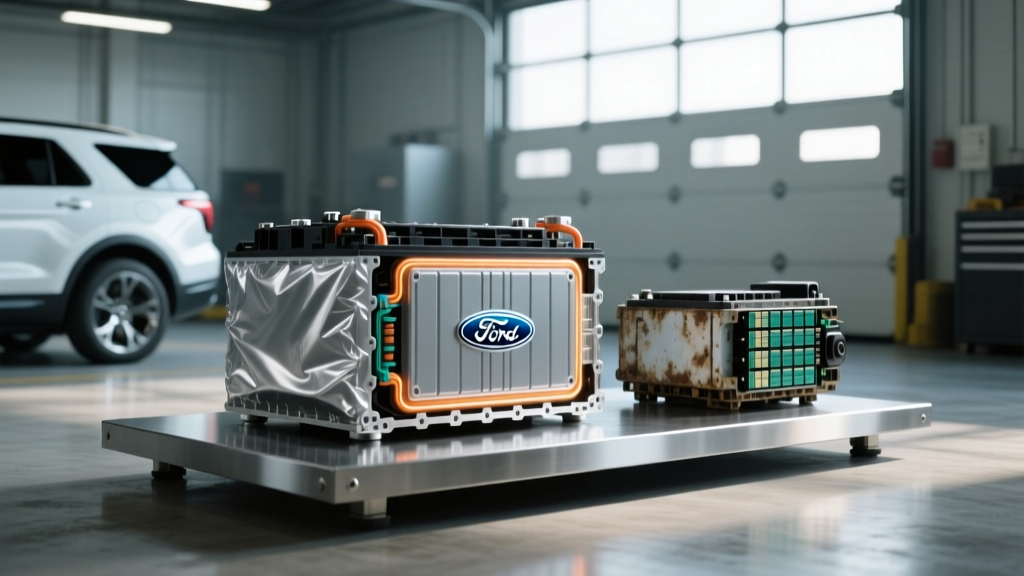
If you've searched for a 2018 Ford Explorer battery, you've likely encountered a confusing mix of 12-volt auxiliary replacements and high-voltage traction pack discussions. The 2018 Explorer was never a full battery-electric vehicle — it was offered as a conventional gas model or, in earlier generations, as a mild hybrid. But that model year sits at a fascinating inflection point in Ford's electrification timeline: just two years before the Mustang Mach-E launched with a ~70 kWh NMC pack, and five years before Ford began scaling LFP chemistry in its lineup.
For EV shoppers in 2026, understanding what happened to batteries from that era — and how far technology has come — is essential context before committing $35,000–$80,000 to an electric vehicle. This guide covers real degradation data, chemistry trade-offs, warranty coverage, and replacement economics so you can buy with confidence.
LFP vs NMC vs NCA: Which Chemistry Should You Choose?
Every EV battery uses a specific cathode chemistry that determines its energy density, lifespan, cold-weather behavior, and cost. In 2026, three chemistries dominate the US market:
- NMC (Nickel Manganese Cobalt) — the mainstream choice for most 2018–2024 EVs, including early Mustang Mach-E and Tesla Model 3 Long Range variants.
- NCA (Nickel Cobalt Aluminum) — used primarily by Tesla in performance-oriented packs.
- LFP (Lithium Iron Phosphate) — rapidly expanding in 2025–2026 models including the Tesla Model 3 RWD, Ford Mustang Mach-E Select, and several Chinese-market imports.
| Attribute | LFP | NMC / NCA |
|---|---|---|
| Energy Density | ~160–180 Wh/kg (lower) | ~220–260 Wh/kg (higher) |
| Typical Cycle Life | 3,000–5,000+ cycles | 1,000–2,000 cycles |
| Cold Performance (below 20°F) | Reduced; slower charging, ~15–25% range loss | Better; ~10–20% range loss |
| Recommended Daily Charge | 100% SoC is fine | 80% SoC preferred for longevity |
| Cost per kWh (pack-level) | ~$90–$110 | ~$120–$150 |
| Cobalt Content | None | Yes (supply-chain & ethical concern) |
| Best For | Daily commuters, high-mileage drivers, budget trims | Long-range needs, cold climates, performance trims |
The trade-off is straightforward: LFP gives you a longer-lasting, cheaper battery with less range per pound. NMC/NCA gives you more range in a smaller, lighter pack but degrades faster if routinely charged to 100% or exposed to extreme heat. For a driver covering 12,000–15,000 miles annually in a temperate climate, LFP is increasingly the rational choice.
How Long Do EV Batteries Actually Last? Real Degradation Data
The most persistent myth in EV ownership is that batteries "need replacing every few years like a phone." The data tells a different story.
Typical EV Battery Degradation Curve
Based on aggregated fleet data from sources including Geotab's EV Battery Health study and owner-reported telemetry:
- Year 1–2: ~2–5% capacity loss (initial formation drop)
- Year 3–5: ~1–2% loss per year (linear phase)
- Year 6–10: ~0.5–1.5% loss per year (plateau phase)
- At 100,000 miles: Average pack retains 88–93% of original capacity
- At 150,000 miles: Average pack retains 82–90% of original capacity
- At 200,000 miles: Average pack retains 75–85% of original capacity
Tesla's own 2024 Impact Report showed Model 3/Y batteries retaining roughly 85% capacity at 200,000 miles. Nissan Leaf owners from 2013–2018 (passive air-cooled packs) saw worse results — some dropping below 70% capacity by 80,000 miles — which underscores how critical thermal management is. Modern liquid-cooled packs from 2020 onward perform dramatically better.
For context, a 2018 model-year EV with an NMC pack and active liquid cooling (like the Chevrolet Bolt EV or second-gen Nissan Leaf with the 60 kWh pack) will typically retain 80–88% capacity today at ~80,000–100,000 miles. That's still 160–200+ miles of usable range from a vehicle originally rated at 238 miles EPA.
What Does the EV Battery Warranty Actually Cover?
Federal law in the United States mandates a minimum battery warranty of 8 years / 100,000 miles for EVs (10 years / 150,000 miles in CARB states including California, New York, and others). But the details matter enormously.
| Manufacturer | Warranty Term | Capacity Retention Threshold | Coverage Notes |
|---|---|---|---|
| Tesla (Model 3/Y LFP) | 8 yr / 100,000 mi | 70% | Covers defects + capacity below threshold |
| Tesla (Model 3/Y Long Range NMC) | 8 yr / 120,000 mi | 70% | Higher mileage for Long Range trims |
| Ford (Mach-E, F-150 Lightning) | 8 yr / 100,000 mi | 70% | Covers components + capacity loss |
| Hyundai / Kia (IONIQ 5, EV6) | 10 yr / 100,000 mi | 70% | Longest term among mainstream brands |
| GM (Ultium-platform EVs) | 8 yr / 100,000 mi | 70% | Modular pack allows partial replacement |
| Rivian | 8 yr / 175,000 mi | 70% | Highest mileage threshold in market |
Key detail: The warranty threshold is typically 70% of original capacity — not a specific range number. If your EV was EPA-rated at 300 miles and the battery degrades to 210 miles of range (70%), the manufacturer must repair or replace it. In practice, very few packs actually fall below 70% within the warranty window, which is why out-of-pocket replacements are rare for vehicles under 120,000 miles.
How Much Does an EV Battery Replacement Cost in 2026?
Battery pack prices have fallen from roughly $1,200/kWh in 2010 to approximately $100–$130/kWh at the cell level in 2026, according to BloombergNEF battery price surveys. But out-of-warranty replacement involves labor, diagnostics, dealer markup, and pack-level integration — pushing the total higher.
| Vehicle Class | Battery Size | Estimated Replacement Cost | Typical Replacement Timeline |
|---|---|---|---|
| Compact EV (e.g., Chevy Bolt, Nissan Leaf) | 40–65 kWh | $6,000–$10,000 | Rarely needed before 200,000 mi |
| Midsize EV (e.g., Model 3, Mach-E, IONIQ 5) | 70–84 kWh | $9,000–$15,000 | Rarely needed before 180,000 mi |
| Full-size / Truck (e.g., F-150 Lightning, Rivian R1T) | 100–135 kWh | $14,000–$22,000 | Rarely needed before 150,000 mi |
| Luxury EV (e.g., Model S, Lucid Air, Taycan) | 90–118 kWh | $15,000–$25,000+ | Varies; some early Model S packs replaced at ~120,000 mi |
The critical context most articles omit: The vast majority of EV batteries never need full replacement. Data from extended warranties and fleet operators shows fewer than 2–3% of packs require replacement within the first 10 years. When replacements do occur, they're often covered under warranty. For a 2018-era EV purchased used today, the pack is likely the least of your concerns — suspension, brakes, and interior wear typically demand attention first.
One cost-saving trend in 2026: modular battery repair. GM's Ultium platform and several Chinese-market EVs allow individual module replacement rather than full-pack swaps, reducing out-of-pocket costs by 40–60%. A single degraded module might cost $800–$2,000 to replace versus $12,000+ for an entire pack.
Factors That Accelerate (or Preserve) Battery Health
Battery Longevity Best Practices — 2026 Owner's Checklist
- Avoid daily DC fast charging above 150 kW. Occasional road-trip fast charging is fine, but making 350 kW chargers your daily routine accelerates degradation by ~1–3% over 5 years versus Level 2 home charging.
- Keep SoC between 20–80% for NMC/NCA packs. LFP owners can charge to 100% regularly without concern — in fact, LFP benefits from periodic full charges for BMS calibration.
- Minimize prolonged exposure to extreme heat. Parking in shade or a garage when ambient temps exceed 95°F reduces calendar degradation. Battery temps above 104°F (40°C) for extended periods are the single biggest longevity killer.
- Use preconditioning before fast charging. Most 2024+ EVs automatically warm the battery when a DC fast charger is set as your navigation destination. This enables faster charging and reduces lithium plating risk.
- Don't store the vehicle at 100% or below 10% SoC for weeks. If leaving an EV for extended periods, set charge limit to ~50% and plug into Level 1 or Level 2.
- Drive moderately in extreme cold. High-regen settings on a freezing battery can cause stress; many EVs automatically limit regen when the pack is below 32°F.
The single most impactful habit? Home Level 2 charging at 7–11 kW. It's slower than DC fast charging, generates far less heat, and is the equivalent of "sipping" electrons rather than "blasting" them into the cells. Owners who charge primarily at home on Level 2 consistently show the best long-term State of Health readings.
How to Check Your EV Battery's State of Health (SoH)
State of Health (SoH) is the percentage of original battery capacity that remains usable. A brand-new EV has 100% SoH; one that has degraded to hold only 90% of its original kWh has 90% SoH.
Methods to check SoH in 2026:
- In-vehicle battery health screen: Tesla (via the Service menu or app), Hyundai/Kia (via the EV battery health display in settings), and Ford (via the FordPass app on Mach-E and Lightning) now provide SoH estimates directly to the owner.
- OBD-II diagnostic tools: Devices like the OBDLink MX+ paired with apps such as EV Health or LeafSpy (for Nissan Leaf) can read battery management system data including SoH, cell voltage variance, and pack temperature.
- Dealer diagnostic report: Any authorized service center can pull a full battery health report. Request this before purchasing a used EV — it's the equivalent of a compression test on a gas engine.
- Third-party battery certificates: Services like Recurrent Auto and Battery Health Report (available through some dealerships) provide verified SoH data for used-EV transactions.
When buying a used EV — whether it's a 2018-era pack or a 2023 model — always verify SoH before purchase. A pack at 92% SoH with 60,000 miles has roughly the same remaining life as one at 88% SoH with 90,000 miles. The degradation rate matters more than the absolute number.
What's Next: Solid-State and Silicon-Anode Batteries
If you're weighing whether to buy now or wait for "next-gen" batteries, here's the realistic timeline:
Solid-state batteries — which replace the liquid electrolyte with a solid material for higher energy density and faster charging — remain in limited production. Toyota has announced a 2027–2028 timeline for commercial solid-state EVs with ~750 km (466 mi) range and 10-minute fast charging. Samsung SDI and QuantumScape are targeting 2028–2030 for broader availability. These are announced targets, not guaranteed launch dates, and initial vehicles will carry premium pricing well above $60,000.
Silicon-anode batteries — which increase energy density by 20–40% over graphite anodes — are closer to mainstream. Sila Nanotechnologies and Group14 Technologies are supplying silicon-dominant anode materials to several OEMs for 2026–2027 model-year vehicles. Expect to see this in performance and luxury trims first, trickling down to mainstream models by 2029–2030.
Sodium-ion batteries — a lower-cost alternative to lithium for budget EVs — are entering production in China and may reach US-market vehicles by 2028–2029, primarily in fleet and entry-level models.
The practical takeaway: current NMC and LFP chemistries are mature, well-understood, and backed by robust warranties. Waiting 4–6 years for solid-state means missing years of EV ownership savings and federal tax credits that may not persist in their current form. For most buyers, the battery in a 2025–2026 EV is "good enough" to last the life of the vehicle.
Frequently Asked Questions
How long do EV batteries last in years and miles?
Most modern liquid-cooled EV batteries (2020+) retain 80–90% of original capacity at 150,000 miles and 8–10 years. Many packs outlast the vehicle itself. The 8-year / 100,000-mile federal warranty floor means manufacturers are legally on the hook if capacity drops below ~70% in that window — and very few do.
How much does an EV battery cost to replace?
Out-of-warranty replacement ranges from roughly $6,000 for a small pack (40–65 kWh) to $22,000+ for a large truck or luxury pack (100–135 kWh). However, fewer than 3% of EV batteries require full replacement within the first decade. Modular repair — replacing individual cell modules rather than the entire pack — is reducing costs further for Ultium-platform and other modular designs.
What does the EV battery warranty cover?
Federal minimum coverage is 8 years / 100,000 miles (10 yr / 150,000 mi in CARB states). The warranty covers manufacturing defects and capacity loss below a threshold (typically 70% of original capacity). It does not cover damage from accidents, flooding, or unauthorized modifications. Check your specific warranty document — terms vary by manufacturer and trim.
How do I check and maximize my EV battery health?
Check SoH via your vehicle's built-in battery health display, an OBD-II scanner with EV-compatible software, or a dealer diagnostic report. Maximize longevity by charging primarily on Level 2 at home, keeping NMC/NCA packs between 20–80% SoC for daily use, avoiding prolonged heat exposure, and preconditioning before DC fast charging. LFP owners can charge to 100% without concern.
LFP vs NMC — which is better and why?
Neither is universally better — it depends on your use case. Choose LFP if you prioritize longevity (3,000–5,000+ cycles), lower cost, and cobalt-free sourcing, and you don't need maximum range. Choose NMC/NCA if you need the longest possible EPA range, live in a very cold climate where LFP's cold-weather penalty is more pronounced, or want a performance-oriented trim. In 2026, LFP is the smart choice for most daily commuters; NMC remains the choice for road-trippers and cold-climate drivers.
Is a used EV from 2018–2020 a safe battery bet?
Generally yes, with caveats. Vehicles with active liquid-cooled battery systems (Tesla Model 3, Chevrolet Bolt EV, Hyundai Kona Electric) have aged well. Avoid early air-cooled packs (2011–2017 Nissan Leaf) which degraded faster in hot climates. Always get a SoH diagnostic before purchasing, and verify whether any remaining warranty transfers to second owners (most do).
Sources: EPA Fuel Economy for EV range and efficiency data; IRS §30D Clean Vehicle Credit for current incentive rules; Geotab EV Battery Health Study for fleet degradation data.